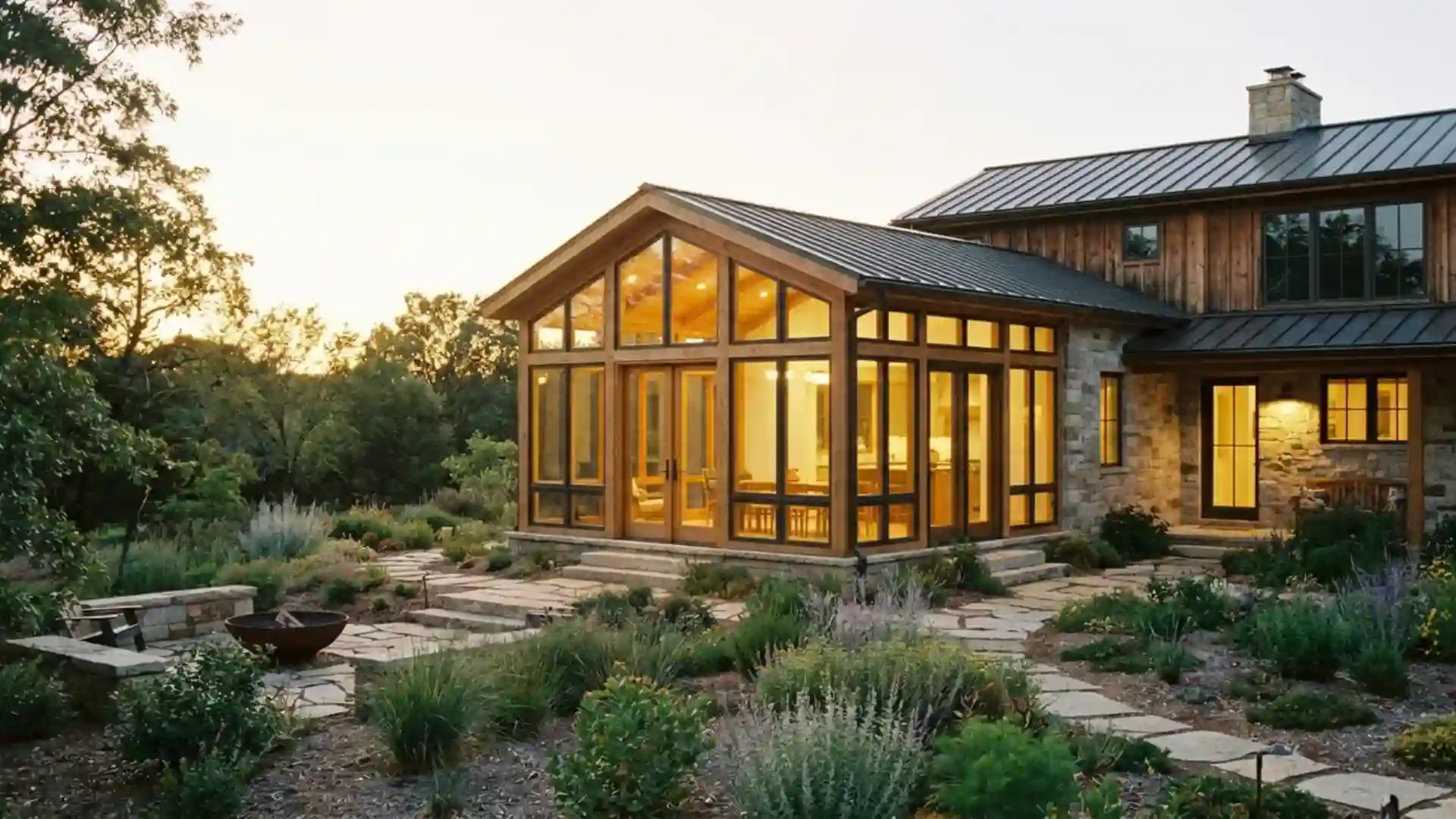

Ask ten homeowners about their sunroom addition cost, and you’ll get ten wildly different numbers.
Well, one person paid $20,000 for a simple screened-in space while another spent $90,000 on a glass-roofed solarium with full HVAC.
Neither is wrong, and neither tells you what you’ll actually pay.
That’s the frustrating part of this project: every blog gives you a range, but nobody explains why the range exists.
But here in this blog, it breaks down the real numbers, the hidden line items, and the decisions that separate a $25,000 sunroom from a $75,000 one, so you can budget with confidence instead of guesswork.
How Much Does a Sunroom Addition Cost?
Most full projects land between $25,000 and $75,000.
Smaller three-season rooms sit near the low end. Larger four-season additions push toward the top. Size matters, but the type of structure matters more. A 12×16 four-season room can cost more than a 20×20 three-season one.
Location shifts also affect totals; coastal and urban markets run higher due to labor and code requirements.
Think of this number as your starting point, not your final quote.
Your actual cost depends on foundation type, glazing choice, and the home’s support work.
Sunroom Addition Cost by Type
Not all sunrooms are built the same way, and that’s what really drives your price.
| Sunroom Type | Cost Range | Best For |
|---|---|---|
| Three-Season | $20,000–$40,000 | Spring-to-fall use, lower budget |
| Four-Season | $40,000–$80,000+ | Year-round living space |
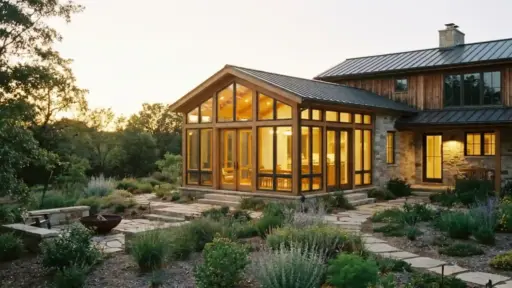
| Solarium (Glass Roof) | $45,000–$90,000+ | Maximum natural light, premium look |
| Prefab/Kit Sunroom | $15,000–$30,000 | Faster install, tighter budgets |
| Porch/Deck Conversion | $25,000–$50,000 | Using the existing structure as a base |
Choose based on how you’ll use the room, not just the price tag.
Complete Cost Breakdown of a Sunroom Addition
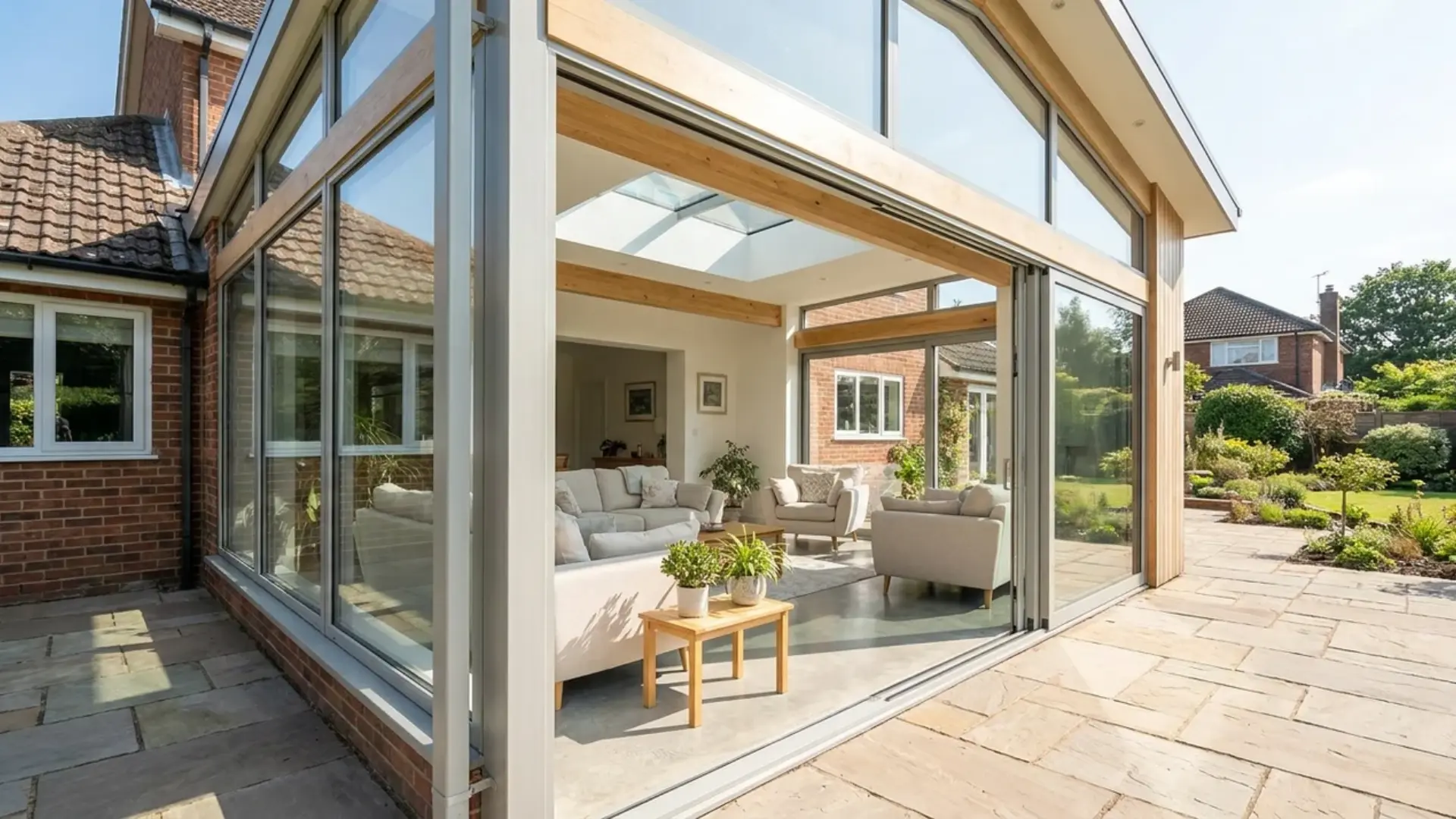
Adding a sunroom is one of the most popular ways people expand living space.
Most quotes lump everything into one number. That’s why people get blindsided by change orders later.
Design, Permits & Inspections
Budget $800–$4,000 combined. A prefab kit requires minimal drafting, while a custom sunroom that ties into your roofline requires stamped structural drawings; skip this, and you’ll likely fail inspection later.
Permit costs vary widely by jurisdiction, too: rural counties may charge a single flat fee, while dense suburbs require separate electrical, structural, and final inspections.
A contractor who says, “We’ll handle it without a number,” probably hasn’t priced it.
Foundation & Framing
Three-season rooms sit on simple piers or slabs. Four-season rooms need frost-depth footings matching your home’s foundation. That means more excavation and longer cure time.
Framing cost isn’t really about wood vs. aluminum. It’s about the roofline.
Matching your home’s pitch and siding adds labor. Kit sunrooms skip this in favor of a simpler shed roof.
$7,000–$24,000, depending on season type.
Windows, Glazing & Roofing
Your choice of glazing affects your energy bill for years.
Roofing costs depend on whether to match existing shingles or vs. glass paneling for a solarium. Flashing at the roof-to-house junction is often overlooked and is the most common point of leakage.
The widest range in the whole project: $7,000–$28,000.
- Single-pane vinyl: budget end
- Dual-pane Low-E: mid-range
- Triple-pane, argon-filled, or structural glass roofing: top end
Electrical Creation
Basic outlet and lighting rough-in runs $1,500–$4,000, but costs climb fast under certain conditions.
If your electrical panel needs a subpanel to handle new circuits, or the sunroom sits far from your main panel and requires trenching for underground conduit, add several thousand more.
Ceiling fans, dimmer switches, and exterior outlets often add costs that are not included in initial estimates.
HVAC & Insulation (Four-Season Only)
Combined: $4,500–$9,000. Mini-splits are the most common HVAC choice for sunrooms.
Extending existing ductwork costs more if your system lacks spare capacity.
Insulation is what makes a room “four-season.” Three-season builds skip it; that’s exactly why they can’t handle heat or cold. People who cut this corner almost always regret it by the first winter.
Flooring & Interior Finishing
Sunrooms experience more sun exposure and temperature fluctuations than standard rooms. Flooring not rated for that warps or fades fast. Ask for finishing costs itemized vague allowances cause disputes later.
Combined: $5,000–$18,000.
| Item | Cost Range | Watch For |
|---|---|---|
| Flooring | $3–$12/sq ft | UV- and temperature-rated materials |
| Drywall/trim/paint | $2,000–$6,000 | Extra corners, more window trim |
Labor Cost
Labor typically accounts for 30–40% of the total project cost, though this can shift if you act as your own general contractor or handle demo and site prep yourself.
Complex tie-ins, tight side-yard access, or coordinating multiple trades, such as an electrician, HVAC tech, framer, and roofer, all push labor costs up independent of materials.
A quote with unusually low labor pricing is worth double-checking for missing scope.
Factors That Have the Biggest Impact on Sunroom Cost
Two people can build the same-size sunroom and still end up with very different bills.
The difference usually comes down to a handful of decisions made before construction even starts.
- Size & design complexity: Larger rooms and custom shapes require more materials and labor hours.
- Material & glass quality: Vinyl and aluminum cost less than wood, while upgraded glazing adds to the total.
- Foundation situation: Building on an existing deck or patio is cheaper than pouring a new slab.
- Location & labor rates: Coastal and high-demand markets often run 15–50% above the national average.
- Build approach: A fully custom design costs more than a prefab kit, though it allows greater flexibility.
Understanding which of these apply to your project makes it much easier to compare contractor quotes accurately.
Sunroom Material Costs Explained
Framing material plays a major role in your total budget, affecting both upfront price and long-term maintenance.
| Material | Cost Range (per sq ft) | Durability & Upkeep |
|---|---|---|
| Vinyl | $5–$15 | Low maintenance with moderate durability. |
| Aluminum | $8–$20 | Low maintenance and performs well in humid climates. |
| Wood | $15–$30 | Premium appearance but requires regular sealing or painting. |
| Insulated Vinyl | $20–$35 | Ideal for four-season rooms with minimal maintenance. |
Choosing the right material depends on your budget and how much upkeep you’re willing to take on in the long term.
What Homeowners are Saying About Sunroom Costs
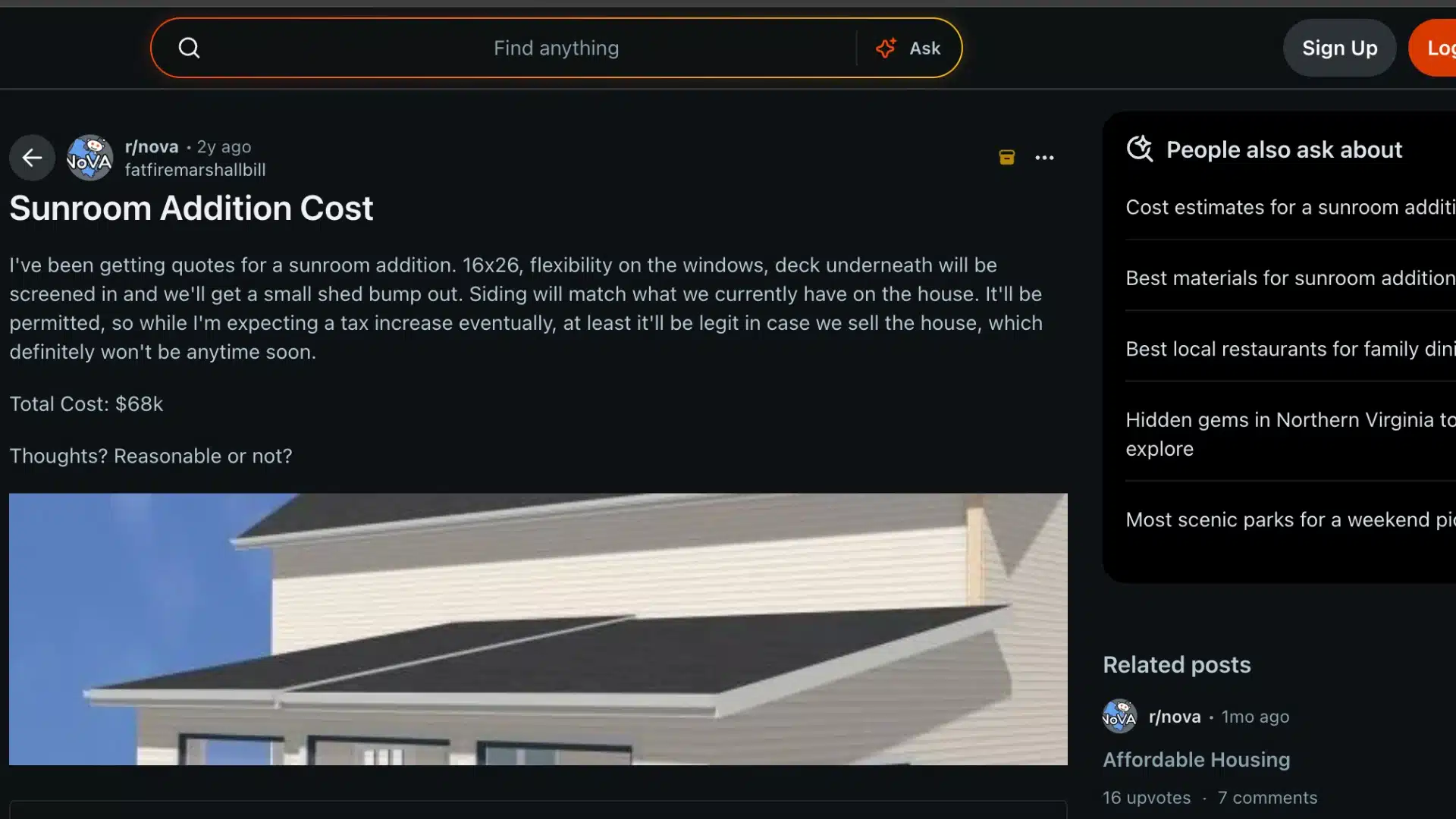
One Reddit user shared that they’re planning a 16×26 sunroom with flexible window options, a screened-in deck below, and a small shed bump-out to match their home’s existing siding.
Total cost: $68,000, fully permitted. Commenters called it surprisingly cheap.
Similar NOVA projects ranged from $42,000 to $100,000 for smaller spaces.
One neighbor shared a cautionary tale: a 1990s addition built without a foundation, causing sinking floors and roof leaks costing $10,000+ in repairs. Lesson learned: proper footings and roof flashing matter more than price.
Insurance increased by only $69 a year. Property tax impact varied, often delayed until the next assessment cycle
Additional Costs Most Homeowners Forget to Budget For
Beyond the core build, several smaller expenses often catch people off guard, adding thousands to the final bill if they aren’t planned for early on. Site conditions and finishing touches are usually the biggest surprises:
- Site preparation (land clearing, excavation): $500 – $3,000
- Site cleanup after construction: $300 – $700
- Foundation reinforcement for existing decks/patios: $1,000 – $6,000
- Flooring upgrades (tile, hardwood, heated flooring): $1,000 – $5,000
- Utility line marking (water, gas, electric): $100 – $500
- Custom furnishings or window treatments: vary, often $500 – $3,000
Building a 10–15% buffer of your total project cost prevents mid-project financial surprises.
Sunroom Cost by Roof Style
Some styles are simple to build and budget-friendly, while others involve more framing, engineering, and labor.
Here’s how the most common roof styles compare on cost.
Shed Roof
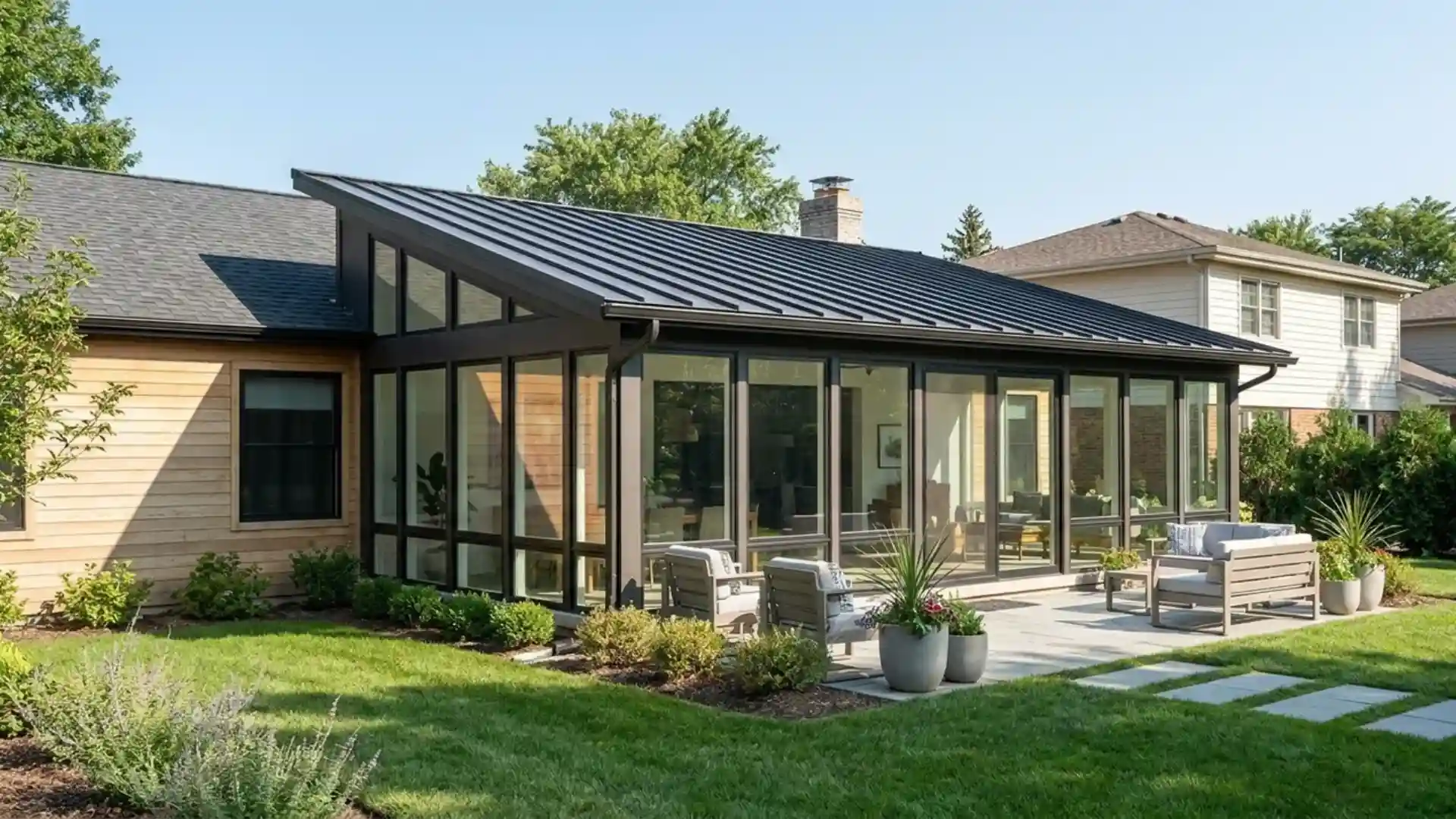
A shed roof uses a single sloped panel, making it the simplest and most affordable option to frame.
Since it requires less structural engineering and fewer roofing materials, labor time drops significantly compared to multi-angled designs. It’s a common choice for three-season sunrooms and prefab kits, where cost efficiency matters more than architectural detail.
This style also sheds rain and snow effectively with minimal maintenance needs.
Approx. cost: $3,000 – $8,000 (added to base structure cost)
Gable Roof
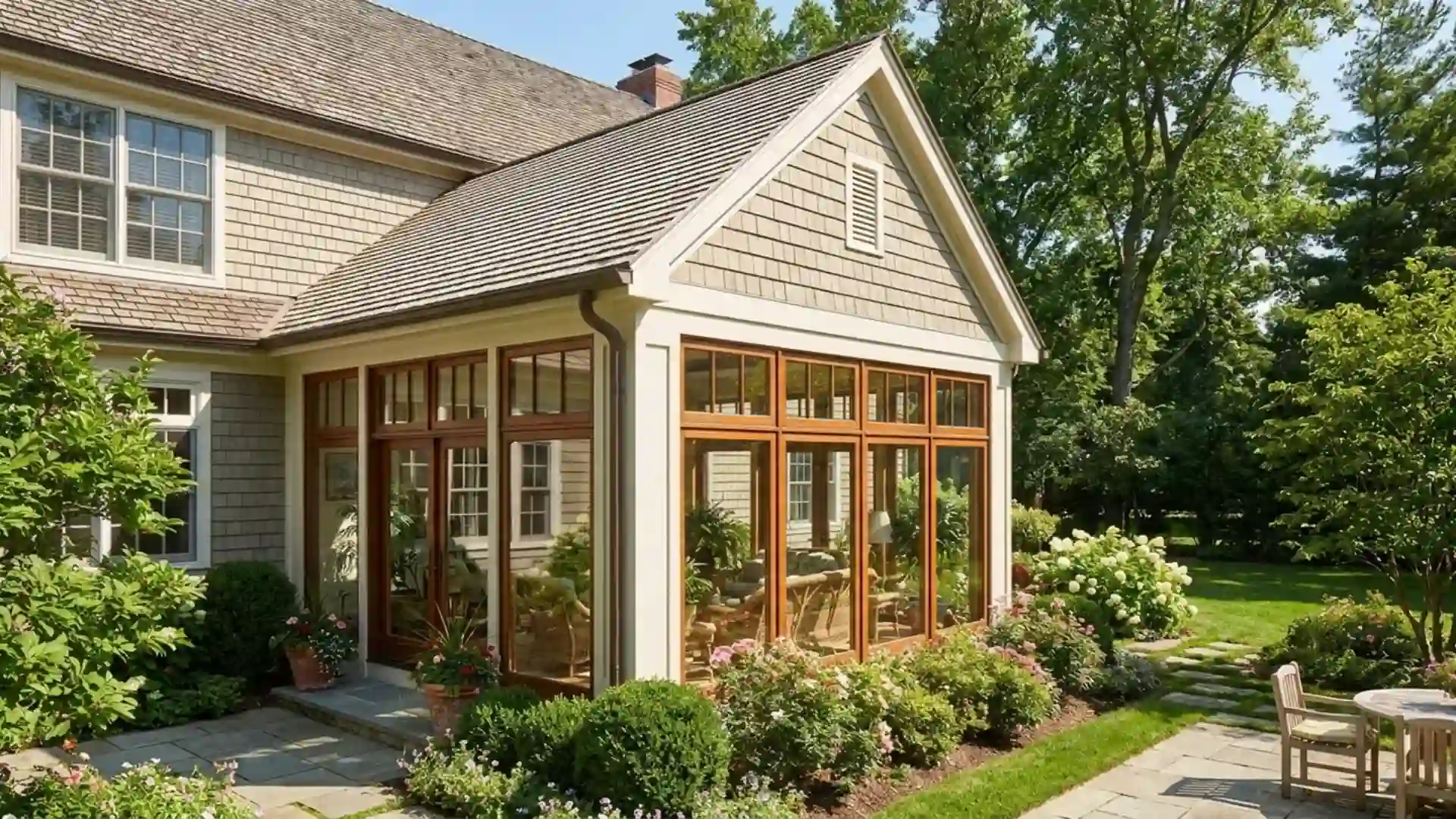
This roof features two sloped sides meeting at a central ridge, giving the sunroom a traditional, house-like profile.
It requires more framing and materials than a shed roof, increasing both labor and cost. This style works well when matching the sunroom’s roofline to the main house’s existing gables, improving curb appeal and resale value.
Approx. cost: $5,000 – $12,000 (added to base structure cost)
Hip Roof
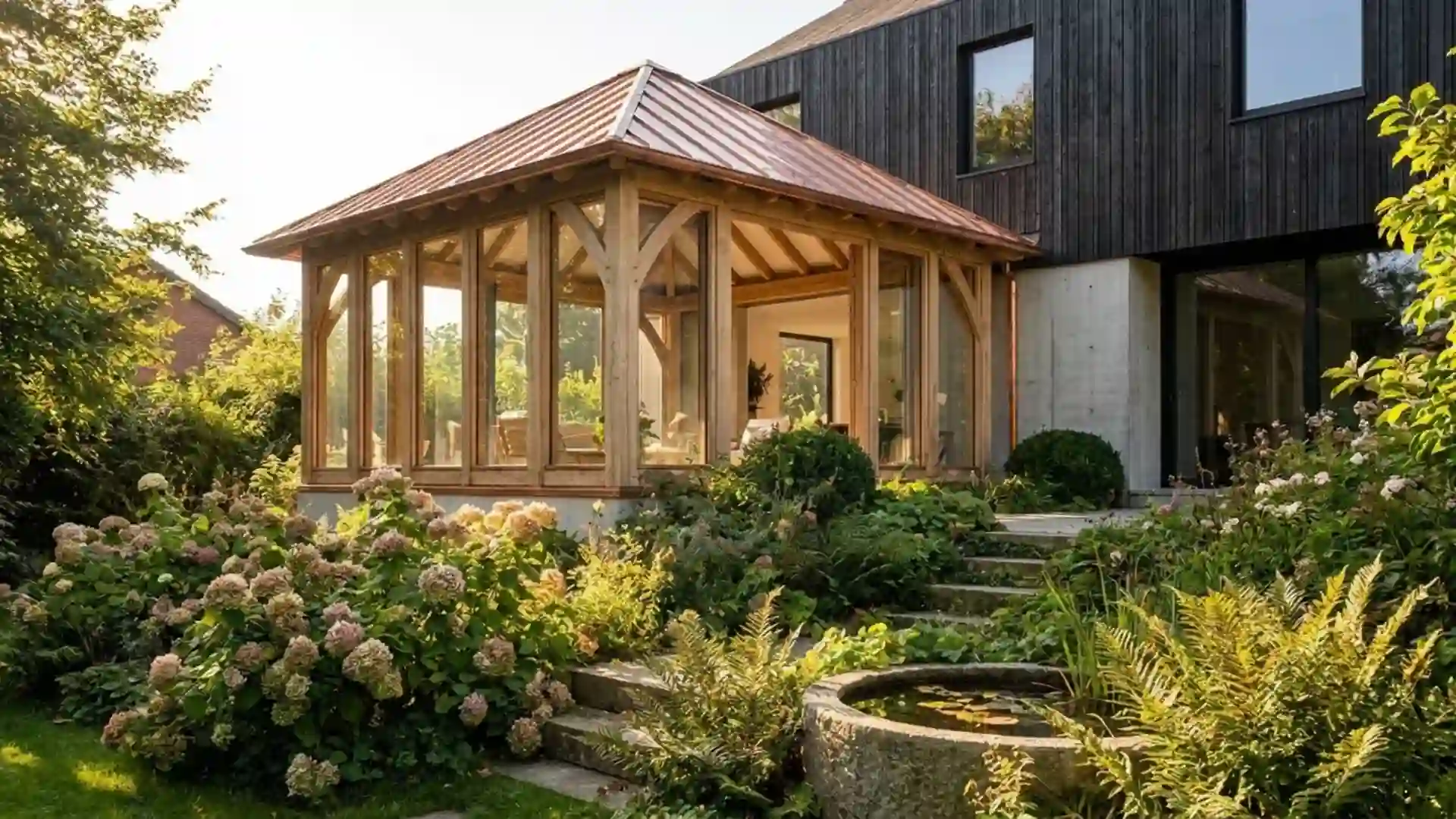
A hip roof slopes on all sides, creating a symmetrical design that blends with many home styles.
The added angles mean more cutting, framing, and labor hours, pushing costs higher than gable or shed options.
This style performs well in high-wind regions, offering better structural stability during storms.
Approx. cost: $8,000 – $18,000 (added to base structure cost)
Studio / Cathedral Roof
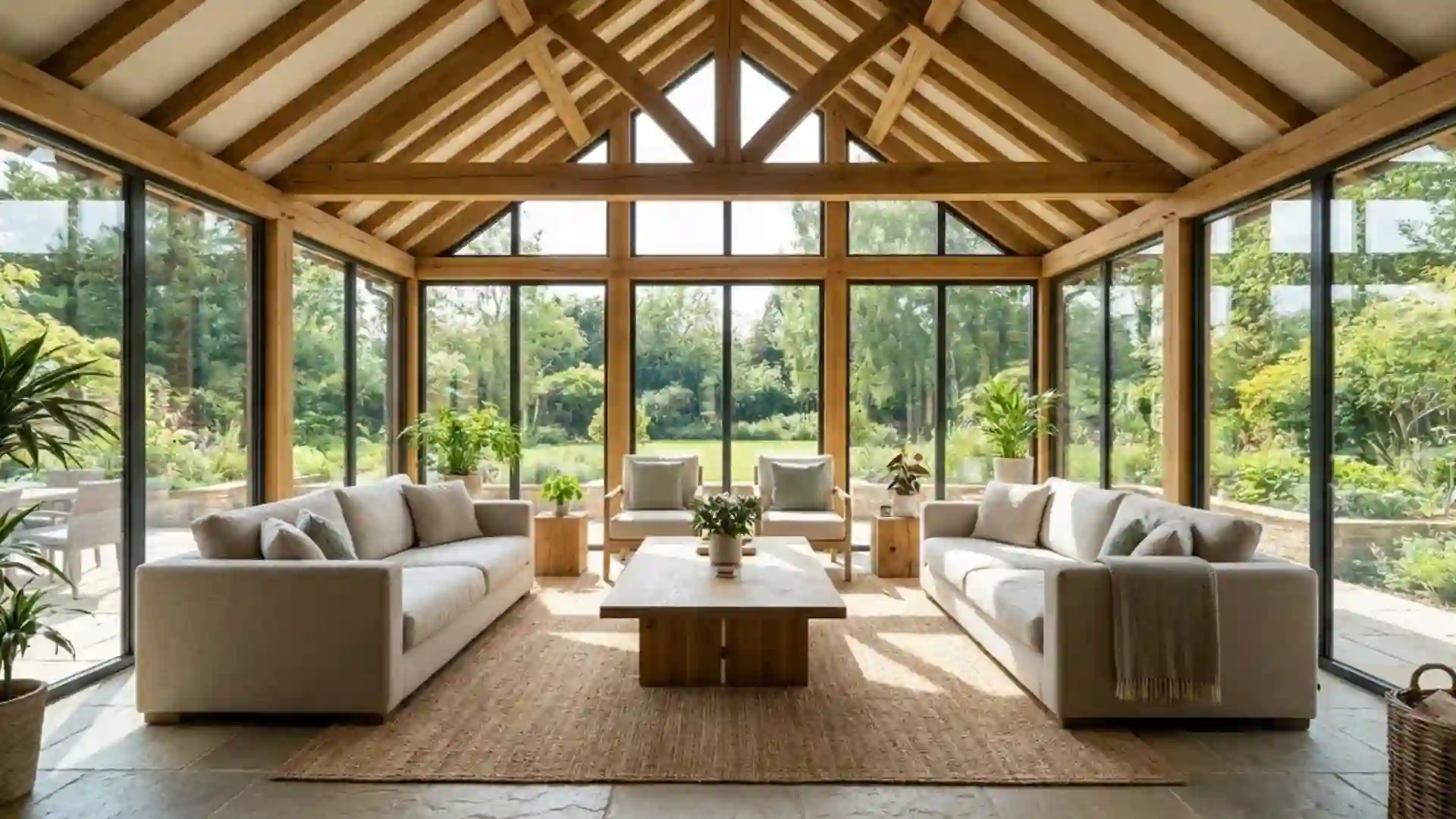
This style uses a single large sloped or vaulted design to create dramatic, open ceiling heights inside the sunroom.
It’s often paired with solariums and conservatories where visual impact matters as much as function. The complex framing and larger glass panels involved make it the most expensive roofing option on this list.
Approx. cost: $10,000 – $25,000+ (added to base structure cost)
Prefabricated vs Custom Sunroom: Which Offers Better Value?
Prefab sunrooms are factory-built kits assembled on-site using standard panel sizes.
Custom sunrooms are designed and built from scratch to match your home’s exact layout, roofline, and style. One trades flexibility for speed; the other trades cost for a tailored fit.
Value depends on your priorities, budget, timeline, or a seamless match to your home.
| Factor | Prefab Sunroom | Custom Sunroom |
|---|---|---|
| Cost Range | $15,000–$30,000 | $35,000–$80,000+ |
| Install Time | 1–2 weeks | 4–8 weeks |
| Design Flexibility | Limited, standard sizes | Fully customized |
| Roofline Match | Often mismatched | Matches existing home |
| Long-Term Value | Lower resale bump | Higher resale bump |
| Best Fit | Tight budgets, quick add-on | Permanent, integrated living space |
DIY vs Hiring a Professional: Is Building a Sunroom Yourself Worth It?
Saving money on sunrooms by DIY seems appealing, but it involves risks that complicate this choice more than most home projects.
When DIY Makes Sense
- Painting, trim work, and shelving installation
- Vinyl plank or click-together tile flooring
- Assembling small, homeowner-friendly prefab kits
- Site clearing and soil prep before construction
- Interior decor and furnishing choices
When Hiring a Professional is Necessary
- Foundation and footing work
- Roof tie-in and flashing at the house junction
- Electrical and HVAC installation
- Structural load calculations and engineering
- Any work requiring a permit sign-off
For most people, hiring a licensed pro for the structural shell and then DIYing the finishing details offers the best balance of savings and safety.
How Long Does it Take to Build a Sunroom?
Timeline is one of the most underestimated parts of planning a sunroom, often varying more than people expect.
Design and contractor selection typically take 1–3 weeks, followed by permit approval, which can run 4–8 weeks depending on your municipality. Site prep and foundation work add another 1–2 weeks.
Construction varies: prefab kits install in days, three-season rooms take 4–6 weeks, and four-season builds with HVAC need 8–12 weeks.
Altogether, most projects span 2–4 months from planning to move-in.
Building in buffer time for weather delays or material lead times helps set realistic expectations from the start.
Does a Sunroom Increase Home Value?
Yes, but the return varies by market and build quality.
Nationally, sunrooms typically recoup 40–60% of their cost at resale. Four-season rooms tied into your home’s HVAC system add more value than three-season additions, since appraisers count them as living space.
Unpermitted work adds zero appraised value and can complicate a sale.
Buyers in warm climates value sunrooms less than those in cold climates, where year-round usability matters.
A well-integrated, permitted sunroom remains one of the few additions buyers actively seek out.
How to Lower Costs & Pay for It
A sunroom addition is a major investment, but smart planning can meaningfully reduce your total spend, and financing can make even a larger project manageable.
From timing your build to choosing the right payment method, small decisions add up.
Smart Savings & Financing Strategies:
- Schedule during the off-season to secure better pricing and contractor availability.
- Choose vinyl or aluminum instead of premium materials to reduce overall project costs.
- Compare at least three contractor quotes before making a decision to avoid overpaying.
- Check for local energy-efficiency rebates on insulated glass or HVAC upgrades to offset part of the cost.
- Review financing options, including a HELOC, home equity loan, personal loan, or contractor financing plans.
Aim to keep total spend under 10–15% of your home’s current value to protect long-term resale balance.
Questions to Ask Before Getting Sunroom Estimates
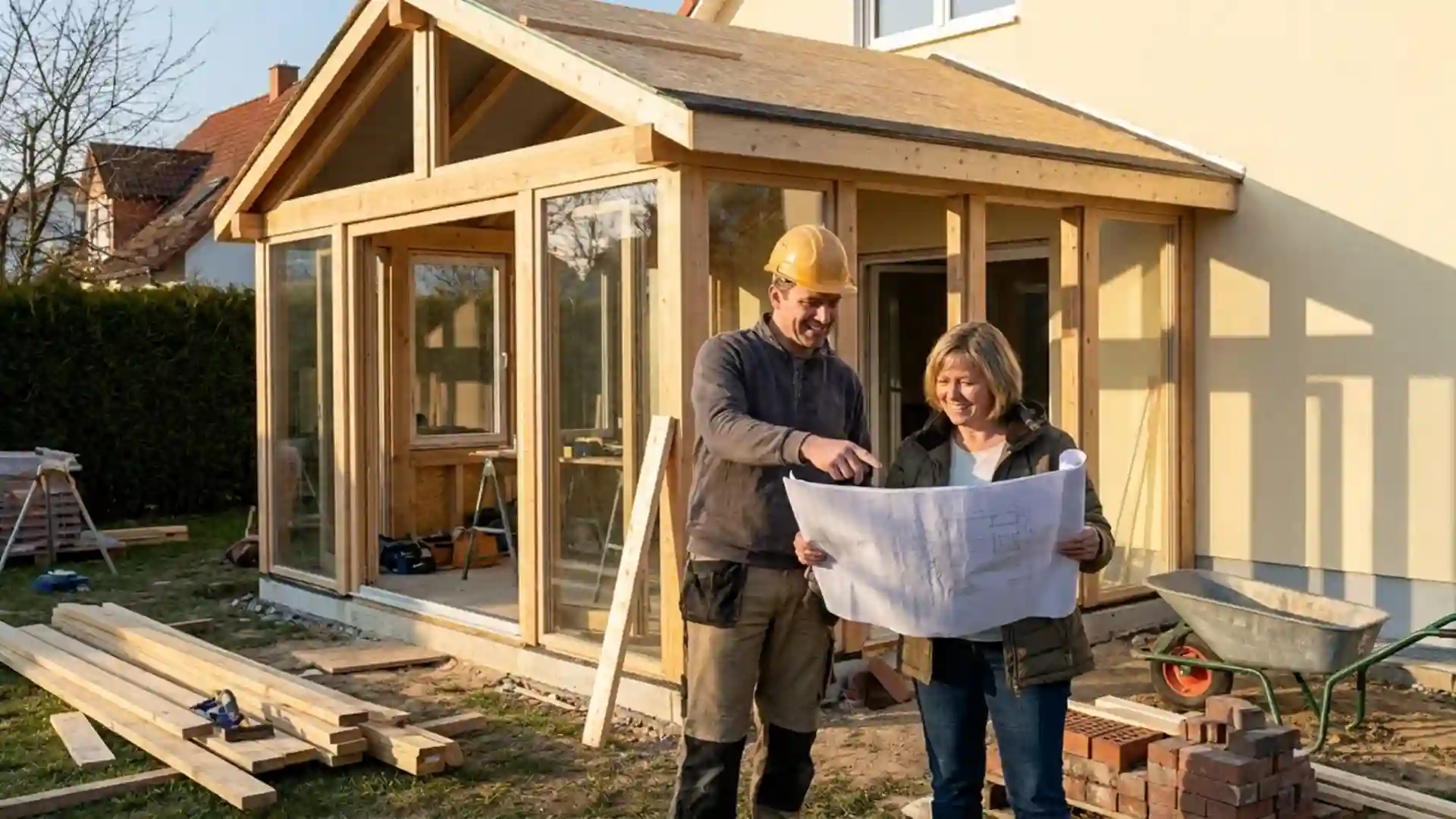
Asking the right questions upfront saves you from vague quotes and costly surprises down the line.
| Question | Why it Matters |
|---|---|
| Is this quote itemized by category? | Vague lump sums hide missing scope |
| Are permit fees included or separate? | Avoids surprise add-ons after signing |
| What’s your warranty on labor and materials? | Protects you if issues surface later |
| Who handles HOA approval paperwork? | Clarifies responsibility and timeline delays |
| What happens if hidden site issues appear? | Sets expectations on change-order pricing |
| Can I see photos of past similar projects? | Confirms real experience with this build type |
| Are you licensed and insured in my area? | Protects you from liability if accidents occur |
Is a Sunroom Worth the Cost?
For most homeowners, yes if they plan to stay long enough to enjoy it.
The value isn’t just financial; it’s the daily quality of life.
A well-built sunroom often becomes the most-used room, providing natural light and extra space year-round. Success depends on choosing the right type for your climate and budget and considering hidden costs.
Skimping on foundation or roofing to save upfront often costs more later.
Done right, a sunroom pays back in comfort long before resale.
End Note!
Your final price depends on foundation depth, glazing quality, roofline complexity, and a dozen smaller decisions made long before construction starts.
What matters more than chasing the cheapest quote is understanding exactly what you’re paying for at each stage.
People who research thoroughly, ask pointed questions, and budget for the unexpected end up with rooms they actually love, not ones they regret.
Get your quotes, compare them line by line, and build a space worth every dollar spent
Frequently Asked Questions (FAQ’s)
Does a Sunroom Addition Increase Home Insurance Rates?
Yes, typically. Adding square footage raises your home’s insured value, which can modestly increase your premium.
How Often Should a Sunroom Be Inspected for Maintenance?
Annually. Annual inspections of glass and seals are recommended, along with seasonal roof cleanings.
Do Wood-Framed Sunrooms Need More Maintenance than Vinyl?
Yes. Wood requires periodic sealing or repainting, while vinyl and aluminum need minimal upkeep over time.
Can Extreme Weather Affect Sunroom Insurance Coverage?
Yes. Insurers may require proof of weather-rated materials, especially in high-wind or heavy-snow regions.

Holding a Master’s in Architecture from the University of Texas at Austin, Emily Rodriguez has dedicated more than two decades to the art and science of building renovation. Starting her journey in historic preservation, she developed a profound respect for blending old with new in building design. Emily became a vital part of our team in 2019, renowned for her insightful and innovative renovation tips. She has been leading our DIY home improvement series since ever since, where she shares her wealth of knowledge in turning outdated spaces into modern havens. When not engaged in writing or consulting, Emily is a passionate advocate for heritage conservation and enjoys exploring vintage architecture, a hobby that complements her professional expertise.