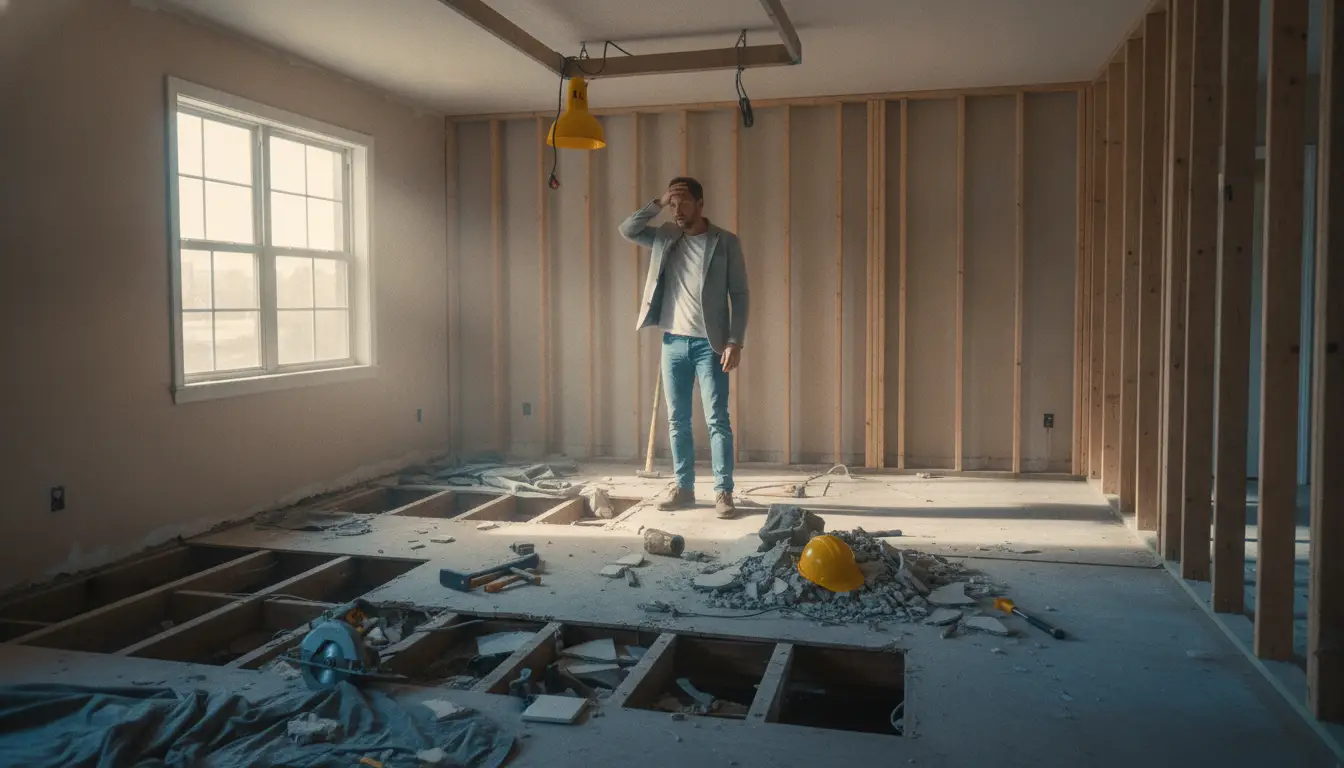

Every homeowner starts a renovation with a number in mind, and almost every one of them ends up spending more than that number. According to the 2026 U.S. Houzz & Home Study, three-quarters of renovating homeowners set an initial budget, yet 37% exceeded it during their 2025 projects.
That gap between the budget on paper and the invoice at closeout is a catastrophic error that can be avoided with an accurate quantity takeoff and cost model. Homeowners who invest in a proper estimate from dedicated Construction Estimating Companies get a trade-by-trade cost breakdown to measure every later bid against, while those who skip this step end up with costly surprises.
Do you want to avoid these budget overruns? In this guide, we will share some secrets that you have to follow to skip these financial surprises. Continue to read to learn these strategies.
The Real Reasons Renovation Budgets Blow Out
Cost overruns during a home renovation project rarely stem from one root cause. Typically, they occur for two main reasons. Understanding the two dominant drivers is what actually separates a controlled renovation from a stressful one. Here are the details of these two factors.
Scope Creep and Uncontrolled Variations
Scope creep is the incremental widening of a project’s ambitions once demolition reveals new possibilities, or once a homeowner sees the space differently. It is consistently cited as a leading driver of budget expansion. Every “while we’re at it” decision adds labor, materials, and often lead time, and few homeowners track the cumulative dollar impact of these micro-decisions until the final invoice arrives.
Hidden Conditions and Unforeseen Structural Issues
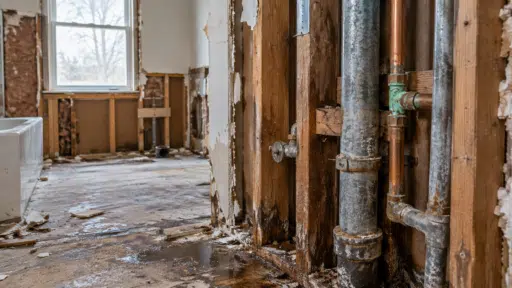
The second major driver is what the industry calls “hidden conditions”: problems that are physically impossible to quantify until walls, floors, or ceilings are opened. Homestery’s 2026 Home Improvement Cost Report, which aggregates industry and government data, found that hidden conditions drove cost overruns in 47% of the major projects it tracked, with the average overrun at 22% of the original budget. Generally, older housing stock is especially prone to this cause, but even newer construction can demand unforeseen maintenance issues.
In the table below, we have listed some common hidden renovation costs and their price ranges.
| Hidden Cost Category | Typical Trigger | Typical Cost Range (USD) |
|---|---|---|
| Structural repairs | Water intrusion, termite damage, deferred maintenance | $5,500 – $50,000+ |
| Electrical rewiring or panel upgrade | Knob-and-tube wiring, insufficient panel capacity | $2,000 – $15,000 |
| Mold remediation | Moisture trapped behind walls or under flooring | $1,500 – $10,000+ |
| Plumbing repiping | Corroded galvanized pipe, undetected leaks | $2,000 – $15,000 |
| Asbestos or lead abatement | Pre-1980s construction materials | $1,500 – $20,000+ |
| Permit and code-compliance upgrades | Unpermitted prior work, code-triggered updates | $500 – $10,000 |
9 Ways to Avoid Costly Overruns During Home Renovation Projects

Once you understand why budgets blow out, the fix becomes a practical checklist rather than guesswork. The following measures address nearly every documented driver of renovation cost overruns, from planning through to final walkthrough.
Set a Realistic Contingency Fund
In traditional construction practice, it was believed that setting aside 10% to 20% of your budget as a contingency fund was sufficient. But that rule of thumb is no longer applicable in the modern construction era. Now, a 25% to 30% contingency is the more defensible standard for major scopes because no one knows how frequently hidden conditions surface in structural, electrical, or plumbing work.
Here is a detailed breakdown of the contingency fund applicable to different scopes during home renovation projects.
| Renovation Type | Recommended Contingency | Rationale |
|---|---|---|
| Cosmetic refresh | 10% | Low exposure to concealed conditions |
| Kitchen or bath remodel, no structural change | 15% – 20% | Moderate plumbing and electrical exposure |
| Structural, electrical, or plumbing rework | 25% – 30% | High likelihood of hidden conditions |
| Whole-home or historic renovation | 30%+ | Compounding risk across multiple systems and code triggers |
Conduct a Pre-Renovation Inspection
It is important to contact an independent building consultant or inspector to assess the property before signing a construction contract. This is not a substitute for the standard pre-purchase inspection. It is an essential scope-specific evaluation focused on the areas you intend to renovate.
An inspector can help you identify asbestos-containing materials, outdated electrical systems, moisture intrusion, and prior unpermitted work. Catching these issues on paper before demolition converts an unknown risk into a budgeted line item.
Build a Line Item Budget Estimate
A single lump-sum number from a builder tells you very little about where your money is actually going. This is where independent Construction Estimating Services come in to add measurable value.
Professional estimators build a detailed cost breakdown to give homeowners a defensible baseline against which to compare contractor bids. Typically, this breakdown includes the cost for all tasks such as demolition, framing, MEP rough-in, finishes, and other general conditions.
When a builder’s quote is thousands of dollars below this baseline, that is a signal to ask pointed questions before signing, not after the wiring is already exposed.
Understand Permits and Code Compliance
Generally, homeowners assume their contractor has already accounted for permit fees. So, they don’t add these fees to their renovation project budget. It is a major reason for facing costly surprises during renovation projects.
Moreover, permit and zoning fees are often underestimated because they vary widely across jurisdictions. These permit fees typically scale with the project’s size and value. Additionally, structural, electrical, or plumbing work almost always requires a permit.
Skipping this step to save time or money is a false economy: unpermitted work can result in fines, mandatory remediation, and complications when the property is eventually sold.
Vet Contractors and Structure the Right Contract
The contract you sign determines who absorbs financial risk when the unexpected happens, so its structure matters as much as its price. A well-drafted agreement should clearly define the scope of work, explicitly list inclusions and exclusions, establish payment milestones tied to verifiable progress, and specify who carries insurance and warranty obligations.
Generally, there are three types of contracts we will mention below.
| Contract Type | How Pricing Works | Best Suited For | Risk Profile |
|---|---|---|---|
| Fixed-price (lump sum) | Single agreed total for a defined scope | Well-documented projects with minimal unknowns | The contractor absorbs overrun risk within defined scope; owner bears cost of variations |
| Cost-plus | Actual documented cost plus a fixed fee or percentage | Renovations with genuine unknowns requiring flexibility | The owner carries most cost risk; requires rigorous invoice tracking |
| Time and materials | Billed hourly plus material cost at cost | Small, exploratory, or open-ended scopes | Open-ended exposure; demands active owner oversight |
No matter which structure you choose, verify licensing and insurance directly with the issuing authority, and never proceed on a verbal agreement, regardless of how trusted the relationship feels.
Account for Material Price Volatility
Material costs are inherently cyclical, and renovation budgets built months before construction begins can be undermined by market movement alone. Lumber, copper, and specialty finishes have all seen double-digit price swings within a single calendar year in recent cycles.
To avoid this financially, ask your contractor or supplier about price-lock agreements for major material categories once your design is finalized, so your budget is not beholden to volatility between contract signing and material procurement.
Build Time Into Your Budget
Delays are actually a cost. Weather, material lead times, permitting backlogs, and labor availability can all extend a project’s timeline. And if you are living off-site during construction, every additional week carries a real dollar figure in rent or temporary accommodation. Build a schedule buffer into your planning the same way you build financial contingency into your budget, and ask your contractor for a realistic timeline before work begins.
Assemble the Right Professional Team Early
Accurate drawings prevent expensive misunderstandings on-site. Design intent that is not translated into precise, dimensioned, buildable documentation is one of the most common sources of change orders because framers, electricians, and plumbers are left to interpret ambiguity rather than execute a clear plan.
For this reason, many renovators bring on a Freelance CAD Drafter to produce construction documents that translate an architect’s or designer’s concept into field-ready specifications. The cost of this step is typically a fraction of what a single mid-project change order costs once framing is already underway.
Match Your Financing to the Project
How you fund a renovation affects your flexibility when surprises occur. Recent research by Clever Offers underscores just how common those surprises are: 85% of homeowners spent money on an unplanned repair in 2025, and nearly one in five (19%) reported having to pause a renovation project entirely because of unexpected costs.
Cash or dedicated savings avoids financing costs altogether, but if borrowing is necessary, carefully compare a home equity line of credit, a renovation-specific loan, and a cash-out refinance, and keep your contingency fund separate from your core budget.
Conclusion
Costly surprises during a home renovation are rarely random. They occur due to predictable reasons such as undefined scope, skipped inspections, thin contingencies, vague contracts, and budgets built on ballpark guesses.
Homeowners who invest early in accurate cost estimates and realistic financial buffers consistently report smoother, more predictable projects than those who rely on good faith alone.
To avoid costly surprises, you must follow strategies such as setting a realistic contingency budget, conducting an inspection, understanding code compliance, vetting contractors wisely, budgeting time, and matching your finances to the project’s actuarial conditions. The projects that finish on budget are not lucky; they are simply taking these proactive approaches.

Holding a Master’s in Architecture from the University of Texas at Austin, Emily Rodriguez has dedicated more than two decades to the art and science of building renovation. Starting her journey in historic preservation, she developed a profound respect for blending old with new in building design. Emily became a vital part of our team in 2019, renowned for her insightful and innovative renovation tips. She has been leading our DIY home improvement series since ever since, where she shares her wealth of knowledge in turning outdated spaces into modern havens. When not engaged in writing or consulting, Emily is a passionate advocate for heritage conservation and enjoys exploring vintage architecture, a hobby that complements her professional expertise.