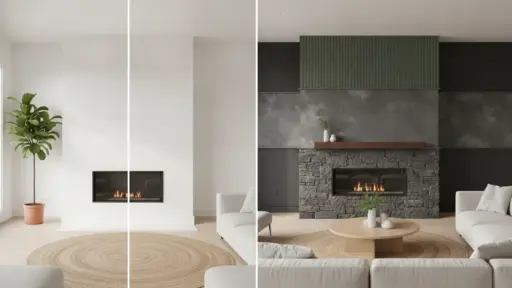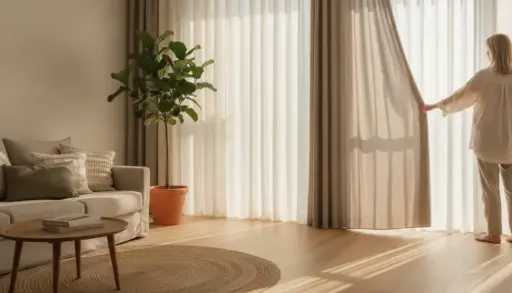
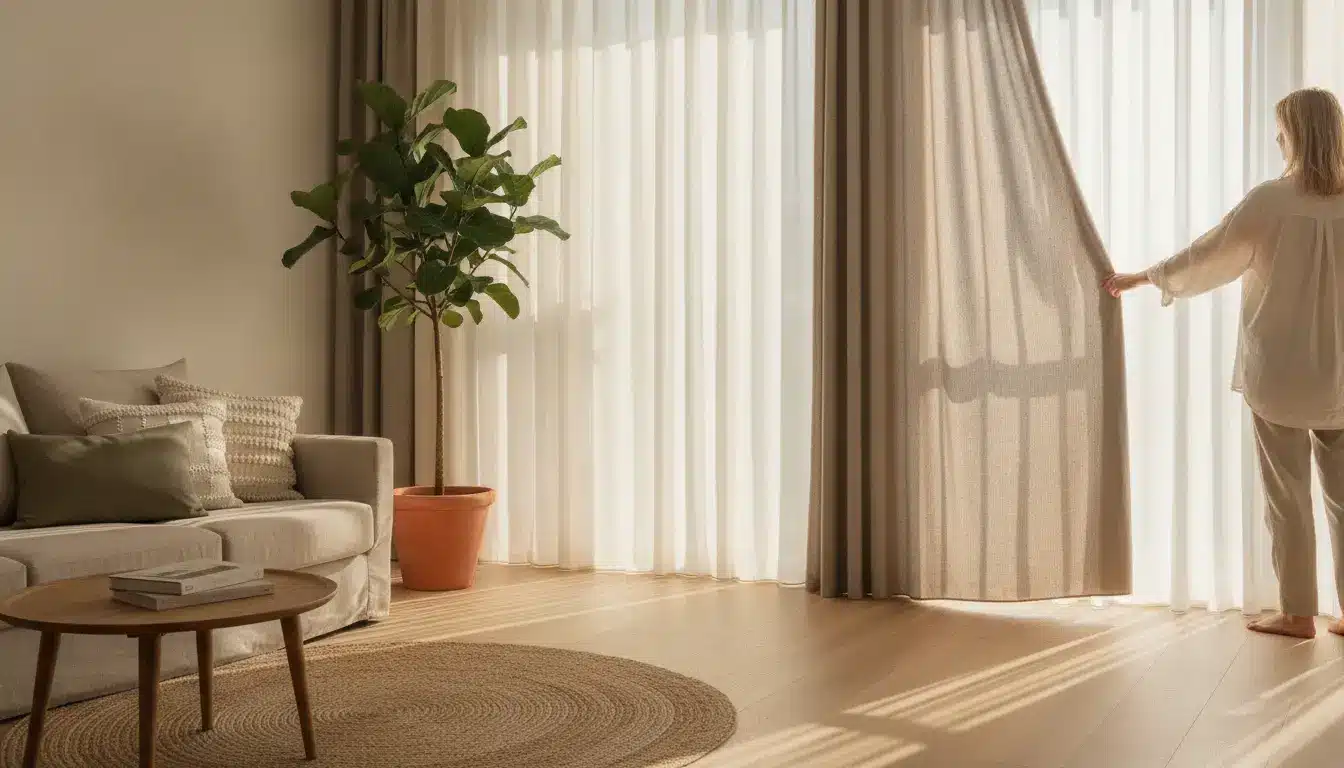

Picture two living rooms that look almost identical in photos — same sofa, same wall color, same curtains in a soft neutral tone. In one, the room is comfortable at 4pm, even with the sun pouring in. In the other, it’s unbearable until the blinds go down and the AC works overtime.
The difference was never the color. When people think about curtains in Dubai, the conversation usually starts with matching — and stops there, before getting to the part that actually determines whether the room works.
Start With How You Actually Sleep
There’s a particular kind of frustration that comes from a bedroom that looks beautiful but won’t go dark. Maybe it’s a baby whose 2pm nap depends on the room staying dim, no matter how bright it is outside. Maybe it’s someone who works night shifts and needs to sleep through a full afternoon of daylight. In both cases, the color of the curtain becomes almost irrelevant next to the question of whether it actually blocks light. Blackout curtains in this context aren’t an upgrade — they’re what makes the room function the way it needs to.
On the other hand, if you’re someone who wakes up with the light and prefers a soft, gradual transition into the day, a heavier blackout fabric might feel like overkill — and a lighter curtain, or a sheer layered with something more substantial, gives you more control over how the morning actually feels.
Think About Who Can See In, Not Just What You Can See Out
Privacy needs vary enormously depending on where you live, and they’re easy to underestimate until you’re sitting in your living room in the evening with the lights on, fully visible to the street or a neighboring villa. Ground-floor rooms, windows facing other homes, and spaces that open onto shared courtyards all benefit from a layered approach — a sheer for daytime privacy that still lets light through, paired with a heavier curtain for evenings.
If you’re higher up, or your windows don’t face directly into anyone else’s space, privacy stops being the deciding factor — and that opens things up considerably. The question shifts from how much coverage do I need to how do I want this room to feel. That’s where lighter fabrics, sheers, and curtains chosen mainly for how they move and catch light start to make more sense than ones chosen primarily to block a view.
Match the Curtain to What the Room Is Actually For
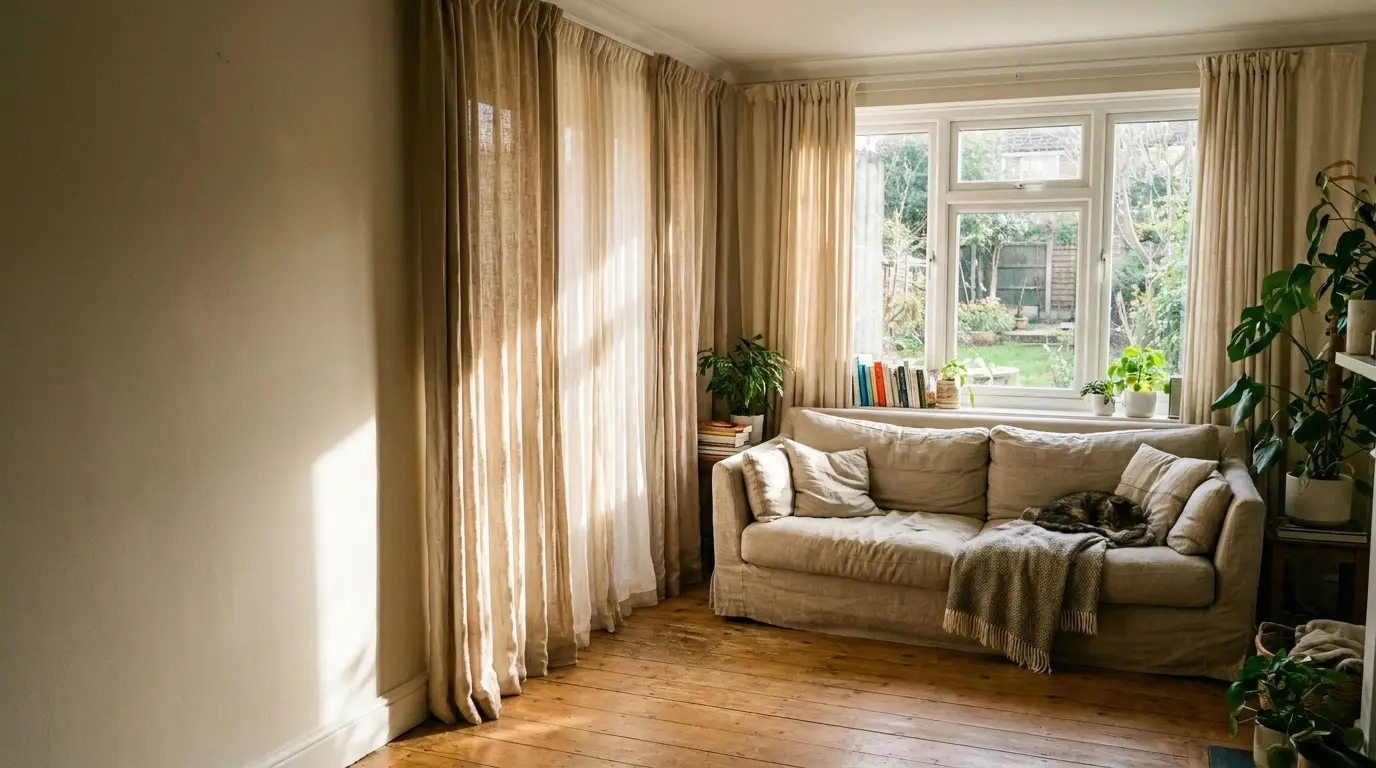
A formal living room that’s used mainly for hosting guests has different needs than a family room where everyday life happens — homework, movie nights, kids on the floor with toys. The formal space can accommodate a more elevated, structured curtain style, since it isn’t subject to daily wear. The family room benefits more from fabrics that are durable, easy to clean, and forgiving of constant use.
Home offices are their own category entirely, and increasingly a room that didn’t used to need this kind of thought. If you’re on video calls regularly, harsh backlighting from an uncovered window can be a real problem — and a curtain that lets you soften or block that light on demand makes a noticeable difference to how you come across on screen, not just how the room looks.
The best-looking curtains in the world don’t help much if they’re fighting against how you actually use the room every day.
Factor In the Sun, Not Just the Season
Across the region, the direction a room faces has a real impact on how much heat and light it receives, and when. A room that gets strong afternoon sun benefits from a curtain that helps manage heat as well as light, which can make a noticeable difference to how comfortable the room feels and how hard the air conditioning has to work to keep up. A room that gets gentler, more indirect light has more flexibility, and the decision can lean further toward style and texture without worrying as much about thermal performance.
Think About Where You Are in Life Right Now
If you’ve recently moved in together, gotten married, or are refurbishing a space for the first time, it’s worth being honest about where you are right now versus where you might be in a few years. Curtains that work beautifully in a quiet, adult household might need to be more forgiving once there are kids, pets, or more day-to-day activity in the home. Choosing fabrics that are easy to clean and durable enough to handle some wear doesn’t mean compromising on how the room looks — it just means the choice is built around the life that’s actually going to happen in that space, not just the one happening on moving-in day — much like creating a home environment that supports your everyday wellness routines.
Let the Lifestyle Decisions Come First
None of this means color and style don’t matter — they absolutely do, and there’s no shortage of beautiful options once the practical questions are answered. But starting with how a room is used, who’s in it, what the light does throughout the day, and what stage of life the household is in gives you a much shorter, more useful list to choose from. The curtains that end up looking effortless in a finished room are almost always the ones chosen with the room’s actual use in mind from the very start.

Ava Taylor, holding a Bachelor’s degree in Interior Design from the Pratt Institute, has made her mark in creating engaging and functional living spaces for over 14 years. She began her career with a New York-based design studio, where she gained a reputation for her innovative and user-centric designs. Ava joined our team in 2019, bringing a blend of artistic flair and practicality to our home improvement section. Since the she has been the lead contributor to our room transformation series, inspiring readers with her unique approach to maximizing space utility and aesthetic appeal. Beyond her professional work, Ava is a passionate collector of vintage furniture, a hobby that enriches her design perspective.