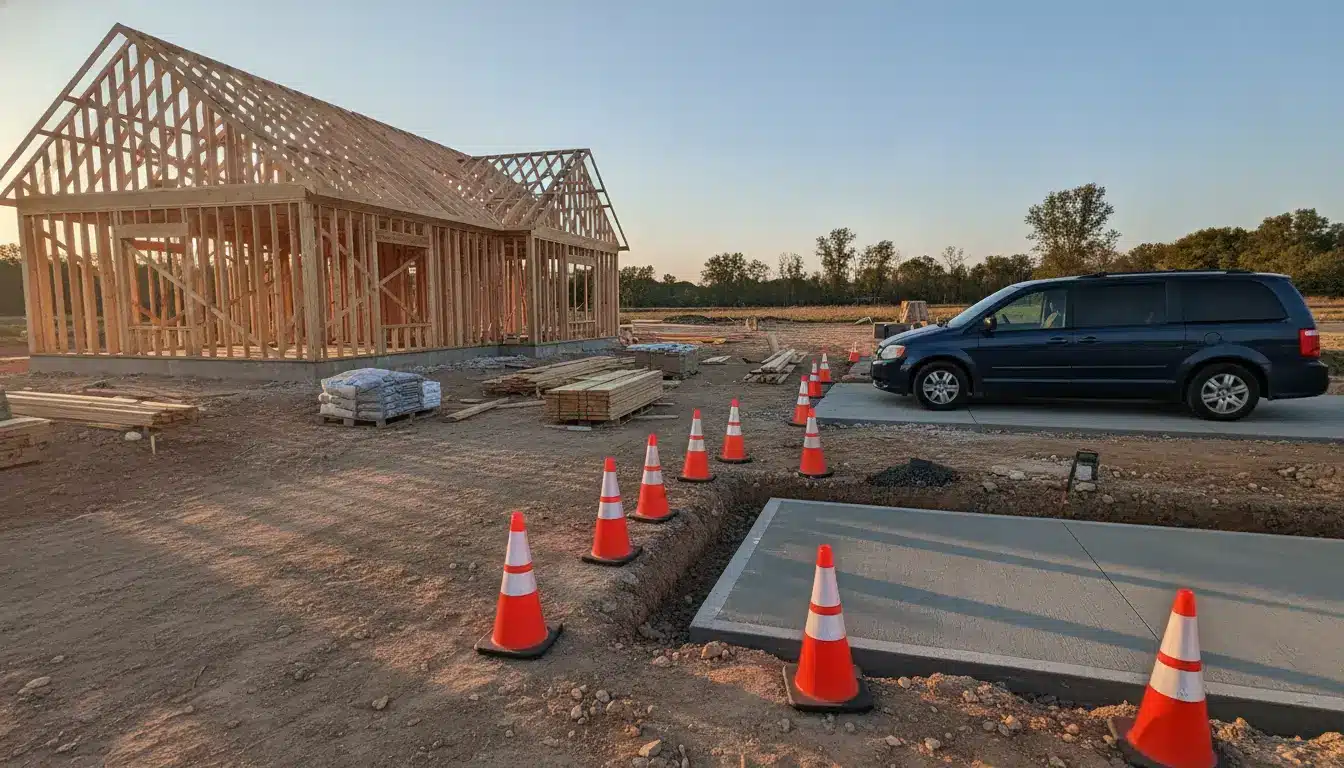

10 Common Pitfalls to Avoid When Building a Custom Home, Including Overlooked Jobsite Safety Basics
Building a custom home comes with a long list of decisions, floor plans, finishes, budgets, timelines, and most homeowners spend the bulk of their energy on the choices that show up in the finished product.
What gets overlooked far more often is the messier, less glamorous reality of managing an active construction site on residential property, especially when a family is still living nearby or a driveway is doing double duty as both a work zone and a daily-use entrance.
Why Jobsite Safety Gets Overlooked in Custom Builds
Most custom home projects involve a general contractor coordinating subcontractors, deliveries, and equipment, but that coordination doesn’t automatically extend to protecting the people who aren’t part of the build itself.
Mail carriers, neighbors walking dogs, kids on bikes, and even the homeowners themselves can end up navigating an active work area without realizing how quickly conditions can change from one day to the next.
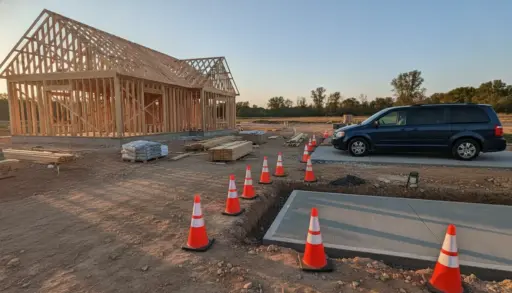
This is where a lot of custom home projects run into avoidable trouble. A driveway that’s clear on Monday might have a delivery truck backing in on Tuesday, exposed trenching on Wednesday, and a concrete pour drying on Thursday. Without clear, consistent markers signaling where it’s safe to walk or drive, that unpredictability becomes a genuine liability.
Common Pitfalls Beyond the Obvious Budget and Timeline Issues
Budget overruns and timeline delays tend to dominate the conversation around custom home pitfalls, and for good reason, they’re common and costly. But a handful of quieter mistakes can just as easily derail a project or create real risk on the property.
One recurring issue is treating the driveway and yard as a single, undifferentiated space throughout construction, rather than actively managing which areas are safe for regular use and which are active work zones on any given day.
Another is assuming subcontractors will automatically flag hazards to anyone outside their crew, when in practice, most trades are focused on their own scope of work and aren’t thinking about a homeowner’s toddler wandering near an open trench.
A third pitfall worth naming directly: underestimating how much foot and vehicle traffic still moves through a property during construction. Even a build that’s fully occupied by the homeowners still sees regular visits from inspectors, delivery drivers, neighbors, and the family’s own daily comings and goings.
Securing the Jobsite Without Overcomplicating It
The good news is that managing this risk doesn’t require anything elaborate. Clear, visible boundaries do most of the work. Homeowners managing part of the process themselves, or simply wanting an extra layer of protection beyond what a contractor provides, often start by looking at traffic cones for sale to mark off active work zones, wet concrete, equipment staging areas, or sections of the driveway that shouldn’t be used on a given day.
Cones are effective specifically because they’re immediately recognizable. Nobody has to read a sign or ask a question, the visual signal does the work instantly, for a delivery driver, a curious neighbor, or a family member walking out to grab the mail.
Combined with basic communication (a quick text to family members about which areas are off-limits that day, or a sign at the end of the driveway during major work), this simple step closes a gap that a lot of custom builds leave open the entire duration of the project.
A few areas worth marking consistently throughout a build:
- Fresh concrete or newly poured surfaces that need curing time
- Trenching, excavation, or utility work left open between work sessions
- Equipment staging zones where machinery or materials sit temporarily
Building the Habit Into the Project From Day One
The projects that handle this well tend to build jobsite safety into their routine from the very first week of construction, rather than reacting after a near-miss.
That might mean a quick daily check-in with the general contractor about what areas need to be marked or restricted, or simply keeping a small set of cones on hand so boundaries can be adjusted as the project moves through different phases.
This habit matters more in a custom build than people expect, precisely because these projects often run longer and involve more phases than a standard renovation.
A foundation phase looks completely different from a framing phase, which looks completely different from final grading and landscaping. Each phase brings its own hazards, and a static, one-time safety plan rarely holds up across months of changing conditions.
The Bigger Picture: Protecting the Investment, Not Just the People
Jobsite safety isn’t only about preventing injury, though that’s obviously the priority. It’s also about protecting the investment itself. Unsecured work zones lead to accidental damage: a car backing over freshly poured concrete, a delivery truck driving through an area that needed to stay undisturbed, materials getting knocked over or contaminated because nobody realized a space was off-limits.
Custom home builds already require homeowners to make dozens of decisions they’ve never had to make before. Adding a simple, low-cost habit of marking off active work areas is one of the easier pitfalls to solve, and one of the most overlooked. It doesn’t require expertise or a big budget, just consistency and a willingness to treat the jobsite as seriously as the finishes going into it.

Holding a Master’s in Construction Management from Purdue University, William Ray has dedicated more than two decades to studying and applying construction principles. His professional journey includes a tenure with a prominent construction firm, where he specialized in project management and building technologies. William brought his knowledge to our team, providing in-depth insights into practical construction techniques. As the leader of our beginner’s guide to building since 2019, he has a knack for breaking down intricate processes into easily digestible content. When not involved in writing or onsite consultations, William enjoys woodworking and volunteering in community building projects, which aligns with his passion for hands-on construction and community service.