


A bedroom ceiling fan does more than circulate air. Positioned overhead, it becomes part of the room’s color palette, lighting plan, and overall sense of balance. The right finish can disappear into a pale ceiling, echo a walnut bed frame, or repeat the black details already present in curtain rods and bedside lamps.
There is no single best color for every bedroom. White, matte black, wood tones, satin nickel, and gold each create a different relationship with the walls, furniture, and ceiling. Start with the colors you already have, then consider whether the fan should blend quietly into the background or become a deliberate design feature.
What Should You Match Your Bedroom Ceiling Fan With?
A well-chosen fan usually relates to at least one visible feature in the bedroom. That feature might be the ceiling, the wall color, a wooden bed frame, the flooring, or nearby metal hardware. The goal is visual connection rather than an exact match between every surface.
For a quiet, low-profile appearance, match a white fan to a white or off-white ceiling. If your bedroom includes walnut nightstands or a wood headboard, wood-look blades can repeat that warmth overhead. A black motor housing can connect with curtain rods, window frames, or reading lights even when the blades have a different finish.
Think of the housing and blades separately. Black-and-walnut, for example, can link dark metal details with wooden furniture at the same time. This layered approach often looks more natural than trying to match the fan to a wall color precisely.
Should a Ceiling Fan Match the Ceiling or the Walls?
Matching the ceiling makes a fan less noticeable. This approach works especially well with pale ceilings, compact bedrooms, and interiors where the bed, artwork, or accent wall should remain the primary focal point. A white fan against a white ceiling keeps the overhead area calm without demanding attention.
Matching the walls is less important because the fan sits against the ceiling, not directly against the painted surface. Instead, consider whether the finish works with the wall color’s undertone and the other materials in the room. A black fan can look balanced above beige walls when the bedroom already contains black picture frames or a dark headboard.
Contrast also has its place. A dark fixture against a light ceiling can feel intentional when its color appears elsewhere. Without that repetition, however, the same fan may look like an isolated object floating above an otherwise soft interior.
| Bedroom palette | Suggested finish | Why it works |
|---|---|---|
| White ceiling; pale walls | White | Maintains a light, unobtrusive ceiling. |
| Tan walls; walnut furniture | Black and walnut | Repeats warm wood and darker accents. |
| Gray walls; silver hardware | Satin nickel | Connects with cool-toned metal details. |
| Sage walls; natural wood | Walnut or white | Supports an earthy, relaxed palette. |
| Charcoal walls; black accents | Matte black | Creates a cohesive, moody appearance. |
| Blue-green walls; warm lamps | White or gold-accented | Adds softness or a controlled contrast. |
These pairings are useful starting points, not strict decorating rules. Natural daylight, paint undertones, and the amount of visible wood or metal can all change the final effect.
What Color Ceiling Fan Works Best With Gray Bedroom Walls?
Gray can be warm, cool, soft, or dramatic, so the right fan finish depends on more than the paint label. Look at the ceiling color, the hardware, and whether the room needs additional warmth.
 ”
”
White for a Light, Airy Bedroom
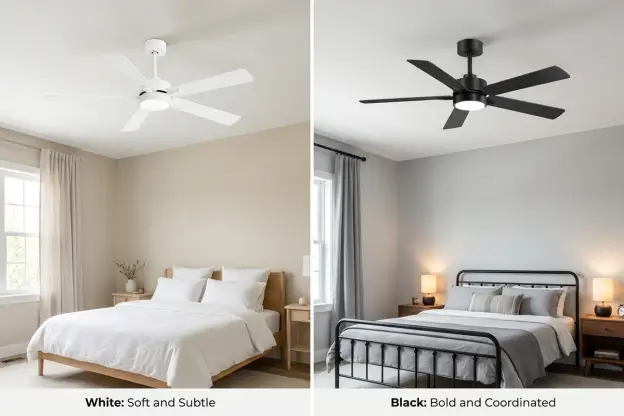
A white fan with light gray walls and a white ceiling creates a gentle transition overhead. Add white bedding, pale curtains, and simple furniture for a room that feels open rather than busy. This combination is particularly useful when the ceiling is low or the bedroom has limited visual space.
Matte Black for Structure and Contrast
A black fan can give gray walls a stronger architectural edge. It works best when the bedroom already includes a black bed frame, dark window trim, black curtain rods, or framed artwork. Against a white ceiling, the fan becomes a deliberate focal point instead of disappearing.
Satin Nickel for Cool-Toned Hardware
Satin nickel suits soft gray rooms with silver-toned door handles, reading lamps, or other understated metal finishes. The effect is coordinated without being overly dark, making it a practical choice for contemporary bedrooms.
Walnut for a Warmer Finish
Gray rooms can feel cold when every surface sits in the same cool range. Walnut or another wood-look finish introduces warmth and relates naturally to a wooden headboard, dresser, or flooring. A black-and-walnut design can bridge warm furniture and darker hardware in the same space.
How to Match a Ceiling Fan With Beige and Tan Bedroom Walls
Beige and tan are forgiving because they work with both pale finishes and richer wood tones. The difference lies in whether the room should feel soft and blended or slightly more defined.
For a calm neutral bedroom, combine light tan walls with a white ceiling, cream bedding, and a white fan. The result keeps the focus on texture: linen curtains, an upholstered headboard, a woven rug, or light wood furniture.
If the room already contains walnut nightstands, an oak bed frame, or warm wood flooring, a wood-finish fan creates a stronger connection. Black-and-walnut finishes add definition while preserving the warmth that makes tan and beige bedrooms inviting.
Matte black can also work with beige walls, especially when dark curtain rods, picture frames, or a metal bed frame provide supporting accents. The contrast should feel repeated and intentional rather than introduced by the ceiling fan alone.
What Ceiling Fan Finish Looks Best With Sage Green or Blue-Green Walls?
Sage green often pairs comfortably with natural wood because both belong to a softer, earthier palette. Light walnut blades can brighten the room, while darker walnut brings a more grounded look. Add cream bedding and wooden bedside tables to maintain a relaxed, balanced atmosphere.
For a more modern interpretation, introduce a matte black housing that echoes black sconces, curtain rods, or a bed frame. The contrast gives sage walls structure without requiring the entire fan to be black.
Blue-green bedrooms tend to work well with white, satin nickel, or restrained gold accents. White creates a breezy, coastal feeling; satin nickel relates to cooler hardware; and gold can add warmth when it connects with bedside lamps, mirror frames, or other existing details.
Paint samples should be viewed in daylight and again under evening lighting. Two colors that appear similar in a store can behave differently once they sit next to the room’s furniture, window exposure, and ceiling fixture.
Black or White Ceiling Fan in a Bedroom: Which Is Better?
White is often the simpler choice when the ceiling is pale and the room should feel quiet. It works with light walls, white trim, coastal interiors, and compact bedrooms where a visually heavy fixture might dominate the space.
Black creates a stronger presence. In a bedroom with black-framed artwork, dark bedside lamps, or a black bed, that presence can help tie the room together. Against light paint, it introduces contrast; in a darker bedroom, it can reinforce a coordinated, layered look.
Neither finish is automatically more stylish. A white fan can look considered when the room depends on soft neutrals, while a black fan can feel balanced when darker details recur throughout the space. If both options seem too extreme, walnut or a mixed black-and-wood finish often provides a comfortable middle ground.
How Ceiling Fan Lighting Changes the Way Bedroom Paint Looks
A fan’s finish determines how the fixture appears, but its light color changes how the rest of the room is perceived. The paint does not actually change; its visual character shifts under different lighting conditions.
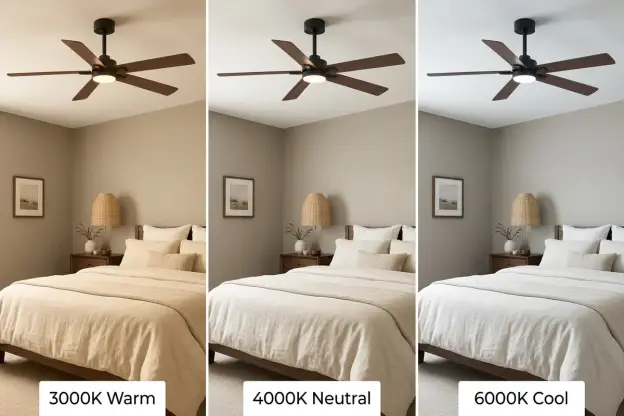
Warm light around 3000K can make beige, tan, cream, and walnut tones feel softer in the evening. Neutral light around 4000K often provides a clearer view of gray, greige, and sage finishes. Cooler settings around 6000K may feel brighter, although they can be less comfortable for a bedroom intended mainly for relaxation.
When one overhead fixture needs to support both comfort and practical illumination, ceiling fans with lights can combine airflow and lighting without adding another visual element to the ceiling.
Layer the ceiling light with bedside lamps when possible. That gives the room a practical overhead option while preserving softer light near the bed. Available light settings vary by model, so check the individual product details before assuming a fan includes adjustable color temperature.
Match the Fan Finish to Bedroom Furniture and Hardware
The easiest way to make a ceiling fan feel connected is to identify two or three finishes already repeated in the room. A walnut bed frame, black curtain rod, and cream bedding, for example, provide a clearer guide than the wall color alone.
Wood-look blades can echo the floor, headboard, or nightstands without needing to match the stain perfectly. A slightly lighter or darker wood tone can still work when it shares the same warm or cool character as the existing furniture.
The motor housing can follow a different cue. Satin nickel relates to silver-toned handles; black connects with window frames or reading lamps; and gold works best when another warm metal detail is visible. Mixing finishes is fine as long as they create a recognizable relationship rather than competing for attention.
Ceiling Fan Finishes for Different Bedroom Styles
Modern and Minimalist
A white, matte black, or satin nickel fan with a simple silhouette suits bedrooms with clean lines and limited ornament. Keep the surrounding palette restrained and let the finish connect with the bed frame, hardware, or ceiling.
Modern Farmhouse
Tan walls, cream bedding, rustic wood furniture, and a black-and-walnut fan create a natural farmhouse combination. Wood blades add texture, while darker metal details keep the room from feeling overly delicate.
Coastal and Light-Filled
White fans and lighter wood finishes work well with blue-green walls, pale textiles, and breezy curtains. A low-contrast ceiling maintains the relaxed character typically associated with coastal-inspired bedrooms.
Dark and Moody
Charcoal blue, deep green, and darker gray walls can support matte black, dark walnut, or carefully chosen gold accents. Repeat the finish through hardware or lighting so the fan feels like part of the overall design.
Organic Modern
Sage green paint, warm neutrals, simple shapes, and natural wood tones suit an organic modern bedroom. A wood-finish fan introduces practical airflow while reinforcing the room’s quieter connection to natural materials.
Choose a Fan Size That Fits the Bedroom and Its Color Scheme
Color cannot compensate for a fan that overwhelms the room. Consider the bedroom’s floor area, furniture placement, ceiling height, and the manufacturer’s installation guidance before deciding on a finish.
A 42-inch fan may suit a compact or guest bedroom when the blades have adequate clearance from walls, furniture, and other fixtures. A 52-inch model may look more balanced in a wider primary bedroom, provided the ceiling height and installation requirements support it.
A 42- or 52-inch ceiling fan with multiple finish options shows how one overall design can offer black, white, walnut, satin nickel, or gold finishes while accommodating different bedroom layouts.
This model also lists integrated LED settings of 3000K, 4000K, and 6000K, allowing the lighting to be considered alongside the room’s paint and furniture. Check the actual finish-and-size combination, installed dimensions, and current availability before selecting a particular variant.
Five Bedroom Color Combinations That Work
Light Tan Walls, White Ceiling, and Black-and-Walnut Fan
Pair warm tan walls with a walnut bed frame, cream bedding, and black curtain rods. A black-and-walnut fan brings the wood and metal details together while adding just enough contrast overhead.
Soft Gray Walls, White Trim, and Satin Nickel Fan
Combine pale gray paint with white trim, silver-toned door handles, and light-colored bedding. Satin nickel keeps the room cohesive without creating the sharper contrast of a black fixture.
Sage Green Walls, Cream Bedding, and Wood-Finish Fan
Use sage green as the backdrop for natural wood nightstands and soft neutral textiles. Walnut blades reinforce the room’s earthy character and work well in farmhouse or organic modern interiors.
Charcoal Blue Walls, Black Hardware, and Matte Black Fan
Repeat a dark finish through the bed frame, window details, or bedside lighting. A matte black fan then feels connected to the room rather than appearing as an isolated dark shape against the ceiling.
Beige Walls, Pale Textiles, and White Fan
For a compact bedroom, combine beige walls with a white ceiling, light curtains, and simple bedding. A white fan maintains a quieter ceiling and allows the rest of the room’s materials to provide the visual interest.
Common Ceiling Fan Color Mistakes to Avoid
Choosing a finish from a product photo alone can be misleading. Review it against the actual ceiling color, wall undertones, wood furniture, and metal details in your bedroom before deciding whether it blends or contrasts.
Another common mistake is adding a black fan to a room with no other dark elements. Black can look elegant, but it generally feels more intentional when repeated through artwork, curtain hardware, a bed frame, or lighting.
The opposite problem is forcing every finish to match exactly. Coordinated colors usually look more natural than identical ones. Wood tones can vary, and metal finishes can differ, as long as the room still has a clear visual relationship.
Do not overlook lighting or scale. Compare paint colors in daylight and under evening light, then make sure the chosen blade span suits the room. If you are considering painting or modifying an existing fan, consult the manufacturer’s instructions first because changes may affect the finish, balance, operation, or warranty.
Frequently Asked Questions
What Should You Match Your Ceiling Fan With?
Match your ceiling fan with a visible feature already present in the bedroom, such as the ceiling, bed frame, wood furniture, door handles, curtain rods, or bedside lamps. The finish does not need to match everything; it simply needs a clear visual connection to the room.
What Is the Best Color for a Bedroom Ceiling Fan?
The best color depends on your existing decor. White works well with pale ceilings, matte black complements darker accents, walnut adds warmth to wood-furnished rooms, and satin nickel coordinates with cool gray walls and silver-toned hardware.
Should a Ceiling Fan Be the Same Color as the Ceiling?
A ceiling fan does not need to match the ceiling. Matching finishes create a quieter, less noticeable look, while a contrasting fan can become a focal point. Choose the approach that best suits the room’s size, furniture, and existing accents.
What Color Ceiling Fan Goes With Gray Walls?
White, matte black, satin nickel, and walnut can all work with gray walls. White suits pale ceilings, black repeats darker details, satin nickel complements silver hardware, and walnut introduces warmth when the bedroom contains wood furniture.
Is a Black or White Ceiling Fan Better for a Bedroom?
White is often preferable when you want the fan to blend into a light ceiling. Black works well when the bedroom includes a dark bed frame, black curtain rods, or similar accents. Neither color is universally better; the surrounding decor determines the fit.
What Ceiling Fan Color Works With Beige or Tan Walls?
White, natural wood, black-and-walnut, and matte black can complement beige or tan walls. White keeps the room soft, wood adds warmth, and black introduces contrast when it connects with other dark furniture or hardware.
What Ceiling Fan Finish Goes With Sage Green Walls?
Walnut, natural wood, white, matte black, and restrained gold accents can all suit sage green walls. Choose wood for an earthy look, white for a lighter appearance, or black when the room already includes dark hardware or furniture.
Do All Ceiling Fans Need to Match Throughout a House?
No. Ceiling fans can vary between rooms to suit different paint colors, furniture, ceiling heights, and lighting needs. Maintaining a related overall design style is usually more useful than requiring every finish to be identical.
Are Ceiling Fans Still in Style in Bedrooms?
A ceiling fan can fit comfortably into a current bedroom design when its finish, blade profile, size, and lighting relate to the surrounding decor. Simple silhouettes and coordinated materials generally feel more intentional than selecting a fixture without considering the room.
Does Ceiling Fan Light Color Affect How Bedroom Paint Looks?
Yes. Warm, neutral, and cool lighting can change how paint colors appear without changing the paint itself. Warm light often softens beige and wood tones, while neutral or cooler light may make gray, green, and blue shades appear different.
Choose a Ceiling Fan That Connects With the Whole Room
The right bedroom ceiling fan is not necessarily the one that matches the ceiling or the walls exactly. It is the one that makes sense beside the room’s furniture, hardware, lighting, and overall color palette.
Comparing the finish, size, and lighting options available from Breezary can help narrow the choice before checking the measurements and installation requirements of an individual model.
A white fan may quietly blend into the ceiling, a black fan may reinforce darker accents, and walnut blades may add warmth to tan, gray, or sage-green walls. When the finish, proportions, and light work together, the fixture feels like a natural part of the bedroom rather than an afterthought.

Holding a Master’s in Architecture from the University of Texas at Austin, Emily Rodriguez has dedicated more than two decades to the art and science of building renovation. Starting her journey in historic preservation, she developed a profound respect for blending old with new in building design. Emily became a vital part of our team in 2019, renowned for her insightful and innovative renovation tips. She has been leading our DIY home improvement series since ever since, where she shares her wealth of knowledge in turning outdated spaces into modern havens. When not engaged in writing or consulting, Emily is a passionate advocate for heritage conservation and enjoys exploring vintage architecture, a hobby that complements her professional expertise.