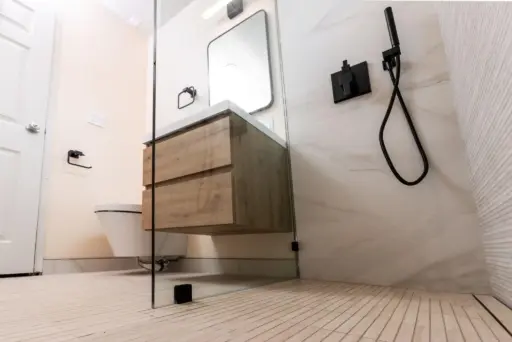
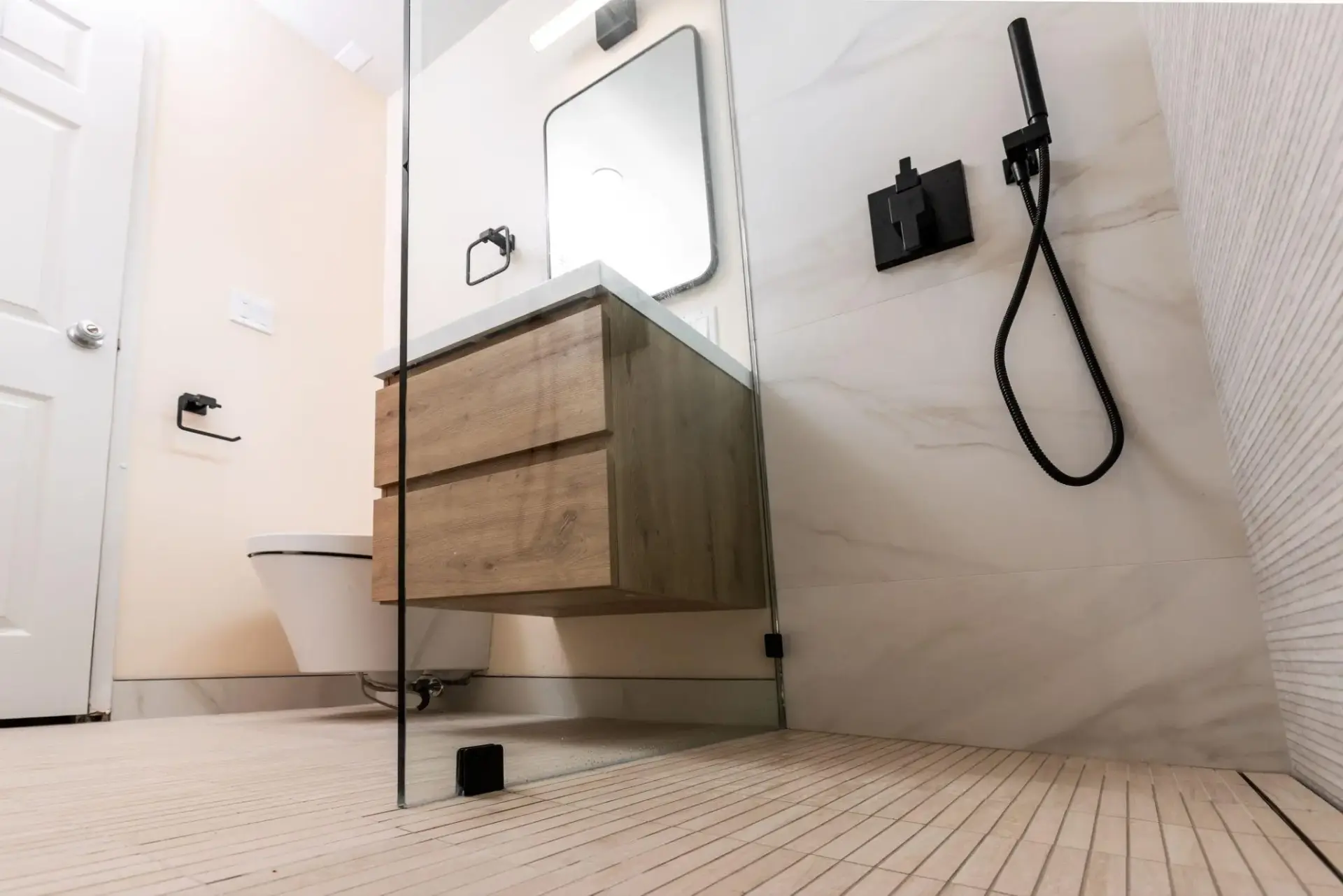
A bathroom renovation in 2026 usually runs between $10,000 and $30,000, with most homeowners landing near the middle for a full mid-range remodel. Labour is the largest slice, often eating up half the budget, followed by plumbing, fixtures, and finishes. Small refreshes can start around $5,000, while primary suites climb past $60,000. What you spend depends less on taste and more on what sits behind your walls.
Introduction
Picture yourself standing in your bathroom with a paint chip in one hand and a tile sample in the other, feeling like you’ve got the budget mostly figured out. Then the contractor opens up the wall behind the vanity, and suddenly the conversation shifts from finishes to rotted subfloor and aging pipes. That moment catches almost everyone off guard.
Most people plan their budget around the parts they can see. Yet the pretty stuff, the tile and the taps, rarely breaks the bank. The money tends to disappear into the work hidden from view. If you’re weighing your options and want a sense of how the pros scope a project, browsing examples of professional Reborn Renovations bathroom renovations can help set realistic expectations before you commit.
Knowing where each dollar lands is the difference between a project that stays on track and one that balloons past what you planned. Let’s follow the money.
What Your Bathroom Renovation Cost Really Pays For
Most homeowners assume the tile and the vanity will swallow the budget. In practice, the biggest costs hide in places you’ll never see once the job is done. Understanding this split upfront helps you plan smarter and spot a fair quote from a padded one.
Here’s roughly how a typical mid-range project divides up:
| Category | Share of Budget | What It Covers |
|---|---|---|
| Labour | 45–55% | Demolition, installation, skilled trades |
| Materials & fixtures | 30–40% | Tile, vanity, toilet, tub, taps, lighting |
| Permits & extras | 10–15% | Inspections, disposal, project management |
Why Labour Eats the Biggest Slice
Skilled trades cost money because the work demands precision. A plumber, an electrician, and a tile setter each bring years of training, and their hours add up fast. Rushing this part or hiring cheap almost always leads to callbacks and leaks down the road.
- Plumbers and electricians often bill by the hour, and rates climb in bigger cities.
- Waterproofing and tiling take patience, which means more billable time.
- Moving fixtures from their original spots multiplies the labour needed.
That last point matters more than people realize. The average cost to remodel a bathroom drops sharply when the toilet, sink, and shower stay roughly where they already sit.
The Hidden Repairs That Blow Past Your Budget
Once demolition starts, surprises come out of hiding. Old homes in particular tend to reveal water damage, outdated wiring, or pipes well past their prime. These repairs aren’t optional, and they’re the number one reason a project runs over.
A realistic bathroom renovation cost breakdown always leaves room for the unexpected. Setting aside 10 to 15 percent as a cushion keeps a nasty discovery from derailing the whole plan.
Fixtures, Finishes, and the Layout Trap
The visible pieces give you the most control over spending. A stock vanity and a mid-priced faucet look sharp without draining the account, while custom cabinetry and imported stone push numbers quickly. Size shapes the total too: a small bathroom renovation cost stays lower simply because there’s less square footage to cover and fewer materials to buy.
Where you can’t easily trim is the plumbing rough-in, which brings us to the single fixture that trips up more budgets than any other.
How Much a Shower Replacement Cost Can Swing Your Total
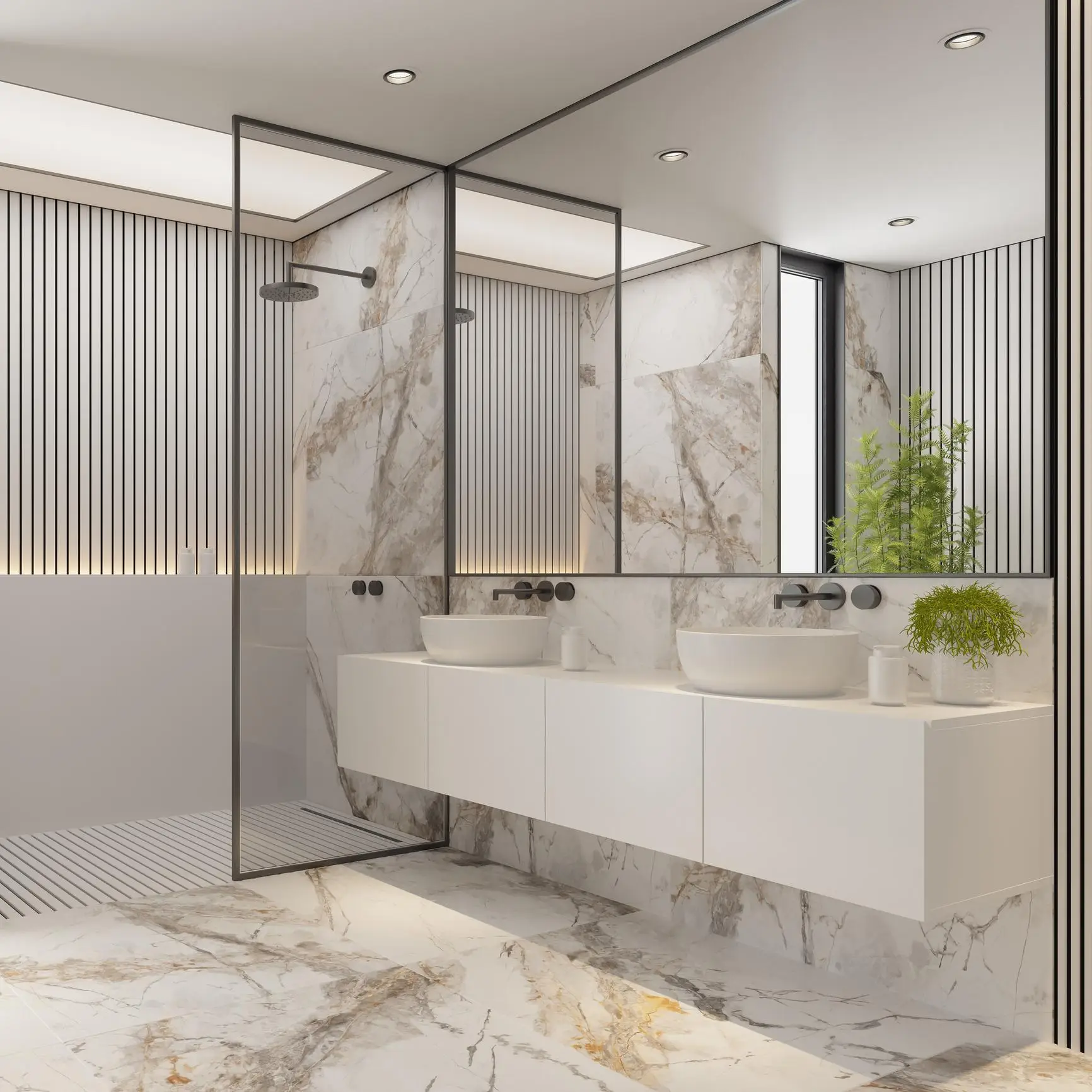
Few decisions move a renovation budget like what you do with the shower or tub. It’s the wettest, most complex zone in the room, which makes it both the priciest to build and the easiest to underestimate. Homeowners often treat it as a simple swap, then learn it touches nearly every trade in the project.
How much does a shower replacement cost? The answer depends entirely on how far you go:
- Like-for-like swap: Replacing a tub or shower in the same footprint keeps costs modest, since the plumbing stays put.
- Tub-to-shower conversion: Removing a tub for a walk-in shower means new waterproofing, tile, and often a glass enclosure.
- Full custom build: Benches, niches, rainfall heads, and curbless entries stack up labour and materials quickly.
Small Upgrades That Trigger Bigger Bills
A single upgrade can set off a chain of others. Choosing a curbless shower, for example, may require adjusting the floor slope, which pulls in extra framing and drainage work. Picking large-format tile might mean the substrate needs to be dead flat, adding prep time.
Here’s how the ripple tends to play out:
| Decision | Hidden Cost It Triggers |
|---|---|
| Frameless glass panel | Reinforced walls, precise measuring |
| Moving the drain | New plumbing rough-in, floor repair |
| Heated tile floor | Dedicated circuit, thicker floor build |
A Real-World Look at a Tub-to-Shower Swap
Say a couple wants to pull out a cramped tub and install a spacious walk-in shower. On paper it feels like a straightforward trade. In reality, the crew has to reroute a drain, waterproof a larger wet zone, and reinforce the wall for a glass door. What looked like one line item quietly becomes four.
The takeaway is simple: match your ambitions to your budget before demo day, not after. Planning the scope carefully is what separates a smooth remodel from a stressful one.
Budgeting Smart Before You Swing the Sledgehammer
The number on your final invoice has less to do with the tile you fell in love with and more to do with everything holding that tile up. Labour, plumbing, and the surprises lurking behind old drywall shape the real total, while the finishes you fret over often cost the least. Once you see a renovation this way, budgeting stops feeling like guesswork.
Go in with a clear scope, a healthy cushion for the unexpected, and honest answers about how much you’re willing to move around. Keep fixtures close to their original spots when you can, and spend your splurge money where it truly shows. Do that, and your bathroom becomes a room you’re glad to walk into every morning, built to last well beyond the trends. Plan smart now, and the payoff lasts for years.

NKBA-certified designer Harper Williams holds a degree in Interior Architecture from Auburn University and has specialized in high-function kitchens and spa-inspired baths since 2011. She joined us in 2024 to simplify layout planning, fixture selection, and budget tricks for remodelers. Away from CAD files, Harper restores vintage cookstoves and crafts small-batch soaps.