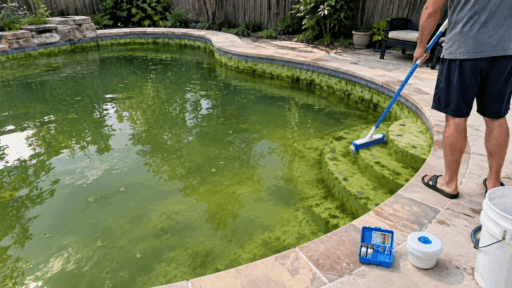
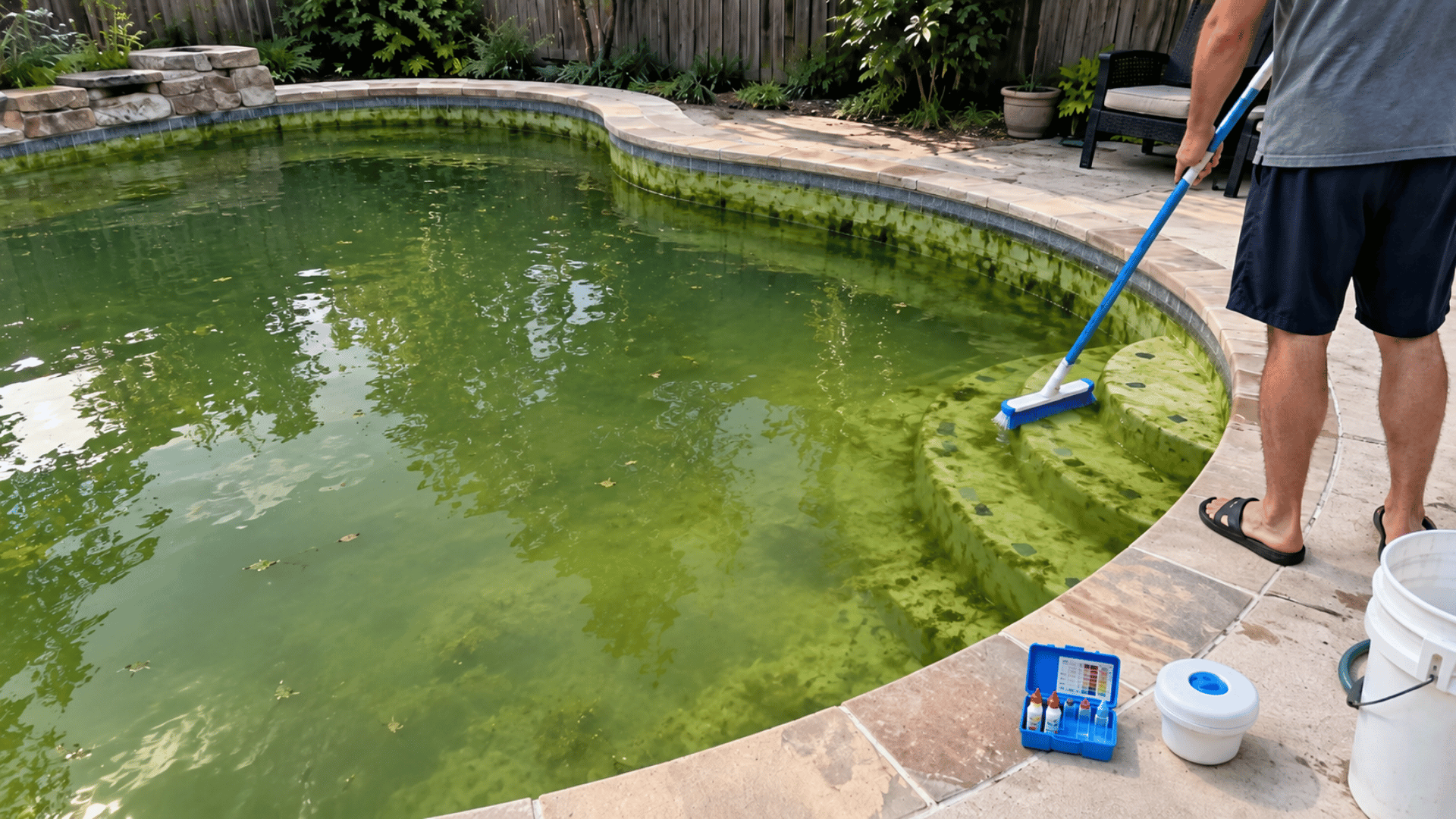

To learn how to get rid of algae in a pool, start by removing loose debris, testing the water, brushing affected surfaces, treating the algae with the right chlorine product, and keeping the filtration system running.
Once the algae dies, vacuum it out, clean the filter, and test the water again.
Green algae is the most common type and is usually easier to remove. Mustard and black algae can be more stubborn and may need repeated brushing and treatment.
I would avoid adding several chemicals at once. First identify the algae and check the water chemistry, then follow the treatment label for your pool size. This makes it easier to fix the outbreak without creating another water-balance problem.
Below, you’ll see how to remove the algae, clean up what remains, and keep it from returning.
What Type of Pool Algae Are You Dealing With?
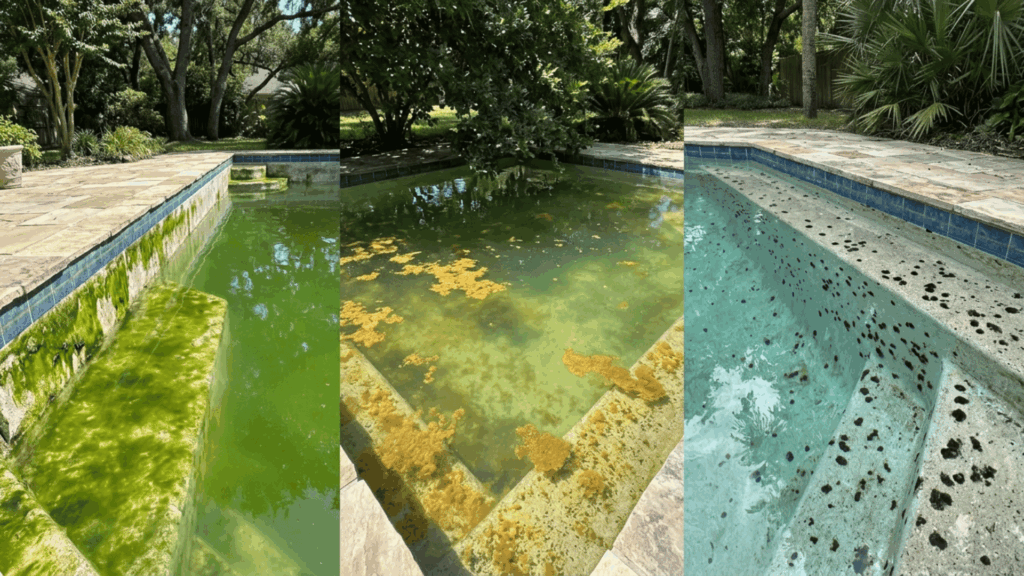
Before treating the pool, check what the growth actually looks like. Green, mustard, and black algae behave differently, so the same treatment may not work equally well for each type.
Green algae is the most common, while black algae tends to be much harder to remove because it attaches firmly to pool surfaces.
Here is a quick comparison:
Algae Type | What It Usually Looks Like | Difficulty |
|---|---|---|
Green algae | Green water or slippery green growth | Usually easier |
Mustard algae | Yellow or brown dusty patches | More resistant |
Black algae | Dark, firmly attached spots | Most stubborn |
Dirt, pollen, and metals can sometimes resemble algae, so avoid repeatedly treating the water until you are reasonably sure algae is the problem.
How Do You Get Rid of Algae in a Pool?
A general algae outbreak needs both chemical treatment and physical cleanup. Killing algae alone is not enough because dead material can remain suspended or settle on the pool floor.
This process works well as a starting point for green algae. Mustard and black algae may need additional brushing and repeated treatment.
1. Remove Leaves and Loose Debris
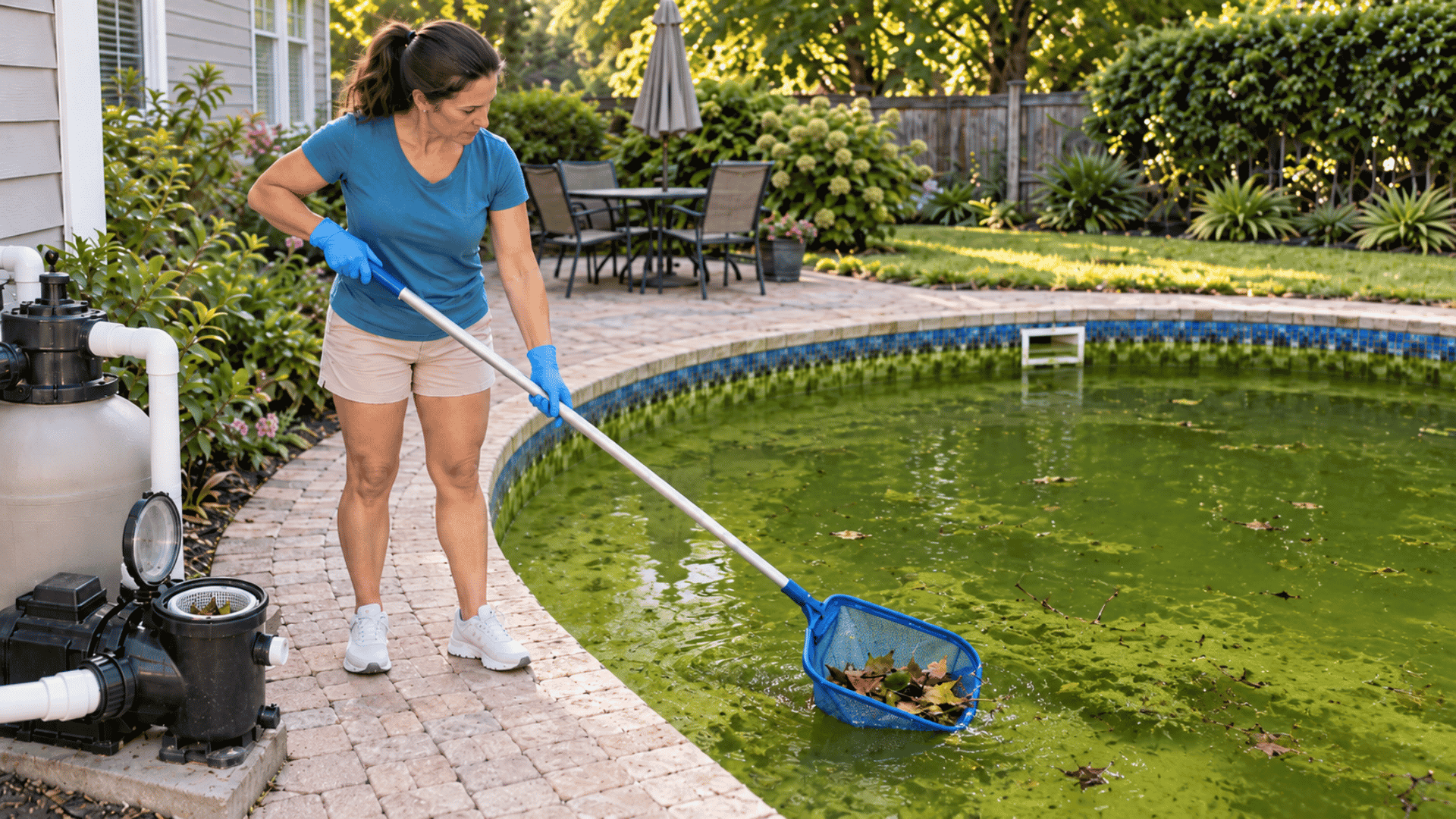
Start by skimming leaves, insects, twigs, and other loose material from the water. Empty the skimmer and pump baskets at the same time.
Removing this material reduces the amount of debris the sanitizer and filtration system have to handle. It also makes brushing and vacuuming easier later. Do this before adding algae treatment rather than leaving unnecessary organic material in the pool.
2. Test the Pool Water
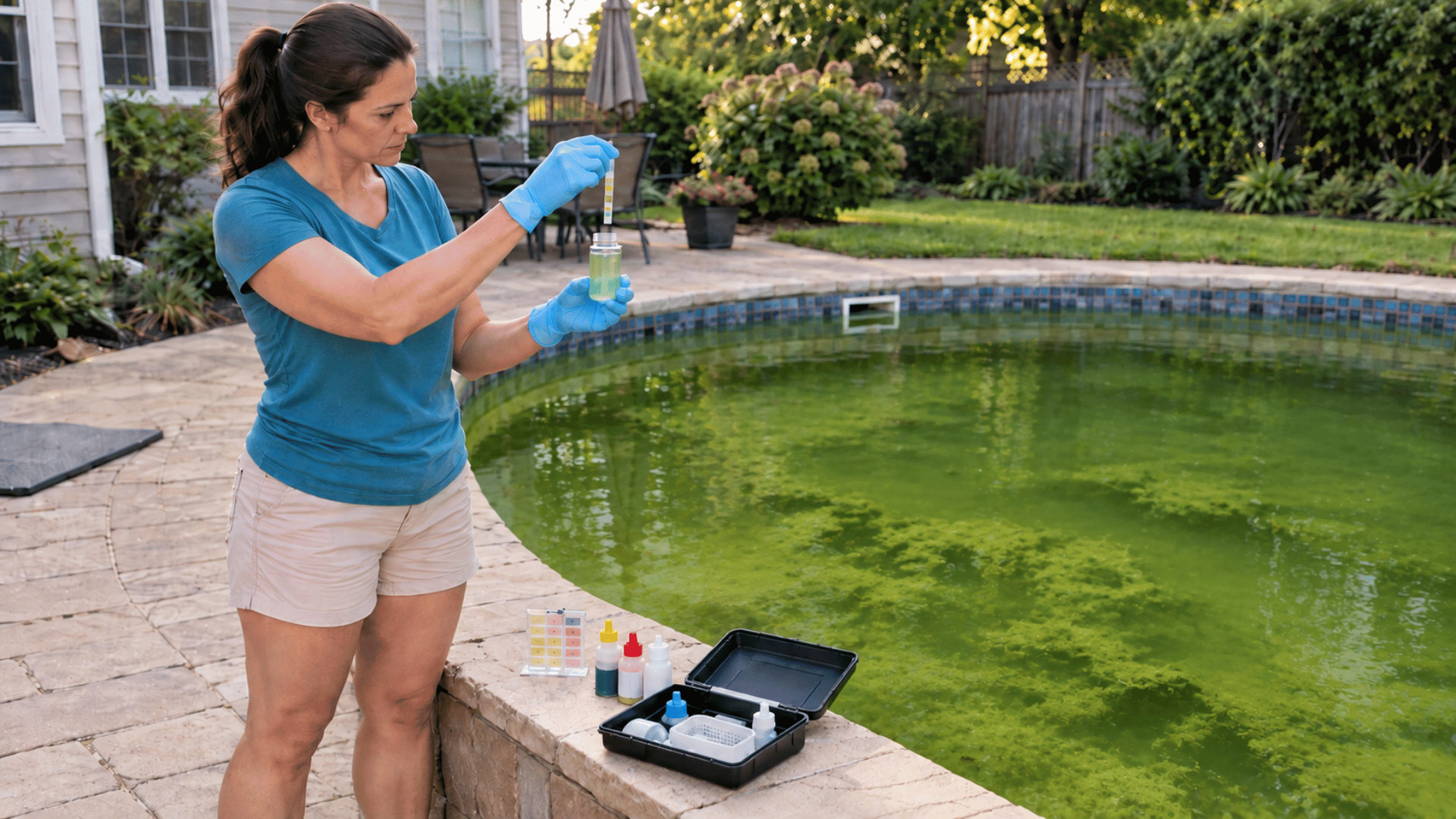
Check free chlorine and pH first. It is also useful to know total alkalinity and cyanuric acid when your pool uses stabilizer.
The CDC recommends maintaining pool pH between 7.0 and 7.8 and at least 1 ppm free chlorine. When cyanuric acid is used, it recommends at least 2 ppm free chlorine.
These are normal operating recommendations. Follow the treatment product label when temporarily raising chlorine to deal with algae.
3. Brush the Algae Thoroughly
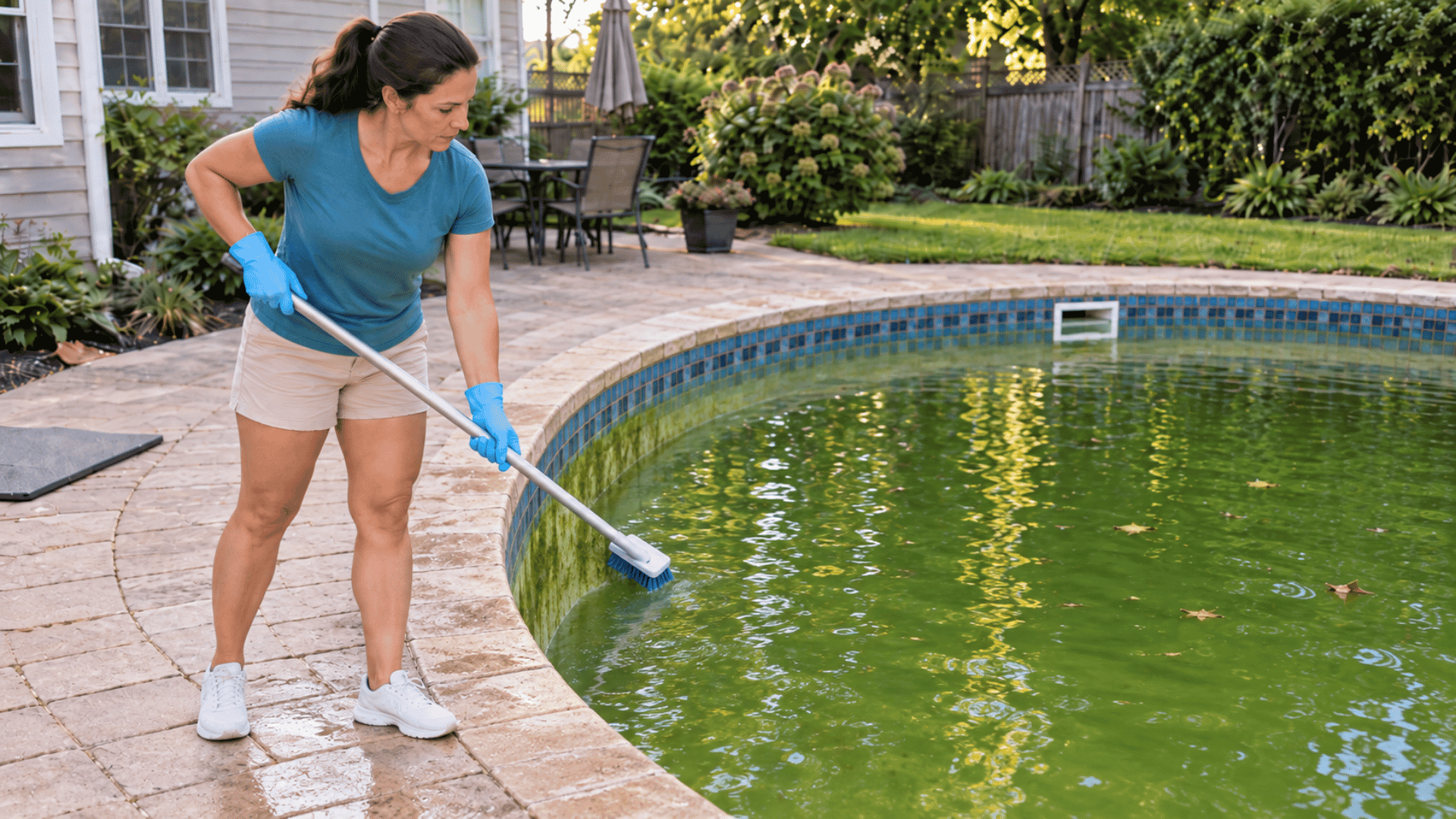
Brush every affected wall, step, corner, and section of the pool floor. Pay particular attention to ladders, fittings, shaded areas, and places with weaker circulation.
Brushing breaks algae away from the surface and exposes more of it to sanitizer. It also helps move loosened material toward the filtration system.
Choose a brush that is suitable for your pool finish. A tool appropriate for plaster may be too aggressive for vinyl or fiberglass.
4. Treat the Pool With Chlorine Shock
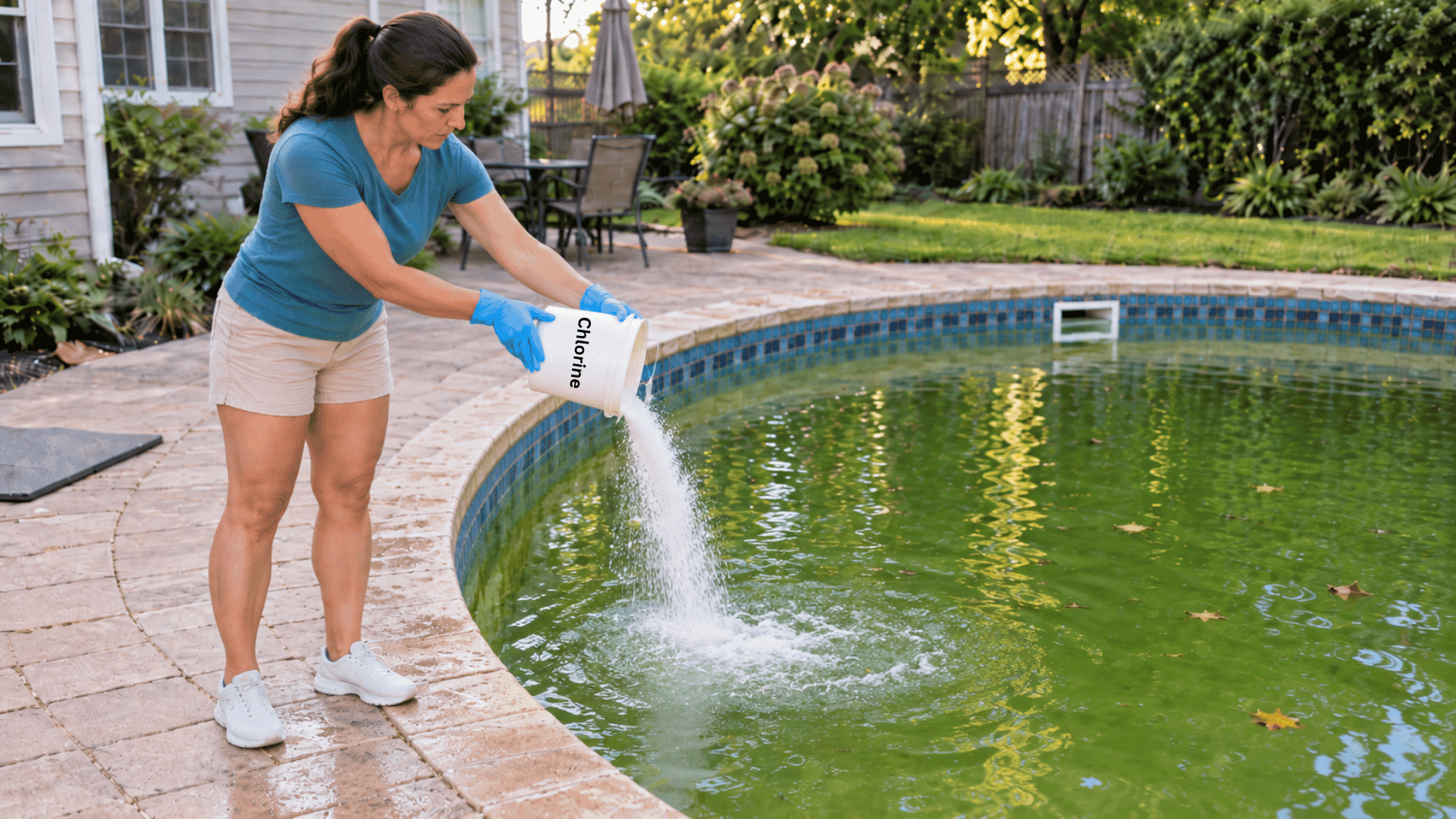
Once the surfaces are brushed, apply a chlorine shock product that is suitable for your pool.
Do not use one universal dose. Shock products have different chlorine concentrations, and the amount required also depends on pool volume and water condition. Calculate the pool volume and follow the product label carefully.
Keep swimmers out during treatment and follow the label instructions for safe re-entry. Never mix different pool chemicals together unless the product instructions specifically tell you to do so.
5. Run the Pump and Filter
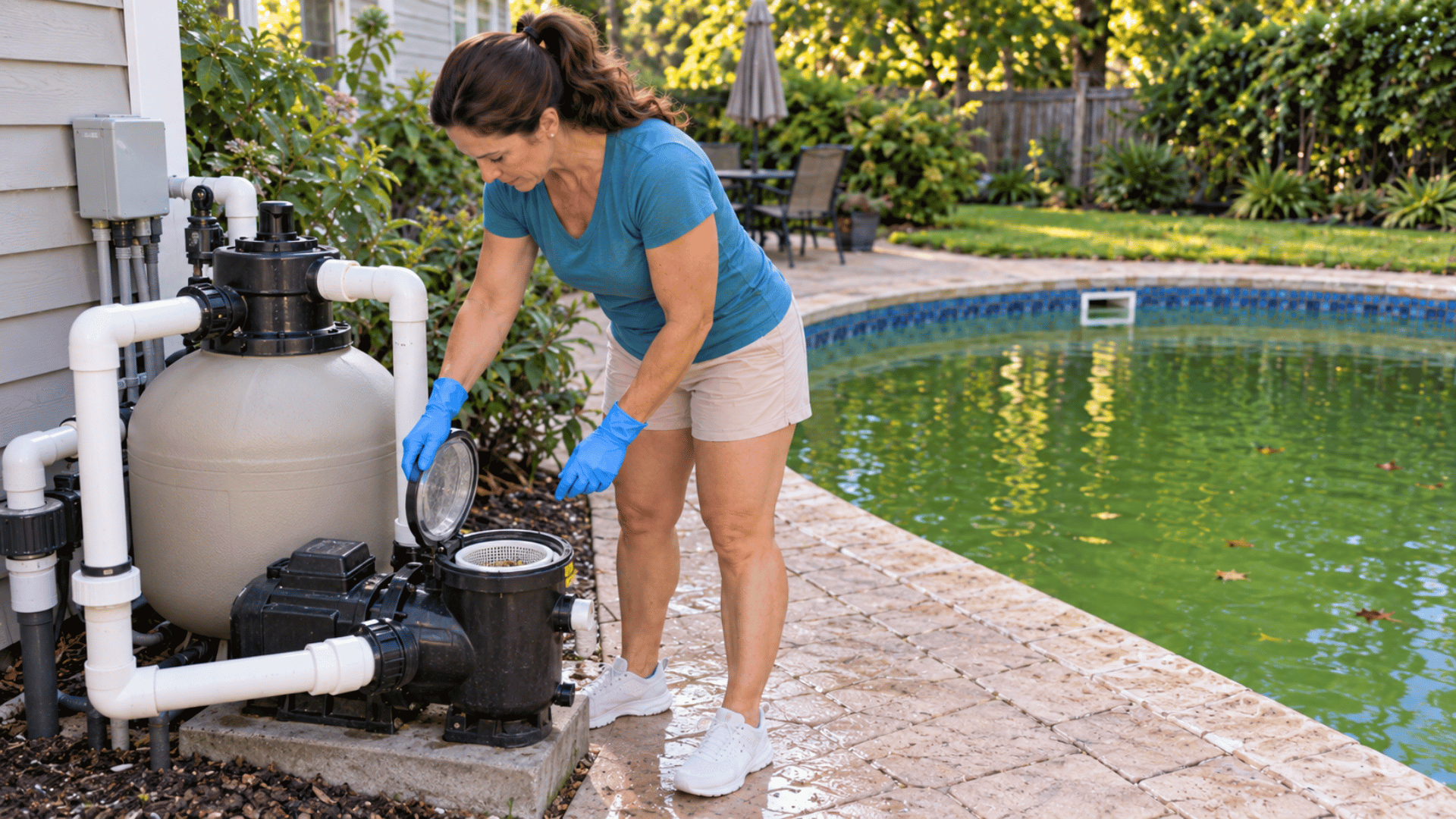
Keep the circulation and filtration system operating while the treatment works. The filter now has to remove dead algae and other suspended material from the water.
Watch:
- Return flow
- Filter pressure
- Pump basket
- Skimmer basket
- Filter condition
CDC guidance also emphasizes maintaining filtration and recirculation systems properly.
For an above-ground pool, improving pool pump performance can help maintain the circulation needed during algae treatment.
Clean or backwash the filter when required for your particular system instead of allowing trapped debris to restrict flow.
6. Vacuum Out the Dead Algae
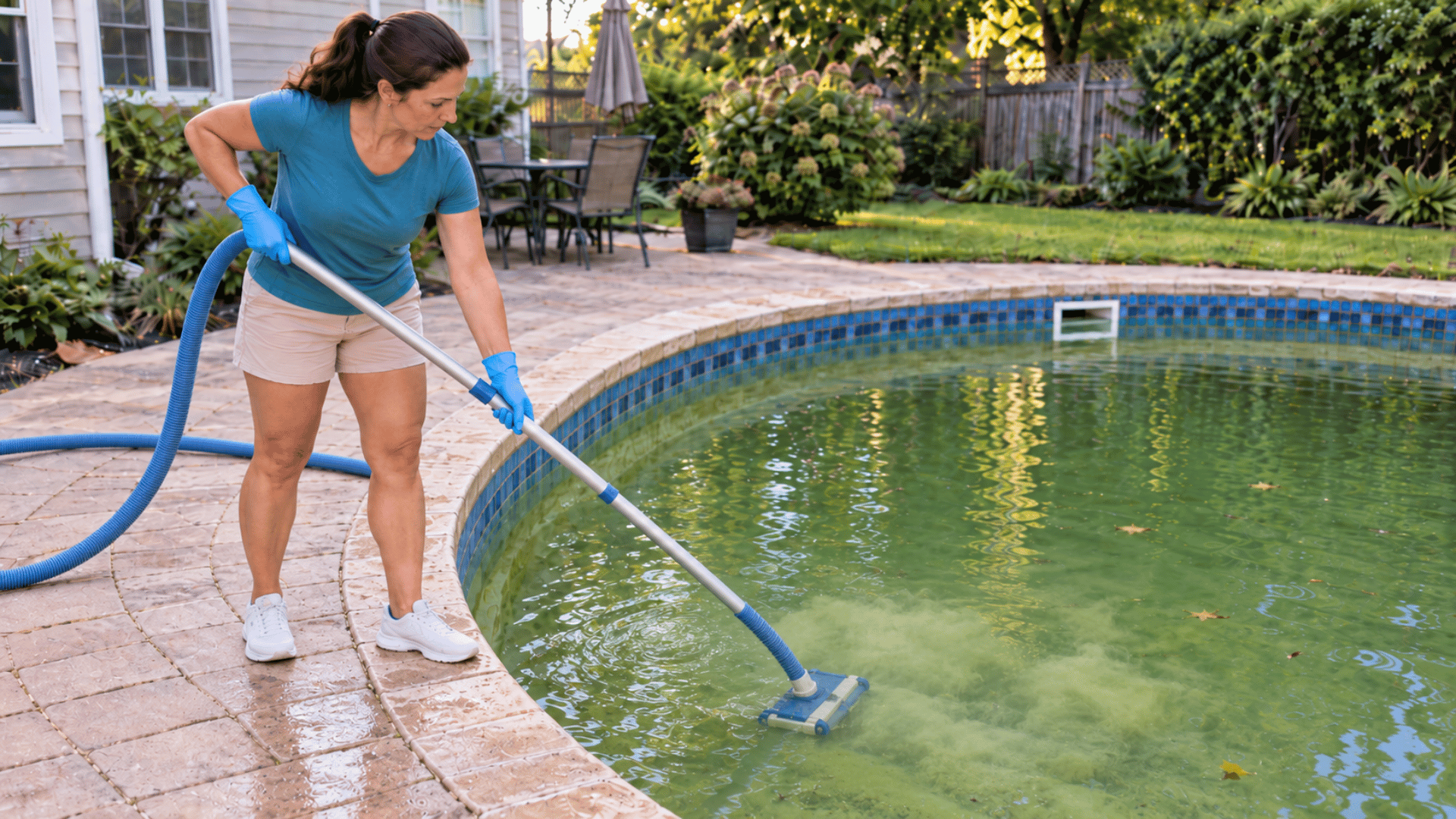
Dead algae may leave the pool cloudy or form gray, green, or dusty material across the floor.
Vacuum this material slowly so you do not stir it back into suspension. Some filtration systems have a waste setting that allows heavy debris to bypass the filter, but only use that method when your equipment supports it.
If the pool becomes cloudy after treatment, that does not necessarily mean the algae is still alive. Fine dead material may simply need more filtration and vacuuming.
7. Clean the Filter and Retest
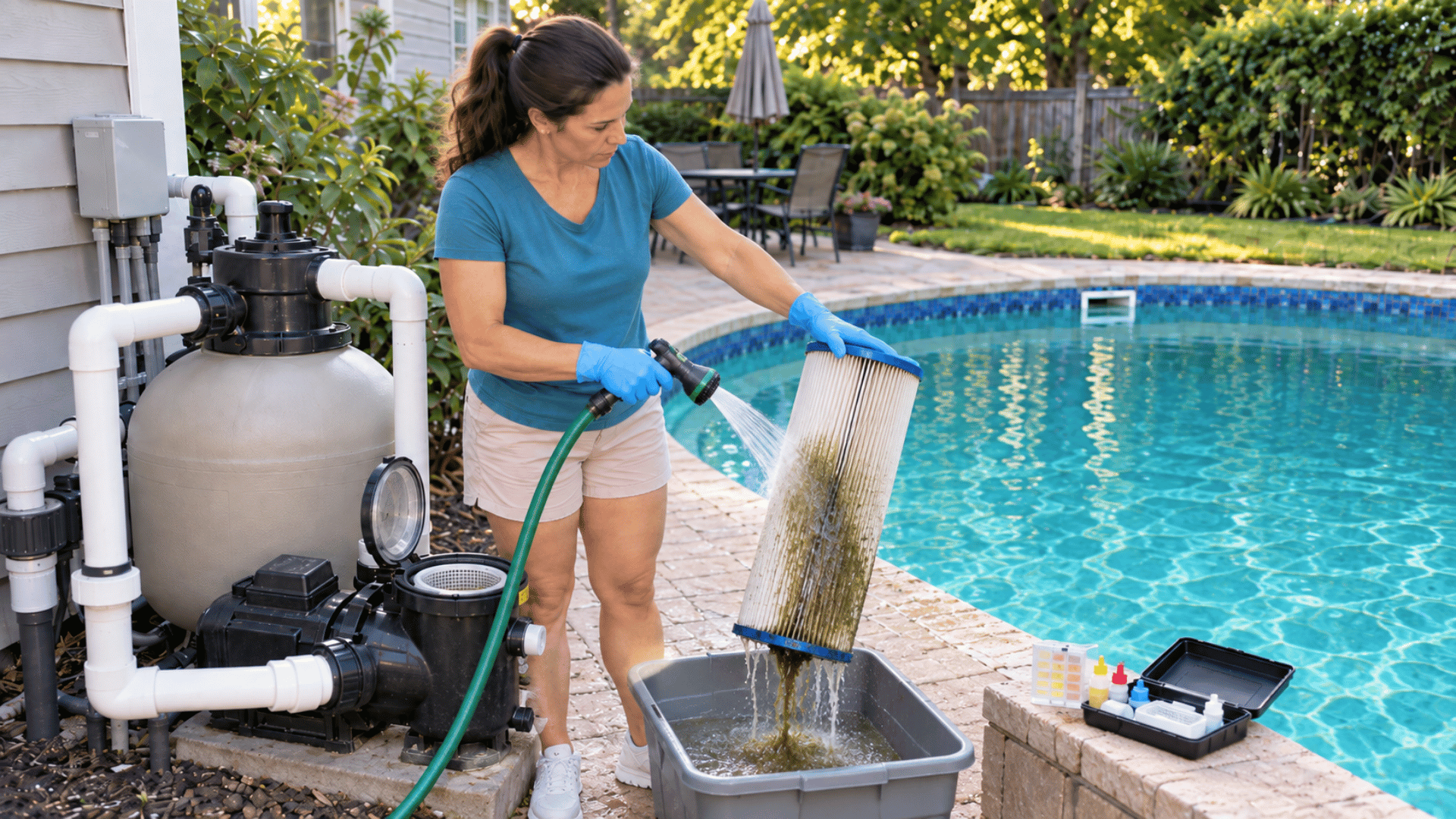
Once most of the algae has been removed, clean or backwash the filter again. Then retest chlorine and pH and inspect the surfaces for remaining growth.
If you use a cartridge system, proper pool filter cartridge cleaning helps remove trapped algae and debris before normal filtration resumes.
Do not consider the treatment finished only because the green color has disappeared. The water should be clear, the surfaces should be free of visible algae, and the chemistry should be back within its normal operating range.
If patches remain, brush them again and continue treatment according to the product directions.
What Chemicals Can Help Remove Pool Algae?
Different pool products do different jobs during an algae cleanup. Chlorine is generally used to kill active algae, while other products may support treatment or help remove what remains afterward.
Treatment | Main Purpose |
|---|---|
Chlorine shock | Raises sanitizer to treat active algae |
Algaecide | Supplemental algae treatment |
pH adjuster | Corrects pH when needed |
Clarifier | Helps filters capture fine suspended particles |
Flocculant | Helps particles settle for removal |
An EPA-registered pool algaecide, for example, may be specifically labeled for control of green, mustard, or black algae.
I would treat clarifier and flocculant as cleanup tools, not replacements for killing live algae. Always follow the exact label because chemical strength, dosage, and compatibility vary between products.
How do You Get Rid of Green Algae in a Pool?
Green algae may appear as green water, slippery surfaces, or green deposits along the floor and walls. It is also the most common pool algae described in consumer treatment guidance.
For a typical green algae outbreak, follow this order:
Remove debris → test the water → brush the algae → apply the appropriate chlorine treatment → run the pump and filter → vacuum dead algae → clean the filter → retest
Do not stop as soon as the water changes from green to cloudy blue. That color change often means the algae has died, but the remaining material still needs to be filtered or vacuumed out before the pool is fully clear.
Does Mustard or Black Algae Need Different Treatment?
Yes. Both can require more persistent treatment than an ordinary green algae outbreak.
Mustard Algae
Mustard algae often appears as yellow, tan, or brown dusty growth, particularly in shaded parts of the pool. It can return after an ordinary cleanup.
Brush affected areas thoroughly and follow a pool treatment specifically labeled for mustard algae. Items that contact the pool water, such as brushes and removable equipment, may also need attention so algae is not carried back into the treated water.
Black Algae
Black algae usually appears as dark spots that cling firmly to pool surfaces. It can be especially difficult to remove from porous finishes.
Treatment commonly requires repeated brushing so sanitizer can reach the growth more effectively.
Use tools appropriate for the pool surface. Aggressive brushing that may be suitable for some concrete finishes can damage softer vinyl or fiberglass surfaces.
How Do You Remove Dead Algae From the Pool?
Killing algae and cleaning it out are two separate parts of the job. Once algae dies, it can remain suspended in the water or settle as fine material across the floor.
Use this cleanup sequence:
- Continue filtration: Give the filter time to collect suspended particles.
- Vacuum settled algae: Move slowly to avoid stirring it back into the water.
- Clean the filter: Remove the algae and debris the filter has collected.
- Brush remaining spots: Check steps, corners, walls, and low-flow areas.
- Retest the water: Confirm chlorine and pH have returned to suitable levels.
- Repeat if needed: Heavy outbreaks may require another round of cleaning.
If the algae is gone but the water remains hazy, focus on filtration and removal before automatically adding more shock.
What Mistakes Can Make Pool Algae Treatment Fail?
An outbreak often returns because part of the treatment or cleanup was missed, not simply because too little chemical was added.
Common mistakes include:
Common Mistake | Why It Can Be a Problem |
|---|---|
Skipping water testing | You will not know which water levels need correcting before treatment. |
Adding shock without brushing | Algae stuck to pool surfaces may be harder for the sanitizer to reach. |
Stopping filtration too soon | Dead algae and fine debris may remain suspended in the water. |
Ignoring the filter | A dirty filter can restrict circulation and reduce filtration efficiency. |
Skipping vacuuming | Dead algae can settle and remain on the pool floor. |
Using the wrong brush | The brush may clean poorly or could damage certain pool surfaces. |
Assuming clarifier kills algae | Clarifier mainly helps collect suspended particles; it does not work as an algaecide. |
Mixing treatments together | Pool chemicals can react dangerously when combined incorrectly. |
The CDC advises reading product labels and avoiding improper mixing of pool chemicals.
How Can You Stop Pool Algae From Coming Back?
Once the pool is clear, consistent sanitizer, circulation, and cleaning matter more than repeatedly adding algaecide.
- Check chlorine and pH regularly: Catch changes before algae gets established.
- Keep the filter maintained: Clean or backwash it when required.
- Maintain circulation: Make sure water reaches steps, corners, and other quieter areas.
- Brush regularly: Give extra attention to places where algae appeared before.
- Remove debris: Leaves and dirt add extra demand to the water.
- Check after storms and heavy swimming: Both can change water conditions quickly.
- Keep equipment operating properly: Poor filtration or circulation makes algae easier to establish.
The CDC recommends routine chlorine and pH testing and proper maintenance of filtration and recirculation systems.
Regular brushing, water testing, filtration, and circulation should remain part of your pool maintenance routine after the outbreak clears.
Pay extra attention to any shaded corner or step where algae repeatedly returns because it may point to weak circulation or inconsistent brushing.
Final Thoughts
Knowing how to get rid of algae in a pool means dealing with both the living growth and the material left behind afterward.
For most green algae outbreaks, the basic sequence is straightforward: test, brush, treat, circulate, vacuum, clean the filter, and retest.
Mustard and black algae may require more repeated brushing and a treatment specifically labeled for that algae type.
Do not keep adding chemicals simply because the pool has not cleared immediately. Once the algae has been killed, filtration and vacuuming still need time to remove the remaining particles.
The goal is not only water that is no longer green. The pool should be clear, the surfaces should be clean, and the water chemistry should be back within the appropriate range.
What type of algae are you dealing with: green water, yellow patches, or stubborn black spots? Comment below with what you are seeing.
Frequently Asked Questions
Can You Swim in a Pool With Algae?
Avoid swimming when visibility is poor or chlorine and pH are outside recommended ranges. Wait until treatment is complete and the water is clear and properly balanced.
Will Algaecide Clear a Green Pool by Itself?
Usually not. Removing an active outbreak typically also requires sanitizer, brushing, filtration, and cleanup. Use algaecide only according to its specific product directions.
Why Is My Pool Still Green After Shocking?
Possible causes include insufficient sanitizer, incorrect pH, poor circulation, remaining algae, a dirty filter, or metals that are discoloring the water rather than algae.
How Long Does It Take to Get Rid of Pool Algae?
A mild green outbreak may clear relatively quickly. Heavy green, mustard, or black algae can require repeated brushing, treatment, filtration, and vacuuming.
Do You Have to Drain a Pool to Remove Algae?
Usually not. Most algae outbreaks can be treated with proper chemistry, brushing, filtration, and vacuuming without completely draining the swimming pool.

With a Master’s in Architecture from the University of California, Berkeley, Mitchell Green has spent over two decades dedicated to the study and practical application of home fixture design. His career started in an architectural firm, providing him a strong foundation in the structural and aesthetic aspects of home interiors. Mitchell brought his comprehensive knowledge to our platform, where he has been an influential voice in our home fixtures and fittings section. Since 2018, he has been guiding our readers through the intricacies of selecting and installing fixtures, combining technical know-how with design flair. In his spare time, Mitchell is a keen photographer, capturing architectural details and design elements, an interest that complements his professional focus.