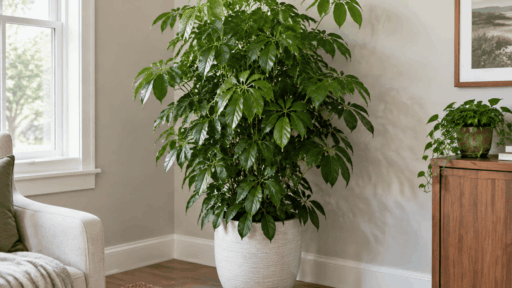
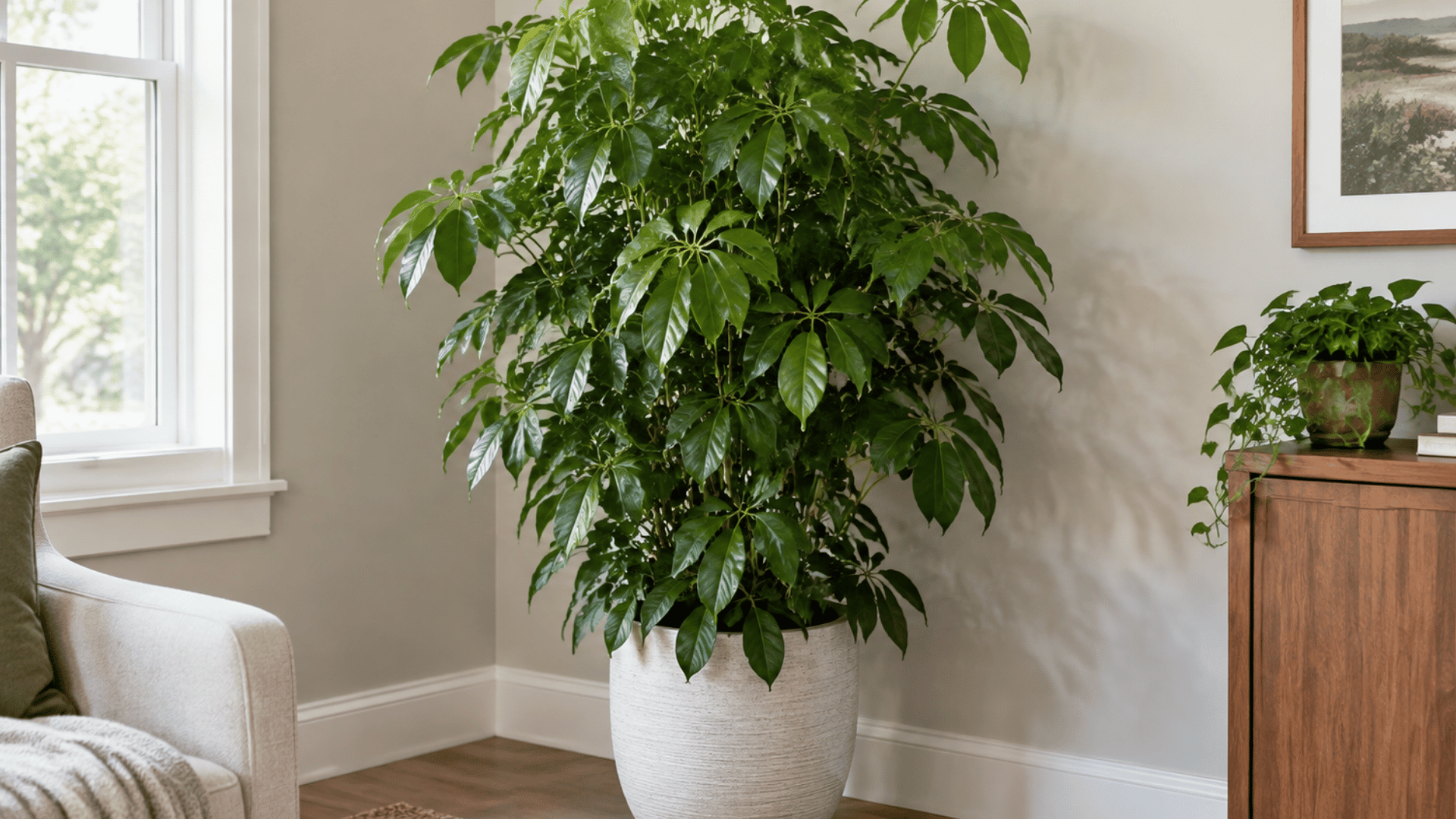

Many indoor plants fail not because they are difficult, but because small care mistakes go unnoticed for too long.
Good schefflera plant care starts with understanding what this leafy houseplant needs, not treating it like any other green plant.
You may notice slow growth, dull leaves, or a plant that does not look healthy even after regular attention. Common routines often miss the signs a schefflera gives when something is wrong.
Learning the right approach can help you avoid guesswork and build a better connection with your indoor plant.
What is a Schefflera Plant?
Schefflera, also known as the umbrella plant, is a popular indoor plant known for its clusters of glossy leaves that spread out like the spokes of an umbrella.
The two common indoor types are Schefflera arboricola, also called the dwarf umbrella tree, and Schefflera actinophylla, which grows larger and suits bigger spaces.
Native to tropical regions, Schefflera prefers warm indoor conditions and can adapt well to homes and offices when its basic needs are met.
Before starting Schefflera plant care, understanding the plant’s natural growing habits helps create a better indoor environment for healthy growth.
How to Care for a Schefflera Plant (Step by Step)
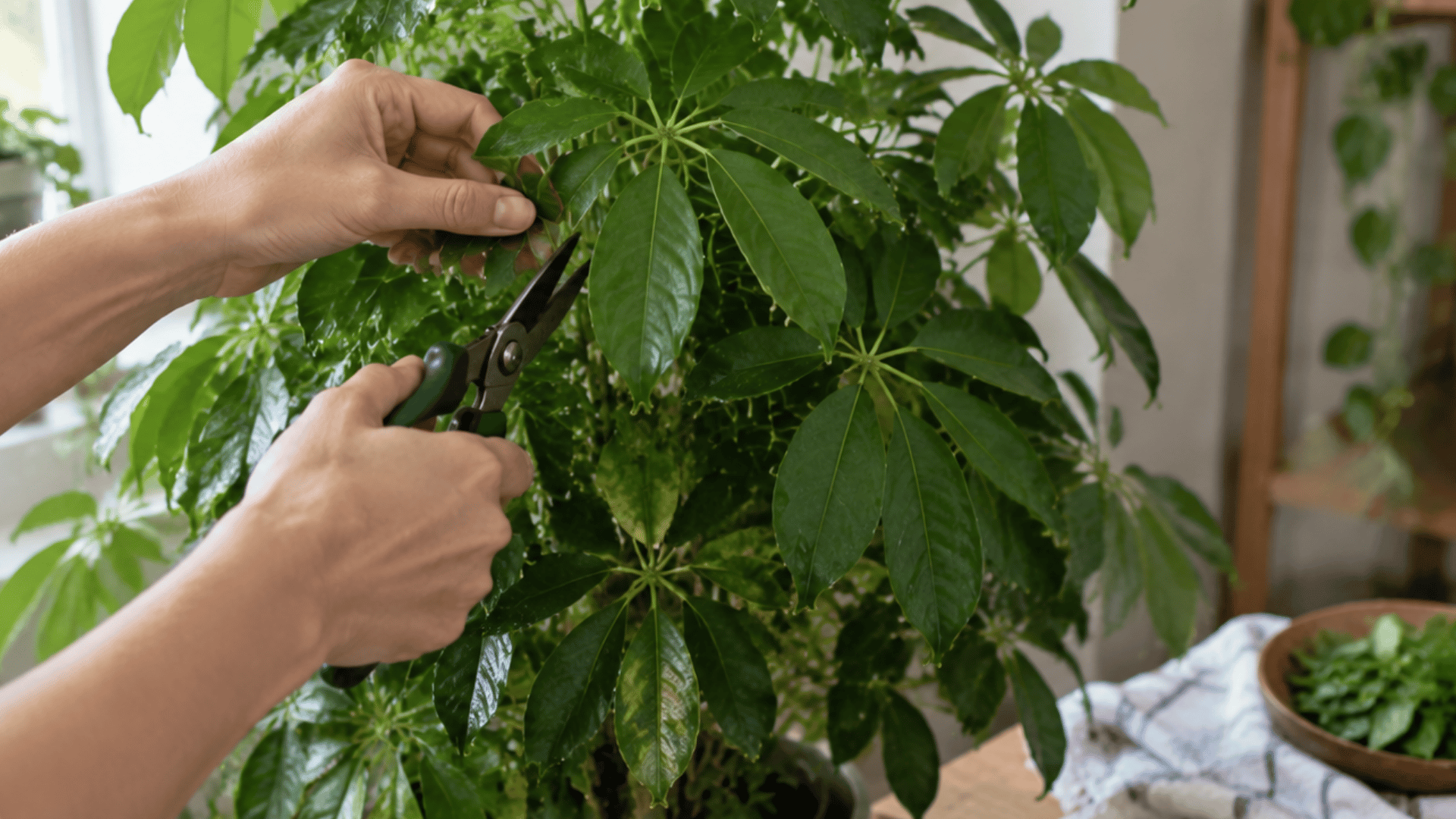
A simple care routine can help your Schefflera stay healthy and keep its leaves fresh and green. Small daily changes often make a noticeable difference.
Step 1: Choose the Right Spot With Proper Light
Schefflera plants grow well in bright, indirect light. Place the plant near a window where it receives enough sunlight without harsh afternoon rays.
Too much direct sun can scorch the leaves, while low light may cause slow growth and weak stems. Rotate the pot occasionally so all sides receive balanced light, and the plant grows evenly.
Step 2: Water Your Schefflera the Right Way
Watering needs depend on the soil condition, not a fixed schedule.
Check the top 1–2 inches of soil before watering. If it feels dry, water deeply until excess water flows from the drainage holes.
Avoid leaving the pot in standing water, as soggy soil can harm the roots. Reduce watering during colder months when growth slows.
Step 3: Use the Right Soil and Pot
Schefflera plants need a soil mix that drains well while still holding enough moisture for healthy root growth.
Heavy soil that stays wet for long periods can limit airflow around the roots and increase the risk of root problems. Choose a pot with drainage holes at the bottom so extra water can escape after watering.
If the soil feels compact or dries unevenly, adding materials like perlite can improve the texture and allow better airflow.
Step 4: Maintain the Right Temperature and Humidity
Schefflera plants prefer stable indoor conditions with warm temperatures and moderate humidity. Keep them away from cold drafts, heaters, and air conditioners that can stress the leaves.
Dry indoor air may cause leaf edges to turn brown or curl. Keeping nearby plants together or using a humidity tray can help maintain better moisture levels.
Step 5: Feed Your Schefflera During the Growing Season
Schefflera plants benefit from regular feeding when they are actively growing, especially during spring and summer.
Fertilizer provides extra nutrients that support new leaves, stronger stems, and overall plant growth. Use a balanced liquid houseplant fertilizer according to the product instructions.
Apply it during the growing months and reduce feeding during fall and winter when the plant’s growth naturally slows.
How to Prune a Schefflera Plant?
Regular pruning helps a Schefflera maintain a fuller shape, remove unhealthy growth, and keep the plant looking neat indoors while encouraging fresh new leaves.
Choose the Right Time
Prune your Schefflera during the active growing season, usually spring or summer, when the plant can recover faster and produce healthy new branches. Avoid heavy pruning during colder months when growth naturally slows.
Remove Damaged Leaves
Cut away yellow, brown, or unhealthy leaves using clean pruning scissors to prevent the plant from wasting energy on weak growth. Removing damaged parts also helps improve the plant’s overall appearance.
Trim Overgrown Stems
Shorten long or uneven branches to encourage bushier growth and help the plant maintain a balanced shape instead of becoming tall and thin. Regular trimming can also improve indoor plant structure.
Make Clean Cuts
Use sharp, sanitized tools and cut just above a leaf node where new branches can develop. Clean cuts reduce damage and help the plant heal more easily after pruning.
Avoid Heavy Pruning
Remove only a portion of the plant at one time because cutting too much can stress the Schefflera and slow its recovery. Small, regular trims usually help maintain healthy growth.
When and How to Repot a Schefflera Plant?
Repot your Schefflera when roots start growing through the drainage holes, water runs through the pot too quickly, or the plant becomes too large for its container.
Spring is usually a good time because the plant begins active growth and can adjust more easily.
Choose a new pot that is only slightly larger than the current one to avoid excess soil holding too much moisture.
Gently remove the plant, loosen tightly packed roots, and place it in fresh, well-draining soil. Water lightly after repotting and keep it in a suitable spot while it settles.
Common Schefflera Plant Problems and How to Fix Them
Even with proper care, Schefflera plants can sometimes show signs of stress. Identifying the cause early makes it easier to bring the plant back to good health.
Problem | Possible Cause | What to Do |
|---|---|---|
Overwatering or poor drainage | Check soil moisture and allow excess water to drain | |
Drooping leaves | Dry soil, sudden changes, or stress | Check watering and keep conditions stable |
Brown leaf tips | Dry air or inconsistent watering | Adjust humidity and maintain a regular routine |
Leaf drop | Low light, temperature changes, or watering issues | Move the plant to a suitable spot and review care habits |
Long, weak stems | Not enough light | Place the plant in brighter indirect light |
Sticky leaves | Possible pest activity | Check leaves and treat pests if found |
Conclusion
Caring for an indoor plant doesn’t have to feel complicated. A little attention and patience can help your Schefflera grow well and become a lasting part of your home.
The goal of Schefflera plant care isn’t perfection, but creating a comfortable environment where the plant can adjust and grow naturally.
Once you understand its needs, caring for it becomes a simple habit rather than a daily task. With steady effort, your plant can stay fresh, healthy, and enjoyable for years while adding a touch of greenery to your space.
Frequently Asked Questions
How Long Can a Schefflera Plant Live Indoors?
With proper care and suitable indoor conditions, a Schefflera can live for many years. Its lifespan depends on factors like the plant’s variety, environment, and overall health. Older plants may grow larger and need occasional shaping to keep them a comfortable indoor size.
Can Schefflera Plants Grow From Cuttings?
Yes, you can grow Schefflera plants from stem cuttings. A healthy stem section can be placed in water or a suitable growing medium until roots develop. Propagation is often done during warmer months when the plant is actively producing new growth.
Are Schefflera Plants Safe Around Pets?
Schefflera plants contain compounds that may irritate pets if they chew on them. Dogs and cats may experience symptoms like mouth discomfort, drooling, or stomach upset after eating plant parts. Keeping the plant in a location pets cannot reach can help avoid problems.

Jordan Mathews, who has a degree in horticulture from Texas A&M University, has been a guiding force in plant health and sustainable gardening for over 16 years. His career began with a role at a renowned botanical garden, where he deepened his understanding of plant physiology and eco-friendly cultivation methods. Jordan joined our website as a freelancer in 2020, becoming a go-to expert for readers seeking advice on nurturing diverse plant species apart from offering insights grounded in scientific knowledge and practical experience. Beyond his professional achievements, Jordan is a keen nature photographer, capturing the beauty of flora in its immensely diversified forms.