
I spent two years carrying a laundry basket into a room lit by one bare bulb. Folded towels came out of there with mystery stains I never saw until I walked into the hallway. If you’ve ever held a black sock up to a dim light and given up, you know exactly the kind of room I’m talking about.
Here’s the good news. You don’t need a window, a contractor ripping siding off your house, or a second mortgage. Tubular daylighting runs daylight from your roof down through an attic tube into any room you pick. It costs a fraction of a traditional skylight, it doesn’t come with the leak risk that scares people off roof glass, and it fits in spaces where a window simply has nowhere to go. I’ll walk you through how these systems work, when they beat a window and when they don’t, and the exact decision checklist I’d use before booking anything.
What a Tubular Daylight System Actually Does
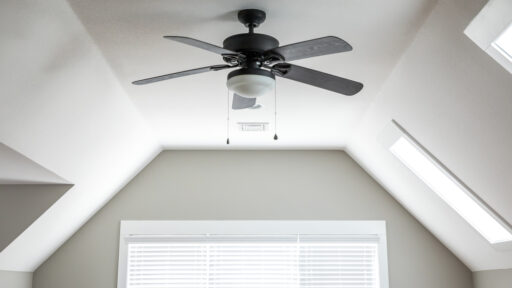
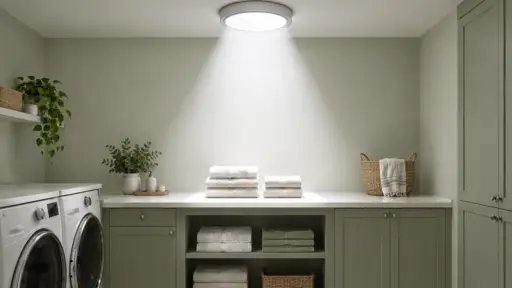
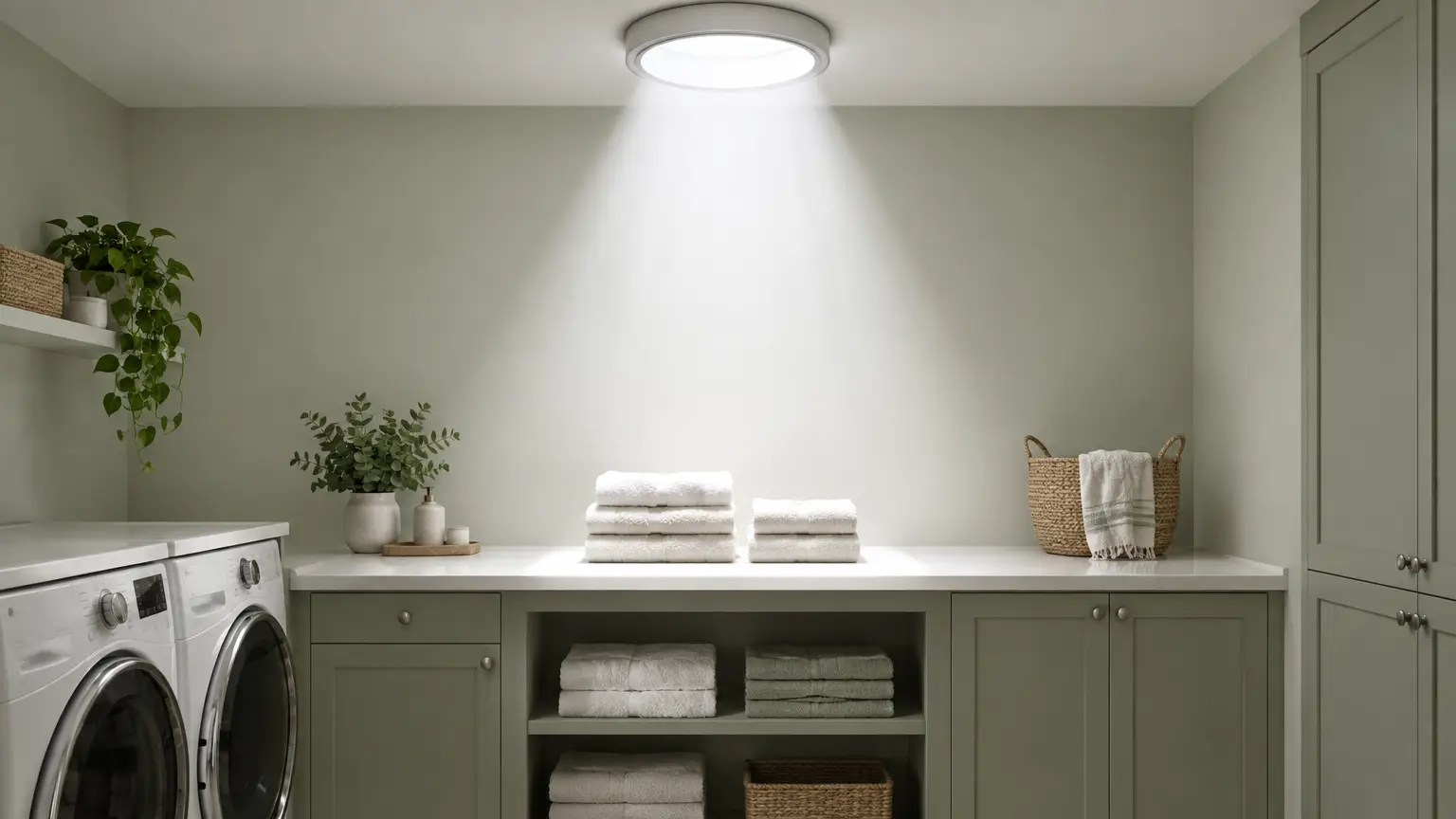
Three parts make the whole thing work. A roof-mounted dome captures sunlight from every angle, not just straight overhead. A reflective tube carries that light down through the attic. A ceiling fixture at the bottom end spreads it across the room like a normal light would.
The tube part is where quality separates the good units from the cheap ones. Decent tubing bounces a captured beam around bends and past attic obstructions with very little loss. Cheap tubing eats the light, and you end up with a glowing circle on the floor that lights nothing else.
Pay attention to tube diameter too. A 10-inch tube in a 9-foot run gives you a very different result than a 14-inch tube in the same run. Longer distance means more loss, so the deeper your attic, the wider you should go. Salespeople sometimes push the smaller unit because it’s cheaper and faster to install. Don’t let them, unless the run is genuinely short.
Why the Laundry Room Is the Perfect Candidate
Laundry rooms usually sit in the interior of a house, pressed up against a garage wall or buried between bathrooms with no exterior face available. That’s exactly the geometry tubular systems were designed for.
You also need real light in there for reasons most people don’t think about until it’s too late. Spotting stains on a collar, matching dark socks, checking whether that white shirt turned gray. Overhead bulbs flatten everything and hide color differences. Daylight doesn’t. That matters more than most people expect.
The heat problem disappears too. A big west-facing window turns a laundry room into a sauna in July, and dryers already dump heat into that space. Tubular fixtures spread light without pouring in the solar gain that makes a room miserable, because the tube itself blocks most of the heat that would come through open glass.
Where the Sun Goes After Dark
Daylight stops at sundown, so the room goes dark exactly when a lot of people actually do laundry. Manufacturers solved this a couple of ways. Some fixtures take an add-on LED kit that turns the same fixture into a normal light after dark. A few models build a small solar night light into the diffuser.
Ask what happens at 9 p.m. before you sign. If the answer is a shrug, keep looking.
A Decision Checklist I’d Actually Use
Run through these in order. Any “no” changes the plan.
- Measure the true run. From the roof deck down to the finished ceiling. Under 6 feet is easy. Past 12 feet, size up the tube.
- Walk the attic path. Pipes, ductwork, and cross-bracing all get in the way. A good installer routes around them. A rushed installer cuts through something he shouldn’t.
- Check your roof material. Asphalt shingle, metal, and tile each need different flashing. This is where leaks come from when it’s done wrong.
- Confirm the ceiling location. The fixture goes where the tube can reach, not always where you’d prefer it. Aim for the center of the walking path, not the corner.
- Ask about the curb. Some roofs need a raised curb, some don’t. Get it in writing either way.
- Settle the after-dark question. LED kit, night light, or nothing. Decide before install, not after.
The one people skip is number two. A ten-minute attic walk before you sign prevents a week of misery later.
Daylighting Numbers Worth Knowing
Daylighting isn’t a fringe idea. According to the U.S. Department of Energy, daylighting has been a standard part of building design for decades because it reduces the need for electric lighting during daytime hours. That’s the baseline case for any windowless room: you’re not adding light, you’re replacing light you were already paying for.
The flip side, and this is the part people get wrong, is that daylight varies. A cloudy February morning delivers a fraction of what a July afternoon does. Size the tube for the worst month you get, not the best one, or you’ll be disappointed every winter.
What a Real Install Looks Like

I watched a neighbor’s get done last spring on a 1970s ranch house. Crew showed up around eight. Roof portion first, then the attic run, then the ceiling cutout. The ceiling work is the part that surprises people. There’s drywall dust, there’s a hole in your ceiling, and there’s a trim ring that hides it. Two guys, about three hours, one room. He tipped them because they vacuumed the hallway before they left.
He also learned something. His original plan put the fixture over the washer. The tube couldn’t get there without a nasty double bend, so it landed about four feet over, closer to the folding counter. Turned out better. His wife folds there now with real light on the fabric.
The point: the ceiling is the last decision, not the first.
Common Mistakes I See People Make
Chasing the Cheapest Quote
Cheapest usually means thinner tubing and a smaller diameter. You save a few hundred dollars and get a dimmer room. Bad trade.
Ignoring the Roof Pitch
A steep roof catches different light than a shallow one. The dome can compensate, but the installer needs to angle it, and that takes experience.
Skipping the Maintenance Conversation
Domes collect pollen and dust. In heavy tree cover, they fog up. A quick wipe once or twice a year keeps output up. Nobody mentions this at the sales table, which is odd, because it’s the difference between year-one performance and year-five performance.
The materials themselves are built to last, though. Tubing and fixtures are designed to hold up over decades of temperature swings, which is why manufacturers can offer long warranties on them. The National Institute of Standards and Technology exists in part to keep measurement standards like light output consistent, so when a spec sheet claims a reflectivity number, that number means something.
When a Window Wins Instead
If you have an exterior wall with room and a view worth looking at, put in a window. You get daylight plus air plus an escape route. A tubular fixture can’t do any of those.
The case for tubes is narrow and specific: interior rooms, dark hallways, bathrooms with no exterior face, laundry rooms in the middle of the house. In that zone, they’re hard to beat.
Where does a name-brand installation fit into this? If you’re in a region with an established dealer network, working with one is often the difference between a system that performs for years and one that under-delivers from day one. A proper solatube installation involves roof flashing done right the first time, a correctly angled dome, and tube routing that respects your attic instead of punching through it.
The Thing Nobody Talks About
Records matter here, and not just the receipts. According to the National Archives, homeowners have long relied on documented records to establish and protect property history, and adding a fixed fixture to a roof falls into that same category. If you ever sell the house, a new owner will want to know who installed it, when, and under what warranty. Keep the paperwork in the same folder as your roof documents. Future you, and future buyer, will thank you.
Day One Versus Year Five
The best test of any daylight system isn’t the first sunny afternoon. It’s a gray Tuesday in February when you’re sorting laundry and you can still tell black from navy. That’s the whole point. Not a dramatic transformation, just a room that finally works the way it should.
So before you go shopping for quotes, answer one question honestly. Do you want light in that room, or do you want a window? If it’s the first one, a tube is the cheaper, faster, less risky path. If it’s the second, get the window.
If you’re not sure, walk your attic first. That walk will tell you more than any sales quote ever will.

Holding a Master’s in Architecture from the University of Texas at Austin, Emily Rodriguez has dedicated more than two decades to the art and science of building renovation. Starting her journey in historic preservation, she developed a profound respect for blending old with new in building design. Emily became a vital part of our team in 2019, renowned for her insightful and innovative renovation tips. She has been leading our DIY home improvement series since ever since, where she shares her wealth of knowledge in turning outdated spaces into modern havens. When not engaged in writing or consulting, Emily is a passionate advocate for heritage conservation and enjoys exploring vintage architecture, a hobby that complements her professional expertise.