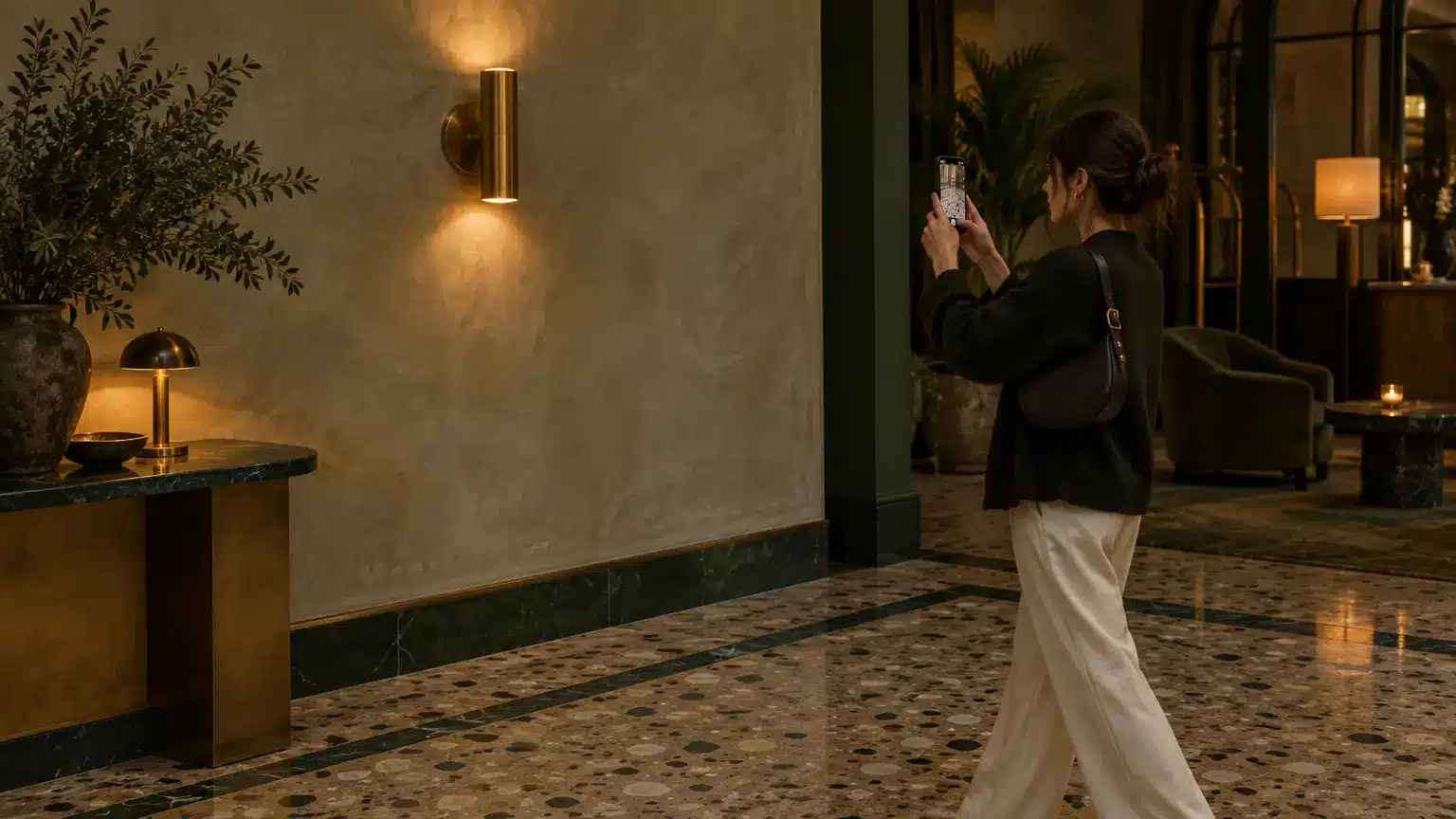

Ask an interior designer where their best ideas come from, and very few will say Pinterest. They’ll tell you about the terrazzo floor in a hotel bathroom in Lisbon, the way a small bistro layered three kinds of lighting over a single bar, or the moody green a friend used on a hallway ceiling. The ideas that stick usually come from real spaces, seen in person, at the moment you least expect them.
The trouble is that those moments pass quickly. You notice something beautiful, you tell yourself you’ll remember it, and by the time you’re home and standing in front of the paint aisle, the details are gone. Learning to spot good design in the wild is only half the skill. The other half is saving it before it slips away.
Why Real Spaces Beat Screen Inspiration
A photo on a screen is someone else’s edit. The lighting has been adjusted, the angle chosen, and anything messy cropped out. That’s not a bad thing, but it can be misleading when you’re trying to recreate a look at home.
Seeing a space in person gives you information a screen can’t. You get a sense of true scale, so you can tell whether that oversized pendant actually overwhelms the table or just looks dramatic in a wide shot. Textures like limewash, bouclé, honed marble, and raw oak all read flat in photos, but in person you understand why they work. You also see how light changes the room, since a warm white that glows at dinner might look gray at noon. And you notice how a space feels, from the ceiling height to the acoustics to how easily you move through it.
This is also why so many of the design details people notice without knowing why are hard to spot online. They’re felt more than seen.
Places Worth Paying Attention To
Once you start looking, inspiration shows up everywhere. Some places are especially generous with ideas because professionals designed them to make an impression.
Boutique hotels. Hotels are essentially showrooms for durable, beautiful materials. Lobbies are great for lighting and seating arrangements, while guest bathrooms often have clever tile layouts and storage ideas that translate well to smaller homes.
Restaurants and cafés. Pay attention to how they handle lighting, wall treatments, and flooring in high-traffic areas. Many restaurant designers are experts at making a room feel warm without clutter.
Open houses and model homes. These are staged to sell, so they show current trends applied to real floor plans. Look at paint transitions between rooms and how furniture is scaled to the space.
Museums and galleries. Beyond the art, notice the millwork, gallery lighting, and the way neutral walls are chosen to let objects stand out.
Garden centers and nurseries. Great for outdoor ideas like planter groupings, path materials, and pergola details you might want for your own patio.
Friends’ homes. Often the most practical inspiration of all, because you can ask what paint they used and whether they’d do it again. Just ask before taking photos of someone’s space.
What to Actually Capture
A vague photo of “a nice room” rarely helps later. The most useful inspiration is specific, so when something catches your eye, try to pin down exactly what it is that you like.
- Walls and finishes. Take a close-up of the texture, then a wider shot that shows how it works with the trim and ceiling color.
- Lighting and atmosphere. Note every light source in the room, from ceiling fixtures to wall sconces and table lamps. That cozy glow often comes down to color temperature, and warmer bulbs in the 2700 to 3000 K range are what most living spaces use to feel inviting.
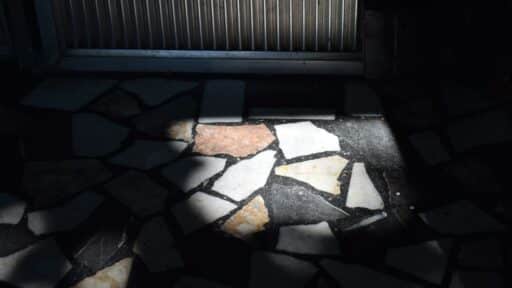
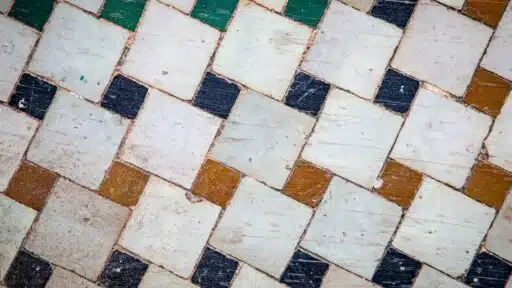
- Flooring. Capture the pattern, the grout color, and the point where it meets the wall or another floor.
- Seating areas. Look at furniture spacing, the rug size relative to the sofa, and how tall the side tables are.
- Color combinations. Photograph all the colors together, ideally in daylight.
- Storage ideas. Notice how a cabinet opens, how deep it is, and what it’s built from.
If you’re drawn to a bold feature wall, for instance, a close-up of the texture paired with a wider shot of the room will tell you far more than either one alone. It’s the difference between knowing you like it and knowing how to build it, which makes browsing accent wall ideas later much more productive.
Saving Ideas in the Moment
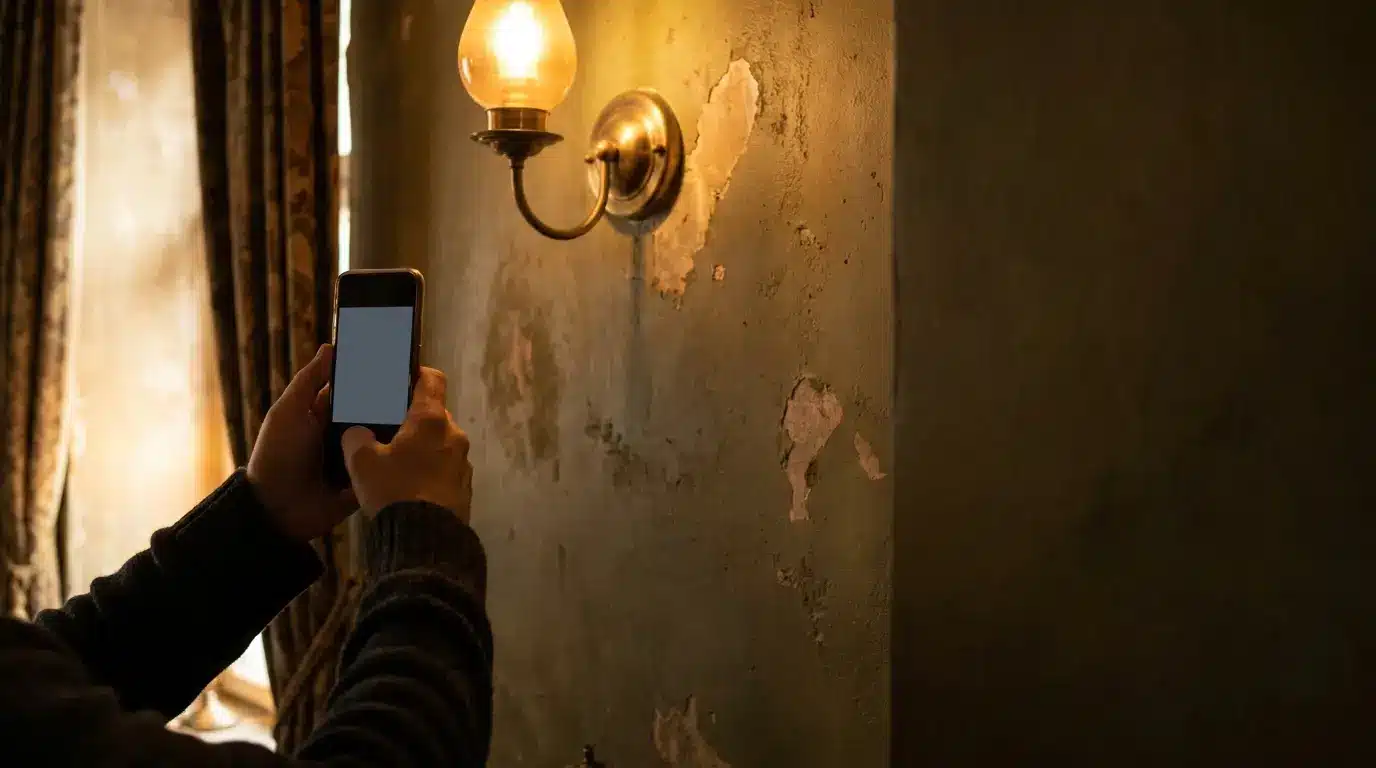
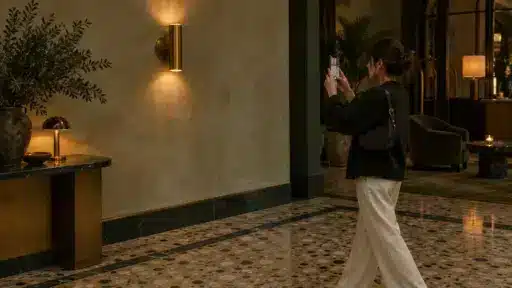
The biggest obstacle to collecting inspiration is timing. Good ideas tend to appear when you’re busy doing something else, like eating dinner, touring a house, or walking through a hotel with your luggage. Pulling out your phone can feel awkward, especially in a restaurant or someone else’s home, so most people simply don’t.
Small habits make a big difference. A running note on your phone just for design finds works well, and even three words like “black grout, white hex” can save an idea. Voice memos help when your hands are full, letting you describe what you see and why you like it while it’s still fresh. A quick photo is often the most useful record of all, as long as it’s appropriate to take one.
For people who collect ideas constantly, Meta AI glasses have become a surprisingly practical option. They let you grab a photo of a herringbone floor or a brass sconce by voice while you’re still mid-conversation over dinner, without breaking the moment to dig through a bag. Because they look like a regular pair of frames, they fit into the same settings where you’d find the best inspiration. It’s still good manners to be mindful of the people around you, though, since the glasses show a small light when they’re capturing.
Whatever method you use, the goal is the same: record the idea within seconds of noticing it. The details you think you’ll remember are the first ones to fade.
Turning Snapshots Into a Plan
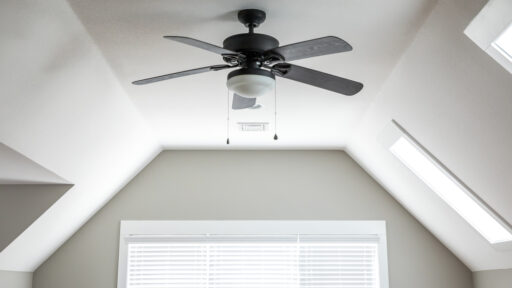
A camera roll full of random ceilings and tile close-ups isn’t a plan yet. Setting aside a few minutes each week to sort what you’ve collected turns scattered snapshots into something you can use.
- Sort by room. Create folders or albums for the kitchen, bedroom, entryway, and outdoor spaces. Some ideas will fit more than one, and that’s fine.
- Add a note to each photo. Write down what you liked about it. “The contrast between the dark cabinets and the pale floor” is far more useful than an unlabeled image.
- Match colors to real swatches. Bring your photos to the paint store or compare them against brand color tools. Photos shift color depending on the light, so always test a sample on your own wall. Benjamin Moore suggests brushing samples onto foam board so you can move them around the room and see how they change throughout the day.
- Check the practical side. That polished stone floor looked stunning in a hotel, but will it hold up to a muddy dog? If you’re planning an entry, for example, compare your finds against durable entryway flooring ideas before committing.
Editing Your Inspiration
After a few months of collecting, something interesting happens. You’ll notice the same things showing up again and again. Maybe it’s warm wood against deep green, or low lighting from several small sources, or rooms that mix old and new pieces. Those patterns are your actual style, and they’re often different from what you assumed you liked.
This is where your collection becomes truly valuable. Instead of chasing every trend you see online, you have a record of what consistently makes you stop and look. Keep the ideas that come up repeatedly and let go of the one-offs. A small, focused set of references will guide your decisions far better than a thousand saved pins.
The best part is that the habit never really ends. Once you train your eye to notice good design, every trip, dinner, and walk through a new building becomes a chance to find the next idea for your home.

With a Master in Architectural Studies from University of Pennysylvania, Marwa Haydar has pioneered living spaces since 2005. Her expertise, initially honed in a prestigious architectural firm, is evident in her approach to creating environments. Marwa became part of our team in 2019 and has since been a driving force in our home improvement section, known for her practical yet stylish solutions. She’s been spearheading our design workshops since then, infusing her passion for teaching into her work. In her leisure time, Marwa enjoys exploring historic architecture and is an enthusiastic pottery hobbyist, further enriching her understanding of form and texture.