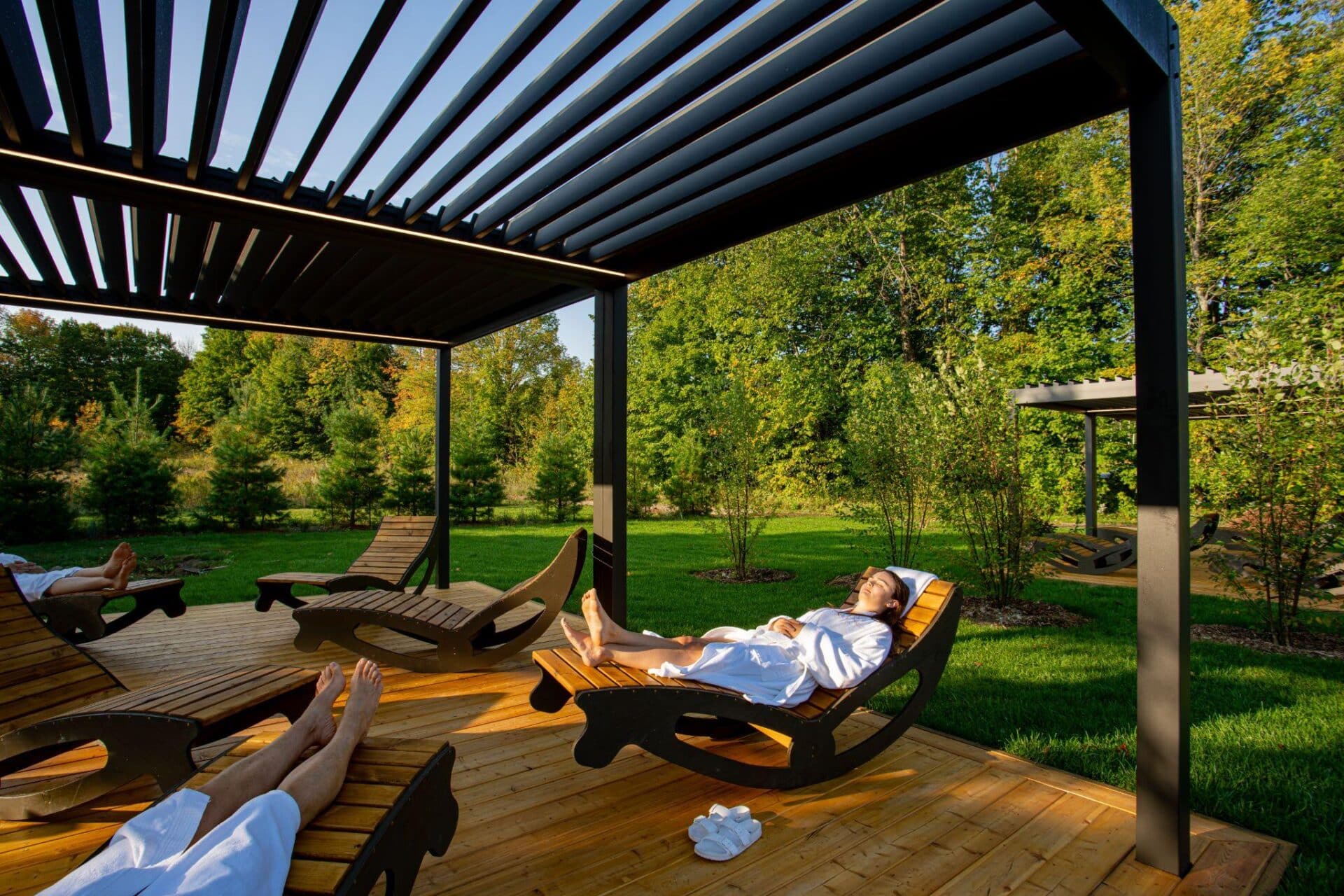

New cushions and a few planters can soften a patio without making it feel finished. When furniture has no clear relationship to the house or garden, decoration has little to build on.
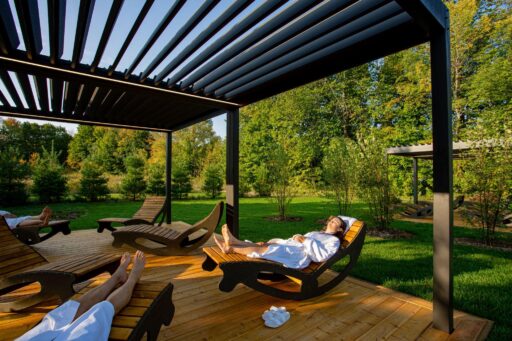
An aluminum pergola offers one way to establish that missing framework: its lines define a room overhead while leaving the arrangement below open to light, planting and everyday movement.
A Patio Often Needs Structure More Than Decoration
An unfinished feeling usually has a spatial cause. The table may sit too far from the door, the lounge chairs may face an unappealing corner, or the seating group may appear small against a broad stretch of paving.
Adding objects can hide those issues briefly, but it also creates more surfaces to clean and more furniture to move when the space is needed for something else.
Before choosing accessories, the household can identify one main activity and the view that should accompany it. A dining patio and a quiet reading terrace do not need the same centre of attention.
Keeping that distinction clear helps determine the scale of cover and the amount of furniture. The garden does not need to accommodate every possible outdoor activity within one symmetrical arrangement.
Create a Visual Frame Before Layering Accessories
An overhead frame establishes edges that paving alone may not communicate. Its height, width and post positions influence whether the space feels intimate, generous or crowded.
A roof that extends well beyond the furniture can feel disconnected from the activity beneath it, while a tight footprint may leave chairs exposed whenever they are occupied. Usable dimensions matter more than the outline viewed from above.
Several visual relationships help the frame settle into the property. They can be tested with a measured plan and simple markers before a final design is selected:
- The main beam relates to a meaningful line on the façade without awkwardly cutting across windows.
- Posts sit clear of doors and do not interrupt the principal view from the house.
- The roof footprint accommodates furniture in use, including chairs pulled away from the table.
- The structure leaves enough open garden around it to avoid dominating the entire site.
- Its proportions suit the house rather than copying a photograph from a different setting.
These are composition questions, not structural instructions. The final layout still needs suitable supports, drainage and connections.
A refined appearance depends on resolving those requirements early, because improvised brackets or exposed service routes can undermine an otherwise restrained design.
Why Aluminum Works with Modern and Transitional Homes
Aluminum framing can create precise edges and a consistent profile, which makes it useful for both contemporary and less strictly modern exteriors. On a traditional house, a simple frame can provide a quiet contrast rather than imitate decorative details.
On a modern façade, it can continue existing horizontal lines. Neither approach requires every outdoor surface to match exactly.
Finish selection works best in relation to the whole elevation. A dark frame may connect with window trim, while a lighter roof can reduce the visual weight of overhead coverage. Samples viewed outside reveal how colour and sheen change beside brick, stone or siding.
A finish that looks neutral on a screen may appear warmer, cooler or more reflective in the actual garden.
Let Light and Shadow Do Part of the Decorating
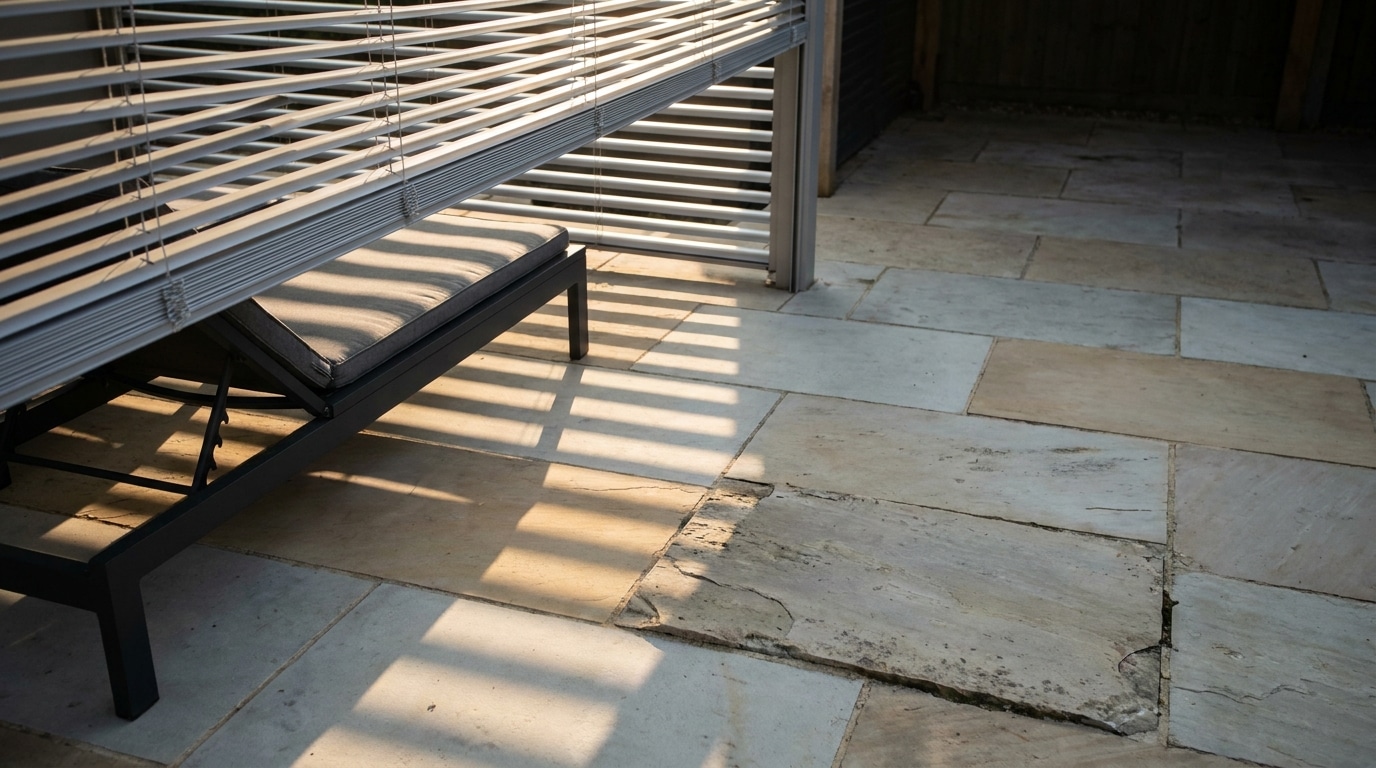
Where adjustable louvers are included, the changing pattern of daylight becomes part of the room’s character. Their orientation affects when sun enters and where shadows fall, so the desired lunchtime or evening conditions should influence the plan.
The presence of an adjustable roof does not mean every seat can receive the same light at every hour. Furniture position remains part of the solution.
At night, lighting should support activities and preserve the atmosphere beyond the frame. A bright perimeter alone can make the roof more prominent than the people below it.
Lower, carefully directed light can help a dining or seating area feel comfortable without washing out the garden. Dimming, glare and views from neighbouring spaces deserve attention alongside fixture appearance and weather suitability.
Add Personality Through Furniture and Greenery
Once the main lines are settled, a few complementary elements can create character. Each addition should provide a distinct contribution rather than repeat what another piece already does:
- A properly sized outdoor rug can connect a seating group where the surface and drainage conditions suit it.
- A limited textile palette can introduce colour without competing with the planting.
- One substantial planter may define an edge more clearly than several unrelated small pots.
- Comfortable seating should fit the routine that prompted the patio project in the first place.
- A selective privacy element can soften one exposed view while keeping other sides open.
The arrangement also needs to work between gatherings. Cushions require storage, plants need watering and surfaces need cleaning. Oversized planters or heavy furniture can make those tasks unnecessarily difficult.
Choosing pieces that are easy to maintain protects the intended calm appearance more effectively than relying on constant rearrangement before the patio is used.

Robert Thompson, a proud alum of the University of Oregon with a degree in Landscape Architecture, has been a leading figure in outdoor space enhancement for over 17 years. He started his career with a landscape design firm, gaining invaluable experience creating functional and attractive outdoor living areas. Robert joined our website in 2018, where he quickly became known for his innovative yet practical advice on outdoor renovations. He has been the chief editor of our deck and patio section ever since then, helping readers transform their outdoor spaces into personal retreats. When not drafting designs or writing, Robert is an avid kayaker, often drawing inspiration from nature for his creative projects.