
Large construction projects need bathroom components that arrive in the correct quantities and match approved plans. A commercial bath supplier supports procurement, material selection, delivery coordination, and installation.
The work covers toilet partitions, accessories, and lockers while project teams manage schedules, inspections, and site access. Clear specifications and dependable dispatch reduce rework during new construction, renovations, and rehabilitation projects. The following sections explain how that support fits into an active construction schedule.
Project managers need a supplier that can review plans, confirm quantities, and coordinate deliveries with each construction phase. The official MJ Products website gives project teams a reference for commercial bathroom materials, installation services, and project contacts. Reviewing those details helps contractors compare partition, accessory, and locker requirements before purchase orders reach the field.
Plan Review and Material Coordination
A large project often repeats the same restroom layout across several floors or buildings. The supplier reviews those layouts to identify toilet partition counts, accessory schedules, locker quantities, and installation requirements.
That review helps prevent mismatched finishes, incomplete accessory packages, and late changes. It also gives contractors a clearer basis for estimating labor, planning delivery timing, arranging storage, and scheduling installation.
Material coordination must follow the construction schedule. Bathroom products usually arrive after walls, flooring, and utility work reach the required stage. Early planning keeps materials from sitting unprotected on a crowded job site.
Material Supply for Large Projects
The supplier provides toilet partitions, toilet accessories, and lockers for commercial construction. Its product range includes metal toilet compartments and accessories held in a 12,000-square-foot warehouse in Fenton, Missouri.
Warehouse stock gives project teams a practical source for commonly requested items. It also supports organized dispatch when a project needs materials for several restroom areas at separate stages.
The supplier distributes products from recognized manufacturers, including Bobrick, Global Partitions, Scranton Products, Kimberly-Clark, and Koala. Product selection still depends on project specifications, approved submittals, and the design team’s requirements.
Installation at the Job Site

Supply and installation require separate coordination, even when one company manages both functions. The installation team must confirm site readiness, verify dimensions, and work from the approved layout before placing partitions or accessories.
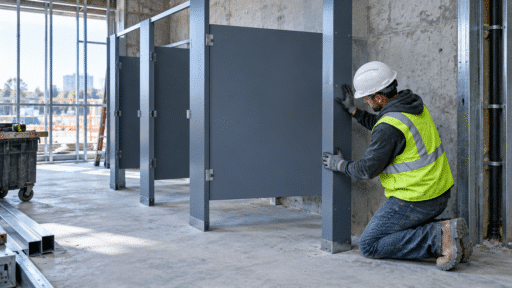
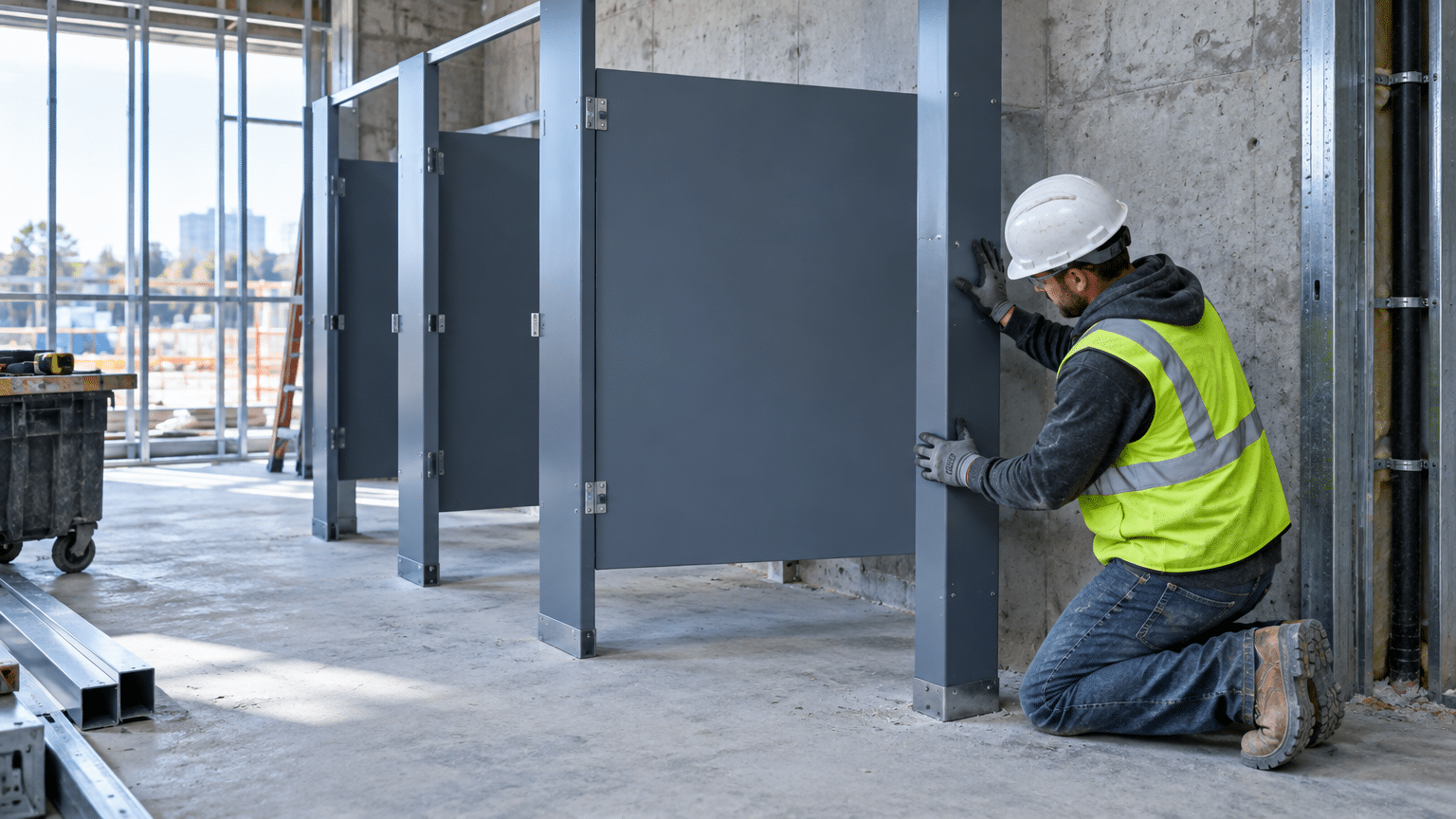
Toilet partition installation requires accurate measurements around walls, doors, plumbing fixtures, and floor conditions. Accessory installation also requires correct placement for dispensers, grab bars, hand dryers, and related equipment.
Locker installation follows a similar process. Crews must account for wall conditions, clearances, anchoring points, and the intended room layout. Careful site coordination prevents this work from interfering with other trades.
Support for Different Build Types
Commercial bathroom suppliers work across several types of construction. The supplier provides material supply and installation for new construction, renovations, and rehabilitation projects.
The project setting also changes coordination requirements. The company reports experience with commercial, industrial, institutional, government, education, and healthcare construction projects.
A school renovation requires different scheduling decisions than a healthcare build or tenant-finishing project. The supplier must follow the site rules, access limits, inspection process, and handover schedule established for each project.
Compliance and Design Assistance
Accessibility requirements affect restroom layouts, grab bar positions, clearances, and fixture relationships. The supplier provides design-build assistance related to Americans with Disabilities Act design standards, regulations, and compliance.
Design assistance helps project teams address bathroom requirements before installation begins. It also gives contractors a place to raise questions about dimensions, accessory placement, and product coordination during plan review.
Compliance work still requires the project’s architect, engineer, and contractor to confirm applicable requirements. A supplier’s input supports coordination, but the project design documents control the final installation.
Scheduling, Storage, and Delivery
Large projects rarely need every bathroom product on a single day. A phased dispatch plan can match material deliveries with room completion and available storage space.
Project teams should confirm quantities, delivery locations, access instructions, and requested dates before dispatch. They should also identify who will inspect materials and report damage or shortages after delivery.
Organized storage protects finished surfaces and keeps components easy to identify. Clear labeling by floor, room, or building helps installation crews find the correct items without opening every package.
A Practical Procurement Process
A useful procurement process begins with the drawings and specifications. The team then confirms product types, quantities, finishes, mounting requirements, and installation responsibilities.
Next, the supplier and contractor review the schedule. This review should identify long-lead items, warehouse requirements, phased deliveries, and site contacts.
Before work begins, the contractor should confirm that the area is ready for installation. A final check of measurements, access, and approved materials reduces avoidable corrections after crews arrive.
Conclusion
A commercial bath supplier connects product selection, warehouse supply, delivery planning, and field installation for large-scale builds. That coordination gives contractors a clearer process for managing partitions, accessories, and lockers across new construction or renovation work.
Before issuing a purchase order, project teams should provide the drawings, specifications, quantities, schedule, and site requirements for review. An early, detailed check creates a practical plan for dispatch and installation.

Holding a Master’s in Construction Management from Purdue University, William Ray has dedicated more than two decades to studying and applying construction principles. His professional journey includes a tenure with a prominent construction firm, where he specialized in project management and building technologies. William brought his knowledge to our team, providing in-depth insights into practical construction techniques. As the leader of our beginner’s guide to building since 2019, he has a knack for breaking down intricate processes into easily digestible content. When not involved in writing or onsite consultations, William enjoys woodworking and volunteering in community building projects, which aligns with his passion for hands-on construction and community service.