


Most people don’t think much about their kitchen trash bags until they start tearing too easily or filling up too quickly.
The 13-gallon bag is the familiar choice for many American households. People often wonder why this size became so popular and whether it’s the right choice for every kitchen.
A 13-gallon bag holds approximately 49.2 liters or 52 quarts. It is commonly marketed as a tall kitchen trash bag. Most standard household kitchen bins are designed around this capacity. However, the right bag depends on the bin’s dimensions and shape.
Why 13 Gallons Became the Go-To Kitchen Size
13-gallon bags occupy such an established position in the household cleaning market. Smaller bags may require frequent replacement, while significantly larger bags can be inconvenient for everyday kitchen waste.
A 13-gallon bag can accommodate common household waste, including food packaging, paper towels, disposable containers, and general kitchen rubbish. Many freestanding and cabinet-mounted kitchen waste bins are designed to accommodate this size.
The format’s popularity means consumers can find multiple options, including drawstring, scented, unscented, and heavy-duty varieties.
What Actually Fits Inside a 13-Gallon Trash Bag?
Common kitchen waste such as empty food packaging and wrappers, paper towels and napkins, disposable plates and cups, vegetable peelings and other non-composted food scraps can easily fill a 13-gallon trash bag.
The actual amount a bag can hold depends on the type of waste.
For example, lightweight packaging takes up considerable space without adding much weight. Wet food scraps and heavier discarded materials can make a bag difficult to lift even when it is not completely full.
Capacity and weight are different considerations. A bag that has not reached its full volume can still become too heavy or experience excessive strain.
The Measurements Matter More Than the Number on the Box
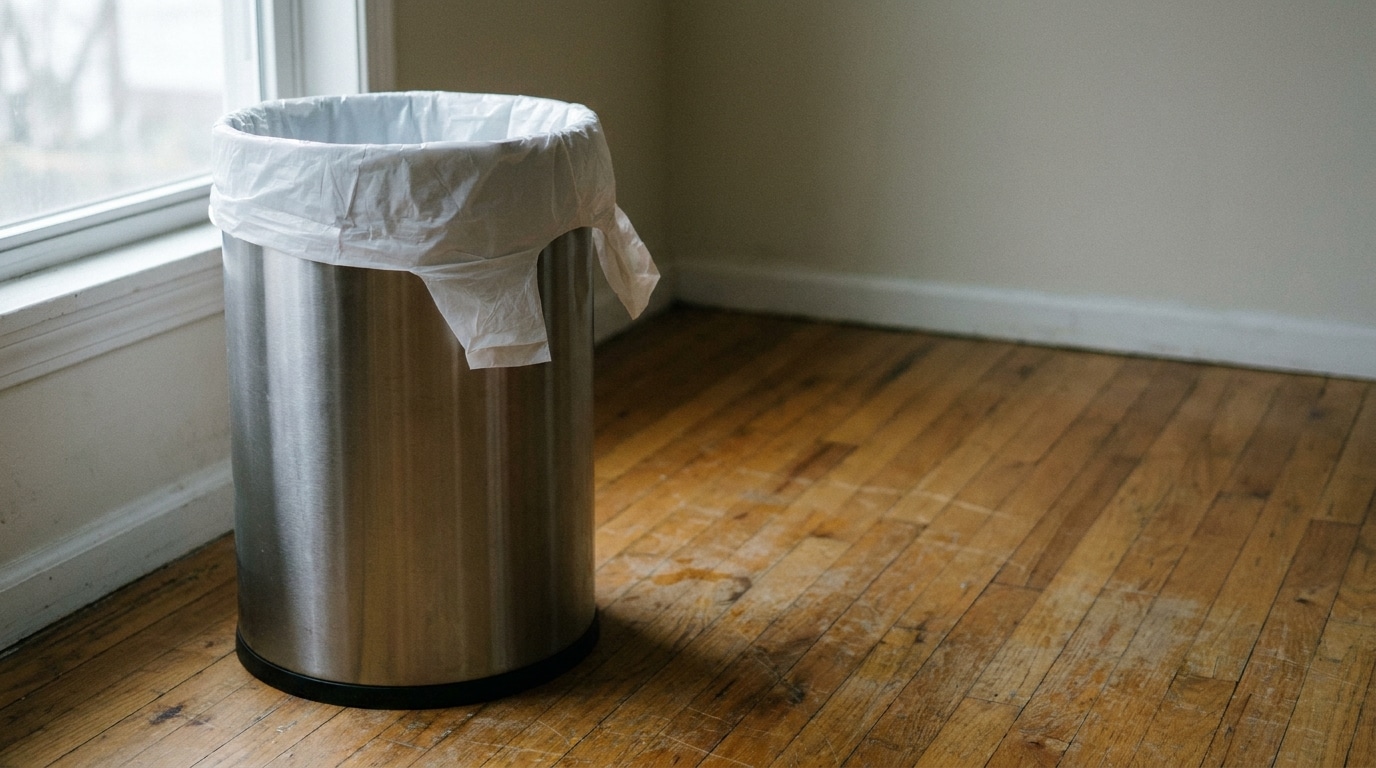
Two bags labeled 13 gallons might not fit the same trash can equally well.
Look into the following measurements:
- Width: bag must stretch around the bin opening without excessive tension.
- Height: It needs enough material to cover the sides and fold over the rim.
- Shape: Round, rectangular, slim, and square bins can require different bag dimensions.
- Overhang: Additional material helps keep the bag in place and makes removal easier.
When Should You Size up From 13 Gallons?
Moving to a larger bag is not necessarily about having more waste. Sometimes, it is about making everyday cleanup easier.
1. Large or busy households
Families with several members may generate more packaging, food waste, and everyday rubbish. A larger bag can reduce the frequency of replacements.
2. Frequent home cooking
People who prepare most meals at home may discard considerable quantities of food packaging, produce scraps, and disposable kitchen materials.
3. Oversized kitchen bins
Some households use larger freestanding bins or bins with wider openings that require more capacity and different dimensions.
4. Entertaining and hosting
Dinner parties, celebrations, and family gatherings can produce more waste than an ordinary day. A larger liner can be useful during these periods.
5. Bulky but lightweight waste
Empty cartons, food boxes, and packaging can fill a 13-gallon bag quickly without making it particularly heavy.
16- or 20-gallon options may suit some larger kitchen bins, while 30-gallon bags are generally better for garage and outdoor use.
The bin’s measurements should determine the final choice, rather than household size alone.
How to Choose Between Standard, Larger, and Heavy-Duty Bags
Buying a bigger bag is not always the solution to a tearing or leaking problem.
Take into consideration these three factors:
- Capacity: Choose a larger gallon size when the existing bag fills too quickly or the bin needs more volume.
- Thickness: Consider a stronger liner when handling heavier or potentially sharp household waste. Thickness is commonly expressed in mils, with one mil equal to 0.001 inches.
- Construction: Drawstrings, reinforced seams, and leak-resistant bottoms can improve everyday usability.
Making the Right Choice for Your Kitchen
Standard 13-gallon trash bags work well for many everyday kitchen bins. Larger bags make sense when the bin needs more capacity or waste volume consistently exceeds the available space. Dimensions, thickness, and construction matter as much as gallon capacity.
Frequently Asked Questions
1. Are 13-gallon trash bags a standard kitchen size?
Yes. They are one of the most common sizes for household kitchen trash cans, particularly tall kitchen bins.
2. Can I use a larger trash bag in a 13-gallon trash can?
Yes, as long as it can be secured around the rim. However, excess material may bunch inside the bin, making it less convenient.
3. When should I switch to a larger kitchen trash bag?
Consider sizing up when your current bag fills too quickly, your trash can is larger than standard, or you regularly dispose of bulky packaging.

NKBA-certified designer Harper Williams holds a degree in Interior Architecture from Auburn University and has specialized in high-function kitchens and spa-inspired baths since 2011. She joined us in 2024 to simplify layout planning, fixture selection, and budget tricks for remodelers. Away from CAD files, Harper restores vintage cookstoves and crafts small-batch soaps.