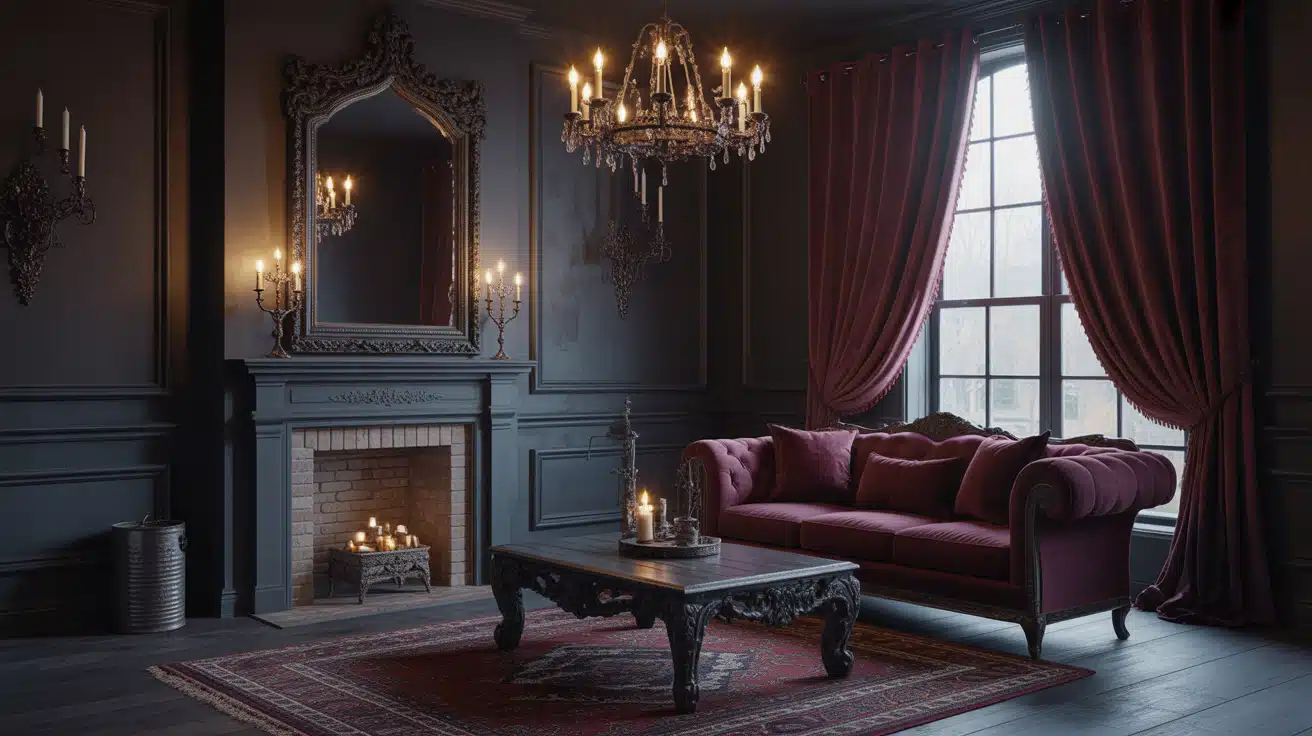

Your friends call your style “dark,” but you see it as bold. Black walls don’t scare you; they excite you.
You’re drawn to velvet, ornate mirrors, and furniture that looks like it belongs in a castle. That’s not weird.
That’s Gothic interior design, and it’s been turning heads for centuries.
Most people think Gothic means gloomy or depressing, but they’re missing the point.
This style combines drama, history, and craftsmanship in ways that modern minimalism can’t touch.
This guide breaks down what Gothic interior design actually is, why it works, where it came from, and how to bring it into your home without turning your living room into a haunted house. Ready to go dark?
What is Gothic Interior Design?
Gothic interior design is a decorative style inspired by medieval European architecture from the 12th to 16th centuries.
It brings cathedral elements, pointed arches, dramatic height, rich colors, and ornate details into residential spaces.
This isn’t about Halloween decorations or teenage rebellion.
True Gothic design reflects craftsmanship, history, and intentional drama. It uses deep colors, heavy fabrics, carved wood, metal accents, and architectural details that draw the eye upward.
The style balances darkness with richness.
Black isn’t just black; it’s layered with burgundy, deep purple, forest green, or midnight blue. Textures matter as much as color. Velvet, leather, stone, and wrought iron create depth and visual interest.
Gothic design works in full rooms or as accent elements. You don’t need to commit to an entire Gothic home.
A single statement piece, such as an arched mirror, a carved wooden chair, and a dramatic chandelier, can shift a room’s entire mood.
Gothic Interior Design Characteristics
These features define the Gothic style and separate it from other dark or dramatic design approaches.
1. Pointed Arches: Tall, narrow arches that mimic cathedral windows and doorways. They create vertical lines that make ceilings feel higher.
2. Dark Color Palettes: Deep blacks, charcoals, burgundies, purples, and forest greens dominate. Metallic accents in gold, silver, or bronze add contrast.
3. Heavy, Luxurious Fabrics: Velvet, brocade, damask, and leather appear on furniture, curtains, and wall hangings. These materials absorb light and add weight to the space.
4. Wrought Iron and Metal Accents: Chandeliers, candle holders, curtain rods, and railings feature intricate metalwork with Gothic motifs like fleur-de-lis or trefoils.
5. Dramatic Lighting: Low, warm lighting from candles, lanterns, or vintage-style fixtures creates shadow and atmosphere. Chandeliers with crystals or candelabras are common.
6. Stained Glass Elements: Colored glass in windows, lamps, or wall art adds color and filters light in distinctive patterns.
7. Religious or Medieval Imagery: Crosses, heraldic symbols, tapestries, and artwork with historical or spiritual themes appear as decorative elements.
Rich History of Gothic Culture
Gothic design didn’t start in living rooms. It began in churches and evolved through distinct cultural movements.
Timeline of the evolution of Gothic design through the centuries:
| Period | Era | Key Developments |
|---|---|---|
| Medieval Origins | 1150-1500s | Gothic architecture emerged in France with soaring cathedrals featuring pointed arches, flying buttresses, ribbed vaults, and rose windows. Famous examples: Notre-Dame, Chartres Cathedral, Westminster Abbey. |
| Gothic Revival | 1800s | Writers like Edgar Allan Poe and Mary Shelley popularized Gothic horror. Architects designed homes, universities, and estates with medieval-inspired pointed arches, turrets, and carved details. |
| Modern Gothic Subcultures | 1980s-Present | The goth subculture brought Gothic aesthetics into fashion and music through bands like Bauhaus and Siouxsie and the Banshees. Gothic interior design emerged with dark walls, vintage furniture, and Victorian decor. |
| Contemporary Gothic Styles | 2000s-Today | Gothic design now includes traditional (medieval-inspired), Victorian Gothic (ornate and romantic), modern Gothic (minimalist dark tones), and industrial Gothic (raw materials with metal accents). |
Interior Design Ideas in Gothic Style
Here are practical ways to bring Gothic design into different rooms without full renovations.
1. Living Room
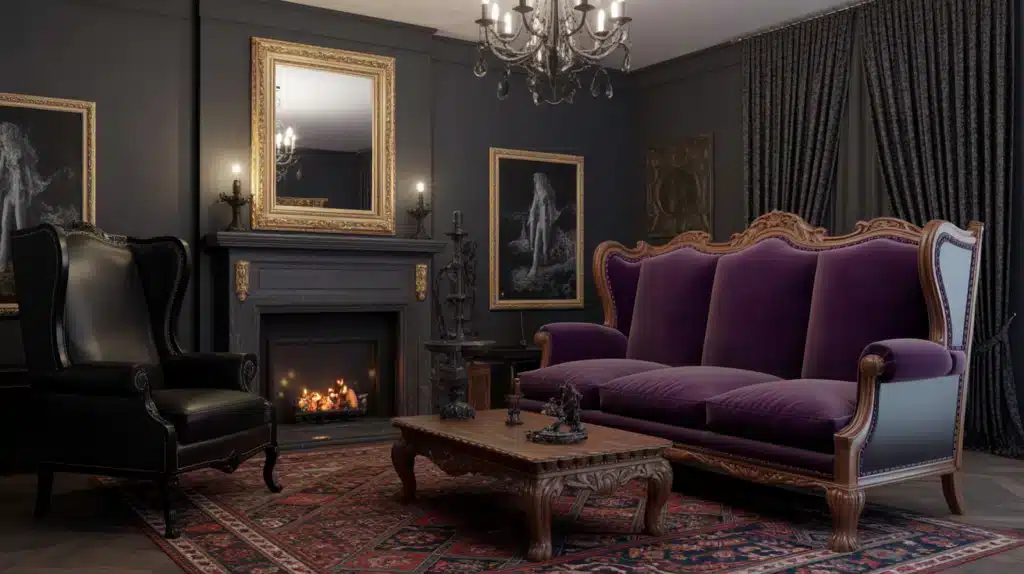
Add a large ornate mirror with carved wooden or metal framing as a focal point.
Choose a velvet sofa in black, deep red, or purple, and hang a wrought iron chandelier or place a vintage floor lamp in the corner.
Display candles in ornate holders on mantles or side tables, and ground the space with a Persian or Oriental rug featuring rich, dark colors.
2. Bedroom
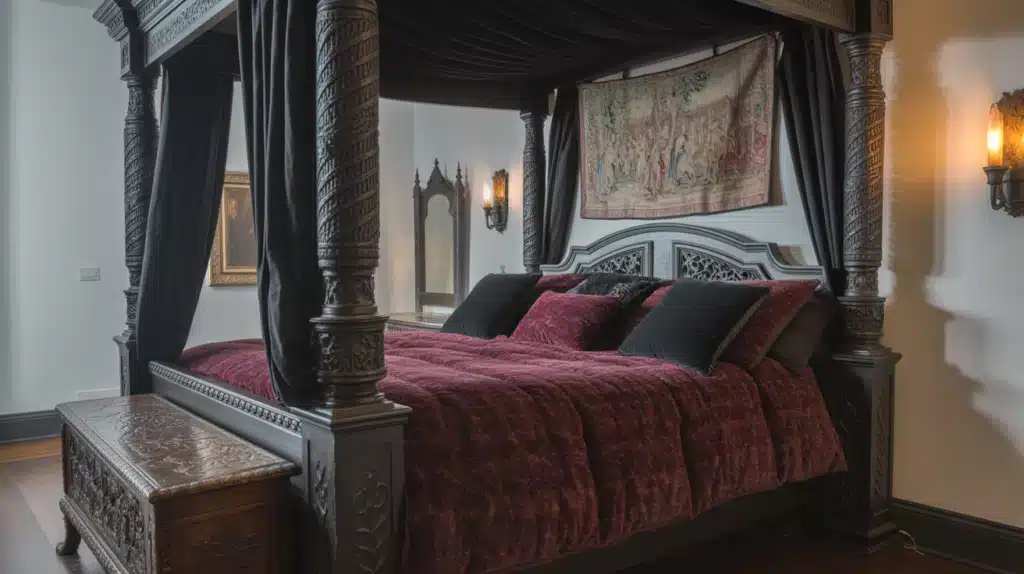
Create a Gothic bedroom sanctuary with a four-poster bed featuring carved wood or wrought iron framing.
Hang heavy velvet or brocade curtains in dark tones to control light and add texture. Layer your bedding with deep-colored quilts, throws, and textured pillows for a luxurious feel.
Display tapestries or Gothic artwork above the bed as a statement piece.
Place antique trunks or carved wooden chests at the foot of the bed for storage with character, and install wall sconces to provide soft, ambient lighting.
3. Dining Room
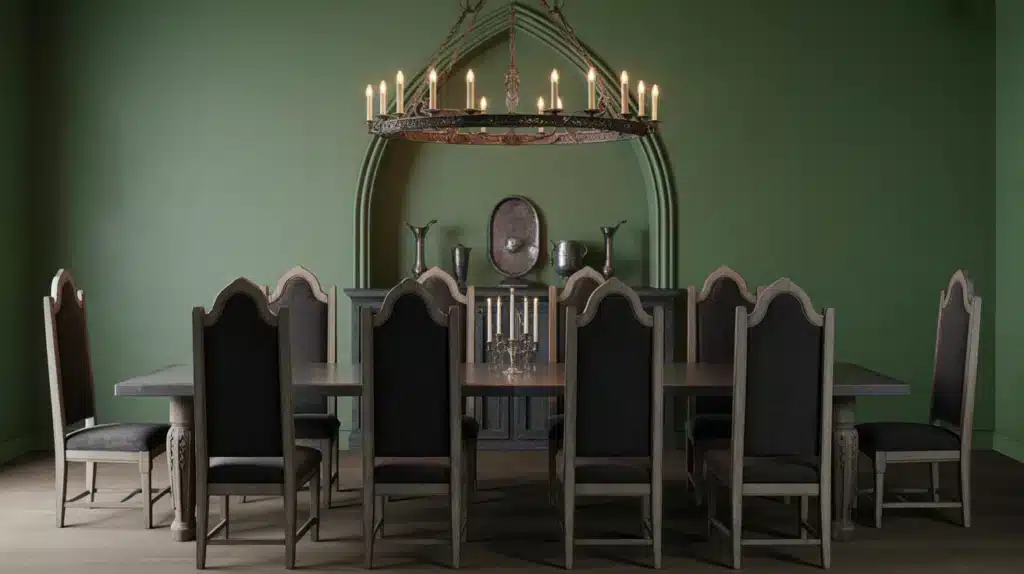
Design a dramatic dining space with a long wooden table featuring carved legs and ornate details.
Pair it with high-backed chairs upholstered in dark fabric for a medieval banquet feel. Hang a dramatic chandelier with candle-style bulbs as the room’s centerpiece.
Display pewter or silver serving pieces on shelves or sideboards to add metallic accents.
Use candlesticks and dark floral arrangements as table centerpieces, and paint walls in dark green or deep plum to create an intimate, moody atmosphere.
4. Bathroom

Turn your bathroom into a Gothic retreat by installing a clawfoot tub in black or dark metal finish as the focal point.
Cover floors and walls with dark tile or natural stone for texture and depth. Add ornate mirrors with antique frames above the sink or vanity.
Choose vintage-style faucets and fixtures in bronze or matte black finishes.
Display candles and apothecary jars on shelves for atmospheric lighting and storage, and hang dark fabric shower curtains featuring lace or damask patterns.
5. Home Office

Build a Gothic workspace using a heavy wooden desk with carved details and substantial presence.
Add a leather office chair in black or burgundy for comfort with style. Install floor-to-ceiling bookshelves and fill them with old books, creating both storage and visual impact.
Hang Gothic-inspired art or framed vintage maps on the walls for character.
Use desk lamps with Tiffany-style stained glass shades to provide warm, colored lighting, and incorporate dark wallpaper with damask or floral patterns on one accent wall.
6. Gothic Restaurant or Cafe Design
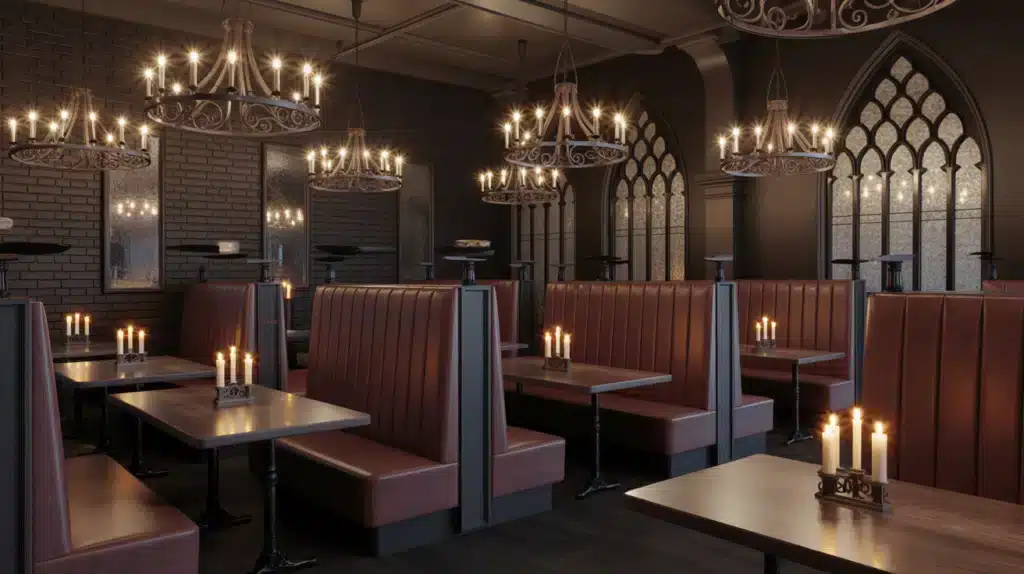
Create a memorable dining atmosphere by using high-backed booths upholstered in dark velvet or leather.
Install dramatic chandeliers with dim, warm bulbs over each table section. Cover walls with dark wallpaper featuring damask patterns or exposed brick.
Use heavy wooden tables with wrought iron details, and place candles in ornate holders on every surface.
Add stained glass panels or Gothic arched windows to filter natural light, creating an intimate, moody space that customers remember.
Why Do People Like Gothic Interior Design?
Gothic design appeals to people who want their homes to feel distinctive, not neutral.
It makes a bold statement that challenges the idea that every room needs bright whites and beige tones.
Everything in Gothic spaces feels substantial, solid furniture, rich fabrics, and meaningful details that reference centuries of craftsmanship.
The style embraces darkness instead of fighting it, creating comfortable spaces for people who prefer low light.
Gothic design also allows creative mixing of eras and styles, from Victorian pieces to modern art, making it flexible and personal.
Conclusion
Gothic interior design isn’t about darkness for darkness’s sake.
It’s about drama, history, and craftsmanship that modern trends ignore.
When you choose deep colors, heavy fabrics, and ornate details, you’re not decorating, you’re making a statement.
This style proves that homes don’t need to be bright and neutral to feel complete. They can be moody, rich, and unapologetically bold.
Gothic design survived centuries because it taps into something real: the desire for spaces that feel substantial and unique.
If you’re tired of interiors that look like every other house on the block, Gothic style offers an alternative.
It just requires the confidence to commit.

With a Master in Architectural Studies from University of Pennysylvania, Marwa Haydar has pioneered living spaces since 2005. Her expertise, initially honed in a prestigious architectural firm, is evident in her approach to creating environments. Marwa became part of our team in 2019 and has since been a driving force in our home improvement section, known for her practical yet stylish solutions. She’s been spearheading our design workshops since then, infusing her passion for teaching into her work. In her leisure time, Marwa enjoys exploring historic architecture and is an enthusiastic pottery hobbyist, further enriching her understanding of form and texture.