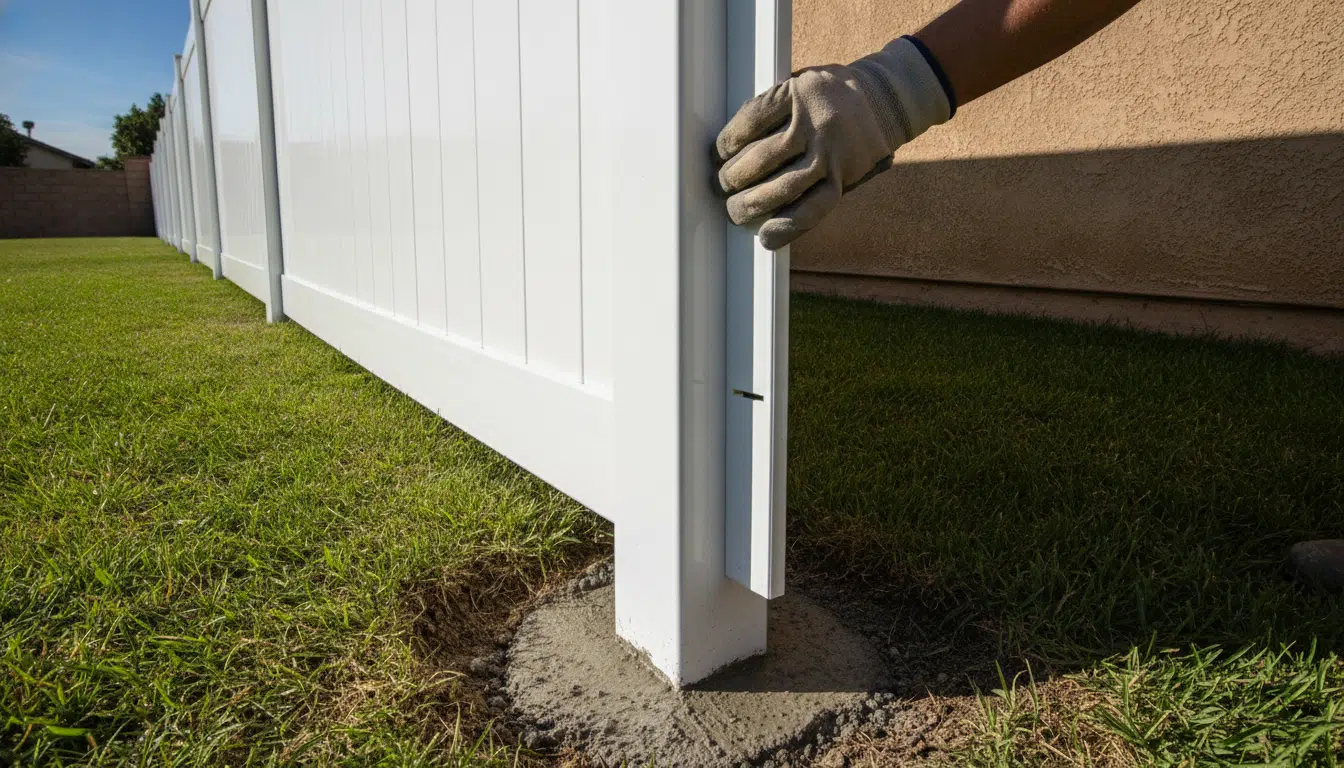

Vinyl fences promise “set it and forget it” curb appeal, yet many warp or buckle because installers skip one small detail: the expansion space PVC needs to breathe.
We looked at licenses, warranties, footing specs, and customer reviews to find seven Van Nuys crews that treat that clearance as non-negotiable—and back it with written proof.
Below you’ll see how we ranked them, what they actually guarantee, and which permits Los Angeles still expects you to pull before the first post hits concrete.
How We Ranked Van Nuys Vinyl Fence Installers
Each company had to pass seven firm gates: an active CSLB license, written warranties for both material and labor, confirmed Van Nuys service, at least 30 combined Google and Yelp reviews, full answers to our installation-engineering questionnaire, and a clear record, meaning no unresolved license discipline or business-identity red flags. Miss one gate, and the bidder was out.
We then scored the survivors on 100 points: 20 for licensing and insurance, 20 for installation engineering (which includes the documented expansion-gap method), 15 for warranty strength, 15 for review quality, 10 for verified operating history, 8 for a genuine San Fernando Valley footprint, 7 for quote and permit transparency, and 5 for documented lead time.
Finally, we re-weighted raw star ratings with a Bayesian formula, so a 5.0 from ten reviews can’t top a 4.8 backed by four hundred.
The Expansion-Gap Test
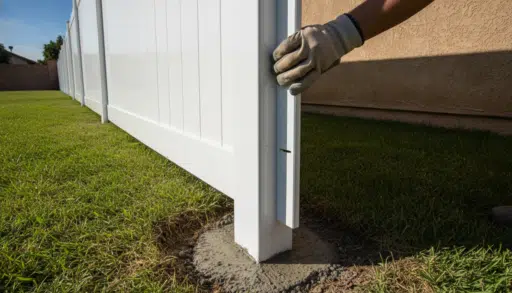
Vinyl shrinks on cool nights and expands when the Valley sun heats the yard. That daily motion needs open space inside every post and rail, or the fence will ripple after a single long summer.
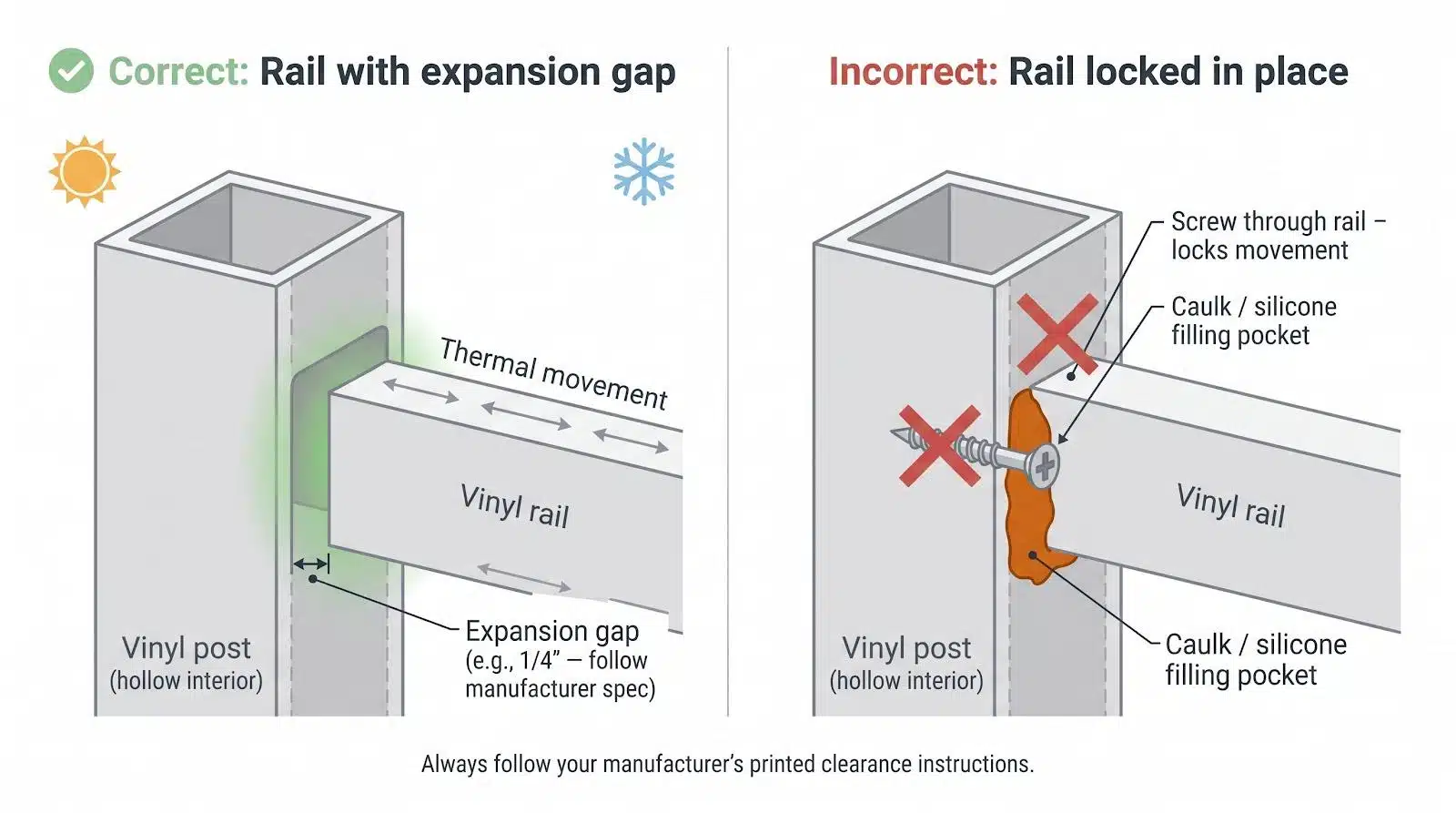
Each manufacturer lists an exact clearance, often a fraction of an inch, that the panel ends must float inside routed posts or U-channels. Installers must keep that space clear, with no stray screws locking rails in place and no silicone filling the pocket. Ask for the printed instruction sheet and have the crew point to the specific clearance before you sign.
Van Nuys Vinyl Fence Installers at a Glance
| Rank | Installer | Score* | Best for | Local base | CSLB # | Material warranty | Workmanship warranty | Fabricates locally? |
|---|---|---|---|---|---|---|---|---|
| 1 | Vinyl Fence Depot | 84 | Local fabrication, stocked parts | Van Nuys | 836988 | Limited lifetime transferable | Not published | Yes |
| 2 | Pro Vinyl Fencing | 82 | Published 5-year labor coverage | Sun Valley | 1104338 | Lifetime transferable | 5 years | Yes |
| 3 | A G Vinyl Fencing | 78 | 7-year craftsmanship term | Chatsworth | TBD | Lifetime | 7 years | Likely |
| 4 | Vinyl Concepts | 76 | Multi-location resources | Newbury Park | 876205 | Lifetime | Pending | Yes |
| 5 | G N G Vinyl Fencing | 74 | Established portfolio | Glendale | 884502 | Lifetime | Pending | Yes |
| 6 | Vinyl Fence Mart | 72 | Walk-in showroom | Northridge | 1105493 | Lifetime | Pending | Parts stocked |
| 7 | Customize Vinyl Fencing | 70 | Custom colors | Northridge | 1069347 | Lifetime | Pending | Yes |
*Scores reflect research completed September 2026 and assume no license or warranty discrepancies emerge during final verification.
1. Vinyl Fence Depot: Best for Local Fabrication and Broad Product Coverage
Vinyl Fence Depot website and local fabrication branding screenshot.
Walk into the Oxnard Street facility and you’ll hear saws cutting rigid PVC for the week’s installs. Your panels are shaped and checked on site instead of being drop-shipped from a distant wholesaler. Local fabrication trims lead times, simplifies color matching later, and lets crews grab replacement parts without waiting on freight.
Two decades of projects across Southern California have given the installers practical know-how for valley soil quirks and pool-barrier inspections. Residential customers receive a limited lifetime transferable warranty (the same coverage detailed on www.vinylfencedepot.com/), while commercial and multi-family jobs carry a 30-year term plus lifetime protection against discoloration.
Service follows a tight sequence. An estimator confirms footage and slope, the office drafts a contract with a modest 10 percent deposit, and fabrication starts once you sign. The crew shows up with panels cut to spec, gate frames pre-reinforced, and hardware staged for a same-day set. You can review the product range and request the full warranty document through Vinyl Fence Depot.
Before you book, ask the project manager to list three details in writing: the exact movement allowance per rail, the footing depth for your fence height, and who handles city or HOA paperwork.
2. Pro Vinyl Fencing: Best for Publicly Described Workmanship Coverage
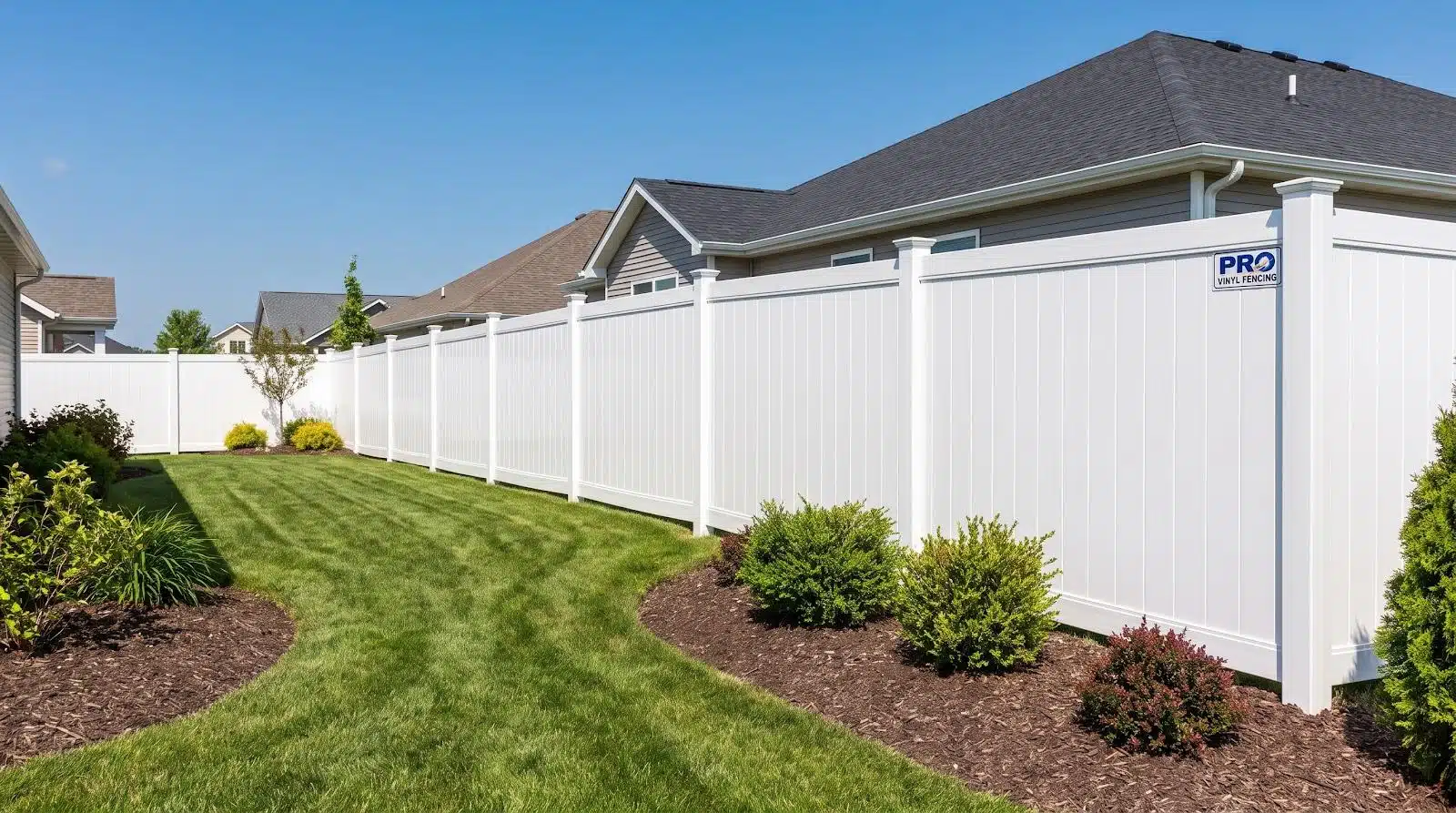
Pro Vinyl Fencing official site screenshot showing vinyl and aluminum services.
Pro Vinyl Fencing spells out its promise: every vinyl job carries a transferable lifetime material warranty plus a five-year workmanship warranty that follows the property long after the truck pulls away. Few competitors publish labor terms this plainly.
The company fabricates its own vinyl and aluminum lines in Sun Valley, pairing rigid PVC with custom gate frames and wall toppers. That in-house control keeps lead times short and color mismatches rare. A consultant measures the yard, sketches slope work, and sends a line-item proposal that separates demolition, footings, panels, and gates.
Before you sign, confirm two points: the clearance each rail needs inside the post, and whether the five-year labor clock resets if the crew returns for an expansion-gap adjustment.
3. A G Vinyl Fencing: Best for a Longer Published Craftsmanship Warranty
A G Vinyl Fencing pairs a lifetime manufacturer warranty with a seven-year craftsmanship term that stays with the property when you sell. Those extra two years of labor coverage stand out in a market where “lifetime” often stops at the gate hardware and never covers the installer’s concrete.
Crews work only on vinyl, patio covers, and related aluminum railings, so you’re not getting a part-time fence team pulled off yesterday’s deck build. The estimator arrives with a code reference sheet for pool safety and slope math, then sends an itemized quote covering lineal footage, gate reinforcement, and post depth.
Because A G lists Northridge as its home base, confirm Van Nuys lead time before scheduling, and ask how the company handles color-matched repairs on custom hues years later.
4. Vinyl Concepts: Best for Established Multi-Location Resources
Vinyl Concepts brings scale to a trade often run from pickup trucks. Showrooms in Newbury Park and Torrance, plus a dedicated parts hub, let the company shift crews, stock, and replacement pickets between branches when schedules or supply chains slip.
Longevity is another edge. The CSLB first issued its license in the late 1990s, and the same legal entity still signs today’s contracts. That continuity means its spec sheets on post depth, slope racking, and steel-reinforced gates draw on thousands of completed jobs.
The public warranty headline is a lifetime material term, while the craftsmanship clock is less clear. Before you approve fabrication, ask for a document that covers labor, color matching, and removal costs, and confirm whether your project will be cut in the company’s own shop or a partner facility.
5. G N G Vinyl Fencing: Best Established Candidate Pending Identity Verification
On paper, G N G checks almost every box — two decades in business, factory-direct vinyl, and a transferable lifetime warranty. Its gallery covers pool enclosures, wall toppers, and lattice accents suited to Valley backyards.
One concern holds the company back. Its Van Nuys page lists 14700 Oxnard Street as a showroom, the same building Vinyl Fence Depot calls headquarters. Until a current CSLB and Secretary of State check resolves that overlap, we place G N G here.
Ask for written confirmation of the business entity on your contract, the active license number, and who carries the bond and workers’ compensation coverage.
6. Vinyl Fence Mart: Best for a Walk-In Showroom and Replacement Parts
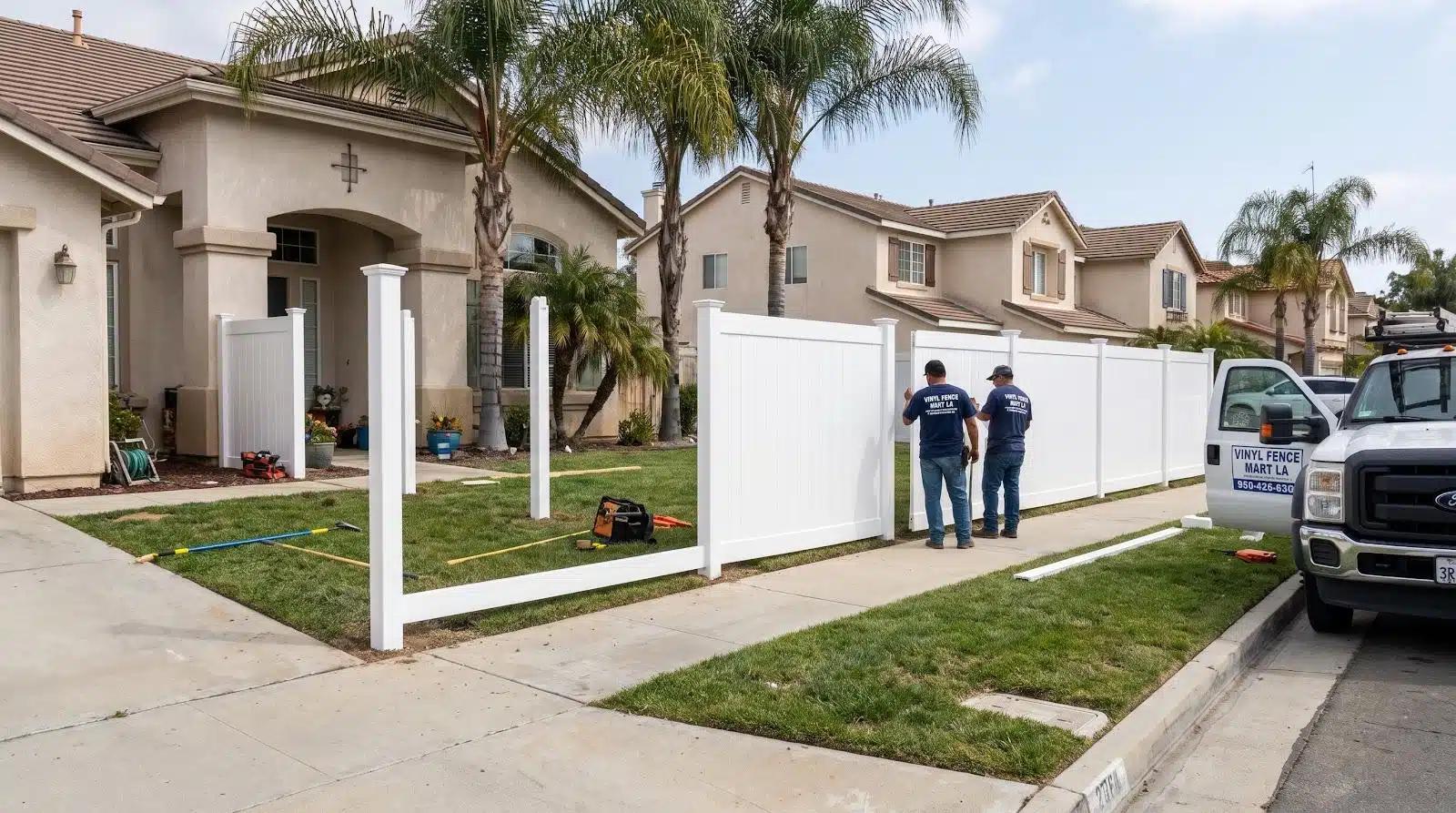
Vinyl Fence Mart Northridge showroom and fencing store screenshot.
Some projects stall because homeowners can’t picture a three-rail ranch style from a website thumbnail. Vinyl Fence Mart solves that with a Northridge showroom where full-height panels, post caps, and gate hardware sit under bright lights. Handling the actual material turns style and color choices into a one-trip decision.
The company stocks common profiles and accessories for quick repairs, which matters when a landscaper’s trailer clips a picket five years from now. Installation crews are available, and the shop will also price a supply-only package if you already have a contractor.
Confirm whether the installers are employees or subcontractors, because that decides who carries workmanship liability, and request both the manufacturer’s lifetime document and the shop’s own labor warranty in one email thread.
7. Customize Vinyl Fencing: Best for Custom Colours and Design Details
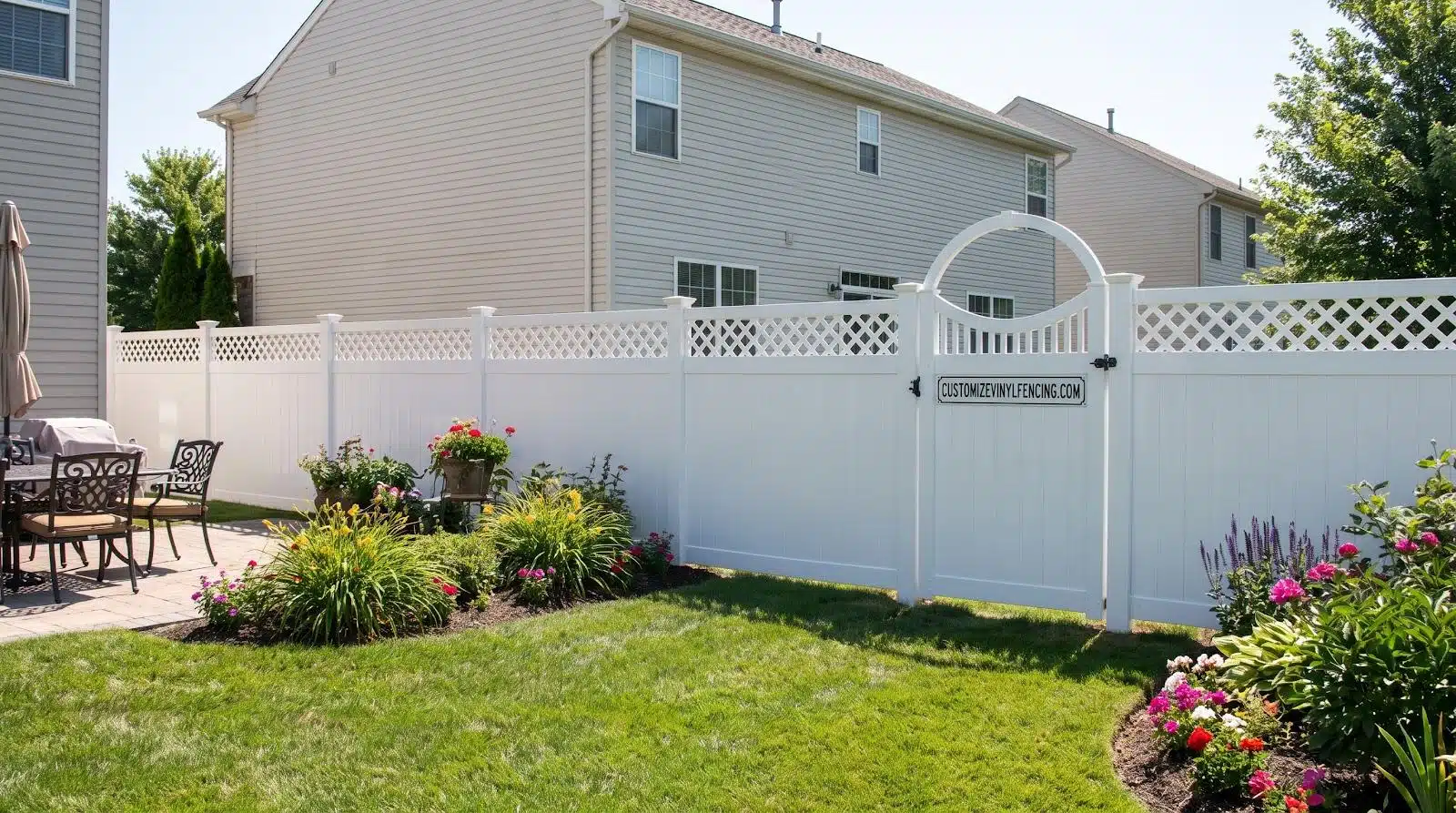
Customize Vinyl Fencing California custom color fence screenshot.
Most vinyl shops stick to white, tan, and clay. Customize Vinyl Fencing treats that palette as a starting point, blending pigments for deeper earth tones and bold hues, then running small batches to match a sage stucco or a charcoal accent wall.
Because pigment affects heat absorption, the crew explains the added reinforcement or wider expansion gaps that darker PVC needs during triple-digit summers. That focus on physics, not just aesthetics, earned this spot.
Verify the current CSLB license status, ask for written fade coverage on your chosen color, and agree on a repair plan if the tint leaves production.
How Much Does Vinyl Fence Installation Cost in Van Nuys?
Vinyl pricing hides inside a dozen moving parts. Material, footage, gates, tear-out, slope, concrete depth, and permit paperwork all pull the number up or down, so tidy “average price” claims rarely hold.
The one figure we can publish responsibly is an older Los Angeles planning benchmark of roughly $30 to $50 per linear foot for standard four- to six-foot privacy vinyl. Treat the midpoint as a planning number, not a 2026 Valley median.
Height increases add material and wind-load engineering. Driveway gates add steel frames, heavy-duty hinges, and sometimes low-voltage wiring. Removing a termite-damaged cedar fence can cost several thousand once dump fees and buried footings appear. Steep slopes need racked panels or stepped bays, and both take more time to set.
Collect at least three written quotes for one identical scope: 100 linear feet, six-foot privacy style, one four-foot pedestrian gate, flat yard, existing wood fence removal, permit handled by the installer.
Van Nuys Fence Permits, Height Limits and Pool Rules
Los Angeles treats fences as two questions: zoning height and building permits. Get either wrong and an inspector can order the panels cut down.
Most backyard vinyl jobs avoid a building permit because the city exempts lightweight fences under ten feet, while masonry hybrids trigger paperwork at 3 feet 6 inches. Only fences over ten feet, or any pool barrier, require a permit, but that exemption never overrides zoning caps.
Zoning limits depend on where the fence sits. Residential fence height and permit rules vary by city. Commonly, heights cap at about 42 inches in the front yard and 72 inches on the sides and rear, but these figures are not universal. Always verify exact height limits and permit requirements with your local planning or building department before assuming a taller number is allowed.
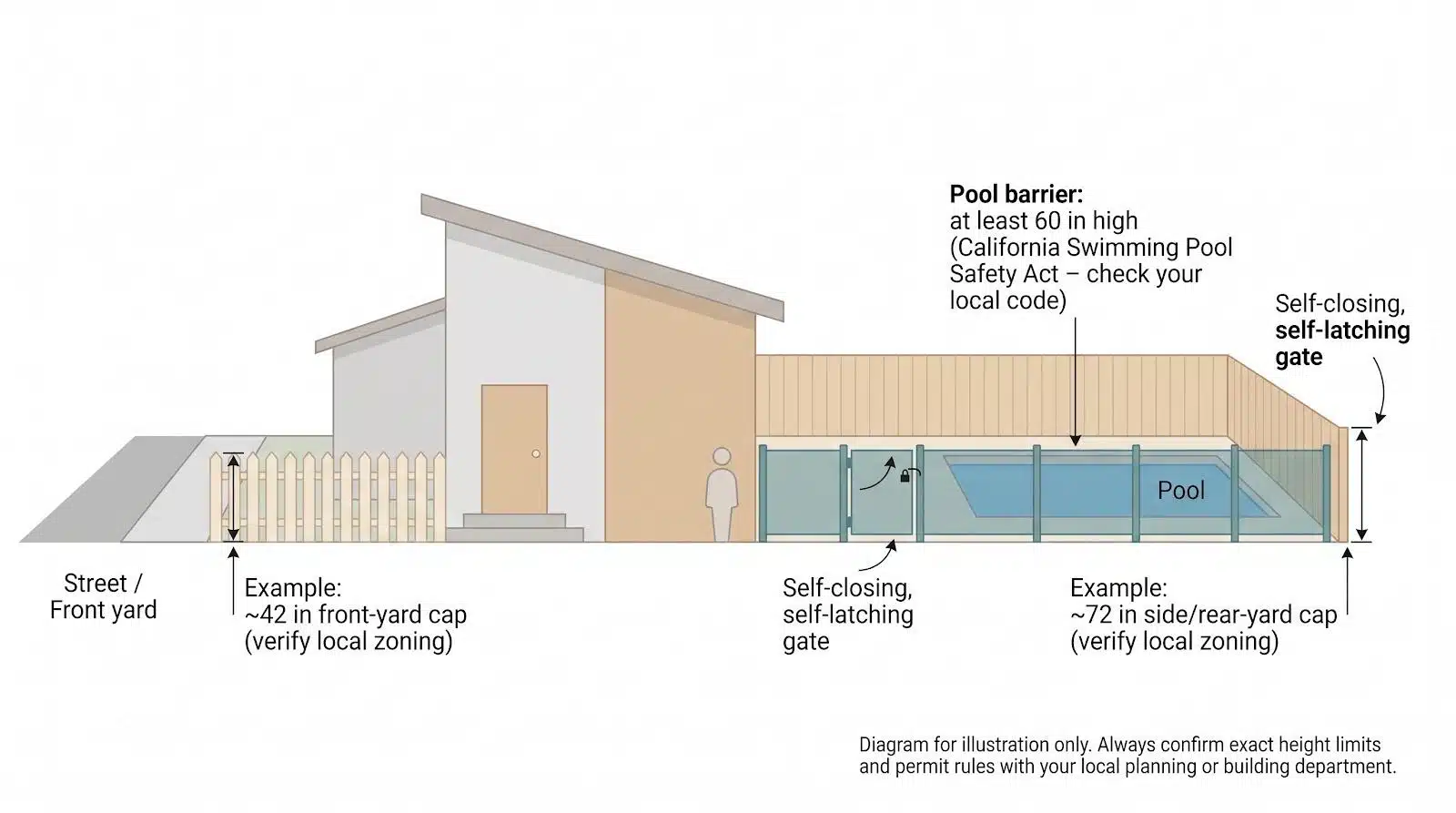
Pool rules add a stricter layer. If the fence also serves as the required enclosure for a new or remodeled pool, the California Swimming Pool Safety Act usually calls for a barrier at least 60 inches high with self-closing, self-latching gates. Exact requirements vary by local authority, so confirm them with your building department. Miss one item and the final inspection fails.
Put the agreed height, bottom clearance, and gate hardware specs in the contract so the installer, the inspector, and your insurer work from the same sheet.
Vinyl vs. Wood, Aluminum and Composite in the Valley
| Material | UV and heat | Termites and decay | Fire behavior | Upkeep | Repairability |
|---|---|---|---|---|---|
| Vinyl/PVC | UV-stable and non-yellowing if made with titanium-dioxide pigment | Won’t rot, rust, or peel; immune to insects | Softens and can ignite; the connection at the house is the weak link | Rinse with mild soap; no repainting | Easy to swap panels if the profile still exists |
| Wood | Needs sealing or staining to shield from sun | Natural food source for termites and fungi | Fully combustible | Re-coat every few years; spot-treat decay | Any carpenter can trim and patch boards |
| Aluminum | Powder coat resists sun | Rust-resistant metal; no organic content | Non-combustible; good near wildfire setbacks (often used for pool-view fencing) | Hose down; touch up scratches | Dents are hard to hide; sections replaced whole |
| Composite | Pigment mixed through the core resists fade | No cellulose for termites | Resin can melt; check the brand fire rating | Occasional wash; no painting | Heavy panels; color matching is difficult if the line is discontinued |
Vinyl is the low-maintenance choice, wood is the design chameleon that demands upkeep, aluminum is the fire-smart pick near structures, and composite costs more both upfront and during repairs. Match the material to your priority—sun fade, wildfire exposure, or pest pressure—then ask each installer about reinforcement, warranty language, and long-term parts availability.
Conclusion
Choosing a vinyl fence installer in Van Nuys comes down to proof: a documented expansion-gap method, active licensing, and clear warranties for both materials and workmanship. Use this list as a starting point, verify every promise in writing, and your “set it and forget it” fence should stay straight long after the summer heat fades.

With a Master’s in Architecture from the University of California, Berkeley, Alexander Martin has dedicated the last 18 years to enhancing outdoor living through thoughtful and robust structure design. His career kicked off in urban planning, giving him a unique perspective on integrating structures into diverse environments. In 2019, Alexander brought his expertise to our website, offering insights into creating versatile outdoor spaces. Since then, he has been the lead advisor for our outdoor design projects and is known for his ability to merge functionality with environmental consciousness. Alexander enjoys rock climbing outside of work and participates in community development projects, activities that reflect his passion for the outdoors and sustainable design.