
Choosing between a deck and a patio can feel confusing, especially when both seem to offer the same outdoor comfort at first glance.
Many homeowners reach this point, unsure which option will actually work better once daily life sets in.
The good news is that the right choice becomes clearer when practical factors are laid out side by side.
This comparison promises a straightforward breakdown based on real use, not just appearance.
It will preview how yard layout, climate, upkeep, and everyday routines influence the decision.
By the end, the difference between a deck and a patio should feel less overwhelming and far easier to decide with confidence.
What is a Deck?
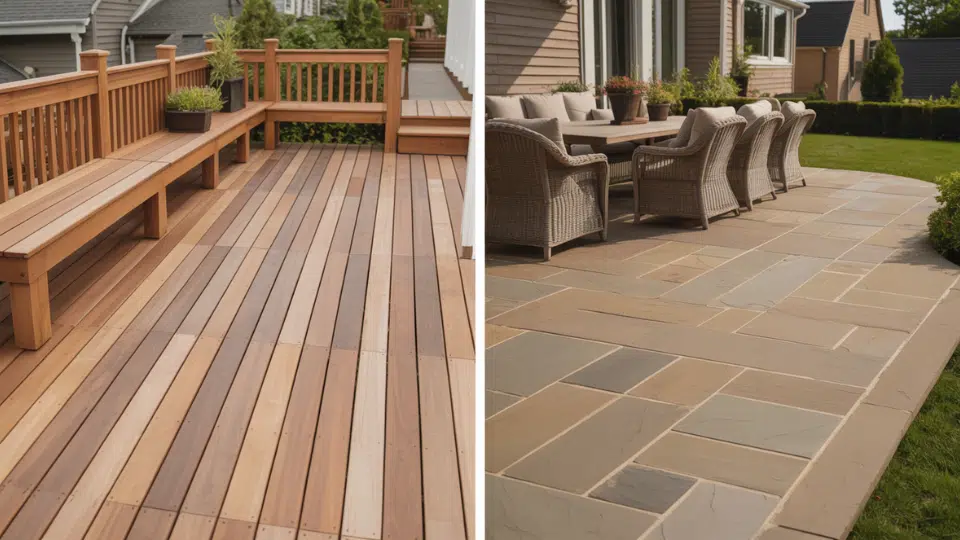
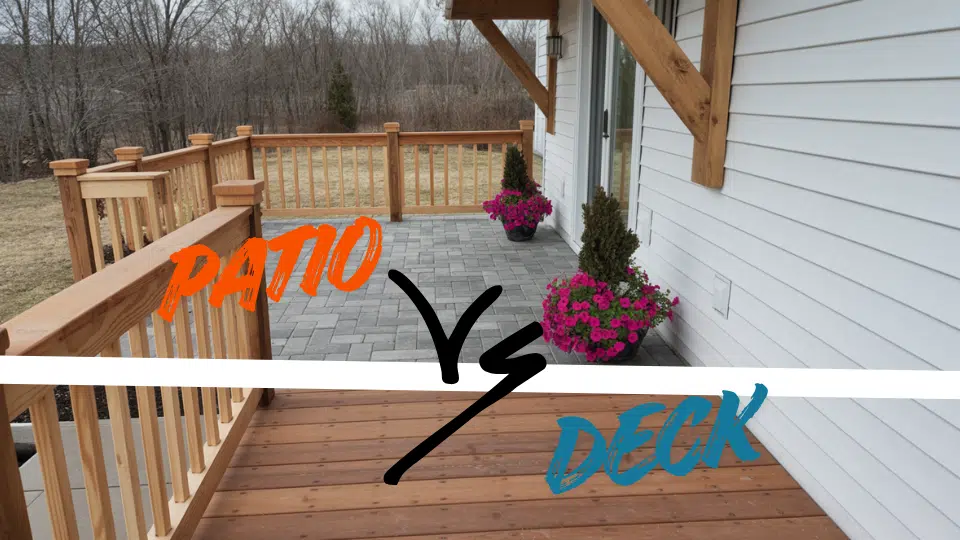
A deck is a raised platform, usually made from wood or composite boards. It can sit a few inches off the ground or rise several feet high. Many decks attach directly to the house, often through a back door or sliding door.
Common deck features include:
- Railings and steps
- Wood or composite surfaces
- Space underneath for storage or airflow
Decks work well when the yard is uneven or when extra height helps improve access.
What is a Patio?
A patio is built directly on the ground. It rests on a prepared base made of concrete, stone, brick, or pavers. Patios often feel like a natural extension of the yard rather than a structure.
Common patio features include:
- Flat, ground-level surfaces
- Stone, concrete, or brick materials
- Easy access from the yard
Patios work best when the land is already level, and drainage is predictable.
Deck vs Patio: Key Differences That Matter
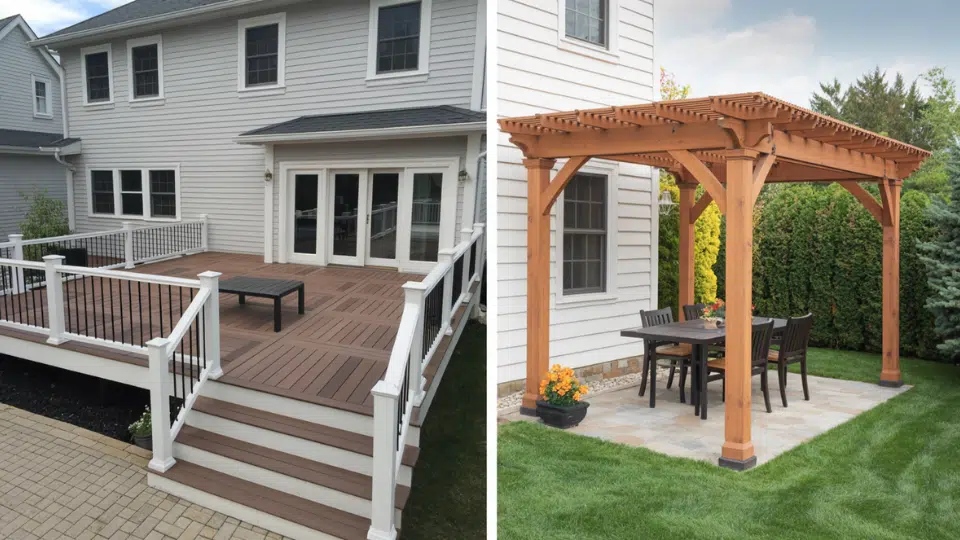
Both options look inviting, but their differences affect cost, effort, and long-term satisfaction.
1. Cost Comparison
Cost often becomes the first deciding factor.
Over time, decks often cost more due to repairs and upkeep. Patios usually remain steady once installed.
| Deck costs | Patio costs |
Higher upfront installation cost Wood decks tend to cost less than composite decks Labor costs increase with height and size | Lower starting cost in many cases Material choice affects pricing greatly Simple concrete patios cost less than stone patios. |
2. Maintenance and Upkeep
This is where many homeowners feel the difference most.
For those wanting less long-term effort, patios tend to be easier to manage.
| Deck maintenance | Patio maintenance |
Regular cleaning Staining or sealing every few years Boards may need replacement | Occasional washing Weed control between pavers Less frequent repairs |
3. Durability and Lifespan
Weather exposure affects both, but not equally. If long-term durability matters most, patios usually hold the edge.
| Deck lifespan | Patio lifespan |
Wood decks last around 10–15 years Composite decks can last longer Moisture and sun cause wear | Concrete and stone can last decades Resistant to insects and moisture Minimal structural breakdown |
Deck vs Patio Based on Yard Layout
The shape and slope of the yard often make the decision for you. Some outdoor spaces naturally suit one option better than the other, even before budget or style come into play.
Sloped or Uneven Yards
Decks work well on uneven ground because support posts can be adjusted to create a level surface without major changes to the land. This reduces digging and helps preserve the existing landscape.
Because decks sit above ground, water drains underneath instead of pooling on the surface, which is useful in areas with frequent rain.
Patios require a flat and stable base. Sloped yards often need excavation, grading, or retaining walls, which increases both cost and project time.
Level Yards
Flat yards are well-suited for patios. Installation is simpler, and the finished surface blends naturally with the surrounding landscape.
Patios in level yards feel open and flexible, allowing furniture layouts to change easily and movement between yard areas to stay smooth.
Decks can still work on flat ground, especially when attached to the home, but the added height may not always be necessary when easy yard access is the main goal.
Deck vs Patio and Climate Considerations
Weather plays a big role in how each structure ages.
Hot and Humid Regions
Heat, moisture, and sun exposure influence surface comfort, durability, and long-term upkeep in warm climates.
Deck surfaces can trap heat in hot and humid regions, especially when darker materials are used.
Composite decking resists moisture better than natural wood and performs well in high-humidity conditions.
Patios tend to stay cooler when built with stone or light-colored concrete materials.
Shade structures such as pergolas or umbrellas help make both decks and patios more comfortable in warm weather.
Cold or Snowy Areas
Weather changes, snow buildup, and freezing temperatures affect how decks and patios perform throughout the year.
Deck boards may warp, crack, or weaken over time due to repeated exposure to snow and freezing temperatures.
Snow removal is usually easier on patios because flat surfaces allow for safe and simple shoveling.
Freeze-thaw cycles can damage surfaces when drainage is poor or improperly planned.
In colder climates, patios often handle seasonal stress better when built with durable materials and proper drainage.
Deck vs Patio for Daily Use
How an outdoor space is used day to day should guide the final decision.
Decks often feel well-suited for elevated dining and enjoying views, especially when attached directly to the home.
Railings help define the space and keep gatherings contained, which can be helpful during meals or larger get-togethers. Patios offer more flexibility.
Furniture can be spread out easily, and guests can move freely between the lawn and seating areas without steps or barriers.
For families, kids, and pets, patios often feel more practical. Being at ground level makes movement safer and simpler, with no stairs or railings to manage.
Decks can still work well in family settings, but added safety features such as secure railings and gates become more important.
Deck vs Patio and Home Value
Both decks and patios can add appeal, but the impact on home value depends on build quality and location.
Well-built decks often attract buyers who enjoy outdoor entertaining and elevated living spaces.
Clean, durable patios tend to appeal to buyers looking for low upkeep and long-term reliability.
Poor construction reduces value regardless of which option is chosen, and local market preferences play a role, with some areas favoring decks and others leaning toward patios.
Deck vs Patio: Which One Should Be Chosen?
Choosing between a deck and a patio becomes easier when each option is matched against other needs, such as yard conditions, upkeep expectations, and daily use.
The table below highlights which option fits better based on common homeowner priorities.
| Factor | Choose a Deck If | Choose a Patio If |
|---|---|---|
| Yard layout | The yard is sloped or uneven and needs elevation | The yard is flat and stable |
| Budget focus | Higher upfront cost is acceptable | Lower installation cost is preferred |
| Maintenance | Regular upkeep is manageable | Minimal long-term upkeep is important |
| Climate | Mild or dry weather is common | Hot, humid, or cold climates are common |
| Daily use | Elevated seating or views matter | Easy ground-level access is preferred |
| Families and pets | Safety features can be added | Stairs and railings are best avoided |
| Durability | A shorter lifespan is acceptable | Long-term durability is a priority |
| Home style | Lifted outdoor space fits the home design | Natural yard-level flow is preferred |
Conclusion
The decision between a deck and a patio comes down to how the space will be used and maintained over time.
Decks work well for uneven yards and elevated access, while patios offer durability and simple upkeep at ground level.
Climate, budget, and daily habits all play a role in shaping the better option.
Outdoor decks and patios support everyday living by creating comfortable spaces for relaxation, social connection, and regular time spent outside the home.
There is no single choice that fits every home, but a thoughtful review of priorities makes the answer clearer.
When planned carefully, either option can become a comfortable and functional outdoor area.
Taking time to weigh these factors helps ensure the space remains enjoyable, practical, and well-suited to the home for years to come.

Robert Thompson, a proud alum of the University of Oregon with a degree in Landscape Architecture, has been a leading figure in outdoor space enhancement for over 17 years. He started his career with a landscape design firm, gaining invaluable experience creating functional and attractive outdoor living areas. Robert joined our website in 2018, where he quickly became known for his innovative yet practical advice on outdoor renovations. He has been the chief editor of our deck and patio section ever since then, helping readers transform their outdoor spaces into personal retreats. When not drafting designs or writing, Robert is an avid kayaker, often drawing inspiration from nature for his creative projects.