
A garage floor takes plenty of abuse. Cars bring in water, road salt, dirt, oil, and mud. Tools get dropped, storage bins scrape the surface, and hot tires sit in the same spots every day. A durable floor coating helps protect the concrete from wear and damage while keeping the garage looking cleaner and making routine maintenance much easier.
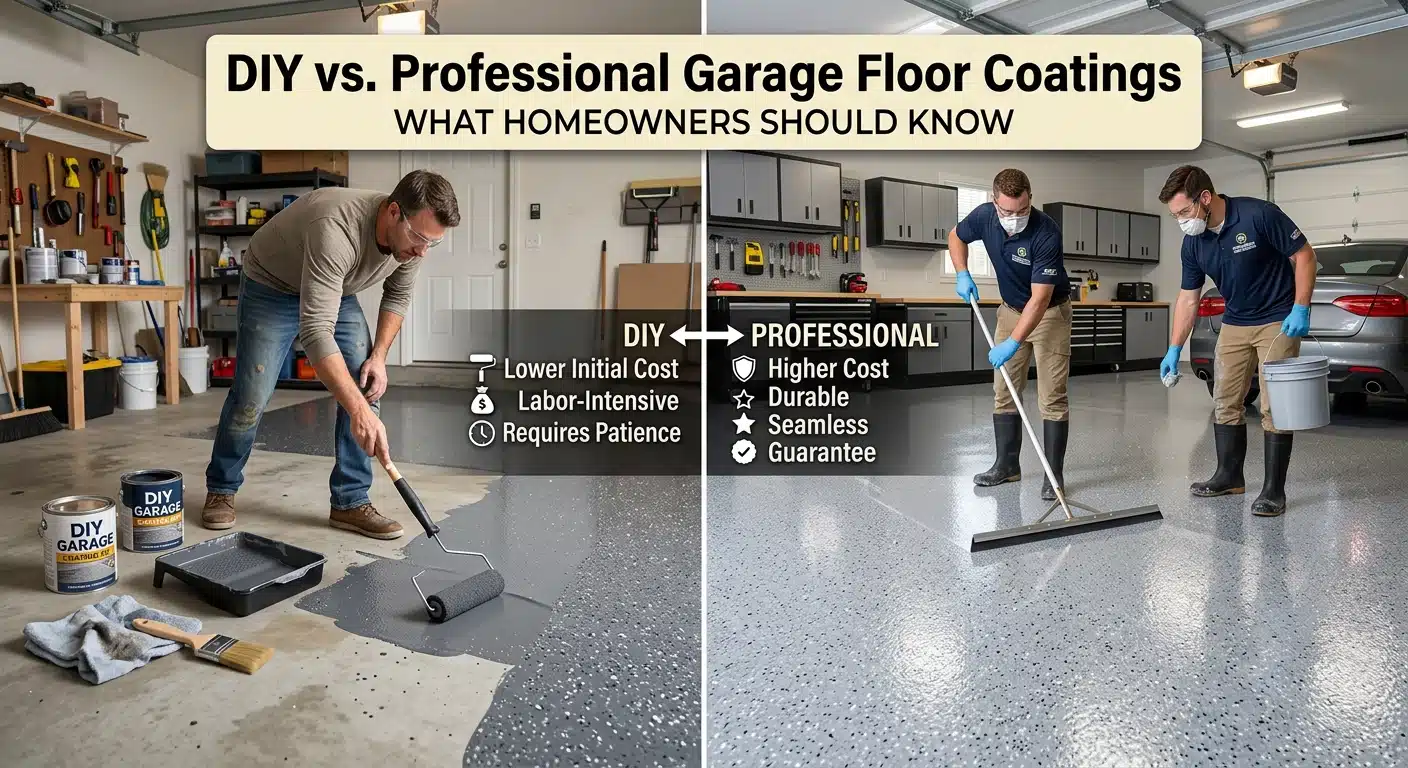
For homeowners planning an upgrade, the main question is whether to use a DIY kit or hire a professional. DIY products cost less upfront, but coating a garage floor involves more than rolling epoxy onto concrete. Preparation, repairs, moisture, temperature, and product quality all affect the result.
A to Z Epoxy Flooring CT and other professional epoxy flooring contractors focus heavily on preparing the concrete before applying a coating. Understanding how DIY and professional systems differ can help you choose the approach that fits your budget, expectations, and garage.
What Does a Garage Floor Coating Do?
A garage floor coating creates a protective layer over concrete. Depending on the system, it can help resist stains, chemicals, moisture, tire marks, scratches, and everyday wear.
Coatings also improve appearance. Homeowners can choose solid colors, decorative flakes, or textured finishes that turn plain concrete into a more finished surface.
Common options include epoxy and polyaspartic coatings. Each has different curing times, installation requirements, and performance characteristics.
Why DIY Garage Floor Coatings Are Popular
DIY kits are easy to find at home improvement stores and online. Many include coating materials, instructions, decorative flakes, and sometimes cleaning products.
Lower Upfront Cost
The biggest attraction is price. You are not paying for professional labor, commercial grinders, or installation equipment.
Flexible Scheduling
A DIY project lets you work around your own schedule. You can clean the garage one day, repair cracks another day, and coat the floor when conditions are right.
Where DIY Garage Coatings Often Fail
The hardest part is usually not applying the coating. It is preparing the concrete well enough for the material to bond.
Poor Surface Preparation
Concrete may look clean while still holding oil, grease, sealers, or other contaminants inside its pores. These substances can prevent the coating from sticking properly.
Professionals often grind concrete mechanically. Grinding clears away surface buildup and roughens the concrete, helping the coating bond more securely to the floor.
Some DIY systems rely on cleaning or acid etching instead. If preparation is incomplete, the coating may peel, bubble, chip, or separate later.
Cracks and Surface Damage
Cracks, pits, and damaged areas should usually be repaired before coating. Rolling epoxy over them does not fix the underlying problem.
Application Errors
Temperature, humidity, mixing ratios, and coating thickness matter. Decorative flakes also need to be spread evenly for a consistent finish.
Common mistakes include:
- Uneven color or gloss
- Roller marks
- Thin or bare spots
- Bubbles
- Poor adhesion
- Uneven flake coverage
How Professional Installation Is Different
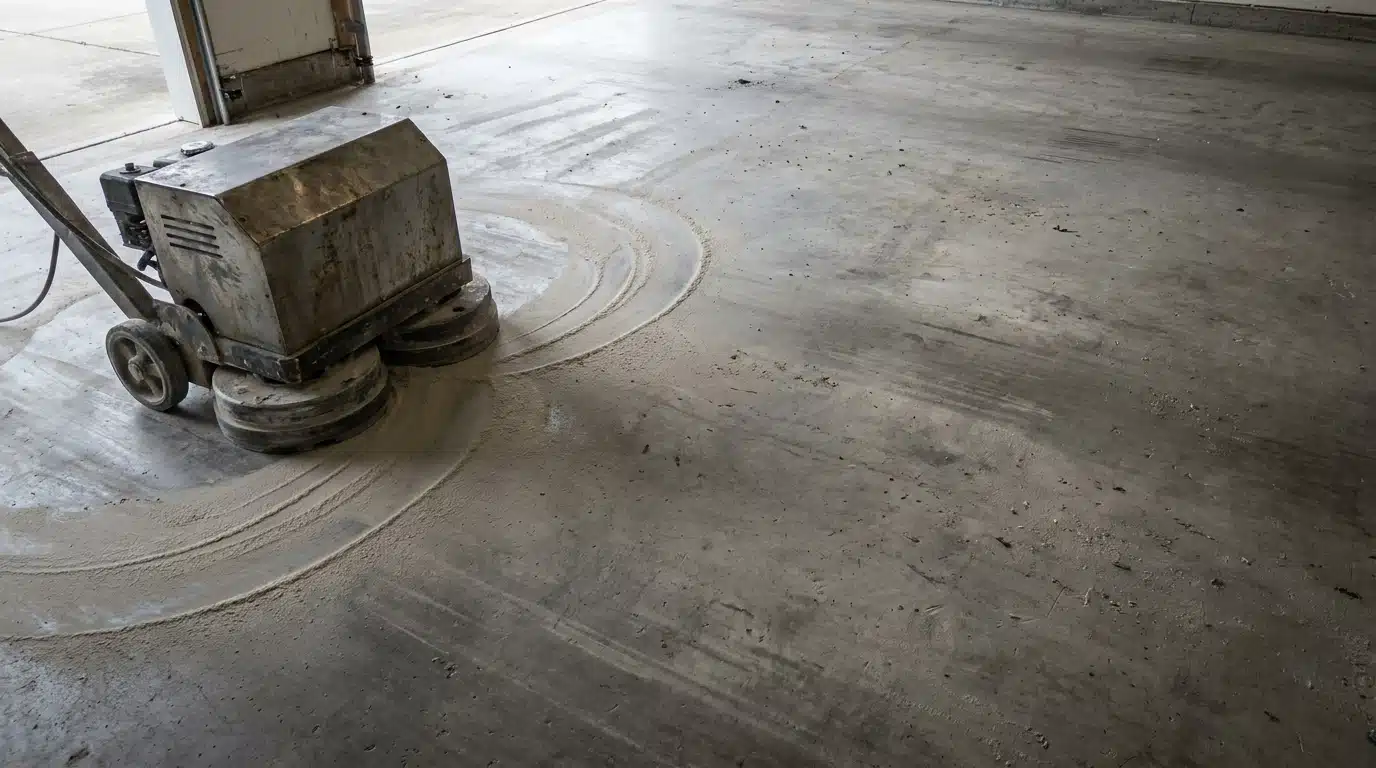
Professional installation usually includes several preparation steps before the final coating is applied.
Mechanical Grinding
Installers commonly use specialized grinders and dust-control equipment to prepare the slab. This removes weak surface material, old coatings, and contaminants while opening the concrete for better adhesion.
Professional-Grade Systems
A store-bought DIY kit is not always the same as a professional coating system. Professional installers may use several layers, including a base coat, decorative flakes, and a protective topcoat.
Polyaspartic systems are popular because they cure quickly and resist wear and UV exposure.
DIY vs. Professional Cost
DIY usually costs less at first, but materials are not the only expense.
You may need to buy or rent grinders, cleaning tools, crack repair products, mixing equipment, rollers, and safety gear. Larger garages can also require more coating than expected.
Professional installation costs more because the price includes labor, equipment, preparation, repairs, and materials.
Instead of comparing only upfront prices, consider how long you want the floor to last and what it could cost to repair a failed DIY coating.
How Much Time Does Installation Take?
A DIY garage coating can take an entire weekend or longer. The garage must be emptied, cleaned, prepared, repaired, coated, and allowed to cure.
Professional crews often work faster because they already have the tools and experience for each stage. Vehicles and heavy items still need to stay off the floor until the coating cures.
When DIY May Make Sense
DIY can work when the garage is small, the concrete is in good condition, and you are comfortable with detailed preparation.
When Hiring a Professional Makes Sense
Professional installation may be a better fit when you want a long-term coating system, have a large garage, or need concrete repairs.
It can also help if you want decorative flakes with an even, consistent appearance.
Homeowners who do not want to rent grinding equipment or risk redoing a failed coating may find professional installation worth the added cost.
Final Thoughts
DIY and professional garage floor coatings can both improve a garage, but they are different projects.
DIY can save money when the concrete is in good shape and the homeowner is willing to spend time on preparation. Professional installation offers specialized equipment, experienced surface preparation, and coating systems made for demanding garage conditions.
Whichever route you choose, do not rush preparation. The quality of the finished floor is largely determined by the condition of the concrete beneath it.
Frequently Asked Questions
Can epoxy be applied directly to a concrete garage floor?
Usually not without preparation. The concrete should be clean, dry, repaired, and properly profiled so the coating can bond correctly.
How many years can a garage floor coating last?
Lifespan depends on coating type, preparation, installation, vehicle traffic, and maintenance. Better preparation generally improves long-term performance.
Is epoxy better than garage floor paint?
Epoxy typically creates a thicker, stronger surface than basic concrete paint. Product quality and installation still matter.
Can coatings hide cracks?
Small cracks can often be repaired before coating. The coating itself should not replace proper crack repair.
Is professional installation worth it?
It depends on your priorities. If durability, appearance, preparation, and long-term performance matter most, professional installation can offer advantages.

Holding a Master’s in Architecture from the University of Texas at Austin, Emily Rodriguez has dedicated more than two decades to the art and science of building renovation. Starting her journey in historic preservation, she developed a profound respect for blending old with new in building design. Emily became a vital part of our team in 2019, renowned for her insightful and innovative renovation tips. She has been leading our DIY home improvement series since ever since, where she shares her wealth of knowledge in turning outdated spaces into modern havens. When not engaged in writing or consulting, Emily is a passionate advocate for heritage conservation and enjoys exploring vintage architecture, a hobby that complements her professional expertise.