
Most people spend time thinking about shingles, gutters, and paint colors. But the roof eave? It barely gets a second thought.
That’s the problem. Roof eaves are one of those parts of a house that most people walk past every day without really noticing. But once you understand what they do, you’ll start seeing them everywhere.
This blog covers what an eaves roof actually is, why it matters, and what the different parts and types look like. Simple, practical, and useful for any homeowner who wants to better understand their roof.
What is an Eaves Roof?
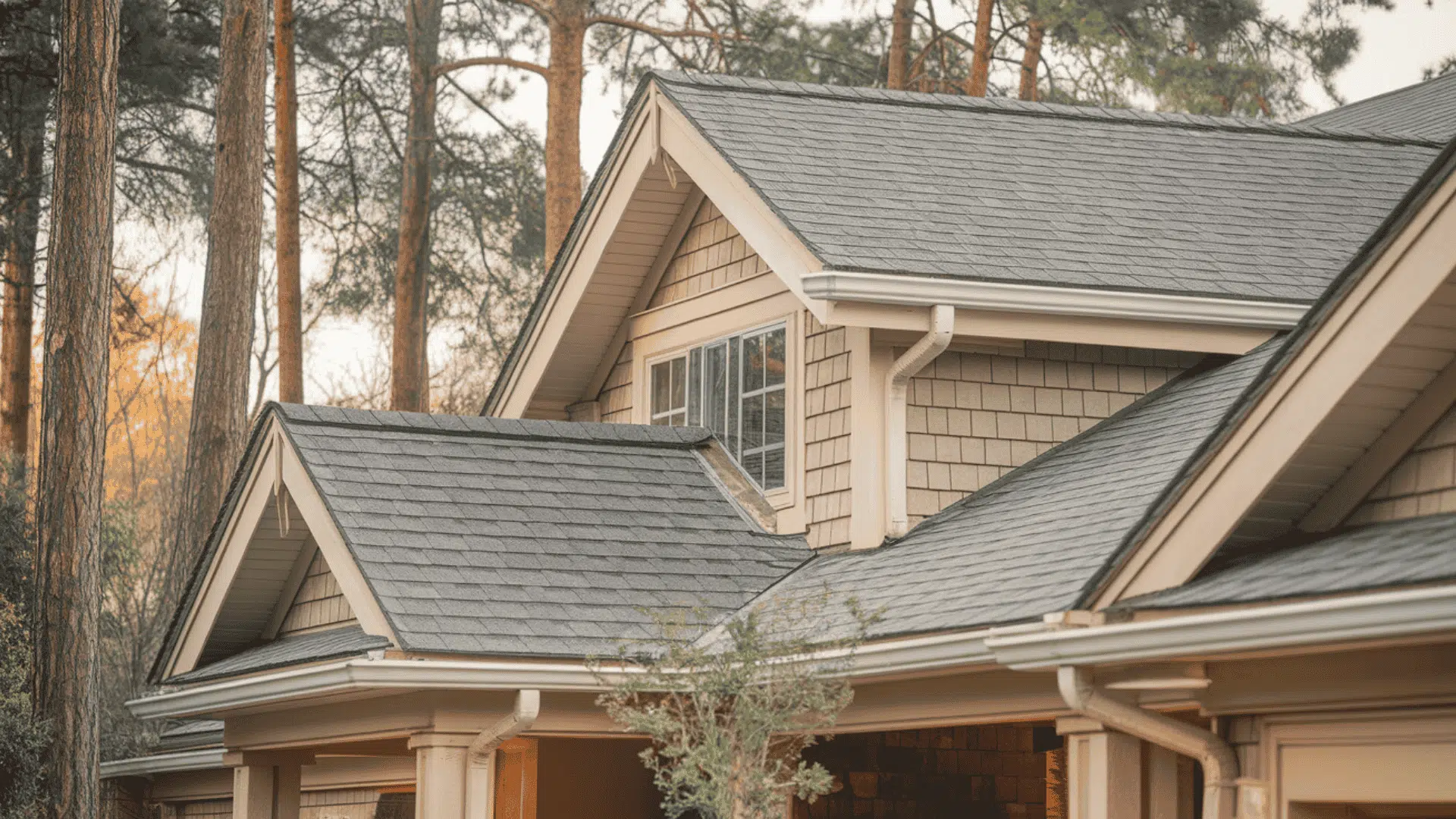
A roof eave is the lower edge of a roof that extends beyond the exterior wall of a house. That overhang, even if it’s just a foot wide, is the eave.
Think of it this way. The roof doesn’t stop right at the wall. It pushes out a little further. That extended section is what we call the eave.
It sits at the lower edge of your roof, extends past your exterior wall, and shields your home from rain, sun, and moisture damage every single day.
Why It Matters: Function and Benefits
Roof eaves do more than finish the look of a home. They quietly protect key areas from water, heat, and long-term damage.
- Directs Rainwater Away – Prevents water from running down walls and pooling near the foundation
- Protects Exterior Walls – Reduces moisture exposure, helping avoid rot and paint damage
- Supports Ventilation – Allows airflow through soffit vents to control heat and moisture
- Provides Shade – Limits sun exposure and helps keep indoor temperatures more stable
Key Components of a Roof Eave

A roof eave isn’t just one single component. It’s made up of several parts that work together to support the roof edge and manage water drainage. Here’s a breakdown of each one.
1. Soffit
The soffit is the underside of the eave, the part you see when you stand outside and look up at the roof overhang. It covers the gap between the exterior wall and the roof edge, giving the eave a clean, finished look from below.
Many soffits include small perforated panels or vent strips to support attic airflow. Without a soffit, that gap would be left open to moisture, pests, and debris.
2. Fascia
The fascia is the vertical board that runs along the very edge of the roof, attached to the ends of the rafter tails. It’s the flat, forward-facing surface you see at the roof line, and it gives the roof edge a neat, finished appearance.
More practically, it’s where your gutters are mounted. Because gutters bear the full weight of collected rainwater, the fascia needs to remain in good condition and should be inspected regularly for early signs of moisture damage.
3. Rafter Tails
Rafter tails are the ends of the roof rafters that extend past the exterior wall. They’re the structural backbone of the eave, supporting both the soffit below and the roof covering above.
In open-eave designs, rafter tails are left visible. On closed or boxed eaves, soffit panels cover them up. Either way, they’re doing the same structural job underneath.
4. Gutters
Gutters attach directly to the fascia board and sit right at the roof edge. Their job is to collect rainwater as it runs off the roof and channel it toward downspouts, safely carrying it away from the house.
Gutters are technically a separate system, but they’re closely tied to the eave. And when they’re clogged or damaged, the fascia and soffit below tend to take the brunt of the damage first.
Roof Eave vs. Roof Overhang
These two terms are often confused. Here’s a clear way to think about it:
| Feature | Roof Eave | Roof Overhang |
|---|---|---|
| What it is | The structural area at the lower roof edge | The horizontal distance the roof extends past the wall |
| What it includes | Soffit, fascia, rafter tails, gutters | A measurement of how far the roof projects outward |
| How it’s used | Refers to the physical components at the roof edge | Refers to the length or depth of the projection |
| Example | “The eave needs a new soffit panel.” | “The overhang is 18 inches wide.” |
So the overhang tells you how far the roof extends beyond the wall. The eave describes what’s there at that edge. They’re closely related, but they refer to different things.
Types of Roof Eaves Used in Houses
Not all roof eaves look the same. Different houses use different eave designs depending on the roof style, construction method, and the home’s overall look. Here are the main types you’ll come across.
1. Open Eaves

Open eaves leave the rafter tails fully exposed from below, with no soffit panel covering them. You can see the underside of the roof decking and the individual rafters when you look up.
This style is common in traditional and craftsman-style homes. It gives the roofline a rustic, structural look, but exposed rafter tails require regular maintenance because they’re directly exposed to moisture and pests. If you choose this style, painting or sealing the exposed rafter tails every few years is the simplest way to keep them in good shape.
2. Closed Eaves

Closed eaves have a soffit panel fitted across the underside of the overhang, covering the rafter tails completely. From below, the eave looks smooth and clean with no structural elements visible.
This is the most common eave style in modern residential construction. It’s low maintenance, looks tidy, and the soffit can easily accommodate ventilation openings for attic airflow. If you’re unsure what type of eave your home has, a smooth, uninterrupted underside is a clear sign of a closed eave.
3. Boxed Eaves

Boxed eaves take things a step further. Both the underside and the outer edge of the overhang are fully enclosed, creating a solid, rectangular box shape at the roof edge.
This style is commonly found on colonial, Victorian, and other formal architectural styles where a clean, uniform roofline matters. It requires more material and labor to build, but offers strong protection for the structural components inside. If low maintenance and a sharp roofline are both priorities, boxed eaves are worth the extra upfront cost.
4. Wide Eaves

Wide eaves, typically anything over 18 inches, offer better coverage for your home. They keep more rain from reaching the walls, provide more shade over windows, and give gutters more room to work effectively.
This style works especially well in areas with heavy rainfall or intense sun. Older homes and traditional builds in hot climates often feature wide eaves for exactly this reason.
If your home sits in a high rainfall area, going wider than the standard 18 inches is a decision that tends to pay off over time.
5. Narrow Eaves

Narrow eaves are common in modern and contemporary home designs where clean lines and minimal overhangs are preferred.
The trade-off is reduced protection. Narrow eaves offer less coverage from rain and sun, so they work best in drier climates where weather exposure is less of a concern.
If you live in a wetter climate and your home has narrow eaves, keeping gutters clean and well-maintained becomes even more important.
Helpful Tips for Maintenance
Eaves are exposed to the weather year-round, so problems do arise. Here are the most common issues and what to watch for:
- Rotting fascia boards: Constant moisture exposure can cause fascia wood to soften and rot, which leads to gutters pulling away from the roofline
- Damaged soffits: Cracks, holes, or sagging soffit panels are common, especially after storms, and can let moisture and pests into the eave space
- Blocked soffit vents: Debris, paint buildup, or pest nests can block ventilation openings, reducing attic airflow and causing heat and moisture buildup
- Gutter overflow: Clogged gutters cause water to back up and sit against the fascia and soffit, speeding up damage to both. Clear them out at least twice a year, and after any heavy storm, to keep water properly flowing away from the eave.
Conclusion
Roof eaves do a lot more than most homeowners give them credit for.
From directing rainwater away from your foundation to keeping your attic ventilated and your walls dry, a well-built roof eave quietly protects your home on every front.
Understanding the parts, types, and proper sizing of an eaves roof helps you make smarter decisions, whether you’re building new, replacing old components, or just keeping up with regular maintenance.
Take a few minutes to inspect your eaves after the next heavy storm. Check the fascia, look at the soffit, and clear out those gutters. Small checks like these go a long way in avoiding costly repairs later.

With a Master’s in Architecture from the University of California, Berkeley, Alexander Martin has dedicated the last 18 years to enhancing outdoor living through thoughtful and robust structure design. His career kicked off in urban planning, giving him a unique perspective on integrating structures into diverse environments. In 2019, Alexander brought his expertise to our website, offering insights into creating versatile outdoor spaces. Since then, he has been the lead advisor for our outdoor design projects and is known for his ability to merge functionality with environmental consciousness. Alexander enjoys rock climbing outside of work and participates in community development projects, activities that reflect his passion for the outdoors and sustainable design.