
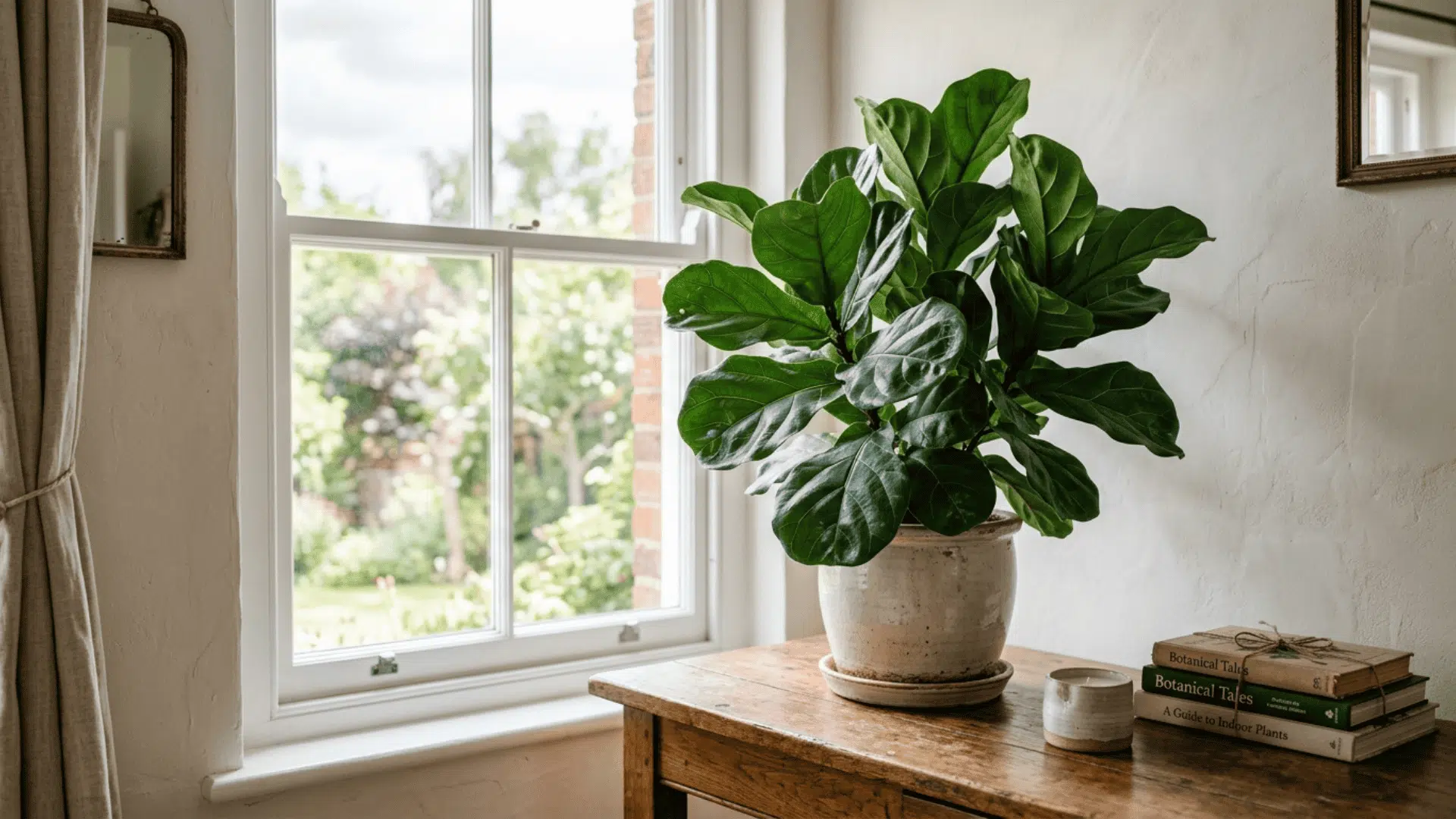

Ficus plants look great on paper. Beautiful, full, and lush. But then they start dropping leaves the moment they get moved to a new spot.
Many plant owners run into this. The ficus plant care routine that works for one person seems to completely fail for another.
With the right routine in place, ficus plants are manageable for most indoor plant owners. This blog covers everything needed to keep a ficus healthy and thriving indoors.
What is a Ficus Plant?
Ficus is a large genus of flowering plants that belongs to the mulberry family. It includes hundreds of species, but only a few have become popular as indoor plants.
The most common ones are the Fiddle Leaf Fig, Rubber Plant, and Weeping Fig. Each has its own look, but all of them share similar ficus plant care needs when grown indoors. In their natural habitat, ficus plants grow in tropical and subtropical regions.
They can reach impressive heights outdoors. Indoors, growth slows considerably, making them a practical choice for homes and offices.
They are valued for their thick foliage, air-purifying qualities, and the structure they add to indoor spaces. With stable conditions, they can thrive indoors for several years.
How Ficus Plants Became Popular Houseplants
Ficus plants became popular indoor choices due to their look, ease, and trend appeal over time.
- Adaptable Indoor Plant: Works well in both homes and offices
- 70s–80s Design Trend: Matched the demand for large leafy decor
- Easy Availability: Affordable and widely sold
- Better Care Knowledge: Easier to grow with improved guidance
- Social Media Boost: Fiddle Leaf Fig increased popularity
How to Care for a Ficus Plant
Proper ficus plant care comes down to maintaining the right balance of light, water, and environment. Consistency matters more than frequent changes in routine.
1. Light Requirements

Ficus plant care begins with getting the lighting right. Bright, indirect light is ideal for indoor growth.
A spot near a north or east-facing window works well. Direct sunlight can burn the leaves, while too little light causes them to drop.
Low light slows growth and weakens the plant over time. If natural light is limited, a grow light placed a few feet away can help maintain steady conditions.
2. Watering Schedule

Watering is one of the most important parts of ficus plant care. A consistent schedule based on soil moisture rather than fixed days works much better for keeping the ficus healthy.
The soil should be checked before every watering. If the top inch feels dry, it is time to water. During summer, watering may be needed more frequently. In winter, the plant needs less water as growth slows down.
Overwatering shows up as yellowing leaves and soggy soil. Underwatering causes leaves to curl and dry out.
3. Soil and Pot Selection

The right soil and pot setup support healthy root development in any ficus plant care routine. A well-draining potting mix works best.
Adding perlite or coarse sand to regular potting soil improves aeration and helps the roots breathe more freely.
Terracotta pots are a practical choice as they allow the soil to dry out more evenly. Avoid pots that are too large, as excess soil can retain moisture, increasing the risk of root rot.
4. Temperature and Humidity

Ficus plant care also depends on maintaining a stable indoor climate. Ficus plants prefer temperatures between 60°F and 75°F.
Positioning the plant away from direct heat sources and cold drafts helps maintain a steady temperature throughout the day.
Humidity plays an important role as well. Dry indoor air, especially during winter, can lead to brown leaf edges.
Placing a humidifier nearby or setting the pot on a tray filled with pebbles and water are simple ways to maintain adequate moisture levels around the plant.
5. Placement and Stability

One often-overlooked aspect of ficus plant care is where the plant is kept permanently. Ficus plants are highly sensitive to being moved.
Even shifting them from one side of a room to another can trigger leaf drop. Choosing the right spot from the start saves a lot of trouble later.
Once a suitable location is found, it is best to leave the plant there. Avoid rotating it too frequently or placing it in high-traffic areas where it gets bumped or disturbed.
Keeping conditions stable around the plant allows it to settle in and grow without unnecessary stress.
Ficus Plant vs. Other Popular Houseplants
When choosing an indoor plant, it helps to compare ficus plant care with other common houseplants in terms of light, water, and overall maintenance.
| Factor | Ficus | Snake Plant | Pothos | Peace Lily |
|---|---|---|---|---|
| Light Needs | Bright, indirect light | Low to bright indirect light | Low to medium light | Low to medium indirect light |
| Watering Frequency | Moderate, check soil moisture | Every 2 to 3 weeks | Every 1 to 2 weeks | When the soil feels dry |
| Humidity Preference | Moderate to high | Low | Low to moderate | Moderate to high |
| Temperature Sensitivity | High | Low | Low | Moderate |
| Sensitivity to Movement | Very sensitive | Not sensitive | Not sensitive | Slightly sensitive |
| Beginner Friendly | Moderate | Yes | Yes | Yes |
| Growth Rate | Moderate | Slow | Fast | Moderate |
Maintenance Tips
Regular maintenance is a key part of ficus plant care that helps the plant stay healthy and maintain its shape over time.
- Clean the Leaves: Dust accumulates on ficus leaves, blocking light absorption. Wiping them down with a damp cloth every few weeks keeps the surface clear and healthy.
- Prune Regularly: Trimming dead or overgrown branches helps control the size and shape of the plant. Light pruning during the growing season encourages fuller, more balanced growth.
- Fertilize Seasonally: Applying a balanced liquid fertilizer once a month during spring and summer supports steady growth. Fertilizing should be stopped during fall and winter when the plant is resting.
- Repot When Needed: Once roots start coming out of the drainage holes, it is time to move the plant to a slightly larger pot with fresh soil.
- Rotate Occasionally: Give the plant a slight turn every few weeks to ensure all sides receive equal light and prevent uneven growth.
Conclusion
Ficus plants are rewarding to grow indoors when the right conditions are maintained. Ficus plant care does not require constant attention, but it does require consistency.
Light, watering, humidity, and placement all work together to keep the plant stable and healthy. Small, gradual adjustments always work better than sudden changes.
If the plant starts showing signs like leaf drop or browning edges, the cause is usually something simple that can be fixed without much effort.
Stick to a steady routine, avoid moving the plant unnecessarily, and check in on it regularly. A ficus that feels settled in its environment will grow well and last for years.

Jordan Mathews, who has a degree in horticulture from Texas A&M University, has been a guiding force in plant health and sustainable gardening for over 16 years. His career began with a role at a renowned botanical garden, where he deepened his understanding of plant physiology and eco-friendly cultivation methods. Jordan joined our website as a freelancer in 2020, becoming a go-to expert for readers seeking advice on nurturing diverse plant species apart from offering insights grounded in scientific knowledge and practical experience. Beyond his professional achievements, Jordan is a keen nature photographer, capturing the beauty of flora in its immensely diversified forms.



![20 front yard succulent garden ideas[P]](https://enthrallinggumption.com/wp-content/uploads/2023/12/20frontyardsucculentgardenideas-1024x576.jpg.webp)