

Most people buy a nightstand and a wall shelf as two separate decisions. The nightstand comes from a furniture site, picked for price and finish. The shelf gets added later, usually above it, usually because the wall above a nightstand looks bare once the lamp and the book stack are in place. Nobody plans them as one object. And that’s exactly why so many bedrooms end up with a nightstand and shelf that technically coexist but never quite look like they belong together.
There’s a fix for this, and it isn’t about buying a matching set. It’s about getting three relationships right: height, spacing, and visual weight. Get those three right and a floating shelf and a wall-mounted or standard nightstand read as a single, considered piece of design. Get them wrong and the wall looks like storage that arrived in two different Amazon orders — which, often, it did.
Floating Shelves and Nightstands: The Pairing Rule Most Bedrooms Get Wrong
Most people buy a nightstand and a wall shelf as two separate decisions. The nightstand comes from a furniture site, picked for price and finish. The shelf gets added later, usually above it, usually because the wall above a nightstand looks bare once the lamp and the book stack are in place. Nobody plans them as one object. And that’s exactly why so many bedrooms end up with a nightstand and shelf that technically coexist but never quite look like they belong together.
There’s a fix for this, and it isn’t about buying a matching set. It’s about getting three relationships right: height, spacing, and visual weight. Get those three right and a floating shelf and a wall-mounted or standard nightstand read as a single, considered piece of design. Get them wrong and the wall looks like storage that arrived in two different Amazon orders — which, often, it did.
The Height Rule Nobody Mentions
Start with the nightstand itself, before the shelf even enters the picture. Interior designers and furniture makers converge on the same range for a reason: the surface of a nightstand should sit level with the top of your mattress, or up to two to four inches above it. Most standard nightstands land between 24 and 28 inches tall, which is exactly why that range shows up on furniture spec sheets over and over. Go much lower and you’ll be reaching down for your glasses at 2am. Go much higher and the nightstand visually overpowers the bed instead of supporting it.
This matters for a shelf-and-nightstand pairing because the nightstand height sets your baseline. Everything above it — the shelf, the art, the sconce — gets measured from that line, not from the floor.
What the Shelf Above It Should Actually Do
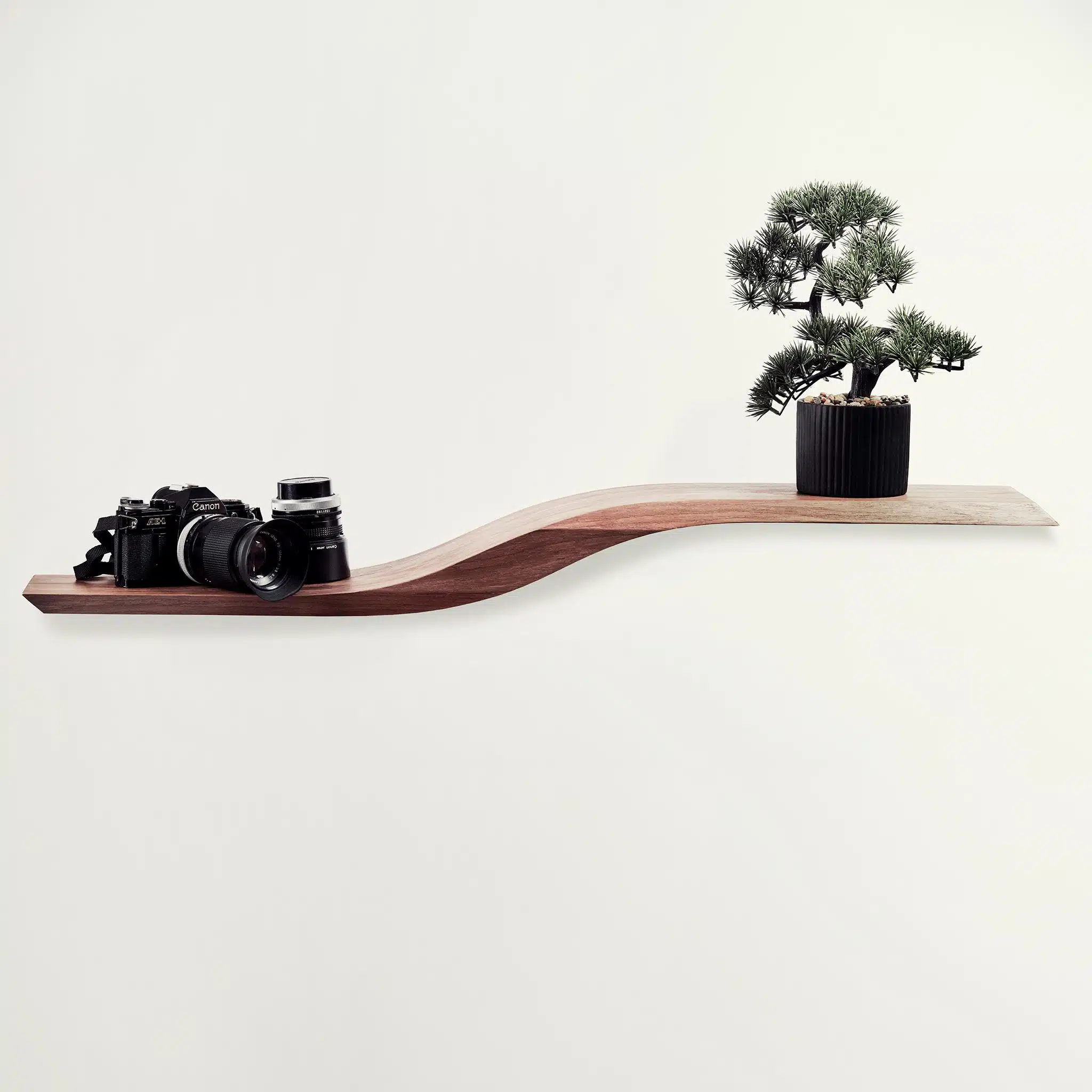
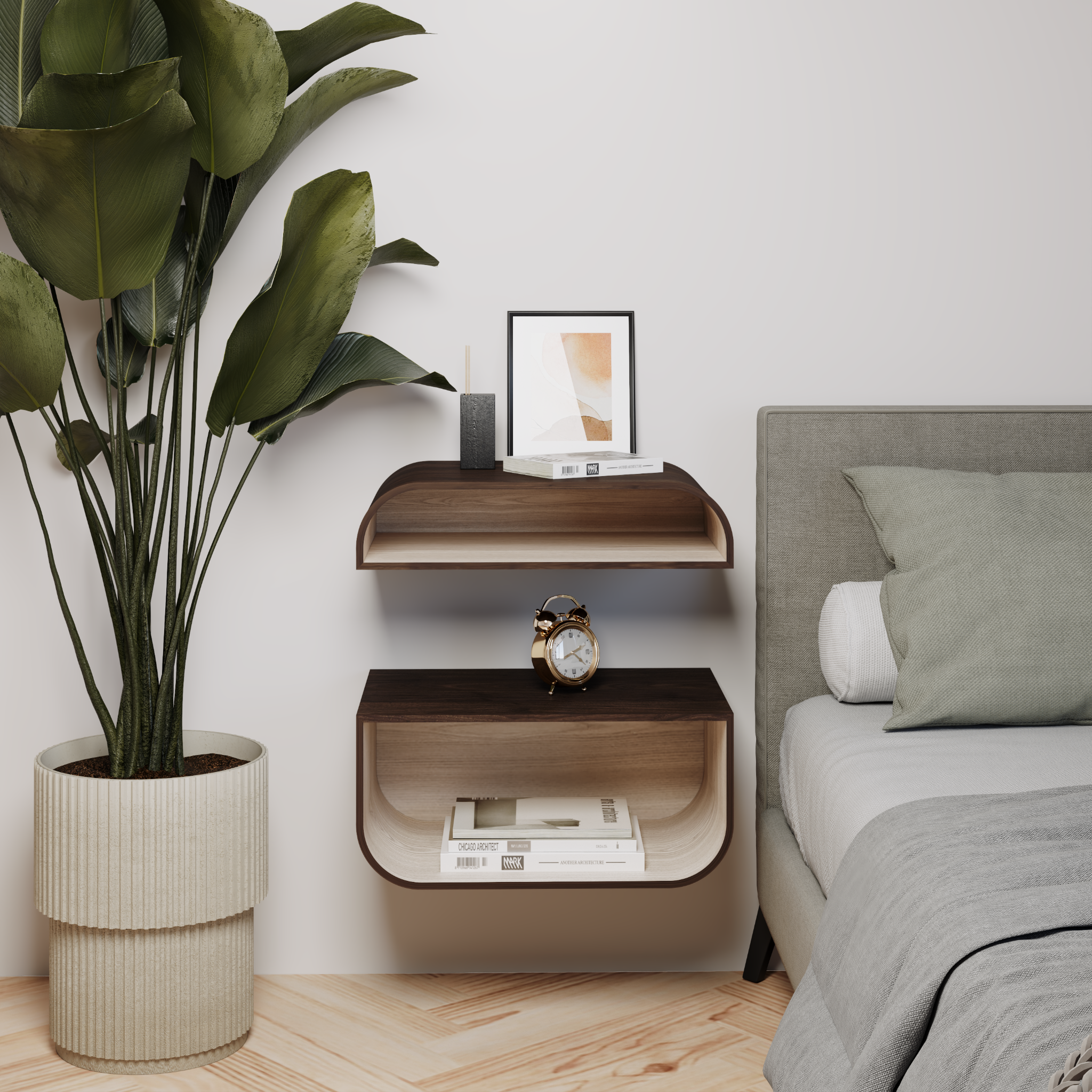
A single floating shelf mounted above a nightstand is doing a specific job: giving you display or overflow storage without adding another piece of furniture to the floor. That only works if there’s real breathing room between the top of the nightstand and the underside of the shelf — enough that a lamp or a stack of books doesn’t graze the shelf above it. Twelve to fifteen inches of clearance is a safe working number for that gap.
If you’re running more than one shelf up the wall — which is a common move in narrower bedrooms where floor space for a second nightstand doesn’t exist — the spacing between the shelves themselves matters just as much. The range that shows up consistently across shelving guides and carpentry references is 10 to 18 inches of vertical clearance: tighter, around 8 to 12 inches, for small decorative objects, and wider, 15 to 18 inches, if you’re stacking books or anything with real height. Crowd the shelves closer than that and the wall starts to look like a bookcase that got taken apart and rehung one board at a time.
Matching Wood Tones Without Buying a Matching Set
The instinct to buy a nightstand and shelf from the same collection, in the same finish, makes sense — but it’s also how you end up with a wall that looks like a showroom display rather than a room someone actually lives in. A better approach is to match the wood tone, not the exact product line. A walnut nightstand doesn’t need a walnut shelf sitting directly above it; it needs a shelf in a wood that reads as warm and dark rather than one that’s a precise grain-for-grain match.
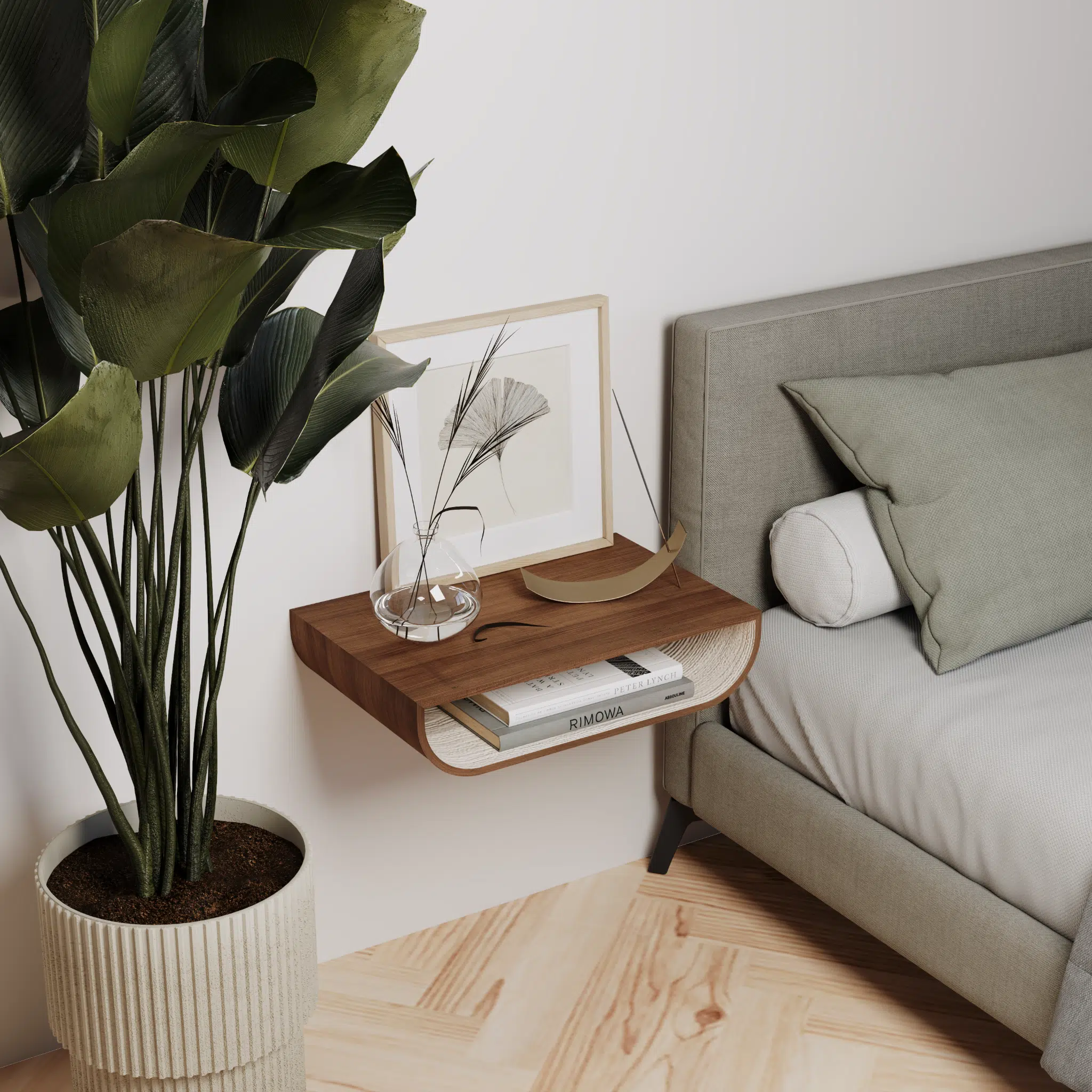
Hardware is worth paying attention to here too, and it’s the detail most people skip. A nightstand or shelf with visible brackets reads as utilitarian; one with concealed, routed mounting reads as built-in. Small workshops that build to order — EWART WOODS’ floating nightstands, a Latvia-based joinery, are one example — tend to hide the wall plate inside the piece itself rather than bolting a bracket underneath, which is part of why a single floating nightstand can look more finished than a much larger conventional one. If you’re shopping rather than building your own, that’s the detail to check before anything else: ask whether the mounting hardware is visible from the side, because that’s the difference between “floating” and “clearly screwed to a bracket.”
Balance, Not Symmetry
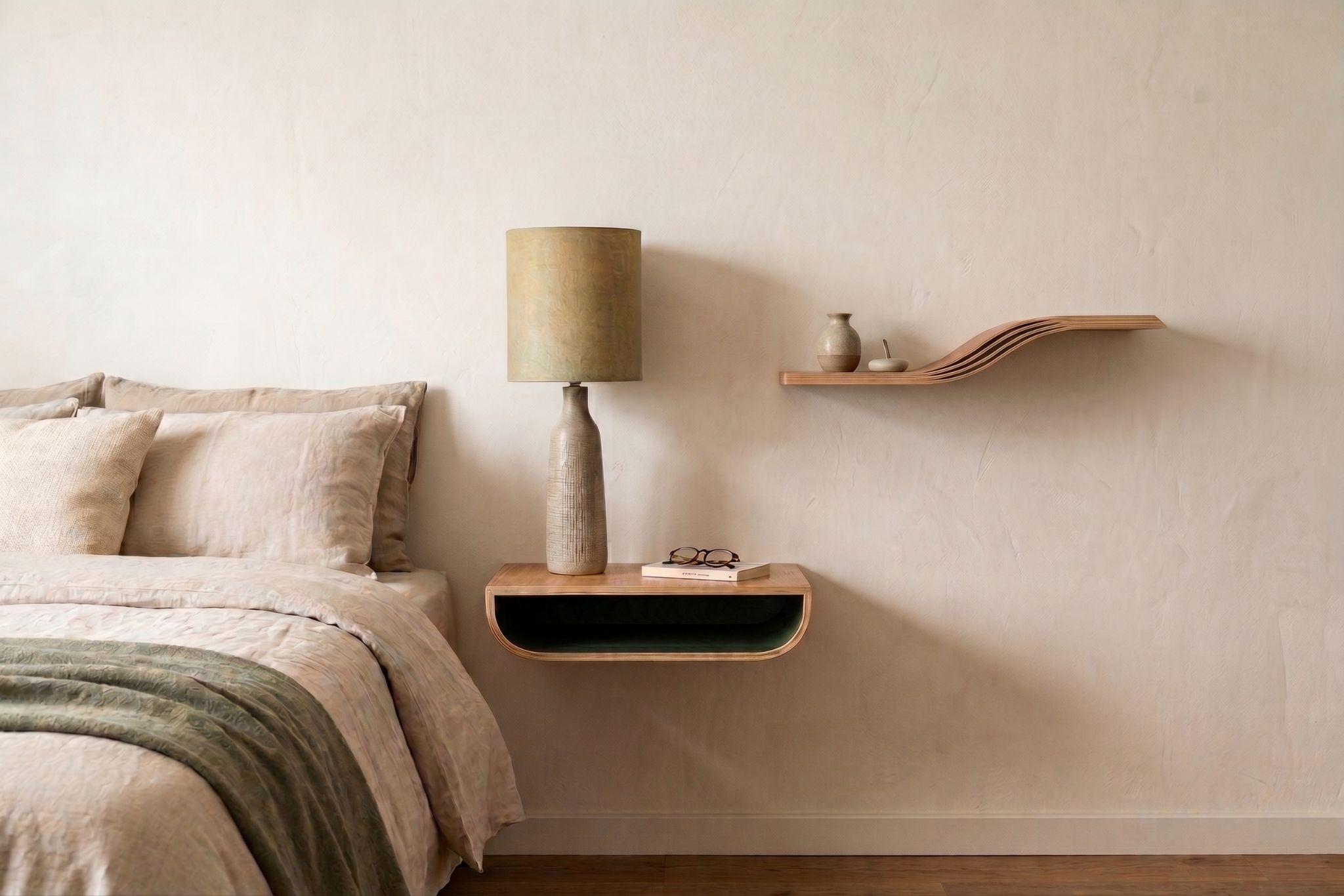
The other mistake is treating the nightstand-and-shelf combination as something that needs to be perfectly centered and symmetrical, the way a headboard flanked by two identical lamps is symmetrical. A single floating shelf above a single nightstand doesn’t need to sit dead-center over it. Offsetting the shelf slightly — extending it a few inches past one edge of the nightstand, rather than matching its width exactly — creates a more intentional, designed look than a stacked, centered pairing does, and it also gives you a longer surface for styling without needing a wider nightstand underneath it.
This is really a question of visual weight rather than geometry. A tall lamp on the nightstand balances a low, horizontal shelf above it. A shelf crowded with objects needs a simpler, quieter nightstand below. The goal is that your eye doesn’t land on either piece individually — it reads the wall as one composition.
The Small-Bedroom Math
In a genuinely small bedroom, the real constraint usually isn’t style, it’s depth. A nightstand deeper than about 12 to 14 inches starts to eat into the walking space beside a bed, especially in rooms where the bed is pushed close to the wall. This is where wall-mounted or floating pieces earn their keep over freestanding ones — a floating shelf typically only needs 6 to 10 inches of depth to hold a lamp and a book, which is often half what a traditional nightstand with drawers requires.
If you’re working with a genuinely tight footprint, it’s worth measuring the depth of both pieces together — nightstand plus shelf — against the actual clearance in the room, not just picking whatever looks good in a photo. A few inches saved in depth on each piece adds up to real, usable floor space over the course of a room.
Where This Usually Goes Wrong
A few patterns come up again and again in bedrooms where the nightstand-and-shelf pairing doesn’t work: the shelf is mounted at a height that made sense on its own but ignores the nightstand below it; the two pieces are bought in identical finishes and end up looking like a bulk furniture-store bundle instead of a considered pairing; and the shelf is loaded with more objects than its span can visually support, so it reads as cluttered rather than curated.
None of these are difficult to avoid once you’re looking for them. Start with the nightstand height, measure the gap to the shelf above it, keep the finishes related rather than identical, and resist the urge to fill every inch of shelf space. A wall that follows those four rules looks designed on purpose — which, in the end, is really the only thing separating a good pairing from a random one. For reference on what a considered pairing looks like in practice, it’s worth browsing a few handcrafted wood shelving lines built specifically to sit above a matching nightstand — seeing the proportions side by side makes the height and spacing rules above much easier to picture in your own room.
The Height Rule Nobody Mentions
Start with the nightstand itself, before the shelf even enters the picture. Interior designers and furniture makers converge on the same range for a reason: the surface of a nightstand should sit level with the top of your mattress, or up to two to four inches above it. Most standard nightstands land between 24 and 28 inches tall, which is exactly why that range shows up on furniture spec sheets over and over. Go much lower and you’ll be reaching down for your glasses at 2am. Go much higher and the nightstand visually overpowers the bed instead of supporting it.
This matters for a shelf-and-nightstand pairing because the nightstand height sets your baseline. Everything above it — the shelf, the art, the sconce — gets measured from that line, not from the floor.
What the Shelf Above It Should Actually Do
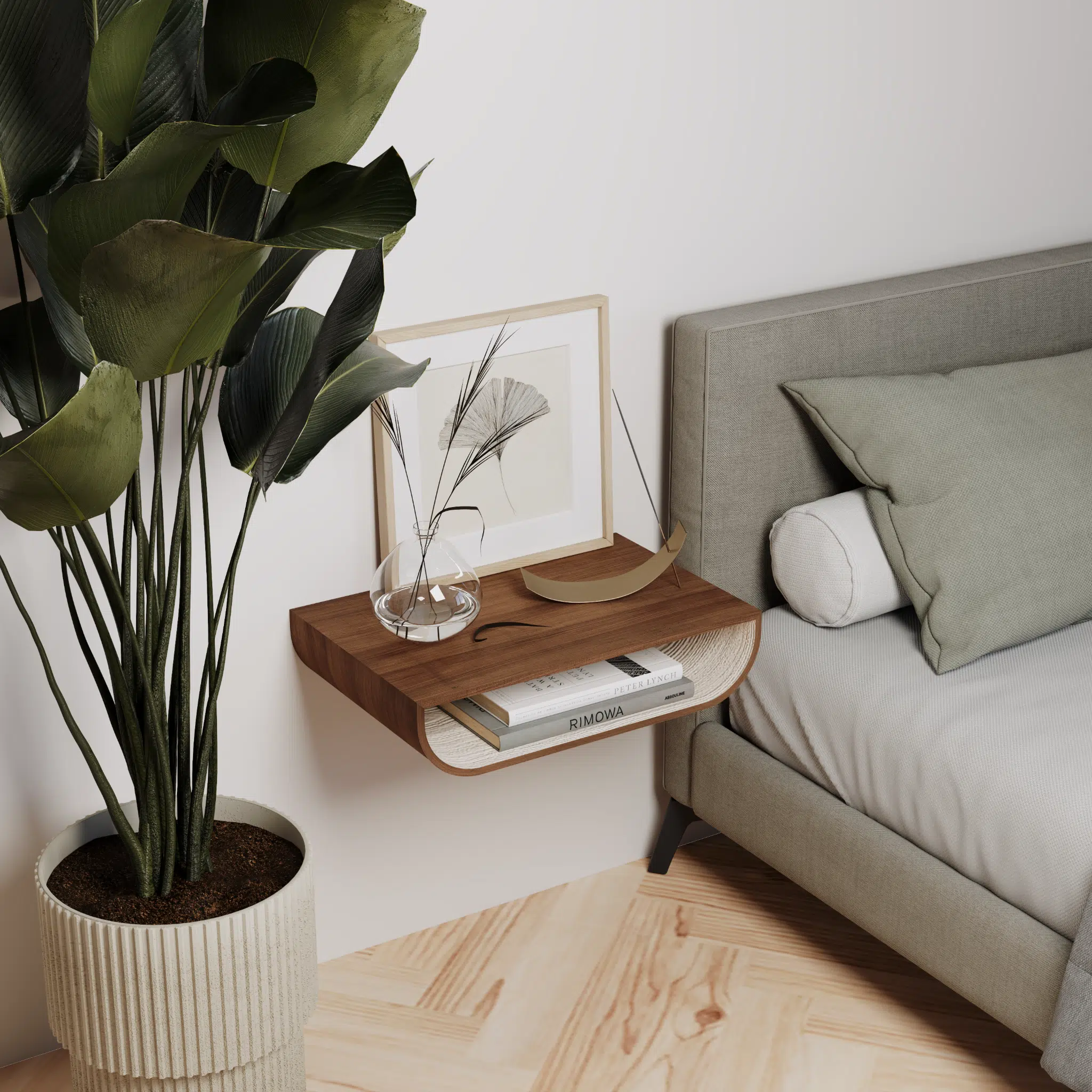
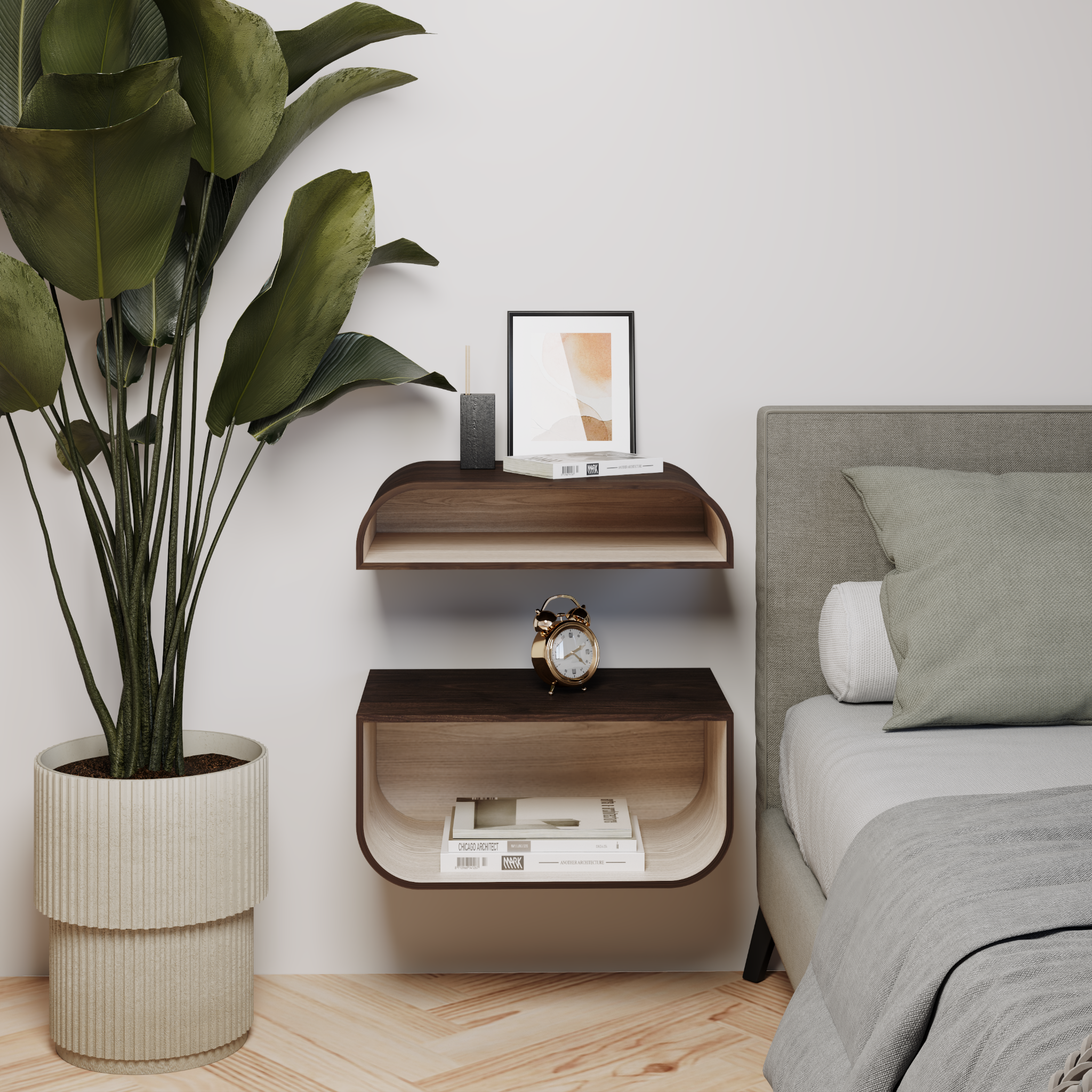
A single floating shelf mounted above a nightstand is doing a specific job: giving you display or overflow storage without adding another piece of furniture to the floor. That only works if there’s real breathing room between the top of the nightstand and the underside of the shelf — enough that a lamp or a stack of books doesn’t graze the shelf above it. Twelve to fifteen inches of clearance is a safe working number for that gap.
If you’re running more than one shelf up the wall — which is a common move in narrower bedrooms where floor space for a second nightstand doesn’t exist — the spacing between the shelves themselves matters just as much. The range that shows up consistently across shelving guides and carpentry references is 10 to 18 inches of vertical clearance: tighter, around 8 to 12 inches, for small decorative objects, and wider, 15 to 18 inches, if you’re stacking books or anything with real height. Crowd the shelves closer than that and the wall starts to look like a bookcase that got taken apart and rehung one board at a time.
Matching Wood Tones Without Buying a Matching Set
The instinct to buy a nightstand and shelf from the same collection, in the same finish, makes sense — but it’s also how you end up with a wall that looks like a showroom display rather than a room someone actually lives in. A better approach is to match the wood tone, not the exact product line. A walnut nightstand doesn’t need a walnut shelf sitting directly above it; it needs a shelf in a wood that reads as warm and dark rather than one that’s a precise grain-for-grain match.
Hardware is worth paying attention to here too, and it’s the detail most people skip. A nightstand or shelf with visible brackets reads as utilitarian; one with concealed, routed mounting reads as built-in.
Small workshops that build to order — EWART WOODS’ floating nightstands, a Latvia-based joinery, are one example — tend to hide the wall plate inside the piece itself rather than bolting a bracket underneath, which is part of why a single floating nightstand can look more finished than a much larger conventional one.
If you’re shopping rather than building your own, that’s the detail to check before anything else: ask whether the mounting hardware is visible from the side, because that’s the difference between “floating” and “clearly screwed to a bracket.”
Balance, Not Symmetry
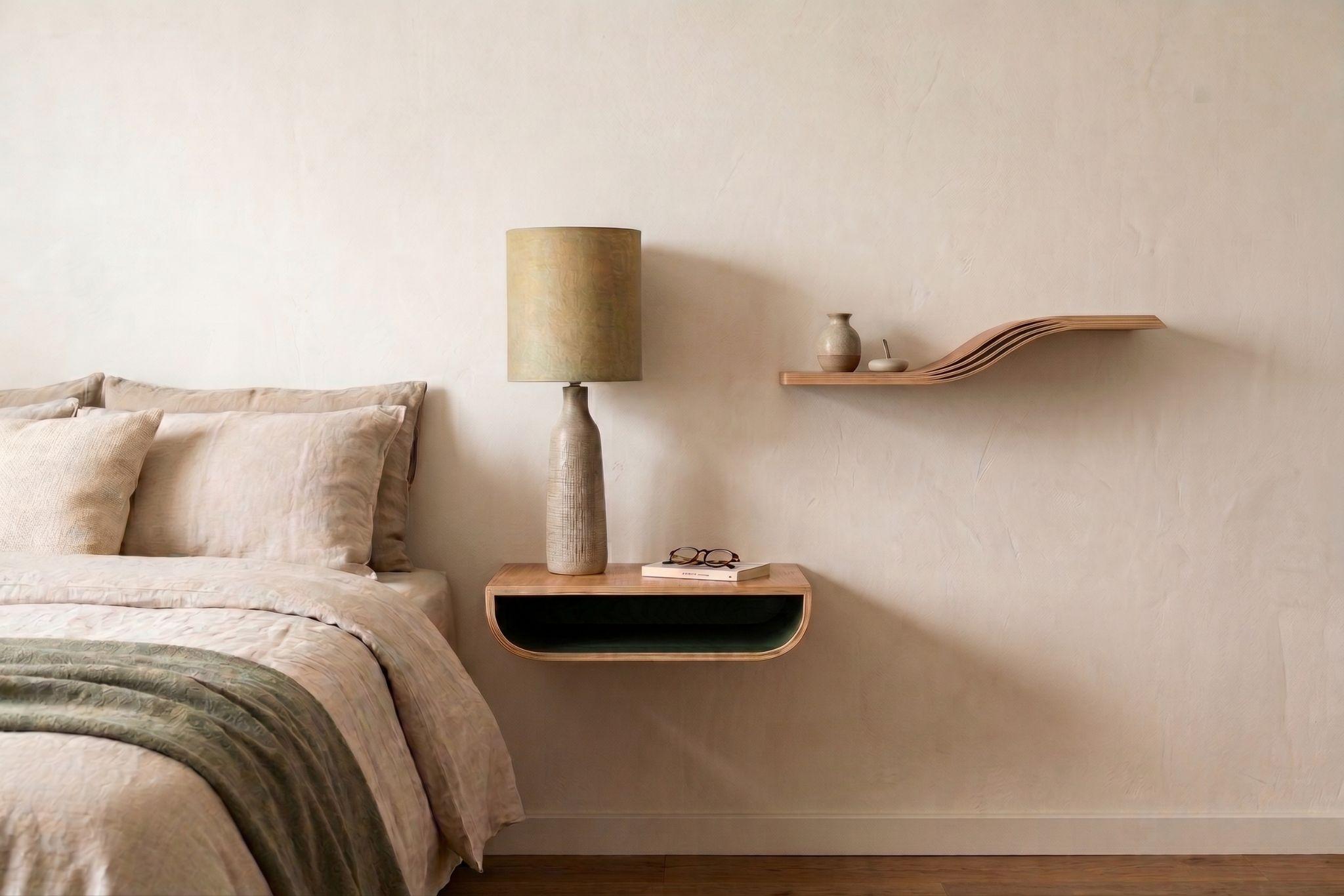
The other mistake is treating the nightstand-and-shelf combination as something that needs to be perfectly centered and symmetrical, the way a headboard flanked by two identical lamps is symmetrical. A single floating shelf above a single nightstand doesn’t need to sit dead-center over it. Offsetting the shelf slightly — extending it a few inches past one edge of the nightstand, rather than matching its width exactly — creates a more intentional, designed look than a stacked, centered pairing does, and it also gives you a longer surface for styling without needing a wider nightstand underneath it.
This is really a question of visual weight rather than geometry. A tall lamp on the nightstand balances a low, horizontal shelf above it. A shelf crowded with objects needs a simpler, quieter nightstand below. The goal is that your eye doesn’t land on either piece individually — it reads the wall as one composition.
The Small-Bedroom Math
In a genuinely small bedroom, the real constraint usually isn’t style, it’s depth. A nightstand deeper than about 12 to 14 inches starts to eat into the walking space beside a bed, especially in rooms where the bed is pushed close to the wall. This is where wall-mounted or floating pieces earn their keep over freestanding ones — a floating shelf typically only needs 6 to 10 inches of depth to hold a lamp and a book, which is often half what a traditional nightstand with drawers requires.
If you’re working with a genuinely tight footprint, it’s worth measuring the depth of both pieces together — nightstand plus shelf — against the actual clearance in the room, not just picking whatever looks good in a photo. A few inches saved in depth on each piece adds up to real, usable floor space over the course of a room.
Where This Usually Goes Wrong
A few patterns come up again and again in bedrooms where the nightstand-and-shelf pairing doesn’t work: the shelf is mounted at a height that made sense on its own but ignores the nightstand below it; the two pieces are bought in identical finishes and end up looking like a bulk furniture-store bundle instead of a considered pairing; and the shelf is loaded with more objects than its span can visually support, so it reads as cluttered rather than curated.
None of these are difficult to avoid once you’re looking for them. Start with the nightstand height, measure the gap to the shelf above it, keep the finishes related rather than identical, and resist the urge to fill every inch of shelf space. A wall that follows those four rules looks designed on purpose — which, in the end, is really the only thing separating a good pairing from a random one. For reference on what a considered pairing looks like in practice, it’s worth browsing a few handcrafted wood shelving lines built specifically to sit above a matching nightstand — seeing the proportions side by side makes the height and spacing rules above much easier to picture in your own room.

Holding a Master’s in Architecture from the University of Texas at Austin, Emily Rodriguez has dedicated more than two decades to the art and science of building renovation. Starting her journey in historic preservation, she developed a profound respect for blending old with new in building design. Emily became a vital part of our team in 2019, renowned for her insightful and innovative renovation tips. She has been leading our DIY home improvement series since ever since, where she shares her wealth of knowledge in turning outdated spaces into modern havens. When not engaged in writing or consulting, Emily is a passionate advocate for heritage conservation and enjoys exploring vintage architecture, a hobby that complements her professional expertise.