
A clogged drain can quickly turn into a frustrating problem. Water starts pooling, unpleasant odors appear, and nothing seems to flow properly.
A homemade drain cleaner offers a simple and effective alternative. Using common kitchen ingredients helps clear minor clogs without causing damage.
It’s also budget-friendly and easy to prepare at any time. This blog shares easy recipes, proper usage tips, and simple habits to help prevent future clogs and maintain clean, free-flowing drains.
Why Choose a Homemade Drain Cleaner?
Many people now skip store-bought cleaners for good reason. Chemical solutions can be harsh on pipes and often cost more over time. A homemade drain cleaner is a simple and safe option that uses everyday household items.
It’s easy to prepare, works well for minor clogs, and avoids strong fumes. For regular maintenance and light blockages, these natural methods offer a practical alternative.
Benefits of Using Natural Drain Cleaners:
- Gentle on pipes
- No strong chemical smell
- Budget-friendly
- Easy to make anytime
- Safe for regular use
Materials Needed to Make Drain Cleaner
Here’s everything you need for this homemade drain cleaner:
| Item | Quantity | Purpose |
|---|---|---|
| Baking Soda | ½ cup | Helps loosen grime and buildup |
| Vinegar | 1 cup | Creates a fizzing reaction to break clogs |
| Hot Water | As needed | Flushes out debris from pipes |
| Measuring Cup | 1 | Ensures correct ingredient amounts |
| Bowl or Cup | 1 | Removes standing water before cleaning |
Homemade Baking Soda and Vinegar Drain Cleaner
A quick and simple solution using common kitchen ingredients to help clear minor clogs and freshen your drain.
Step 1: Clear Standing Water

Before starting, remove any standing water from the sink or drain using a cup or bowl. This step is important because excess water can dilute the ingredients, reducing their effectiveness.
Clearing the water allows the baking soda and vinegar to reach deeper into the pipe and directly target the buildup. It also helps the reaction work more efficiently, giving better results when dealing with slow drains or minor clogs.
Step 2: Add Baking Soda

Pour about half a cup of baking soda directly into the drain, making sure it goes in as deep as possible. You can gently tap the drain area to help it settle further inside the pipe.
Baking soda acts as a mild abrasive, helping loosen grime, grease, and buildup from the pipe walls. This step prepares the drain for the chemical reaction that follows and ensures the mixture works exactly where the clog is forming.
Step 3: Pour Vinegar

Slowly pour one cup of vinegar into the drain right after adding the baking soda. As soon as the two ingredients combine, a fizzing reaction will begin.
This reaction helps break down debris, grease, and other residues stuck inside the pipes. Pouring the vinegar slowly ensures it mixes properly with the baking soda, allowing the reaction to spread evenly throughout the clogged area and improve the cleaning process.
Step 4: Let It Sit

Allow the mixture to sit undisturbed for 15 to 20 minutes. This waiting time is crucial because it gives the fizzing reaction enough time to break down the buildup and loosen minor blockages.
Avoid running water or disturbing the drain during this period. Letting the mixture rest ensures it penetrates deeply into the pipe, targeting hard-to-reach areas and improving the overall effectiveness of the cleaning process.
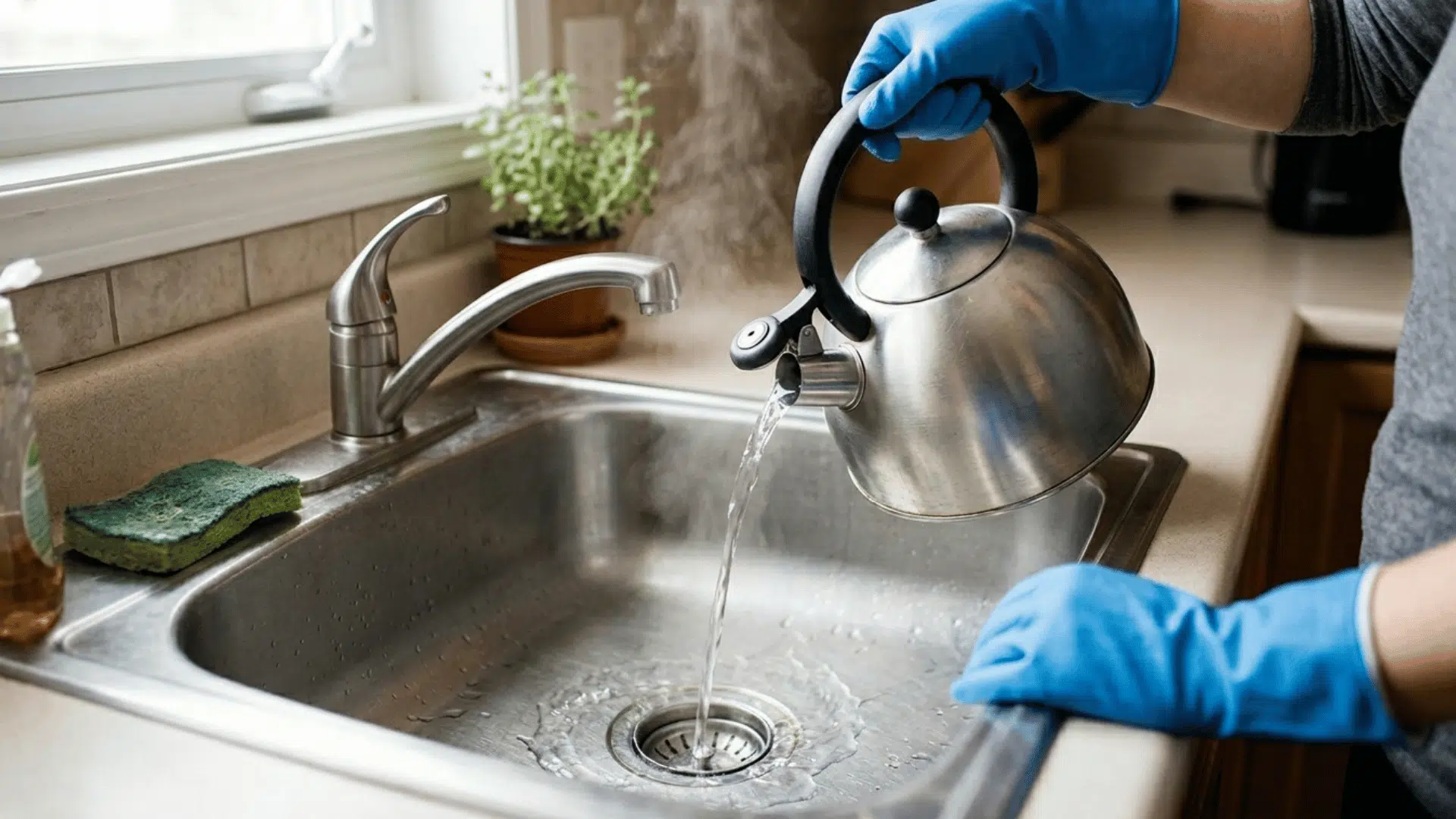
Step 5: Pour Hot Water

After waiting, pour hot water down the drain to flush everything out. The hot water helps carry away the loosened debris, grease, and residue, leaving the pipe cleaner and clearer.
Make sure the water is hot but not boiling, especially if you have plastic pipes, to avoid damage. This final step completes the process and helps restore normal water flow through the drain.
Alternative Drain Cleaner Recipes
Here are a few simple homemade drain cleaners you can make with common household ingredients for different types of clogs.
| Method | Best For | What You Need | How To Use |
|---|---|---|---|
| Salt and Hot Water Solution | Grease and mild clogs | ½ cup salt, hot water | Pour salt into drain → Add hot water → Wait 10–15 mins → Rinse again |
| Dish Soap and Hot Water Method | Kitchen sinks with grease | 2–3 tbsp dish soap, hot water | Pour dish soap → Add hot water slowly → Let it sit for a few minutes |
| Baking Soda and Lemon Juice Mix | Fresh smell and light cleaning | ½ cup baking soda, 1 cup lemon juice | Add baking soda → Pour lemon juice → Wait 15 mins → Flush with warm water |
| Boiling Water Flush | Minor buildup and soap residue | Boiling water | Carefully pour boiling water → Repeat 2–3 times if needed |
When Homemade Drain Cleaner is Not Enough
Sometimes, homemade solutions are not enough to fix the problem. If water is not draining at all, it usually means there is a deep or complete blockage in the pipe.
Repeated clogs can point to buildup further inside that simple methods cannot reach. Bad smells that don’t go away may signal trapped debris or a more serious issue. In such cases, it’s better to use the right tools.
A plunger can help with surface clogs, while a drain snake works for deeper blockages. If the problem continues, calling a plumber is the safest option to prevent further damage and ensure the drain is properly cleared.
Tips to Prevent Future Clogs
Prevention saves time and effort. A few simple habits can keep your drains clear and reduce the chances of blockages.
- Avoid Pouring Grease Down the Sink: Grease may look harmless when hot, but it solidifies as it cools and sticks to pipe walls, leading to clogs over time.
- Use a Drain Cover: A drain cover helps catch food particles, hair, and debris before they enter the pipe, making cleanup easier and preventing buildup.
- Clean Drains Once a Month: Regular cleaning with a homemade drain cleaner helps remove minor buildup before it turns into a bigger problem.
- Flush With Hot Water Regularly: Running hot water through the drain helps wash away grease and residue, keeping pipes clear and flowing properly.
Final Thoughts
A homemade drain cleaner is a simple and practical way to handle everyday clogs without relying on harsh chemicals.
These solutions work well for slow drains and light buildup, helping keep pipes clean with minimal effort. However, for more serious blockages, additional tools or professional help may be required to fix the issue properly.
Starting with these simple methods can save time, reduce costs, and help maintain smooth drainage. With regular care, it becomes easier to avoid clogs and keep everything flowing without unnecessary stress.

Stephanie Grace, a graduate with a degree in Fine Arts from the Savannah College of Art and Design, has been inspiring DIY enthusiasts with her creative and practical guidance for over 14 years. Her career in design and crafting began in a small artisan workshop, where she developed a passion for transforming everyday materials into beautiful and functional items. Stephanie joined our website in 2018, rapidly gaining popularity for her easy-to-follow DIY tutorials and innovative project ideas. Since then, she has been the creative mind behind our DIY section, helping readers bring their artistic visions to life. Outside her professional pursuits, Stephanie enjoys pottery and urban gardening, hobbies that showcase her love for hands-on creativity and nature.