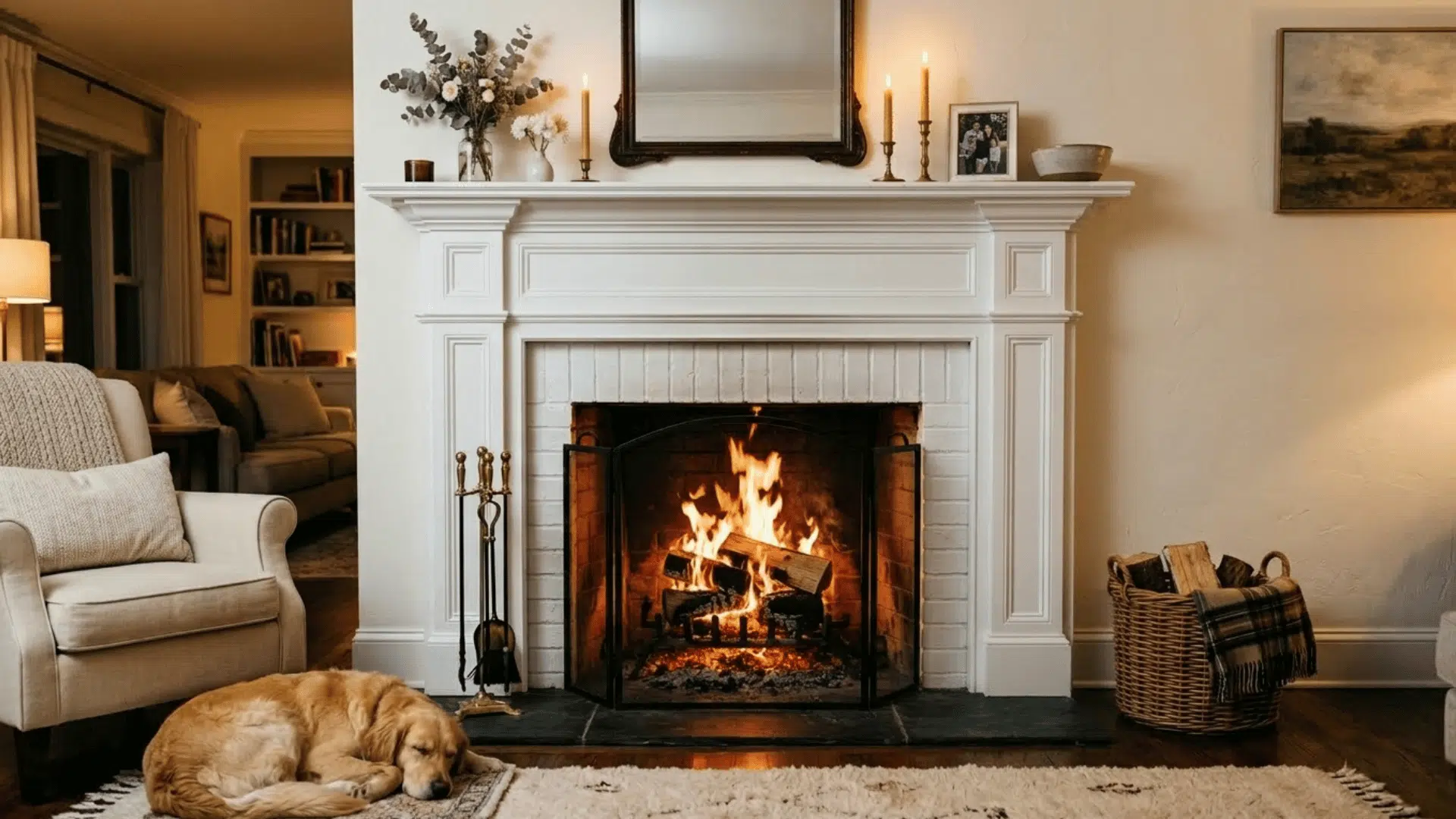

A brick fireplace can make any room feel warm and full of character. But when the brick looks dull or outdated, it can pull the whole space down.
That’s where knowing how to paint brick fireplace surfaces the right way becomes really useful. A fresh coat of paint can completely change how a fireplace looks and feels.
Many people assume it’s a complicated process. But it’s actually quite manageable with the right steps.
This guide leads you through everything from prep work to the final coat, so anyone can get great results without stress or costly mistakes.
Should You Paint a Brick Fireplace?
Painting a brick fireplace can be a great way to refresh a space, but it’s important to understand both the benefits and drawbacks.
On the plus side, paint can instantly brighten a room, cover stained or uneven brick, and create a clean look that fits modern or farmhouse styles.
It’s also a budget-friendly way to update your space and can make smaller rooms feel more open. However, painting is a permanent change and hard to reverse.
It also hides the brick’s natural texture and requires proper preparation to prevent peeling. In some cases, it may even affect resale appeal for buyers who prefer original brick.
What You Need Before You Start Paint Brick Fireplace
Having everything ready saves time and avoids mess. A few basic tools can make the job much easier.
| Item | Purpose |
|---|---|
| Scrub Brush / Wire Brush | Removes dirt, soot, and loose debris |
| Mild Cleaner / TSP Solution | Cleans grease and stains for better paint grip |
| Painter’s Tape & Drop Cloth | Protects surrounding areas from paint splatter |
| Masonry Primer | Helps paint stick and covers uneven surfaces |
| Heat-Resistant Paint | Safe for areas exposed to high temperatures |
| Paint Roller & Angled Brush | Ensures smooth and even paint application |
How to Paint a Brick Fireplace: Step-by-Step Process
Painting a brick fireplace can quickly refresh the look of your space, but getting it right starts with proper prep and the right approach.
Step 1: Clean the Brick Thoroughly

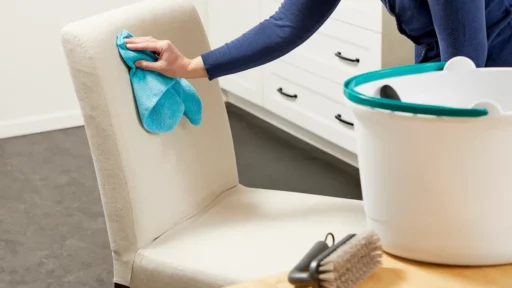
Start by thoroughly cleaning the brick surface so the paint can adhere properly. Use a scrub brush and a mild cleaner to remove dust, soot, and any grease buildup.
Pay extra attention to dark or stained areas, as leftover dirt can affect the final finish.
Once cleaned, let the brick dry completely before moving to the next step, since painting over damp brick can lead to uneven coverage and peeling later.
Step 2: Repair Any Damage

Before painting, take a few minutes to repair any visible damage on the brick. Look for cracks, holes, or gaps between the joints and fill them using mortar or a suitable filler.
This helps create a more even surface and prevents paint from settling unevenly. If there are rough or raised spots, smooth them out so the final finish looks clean and consistent once painted.
Step 3: Apply Primer

Applying primer is an important step that helps the paint stick better to the brick surface. Use a masonry primer, as it’s designed for porous materials like brick.
It also helps cover dark tones, stains, and uneven patches, giving you a more even base to work with. This step makes a big difference in how smooth and long-lasting the final paint finish looks.
Step 4: Paint the Fireplace

Now it’s time to paint the fireplace. Use a roller to quickly and evenly cover the larger, flat areas.
For joints, edges, and tight corners, switch to an angled brush so you can reach every gap. Apply the paint in thin, even layers rather than a single thick coat.
Two coats usually give the best coverage and a smoother finish, so allow the first coat to dry before applying the second.
Step 5: Let It Dry Properly

Once the painting is done, let it cure properly before using the fireplace. Give enough drying time between coats so the paint sets evenly and doesn’t peel later.
After the final coat, avoid lighting a fire right away, as heat can affect fresh paint. Letting it fully cure helps the finish last longer and keeps the surface looking smooth and clean.
Best Paint Colors for Brick Fireplaces
Color choice can change the whole feel of the room. Pick a shade that complements your overall style and lighting. Here are some popular options along with trusted paint brands:
- White – Bright and Clean: Shades like Sherwin-Williams Alabaster or Benjamin Moore White Dove help make the space feel bigger and more open
- Black – Bold and Modern: Colors like Sherwin-Williams Tricorn Black or Behr Black create a strong focal point and add contrast
- Gray – Soft and Neutral: Options such as Benjamin Moore Gray Owl or Valspar Gravityare easy to match with most decor styles
- Beige or Taupe – Warm and Cozy: Try Sherwin-Williams Accessible Beige or Behr Wheat Bread for a subtle, warm look
Alternatives to Painting a Brick Fireplace
Painting is not the only way to refresh your fireplace. Some options keep the brick texture while still updating the look.
1. German Smear Technique
The German smear technique is a popular way to update a brick fireplace without fully covering it. It uses a layer of mortar spread over the brick, then partially wiped away to create a textured, aged look.
This method keeps some of the original brick visible while adding depth, making it a great option for a cozy, rustic space.
2. Limewash Finish
A limewash finish is a great option if you want a softer update for your brick fireplace. It’s a breathable coating that allows moisture to escape, which helps protect the brick over time.
Limewash creates a light, chalk-like finish that looks natural and slightly faded. As it ages, it develops a gently worn look that adds character without fully covering the brick.
3. Staining the Brick
Staining the brick is a good option if you want to change the color without hiding its natural texture. Instead of sitting on top like paint, the stain soaks into the brick, keeping the original surface visible.
This helps maintain the authentic look while giving it a fresh and updated tone that still feels true to the material.
Painting Vs Whitewashing: What’s Better?
Both options can refresh a brick fireplace, but the final look and level of commitment are very different.
| Feature | Painting | Whitewashing |
|---|---|---|
| Coverage | Provides full coverage by completely covering the brick surface with a solid color | Offers partial coverage, allowing some of the original brick color to show through |
| Texture | Hides the natural texture of the brick, giving a smoother and more uniform finish | Keeps the brick texture visible, adding depth and character to the surface |
| Look | Creates a clean, bold, and modern appearance with a consistent color | Gives a softer, more natural look with a slightly aged or rustic feel |
| Flexibility | More permanent and harder to reverse once applied | More forgiving and easier to adjust or lighten if needed |
| Maintenance | Easier to clean and maintain due to a sealed, even surface | May require touch-ups over time as the finish can wear unevenly |
| Application Effort | Requires proper prep, primer, and multiple coats for a smooth finish | Simpler to apply with diluted paint, making it quicker and less labor-intensive |
Common Mistakes to Avoid
Even small mistakes can affect how your painted fireplace looks and lasts, so paying attention to the basics before and during the process helps you get a smoother, longer-lasting finish.
- Skipping proper cleaning, which prevents paint from sticking well
- Not using a primer, leading to patchy and uneven results
- Using regular paint near heat, which can crack or peel
- Applying thick coats instead of thin layers
- Rushing drying time between coats
- Ignoring small cracks or damage before painting
Conclusion
Painting a brick fireplace is a simple way to update a room and give it a fresh, cleaner look. It works especially well if you prefer a smooth and solid finish that hides old or uneven brick.
However, this change is quite permanent, so it’s important to be sure before starting. If keeping some of the natural brick texture matters, options like whitewashing or limewash can be a better fit.
These methods offer a lighter update while still letting the character of the brick show through, helping you balance style and flexibility.
A little planning goes a long way in getting a result that fits your space perfectly

Stephanie Grace, a graduate with a degree in Fine Arts from the Savannah College of Art and Design, has been inspiring DIY enthusiasts with her creative and practical guidance for over 14 years. Her career in design and crafting began in a small artisan workshop, where she developed a passion for transforming everyday materials into beautiful and functional items. Stephanie joined our website in 2018, rapidly gaining popularity for her easy-to-follow DIY tutorials and innovative project ideas. Since then, she has been the creative mind behind our DIY section, helping readers bring their artistic visions to life. Outside her professional pursuits, Stephanie enjoys pottery and urban gardening, hobbies that showcase her love for hands-on creativity and nature.