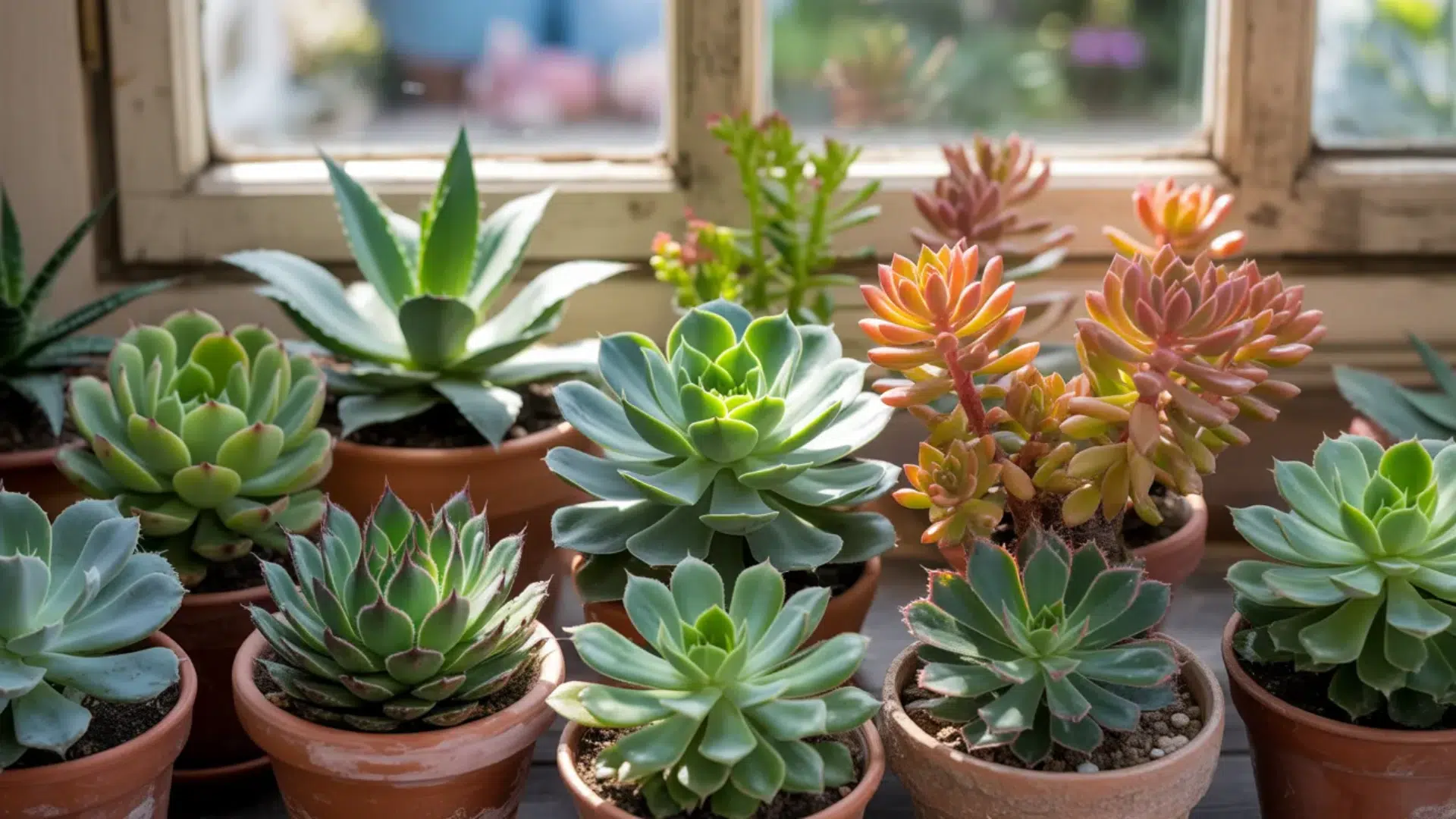

You snapped a leaf off your echeveria by accident, and now you want to know whether it can actually grow into a new plant.
The short answer is yes. Or maybe you want to grow twenty plants from one without spending a dollar. Either way, this works.
Learning how to propagate succulents is one of the most practical skills any plant parent can pick up, and it costs almost nothing.
This covers every major method, leaves, cuttings, offsets, and seeds in plain, honest language. Clear steps, real tips from the community, and zero complicated jargon. Let’s get into it.
Propagation Methods for Your Succulent
Not every succulent responds to every method. Before you propagate succulents, it helps to know which approach suits the plant sitting in front of you.
| Plant Type | Best Method | Success Rate | Notes |
|---|---|---|---|
| Echeveria, Sedum, Graptopetalum | Leaf propagation | High | Easy and commonly used method |
| Leggy or stretched plants (any type) | Stem cuttings | High | Helps reshape and regrow plants |
| Aloe, Haworthia, Agave, Sempervivum | Offsets/pups | Very High | Fast and reliable propagation |
| Rare or hybrid varieties | Seeds | Medium | Slow process, but useful for unique plants |
| Rosette-forming succulents | Stem cuttings | High | Works well for maintaining plant shape |
One important note: Haworthia and Aloe do not propagate reliably from leaves. Stick to offsets for those two; you will save time and avoid frustration.
Tools and Materials Required
Propagating succulent plants requires only a few simple tools and materials, making it an easy process even for beginners. Having everything ready before you start also helps make the propagation process smoother and more efficient.
- Healthy Succulent Plant: Choose a strong, disease-free plant for best results
- Clean Pruning Shears or Knife: Use sharp, sanitized tools to make clean cuts
- Small Trays or Pots: Needed to place and grow new cuttings or leaves
- Well-Draining Soil: Use succulent mix or composted bark to prevent root rot
- Spray Bottle: Helps lightly mist soil without overwatering
- Bright Indirect Light or Grow Lights: Supports healthy growth without burning plants
- 50-Cell Seed Tray (Optional): Useful for organizing multiple propagations
- Clean Working Surface: Keeps the process hygienic and reduces contamination
Step-by-Step: How to Plant Succulents
This step-by-step process makes succulent propagation easier to follow, especially for beginners. By carefully moving through each stage, you can reduce the risk of rot and support healthy new growth.
Step 1: Select a Strong Parent Plant
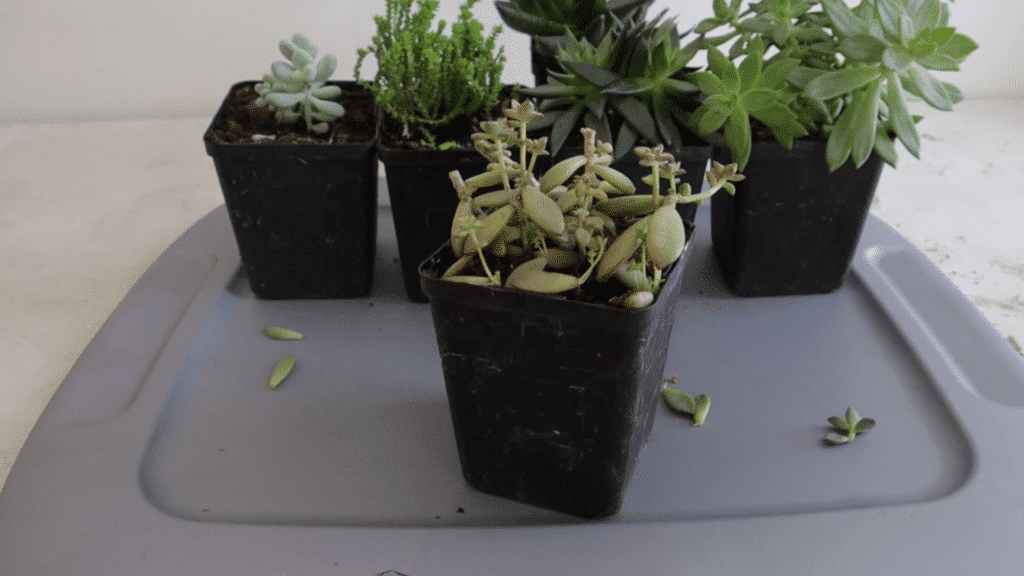
Begin with plant succulents that appear firm, healthy, and free from pests or rot. Leaves should feel thick and full, while stems remain steady and upright.
Plants showing clustered heads or long stems usually offer more propagation options. Remove the plant carefully from crowded planters if necessary, so the structure of your plant succulents becomes visible.
Observing the growth pattern helps determine if leaves, stems, or plant divisions will work best. Starting with healthy plant succulents improves root formation and helps new plants grow steadily during early development stages.
Step 2: Remove Leaves for New Growth
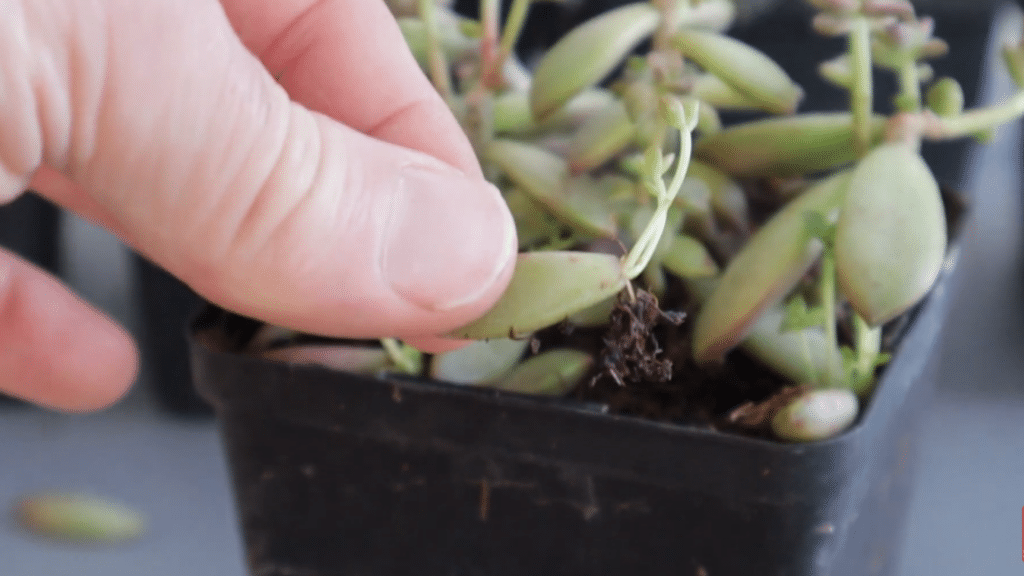
Choose mature leaves located along the lower part of the stem. Hold each leaf near its base and gently twist or pull it to the side until it separates cleanly from the plant.
A clean removal point supports better root formation later. Place the leaves on top of lightly moist soil with the base touching the surface.
Avoid pushing them deep into the soil, as too much moisture can cause decay. Over time, small roots appear from the base while a new rosette forms nearby. The original leaf slowly shrinks as the young plant grows.
Step 3: Prepare and Plant Stem Cuttings
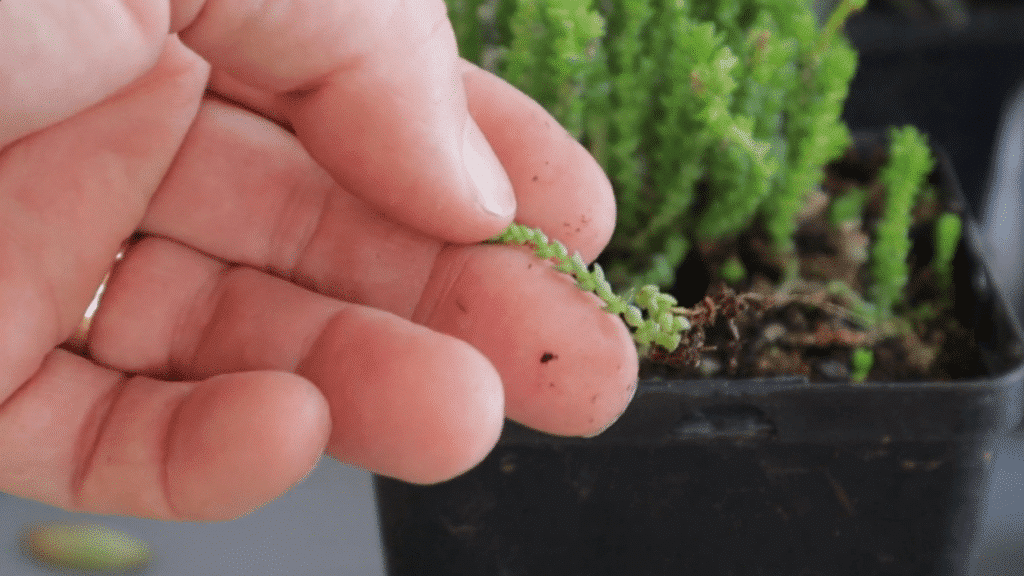
Some succulents grow tall stems with leaves along their length. These stems can produce strong new plants when cut and replanted.
Use clean pruning shears to remove a section of stem containing several leaves. Remove a few leaves from the lower portion to expose the stem base. Gently insert this section into well-draining soil.
The cutting should remain stable without being buried too deeply. Roots gradually develop along the stem, reaching the soil. Bright indirect light and light moisture support steady root formation during this stage.
Step 4: Separate Clustered Plant Heads
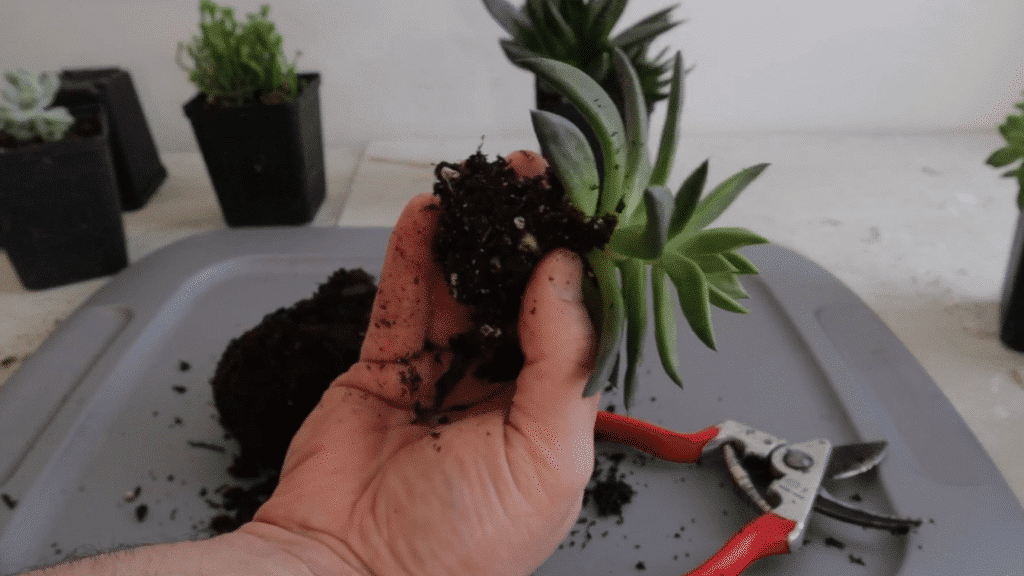
Succulents that grow multiple heads close together can be divided into separate plants. Carefully remove the plant from its container and brush away any loose soil from the roots.
Look for natural gaps between each head where roots divide beneath the soil. Use fingers or a clean knife to separate these sections slowly, so each piece keeps a portion of the roots attached.
Once divided, plant each section in its own pot filled with well-draining soil. This process prevents overcrowding and allows each plant to grow with proper spacing.
Step 5: Maintain the Ideal Rooting Environment
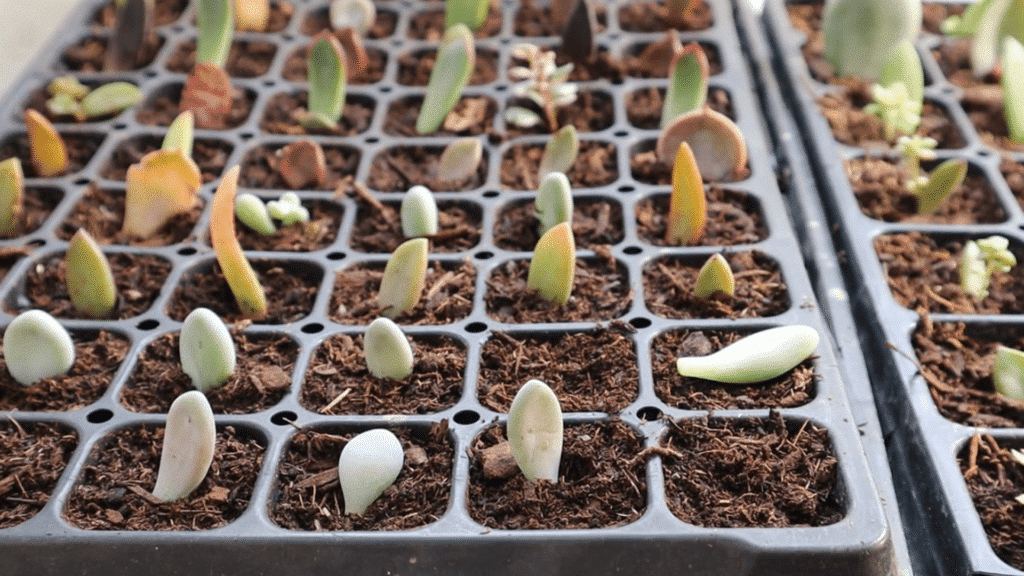
After planting cuttings or divisions, stable growing conditions help plant succulents develop roots steadily. Indoor temperatures around 20–25°C support healthy root formation.
Place containers in bright, indirect light or under grow lights that provide consistent illumination for succulent plants. Avoid direct sunlight during the early rooting stages, as it can quickly dry cuttings.
Light misting two or three times each week maintains gentle moisture without soaking the soil. Over several weeks, new shoots appear, and roots strengthen. Once growth becomes steady, the young plant succulents can be treated like mature plants.
Check out the whole video here:
The Right Conditions to Propagate Succulents Successfully
The environment you create matters just as much as the method itself. Here is what to focus on at every stage:
- Soil: Use a mix of perlite or coarse sand for a gritty, fast-draining soil. The full explanation for why standard potting mix fails is covered in Section 2 above.
- Light: Bright, indirect light is ideal throughout propagation. Direct sun on unrooted cuttings or leaves dries them out before roots can form.
- Watering: For leaves and cuttings, use the misting method covered in each section above. For rooted plants transitioning to pots, switch to bottom watering. Place the pot in a shallow tray of water for ten minutes, and let the soil absorb from below. This encourages roots to grow downward.
- Temperature: 65 to 80 degrees Fahrenheit is the reliable range for most US growers. Avoid cold drafts, air conditioning vents, and windowsills that drop below 50 degrees at night.
- Humidity: Lower is better. Damp environments promote mold, which can quickly kill unrooted plants. If you are propagating in a basement or bathroom, add a small fan for airflow.
- Containers: Terracotta is preferred over plastic during propagation. It is porous, breathes naturally, and draws moisture away from the root zone, significantly reducing the risk of rot compared to plastic pots.
What Experts and Experienced Growers Say
Learning from people who have grown, failed, and recovered with succulents over the years is worth more than theory alone. Here is what professionals, long-time growers, and community voices consistently say about how to propagate succulents effectively:
“The process only works reliably when you get two critical steps exactly right: a clean leaf base separation and resisting the urge to mist too early. Most beginner guides gloss over both.” — Blooming Expert 25-Year Professional Horticulturist
“Succulents just want to take over the world. It seems like all parts of the plant will produce a new one, if given a chance all I do to propagate is create the right conditions and accelerate the process.” — Artemis Flower Farm Professional Succulent Grower
“With only very minor variations, virtually all succulents are propagated the same way, although some succulents prefer one method over another.” — Needles Leaves Experienced Succulent Grower
“Always allow succulent leaves and cuttings to dry and callus before planting. With succulents, the focus is on keeping leaf and stem cuttings free from rot and fungal disease.” — GardenTech Horticultural Resource
“Succulents are good at telling you what’s important to them. It all comes down to observation you’ll soon find out how yours want to reproduce.” — Debra Lee Baldwin Succulent Author & Expert
“Succulent growers report better results using a grittier soil blend 60% pumice, 30% coco coir, 10% worm castings — compared to standard commercial mixes.” — r/Houseplants Reddit Community (1M+ Members)
Every quote above points to the same core truth: propagation success depends less on fancy tools and more on two things: correct timing and restraint with water.
That pattern holds whether the advice comes from a professional grower, a university extension, or a Reddit community of a million plant parents.
Conclusion
Propagating succulents is not a perfect science, and your first batch will teach you more than anyone can. Some leaves will shrivel, some cuttings will stall, and that is part of how it works.
But the methods here apply to dozens of species, and once the process clicks, it becomes second nature.
Start with offsets or a few leaves from a plant you already own, keep conditions simple, resist the urge to overwater, and let time do most of the work.
The goal of learning how to propagate succulents is to stop spending money on plants you can grow yourself. One healthy plant, the right method, and a little patience are genuinely all it takes.

With a Master’s in Landscape Architecture from the University of Virginia, Sophia Stephenson has dedicated the last 20 years to creating and maintaining vibrant outdoor spaces. Her professional journey started in landscape design, where she gained a reputation for innovative and sustainable approaches. Sophia became a part of our editorial team as a freelancer in 2019, offering a fresh perspective on outdoor living. Since 2020, she has been the chief for our outdoor design content, blending aesthetic appeal with environmental stewardship. In her leisure time, Sophia is a keen photographer, capturing the beauty of natural landscapes, a hobby that complements her professional expertise.