

Safety inside a home often depends on details that are easy to overlook until they matter most.
One such detail is the minimum egress window size, a requirement that plays a critical role in emergency exit access and building compliance.
These windows are not chosen at random, and their dimensions follow specific rules tied to how a space is used.
From bedrooms to basements, size, placement, and clearance all affect whether an opening can truly serve its purpose.
Understanding how these requirements work helps prevent costly mistakes and ensures a space meets both safety expectations and code standards before installation decisions are made.
What Are Egress Windows?
Egress windows are windows designed to provide a safe exit during emergencies such as fires or other situations where doors cannot be used.
They are large enough for a person to climb through and allow emergency responders to enter the home if needed.
These windows must open fully without special tools, keys, or effort.
Egress windows are commonly installed in bedrooms and basements, where quick escape options are limited.
Building codes define specific size and placement rules to ensure these windows remain accessible, functional, and effective during urgent situations.
Where Egress Windows Are Required?
Building codes specify certain areas of a home where egress windows must be installed to meet safety standards.
These rules focus on spaces where people may spend extended time and need a reliable way out.
Below are the most common areas where egress windows are required:
Bedrooms: Every bedroom must have an egress window to allow occupants to exit directly to the outside. This applies to both main-level and upper-level bedrooms, ensuring an accessible opening is always available.
Basements: Basements used for living or sleeping purposes must include at least one egress window. If a basement contains a bedroom, that room also needs its own compliant egress opening.
Egress Window Size Rules Under Building Codes
Egress window dimensions are set by national building codes to allow safe exit and entry during emergencies.
These rules focus on the usable opening rather than the visible frame size.
Below are the standard size requirements defined by the most commonly used building codes:
IRC Requirements
The International Residential Code applies to one- and two-family homes and townhouses. It sets minimum standards to ensure occupants can exit without obstruction.
- Net clear opening must meet a minimum square footage
- Opening width and height must meet set minimums
- Sill height is limited to keep the opening reachable
IBC Requirements
The International Building Code covers multi-family and commercial residential buildings. Its rules address higher occupancy and varied building layouts.
- Larger clear opening requirements in some cases
- Stricter placement rules for sleeping areas
- Additional considerations for shared living spaces
The applicable code depends on the building type, so this should be confirmed before installation or renovation.
Egress Window Well Size Requirements
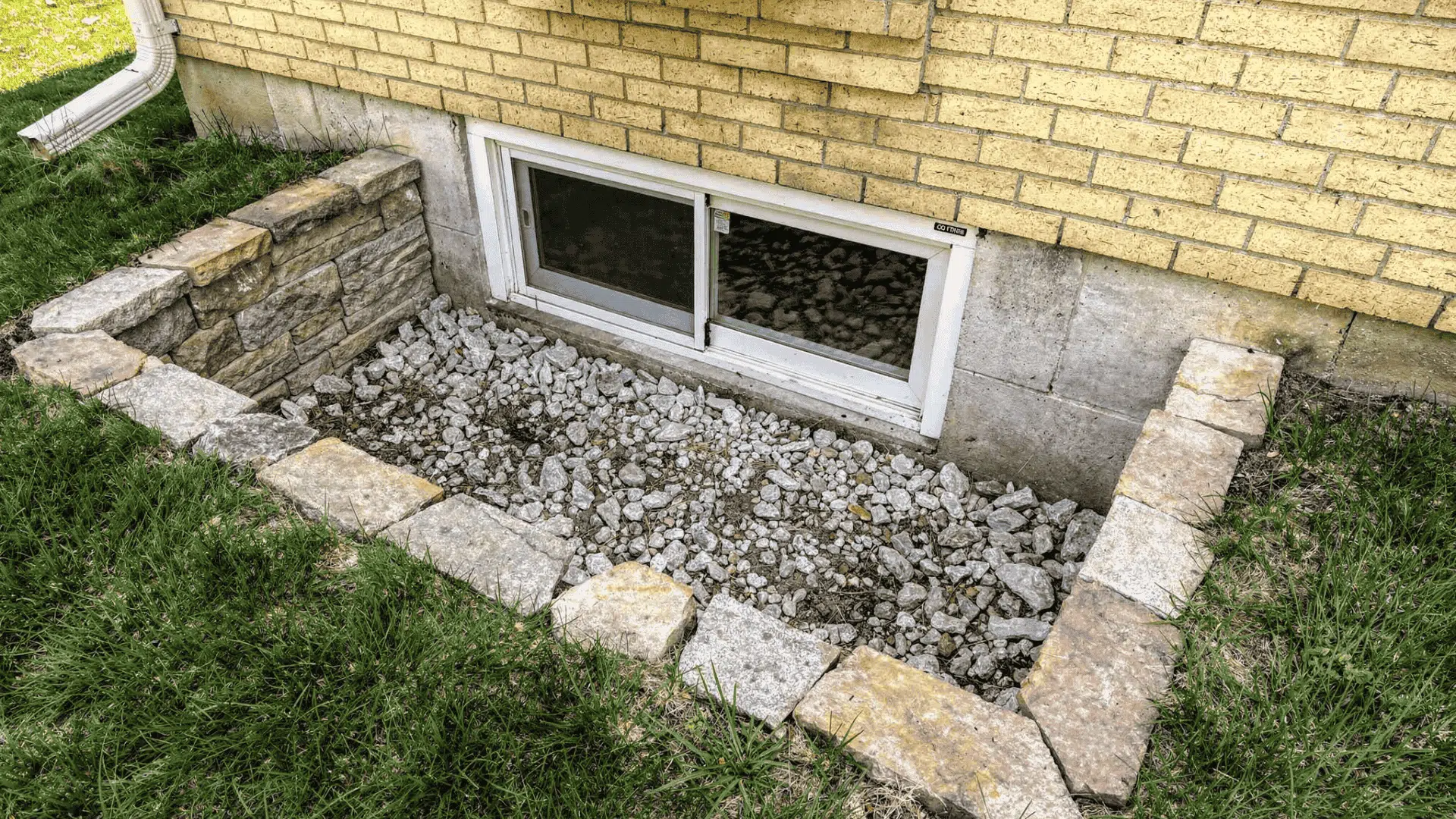
Egress window wells are necessary for windows installed below ground level, as they create a clear space for exit and entry.
These requirements ensure there is enough space to move safely during an emergency:
1. Minimum Horizontal Area
The horizontal space inside a window well must provide enough room for a person to stand, turn, and climb out without obstruction.
A minimum of 9 square feet ensures the area is not cramped and allows emergency responders to assist from outside.
This space must remain clear at all times and cannot be reduced by covers, grates, or landscaping features that block movement.
2. Minimum Depth
Window well depth is measured from the bottom of the well to the top edge.
A minimum depth of 36 inches ensures the window can fully open without hitting the opposite wall.
Adequate depth also prevents the well from feeling confined, making it easier for occupants to step into the space and continue their exit without unnecessary difficulty.
3. Ladder or Step Requirements
When a window well is deeper than 44 inches, a permanent ladder or steps must be installed to support safe climbing.
These access features must be firmly attached and positioned so they do not interfere with the window opening.
The ladder or steps should allow easy footing while keeping the required clear space available for emergency use.
Types of Egress Windows Commonly Used in Homes
Egress windows come in different styles, but not all types function the same way when it comes to meeting safety and size rules. The way a window opens plays a major role in whether it can serve as a proper exit.
1. Casement Windows

Casement windows are attached with side hinges and open outward, allowing the entire opening to remain unobstructed.
This full clearance makes them easier to use as emergency exits, especially in tighter spaces.
Their opening style often helps meet safety requirements without increasing overall window size.
2. Sliding Windows

Sliding windows open by moving one sash horizontally across the frame.
Since only one panel slides open, the available opening is smaller than the full window width.
To meet exit access rules, these windows usually need a larger overall frame size compared to other window types.
3. Single-Hung and Double-Hung Windows

Single-hung and double-hung windows operate by lifting one or both sashes vertically.
Even when fully open, part of the window remains fixed, which reduces the clear opening.
Proper sizing is important to ensure the opening remains large enough for safe and practical use.
Common Code Exceptions and Special Cases
Egress window rules are mostly consistent but allow limited exceptions based on building design and access. Safety remains a priority, but not all spaces are the same.
Understanding these special cases helps avoid misinterpretation of standard requirements.
Grade-Level Openings
Rooms located at ground level may not require a traditional egress window if they have a door that opens directly to the exterior.
This direct access can satisfy emergency exit needs without relying on a window opening.
Local Code Variations
Local building authorities may adopt amendments that adjust national standards.
These changes can affect measurements, placement, or additional features, making it important to confirm requirements with the local code office before construction.
Common Egress Window Size Mistakes to Avoid
Egress windows often fail inspections due to small but critical sizing errors. These mistakes usually happen during planning or installation and can be costly to fix later.
- Measuring the glass instead of the clear opening, which results in an opening that is too small when the window is fully open
- Installing the sill too high from the floor, making the window difficult to reach during an emergency
- Using fixed or non-operable windows, which do not provide a usable exit
- Reducing window well space with covers or obstructions, limiting movement and access
- Ignoring applicable building code type, such as applying residential rules to multi-unit buildings
Avoiding these issues helps meet code requirements, reduces inspection failures, and ensures the window can function properly as an emergency exit when needed.
Final Checklist Before Installation
A final review before installation helps ensure all size, placement, and access requirements are met, reducing the risk of inspection delays or required changes later.
- Confirm net clear opening size
- Check sill height from finished floor
- Verify window well dimensions if applicable
- Ensure the window opens fully without tools
- Review local building code requirements
Tip: Always confirm measurements after framing and before ordering the window to avoid compliance issues later.
Key Takeaways
Meeting the minimum egress window size is not just about passing inspections; it directly affects how safely a space can be used.
Knowing where egress windows are required to follow size rules under different building codes, each detail plays a role in proper compliance.
Window well dimensions, ladder rules, and local exceptions further shape how these openings must be planned and installed.
Small mistakes, such as measuring the wrong opening or overlooking clearance, can lead to delays and rework.
A careful review before installation helps avoid those issues and supports long-term safety.
If an egress window has already been installed or planned, reviewing these requirements can be valuable. Feel free to share experiences, challenges, or helpful tips in the comments below.

Veronica Lee holds a Master’s degree in Landscape Architecture from Cornell University and has dedicated more than 15 years to transforming outdoor areas into artistic and sustainable spaces. Her career took off in a renowned landscape design firm, where she excelled in creating visually stunning and environmentally responsible designs. In 2019, Veronica brought her expertise to our platform, quickly becoming a key contributor to our outdoor design and sustainability sections. As the lead of our landscape innovation series ever since joining, she has inspired readers with her forward-thinking and practical approach. When not drafting designs, Veronica enjoys pottery and participates in local conservation efforts, activities that complement her professional ethos of blending art with nature.


