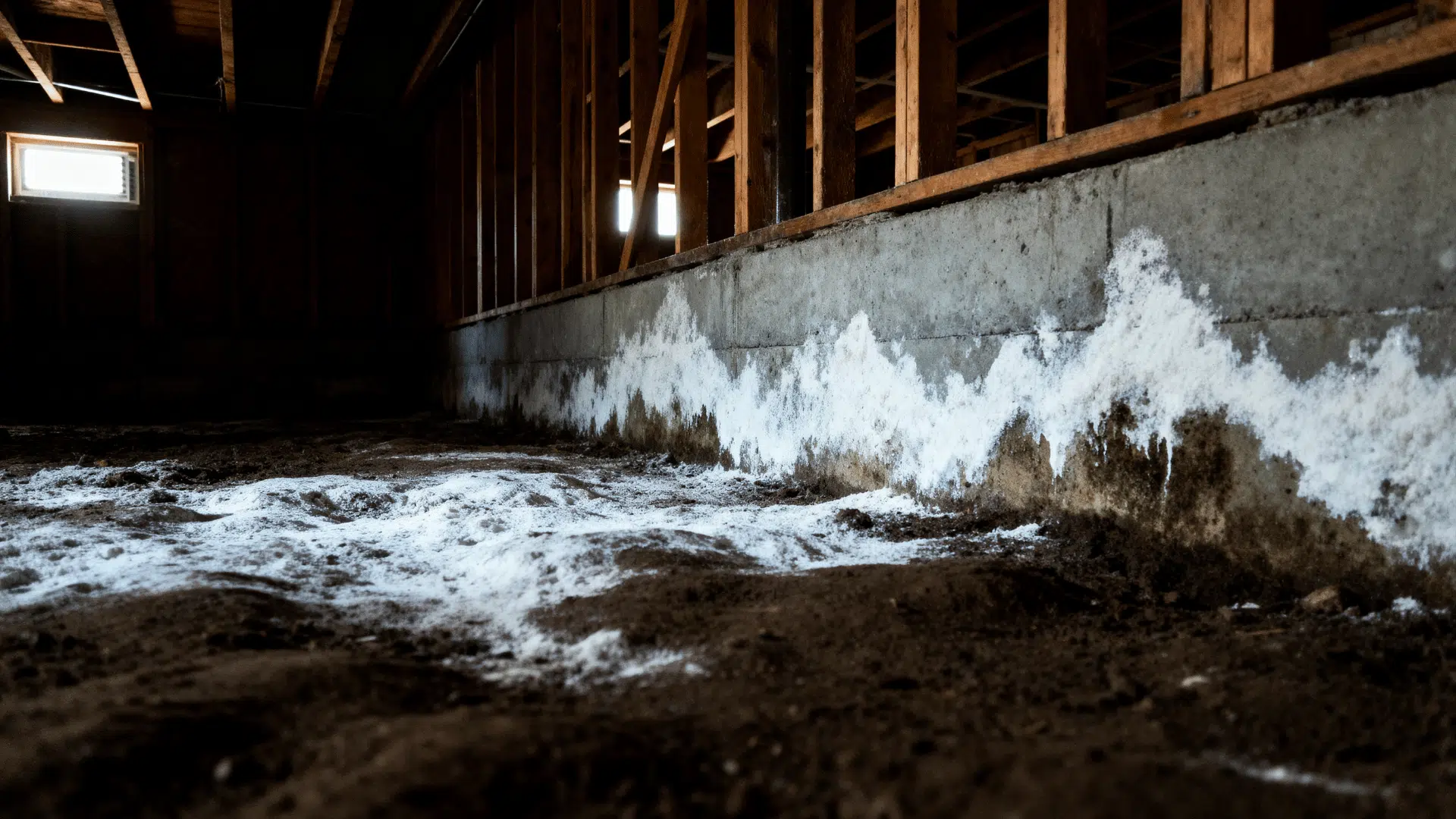

Have you ever felt that rush of finally finding the right house? The neighborhood feels right, the price fits, and you are ready to make an offer, then the inspection report arrives: mold in crawl space.
For many buyers, this triggers panic or an immediate urge to walk away. But crawl space mold doesn’t automatically mean the deal is dead.
It means you need to ask the right questions, understand the real risks, and make a decision based on facts, not fear. This blog breaks it all down so you can confidently move forward with your dream house.
Understanding Mold in Crawl Space
A crawl space is the narrow, unfinished area beneath your home that provides access to plumbing, insulation, and structural supports.
Because it sits close to the ground and is often poorly ventilated, it creates an ideal breeding ground for mold.
Mold in crawl spaces typically appears as dark patches, black, green, or white, on wooden joists, subfloor, or insulation. The most common types found include:
- Cladosporium: Rarely toxic, but can aggravate allergies
- Penicillium/Aspergillus: Common, can cause respiratory issues
- Stachybotrys (Black Mold): The most serious; associated with significant health risks
Not all mold is created equal. Surface-level mold on a small section of wood is very different from a widespread infestation eating through structural beams.
Key Causes of Crawl Space Mold

Mold doesn’t show up without a reason. There are specific conditions that allow it to grow, and understanding those causes is the first step to stopping it for good.
- Poor ventilation: Stagnant air traps humidity and accelerates mold growth
- Ground moisture: Without a proper vapor barrier, soil moisture rises directly into the space
- Plumbing leaks: Even slow, unnoticed drips create persistent dampness
- Flooding or water intrusion: From heavy rain, poor drainage, or a high water table
- Condensation: Warm air meeting cold surfaces creates moisture buildup over time
How Does Mold Grow in Crawl Spaces?
Mold spores are naturally present in the air both indoors and outdoors. In crawl spaces, growth accelerates when humidity exceeds 60%, and moisture becomes trapped.
Materials commonly found in these areas, such as wood joists, subfloor panels, insulation, and dust, provide the organic material mold needs to grow.
Once spores land on a damp surface, mold colonies can begin forming within 24 to 48 hours.
The main reason is the underlying moisture issue. Cleaning visible mold or painting over it may temporarily improve the appearance, but it does not stop mold from returning if humidity, ventilation, or vapor barrier issues remain.
This is why buyers should focus on why the mold is present, not just how much is visible.
What to Look For During Inspection?
Not every problem is easy to spot right away. Knowing exactly what to check and where to look can make the difference between catching an issue early and missing it completely.
- Visible mold growth on joists, beams, or insulation
- Musty odor upon entering the home
- Soft, spongy, or discolored wood (a sign of rot alongside mold)
- Condensation on pipes or walls
- Gaps in or absence of a vapor barrier
Health and Structural Risks

Mold spores travel through air gaps into living spaces, and what starts below your floor can quietly affect everything above it.
| Risk Type | What’s Affected | Consequences |
|---|---|---|
| Respiratory | Lungs & airways | Chronic coughing, breathing difficulty |
| Allergic | Immune system | Asthma flare-ups, skin & eye irritation |
| Neurological | Brain & nervous system | Headaches, memory issues (black mold) |
| High-Risk Groups | Kids, the elderly, and respiratory patients | Severe symptoms, faster onset |
| Floor Joists & Subfloor | Home’s structural base | Spongy floors, collapse risk |
| Load-Bearing Beams | Core structure | Instability, major repair costs |
| Insulation | Moisture & thermal barrier | Reduced efficiency, trapped moisture |
Key takeaway: Structural damage from long-term mold exposure costs far more to fix than the mold itself. The longer it’s ignored, the higher the bill.
How to Assess the Damage Before Making an Offer to the Dealer?
Don’t rely on a general home inspection alone. If mold is flagged, take these steps:
- Hire a certified mold inspector: They’ll identify the type, extent, and moisture source
- Get a remediation estimate: From at least two licensed remediation contractors
- Request disclosure documents: Ask the seller for any prior mold treatment history
- Check structural integrity: Have a structural engineer assess if wood rot is involved
This due diligence gives you hard numbers to work with and serious negotiating leverage.
Should You Walk Away or Negotiate for Property?
This is the core question. The answer depends on the scope and seller flexibility.
If the mold is limited to a small area, the moisture source is identifiable, remediation costs are under $10,000, and the seller is open to negotiation, stay at the table. It’s a manageable problem with a clear path to resolution.
Walk away if the mold is widespread, structural rot is involved, the seller is being evasive, or the remediation cost is disproportionate to the home’s value. No deal is worth inheriting a problem with no clear fix.
Most cases fall somewhere in the middle. A price reduction equal to the remediation cost, plus a reasonable buffer, is a fair and common outcome that works for both sides.
How Much Does Crawl Space Mold Remediation Cost?
Costs vary based on severity, square footage, and location.
| Scope | Estimated Cost |
|---|---|
| Minor (small area, surface mold) | $500 – $1,500 |
| Moderate (partial crawl space) | $2,000 – $6,000 |
| Severe (full space + structural repair) | $8,000 – $30,000+ |
| Full encapsulation (add-on) | $3,000 – $8,000 |
Always get itemized quotes. Be cautious of contractors who provide vague estimates or push for immediate work without a proper assessment.
Legal Protections Every Buyer Should Know
In most U.S. states, sellers are legally required to disclose known material defects, including mold. Never waive your inspection contingency on a property flagged for moisture issues.
- Review the seller’s disclosure form carefully: Any known mold history should be documented
- Include an inspection contingency: This allows you to back out or renegotiate if mold is found
- Add a mold remediation clause: Specify in the purchase contract who is responsible for remediation and to what standard
- Consult a real estate attorney: If the seller concealed known mold, you may have legal recourse post-closing.
Final Verdict
Mold in a crawl space is a serious issue, but not necessarily a deal-breaker. If the mold is limited, the cause is fixable, and the seller is willing to negotiate, buying can still make financial sense.
However, if the damage is extensive, the seller is uncooperative, or the moisture source is unresolved, the risk outweighs the reward.
Rule of thumb: Let the inspection data and remediation cost guide your decision, not emotion. Get the numbers, negotiate hard, and make sure any purchase agreement protects you legally before you sign.

Holding a Master’s in Library and Information Science from the University of Illinois, Josh Clarke has dedicated more than 15 years to managing and disseminating information across various platforms. His professional journey includes significant experience as a research librarian, where he developed an expertise in sourcing and providing accurate and comprehensive answers to diverse questions. In 2018, Josh brought his rich experience to our platform, quickly establishing himself as a reliable source for general FAQs. He has been overseeing our information curation since then, combining his research skills with a flair for engaging content delivery. When not involved in information management, Josh enjoys exploring digital photography and participating in local quiz competitions, hobbies that complement his inquisitive nature and love for learning.