
Outdoor spaces often feel incomplete when planting areas lack structure or purpose.
Thoughtfully planned garden beds can bring order, depth, and visual balance to even the simplest yards.
Raised flower bed ideas offer practical ways to shape planting zones, manage soil conditions, and create clear boundaries for flowers to grow with consistency.
From compact layouts to structured designs that guide movement through the garden, these setups support both function and visual clarity.
Each approach carries its own character, shaped by materials, placement, and space.
The sections ahead highlight varied arrangements that quietly change how a garden looks, feels, and grows over time.
Raised Flower Bed Ideas
Raised flower bed ideas focus on practical layouts and materials that help organize planting areas while supporting healthy plant growth, including thoughtful raised bed garden layouts that improve spacing and overall garden structure.
Below are raised flower bed ideas that vary by layout, material, and placement, offering options suited to different garden sizes and outdoor arrangements:
1. Rectangular Wooden Raised Flower Beds
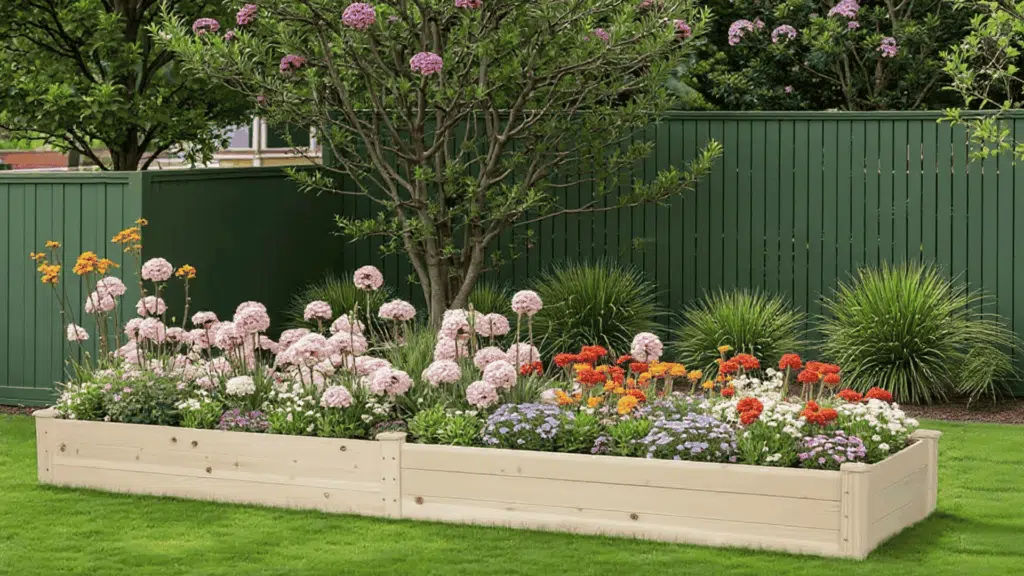
Rectangular wooden raised flower beds offer a structured planting area that supports consistent spacing and orderly arrangements.
Their straight edges make planning easier, especially when grouping flowers by height, bloom time, or color range. Wood provides natural insulation for soil, helping roots stay stable during temperature changes.
These beds fit well in open lawns, backyards, or side gardens and can be adjusted in length and width to match available space. They also allow straightforward soil replacement without disturbing surrounding ground.
2. Raised Flower Bed Ideas with Stone
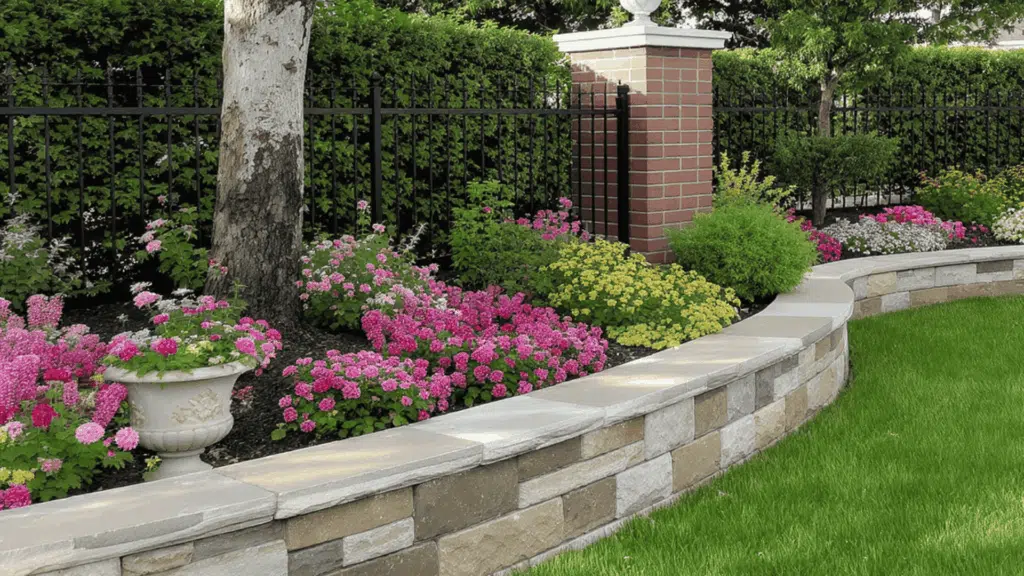
Stone-edged raised flower beds create firm boundaries that help prevent soil movement while maintaining a grounded outdoor appearance.
The weight and placement of stone support long-term stability, making these beds suitable for areas exposed to wind or water runoff. Stone edges hold their shape over time and pair well with flowering plants that spread outward.
This style works particularly well along property lines or near entrances, where consistent edges help maintain a tidy, balanced garden layout.
3. Brick Raised Flower Beds Along Walkways
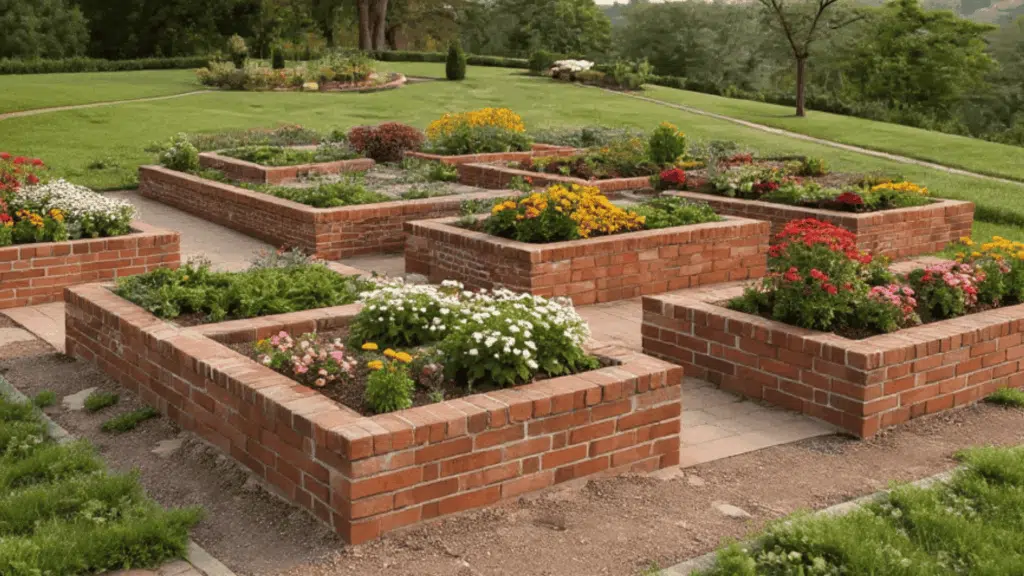
Brick raised flower beds placed along walkways help guide movement through a garden while protecting planted areas from foot traffic.
The defined height keeps soil contained and prevents flowers from spilling onto paths. Brick surfaces warm gradually, supporting steady soil conditions near walk routes.
These beds enhance visual flow by connecting planting areas with walkways, useful in yards, courtyard paths, or shared gardens where clear direction and structure are key.
4. Tiered Raised Flower Beds
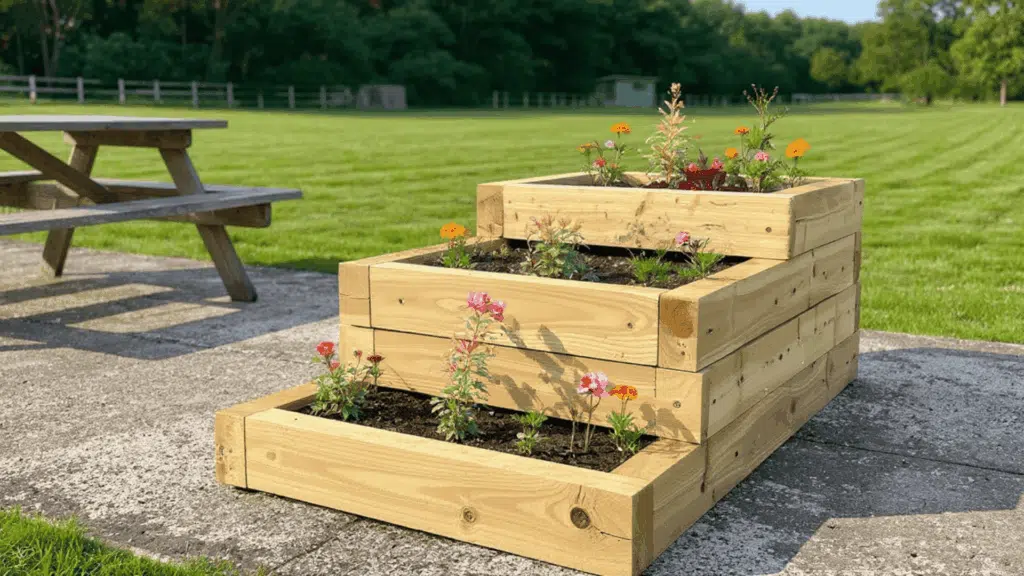
Tiered raised flower beds allow planting on multiple levels, making them suitable for uneven ground or sloped areas. Each level creates a separate growing zone, supporting different flower types without overcrowding.
This structure improves water control by slowing runoff and directing moisture through layers. Tiered designs also provide visibility for shorter plants that might otherwise be hidden.
These beds work well in open spaces where vertical arrangement adds balance without requiring extensive ground modification.
5. Circular Raised Flower Bed Centerpieces
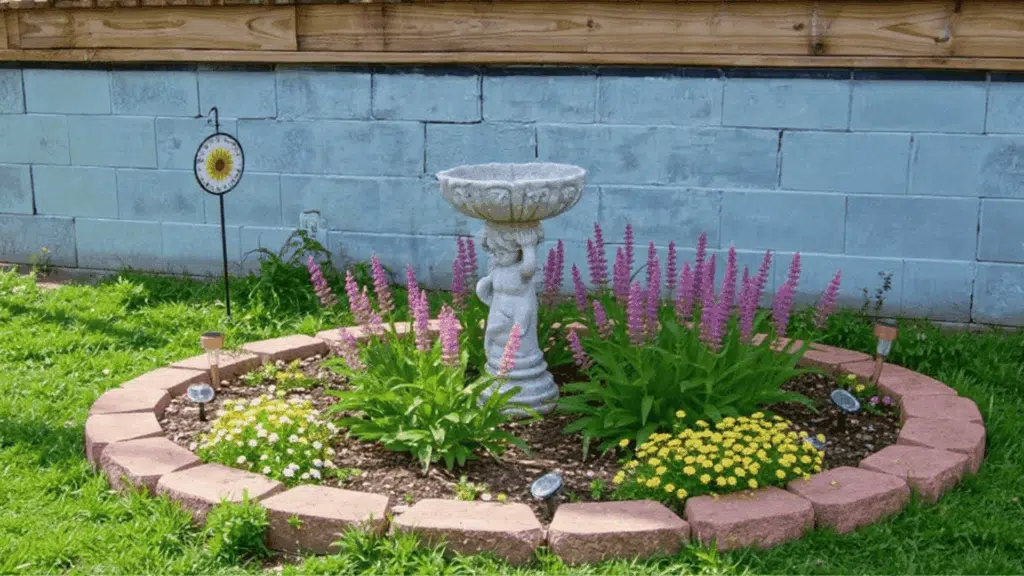
Circular raised flower bed centerpieces are designed to draw attention toward a central area while maintaining even planting distribution. The rounded shape supports smooth soil flow and prevents sharp corners from drying out unevenly.
These beds are often placed in open lawns or garden centers, where flowers can radiate outward in planned patterns.
Circular layouts also allow planting symmetry, which helps maintain visual balance throughout the growing season as blooms change and mature.
6. Raised Flower Beds With Seating Edges
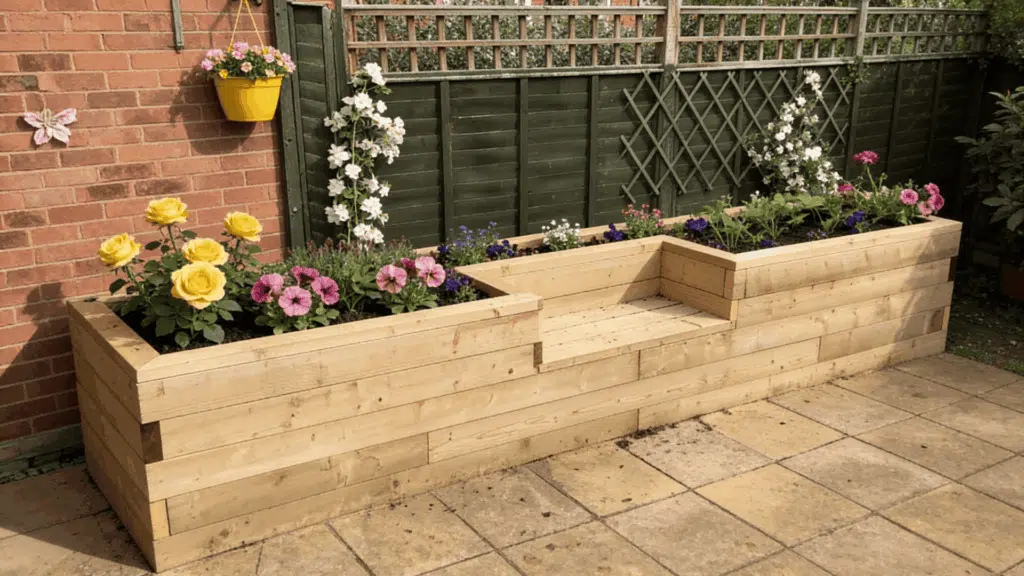
Raised flower beds with seating edges combine planting space with functional resting areas. The extended edges provide a stable surface for sitting while keeping flowers protected within the bed.
This design is often used in patios or enclosed gardens where seating options are limited. The structure enables flowers to grow undisturbed by foot traffic, with seating separate from soil. These beds allow longer garden use without harming plants.
7. Metal Raised Flower Beds
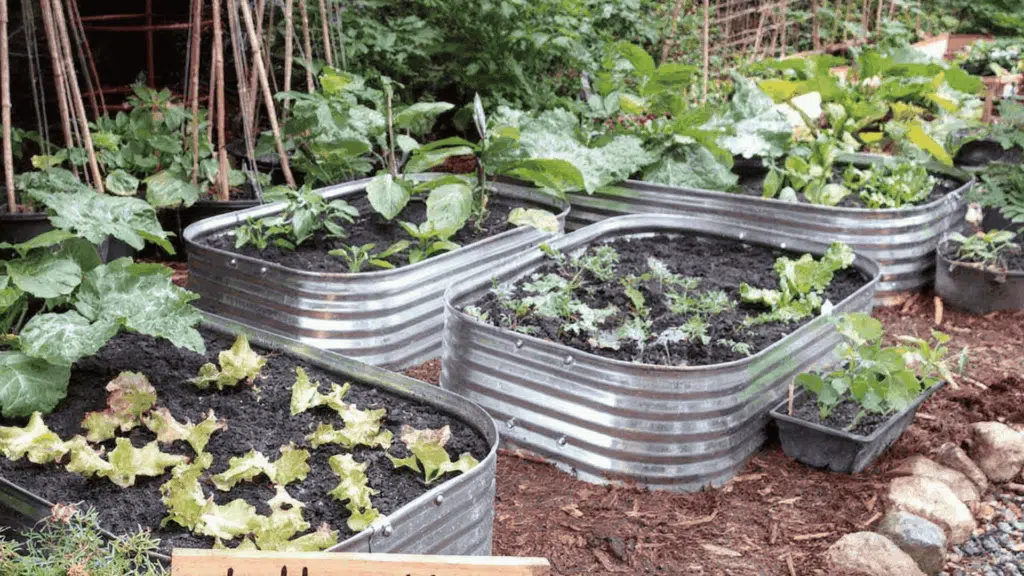
Metal raised flower beds provide strong structure and consistent shape across seasons. Their rigid form prevents bowing and soil loss, especially in deeper bed designs.
Metal surfaces heat and cool more quickly than wood, which can benefit certain flowering plants when soil conditions are carefully managed.
These beds suit controlled layouts where clean lines and defined placement matter. Their durability makes them suitable for repeated planting cycles without frequent structural adjustment.
8. Corner Raised Flower Beds
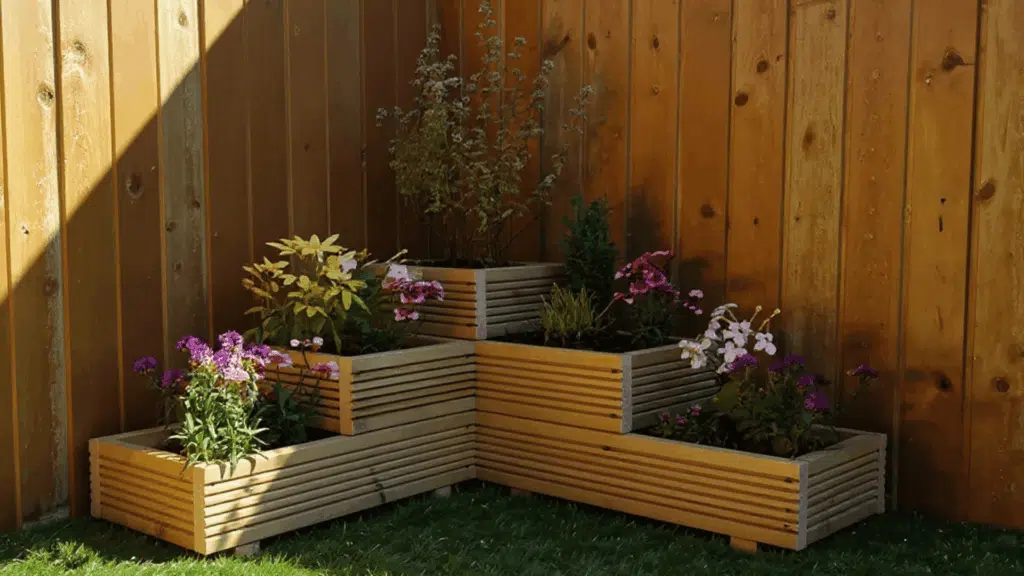
Corner raised flower beds make use of spaces that often remain unused, such as fence junctions or wall intersections.
Their shape allows flowers to grow upward and outward without blocking walkways. These beds help soften sharp angles within a garden while maintaining planting order.
Corner placement reduces wind exposure, promoting stable growth. This design provides coverage without disrupting the main garden layout.
9. Raised Flower Bed Ideas Along Fence
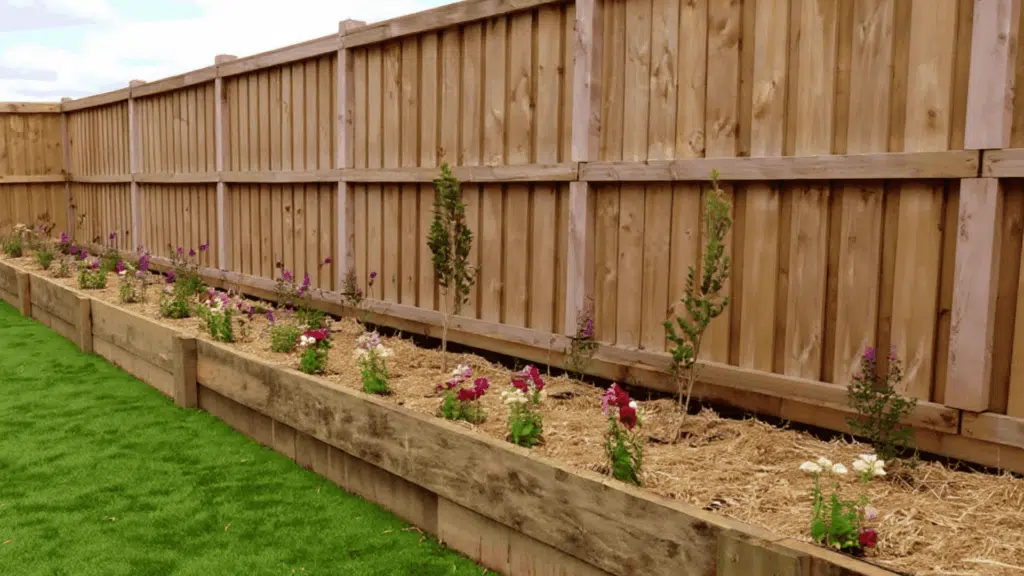
Fence-line raised flower beds run parallel to boundaries, creating extended planting areas without taking up central space. The fence provides support and shelter, while the raised structure keeps soil contained and organized.
These beds work well for layering flowers by height, with taller varieties placed near the fence and shorter ones toward the edge.
Fence-line placement also simplifies maintenance by keeping planting areas accessible and visually aligned with existing structures.
10. Waist-Height Raised Flower Beds
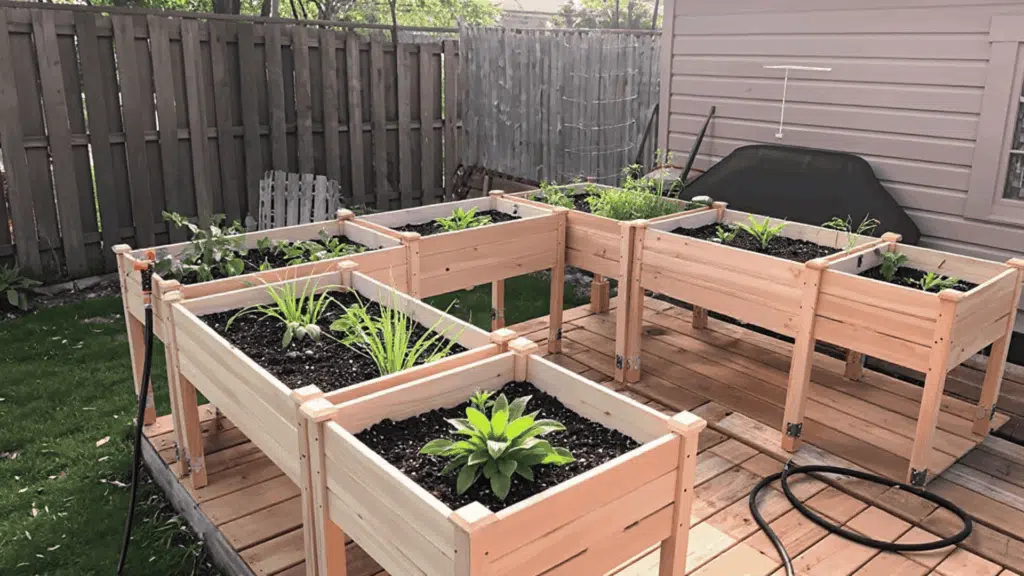
Waist-height raised flower beds are designed to reduce bending during planting and care. Their elevated structure allows easier access to flowers, making maintenance more manageable over time.
These beds often include reinforced frames to support additional soil depth. Waist-level placement also improves air circulation around plants, which can support healthier growth.
This option suits patios, decks, or compact yards where ground-level gardening may be less practical.
11. Raised Flower Beds With Drainage Layers
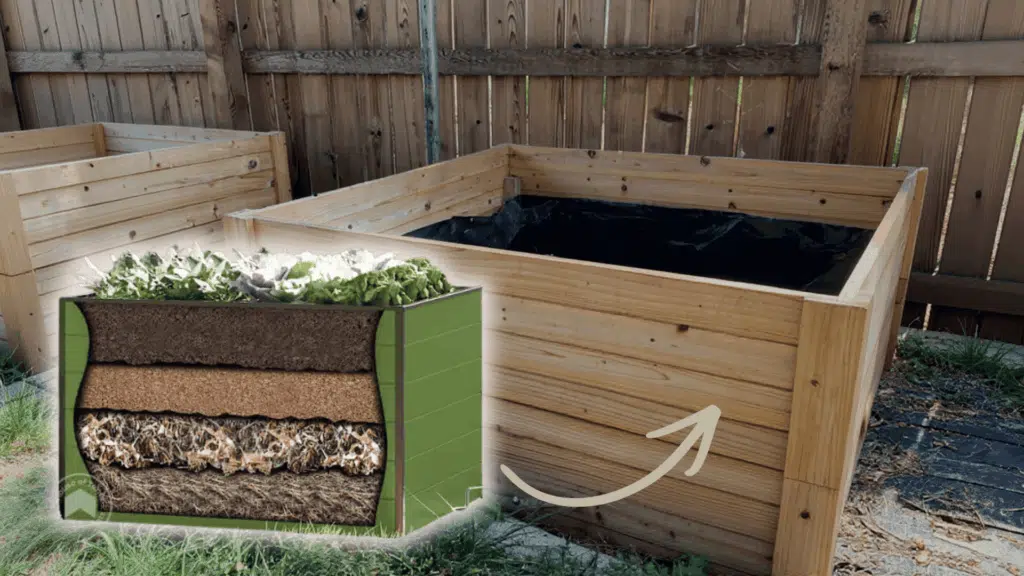
Raised flower beds with drainage layers are built to manage excess water more effectively. A layered base, often including gravel or coarse material, allows water to pass through while keeping soil balanced.
This structure helps prevent water buildup around roots, especially in regions with frequent rainfall. Drainage-focused beds support consistent moisture levels and reduce soil compaction.
They are particularly useful where natural drainage is limited or ground conditions vary.
12. Narrow Raised Flower Beds
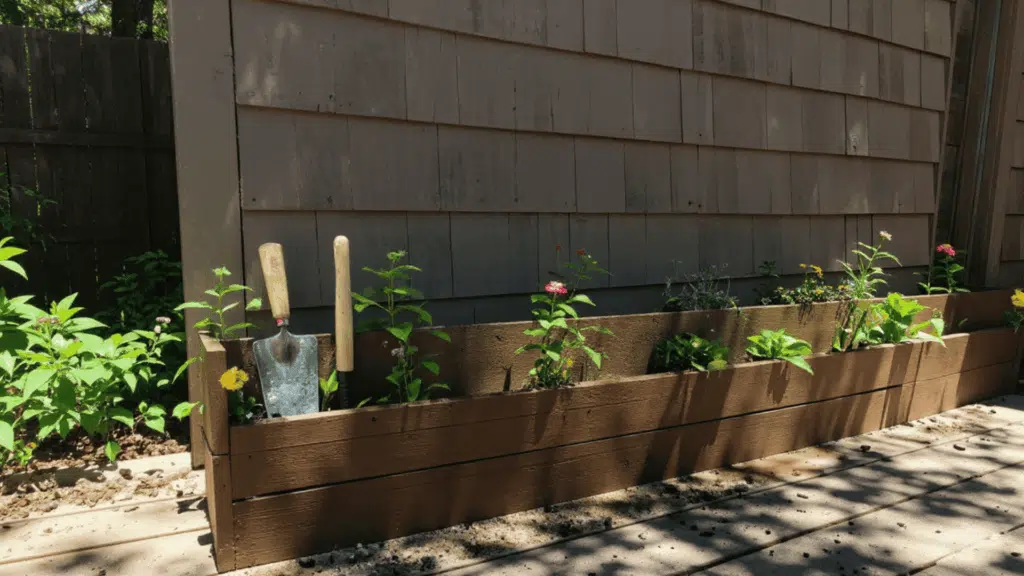
Narrow raised flower beds are designed for tight spaces where width is limited but planting depth is still needed. Their slim profile fits alongside walls, walkways, or driveways without restricting movement.
These beds support linear planting patterns, making them suitable for arranging flowers in rows or sequences.
Narrow designs also simplify watering and maintenance by keeping all plants within easy reach, while still providing enough soil depth for root development.
Raised Flower Bed Ideas on a Budget
Budget-conscious garden planning often relies on smart material choices and simplified layouts rather than expensive builds.
Raised flower bed ideas on a budget focus on reducing material waste, limiting soil use, and selecting designs that remain functional while keeping overall costs within a practical range.
Below is a table outlining estimated costs for common budget-friendly raised flower bed options:
| Raised Flower Bed Type | Materials Used | Estimated Cost Range (USD) |
|---|---|---|
| Reclaimed wood raised flower bed | Pallet wood, screws | $30 – $60 |
| Concrete block raised flower bed | Standard concrete blocks | $40 – $80 |
| Brick reuse raised flower bed | Salvaged bricks | $50 – $90 |
| Narrow ground-level raised flower bed | Timber boards, basic soil | $25 – $50 |
| Shallow raised flower bed | Low timber frame, compost mix | $20 – $45 |
| Fence-line budget raised flower bed | Reused wood or blocks | $35 – $70 |
These cost figures are approximate and may vary based on material availability, location, and local pricing.
Conclusion
A well-planned garden depends on clear structure, thoughtful spacing, and designs that support long-term care.
The ideas covered throughout this guide show how different layouts, materials, and placements can shape planting areas without limiting flexibility.
Raised flower bed ideas make it easier to manage soil conditions, define growing zones, and create visual order across both small and large outdoor spaces.
When beds are chosen based on space, maintenance needs, and planting goals, gardens remain balanced and easier to maintain as seasons shift.
These approaches also allow flowers to grow with consistency while keeping the overall layout organized.
Have a preferred raised flower bed style or a setup that has worked well? Share experiences or favorites in the comments below.

Veronica Lee holds a Master’s degree in Landscape Architecture from Cornell University and has dedicated more than 15 years to transforming outdoor areas into artistic and sustainable spaces. Her career took off in a renowned landscape design firm, where she excelled in creating visually stunning and environmentally responsible designs. In 2019, Veronica brought her expertise to our platform, quickly becoming a key contributor to our outdoor design and sustainability sections. As the lead of our landscape innovation series ever since joining, she has inspired readers with her forward-thinking and practical approach. When not drafting designs, Veronica enjoys pottery and participates in local conservation efforts, activities that complement her professional ethos of blending art with nature.
![20 front yard succulent garden ideas[P]](https://enthrallinggumption.com/wp-content/uploads/2023/12/20frontyardsucculentgardenideas-512x288.jpg.webp)