
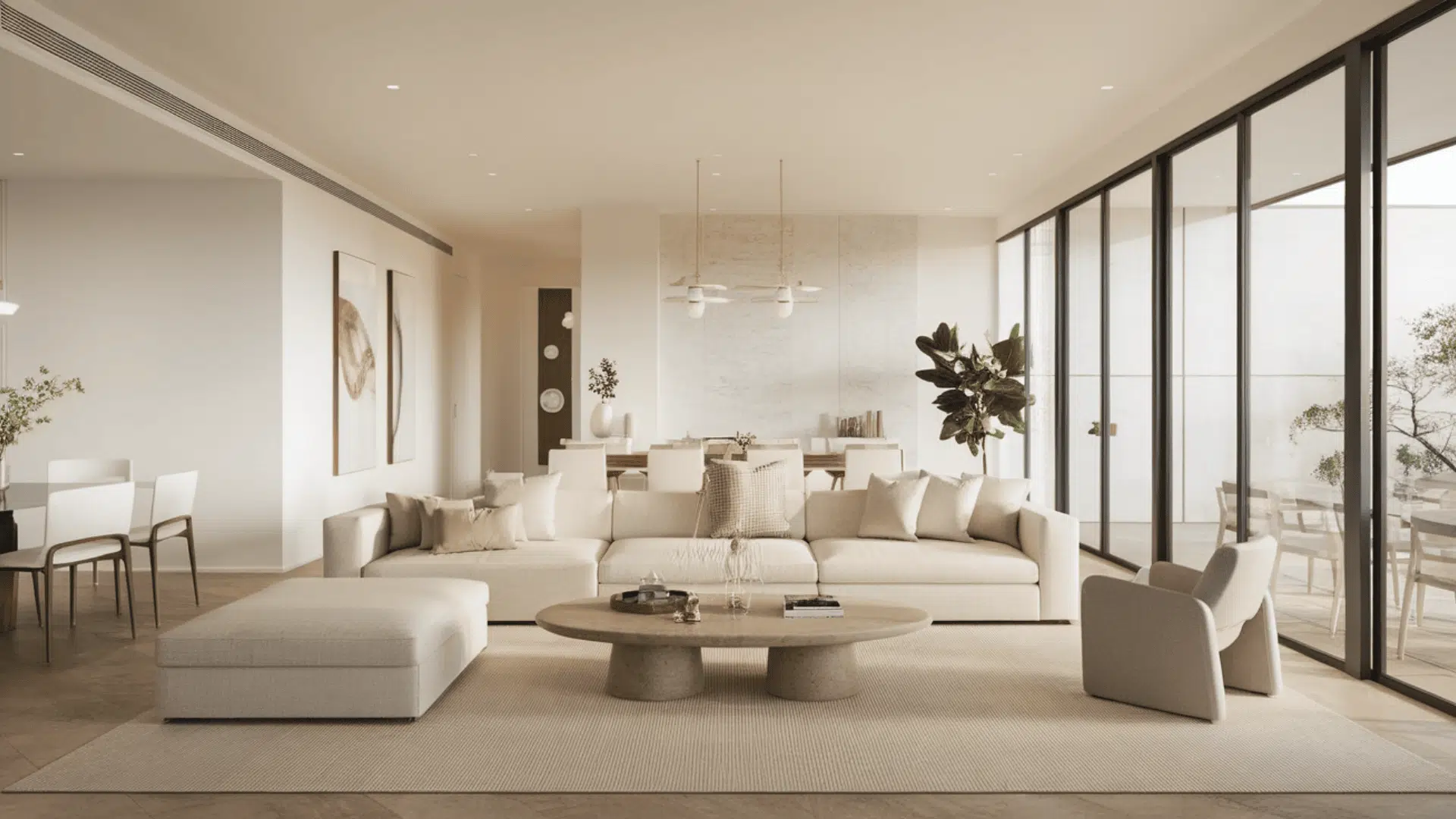

Contemporary interior design is one of those terms that sounds simple but often creates real confusion.
Most people either mistake it for a decade-specific look or mix it up with modern design entirely. But the two are not the same.
Contemporary design reflects what is current right now: the materials, forms, and layouts that suit the way people actually live today. It shifts as trends shift.
This blog breaks down what contemporary interior design is, its core features, and how it shows up in real homes.
What Is Contemporary Interior Design?
Contemporary interior design emphasizes simplicity, open layouts, neutral colors, and furniture that serves a clear purpose.
The style draws from current design thinking rather than recreating any specific past era. What makes contemporary design particularly practical is its ongoing evolution. As trends change, so does the style.
This is what separates it from modern design, which refers to a specific historical movement from the early to mid-20th century.
Unlike styles that follow a fixed set of historical rules, it stays flexible.
It absorbs influences from different periods and movements but always filters them through a current lens, keeping spaces functional and visually grounded in the present.
Key Elements of Contemporary Interior Design
Contemporary interiors follow a clear set of design elements that shape how spaces look and function. These elements work together to create a consistent visual tone across different types of homes and living spaces.
- Clean lines in furniture and architecture that keep forms simple, structured, and free of unnecessary detail
- Open floor plans that create spacious interiors with a natural sense of flow between rooms
- Neutral color palettes with limited accent colors that maintain a calm and visually balanced base
- Natural and industrial materials such as wood, glass, metal, and concrete are used in combination
- Minimal decorative accessories that keep surfaces clear and spaces free of visual clutter
- Furniture with simple forms and smooth surfaces that prioritize function over ornament
- Natural light and statement lighting fixtures that maintain brightness and visual focus throughout the space
- Balanced layouts that support everyday living without compromising on overall visual clarity
Common Characteristics of Contemporary Interiors
Contemporary interiors are designed to change how a space feels to live in, not just how it looks. The characteristics below are what create that difference.
1. Open and Spacious Layouts

Contemporary interiors reduce heavy partitions and prioritize open floor plans.
Walls are kept to a minimum where possible, allowing living, dining, and kitchen areas to flow into one another. This approach makes spaces feel larger and easier to move through during daily use.
Furniture arrangement also plays a role here: pieces are placed to define zones within the open space rather than relying on physical dividers to separate areas.
2. Minimal Decoration

Contemporary spaces use very few decorative items. The focus stays on keeping surfaces clear and interiors free of clutter.
When decorative pieces are used, they are chosen carefully and placed with intention rather than solely to fill the space.
A single piece of artwork, a well-placed plant, or one statement object is often enough to add character without disrupting the overall calm of the room.
3. Clean Lines and Smooth Surfaces

Straight lines and simple shapes define both furniture and architectural elements in contemporary interiors. Curved or heavily ornamented pieces are generally avoided.
Cabinets, shelving, and furniture tend to have flat fronts, sharp edges, and smooth finishes that contribute to a clean overall appearance.
This consistency in form across different elements is what gives contemporary spaces their structured, pulled-together quality.
4. Natural Light and Large Windows

Natural light plays a central role in contemporary design. Large windows are a common feature, as they bring in daylight and create a sense of openness.
This reduces reliance on artificial lighting during the day and helps maintain a bright, airy quality throughout the space.
In many contemporary homes, window treatments are kept minimal, using sheer panels or simple blinds that let light pass through without heavy visual weight.
Core Design Components in Contemporary Interiors
Contemporary interiors rely on color, materials, and lighting to shape their overall appearance. The table below breaks down each component, including how contemporary design differs from modern design.
| Component | Description |
|---|---|
| Contemporary Color Palettes | Neutral colors such as white, grey, beige, and black create a calm base. Accent colors such as muted blues, greens, or warm earth tones can be used in small amounts to add contrast. |
| Materials and Textures | Contemporary interiors combine materials such as wood, glass, metal, concrete, and stone. Textures from fabrics, rugs, and upholstery help add depth without creating visual clutter. |
| Lighting in Contemporary Interiors | Lighting combines functionality and visual focus. Common choices include recessed lighting, pendant fixtures, floor lamps, and large windows that bring in natural light. |
How is Contemporary Interior Design Used in Homes Today?
Contemporary interior design translates well into real homes because it works with the way people actually use their spaces day to day.
The style suits both compact city apartments and larger suburban homes without requiring major structural changes.
In practice, people tend to start with the layout. Removing unnecessary partitions between the living, dining, and kitchen areas creates a base that the rest of the design can build on naturally.
From there, furniture choices are kept straightforward. Pieces are selected for how well they fit the space and serve a function, not solely for visual impact.
Built-in storage keeps surfaces clear without requiring ongoing maintenance. The finishing touches, such as a textured rug, a pendant light, or a single framed print, are added last and sparingly.
These small additions bring warmth to the space without pulling it away from the clean, functional base the style is built on.
Why Contemporary Interior Design Always Remains Popular?
Contemporary design has maintained its presence in homes across different budgets and layouts for good reason. The style is built around principles that continue to serve people well regardless of how trends shift.
- Works well with modern open floor plans that are now standard in newly built homes and apartments, meaning less structural work is needed to achieve the look
- Neutral colors make interiors easy to update without a full redesign: swapping a rug, cushions, or accent pieces is often enough to refresh the space
- Simple layouts support everyday living by reducing visual clutter, so nothing competes for attention, and the space feels easier to use
- Flexible style that adapts to changing trends without losing its core identity: new materials or accent colors can be introduced without disrupting the overall look
- Compatible with different furniture and décor pieces, making it accessible across a range of budgets, since the style does not demand a specific brand or price point
The Bottom Line
Knowing what contemporary interior design is comes down to one central idea: it reflects how people want to live right now, not how they lived decades ago.
Contemporary design is not defined by a single look or a fixed set of rules. It is shaped by simplicity, functional furniture, neutral tones, clean lines, and spaces that work well for daily life.
That is precisely what makes the contemporary design style so practical for modern homes.
If you are planning a space that feels current, calm, and easy to maintain over time, it provides a strong, reliable foundation to build on.

With a Master in Architectural Studies from University of Pennysylvania, Marwa Haydar has pioneered living spaces since 2005. Her expertise, initially honed in a prestigious architectural firm, is evident in her approach to creating environments. Marwa became part of our team in 2019 and has since been a driving force in our home improvement section, known for her practical yet stylish solutions. She’s been spearheading our design workshops since then, infusing her passion for teaching into her work. In her leisure time, Marwa enjoys exploring historic architecture and is an enthusiastic pottery hobbyist, further enriching her understanding of form and texture.


