
You found the perfect industrial building. Great bones, fair price, and then the Phase 1 report lands with a “recognized environmental condition,” and suddenly you are staring at a six figure question: do you walk away or pay for testing?
Welcome to the moment where most commercial deals get real. A Phase 1 study tells you what might be wrong with the dirt under a property. A Phase 2 tells you what is wrong. This article walks you through the exact triggers that force a Phase 2, what the fieldwork actually looks like, and how to read the results without losing your mind or your earnest money.
What Separates a Phase 1 From a Phase 2 Study?
Think of Phase 1 as a records check with eyes on the ground. An environmental professional reviews historical maps, aerial photos, fire insurance records, and regulatory databases, then walks the property looking for suspicious stains, buried tanks, or abandoned drums. The deliverable is a report that either clears the property or flags concerns. No dirt gets moved. No samples get pulled.
Phase 2 flips that entirely. When the Phase 1 uncovers a recognized environmental condition, or when your lender simply demands hard data, a Phase 2 environmental site assessment for properties kicks in. That means drilling soil borings, installing groundwater monitoring wells, and sending samples off to a certified lab for analysis. The goal is straightforward: confirm whether contamination actually exists, measure how far it spreads, and estimate what cleanup would cost. You are trading paper opinions for laboratory facts.
Here is the distinction that matters for your wallet. A Phase 1 might cost you $2,000 to $4,000 on a typical commercial property. A Phase 2 can run anywhere from $5,000 for a small, targeted investigation to $50,000 or more when you are dealing with a large site, multiple contaminants, or deep groundwater. That gap explains why buyers hope Phase 1 clears and lenders keep pushing for more certainty.
The Five Triggers That Force a Phase 2 Environmental Site Assessment
Nobody orders subsurface testing for fun. Specific conditions push a deal into Phase 2 territory, and you should recognize each one before you sign a purchase agreement.
1. The Phase 1 flags a recognized environmental condition. This is the most common trigger. The consultant found evidence of a past release, an underground storage tank that was removed without closure documentation, or a historical operation that likely spilled solvents. The report itself will recommend whether further investigation is warranted.
2. Your lender demands it. Some lenders, especially for SBA 504 loans or larger commercial mortgages, will not close without subsurface testing on properties with any industrial history. They are protecting their collateral, and their underwriting standards are not negotiable. If the bank says test it, you test it.
3. You are buying a former dry cleaner, gas station, or manufacturing site. These property types carry a near automatic presumption of contamination. Dry cleaners used tetrachloroethylene for decades. Gas stations had leaking tanks. Manufacturers dumped solvents behind the plant. A smart buyer assumes these sites need a Phase 2 and budgets for it from day one.
4. The purchase price looks too good. When a commercial property sits well below comparable sales in the area, ask yourself why. Sometimes the seller knows about a contamination issue and priced the property to offload the liability. A bargain price can be the biggest red flag of all.
5. You plan to redevelop the site. Even if the current use seems clean, changing the use to something more sensitive, like residential or daycare, often triggers state regulatory review. That review will almost certainly demand a Phase 2 environmental site assessment for properties before they issue any approvals.
How the Fieldwork Actually Unfolds
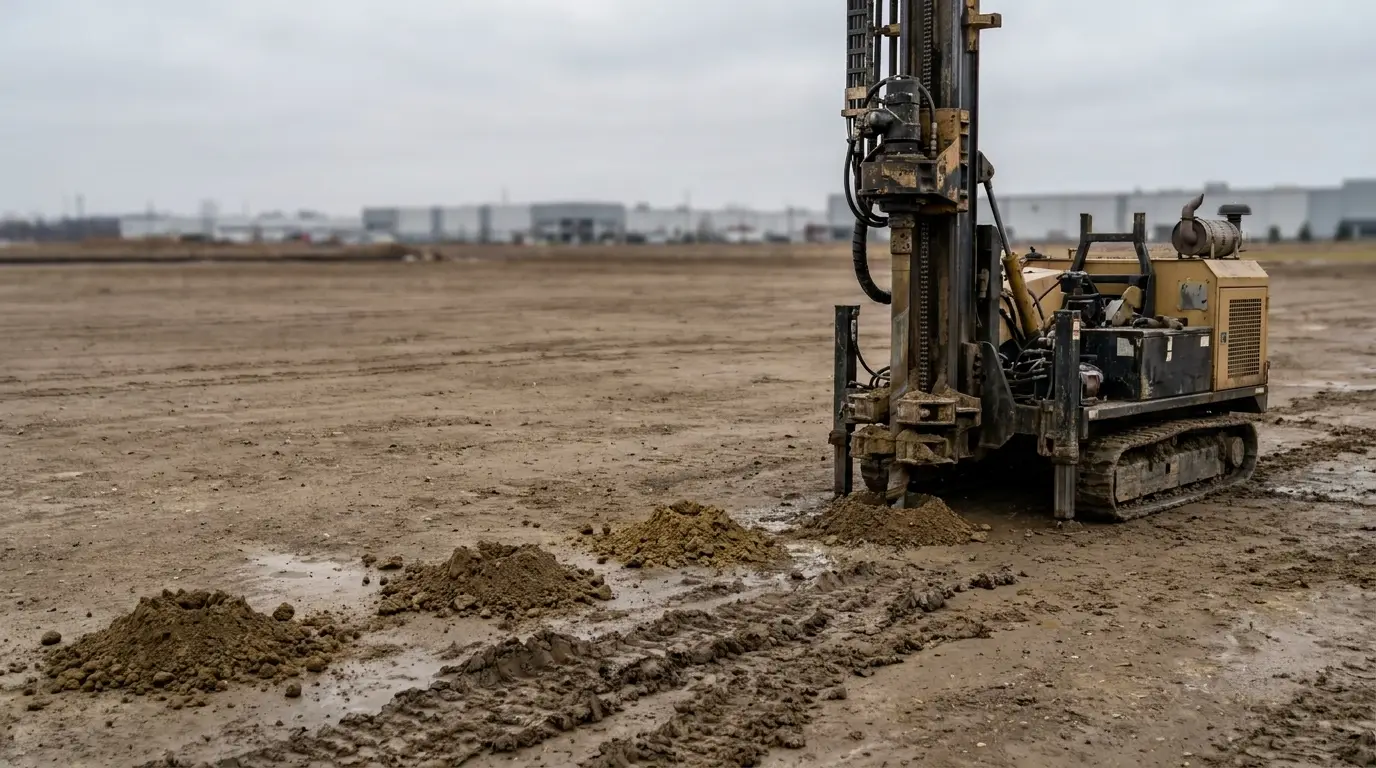
You might imagine a team in hazmat suits arriving with dramatic equipment. The reality is calmer, but the logistics still demand respect. Here is the sequence you can expect once the consultant mobilizes.
First comes the work plan. The environmental professional reviews the Phase 1 findings and designs a sampling strategy that targets the specific contaminants of concern.
They decide how many soil borings to drill, where to place them, and whether groundwater monitoring wells are necessary. Regulatory agencies, like your state environmental department, often have oversight over this plan. The Environmental Protection Agency sets baseline standards for how these investigations protect human health and the environment, and most states follow similar frameworks with their own twists.
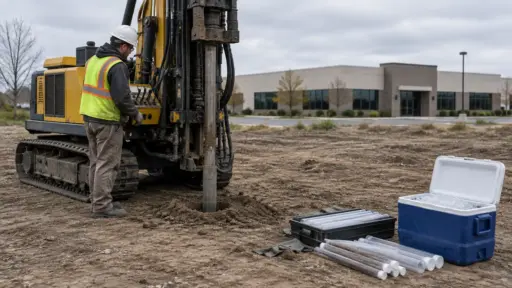
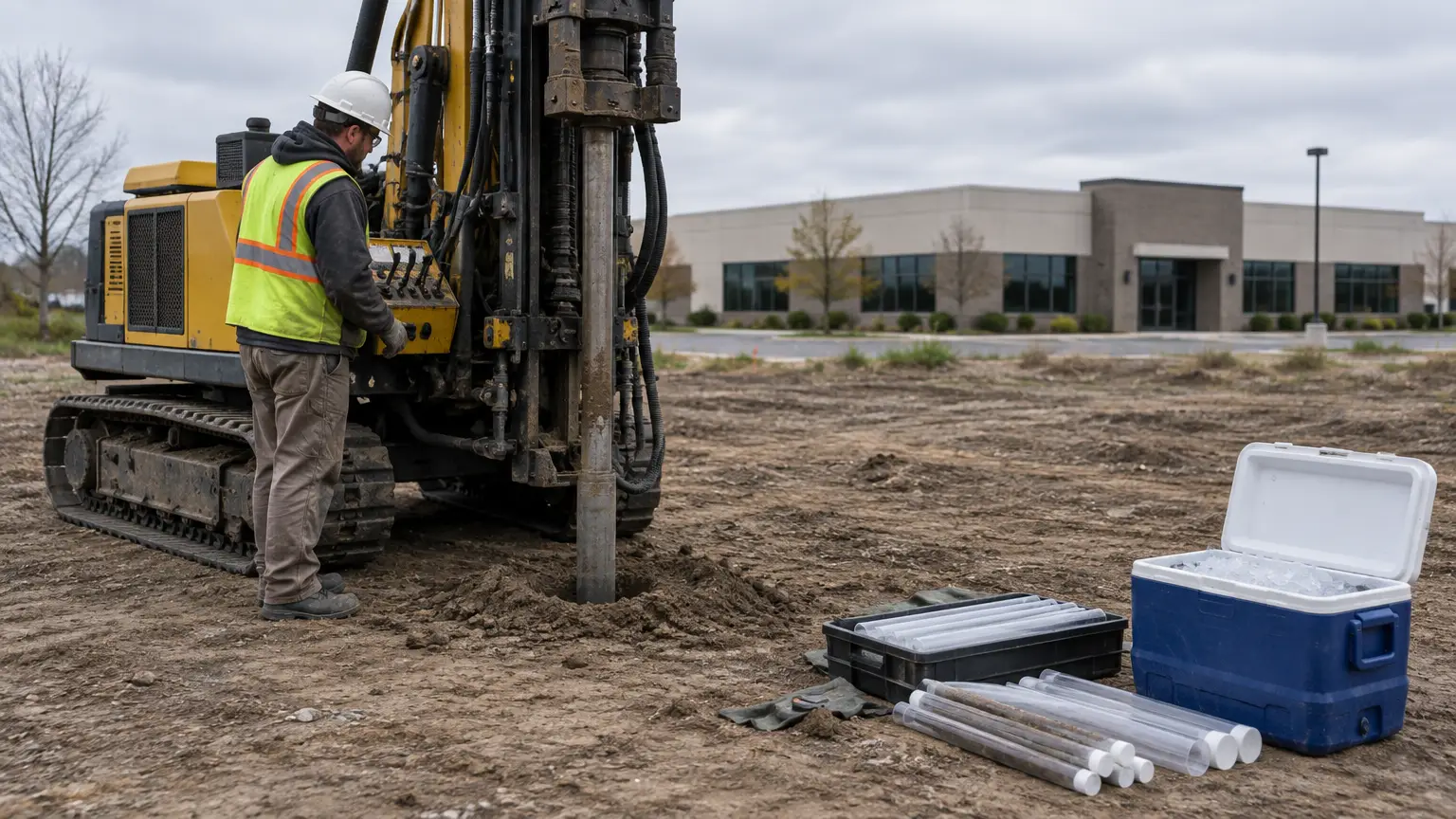
Second comes the drilling. A subcontractor with a track-mounted rig punches soil borings to depths that depend on groundwater depth and the contamination suspected.
Samples come up in clear plastic liners, and the consultant logs each boring, noting soil color, texture, and any petroleum odors. You will see them bag samples, label them chain of custody forms, and pack them on ice for the lab. That chain of custody paperwork matters more than you think, because it establishes that the results are legally defensible.
Third comes groundwater sampling. If the soil shows contamination at depth, the consultant installs monitoring wells. That means drilling a borehole, setting a PVC casing, adding a sand pack, and sealing the annulus with bentonite clay. After allowing time for the well to settle, they bail or pump out standing water, then collect samples. The lab analyzes those samples for the specific contaminants identified in the work plan.
Here is something most buyers never consider: the fieldwork schedule depends on the weather and the drill rig’s availability. A Phase 2 can take two to six weeks from mobilization to final report, and groundwater sampling always takes longer because the wells need development time. Build that timeline into your due diligence period or you will be begging the seller for an extension.
Reading the Results Without Panicking
The lab report comes back, and suddenly you are staring at tables of chemical names and detection limits. Take a breath. The numbers tell a story, but you need the consultant to translate it. Ask for a plain language summary that answers three questions.
First, is contamination present above regulatory standards? Trace amounts of some chemicals occur naturally in soil. The question is whether concentrations exceed the thresholds your state sets for the property’s current or planned use. Below those levels, the contamination is a paperwork nuisance, not a deal killer.
Second, how far has it spread? A small plume contained on your property is manageable. Contamination migrating toward a neighboring property or a drinking water aquifer escalates the situation fast, because now you are dealing with off site liability and potentially third party claims.
Third, what would cleanup cost? The consultant can estimate remediation options based on contaminant type and extent. Soil excavation and disposal might run $50 to $150 per ton. In situ treatments, where chemicals are injected to break down contaminants, cost differently but avoid the disruption of digging. Groundwater treatment through pump and treat systems can stretch on for years. These estimates give you the number you need for the next negotiation.
You have leverage here that most buyers forget. When the Phase 2 confirms contamination, the property is worth less than the contract price. That gives you grounds to renegotiate, ask the seller to fund the cleanup, or demand a credit at closing. Sellers who disclosed honestly knew this day might come. Sellers who hid the problem are now facing a much worse position, because they have lost credibility and legal protection.
The ASTM Standards That Keep Everyone Honest
You will hear consultants reference ASTM standards constantly, and they are not being pretentious. ASTM International publishes the voluntary consensus standards that define what counts as a proper environmental site assessment. The Phase 1 process follows ASTM E1527.
The Phase 2 process, while less uniformly standardized, still references established practices for soil and groundwater sampling. When a consultant says their work meets ASTM standards, they mean the methods are defensible in court and acceptable to regulators. The ASTM International homepage lays out the breadth of these standards, and you can expect your lender and your attorney to demand compliance with them.
Three Mistakes That Cost Buyers Real Money
I have watched buyers make the same errors repeatedly, and each one hurts. Learn from other people’s pain rather than your own.
- Mistake one: skipping the Phase 2 to save money. The $20,000 you save by not testing becomes the $400,000 cleanup bill you discover after closing when a tenant complains about odors. Environmental liability transfers with the deed in most cases, and you cannot simply walk away from contamination you now own. The testing cost is cheap insurance against catastrophic surprise.
- Mistake two: using the Phase 2 results as pure leverage to kill the deal. Some contamination is manageable. A small petroleum release with a straightforward excavation plan might cost $30,000 to fix, which is meaningful but not deal breaking on a multi million dollar property. Walk through the numbers with your consultant before you storm out of the negotiation.
- Mistake three: forgetting the ongoing obligations. If the Phase 2 confirms contamination and you buy the property anyway, you may face regulatory reporting requirements, groundwater monitoring obligations, and restrictions on future development. Factor those recurring costs into your pro forma, not just the one time cleanup bill.
Making the Call
So when do you actually need a Phase 2 environmental site assessment? The honest answer: whenever a competent professional tells you the risk warrants testing, or whenever your lender’s underwriting demands it. The false economy of skipping subsurface investigation on a property with any industrial history is the kind of decision that looks brilliant for six months and catastrophic for the next twenty years.
Your move is straightforward. Read the Phase 1 recommendations carefully. If contamination is suspected, get the Phase 2 scheduled before your due diligence window closes. Use the results to renegotiate from a position of fact. And remember that a contaminated property at the right price, with the right cleanup plan and the right liability protections, can still be a sound investment. You just have to know the real numbers before you commit.
What would your lender say if they knew what you are planning to skip?

Licensed broker Logan Patel holds an MBA in Urban Economics from UCLA and has steered buyers and investors through market swings for a decade. He joined us in 2024 to demystify listings, financing, and neighborhood data with clear, chart-backed advice. When he isn’t scanning comps, Logan coaches youth basketball and scouts mid-century districts for hidden architectural gems on weekend walks.