
An electrical room plays a critical role in keeping buildings powered, safe, and compliant.
It serves as the central location for electrical distribution systems that support lighting, equipment, and essential operations.
Poor planning or misuse of this space can increase safety risks, cause system failures, and lead to compliance issues during inspections.
Clear knowledge of what an electrical room contains, how it should be designed, and which safety rules apply helps reduce hazards and ensures smooth operation.
The sections below explain the meaning and purpose of an electrical room, outline core safety requirements, clarify access limitations, review layout considerations, and explain how compliance is maintained through inspections and documentation.
Electrical Room Meaning and Purpose
An electrical room is a dedicated space designed to house electrical distribution and control equipment.
This room acts as a hub where power enters a building and is routed to different systems and areas.
Electrical rooms are common in commercial buildings, industrial facilities, hospitals, data centers, and large residential complexes.
The size and complexity of the room depend on the building’s electrical load and operational needs.
Core Functions of an Electrical Room
This section outlines the primary roles an electrical room serves in managing, protecting, and distributing electrical power within a building.
Distributes electrical power safely throughout the building
Protects critical equipment from environmental damage
Provides controlled access for maintenance and repairs
Supports system monitoring and fault isolation
What’s Inside an Electrical Room?
This section lists the basic equipment typically installed in an electrical room and explains their general purpose in a building’s power system.
Main panels and subpanels: These send electricity from the main power source to different parts of the building.
Circuit breakers and switches: These shut off power when there is a problem, helping prevent damage and safety risks.
Switchgear: This controls and manages large amounts of electrical power in bigger buildings.
Transformers: These change voltage levels so electricity can be used safely by equipment and systems.
Meters: These measure how much electricity is being used and help track system performance.
Grounding parts: These help direct excess electricity safely into the ground during faults.
Cables and conduits: These carry and protect electrical wires while keeping the room organized.
Why Does Working Space Matter in an Electrical Room?
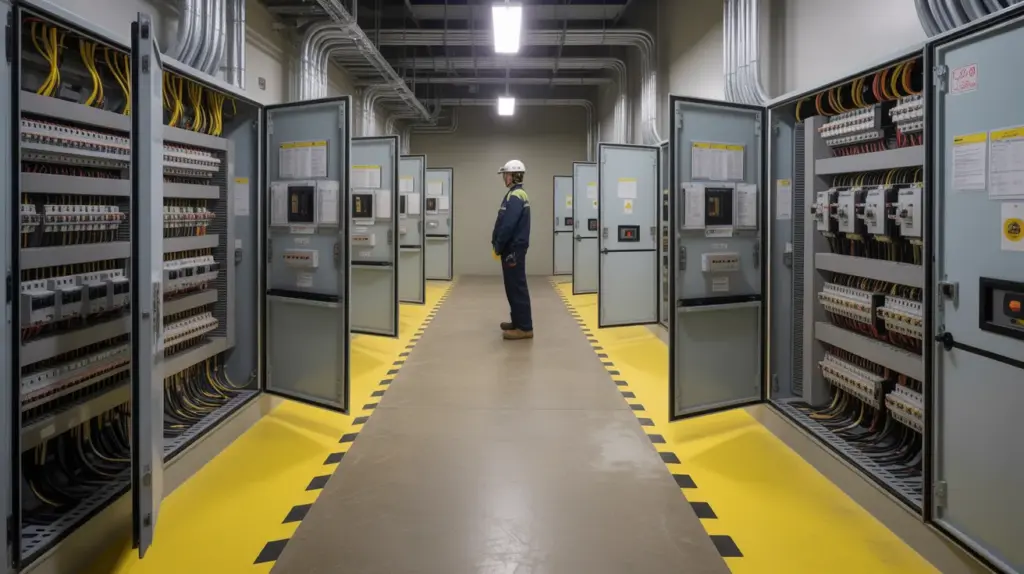
Electrical rooms are not just about what equipment is inside, but also about the space around that equipment.
Enough working space is needed so panels, breakers, and switches can be reached easily and used safely. When space is tight or blocked, even simple tasks become risky.
Clear space allows panels and doors to open fully and gives technicians room to stand, move, and work without touching live parts.
It also helps during emergencies, when quick access to shut off power can prevent damage or injury.
Working space is often overlooked when rooms are used for storage or equipment is added later without planning.
Keeping this area clear helps avoid safety issues, supports smoother maintenance, and reduces problems during inspections.
In simple terms, if the space is usable and uncluttered, the electrical room works better and stays safer.
Electrical Room Safety Requirements
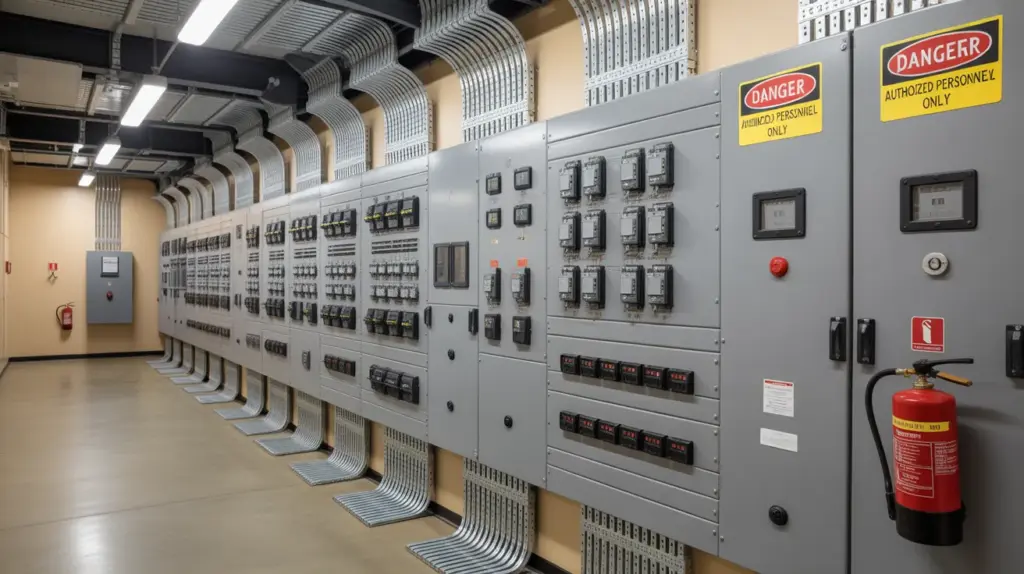
Electrical room safety is governed by electrical codes, fire regulations, and workplace safety standards. These rules exist to reduce fire hazards, electrical shock risks, and equipment damage.
Clearance and working space
Adequate clearance must be maintained in front of and around electrical equipment. This space allows technicians to work safely and exit quickly during emergencies. Obstructed access is a common violation during inspections.
Fire resistance and ventilation
Electrical rooms often require fire-rated walls, ceilings, and doors to limit fire spread. Ventilation systems help control heat buildup generated by transformers and switchgear. Poor airflow can shorten equipment lifespan and increase failure risk.
Lighting and visibility
Proper lighting is required to support safe operation and maintenance. Emergency lighting may also be required to ensure visibility during power loss or system faults.
Locking and controlled entry
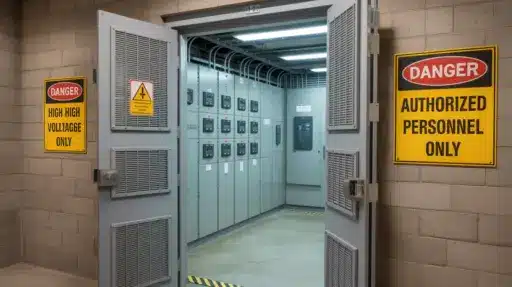
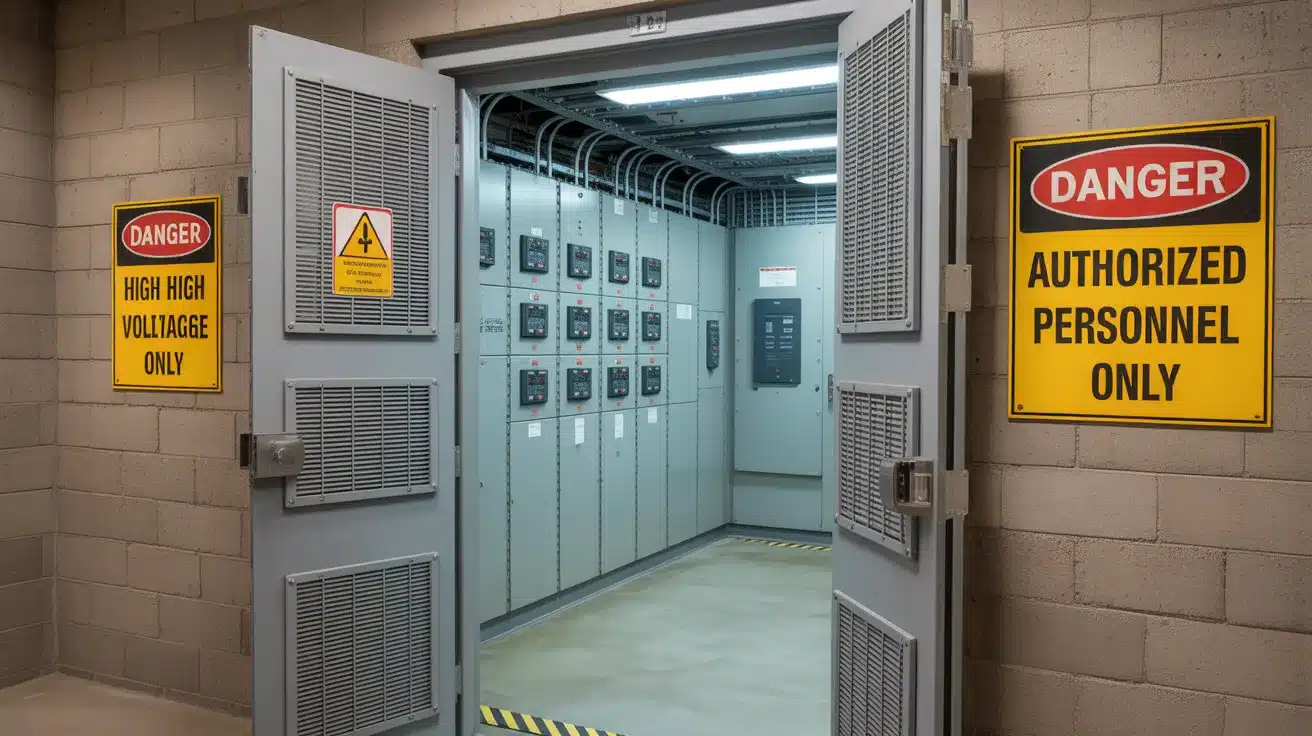
Electrical rooms are typically required to remain locked when not in use. Locks help prevent unauthorized access and reduce the risk of accidental contact with live equipment.
Warning signs and labels
Clear signage is required to indicate electrical hazards and restricted access. Equipment labels support faster identification during maintenance or emergency response.
Electrical Room Access Rules
Access to an electrical room is strictly limited due to the hazards present. Entry policies are usually defined by safety standards and workplace procedures.
1. Authorized personnel only: Only trained and approved personnel are permitted to enter electrical rooms. This usually includes licensed electricians, maintenance staff, and safety inspectors.
2. Training and certification: Access is often tied to training requirements. Individuals must understand electrical hazards, lockout procedures, and emergency response protocols before being granted entry.
3. Contractor and visitor access: External contractors may enter an electrical room only under controlled conditions. Supervision, permits, and documented approval are commonly required. Casual access is not allowed.
4. Workplace policy alignment: Many organizations formalize electrical room access rules within safety manuals or facilities policies. These documents support consistency and accountability during audits.
Electrical Room Compliance and Inspections
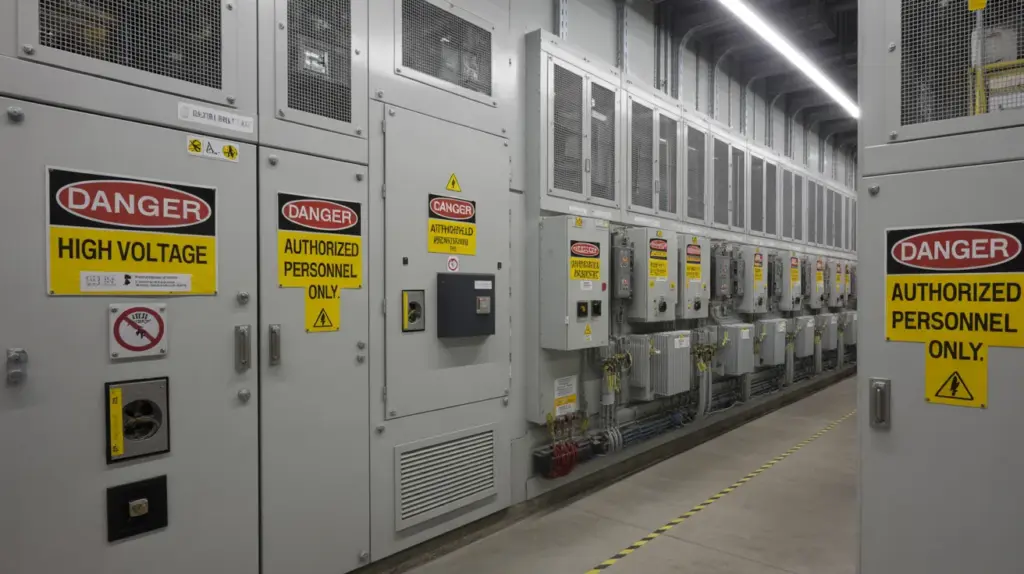
Electrical rooms need to remain safe and usable after installation. Basic compliance is about keeping the space clear, limiting access, and making sure electrical equipment is not blocked or damaged.
Rules for electrical rooms exist to reduce fire and electrical risks. While details vary by location, inspections usually focus on clear access to panels, visible warning signs, proper ventilation, and no storage inside the room.
Simple routine checks help prevent common issues. Making sure nothing blocks equipment and that labels remain visible is often enough to avoid problems during inspections.
Most inspection failures happen when electrical rooms are used for storage or access is restricted. Avoiding these mistakes helps keep the room safe without extra effort.
Are Electrical Room a Utility Closet in Fancy Terms?
An electrical room is not the same as a utility or maintenance closet.
Utility closets may hold plumbing lines, network cables, or cleaning equipment, while electrical rooms are meant only for electrical systems and power distribution equipment.
Keeping this space limited to electrical use helps reduce fire risks, prevents accidental damage to equipment, and allows safe access during maintenance or emergencies.
Using an electrical room for storage or mixed purposes can create safety hazards and may lead to violations during inspections.
Conclusion
An electrical room is more than just a space that holds electrical equipment. Its purpose, layout, working space, and day-to-day use all affect safety, reliability, and long-term operation.
When the room is planned correctly, kept clear, and used only for electrical systems, many common risks can be avoided.
Simple practices such as maintaining access, limiting entry, and avoiding storage help keep the room functional and inspection-ready.
Understanding these basics makes it easier to manage electrical rooms without added complexity.
If there are experiences, questions, or observations related to electrical rooms in different buildings, share them in the comments to add to the discussion.

Ava Taylor, holding a Bachelor’s degree in Interior Design from the Pratt Institute, has made her mark in creating engaging and functional living spaces for over 14 years. She began her career with a New York-based design studio, where she gained a reputation for her innovative and user-centric designs. Ava joined our team in 2019, bringing a blend of artistic flair and practicality to our home improvement section. Since the she has been the lead contributor to our room transformation series, inspiring readers with her unique approach to maximizing space utility and aesthetic appeal. Beyond her professional work, Ava is a passionate collector of vintage furniture, a hobby that enriches her design perspective.