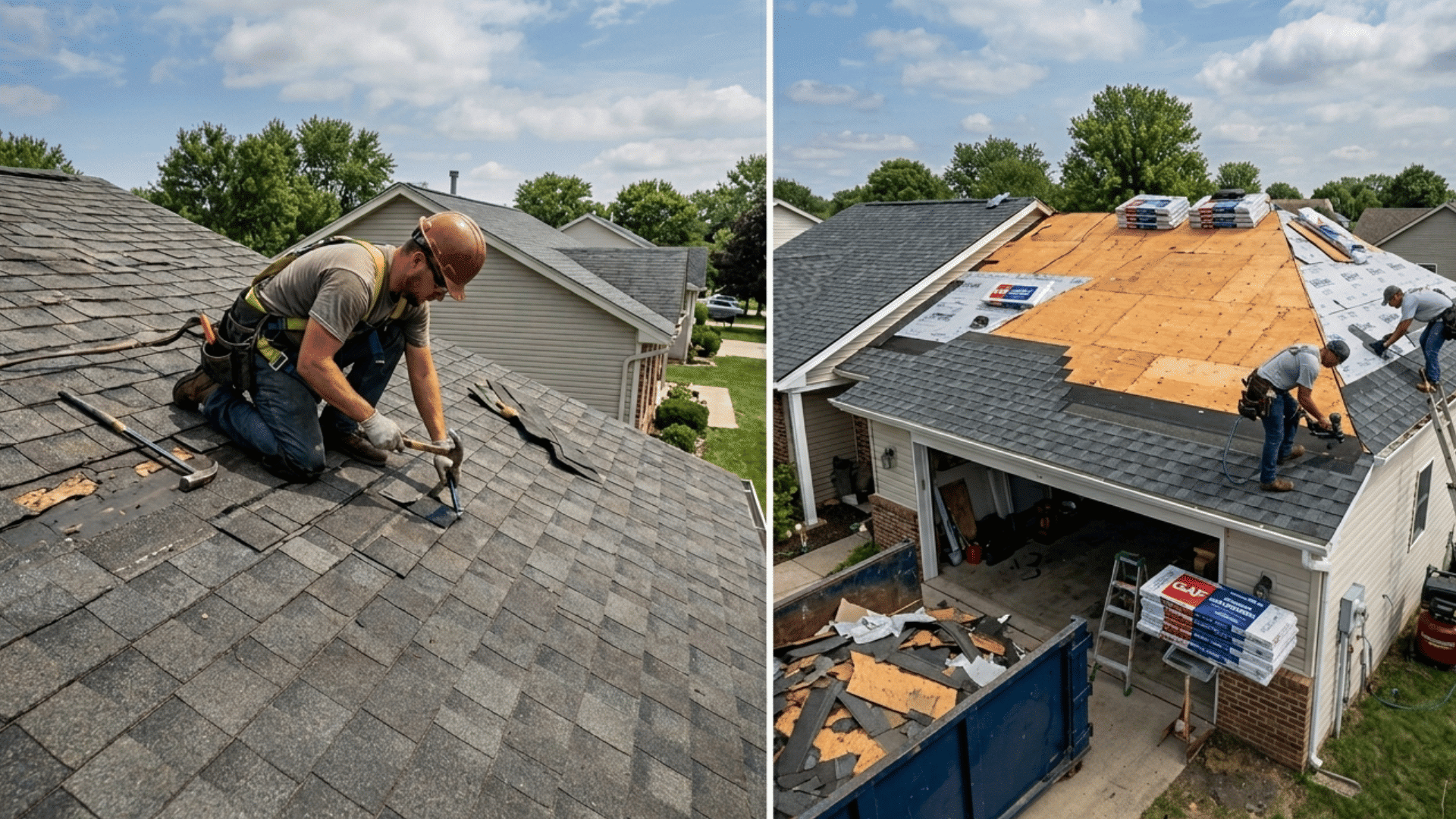

Your roof is the unsung hero of your home, protecting your family from harsh weather such as UV rays, heavy rain, and snow. But even the toughest roof has its limits.
If you notice water stains on your ceiling or hear water dripping inside your walls, the internal debate begins: Should I just repair the damage, or is it time for a total roof replacement?
Making the wrong decision can be costly. Repairing a roof that’s beyond saving is like putting a bandage on a sinking ship, while replacing a roof that only needs a few shingles is a waste of money.
This guide will help you weigh roof repair vs replacement, technical, financial, and structural factors to make the right choice for your home.
What is Roof Repair?
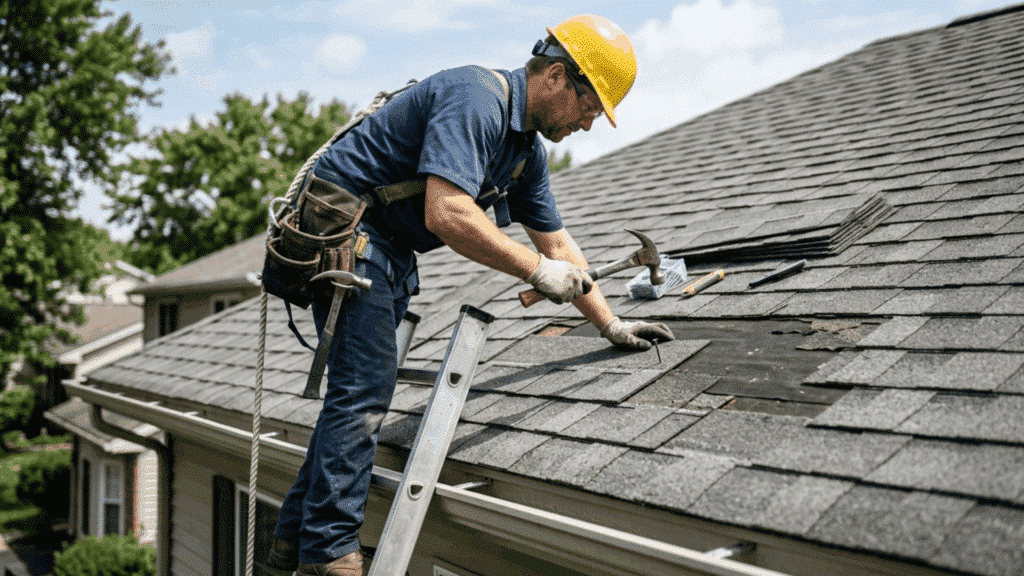
Roof repair is the process of addressing specific issues or damage to your roof without replacing the entire structure.
It’s a cost-effective solution when problems are isolated and don’t affect the whole roof. Roof repairs can range from minor fixes to more extensive work, depending on the severity of the damage.
Types of Roof Repairs
Here are some common types of roof repairs that address various issues to keep your roof in top condition.
- Shingle Replacement: Replacing damaged, cracked, or missing shingles to prevent leaks and further damage. This ensures your roof maintains its integrity and continues to protect your home.
- Leak Sealing: Fixing small leaks and cracks in the roof to stop water from entering. Sealants or other materials are used to close gaps and make the roof watertight again.
- Flashing Repairs: Repairing or replacing damaged flashing around joints, vents, chimneys, and skylights. This prevents water intrusion at vulnerable roof points and ensures a leak-free structure.
- Patching Holes: Fixing holes in the roof caused by storms, debris, or wear. Specialized materials like roofing cement or shingles are used to patch these holes and preserve the roof’s structure.
Purpose of Roof Repair
Roof repairs are designed to address specific issues without needing a full replacement.
- Cost-Effective Fix: Repairs are less expensive compared to full roof replacement.
- Quick Solution: Roof repairs can be completed faster than a replacement, which is ideal for minor issues.
- Preserves Existing Roof Structure: Repairs can extend the life of an aging roof for several more years, depending on the extent of damage.
What is Roof Replacement?
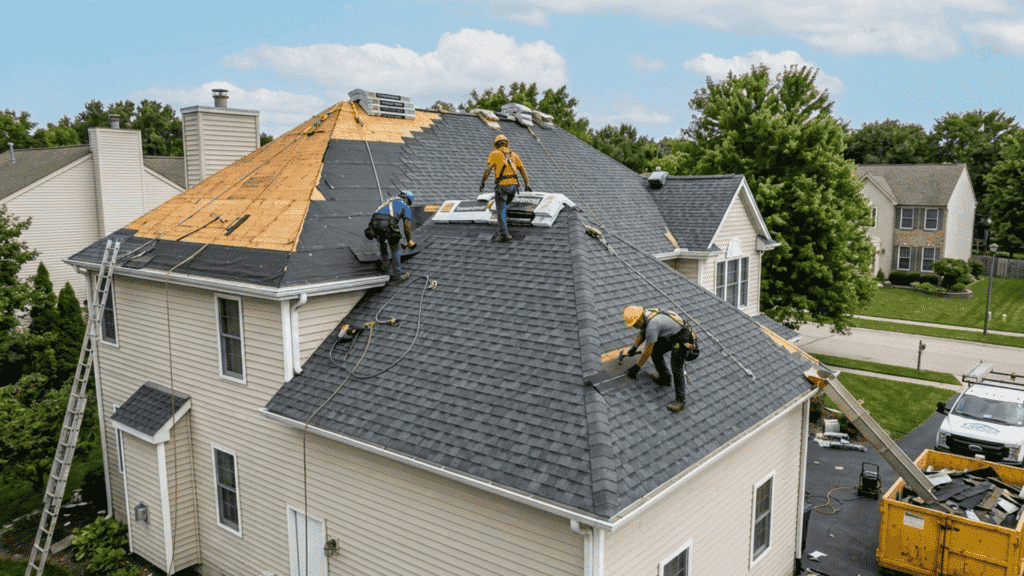
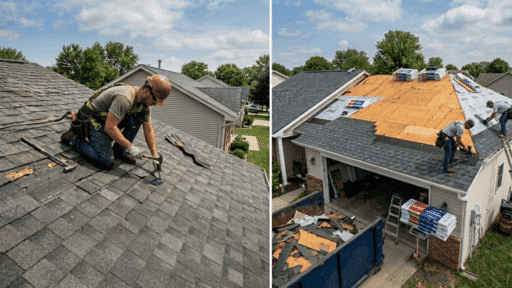
Roof replacement involves removing the old roof and installing an entirely new one. It is a more extensive and costly solution for addressing significant damage or aging roofs.
Replacing your roof ensures a fresh start with a new roofing system that meets modern standards. It also provides peace of mind, knowing that your home is protected with a durable, long-lasting roof.
Types of Roof Replacement
Roof replacement can be done in two main ways, depending on the condition of the current roof and the people’s preferences.
- Complete Roof Tear-Off: Removing the entire existing roof and replacing it with a new roofing system. This option provides a clean slate and ensures that no underlying issues remain.
- Overlay Roof Installation: Installing new shingles over the existing roof. This option is not always ideal for roofs with extensive damage, but it may be a good choice for roofs with minor wear and tear.
Purpose of Roof Replacement
Roof replacement is designed to provide a long-term, durable solution for your home. It addresses the core issues that repairs may not address, ensuring your roof remains strong and reliable for years to come.
- Long-Term Solution: A new roof can last for decades, depending on the material chosen, while repairs may only extend the life of an aging roof for a few years.
- Improves Roof Structure: If your roof is severely damaged, replacement ensures the entire system is intact, reducing future problems.
- Increases Home Value: A new roof can increase the overall value of your home, especially if it’s sold in the future. It boosts curb appeal and assures potential buyers that the roof will last for many years.
Quick Comparison Table: Roof Repair Vs Replacement
Understanding the differences helps in making the right decision for better results and longer-lasting coverage. Below is a simple comparison table that breaks down the key differences.
| Feature | Roof Repair | Roof Replacement |
|---|---|---|
| Cost | More affordable, ideal for minor issues | Higher cost but long-term solution |
| Time | Faster to complete (2–5 hours) | Longer installation process (1–3 days) |
| Duration | Short-term fix, may need repeated repairs (1–5 years) | Long-term solution with many years of coverage, 20–50 years (depending on material) |
| Extent of Damage | Best for minor issues (e.g., leaks, missing shingles) | Necessary for major damage or aged roofs |
| Effectiveness | Good for isolated issues | Provides full protection and a new roof system |
| Home Value | No significant impact | Increases home value and curb appeal |
Key Factors to Consider Before Making Your Decision
Before you commit to roof repair or replacement, it’s essential to evaluate the following factors:
1. Age of Your Roof
The age of your roof plays a crucial role in whether a repair or replacement is the best option. Generally, a roof lasts around 20-25 years, depending on the material. Here’s what you need to consider:
- Under 10 years old: Likely repairable unless significant damage has occurred.
- 10-20 years old: May be worth replacing if frequent repairs are needed.
- Over 20 years old: More cost-effective to replace, as repairs may be temporary.
2. Extent of the Damage
If only a small section of the roof is damaged, repair may be sufficient. However, if the damage is widespread, replacement could be the best choice. Consider the following:
- Minor damage: Small leaks or damaged shingles may require repair, typically costing minor shingle repairs ($150 – $500), leak repairs ($300 – $1,000), and flashing/vent repairs ($400 – $1,200). Most small repairs fall under $2,000 and can extend the roof’s life in the short term.
- Major damage: Water leaks, structural issues, or widespread shingle loss may require replacement, with storm or major spot repairs typically costing $500 – $2,000+.
3. Type of Roofing Material
Material impacts both repair and full replacement costs:
| Material Type | Lifespan | Replacement Cost for ~2,000 sq ft |
|---|---|---|
| Asphalt Shingles | ~20 years | $7,000 – $11,000 |
| Metal Roofing | 40-70 years | $14,000 – $28,000 |
| Wood Shingles | ~30 years | Varies (maintenance needed) |
| Slate/Tiles Roofing | 50+ years | $30,000 – $60,000 |
4. Urgency of the Repairs
If you’re dealing with a roofing emergency, such as leaks or significant water damage, immediate repairs are crucial. However, if the roof is still in generally good condition, you may be able to wait for a full replacement.
Major leaks, extensive water damage, or compromised structural integrity require immediate attention, while minor leaks or small areas that don’t affect the overall integrity of the roof can typically wait.
5. Cost Considerations
When deciding between roof repair and replacement, your budget plays a critical role. It’s essential to weigh upfront costs against long-term savings, factoring in both the price of materials and labor.
| Project Type | Typical Cost Range |
|---|---|
| Standard roof repair | $350 – $1,900 (avg ~$1,150) (modernize.com) |
| General roof replacement | $8,000 – $20,000+ (Home Genius Exteriors) |
| Average full replacement (national) | ~$14,000 – $18,900 (Handyman tips) |
| Large or premium material roof | $28,000 – $60,000+ (Deschutes Roofing) |
Tip: If repairs approach 30–40 % of the full replacement cost, replacement often becomes the better long‑term investment.
6. Local Building Codes and Regulations
Different locations may have specific building codes and regulations that impact your decision.
It’s important to check with your local authorities to understand whether any rules or requirements might affect your roof repair or replacement plans.
Making the Final Call
Choosing between roof repair and replacement is a pivotal decision for your property’s longevity. While a quick fix addresses immediate leaks, a total overhaul offers a permanent shield against the elements.
If you’re weighing roof repair vs. replacement, consider the long-term ROI; investing in a new system often pays for itself through improved energy efficiency and heightened resale value.
Don’t wait for the next downpour to find out your patch wasn’t enough.
No matter if you choose roof repair or replacement, ensuring the right choice for your home’s needs and your financial situation is essential for lasting protection and peace of mind.

With a Master in Architectural Studies from University of Pennysylvania, Marwa Haydar has pioneered living spaces since 2005. Her expertise, initially honed in a prestigious architectural firm, is evident in her approach to creating environments. Marwa became part of our team in 2019 and has since been a driving force in our home improvement section, known for her practical yet stylish solutions. She’s been spearheading our design workshops since then, infusing her passion for teaching into her work. In her leisure time, Marwa enjoys exploring historic architecture and is an enthusiastic pottery hobbyist, further enriching her understanding of form and texture.