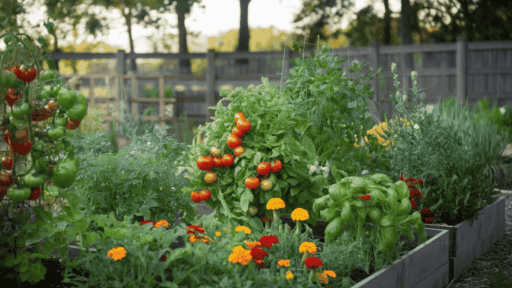
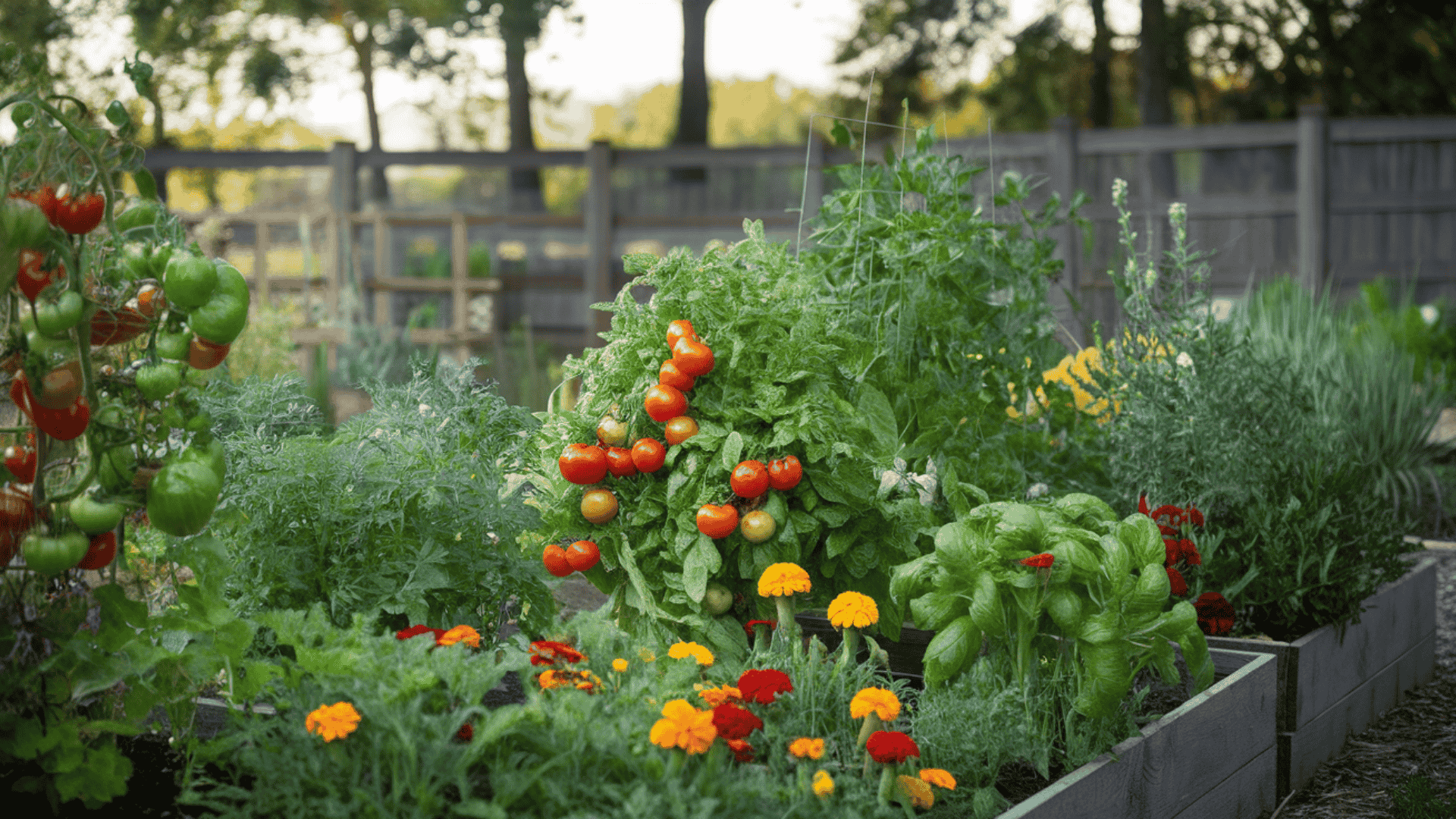

Most people put in the work but still end up with slow growth, pest problems, and disappointing harvests. It is frustrating, especially when everything seems to be done right.
What many gardeners do not realize is that the plants they grow next to each other matter just as much as how they grow them.
That is where companion gardening comes in. When the right plants grow side by side, they naturally support each other, boosting growth, keeping pests away, and improving overall yield.
This guide breaks down its method in simple steps so any gardener can put it to work right away.
What Is Companion Gardening?
It is the practice of planting different crops close together to support one another’s growth.
Instead of growing plants in isolation, you pair them based on how they naturally interact. Some plants keep pests away. Others improve the soil or provide shade.
When chosen carefully, these combinations work together to create a healthier growing environment without extra chemicals or effort.
It’s a practice that goes back centuries: farmers across many cultures have long used plant relationships to grow more food with fewer problems.
Benefits of Companion Gardening
It improves plant health by pairing crops that support each other. These relationships can improve growth, reduce pests, and help plants use soil nutrients more efficiently.
Here are the key benefits:
- Reduced Pest Damage: Marigolds planted near vegetables, for example, release compounds from their roots that repel nematodes and other soil pests, meaning less damage to your crops and less reliance on chemical sprays
- Stronger Plant Growth: Some combinations simply bring out the best in each other. Pairing tomatoes with carrots helps loosen the soil around tomato roots, giving them more room to grow.
- Improved Soil Nutrients: Legumes like beans and peas are natural nitrogen fixers. They pull nitrogen from the air and deposit it into the soil, giving heavy feeders like corn or squash a steady, natural nutrient boost throughout the season.
- Better Use of Garden Space: Tall plants like corn provide vertical structure, while low-growing crops like lettuce fill in the gaps below. Climbing plants grow up instead of out: a practical way to get more from your garden without needing extra land.
Companion Planting Chart for Common Garden Vegetables
A companion planting chart helps to quickly identify which plants grow well together and which combinations to avoid.
Instead of guessing, you can refer to it before planting season and plan your garden layout with confidence. Here’s a straightforward chart covering the most common vegetables:
| Vegetable | Good Companion Plants | Plants to Avoid | Why Avoid |
|---|---|---|---|
| Tomatoes | Basil, carrots, onions, lettuce, mint, marigolds | Corn, potatoes | Compete for nutrients and attract shared pests |
| Carrots | Tomatoes, lettuce, peas, marigolds | Dill | Interferes with carrot root development |
| Cucumbers | Beans, radishes, corn, nasturtiums, calendula | Potatoes | Compete for space and share common diseases |
| Peppers | Basil, onions, carrots, mint, marigolds | Beans | Beans can slow pepper growth |
| Lettuce | Radishes, carrots, cucumbers | Broccoli | Broccoli competes for soil nutrients |
| Beans | Corn, cucumbers, strawberries, calendula | Onions, garlic | Onions and garlic suppress bean growth |
| Cabbage | Dill, onions, potatoes, nasturtiums | Strawberries | Strawberries can stunt cabbage development |
Best Companion Gardening Plant Combinations for Vegetable Gardens
The companion planting chart above gives a quick overview, but here is a closer look at the plant combinations that actually make a difference in a vegetable garden.
1. Tomatoes and Basil
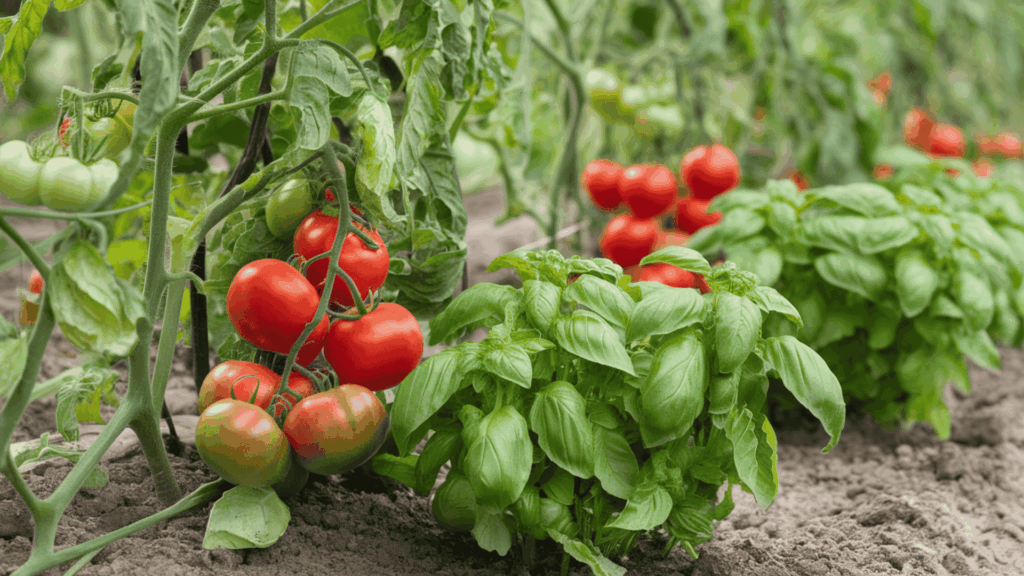
Tomatoes and basil are probably the most well-known duo in companion gardening.
Basil helps reduce insect pressure around tomato plants, and many gardeners swear by this combination season after season. It’s simple, effective, and easy to set up in any garden layout.
2. Corn, Beans, and Squash
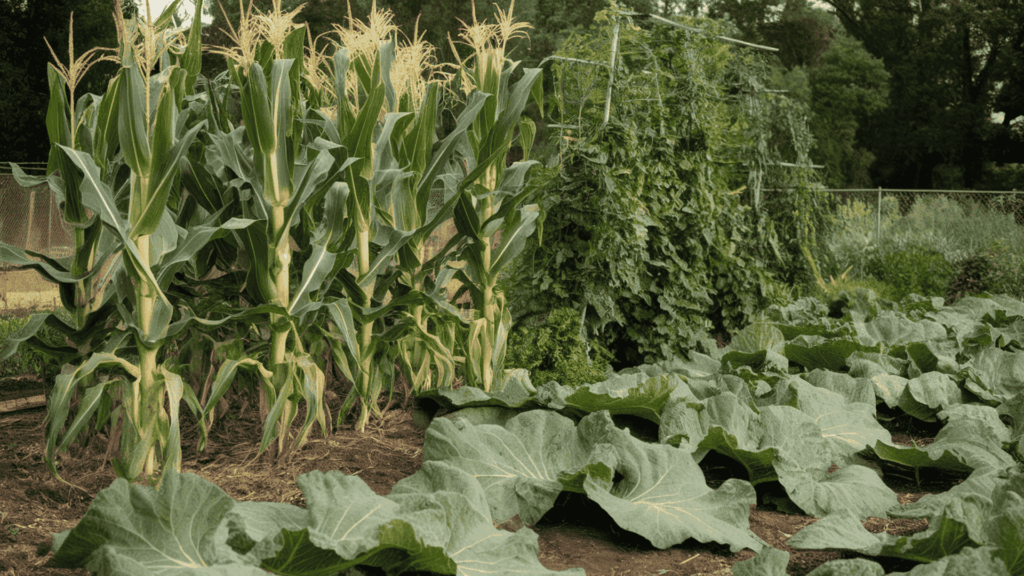
The three-sister combination is one of the oldest companion planting methods around.
This combination was first used by Native American farmers who recognized how these three crops naturally supported each other.
Corn provides a natural structure for beans to climb, squash spreads along the ground, keeping weeds down, and together they create a self-supporting system that still works just as well today.
3. Carrots and Onions
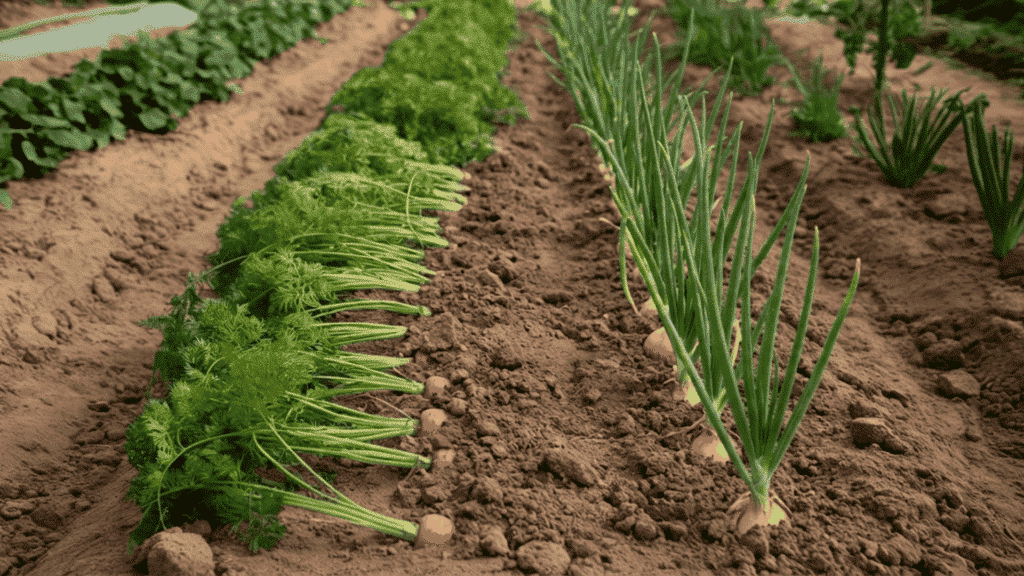
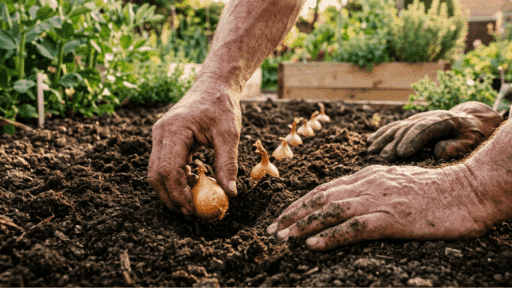
Carrots and onions are a solid pairing: the strong scent of onions keeps carrot flies away, while carrots help loosen the soil around onion roots.
The scent of onions is strong enough to confuse carrot flies before they can reach the crop. Plant them in alternating rows for the best results: this keeps the protective scent distributed evenly across the bed
4. Cucumbers and Radishes
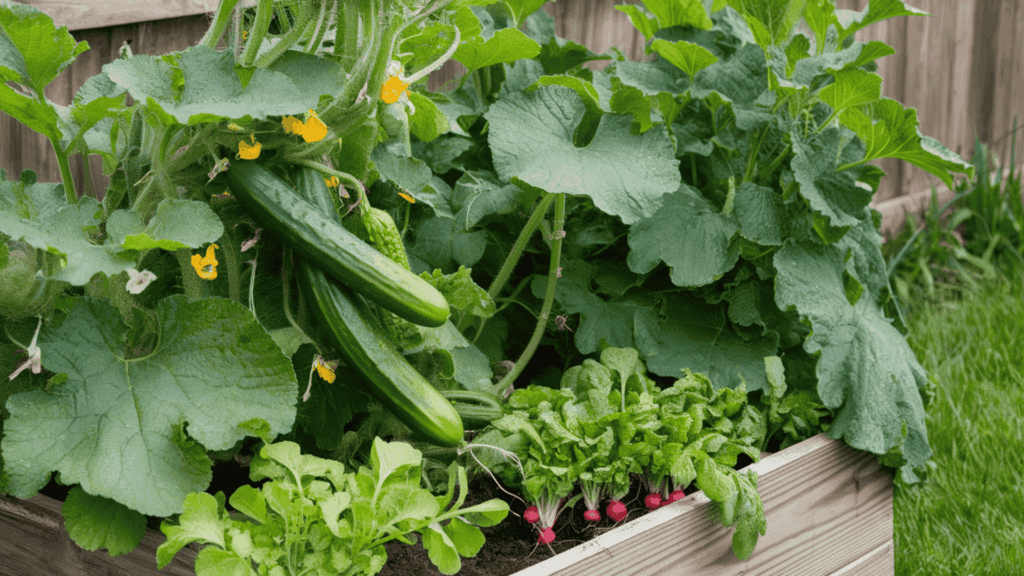
Radishes help reduce cucumber beetle activity, which is one of the more frustrating pest problems for cucumber growers.
Plant a few radishes alongside your cucumbers and let them do the work. Radishes also grow quickly, so they won’t take up valuable space for long.
Once harvested, they leave behind loosened soil that actually benefits cucumber root development.
5. Lettuce and Radishes
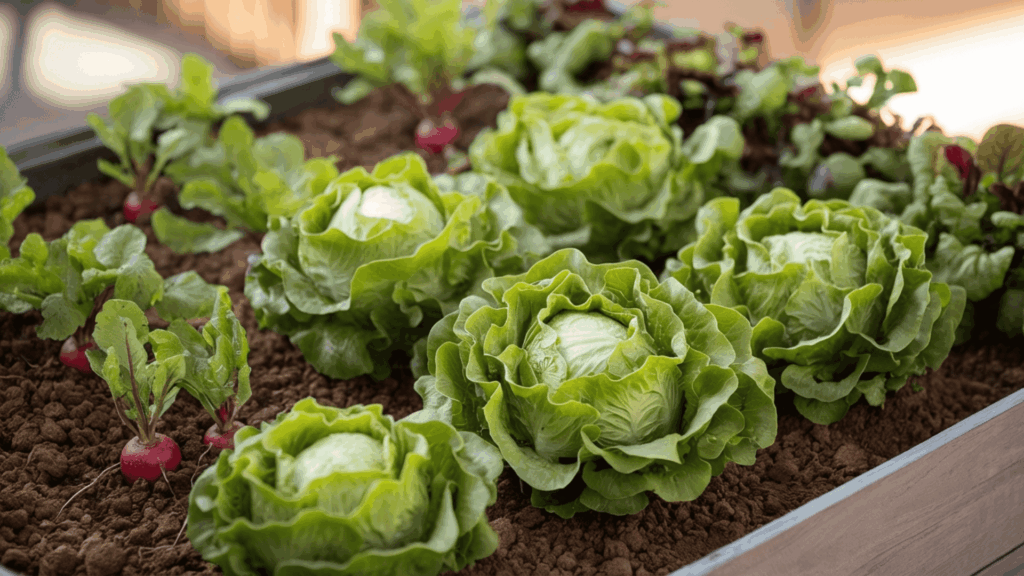
Lettuce and radishes are a naturally efficient pairing in any vegetable garden. Radishes grow quickly and help loosen the soil, which makes it easier for lettuce roots to spread.
Since radishes are harvested fast, they free up space just as lettuce needs more room to grow, making this one of the most practical pairings for gardeners working with limited bed space.
Herbs That Support Your Companion Gardening Setup
Many herbs support nearby vegetables by reducing insect activity or attracting pollinators. Adding herbs to vegetable beds is a practical and low-effort way to improve your gardening setup.
1. Mint
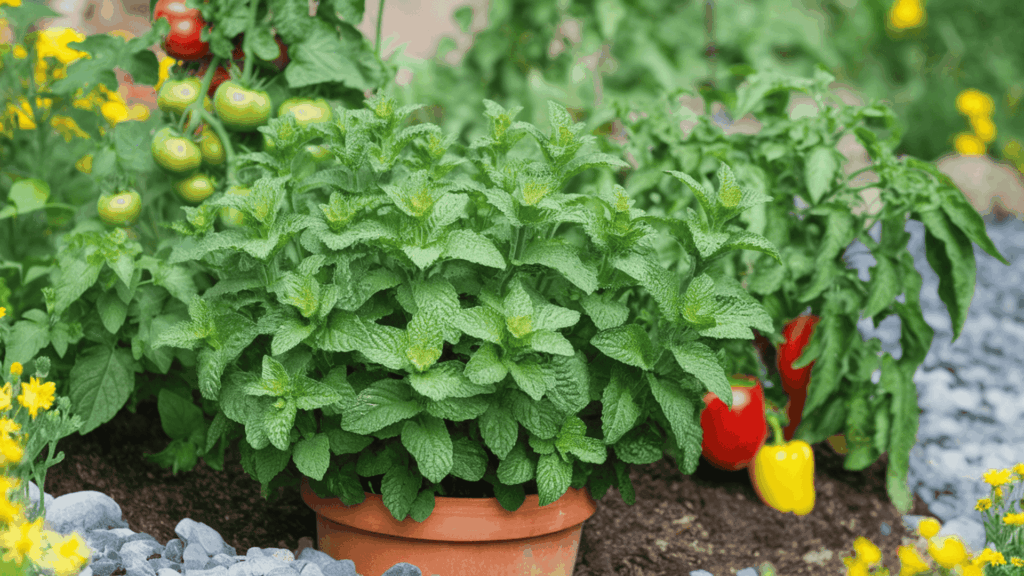
Mint is one of the most effective pest-repelling herbs you can add to a vegetable garden. Its strong scent confuses and deters aphids, ants, and flea beetles near tomatoes, peppers, and brassicas.
One important thing to keep in mind: mint spreads aggressively, so plant it in a pot or contained bed rather than directly in the ground to keep it from taking over surrounding crops.
2. Dill
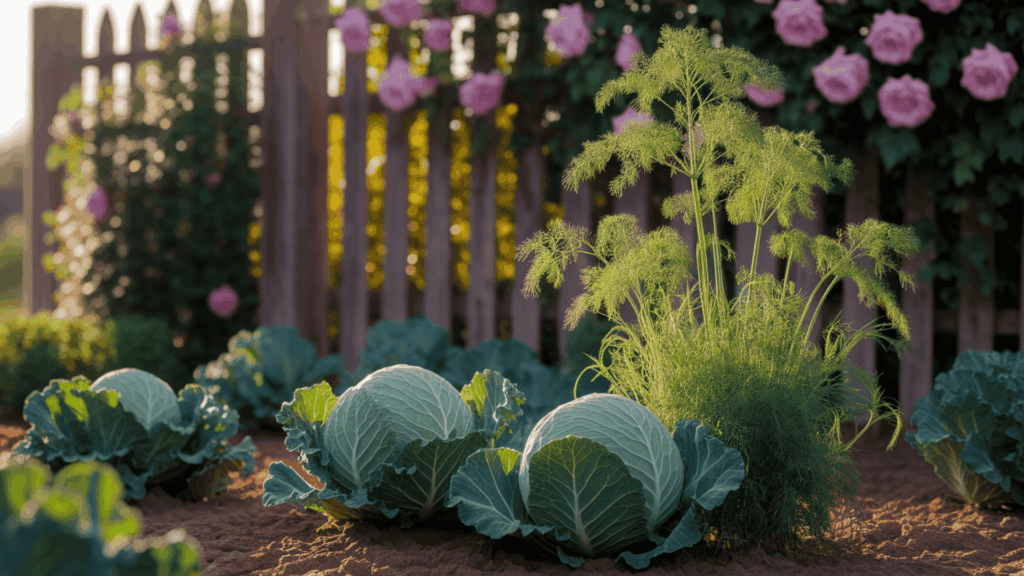
Dill works particularly well alongside cabbage family plants like broccoli and kale. It attracts beneficial insects such as wasps and hoverflies that prey on common garden pests.
Just keep dill away from carrots: the two are not a good match and can interfere with each other’s growth when planted too close together.
3. Oregano
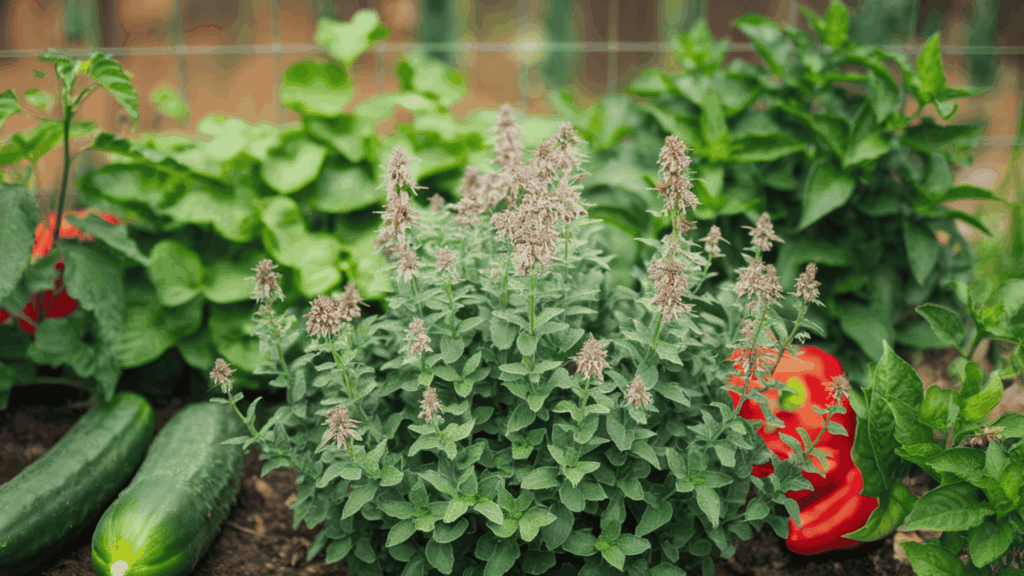
Oregano is a low-maintenance herb that earns its place in any vegetable garden. Its strong scent helps reduce insect activity near a wide range of vegetables.
It also attracts pollinators when it flowers, making it a useful addition to beds where cucumbers, peppers, or squash are growing.
4. Thyme
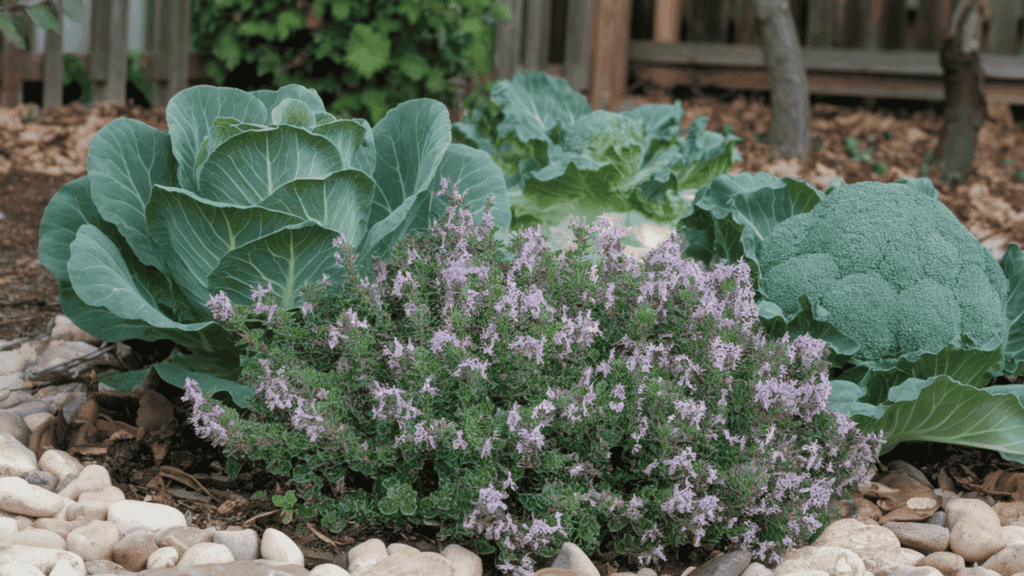
Thyme is especially helpful near cabbage, broccoli, and other related crops. It repels cabbage worms and whiteflies, two of the most common problems for brassica growers.
Thyme is also drought-tolerant and doesn’t need much attention, so it fits easily into garden beds without competing heavily with surrounding vegetables.
Flowers That Support Companion Gardening
Flowers play an important role in companion gardening by attracting pollinators and helping control insects. Many gardeners plant flowers directly within vegetable beds to get the most out of this natural support system.
1. Marigolds
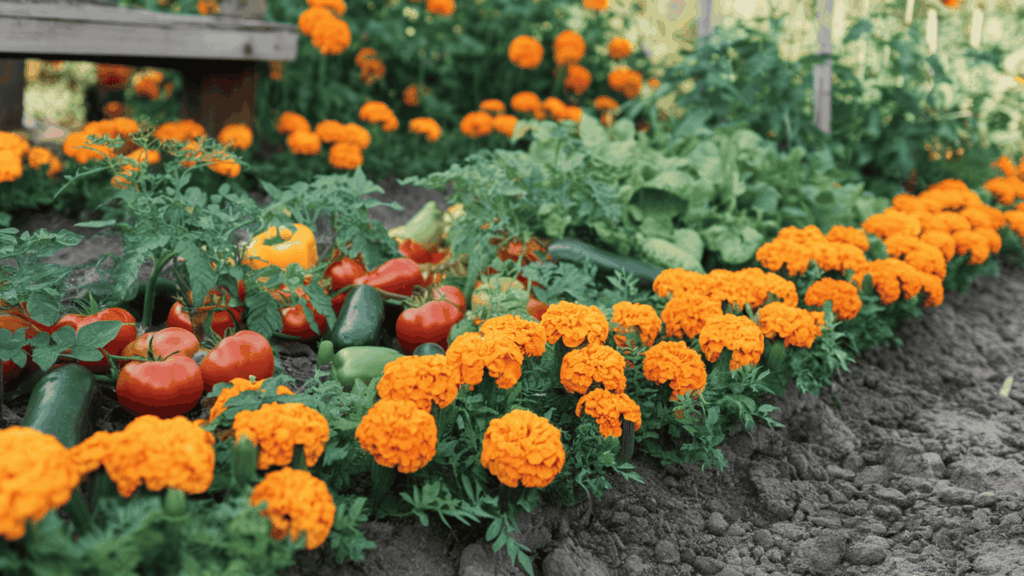
Marigolds are among the most popular companion flowers for good reason.
They release a strong scent from their roots and leaves that repels nematodes, aphids, and other soil pests near vegetables.
Plant them around the border of your vegetable beds or between rows: they work particularly well alongside tomatoes, peppers, cucumbers, and carrots, creating a natural pest barrier that protects these crops throughout the season.
2. Nasturtiums
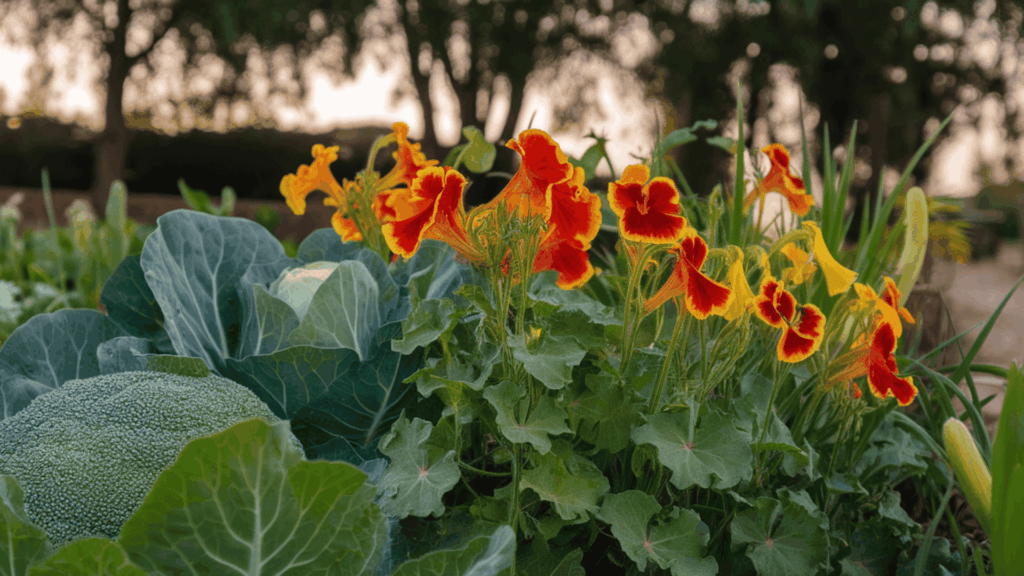
Nasturtiums work differently from most companion flowers: they act as a trap crop. They attract aphids, whiteflies, and caterpillars away from your vegetables and onto themselves instead.
They work best when planted near brassicas like cabbage, broccoli, and kale, as well as cucumbers and beans.
Positioning them along the edges of these beds keeps pest pressure away from your main crops without any spraying or intervention.
3. Calendula
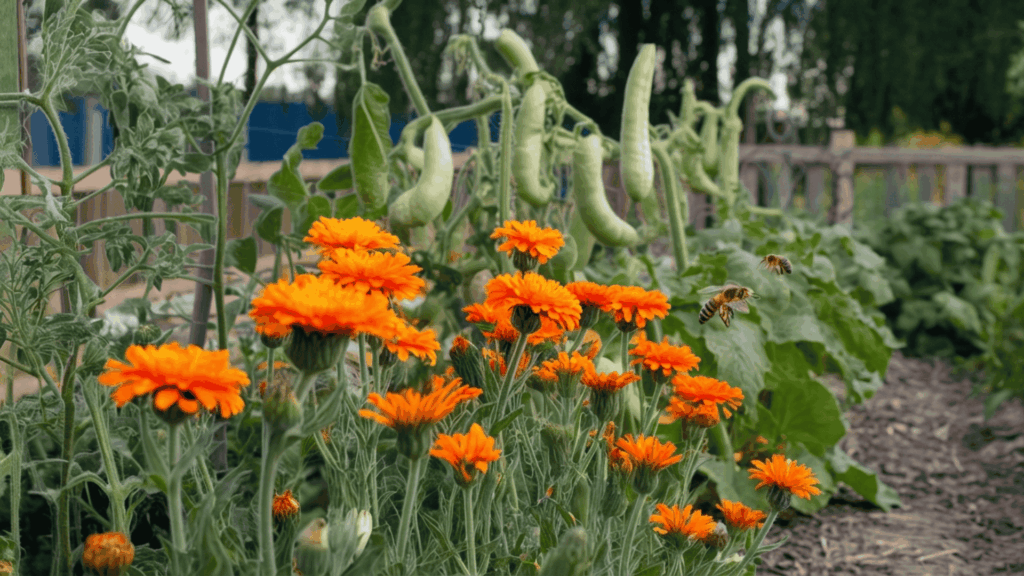
Calendula is one of the hardest-working flowers you can add to a vegetable garden.
It attracts a wide range of pollinators, including bees and butterflies, which benefits flowering vegetables like squash, cucumbers, and peppers.
Calendula also attracts beneficial insects that feed on aphids and other common pests: plant it near tomatoes, beans, and squash for the best results, as these are the crops that benefit most from the pollinators it attracts.
Companion Gardening Tips for Better Results
Successful gardening depends on choosing the right plant combinations and maintaining healthy growing conditions. A few simple practices can improve results in most gardens.
- Start with Proven Plant Pairings: Begin with tested combinations from many seasons, and avoid experimenting with too many new pairings at once.
- Maintain Proper Plant Spacing: Even companion plants need enough room to grow; overcrowding can restrict airflow, increase disease risk, and limit root development.
- Match Water and Sunlight Needs: Companion plants should have similar growing requirements; pairing plants with different water or sunlight needs creates unnecessary stress for both.
- Observe Plant Performance: Pay attention to how your plants respond each season and keep simple notes on what worked to make better planting decisions over time.
The Bottom Line
Companion gardening is not complicated; it’s about working with nature rather than against it.
The right plant pairings reduce pest pressure, improve soil health, and help you get more out of every square foot of your garden.
Start small, observe how your plants respond, and adjust as you go. Over time, it becomes less of a technique and more of a natural part of your growth. Have a plant combination that works well in your garden!

With a Master’s in Landscape Architecture from the University of Virginia, Sophia Stephenson has dedicated the last 20 years to creating and maintaining vibrant outdoor spaces. Her professional journey started in landscape design, where she gained a reputation for innovative and sustainable approaches. Sophia became a part of our editorial team as a freelancer in 2019, offering a fresh perspective on outdoor living. Since 2020, she has been the chief for our outdoor design content, blending aesthetic appeal with environmental stewardship. In her leisure time, Sophia is a keen photographer, capturing the beauty of natural landscapes, a hobby that complements her professional expertise.