
Picking the wrong siding can cost you thousands in repairs, energy bills, and curb appeal you can’t get back. And with so many options out there, it’s genuinely hard to know where even to start.
Vinyl, fiber cement, wood, engineered wood, everyone has an opinion, and most of them contradict each other. So what’s actually worth your money?
If you’re building new or replacing what’s already up, this guide breaks down the best siding for house exteriors, covering durability, cost, maintenance, and real-world performance, so you can make a decision you won’t regret.
What is Siding and Why Does It Matter for Your House?
If you’ve never had to think about siding before, here’s the quick version: siding is the outer layer of material that covers the exterior walls of your home.
It’s essentially your house’s first line of defense against everything the outside world throws at it, rain, wind, heat, cold, and everything in between.
It’s also one of the biggest visual elements of your home’s exterior. It shapes the entire look of your house from the street, which is why choosing the right one matters a lot more than most people initially realize.
So when people talk about finding the best siding for house exteriors, they’re really talking about finding the right balance of all, protection, appearance, durability, and cost, for their specific situation.
Types of Siding Materials for Your House
There’s no single “perfect” siding, but there is a perfect siding for your house, your climate, and your budget. Here’s a breakdown of every major option so you can see exactly what you’re working with.
1. Vinyl Siding
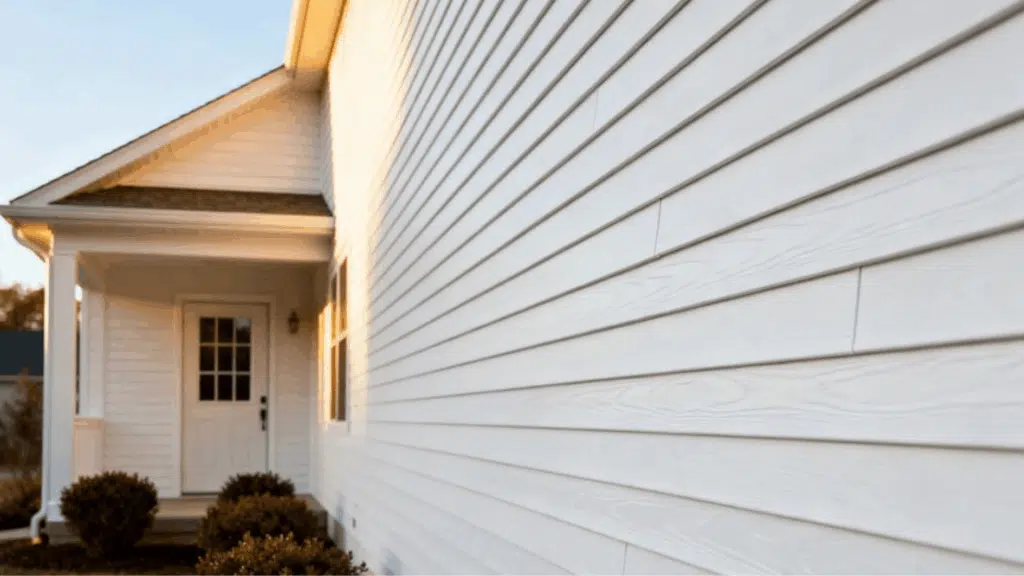
Vinyl siding is the most popular choice, and honestly, it’s easy to see why. It’s made from PVC plastic, comes in hundreds of colors and styles, and requires almost no upkeep compared to other materials. If you’re looking for the best siding projects on a tighter budget, vinyl is usually the first place people land.
Benefits:
- Extremely affordable upfront and long-term
- Holds color well and doesn’t need repainting
- Low maintenance, hose it down occasionally
- Resistant to moisture and insects
- Wide variety of styles, profiles, and colors
Drawbacks:
- Can fade, warp, or crack in extreme heat or cold
- Doesn’t feel or look as premium as natural materials
- Limited customization once installed, cutting and reshaping isn’t easy
- Not the most environmentally friendly option
2. Wood Siding
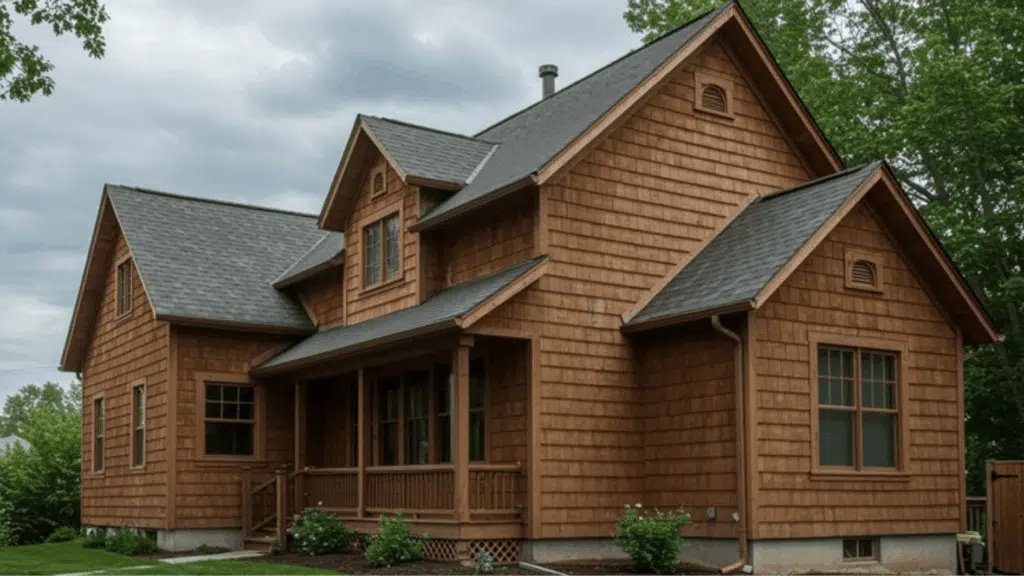
Wood siding is the original, and for many homeowners, nothing else comes close to its natural warmth and character. It comes in several styles, including clapboard (horizontal overlapping planks), shingles, and board-and-batten, each giving a distinctly different look.
It’s one of those materials that genuinely improves the curb appeal of almost any home style.
Benefits:
- Excellent natural insulation properties
- Highly customizable, you can paint, stain, or shape it however you want
- Biodegradable and environmentally friendly
- Can be repaired section by section rather than replaced entirely
Drawbacks:
- Requires regular painting, staining, and sealing
- Susceptible to rot, moisture damage, and pest infestations
- Higher long-term cost when you factor in upkeep
- Not ideal for wet or humid climates without significant treatment
3. Fiber Cement Siding
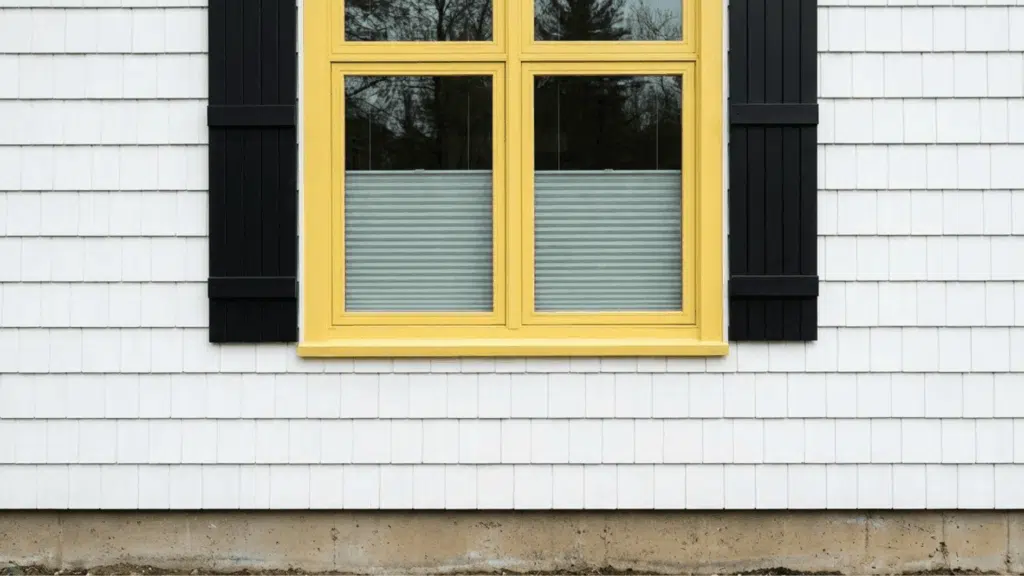
Fiber cement is made from a mixture of cement, sand, and cellulose fibers, and it’s become one of the most recommended options for homeowners who want the look of wood without the headaches that come with it.
Brands like James Hardie have made fiber cement one of the go-to choices for siding projects where longevity is the priority.
Benefits:
- Exceptionally durable, resists fire, rot, pests, and impact
- Mimics the look of wood, brick, or stone convincingly
- Holds paint well and comes pre-primed or pre-painted
- Low maintenance compared to real wood
- Works well in almost any climate
Drawbacks:
- Heavier than most other siding materials, it requires professional installation
- More expensive upfront than vinyl
- Can crack in extreme temperature swings if not installed correctly
- Requires repainting every 10–15 years
4. Metal Siding
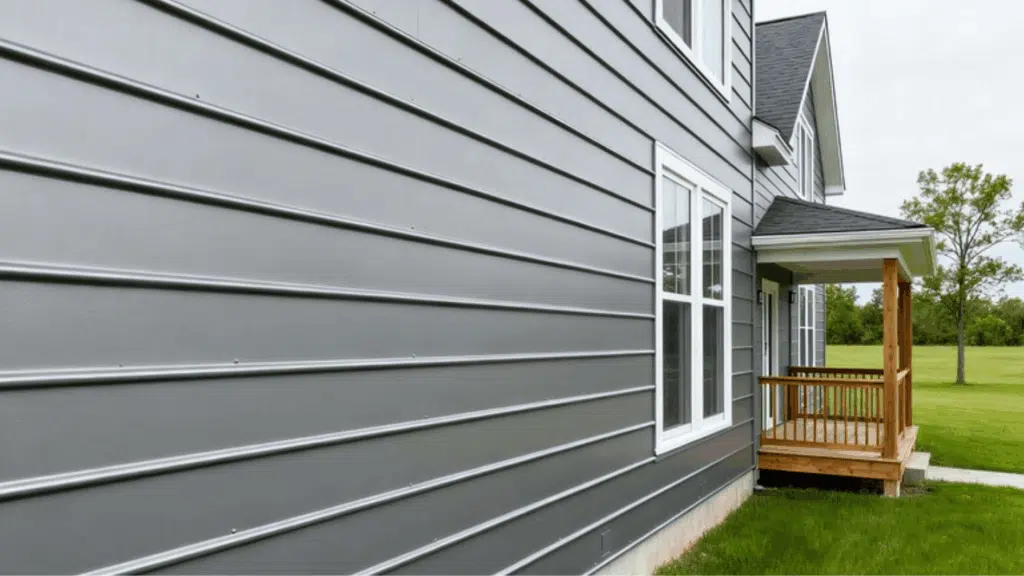
Steel and aluminum siding aren’t just for commercial buildings anymore. Metal siding has made a real comeback in residential design, especially for modern, industrial, and contemporary homes. It’s tough, it lasts a long time, and when it’s done well, it looks genuinely striking.
Benefits:
- Extremely durable and long-lasting
- Fire-resistant and won’t rot or attract pests
- Recyclable and eco-friendly at the end of life
- Low maintenance once installed
- Great for modern architectural styles
Drawbacks:
- Prone to denting from hail or physical impact
- It can be noisy during heavy rain without proper insulation
- May require repainting over time as the finish wears
- Can conduct heat, affecting energy efficiency without proper insulation backing
5. Stucco Siding
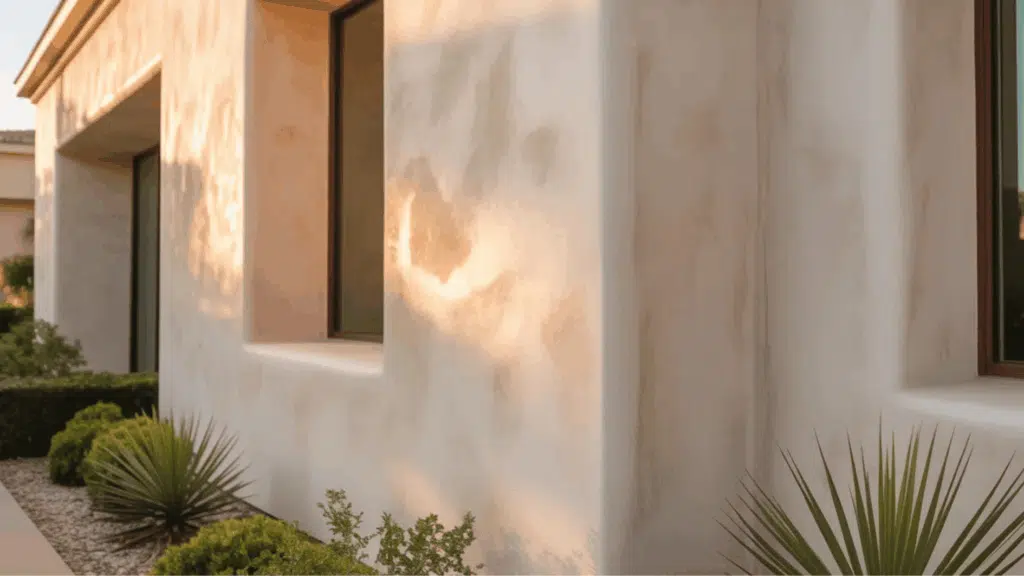
Stucco is a plaster-like material applied directly to the exterior walls in layers, creating a seamless, textured finish. It’s been used for centuries, and it’s particularly well-suited to warmer, drier climates where its energy efficiency and distinctive appearance really shine.
You’ll see it everywhere in the Southwest and Mediterranean-style homes.
Benefits:
- Excellent energy efficiency, keeps homes cool in warm climates
- Good soundproofing properties
- Unique, seamless appearance that’s hard to replicate
- Fire-resistant and durable when properly maintained
- Can be tinted in a wide range of colors
Drawbacks:
- Prone to cracking over time, especially with settling or seismic activity
- Expensive and difficult to repair, it usually requires a professional
- Not well-suited to wet or rainy climates, it can absorb moisture and develop mold
- Limited texture and style options compared to other siding types
6. Brick and Stone Siding
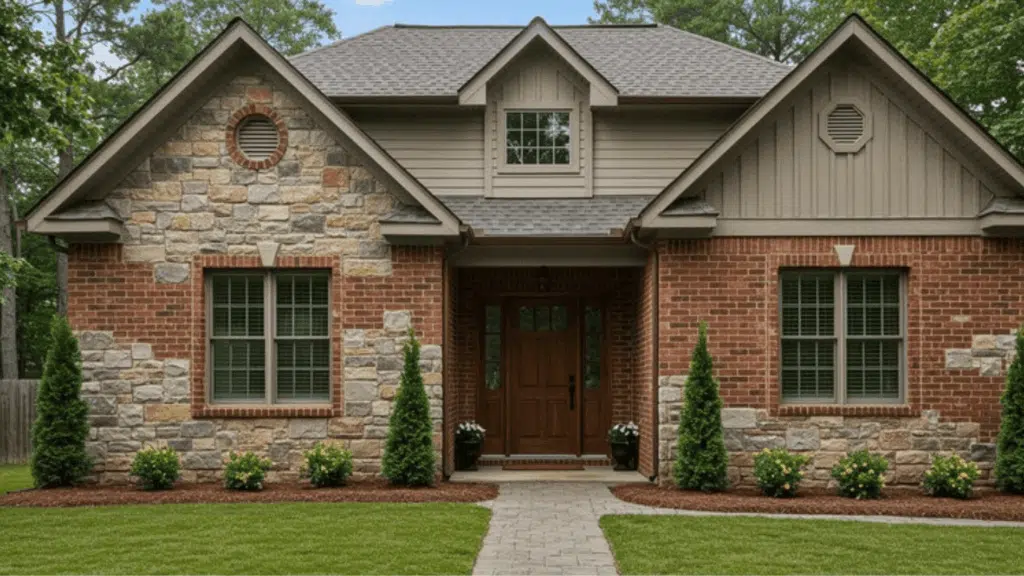
If you’re looking for the best siding for house exteriors that will genuinely last generations, brick and stone are hard to beat.
Brick is made from fired clay while natural stone is, well, actual stone, and both deliver a level of solidity and permanence that no other material really matches. They’re an investment, but they hold its value exceptionally well.
Benefits:
- Exceptional longevity, brick and stone homes can last 100+ years with minimal intervention
- Very low maintenance once installed
- Excellent fire resistance and thermal mass for energy efficiency
- Adds significant resale value to any home
Drawbacks:
- One of the most expensive siding options, both materials and labor
- Heavy, may require additional structural support
- Limited design flexibility once installed
- Labor-intensive installation that takes longer than most other options
How to Choose the Best Siding for Your House
Choosing the best siding for house exteriors involves a lot more than just picking a color you like. Here’s everything you need to weigh before making a decision.
Climate and Weather Considerations
Your climate should honestly be the first thing you look at, because the most beautiful siding in the world is useless if it can’t handle your weather.
- Hot and dry climates: Go with stucco, metal, or fiber cement. They handle intense sun without warping, fading, or cracking.
- Cold and freezing climates: Insulated vinyl or fiber cement are your best friends here. The added insulation layer keeps heat in and energy bills down.
- Wet and rainy climates: Fiber cement, metal, and brick all resist moisture well. Wood and stucco, on the other hand, struggle in consistently damp conditions.
- High-wind or storm-prone areas: Brick, stone, and fiber cement are heavy and impact-resistant enough to hold up where lighter materials are damaged.
- Mixed or variable climates: Fiber cement and engineered wood handle temperature swings and seasonal changes without much drama.
Budget Considerations
Be honest with yourself about what you can spend, both upfront and over time. Cheap siding that needs constant repairs isn’t actually cheap.
- Budget-friendly: Vinyl is the go-to. At $3–$8 per sq ft installed, it’s affordable, low-maintenance, and available in a wide range of styles.
- Mid-range: Fiber cement ranges from $6–$13 per sq ft and offers a premium look without the premium price tag of natural materials.
- Mid to high: Engineered wood runs $7–$14 per sq ft and offers a natural-wood appearance with better moisture resistance than the real thing.
- High-end: Real wood starts around $8–$15+ per sq ft. Beautiful and fully customizable, but factor in ongoing maintenance costs.
- Premium: Brick and stone can run $15–$30+ per sq ft installed, but they last generations and add serious resale value.
Appearence
The best siding for your house is also the one that actually looks right on it. Match your material to your architecture, and you’ll never regret it.
- Traditional or colonial homes: Wood clapboard or brick. Classic lines and natural materials are made for heritage architecture.
- Farmhouse or rustic styles: Board-and-batten wood or vinyl. Vertical lines and natural tones nail this look perfectly.
- Modern or contemporary homes: Metal or smooth fiber cement. Clean profiles and bold colors suit sleek, minimalist designs.
- Mediterranean or Southwest styles: Stucco, every time. The seamless finish and warm tones were basically made for this style.
- Craftsman or bungalow homes: Wood shingles or fiber cement shingles. The textured, layered look fits craftsman detailing beautifully.
Maintenance and Longevity
How much time and money are you realistically willing to put into upkeep? Be honest, it matters more than most people admit upfront.
- Very low maintenance: Vinyl and brick are your easiest options. Vinyl needs an occasional wash. Brick barely needs anything for decades.
- Low maintenance: Fiber cement and metal both require minimal upkeep. Expect to repaint fiber cement every 10–15 years and touch up metal coating as needed.
- Moderate maintenance: Engineered wood and stucco need repainting and sealing every few years, plus crack repairs over time.
- High maintenance: Real wood needs regular painting, staining, sealing, and pest treatment to stay in good shape. It rewards the effort with beauty, but the effort is real.
- Longest lifespan: Brick and stone win here, easily 75–100+ years with minimal intervention. Fiber cement and metal are close behind at 40–70 years with basic upkeep.
Conclusion
There’s no single winner when it comes to the best siding for house exteriors, but there’s absolutely a right answer for your home, your climate, and your budget.
If you’re still unsure, start with the two questions that matter most: what weather does your house face every year, and how much maintenance are you realistically willing to do?
Those two answers alone will significantly narrow your options. From there, match your budget and your home’s style to what’s left on the list.
The perfect siding is out there, and now you have everything you need to find it with confidence.

Tommy Hardy, an alumnus of the Georgia Institute of Technology with a degree in Mechanical Engineering, has been a go-to figure in residential upkeep and innovation for over 18 years. His career commenced in a leading home appliance manufacturing company, where he mastered the intricacies of household systems. Joining our platform in 2020, Tommy quickly became a reader favorite for his practical and easy-to-follow guides. He took the helm of our DIY section in 2019, consistently delivering content that empowers homeowners. Beyond his professional pursuits, Tommy is a passionate gardener and enjoys woodworking, skills enhancing his hands-on approach to home care.