


Choosing the right shower curtain size is more important than many people realize. The correct size helps keep water contained within the shower area while also giving the bathroom a clean and well-arranged appearance.
A poorly fitted curtain can cause water to splash onto the floor, making the space messy and potentially unsafe.
Since bathrooms come in various layouts, shower curtains are available in several standard sizes to suit different setups. The key is selecting a curtain that provides proper coverage while still hanging naturally on the rod.
Understanding these common sizes can make it easier to find the right fit for your bathroom and avoid everyday issues caused by curtains that are too short, too narrow, or poorly proportioned.
What is the Most Common Shower Curtain Size?
The most common shower curtain size is 72 x 72 inches, which has become the standard for most residential bathrooms. This size is designed to fit typical bathtubs and shower rods found in many homes.
Since most standard bathtubs measure about 60 inches in length, a 72-inch-wide curtain provides enough extra fabric to fully cover the opening and create natural folds when hung on the rod.
A 72-inch length also works well with standard shower rod heights, allowing the curtain to hang properly while directing water back into the tub.
Because of its versatility, this size is widely available in a variety of materials, colors, and styles, making it the default option for most bathroom setups.
Why This Size Works for Most Bathrooms
The 72 x 72-inch shower curtain is the most common size in bathrooms. It fits standard bathtub/shower combinations and typical shower rod heights, making it a practical, widely compatible option for everyday use.
- Balanced coverage: The 72 x 72-inch size comfortably fits most standard bathtubs and showers, providing reliable coverage for everyday use.
- Natural draping: Extra width allows the curtain to hang with gentle folds rather than stretching tightly across the rod.
- Better water protection: Slight side overlap helps keep water inside the shower area and reduces splashing.
- Safer bathroom floor: Keeping water contained helps reduce slippery floors and potential accidents.
- Easy compatibility: Most shower curtain liners are also made in 72 x 72 inches, making it simple to pair liners with decorative curtains.
- Widely available: Because it is the standard size, 72 x 72 curtains are easy to find in many colors, patterns, and materials.
Shower Curtain vs. Shower Liner Size
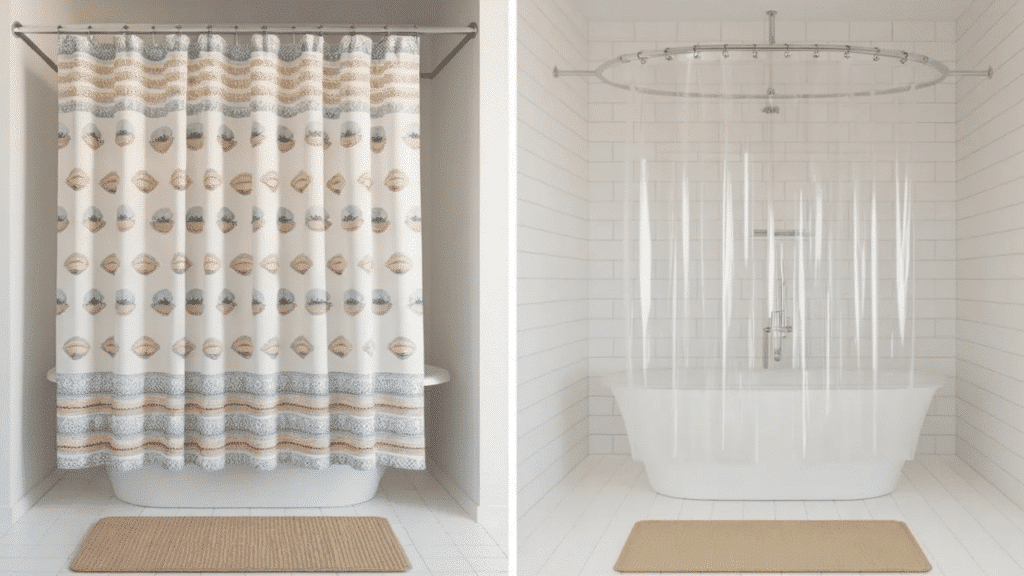
When selecting bathroom accessories, many people wonder what standard shower curtain size is and whether the liner should match it. In most cases, both follow the same common dimensions.
| Feature | Shower Curtain | Shower Liner |
|---|---|---|
| Purpose | Decorative outer layer that enhances the bathroom’s style and design | Protective inner layer that keeps water inside the shower |
| Placement | Hangs outside the bathtub or shower area | Placed inside the tub to block water splashes |
| Material | Fabric, cotton, polyester, or decorative blends | Waterproof materials like vinyl, PEVA, or polyester |
| Standard Size | Usually 72 x 72 inches, which is the standard shower curtain size for most bathrooms | Commonly 72 x 72 inches to match the curtain |
| Main Function | Adds visual appeal and complements bathroom décor | Prevents water from leaking onto the bathroom floor |
How to Measure for the Right Shower Curtain Size
Measuring your shower space before buying a curtain helps ensure the right fit and proper coverage. Below are a few simple steps to help you determine the correct shower curtain size for your bathroom.
- Measure the shower width: Check the width of the shower rod or tub opening.
- Add extra width: Choose a curtain 8 to 12 inches wider than the space.
- Measure the curtain height: Measure from the rod to the tub or floor.
- Check the standard size: compare your measurements with the 72 × 72-inch size.
- Check rod height: Use a longer curtain if the rod is installed higher.
When Should You Choose a Different Size?
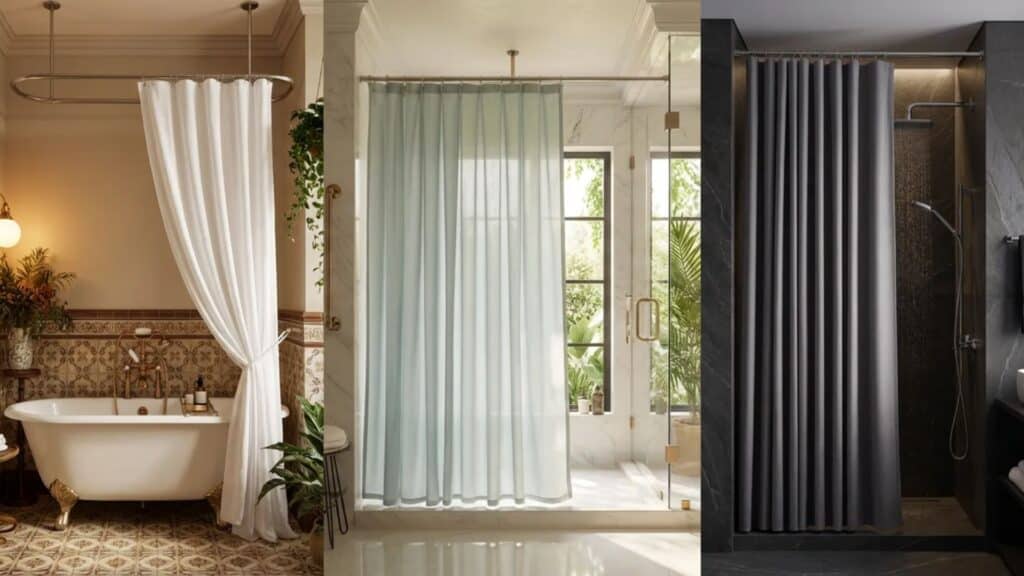
You should consider choosing a different shower curtain size when your bathroom layout, shower type, or rod height does not match the standard 72 x 72-inch curtain.
In these situations, alternative sizes provide better coverage and functionality.
1. Large Shower Areas
In bathrooms with large or wide shower spaces, a standard curtain often fails to provide enough coverage. Most regular curtains are about 72 inches wide, which may leave gaps at the sides.
Extra-wide shower curtains, typically around 108 inches, are better suited for these setups. They help cover the entire shower opening and reduce the chance of water splashing onto the bathroom floor.
2. High Ceilings or High Shower Rods
Bathrooms with higher ceilings or elevated shower rods may make standard curtains look noticeably short. A typical 72-inch curtain can leave an exposed gap between the curtain bottom and the tub or floor.
Extra-long shower curtains, usually 84 inches or longer, solve this issue by providing proper vertical coverage. They help the curtain reach the correct length and create a cleaner, more proportional look in tall bathrooms.
3. Double Rod Setups
Some bathrooms include double shower rods, one for a waterproof liner and another for a decorative outer curtain. This setup improves both functionality and appearance.
However, it often requires slightly wider or longer curtains so both layers hang smoothly without pulling. Proper sizing ensures the curtains slide easily along the rod and maintain good coverage during showers.
4. Shower Stalls Instead of Bathtubs
Shower stalls usually have a narrower opening compared to standard bathtub showers, which changes the curtain size needed. Instead of the common 72 x 72-inch curtain, stalls typically use 54 x 78-inch shower curtains.
This size fits the stall entrance more accurately and prevents extra fabric from gathering at the sides. The correct dimensions also help maintain a neat and functional curtain layout.
Tips for Choosing the Right Shower Curtain
- Consider curtain material: Choose polyester, cotton, or vinyl based on durability and water resistance.
- Check the shower rod height before buying: Measure the rod to ensure the curtain fits properly.
- Match your bathroom style: Select a curtain that complements your bathroom décor.
- Choose the correct size: Pick a curtain width and length that fully covers the shower area.
- Use a liner if needed: A waterproof liner helps prevent water from leaking outside the tub.
Conclusion
Shower curtain sizing may seem like a small detail, but it plays a key role in how well a bathroom functions. The right dimensions help maintain comfort during use, control moisture, and keep the shower area organized.
Because bathrooms vary in layout, rod placement, and shower type, taking a few measurements before buying a curtain can prevent common fit issues.
Beyond size, factors such as curtain material, liner use, and overall bathroom design also influence how effective and practical the curtain will be.
Considering these elements together makes it easier to select an option that suits both the structure of the shower and the style of the space.

With a Master’s in Architecture from the University of California, Berkeley, Alexander Martin has dedicated the last 18 years to enhancing outdoor living through thoughtful and robust structure design. His career kicked off in urban planning, giving him a unique perspective on integrating structures into diverse environments. In 2019, Alexander brought his expertise to our website, offering insights into creating versatile outdoor spaces. Since then, he has been the lead advisor for our outdoor design projects and is known for his ability to merge functionality with environmental consciousness. Alexander enjoys rock climbing outside of work and participates in community development projects, activities that reflect his passion for the outdoors and sustainable design.