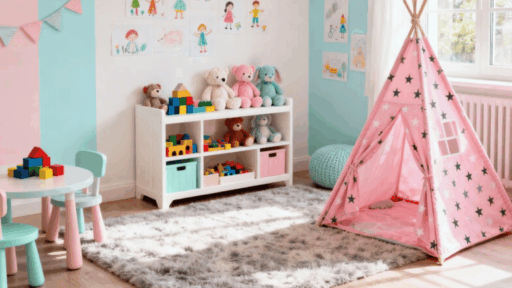
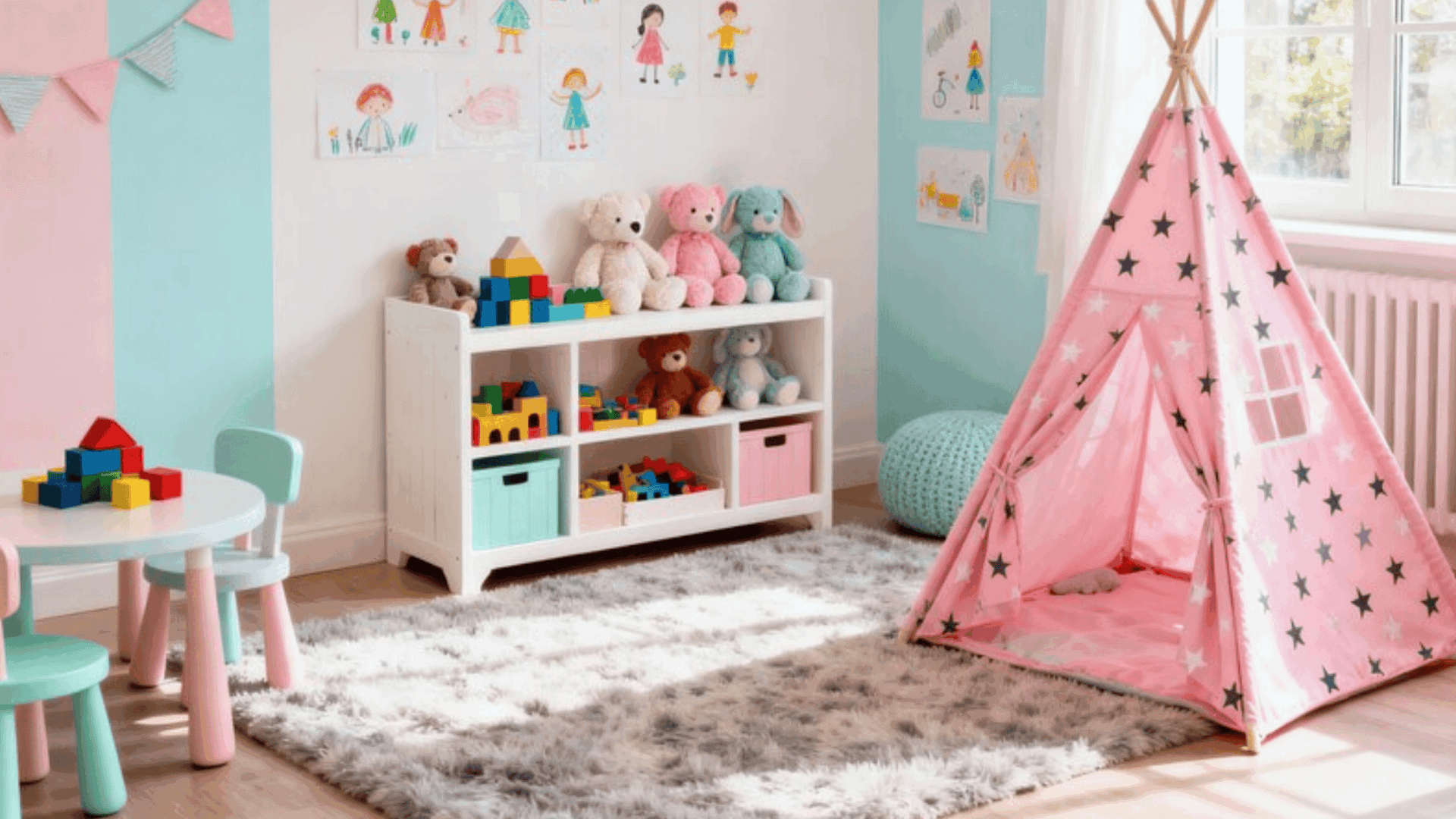

You’ve got a room the size of a closet, a toy collection that somehow keeps multiplying, and a kid who treats every inch of your house like a playground. Sound familiar?
Designing a functional kids’ playroom in a tight space feels impossible, until you realize that small doesn’t mean boring.
It just means you have to be a little smarter about it. With the right small playroom ideas, even the most cramped corner can become a space your child absolutely loves.
This blog covers everything: storage hacks, clever furniture picks, easy DIY wins, and decor ideas that actually work in limited square footage.
Let’s get into it.
Why Small Playrooms are a Design Opportunity
Here’s the thing nobody tells you: a small playroom might actually be better for your kid than a giant one. When you’re working with limited space, every decision is intentional.
You can’t just throw furniture at the problem and hope for the best; you end up with a thoughtfully designed space that actually works.
A smaller room naturally limits distractions and encourages deeper, more imaginative play. And honestly? It’s a win for you, too. Less space means faster cleanups, easier supervision, and way less chaos to manage at the end of the day.
Kids don’t need a warehouse. They need a world, and a well-planned small space can be exactly that.
Small Kids’ Playroom Ideas You Can Copy
These are your visual inspo picks, the ideas worth screenshotting, pinning, and showing your partner at 11 pm when you’ve gone down a Pinterest rabbit hole. Each one is designed for tight spaces and big imaginations.
1. Build a Cubby Wall with Labeled Bins
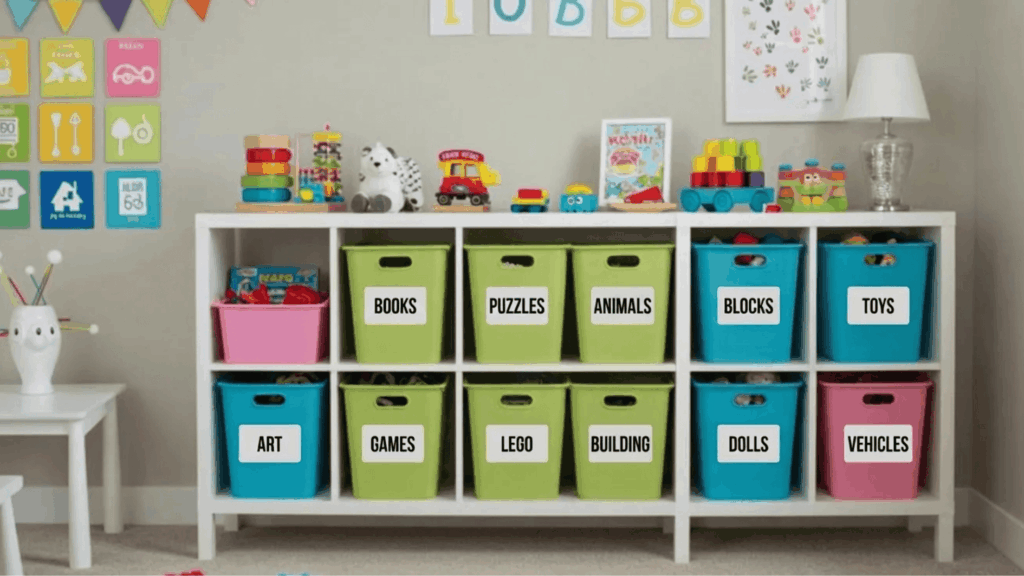
Start with a KALLAX-style shelving unit as your foundation, add fabric bins in coordinating colors, and then label every single one.
When everything has a designated home, cleanup stops being a battle and starts becoming a habit your kid actually follows. It’s one of those small playroom ideas that looks great and works even better in real life.
2. Convert a Closet Into a Reading Nook
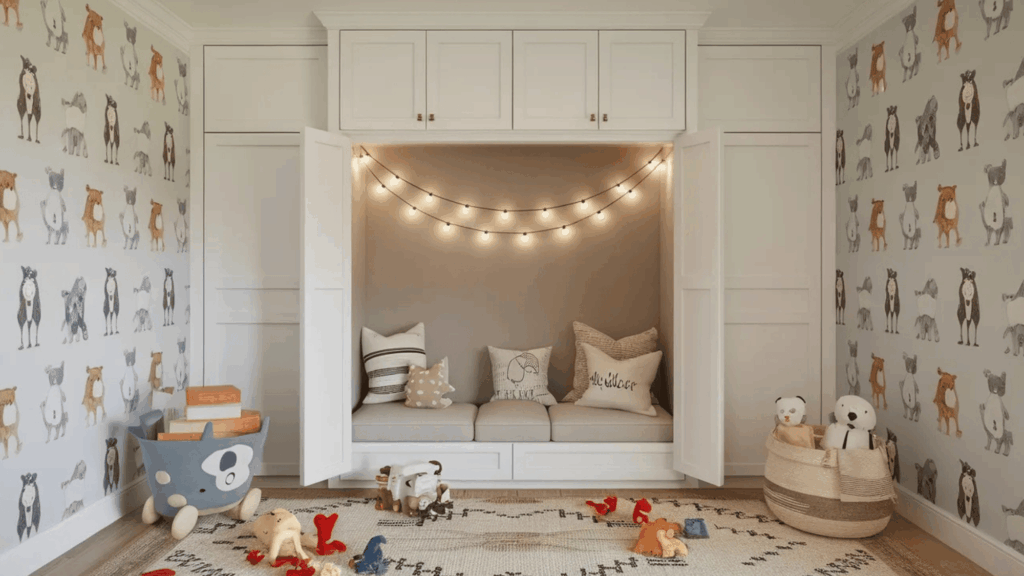
Strip the door off, throw in a cushion, add some string lights, and just like that, you’ve got a cozy reading nook your kid will never want to leave.
This is one of the most beloved DIY playroom ideas for small spaces because it costs almost nothing and takes a single weekend to pull off.
That awkward closet you’ve been ignoring? It’s been a reading corner this whole time.
3. Install Floating Shelves at Kid Height
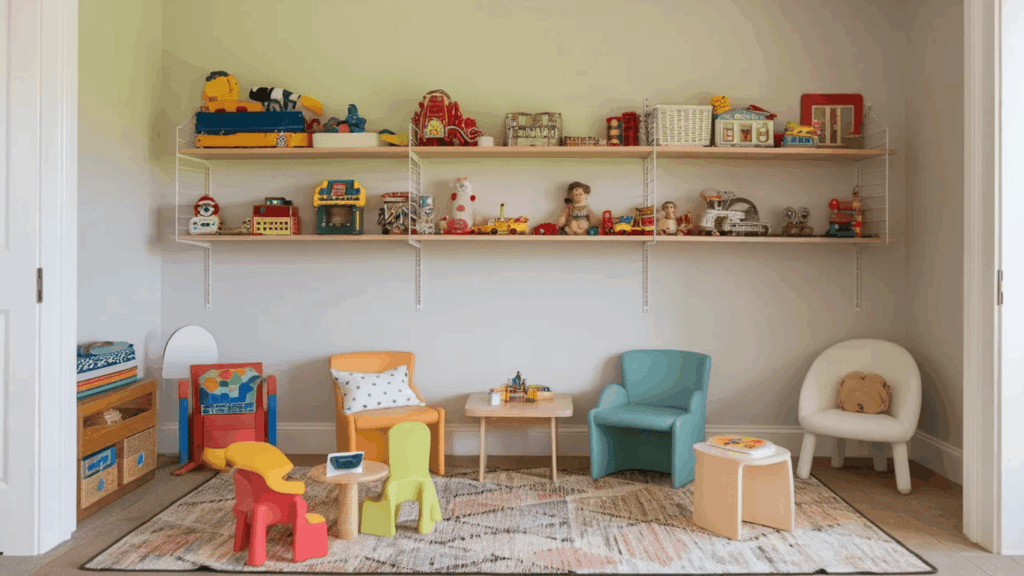
Mount shelves low enough that your kid can independently reach their own toys without asking for help every five minutes.
You can use the higher shelves for baskets and bins that are parent-only territory, keeping the floor completely clear. It’s a simple swap that makes the whole room feel more functional and less cluttered.
4. Add a Pegboard for Art Supplies
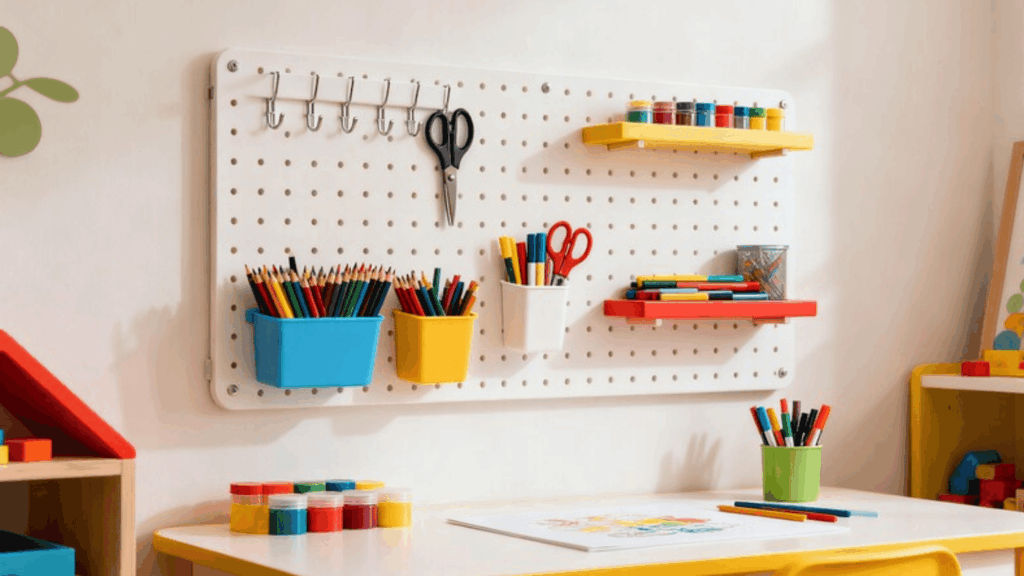
Pegboards are one of the most underrated storage tools for small playrooms. You can add hooks, small shelves, and bins in whatever configuration works for you. They’re perfect for keeping crayons, scissors, and markers off the table and actually within reach when creativity strikes.
Paint it a bold accent color, and it becomes a feature wall, not just a storage solution.
5. Use a Loft Bed to Create Under-Bed Play Space
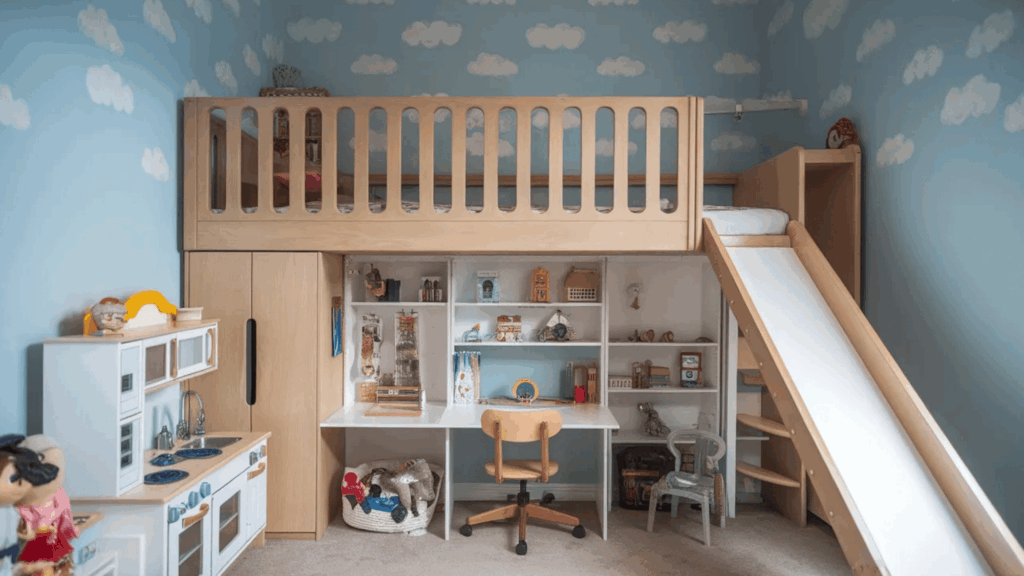
If your ceiling height allows it, a loft bed is basically a cheat code for small rooms; you’re stacking sleeping and playing on top of each other instead of side by side.
The space underneath can become a fort, a reading corner, a mini desk, or a dress-up zone, depending on what your kid is into. It’s consistently one of the top kids’ playroom ideas for rooms that double as bedrooms.
6. Paint a Chalkboard Wall
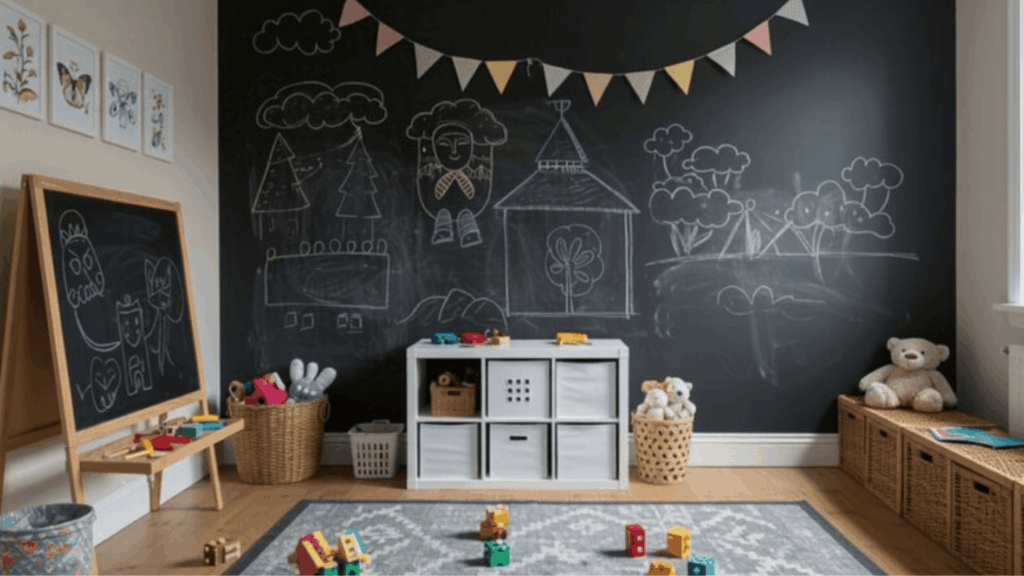
One can of chalkboard paint and an afternoon is all it takes to turn a plain wall into a creative activity zone your kid will use every single day.
They can draw, write, doodle, play school, and it all wipes clean with a damp cloth. Bonus: mark their height on it over the years, and you’ve got a built-in memory wall.
7. Create a Cozy Teepee Corner
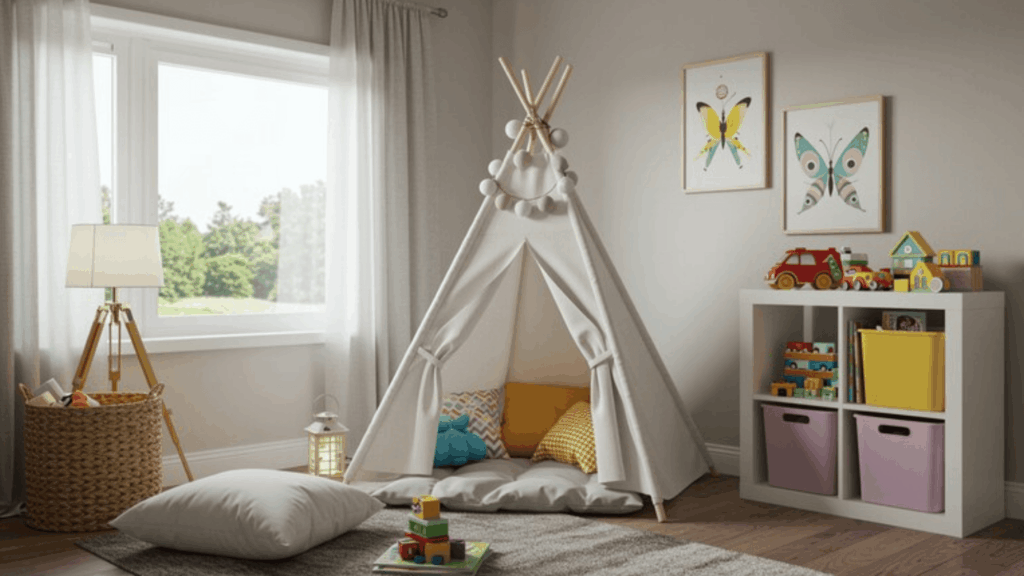
A teepee or play tent is one of the easiest ways to carve out a defined “quiet zone” in a small playroom without any construction. Tuck a small rug, a few pillows, and a battery-powered lantern inside, and it instantly becomes the most coveted spot in the house.
No drilling, no building, just set it up and watch your kid claim it as their own.
8. Use a Fold-Down Wall Desk for Crafts
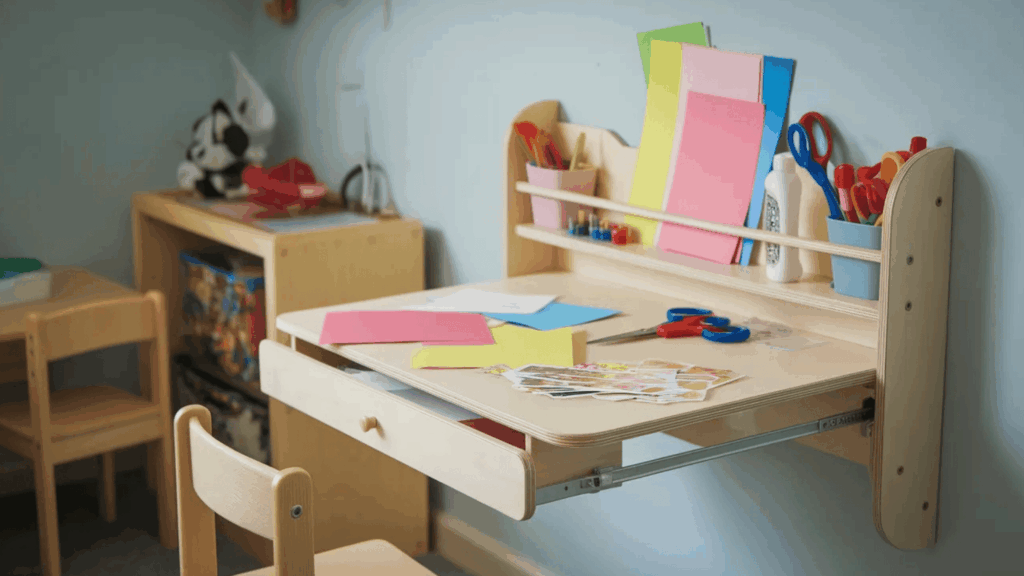
A Murphy-style fold-down desk mounts flat against the wall and only takes up space when you actually need it, which is a game-changer in a small playroom.
It’s perfect for drawing sessions, puzzles, and homework without permanently sacrificing floor space to a full-sized table.
Pair it with a small stool that slides neatly underneath, and you’ve got a full craft station that disappears when playtime is over.
9. Hang a Wall-Mounted Book Ledge
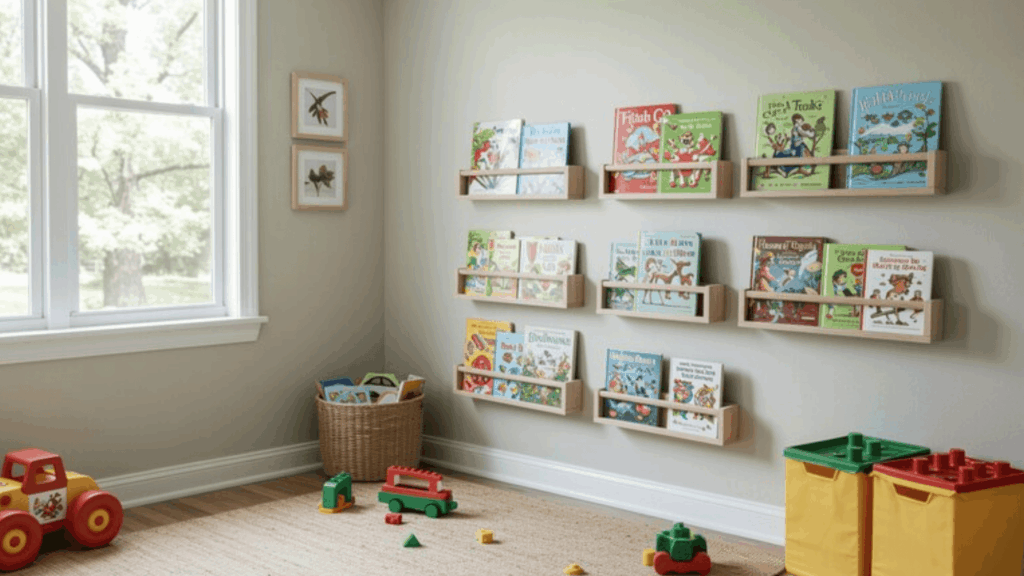
Book ledges are so much slimmer than traditional bookshelves, and because the covers face outward, kids actually notice and choose their books instead of ignoring a spine-out shelf.
Line one whole wall with them for a mini library effect that looks intentional and keeps reading front and center. They work at adult height, too, so you can layer them across the whole wall for a really polished look.
10. Add Toy Storage Under a Window Bench
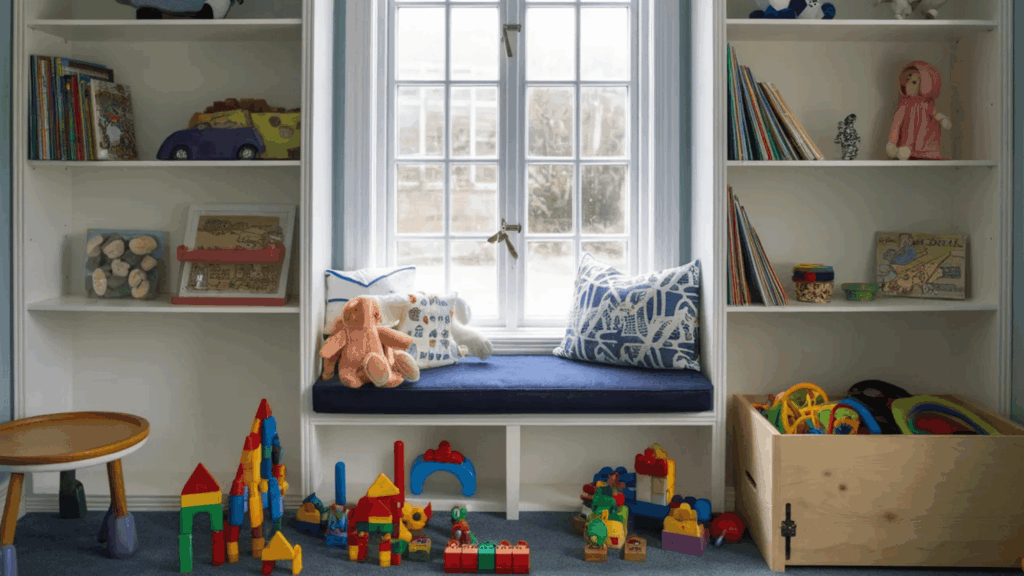
A bench that runs the length of the wall under a window, with drawers or cubbies built in underneath, gives you seating, storage, and a cozy lookout perch all in one piece of furniture.
It’s one of those small playroom ideas that’s especially useful when you’ve got an awkward window placement that eats into your usable wall space. Build it custom or find a ready-made version; either way, it’s square footage well spent.
11. Use a Rolling Cart as a Mobile Art Station
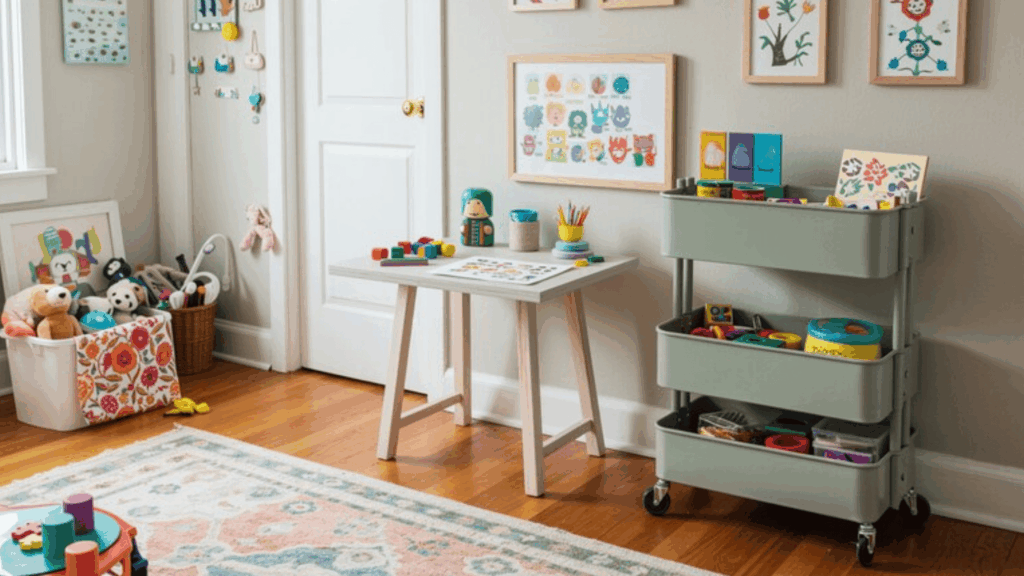
A RÅSKOG-style rolling cart is basically a portable art studio; it holds all the supplies in one place and rolls out when you need it and tucks into a corner when you don’t.
Kids love having something that feels theirs entirely, so add their name to it and watch them take ownership seriously.
It’s one of the most practical kids’ playroom ideas for keeping craft supplies contained without dedicating a whole wall to storage.
12. Create a Sensory Corner with a Small Ball Pit
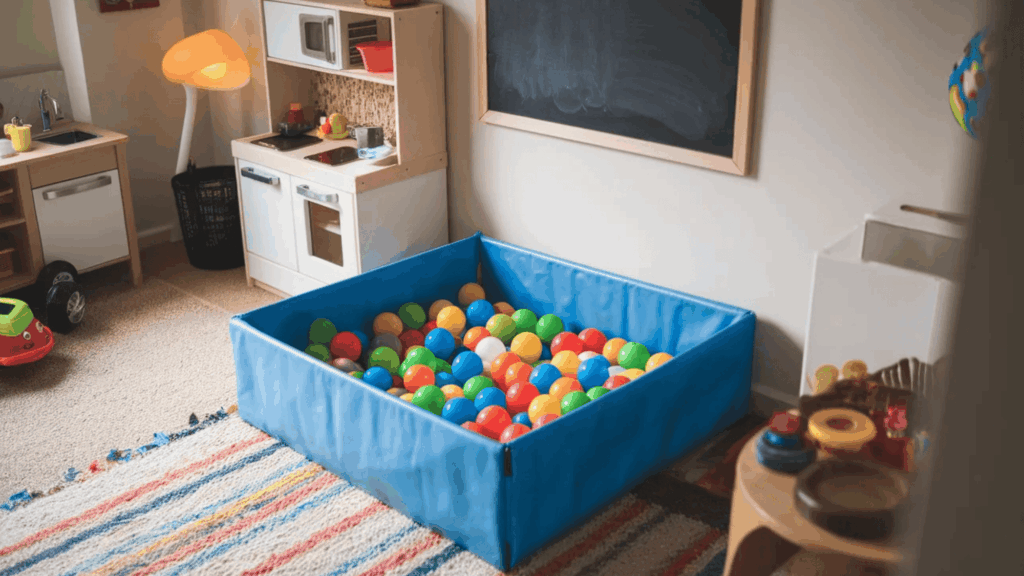
A pop-up ball pit fits comfortably in a 3×3 ft corner and is genuinely one of those things kids lose their minds over, especially toddlers and sensory-seeking kids who need that kind of input. When the novelty wears off for the day, it folds flat for easy storage, so it doesn’t take up permanent real estate.
Tuck it into a corner with a small mat underneath, and it becomes a dedicated sensory zone that does serious work in a small footprint.
13. Use Ottomans with Hidden Storage
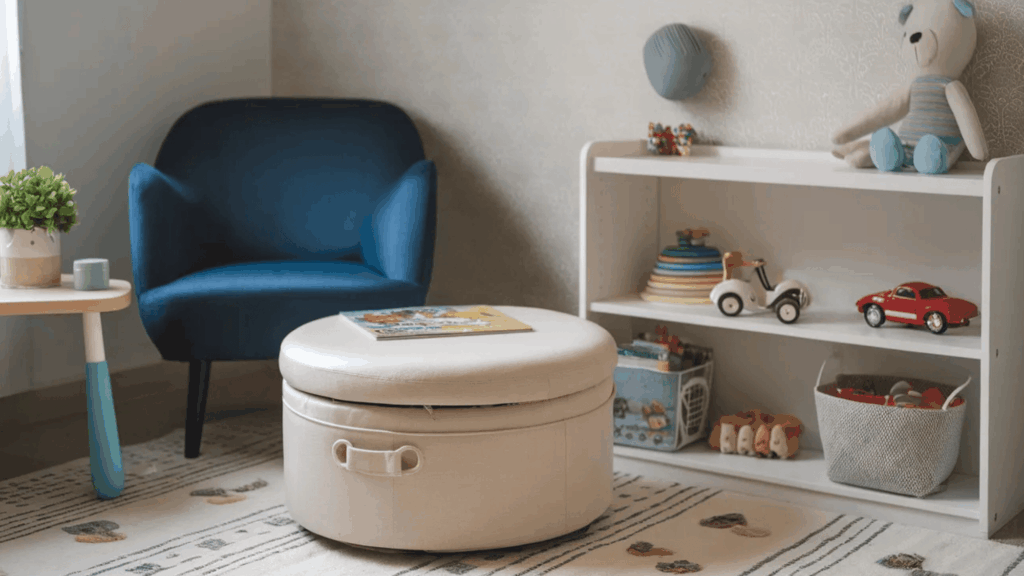
Cube ottomans with lids are doing the most work of any piece of furniture in a small playroom. Flip the top, and you’ve got room for stuffed animals, dress-up clothes, board games, and everything else that doesn’t have a home.
They double as extra seating when the room fills up, and because they stack and cluster easily, you can arrange them in whatever layout works best for your space. Look for ones in neutral tones so they blend into the room rather than add visual noise.
14. Mount a Whiteboard on the Wall
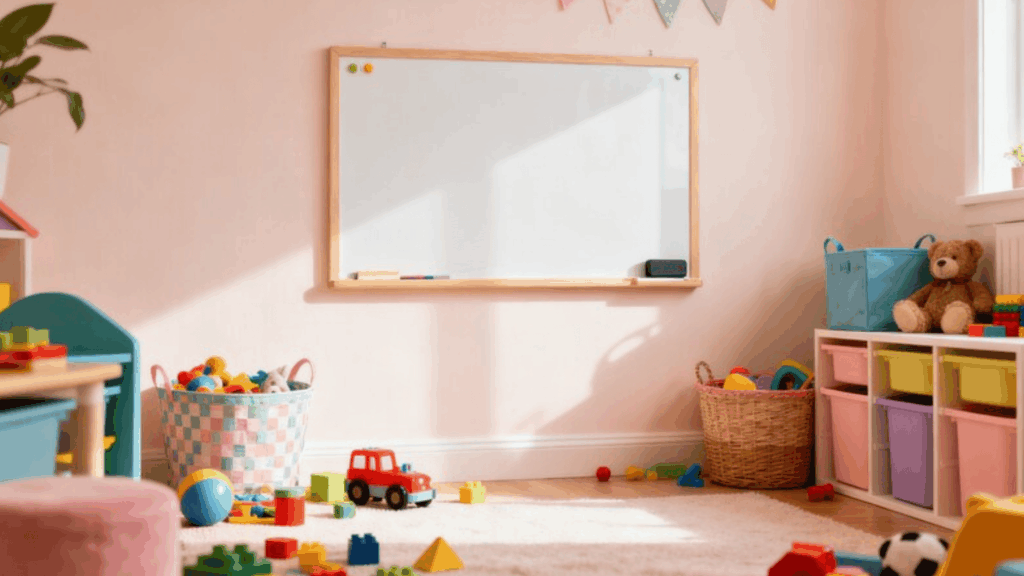
A wall-mounted dry-erase board is mess-free, endlessly reusable, and honestly, one of the best things you can add to a small playroom.
Kids use it for drawing, spelling practice, pretend school, scorekeeping for games, and the list goes on. If you can swing a floor-to-ceiling size, go for it, because kids will absolutely fill every inch of it.
15. Hang a Canopy Over the Play Area
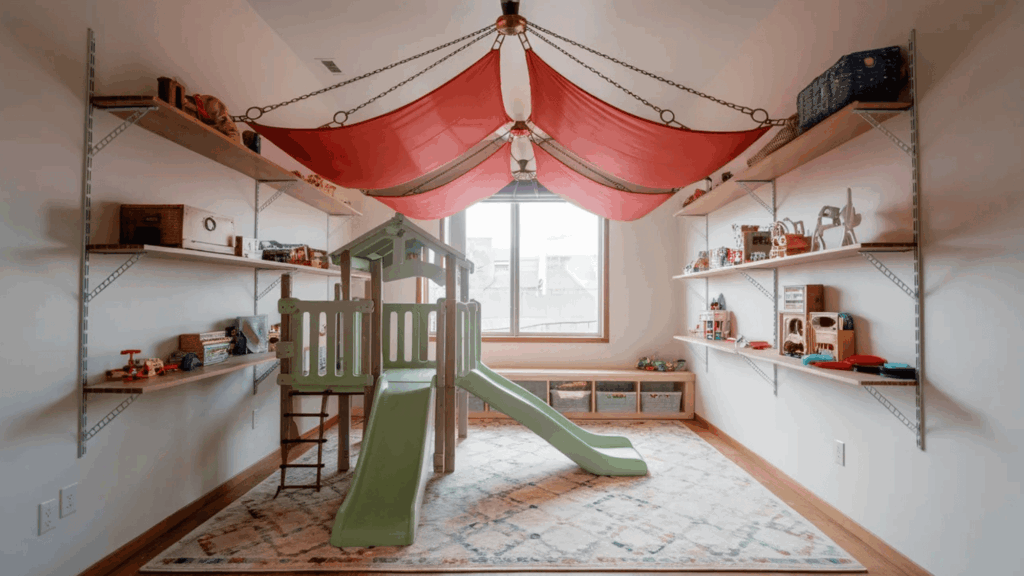
A ceiling-mounted canopy over a small rug instantly changes a corner of the room into a defined play zone that feels intentional and magical at the same time.
It serves as a visual boundary without walls or furniture, which is perfect for creating zones in a tight space. Go with a gauzy, fairy-light style, and your kid will want to spend every waking hour underneath it.
16. Build a DIY Play Kitchen in a Corner
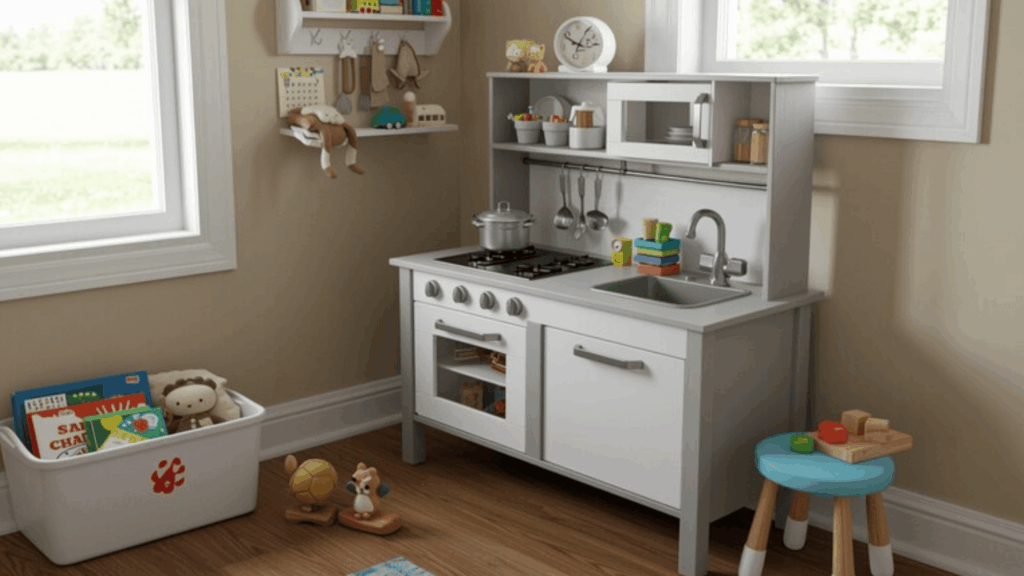
A play kitchen doesn’t need much room; a 2×2 ft corner footprint is genuinely enough to fit one in if you go with the right setup.
The DIY route is especially great here: repurpose an old nightstand or small cabinet, add some painted-on details and a few dollar-store accessories, and you’ve got a full kitchen setup for a fraction of the cost.
It’s one of the most popular DIY playroom ideas for small spaces for toddler-aged kids, and they will play with it for years.
17. Use Vertical Toy Storage Towers
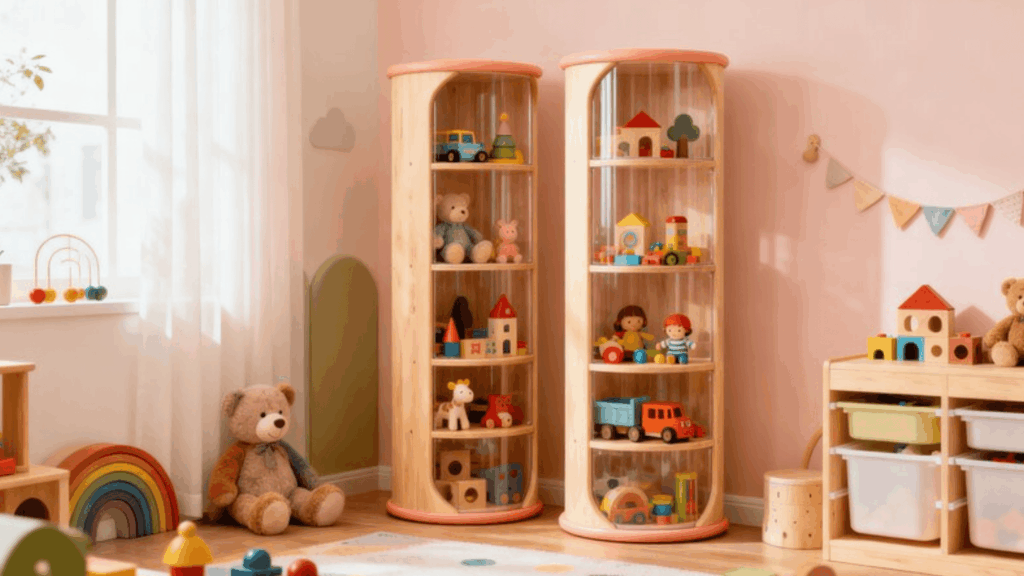
Tall, narrow storage towers are a small playroom’s best friend because they take up almost no floor space while offering a serious amount of storage height.
Organize them by toy type, one for building blocks, one for art supplies, one for games, so kids know exactly where everything lives.
Look for versions with wheels so you can reconfigure the layout whenever you need to without any heavy lifting.
18. Add a Rope Ladder or Climbing Wall Panel
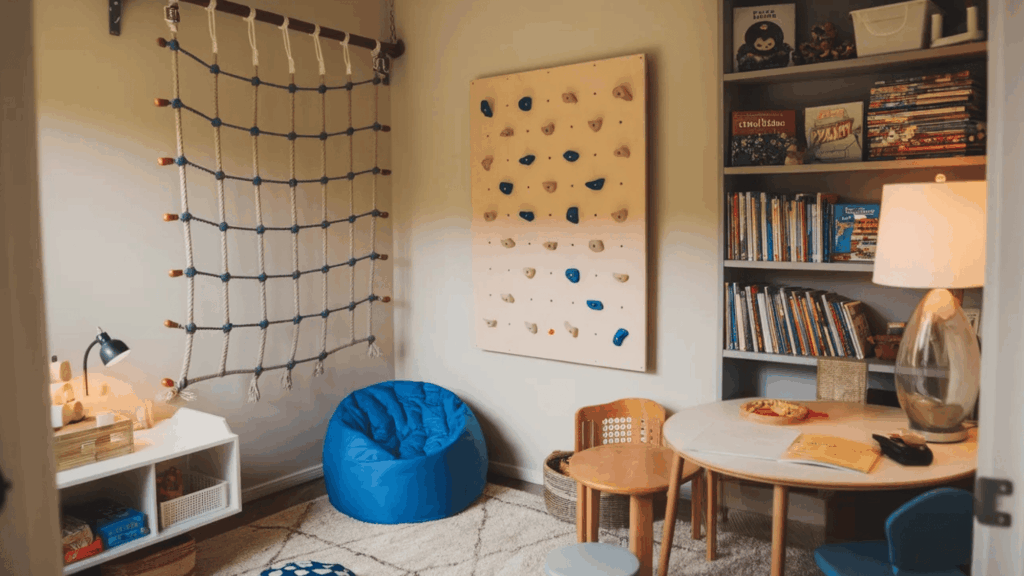
A small wooden climbing panel or rope ladder mounted directly to the wall brings the kind of physical, active play that kids genuinely need, without requiring anything close to a full jungle gym setup.
It’s especially effective in rooms with a loft bed, since the two elements work together to create a layered, adventure-style space. It channels energy upward instead of outward, which is exactly what you want in a small room.
19. Lay Down a Town/Road Play Rug
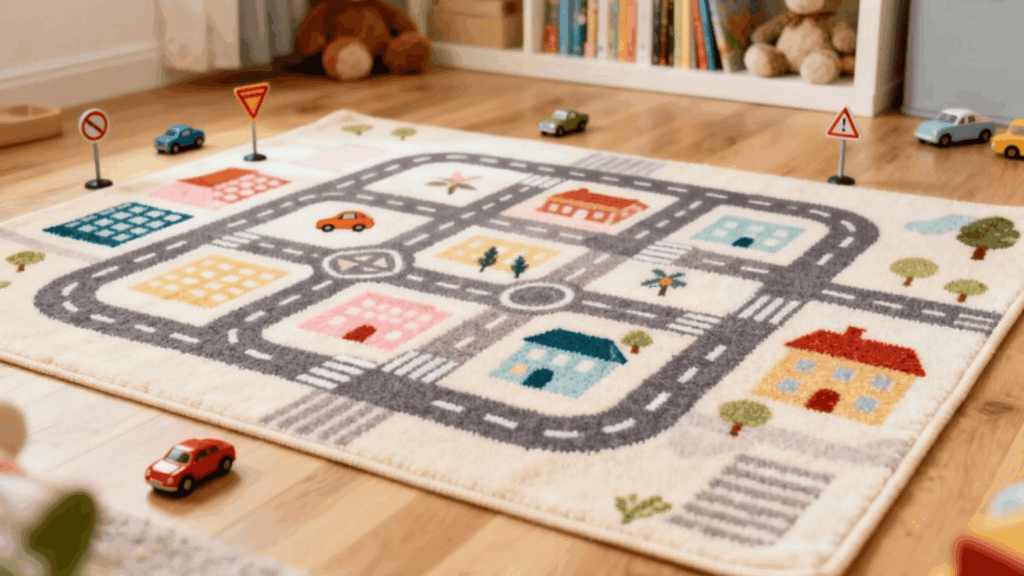
A road map rug is one of the simplest and most effective ways to define a specific play zone in a small playroom without adding any furniture or storage.
Kids gravitate to it naturally for car and truck play, which means their activity stays contained to one area of the room without you having to ask. When you need the floor back, it rolls up in seconds, which is more than you can say for most playroom setups.
20. Install a Magnetic Wall for Building Play
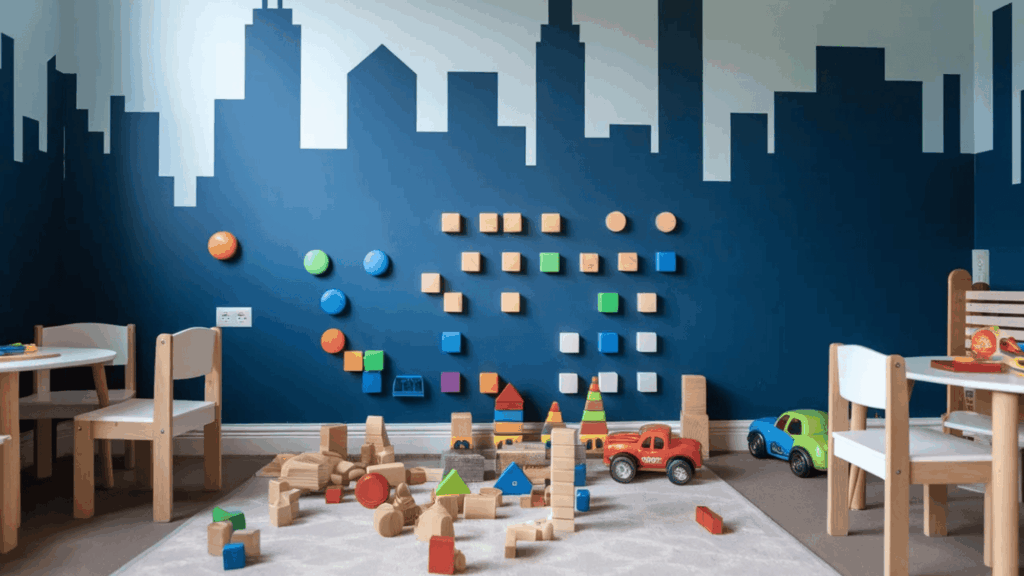
A magnetic paint wall or a sheet of metal-backed board gives you an instant interactive surface that kids can use for magnetic tiles, letters, drawings, and all kinds of building play. It’s completely wall-mounted, takes up zero floor space, and is one of those additions that kids become genuinely obsessed with.
It’s low-profile enough to blend into the room but high-engagement enough to become one of the most-used spots in the whole space.
21. Hang a Small Indoor Swing from The Ceiling
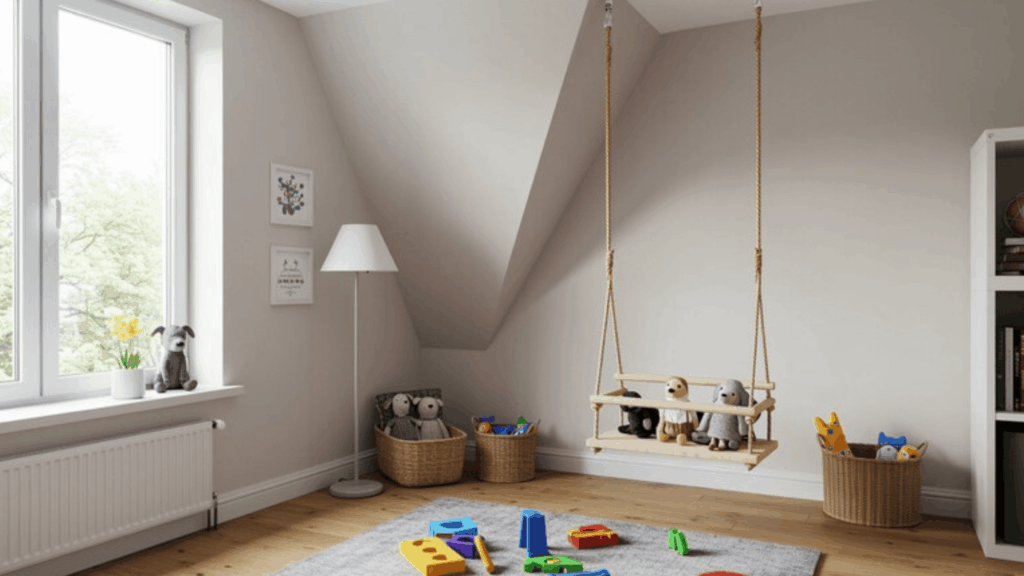
A single-point ceiling swing takes up almost no floor space at all and delivers the kind of sensory, movement-based play that a lot of kids crave, especially on days when getting outside isn’t an option.
It’s a particularly great addition for kids who need movement breaks to regulate and refocus. Just make sure it’s properly anchored into a ceiling joist, not just drywall; safety has to come first on this one.
22. Use a Cube Organizer as a Room Divider
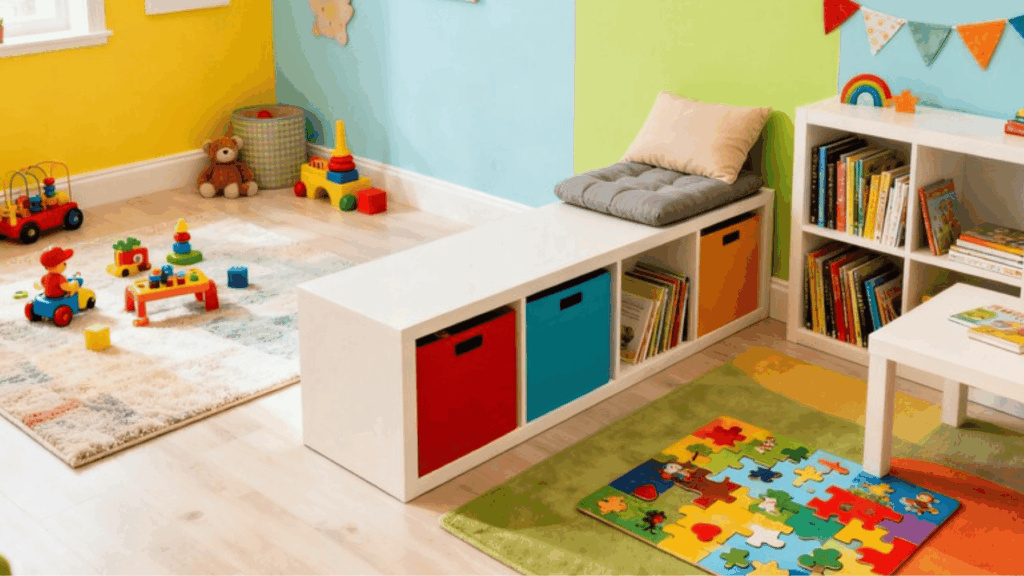
A low cube organizer placed perpendicular to the wall does double duty: it splits the room into two distinct zones while also providing storage on both sides.
One side becomes the active, loud play area, and the other becomes a quieter space for reading or puzzles, which is genuinely useful when you’ve got kids with different moods at the same time.
Add a cushion to the top, and it becomes a seating option too.
23. Create a Dress-Up Station with Hooks and a Mirror
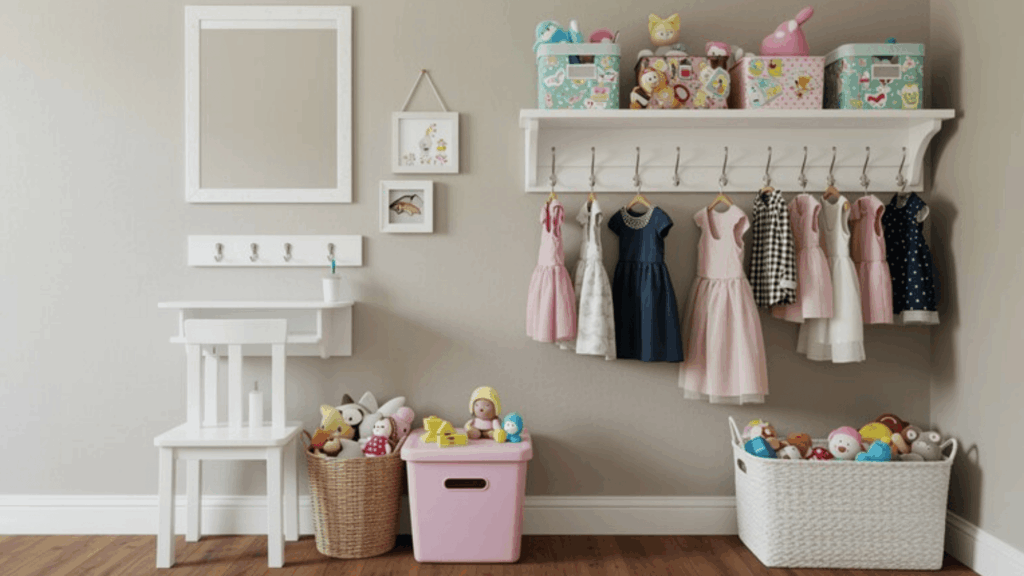
All you need for a full dress-up corner is a row of low hooks, a small mirror, and a basket for accessories, and the whole setup takes up less than a foot of wall depth.
It keeps costumes and props organized and within reach, which means your kid can get in and out of character independently without making a mess of the whole room. It’s a must-have addition in any kids’ playroom ideas list if you’ve got a kid who’s into dramatic play.
24. Add Glow-in-the-Dark Stars to the Ceiling
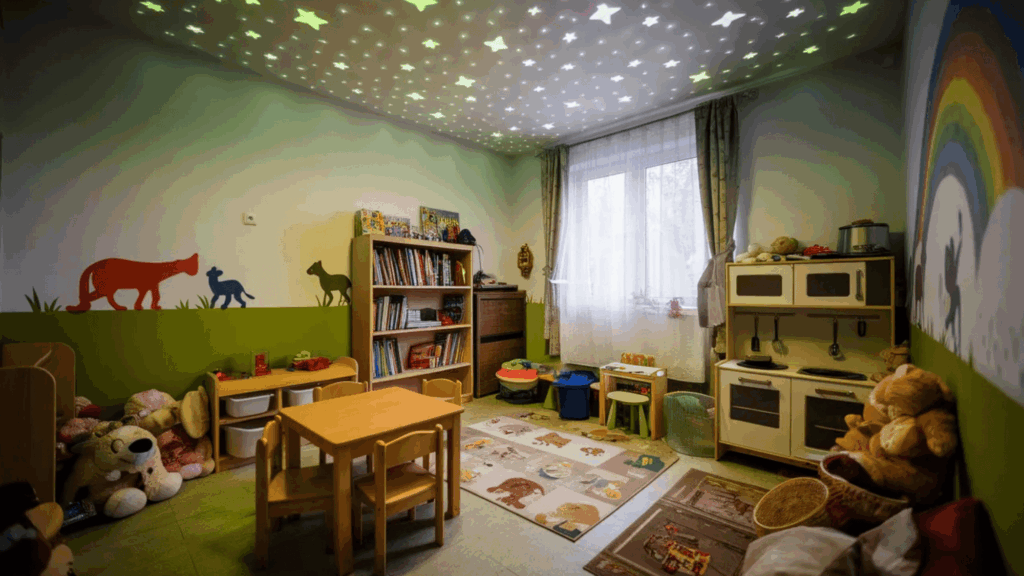
Glow-in-the-dark ceiling stars are tiny, cost almost nothing, and completely change the atmosphere of a small playroom after the lights go down.
Pair them with a nightlight and a few floor cushions, and that corner of the room becomes a “stargazing spot” that kids genuinely treasure. It’s one of those small details that makes a space feel special in a way that has nothing to do with square footage.
25. Use a Tension Rod Under a Shelf for Extra Storage
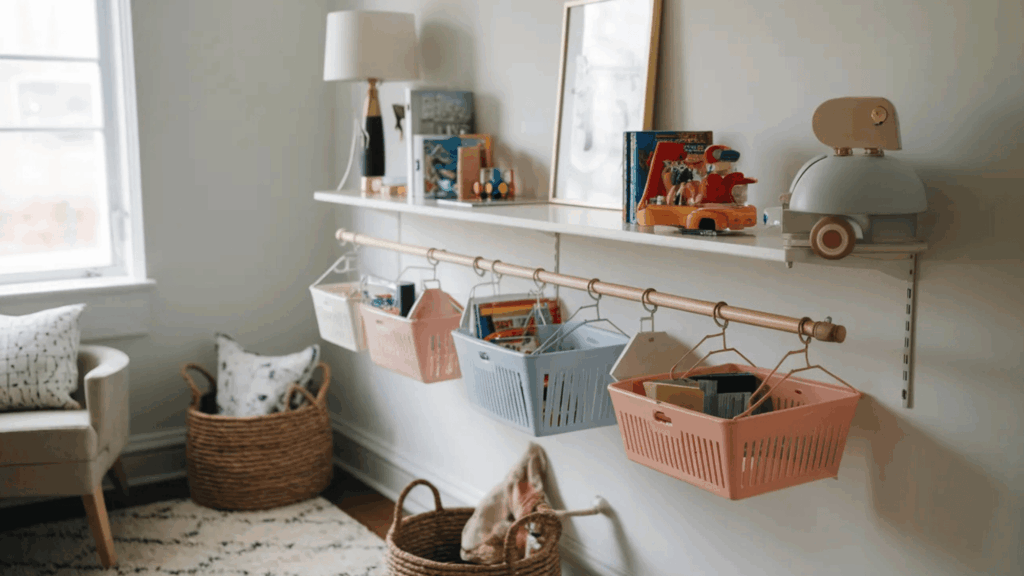
A tension rod stretched across the underside of a floating shelf lets you hang small clip-on baskets, doubling your storage in the same vertical footprint.
It’s one of those zero-effort hacks that looks intentional and works surprisingly well for art supplies, small stuffed animals, and dress-up accessories that don’t have a natural home elsewhere. If you’ve already got floating shelves, this upgrade takes about five minutes.
More Small Playroom Ideas You’ll Want to Steal
These bonus small playroom ideas are just as good; they’re practical, budget-friendly, and easy to pull off even on a weekend. Keep scrolling.
- Rotate Toys Weekly to Reduce Clutter: Store half the toys out of sight and swap them out every week. Use labeled bins in a closet for the “off-duty” toys so the rotation stays organized and stress-free.
- Choose Furniture on Legs to Create Visual Space: Furniture with visible legs makes a small room feel significantly airier and less boxy; it’s a simple design trick that makes a real difference in tight spaces. It works especially well with tables and chairs, where that little bit of visible floor underneath opens the whole room up visually.
- Paint the Ceiling a Fun Color: An unexpected ceiling color draws the eye upward and instantly makes the room feel taller and more playful. Soft sky blue, pale yellow, or even a simple painted mural all work beautifully.
- Use Clear Bins So Kids Can See Their Toys: Clear bins mean no more dumping everything out to find one specific toy; kids can see exactly what’s inside and grab what they need independently. Label the front with both a picture and a word so even pre-readers know where everything goes when it’s time to tidy up.
- Hang Artwork at Kid Height: Rotate your kid’s artwork in simple clip frames mounted at their eye level; it makes the space feel theirs genuinely and builds real pride in the room. Cheap clip frames from a dollar store work perfectly, and swapping the art out regularly keeps the walls feeling fresh.
- Use Stackable Storage Cubes: Stackable cubes are one of the most flexible storage solutions for a small playroom because you can add more as your needs grow without replacing anything. Arrange them in an L-shape to fill a corner efficiently, and mix open and closed cubes for a look that’s both functional and visually balanced.
- Add a Small Trampoline for Active Play: A mini indoor trampoline fits in roughly a 3 ft circle and is genuinely one of the best ways to burn energy indoors when going outside isn’t an option. Fold it up and lean it against the wall when it’s not in use. It takes up almost no space and saves everyone’s sanity on rainy days.
- Use Wall Decals Instead of Paint for Themes: Removable wall decals let you theme the room however your kid is obsessed right now, jungle, space, dinosaurs, you name it, without committing to paint you’ll regret in six months. They peel off cleanly, leave zero damage, and cost a fraction of what a painted mural would.
- Put a Small Whiteboard on the Back of the Door: The back of the door is almost always wasted space, and a small whiteboard mounted there turns it into a drawing spot kids genuinely love to use. It also doubles as a chore chart or family schedule board, making it useful for parents as much as for kids.
- Add a Cushioned Reading Corner With a Canopy: A floor cushion, a couple of throw pillows, and a wall-mounted canopy are all you need to create a cozy reading nook that requires zero furniture. It works especially well in corners that are too small or awkward for anything else; suddenly, that dead space becomes the best seat in the room.
- Use Bungee Cords Inside Cabinets to Hold Balls: Stretch a few bungee cords across the inside of a low cabinet, and you’ve got an instant corral for balls and round toys that usually roll everywhere the moment you open a door. It’s a completely free hack if you’ve already got bungee cords at home, and it keeps those toys accessible without letting them escape.
- Install a Low Curtain Rod for Dress-Up Clothes: Mount a curtain rod low on the wall and hang costumes and dress-up pieces directly from it. Kids can flip through and pick their outfit independently without pulling everything off a hook or out of a bin. Add a few extra hooks below the rod for bags, capes, and accessories to complete the station.
- Add a Small Sensory Bin Table: A low tray-style table with a lip around the edge keeps sensory play materials, sand, water beads, rice, and kinetic sand contained to one spot instead of spread across the entire floor. Most versions fold flat or slide under a bed when not in use, so they don’t take up permanent floor space.
- Use Washi Tape to Create Floor “Zones”: Washi tape on the floor is one of the cheapest and most creative ways to define activity zones, a road for cars, a hopscotch grid, or a square for building, without any furniture at all. It peels off cleanly when you’re ready to change things up, and kids naturally follow the lines, which keeps play surprisingly contained.
- Hang a String Light Photo Display: String lights with mini clothespins along one wall create a rotating gallery for your kid’s artwork that also doubles as warm, ambient lighting in the evenings. Swapping pieces out as new masterpieces come home from school takes about thirty seconds and keeps the display feeling current.
- Store Board Games Vertically in a Magazine Holder: Standing board game boxes upright in large magazine holders or file organizers takes up a fraction of the shelf space that stacking them flat would require. Label the spine of each box so kids can grab the game they want without pulling the whole stack down.
- Create a Simple Stage With a Low Platform: A small raised platform, even just four inches off the ground, instantly becomes a performance stage that kids take very seriously. Build it from a sheet of plywood, paint it a fun color, and add a curtain on a tension rod for a full theatrical setup that’s big on imagination and small on footprint.
- Add Foam Floor Tiles for Safe Active Play: Interlocking foam tiles protect little knees and elbows during floor play and make the space feel intentionally designed for active kids. They’re easy to install, easy to wipe clean, and easy to reconfigure. Go for neutral tones if you want them to blend into the room rather than compete with everything else.
- Use a Pocket Chart for Small Toy Organization: Hanging pocket charts, the kind typically used in classrooms, are surprisingly perfect for organizing tiny toys like Legos, figurines, and small cars by category. The whole thing hangs on a single wall hook and takes up absolutely zero floor space, which makes it one of the more underrated kids’ playroom ideas out there.
- Mount a Basketball Hoop on the Back of the Door: A mini over-the-door basketball hoop brings serious active-play energy to the room without taking up a single inch of floor space. Kids of almost any age will use it constantly, and it’s one of those additions that quietly channels a lot of physical energy that might otherwise go sideways.
- Use a Bench With Cubbies at the Entrance: A small cubby bench right at the playroom entrance gives shoes, backpacks, and bags a designated spot before kids even walk in, which helps keep the main space clutter-free. It also sets a natural “transition into play mode” ritual that kids pick up on faster than you’d expect.
- Repurpose a Bookshelf as a Puppet Theatre: Lay a bookshelf on its side, drape a curtain across the middle opening, and you’ve got an instant puppet theatre that kids will put on full productions with. When the show’s over, it flips back to functioning as regular storage, so it’s genuinely earning its keep in a small space.
- Add Glow-in-the-Dark Paint Accents: A constellation, a simple road, or a freehand mural painted in glow-in-the-dark paint changes the room into something completely different after dark. It’s especially magical on a feature wall or the ceiling, and it costs very little to pull off, given the reaction it gets from kids.
- Keep a “Donate” Bin Permanently in the Room: A clearly labeled donation bin sitting right in the playroom turns decluttering from a big, stressful event into a quiet, ongoing habit. When it fills up, it goes. Kids gradually learn to let go of things they’ve outgrown.
- Let Your Kid Have the Final Say on One Element: Whether it’s picking the rug, choosing a wall color, or naming the reading nook, giving your kid one real, meaningful choice in the design makes them far more likely to respect and take care of the space.
Conclusion
These ideas are a lot to take in, so don’t feel like you need to do all of them at once.
The best approach is to pick one or two small playroom ideas that fit your space, your budget, and your kid right now, and start there.
Maybe it’s a cubby wall. Maybe it’s just a tension rod under a shelf. Either way, you’re moving in the right direction. The best kids’ playroom ideas don’t require a complete overhaul; they need a little intention behind every decision.
And if you’re working with a tight budget, some of the most impactful DIY playroom ideas for small spaces on this list cost next to nothing.
Your kid doesn’t need more square footage. They need a space that was designed with them in mind.

Ava Taylor, holding a Bachelor’s degree in Interior Design from the Pratt Institute, has made her mark in creating engaging and functional living spaces for over 14 years. She began her career with a New York-based design studio, where she gained a reputation for her innovative and user-centric designs. Ava joined our team in 2019, bringing a blend of artistic flair and practicality to our home improvement section. Since the she has been the lead contributor to our room transformation series, inspiring readers with her unique approach to maximizing space utility and aesthetic appeal. Beyond her professional work, Ava is a passionate collector of vintage furniture, a hobby that enriches her design perspective.