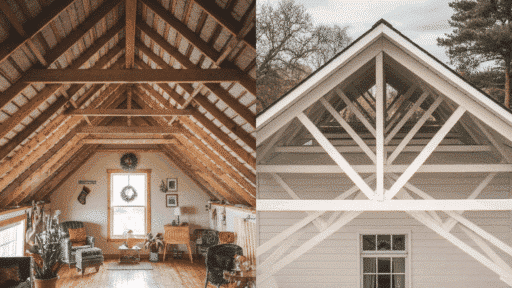
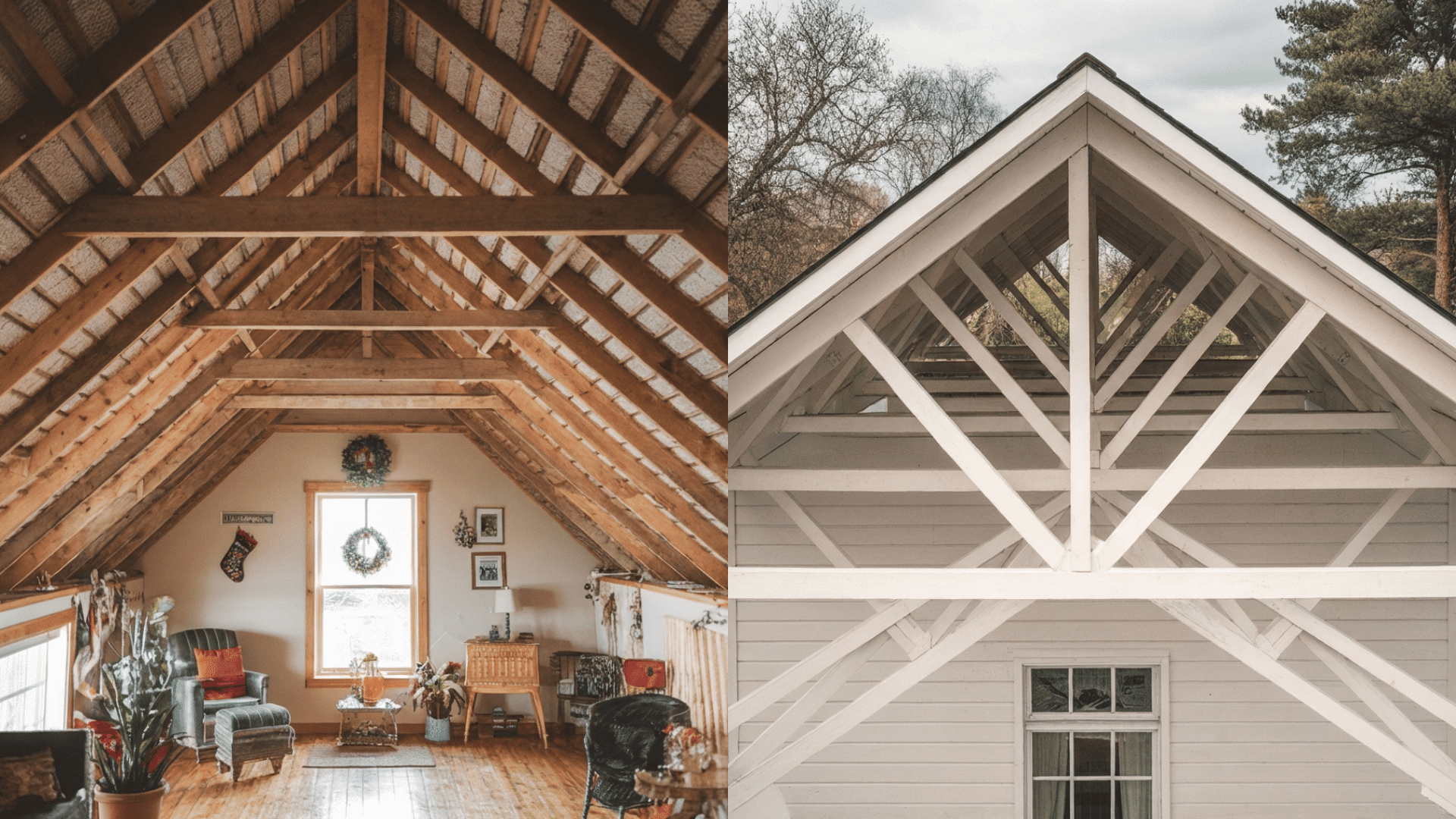

When building or renovating a home, choosing the right roof support system is crucial for stability and durability. Two common options are rafters and trusses, each with its own set of benefits and challenges.
While both serve the same purpose – supporting the roof – there are key differences in their design, construction, and installation.
In this blog, I’ll break down the differences between rafters and trusses, helping you decide which is the best fit for your project.
What are Rafters & Trusses?
Rafters are long, sloping beams that form the basic framework of a pitched roof. They are commonly used in traditional roof construction and are installed individually, spaced evenly to support the roof’s weight.
Since rafters are cut and assembled on-site, they allow greater flexibility in roof design. This makes them a suitable choice for homes with custom layouts, complex rooflines, or projects where more design control is needed during construction.
Trusses are pre-engineered roof framing systems built in a triangular shape to support the roof structure. Unlike rafters, which are cut and assembled on-site, trusses are manufactured in factories and delivered to the construction site ready for installation.
This pre-built design helps speed up the construction process and reduces labor on-site. Trusses are also designed to distribute the roof’s weight evenly across the structure, which improves stability.
Key Differences: Rafters vs. Trusses
Understanding the differences between rafters and trusses can help you choose the right roof structure for your project.
1. Design Structure
Rafters and trusses differ mainly in how they are designed. Rafters use individual sloped beams that connect from the ridge to the walls.
Trusses use a network of connected triangular members that form a rigid framework.
Rafters offer more flexibility for custom roof shapes. Trusses follow a pre-engineered design that works best for standard roof layouts.
2. Construction Method
The way these two systems are built is also different.
Rafters are cut and assembled on-site, which allows builders to adjust the design during construction. This process takes more time and skilled labor.
Trusses are factory-built and delivered ready to install. Because they arrive pre-assembled, installation is usually faster and requires less labor.
3. Cost and Installation Time
Cost is another key difference between rafters and trusses. Rafters often cost more because they require custom cutting, longer installation time, and skilled labor.
Trusses are typically more budget-friendly. Since they are mass-produced in factories, they reduce both material waste and labor costs.
4. Structural Strength
Both systems are strong, but they distribute weight differently. Rafters rely on beams and support walls to carry the roof load. This may require additional structural support inside the building.
Trusses spread weight across multiple triangular components. This design improves stability and often reduces the need for interior load-bearing walls.
5. Attic and Interior Space
The interior space under the roof can vary depending on the system used. Rafters often allow more usable attic space because there are fewer internal supports.
Trusses use many internal web members, which can limit attic storage or living space unless special attic trusses are used.
Different Types of Rafters and Trusses
When deciding between rafters and trusses, it’s important to understand the different types of each and how they fit specific roofing needs.
Types of Rafters
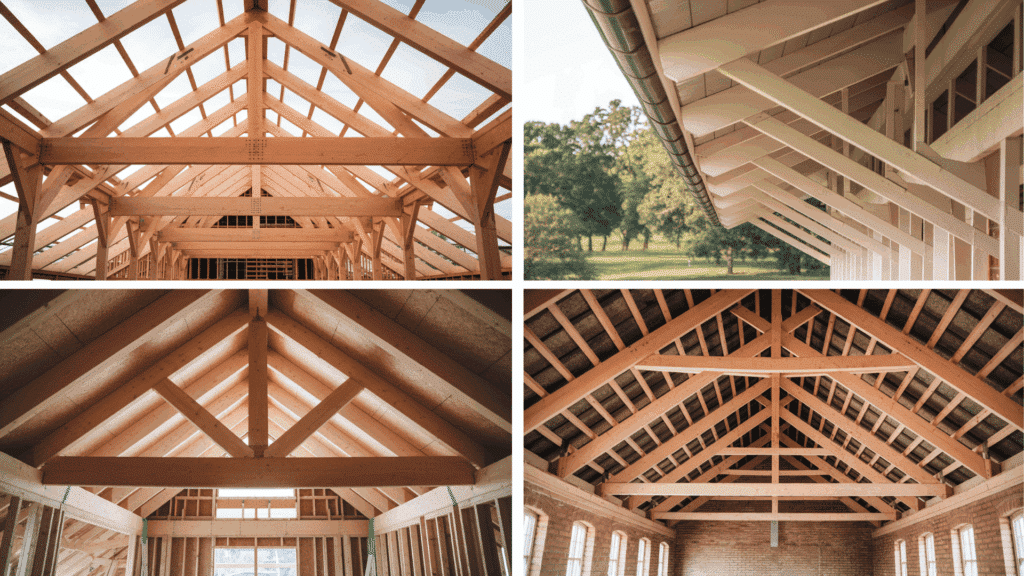
Each type of rafter serves a specific function depending on the roof’s design and structural needs.
| Type of Rafter | Description | Common Use |
|---|---|---|
| Common Rafters | Standard rafters that run from the ridge beam to the eaves. | Used in simple gable roof designs. |
| Hip Rafters | Rafters that run diagonally from the corner of the roof to the ridge. | Used in hip roofs where all sides slope toward the center. |
| Valley Rafters | Rafters located where two sloped roof sections meet. | Used where two roof planes intersect. |
| Cripple Rafters | Short rafters placed between the ridge and the hip or valley rafter. | Used in complex roof structures for additional support. |
| Collar Tie Rafters | Rafters connected by a horizontal tie beam. | Help prevent roof sagging and distribute structural load. |
| Fascia Rafters | Rafters that extend beyond the roof edge to support the fascia board. | Common in eave designs to finish the roof edge. |
| Ridge Rafters | Rafters that run along the peak of the roof and support other rafters. | Essential in both gable and hip roof designs. |
Types of Trusses
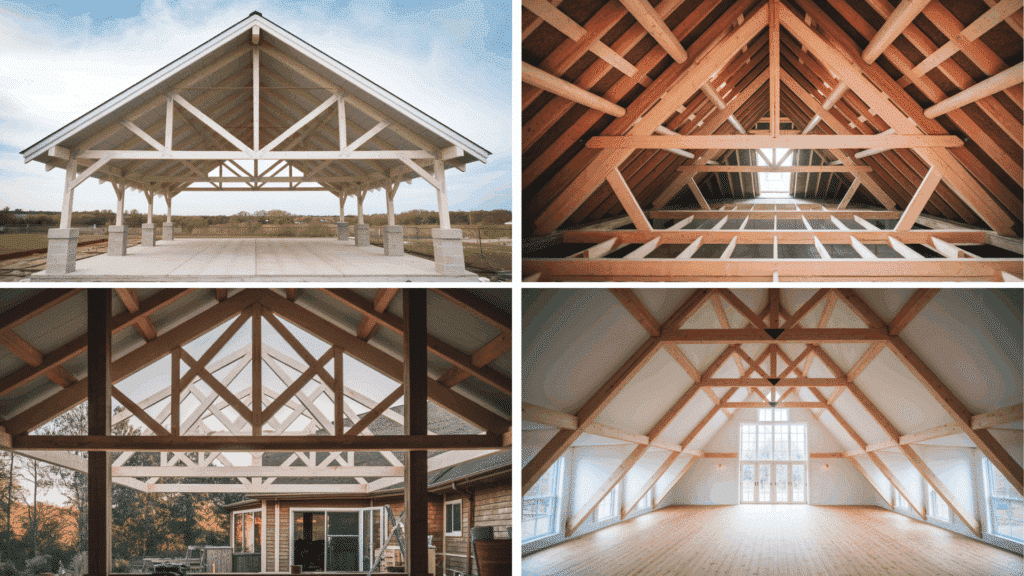
Each type of truss serves different purposes based on the roof’s design, the span, and load requirements.
| Type of Truss | Description | Common Use |
|---|---|---|
| King Post Truss | Simple design with a central vertical post and two sloping beams. | Ideal for short to medium roof spans. |
| Queen Post Truss | Similar to a king post truss but uses two vertical posts instead of one. | Suitable for medium spans and supports more weight. |
| Fink Truss | Includes a web of triangular sections that increase stability. | Common in residential roofs with longer spans. |
| Attic Truss | Designed with extra space in the center for usable attic area. | Used when creating storage or living space in the attic. |
| Scissor Truss | Uses angled members that form a sloped or vaulted ceiling shape. | Ideal for homes that want a vaulted ceiling look. |
| Gable Truss | One of the most basic truss designs used at the ends of roofs. | Common in standard residential gable roof designs. |
Which is Right for Your Home?
Choosing between rafters and trusses depends on factors like budget, roof design, construction time, and the amount of attic space you want.
When Rafters Make the Most Sense
- Best for homes with custom roof designs or complex rooflines.
- Suitable when more attic or loft space is needed.
- Ideal when design flexibility is important.
- Works well for smaller construction projects or renovations.
- A good option when modifications may be needed during construction.
- Helpful when homeowners want open ceiling designs like cathedral ceilings.
When Trusses are the Better Choice
- Great for standard roof designs in modern residential construction.
- Ideal when faster installation is required.
- Suitable for projects with a limited budget due to lower labor costs.
- Works well for large buildings or wider roof spans.
- A practical choice when structural strength and weight distribution are priorities.
Conclusion
In the battle of rafters vs. trusses, there is no one-size-fits-all answer.
Both roofing systems have their advantages, and the right choice for your home will depend on your design preferences, budget, and timeline.
Understanding the differences between these two options will help you make the best choice for your construction project.

Holding a Master’s in Construction Management from Purdue University, William Ray has dedicated more than two decades to studying and applying construction principles. His professional journey includes a tenure with a prominent construction firm, where he specialized in project management and building technologies. William brought his knowledge to our team, providing in-depth insights into practical construction techniques. As the leader of our beginner’s guide to building since 2019, he has a knack for breaking down intricate processes into easily digestible content. When not involved in writing or onsite consultations, William enjoys woodworking and volunteering in community building projects, which aligns with his passion for hands-on construction and community service.