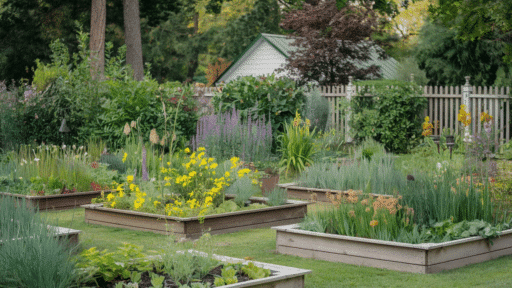
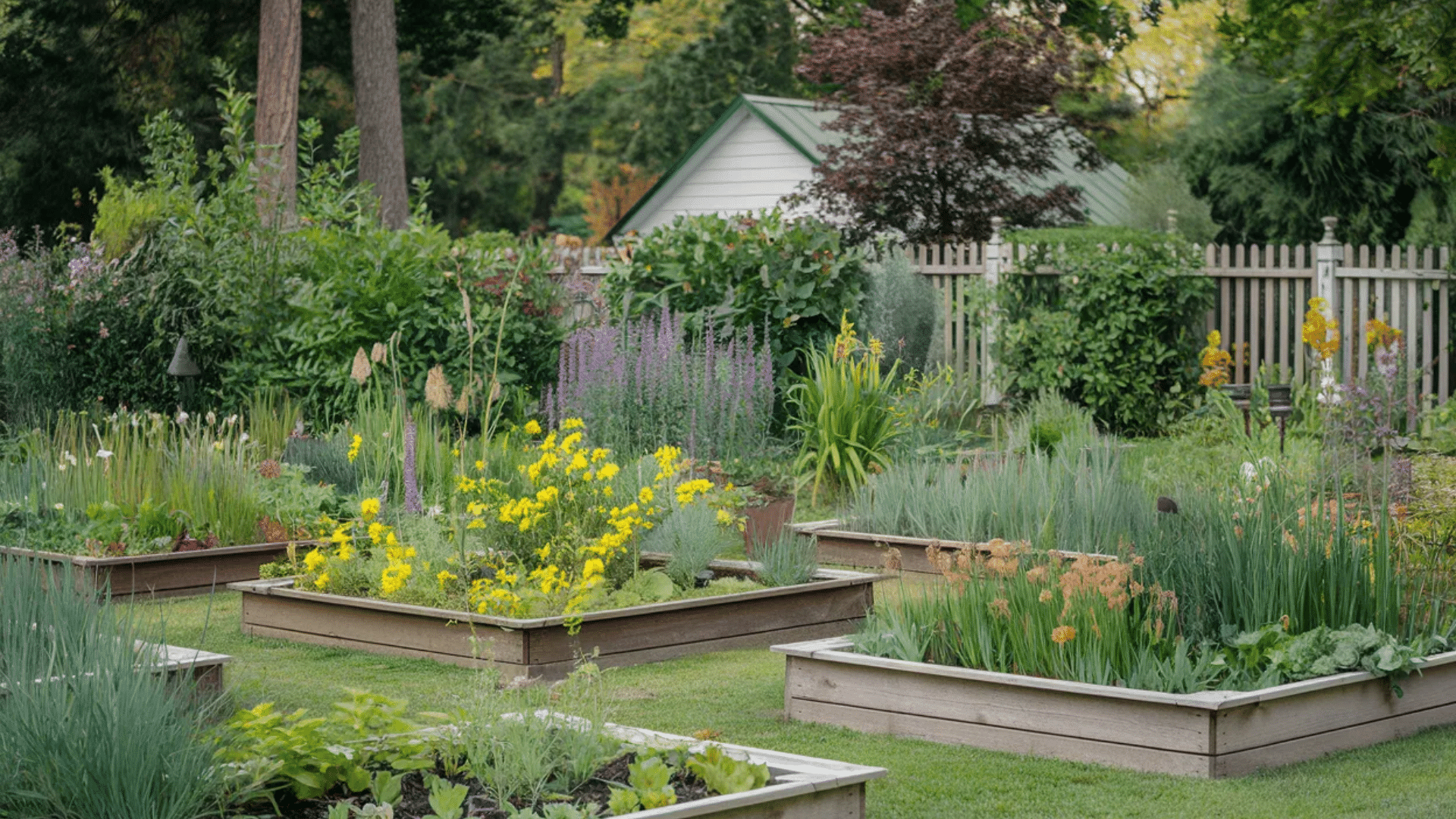

Most people assume a vegetable garden needs a sprawling backyard. It does not.
You can grow real food with the right vegetable garden ideas, even from a narrow balcony in Chicago, a sunny patio in Austin, or a spare corner of your suburban yard.
American households are growing more of their own produce than ever before, and a small footprint is no longer a barrier.
This blog walks you through a practical, well-tested vegetable garden layout that fits your life.
Why Small Space Gardening is Worth Your Time
A small garden is not a compromise; it’s a smarter choice for many US homeowners and renters.
You spend less time on upkeep, spend less money on setup, and have full control over what grows and how. The rewards come faster than most beginners expect. These are the advantages:
- Fresh produce steps from your kitchen, picked at peak flavor, not days after harvest
- Lower grocery bills, especially on herbs, salad greens, and tomatoes
- Less food waste, you pick exactly what you need, when you need it
- Proven mental health benefits of tending plants are a documented stress reducer
- Stronger curb appeal, an edible garden can be as attractive as any flower bed
Even a single raised bed or a row of pots on a deck produces dozens of pounds of food per season. The key is planning a smart vegetable garden layout from the start, one that matches your space, your sun exposure, and your cooking habits.
Clever Vegetable Garden Ideas for Small Spaces
Below are various ideas, ranked by versatility and ease of setup. Each one suits a different space type, from a balcony to a suburban backyard, so read through and pick the ones that fit your situation.
1. Container Garden on Your Balcony or Patio
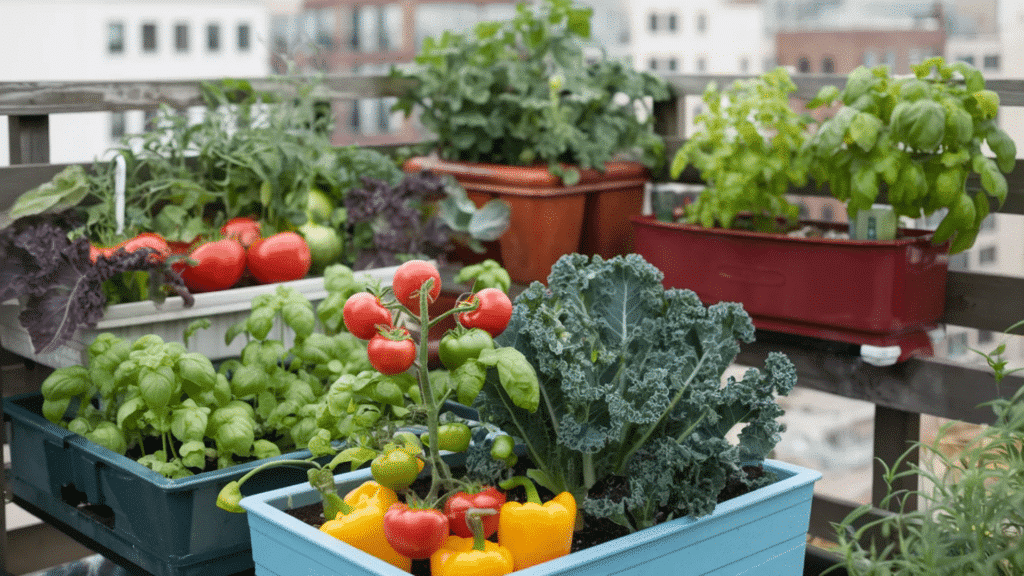
Container gardening is one of the most flexible vegetable garden ideas for urban dwellers. You can grow tomatoes, peppers, kale, basil, and more in standard 10-gallon pots, no ground access required.
- Best Crops: tomatoes, peppers, bush beans, herbs, lettuce
- Minimum container depth should be 8 to 10 inches for most vegetables
- Ideal for apartment balconies, condos, townhomes
- Group containers together to reduce individual drying time between waterings
2. Classic Raised Bed Garden
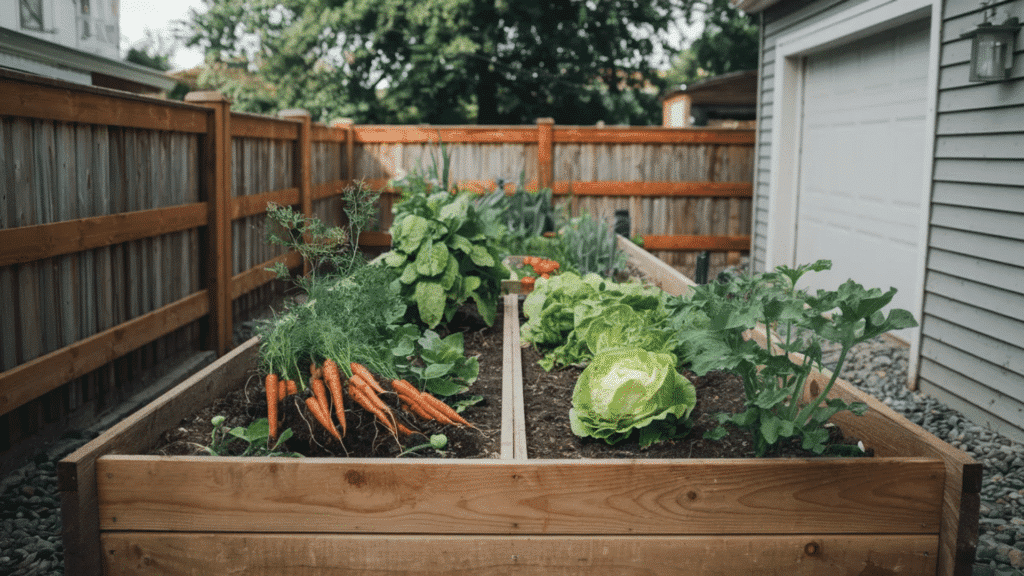
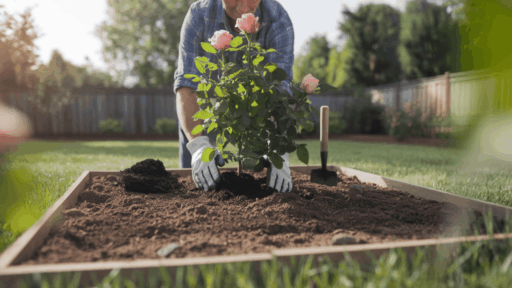
A 4×4 or 4×8 raised bed is the gold standard for backyard vegetable garden ideas across the US. Raised beds give you total control over soil quality, drain better than in-ground plots, and warm up faster in spring, a meaningful advantage in northern states like Minnesota or Wisconsin.
- Build along a fence, garage wall, or deck edge to use otherwise dead space
- Cedar and pine boards resist rot naturally and stay affordable
- A single 4×4 bed can hold 16 different vegetable varieties using one-foot spacing
- Weed pressure drops significantly compared to traditional in-ground rows
3. Square Foot Gardening Method
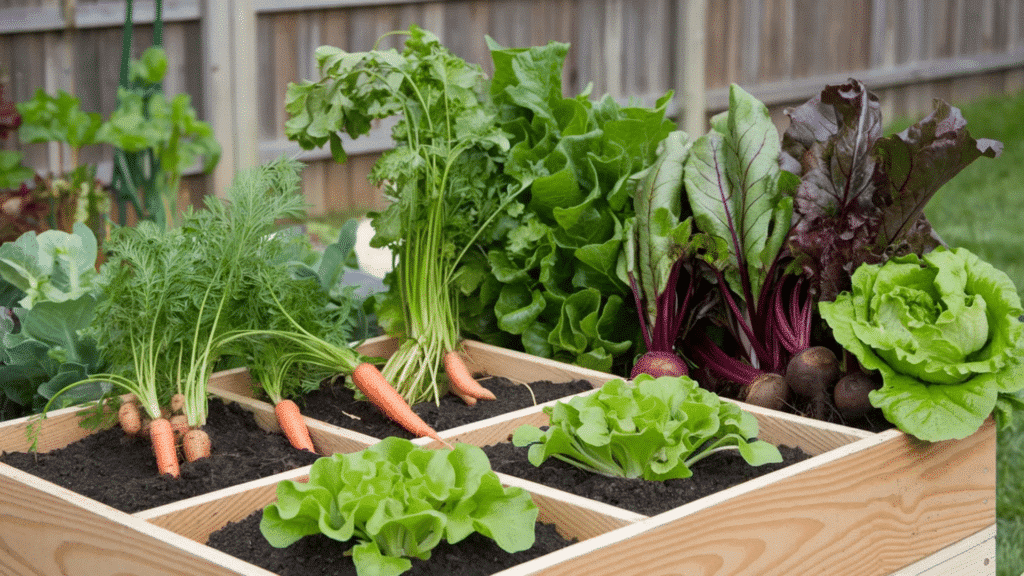
Square-foot gardening (SFG) is the most space-efficient approach to vegetable gardening for home growers. Developed by Mel Bartholomew, SFG divides your bed into one-foot squares and assigns a defined plant count to each.
Sixteen carrots fit in a single square foot. Nine beets. Four lettuces. One tomato. This method removes guesswork and eliminates wasted soil.
- No rows, no empty aisles, every square inch is in production
- Built-in spacing rules make it approachable for first-time gardeners
- Works in any raised bed size, from a compact 2×2 to a full 4×8
- When one square is harvested, you replant it the same day, with no downtime
4. Vertical Wall Planter System
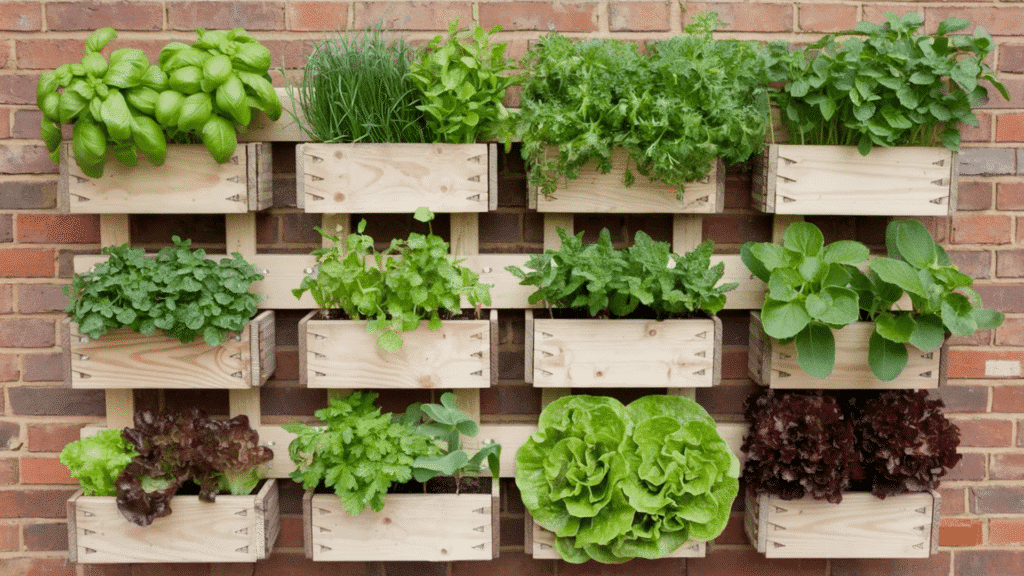
If your floor area is limited, redirect your attention upward. Pocket-style fabric wall planters or wooden pallet frames turn a bare fence or exterior wall into a productive growing surface.
- Mount on a south or west-facing wall for maximum daily sun exposure
- Fabric pocket panels are lightweight, low-cost, and easy to hang
- Run a drip irrigation strip behind the pockets to cut watering time by half
- Top crops for wall planters: basil, cilantro, parsley, mint, leaf lettuce, strawberries
5. Trellis Garden for Climbing Crops
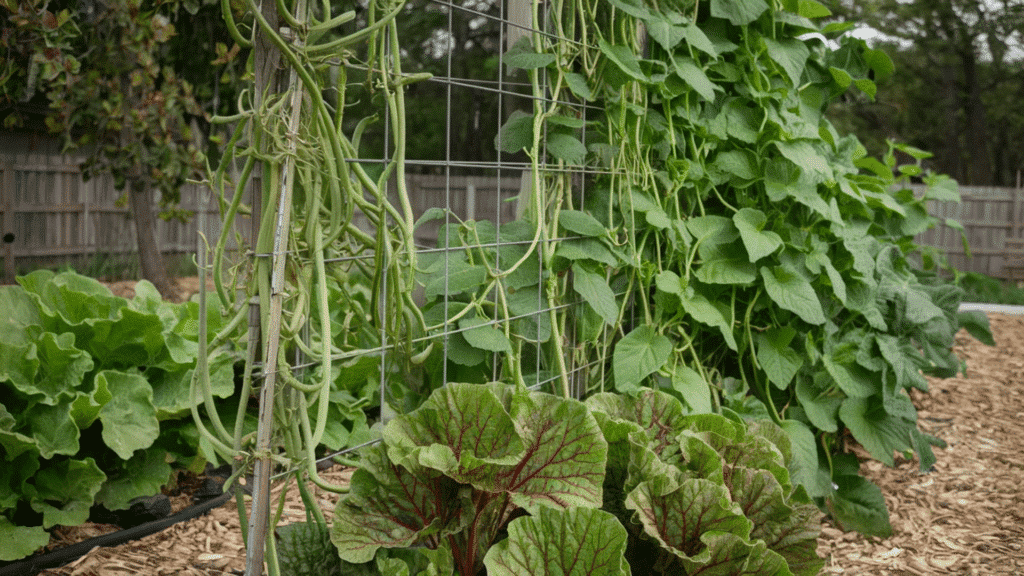
A trellis is one of the highest-return additions you can make to any small vegetable garden layout. Training cucumbers, pole beans, peas, and compact squash varieties to grow vertically frees up ground-level space for additional plantings.
- Cucumbers trained vertically produce straighter fruit and stay freer of fungal issues
- Pole beans yield two to three times more than bush varieties over the course of a season
- Sugar snap peas are one of the most rewarding early-season crops for this setup
- Shade-tolerant greens planted beneath the trellis create an efficient two-crop system
6. Keyhole Garden Design
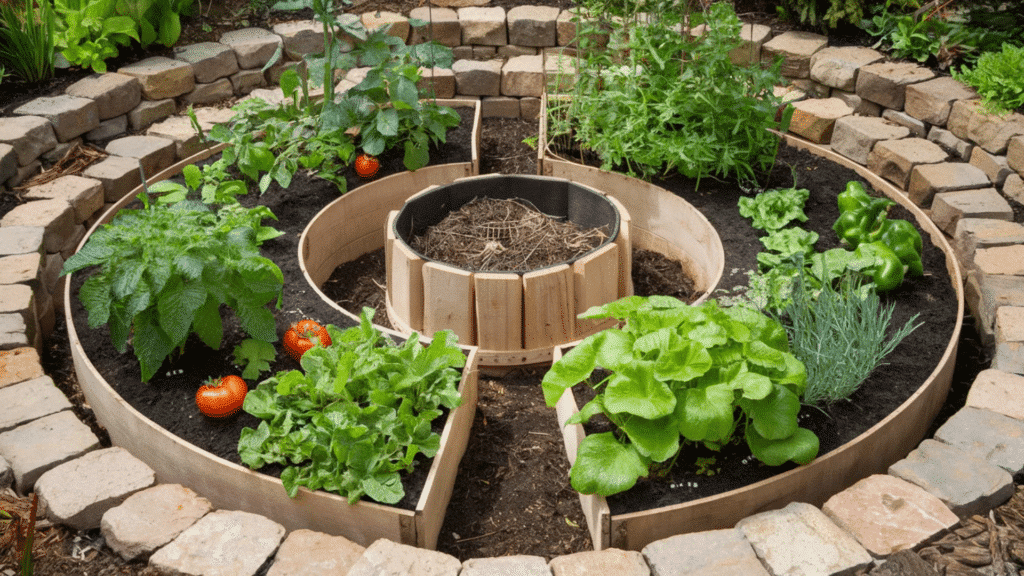
The keyhole garden is one of the most production-efficient options in the small vegetable garden layout category. It’s a circular raised bed, typically four to eight feet across, built around a central compost basket.
- Fits within an 8×8-foot footprint and produces significant yields per square foot
- The integrated compost system reduces fertilizer spending over the long term
- Especially effective in drought-prone states like Texas, Arizona, and New Mexico
- No internal walking aisles, every part of the bed is reachable from the outer edge
7. Window Box Herb and Salad Garden
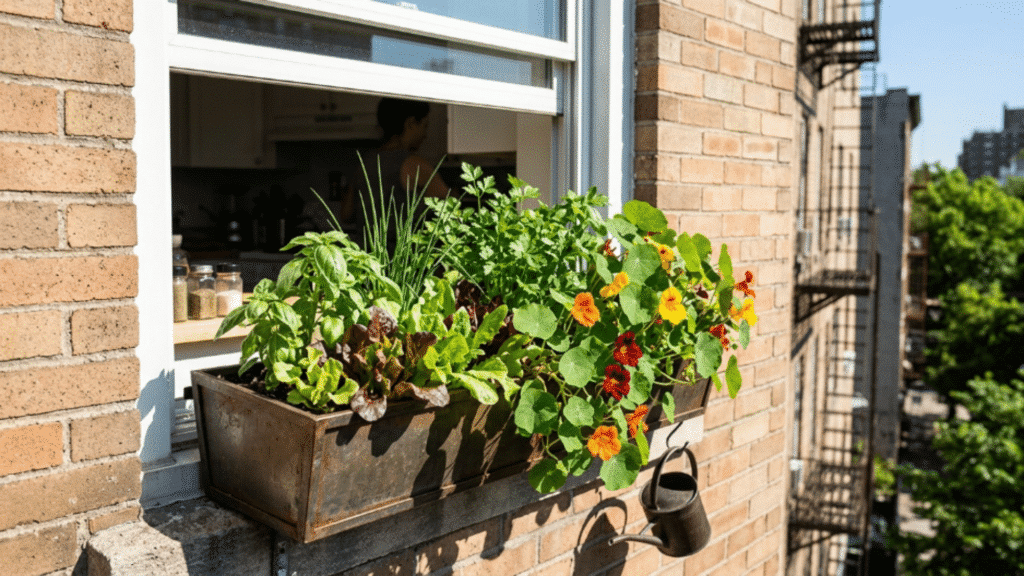
A window box mounted outside a kitchen window is one of the most convenient vegetable garden ideas available to apartment dwellers.
- South or east-facing windows provide the strongest daily light for edible crops
- Use a lightweight potting mix with added perlite to keep the box weight manageable
- Window boxes dry out quickly in summer. Plan on watering daily during hot months
- Nasturtiums planted alongside add color and naturally deter common garden pests
8. Fabric Grow Bag Garden
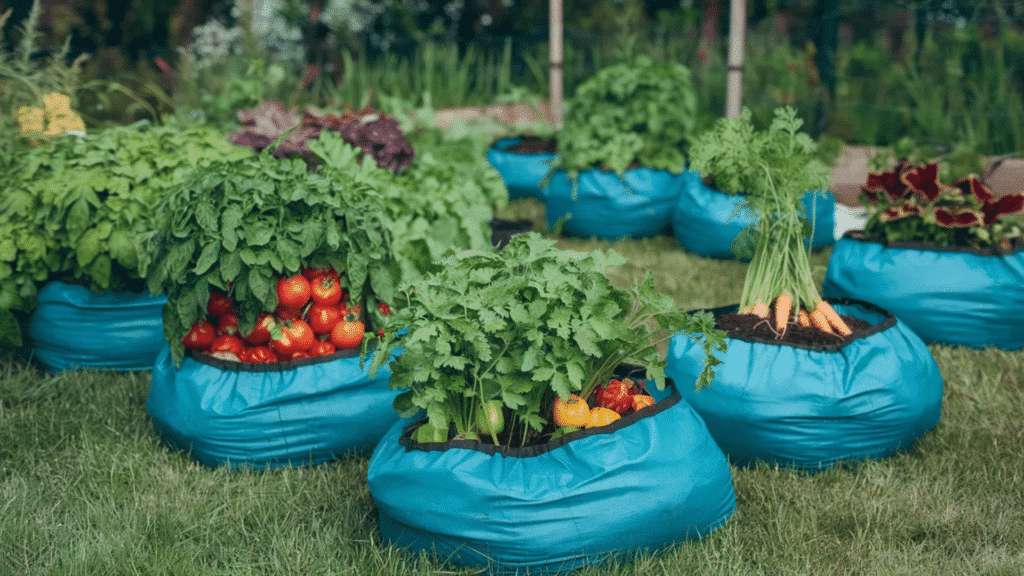
Fabric grow bags are a portable and affordable alternative to ceramic or plastic containers. The breathable material prevents root rot and encourages stronger root development through natural air pruning.
- Air pruning through the fabric produces a denser, more productive root system
- Cost per bag is a fraction of what an equivalent ceramic or plastic pot runs
- Portability lets you reposition plants to follow the sun throughout the season
- Top crops: potatoes, carrots, tomatoes, peppers, radishes
9. A-Frame Garden Structure
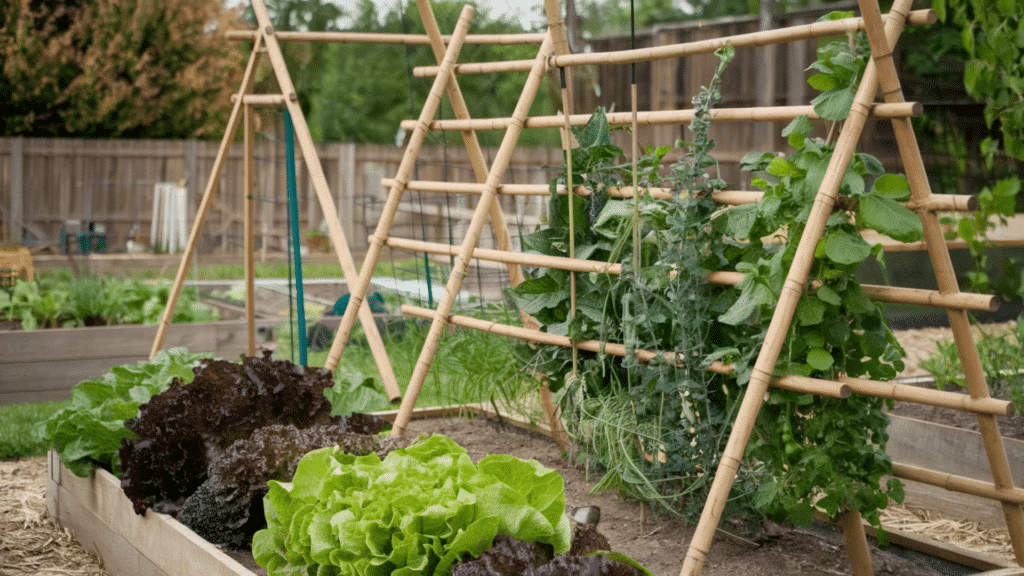
A-frame trellis functions as two gardens in one. Climbing vegetables grow up the angled sides while shade-tolerant crops grow comfortably underneath in the filtered light.
- Build from bamboo poles, wooden dowels, or lightweight metal conduit on a weekend
- The shaded zone beneath is particularly valuable for lettuce during hot US summers
- One structure can support three or four different crops at the same time
- Works equally well in a raised bed or planted directly into the ground
10. Hanging Basket Garden
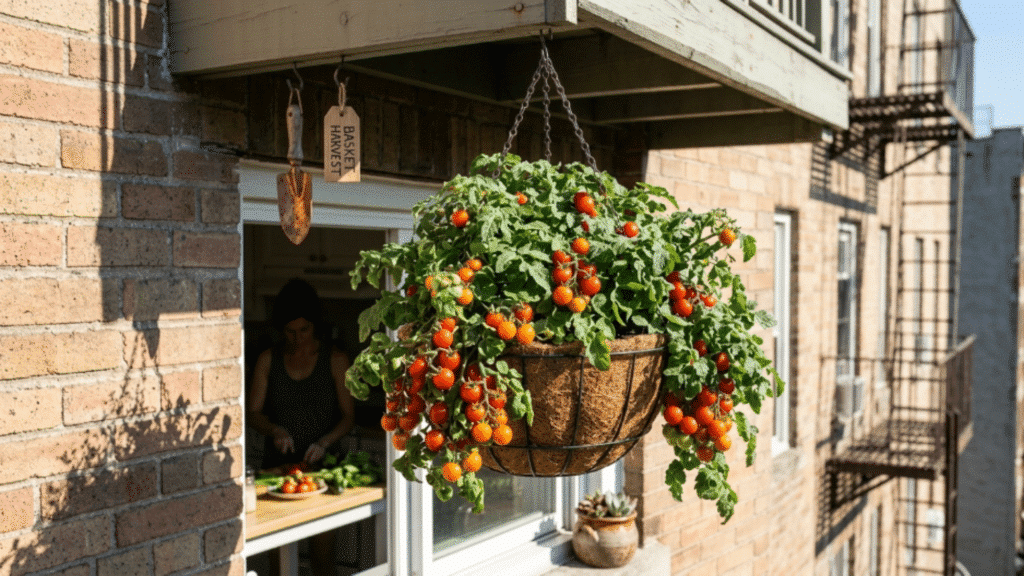
Hanging baskets are far more useful for vegetables than most gardeners realize. Trailing tomato varieties, compact peppers, and herbs like thyme and oregano grow well when suspended from a balcony beam, pergola, or porch ceiling.
- Use a minimum 12-inch basket for fruiting plants; smaller sizes dry out too rapidly
- Select trailing or‘’tumbling’ tomato varieties bred specifically for basket growing
- Coco liner inside wire baskets holds moisture while allowing drainage
- Position for morning sun and partial afternoon protection in hot-climate US states
11. Tiered Raised Bed System
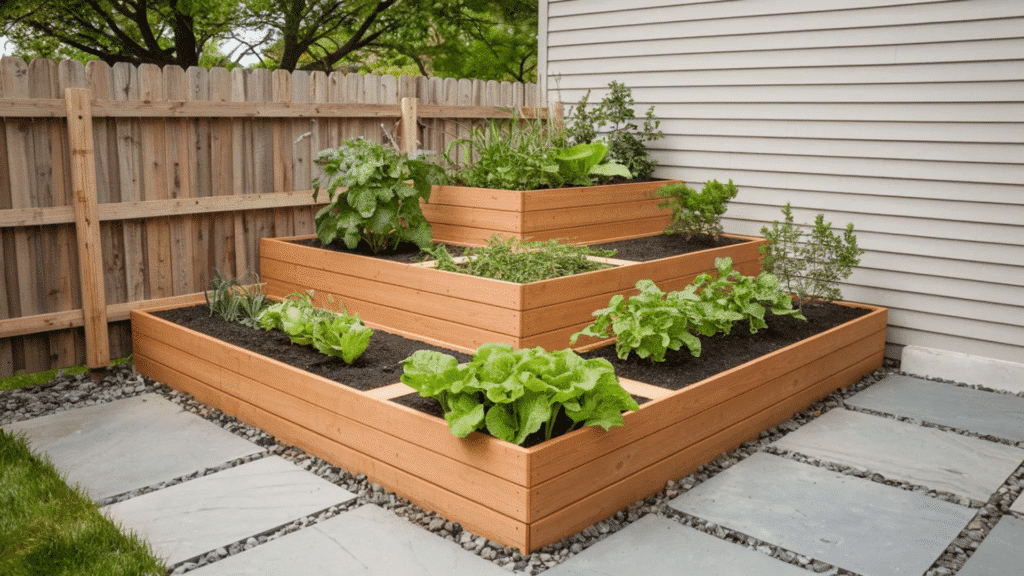
A tiered raised bed stacks two or three levels of growing space vertically, like a stepped garden pyramid. The lower, wider tier is suited to larger crops, such as tomatoes and squash.
- Visually appealing on patios functions as productive garden furniture
- Each tier can hold a different soil depth, suited to the root type grown there
- Water naturally migrates from upper to lower tiers, reducing overall usage
- Pre-built cedar tiered beds are available at most major US garden centers
12. Companion Planting Strategy
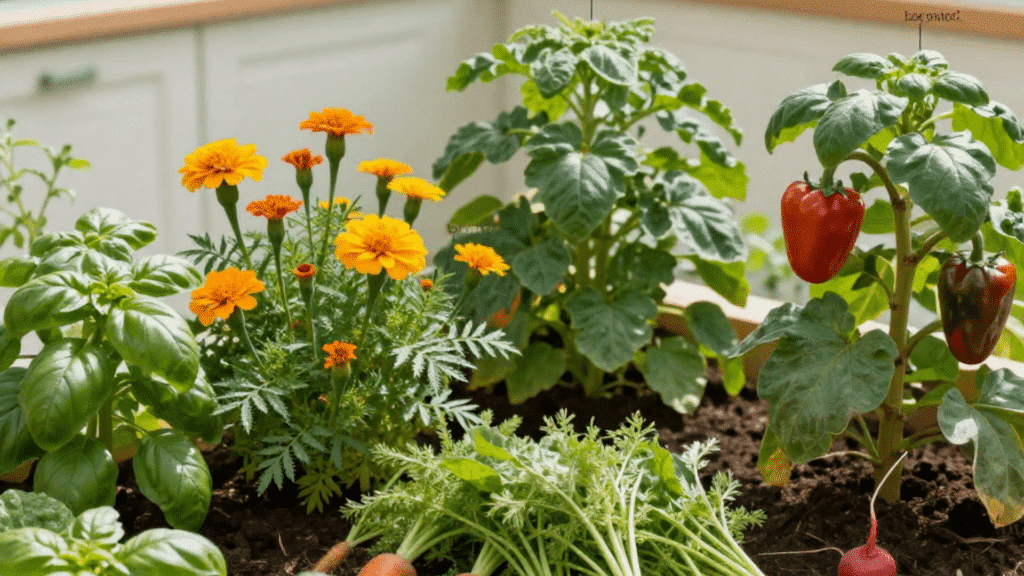
Companion planting means placing two or more vegetables together deliberately because they support each other’s growth.
- Marigolds alongside nightshades suppress whiteflies and soil nematodes
- Fast radishes next to slow carrots: one feeds your table while the other grows
- Basil and peppers share similar sun and water needs, a natural pairing
- Avoid placing fennel near most other crops it produces chemicals that inhibit nearby plants
13. Succession Planting for Continuous Harvests
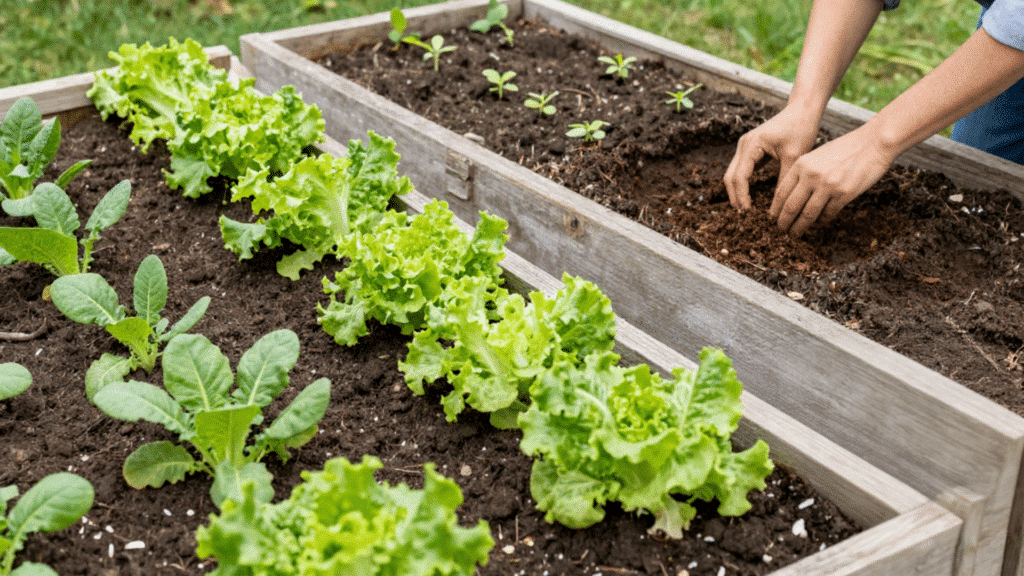
Succession planting means spacing your sowing dates two to three weeks apart so fresh crops are always coming in as older ones finish.
- Start new salad green sowings every two weeks from March through September
- Fast-maturing varieties, some lettuces are ready in 30 days, keep the cycle moving
- Add a thin compost layer and replant any cleared square or container the same day
- A basic phone note or planting journal is enough to keep the schedule on track
14. Potager-Style Kitchen Garden
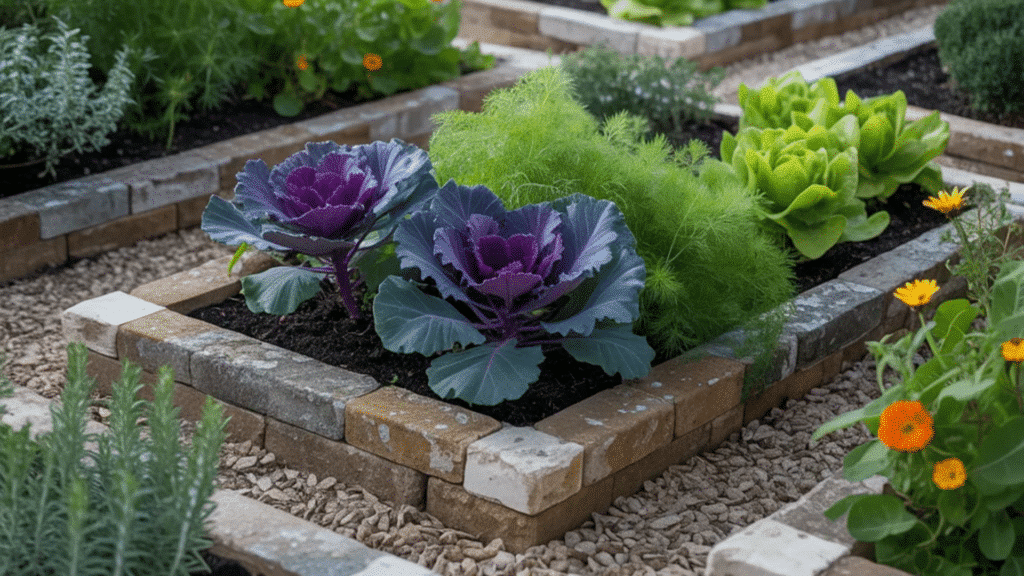
A potager garden mixes vegetables, herbs, and ornamental plants in a layout that is both productive and visually pleasing. The style originated in France and has become popular across the US as homeowners realize edible and ornamental goals don’t have to be separate.
- Edible flowers like nasturtiums and calendula attract pollinators and add seasonal color
- Contrasting leaf textures of kale, fennel, and lettuce create striking visual combinations
- Geometric beds with defined stone or brick borders give the space a tidy, intentional structure
- Mix perennial herbs like rosemary and thyme with seasonal vegetables for year-round interest
15. The No-Dig Lasagna Garden Method
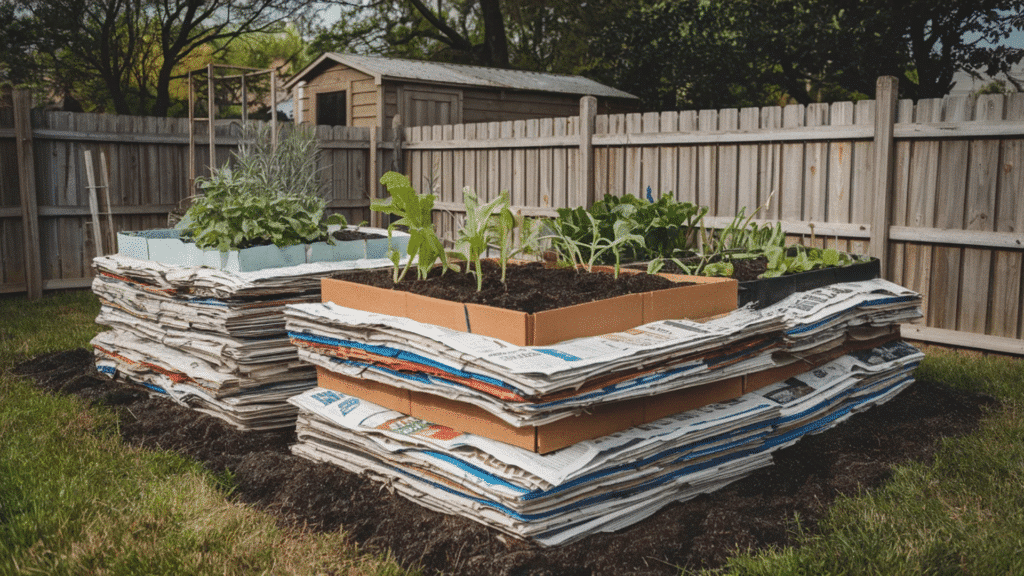
The no-dig method suits renters, beginners, and anyone who doesn’t want to invest time in tilling or soil removal.
- No tilling, no renting equipment, cardboard handles the heavy work
- Leaves no permanent mark on rental properties, an important US renter consideration
- Organic layers break down continuously, feeding the soil long after planting starts
- Best built in fall for spring planting,g decomposition needs time to occur fully.
Best Vegetables to Grow When Space is Tight
Not every crop belongs in a compact garden layout. Prioritize plants with a strong yield-to-space ratio. The table below covers the most reliable performers across the majority of the US growing zones.
Vegetable | Space Needed | Sun Required | Difficulty Level |
Tomatoes (bush or patio) | 5-gal container | 6–8 hours | Easy |
Lettuce & Salad Mix | 6-inch depth | 3–5 hours | Very Easy |
Radishes | 1 sq ft / 16 | 4–6 hours | Very Easy |
Bush Beans | 4-inch spacing | 6+ hours | Easy |
Basil & Cilantro | Window box | 4–6 hours | Very Easy |
Bell Peppers | 3-gal container | 6–8 hours | Easy |
Kale | 8-inch spacing | 4–6 hours | Easy |
Cucumbers (on trellis) | Vertical space | 6–8 hours | Moderate |
Spinach | 3-inch spacing | 3–5 hours | Very Easy |
Carrots | 12-inch depth | 5–7 hours | Easy |
Avoid large sprawling crops, pumpkins, full-size watermelons, and standard corn varieties in compact spaces unless you can train them vertically. Their ground coverage far exceeds what a small garden can afford.
Mistakes That Quietly Ruin a Small Garden
Small gardens amplify errors faster than large ones do. Here are the five most common missteps and the straightforward fix for each.
- Planting Too Many Crops at Once: Starting with eight or ten different vegetables creates competition for light, water, and nutrients across the board. Pick three to five vegetables you genuinely eat regularly. Get those right in your first season, then expand from there.
- Using an Undersized Container: Most vegetables need a minimum of 8 to 10 gallons of container volume. Smaller pots restrict root expansion, dry out too fast, and limit yield. If a pot feels small, it probably is.
- Ignoring Drainage: Waterlogged roots fail faster than dry ones. Every container in your garden must have drainage holes at the base; if yours doesn’t, drill them before you fill it with soil.
- Overestimating Available Sunlight: Many gardeners assume their space receives full sun when it actually gets only 4 to 5 hours. Download a free sun-tracking app and monitor your space for two to three days before you commit to a planting plan.
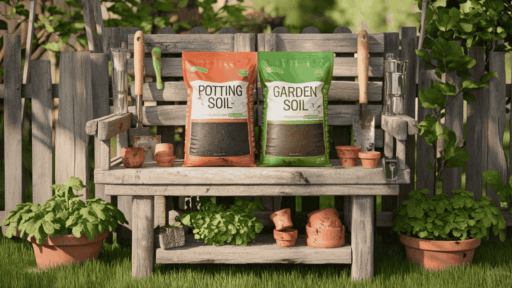
- Using Garden Soil in Pots: Garden soil compacts inside containers and chokes root systems. Always use a high-quality potting mix for any above-ground container, and add perlite if you need extra drainage in your specific climate.
Conclusion
Space is rarely the real barrier; planning is. The right garden layout turns even the narrowest balcony or the sunniest corner of a patio into a consistent production.
Pick one idea from this list that fits your actual situation.
A single raised bed, a row of containers, or a window box of herbs is a real garden, and it pays off in fresh food, lower grocery costs, and the quiet satisfaction of growing something yourself.
With these vegetable garden ideas, you can make the perfect decision. So set the plan, grab the seeds, and get started. Your garden is waiting.

With a Master’s in Landscape Architecture from the University of Virginia, Sophia Stephenson has dedicated the last 20 years to creating and maintaining vibrant outdoor spaces. Her professional journey started in landscape design, where she gained a reputation for innovative and sustainable approaches. Sophia became a part of our editorial team as a freelancer in 2019, offering a fresh perspective on outdoor living. Since 2020, she has been the chief for our outdoor design content, blending aesthetic appeal with environmental stewardship. In her leisure time, Sophia is a keen photographer, capturing the beauty of natural landscapes, a hobby that complements her professional expertise.