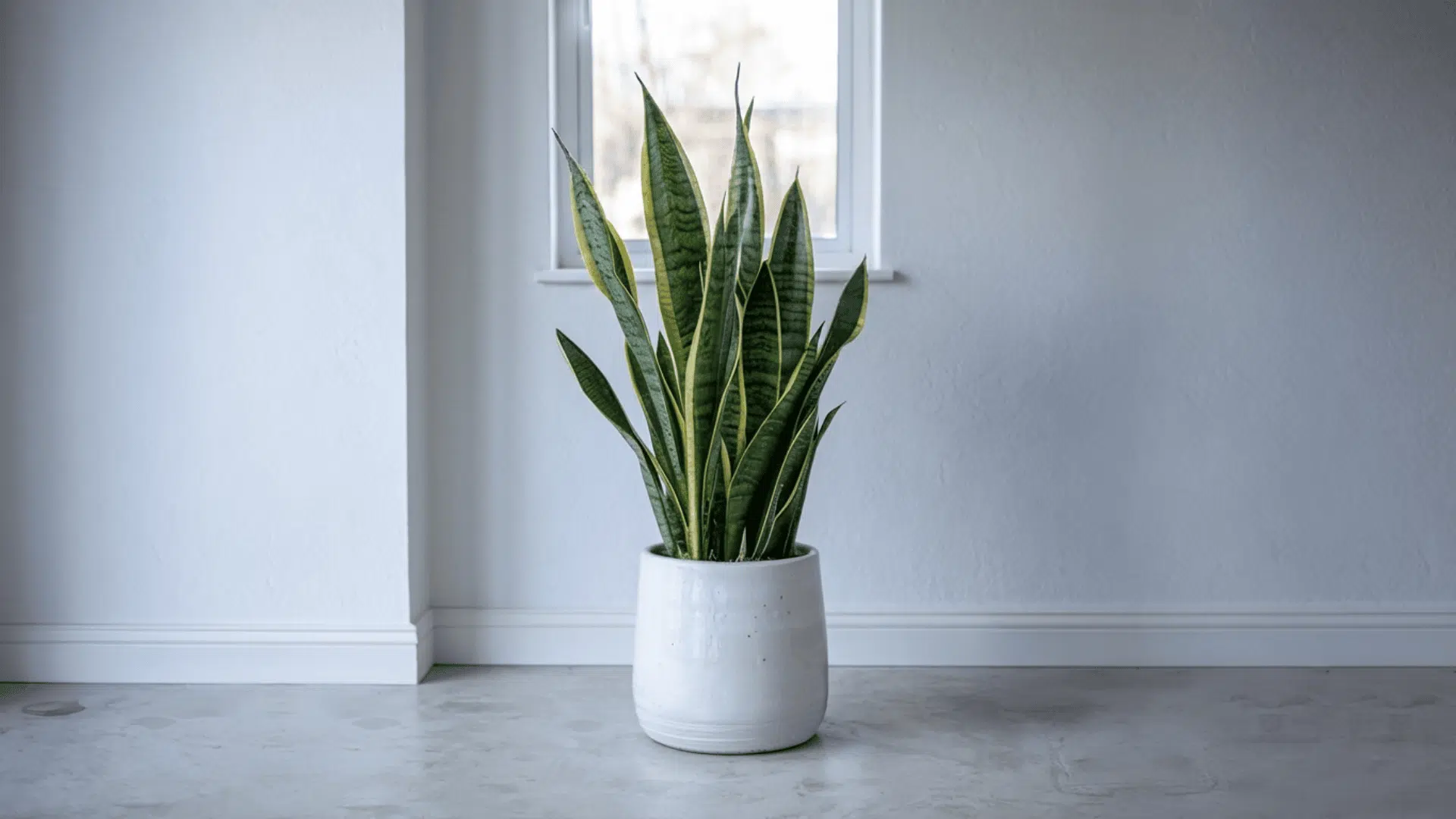

Caring for snake plants is simpler than most people think, but getting it right still matters. These plants are tough and low-maintenance, yet many people still struggle to keep them healthy.
Knowing how to care for a snake plant properly, from watering schedules to light conditions, can make all the difference between a plant that survives and one that actually grows well.
If you’re looking for a complete guide on snake plant care, covering soil, placement, temperature, and more, this is it. Let’s get into it.
Snake Plant 101: Everything You Need to Know
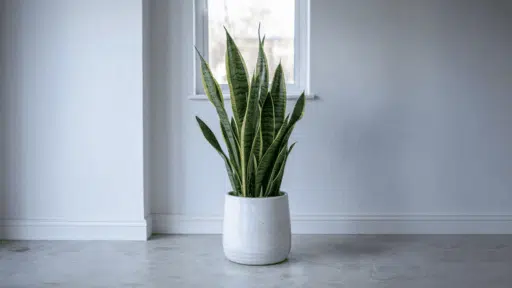
Snake plants (Dracaena trifasciata), also known as Sansevieria or mother-in-law’s tongue, are hardy indoor plants that can handle a fair amount of neglect.
They grow upright, have stiff sword-shaped leaves, and come in several varieties with different leaf patterns and colors.
One thing that makes snake plant indoor care so beginner-friendly is how forgiving these plants are. They can handle low light, irregular watering, and less-than-perfect conditions better than most houseplants.
Health Benefits of Snake Plants
Snake plants do more than just sit pretty on a shelf. Here’s what they actually bring to the table:
- Air Purification: They absorb harmful toxins like formaldehyde, benzene, and xylene, which are commonly found in household products, furniture, and paint.
- Nighttime Oxygen Release: Unlike most plants, snake plants release oxygen at night, making them a great addition to bedrooms.
- Stress Reduction: Being around snake plants can have a calming effect on the mind and help lower everyday stress levels.
- Better Focus and Productivity: Studies show that having plants in living or working spaces can boost concentration and overall productivity.
How to Care for a Snake Plant Indoors?
Proper snake plant indoor care mainly depends on getting four things right: light, watering habits, soil, and placement. These basic steps help the plant grow steadily and prevent the most common problems.
1. Fulfilling Light Requirements
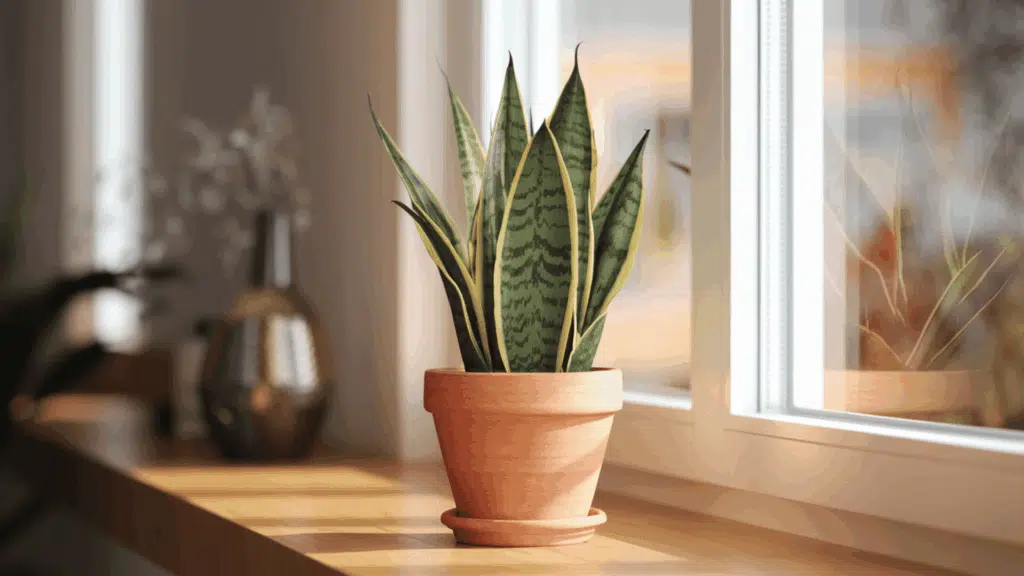
Snake plants are pretty flexible when it comes to light. They can survive in low light, but they grow best in bright, indirect sunlight.
A spot near a window that gets filtered light for a few hours a day is ideal.
Direct harsh sunlight for long periods can scorch the leaves. On the other hand, very low light levels will significantly slow growth, so a balance is the key here.
2. Regular Watering
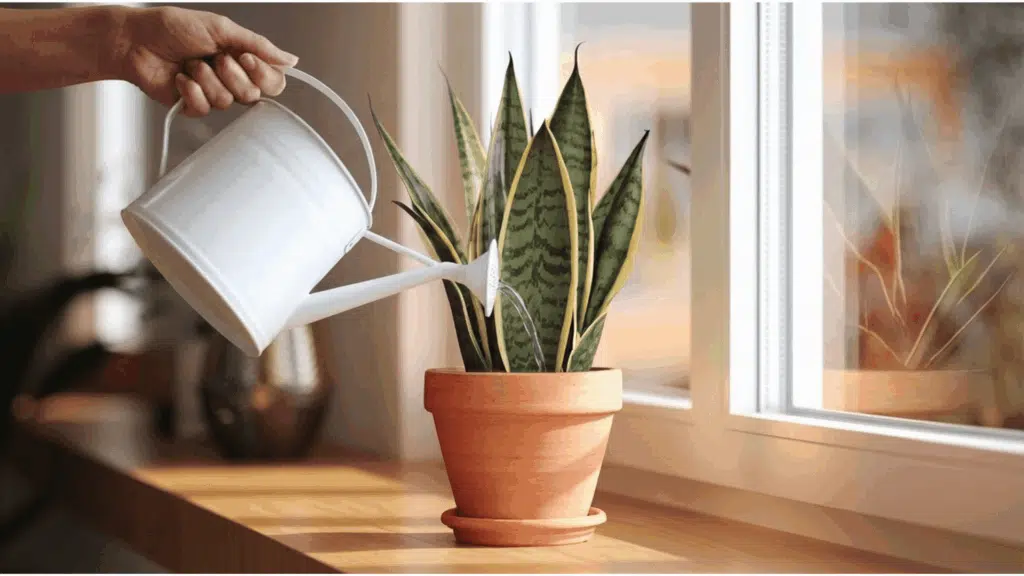
This is where most people go wrong. Overwatering is the number one cause of snake plant problems, including root rot and yellowing leaves.
Water your snake plant only when the top 2 inches of soil are completely dry. In warmer months, that usually means watering once every 2 to 3 weeks.
In winter, cut back even further: once a month is often enough. Always make sure excess water drains out of the pot fully after each watering.
3. Using Appropriate Soil
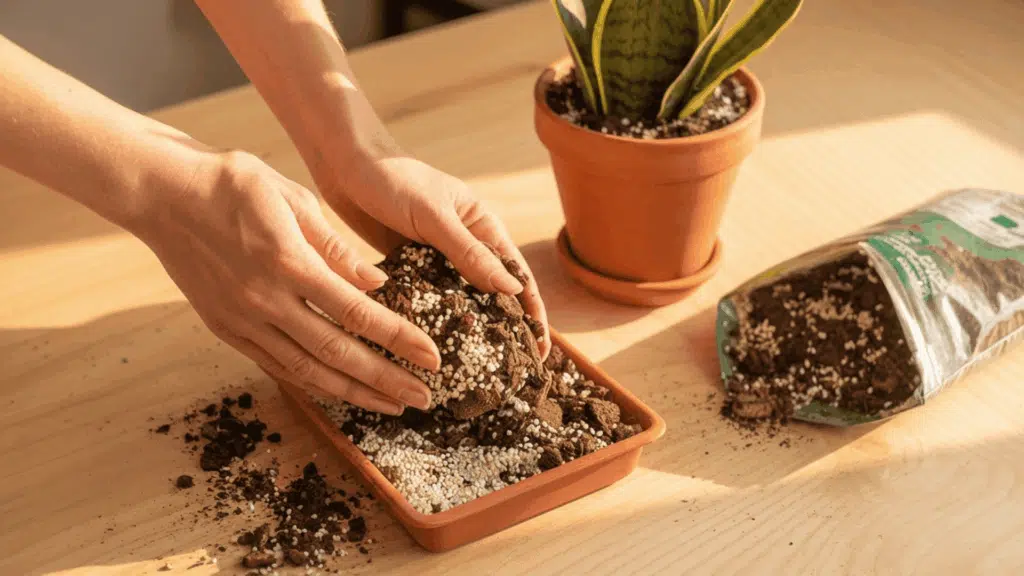
Snake plants need soil that drains well and doesn’t hold too much moisture. A standard cactus or succulent mix works really well.
You can also mix regular potting soil with perlite or coarse sand to improve drainage. Heavy, dense soil that retains water for too long can lead to root rot. So avoid regular garden soil on its own.
4. Choosing the Right Pot for Drainage
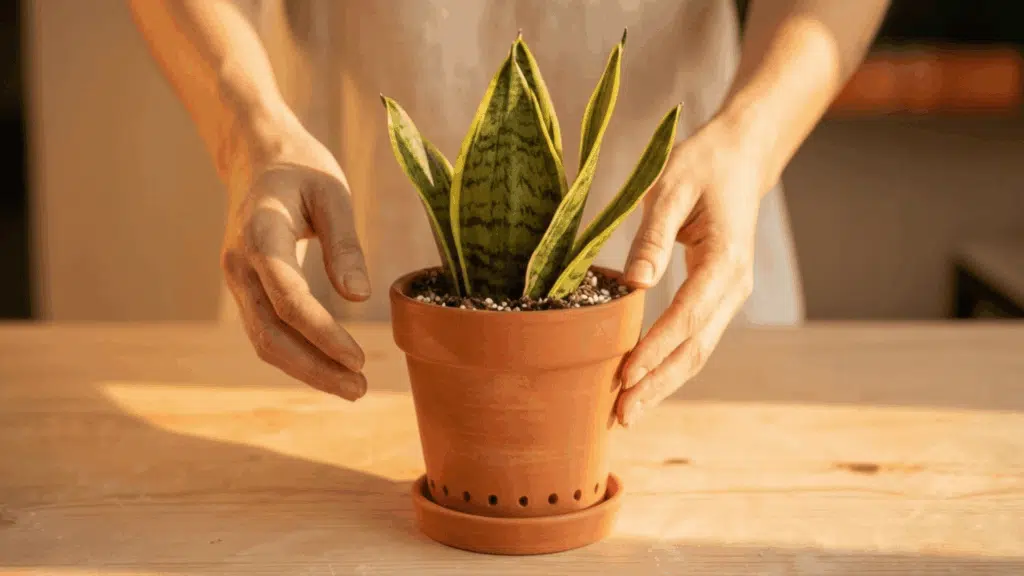
The pot you use matters just as much as the soil. Always go for a pot with drainage holes at the bottom.
Terracotta pots are a great option because they allow moisture to evaporate through the walls, keeping the soil from staying wet for too long.
Avoid pots that are too large for the plant. A pot that’s too big holds more soil and moisture than the roots need, increasing the risk of rot.
5. Maintaining Ideal Temperature and Indoor Conditions

Snake plants do well in typical indoor temperatures between 60°F and 80°F (15°C to 27°C). They don’t handle frost or freezing temperatures well, so keep them away from cold drafts and windows during winter.
Humidity is not a major concern for indoor snake plant care. They adapt well to the typical humidity levels in most homes.
Just avoid placing them near air conditioning vents or heating units, as extreme dry air can affect the leaves over time.
Additional Care Practices for Healthy Snake Plants
Beyond the basics, a few extra care practices help keep your snake plant in good shape over time. When it comes to fertilizing, snake plants don’t need much.
| Care Practice | What to Do | When to Do It |
|---|---|---|
| Fertilizing | Apply a balanced liquid fertilizer | Once a month during spring and summer only |
| Skip Fertilizing | No feeding needed | Fall and winter, as growth slows down |
| Repotting | Move up one pot size and refresh the soil | Every 2 to 3 years or when the plant outgrows its pot |
| Propagating | Divide at the root during repotting, or cut a healthy leaf into sections and place in water or soil | During repotting or anytime with a healthy leaf |
| New Growth | Be patient, new growth appears on its own | Within a few weeks after propagating |
Maintenance Tips for Your Snake Plants
Simple routine care helps prevent plant stress and maintain steady growth. These quick habits make a big difference over time.
- Remove damaged or yellow leaves: Cut them off at the base using clean scissors or pruning shears. This keeps the plant tidy and stops disease from spreading to healthy leaves.
- Keep leaves clean to reduce dust buildup: Wipe the leaves gently with a damp cloth every few weeks. Dust buildup can block light absorption and slow growth.
- Check soil moisture before watering: Stick your finger about 2 inches into the soil. If it still feels damp, wait a few more days. This one habit prevents most overwatering issues.
- Inspect for common indoor pests: Spider mites, mealybugs, and fungus gnats are the most common culprits. Check the leaves and soil regularly and treat early if you spot anything.
- Adjust watering during winter months: Growth slows in cooler months, so the plant needs far less water. Reduce watering frequency to avoid waterlogged soil and root rot.
Wrapping It Up
Taking care of a snake plant does not have to be complicated.
Get the watering right, give it decent light, use well-draining soil, and your plant will reward you with steady growth and cleaner air. That is really the heart of snake plant care.
Learning how to care for a snake plant comes down to a few consistent habits: checking soil moisture, adjusting watering seasonally, and giving it the right light.
Snake plant indoor care is low effort with high reward. Start small, stay consistent, and watch the difference it makes.

With a Master’s in Landscape Architecture from the University of Virginia, Sophia Stephenson has dedicated the last 20 years to creating and maintaining vibrant outdoor spaces. Her professional journey started in landscape design, where she gained a reputation for innovative and sustainable approaches. Sophia became a part of our editorial team as a freelancer in 2019, offering a fresh perspective on outdoor living. Since 2020, she has been the chief for our outdoor design content, blending aesthetic appeal with environmental stewardship. In her leisure time, Sophia is a keen photographer, capturing the beauty of natural landscapes, a hobby that complements her professional expertise.