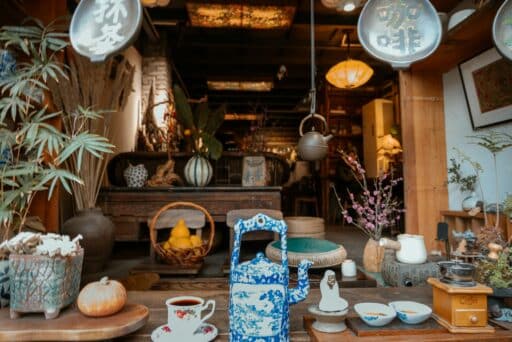
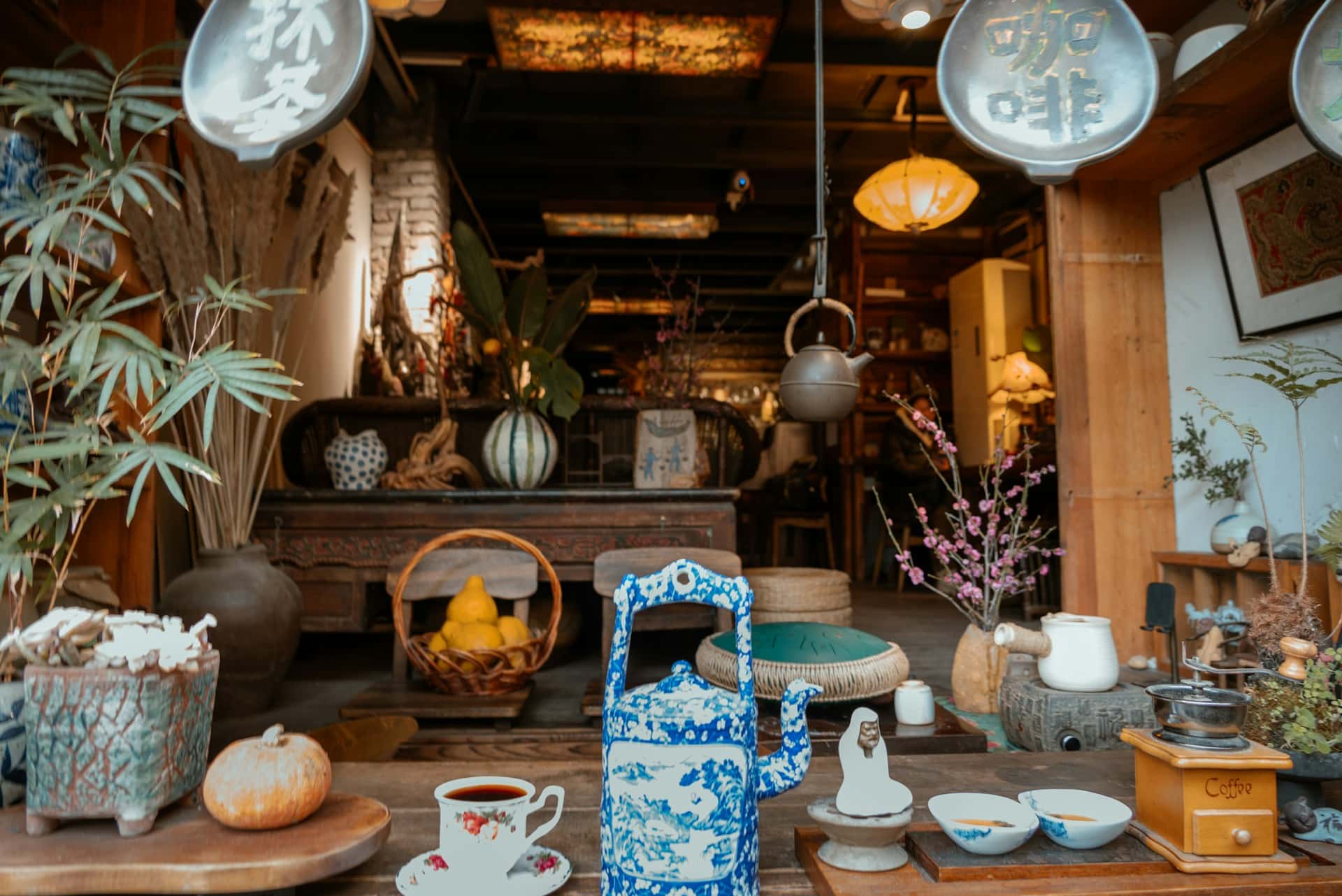

A Chinese tea room is a peaceful retreat that embraces simplicity, elegance, and harmony. Rooted in the philosophy of slow living, it offers a space to relax, share tea, and return to inner tranquility.
Whether you have a dedicated tea room in a spacious villa or a quiet corner in a cozy apartment, creating an elegant Chinese tea room begins with a few essential principles. By integrating natural materials, thoughtful layouts, tea ceremony aesthetics, and refined furnishings, the space balances traditional culture with modern practicality. Combining the characteristics of Chinese tea rooms, tea table layout logic, tea set selection skills, soft furnishing design and practical pitfalls to avoid, this guide will walk you through creating a timeless oriental tea space with both ceremonial charm and everyday warmth.
1. Four Aesthetic Characteristics of Chinese Tea Rooms
All designs and layouts of a Chinese tea room revolve around traditional tea ceremony culture and oriental aesthetics—this is what sets it apart from ordinary casual tea areas and the fundamental logic for creating an elegant space.
Hierarchical Etiquette, Clear Order
Chinese culture favors symmetry and respect for hierarchy. Seat positions around tea table set the rule of brewing in a way. Host, guest and associating guest are seated at respective, proper, strict and solemn positions. The layout is neat and symmetrical, making hospitality solemn and proper, embodying the etiquette of Chinese hospitality.
Substantial and Empty, Artistic Simplicity
Following the oriental wisdom of “less is more”, avoid cluttering the furniture. As the central element, the tea table should retain negative space. The tabletop should be sparsely decorated and tidy, and the area around the tea table should not be crowded with furniture. This facilitates easy tea preparation and movement, creating a relaxed and elegant atmosphere.
Natural and Rustic, Harmony with Nature
It favors natural materials such as solid wood, bamboo, stone, linen and ceramics. Its warmth, texture and purity correspond with the concept of the tea ceremony that emphasizes the sense of calm, simplicity and serenity between people, space, and nature.
Practical Elegance, Functional Ritual
Aesthetics never separate from practicality. All tea sets and decorations are arranged to follow the tea-making process—from fetching utensils and warming cups to brewing and storing, the entire process was smooth. It balances ceremonial charm with everyday convenience.
2. Choosing the Right Location
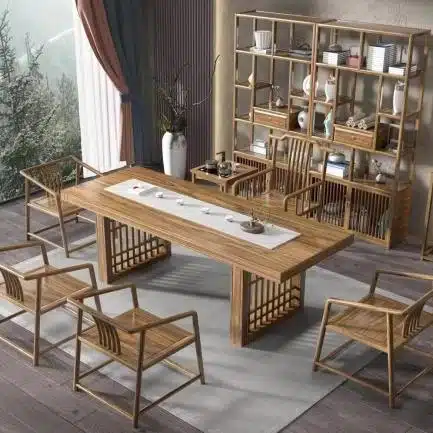
Tranquility is the primary principle of a tea room. A tea room does not have to be a dedicated room; it is a place away from noise and disturbance, with natural light, that can create a tranquil atmosphere and make tea drinking a transcendent enjoyment.
The best places for a home tea room are varied: a cozy bay window, a balcony outside surrounded by plants, a quiet study, a spare bedroom, or an uncluttered corner of the living room. Even a small tatami platform can be fine. Of course, the best part of any tea room is the natural light. The soft light brings out the soft textures of polished porcelain and Yixing clay teapots and cups, makes the tea’s transparent color natural again, and makes the space feel warm and cleaned.
Selecting and Arranging the Tea Table
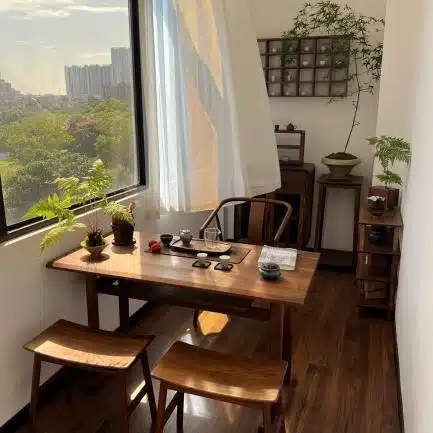
The tea table is the absolute center of a Chinese tea room—both a practical surface for tea preparation and hospitality, and a reflection of the space’s style and etiquette. In traditional Chinese culture, the tea table differs from a dining table, reserved exclusively for tea tasting, communication and calm reflection, carrying profound cultural meaning. Its material, size and layout directly shape the tea room’s overall ambiance.
Tea Table Materials and Styles
Choose natural materials: solid wood, old elm, walnut, bamboo, and mahogany finishes are all excellent choices. They have a pleasant texture, are heat-resistant, and durable. Use soft tones, such as natural wood, tan, and dark brown—these colors are gentle, understated, and versatile, complementing the tranquil and relaxing atmosphere of a tea room.
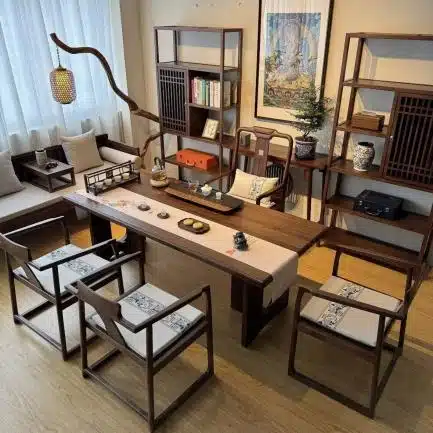
Three popular styles:
Kung Fu Tea Table: Highly practical, with built-in drainage, water storage trays, dedicated tea set storage and display areas. Perfect for traditional Kung Fu tea preparation, balancing ceremony and tidiness.
Minimalist Zen Tea Table: Clean lines with no elaborate carvings. Low-profile and minimalist, ideal for modern small apartments and contemporary home decor, blending tradition with modernity.
Bamboo Tea Table: Fresh and natural, with a gentle rustic charm that easily creates a relaxed, meditative tea atmosphere.
- Size Matching Principles
Space dictates tea table size to avoid imbalance:
• Small tea rooms (5–10㎡): 1.2m–1.5m compact tables, unobtrusive yet functional for 1–3 people.
• Standard independent tea rooms (10–20㎡): 1.6m–2m standard solid wood tables, seating 4–6 guests with an open, dignified feel.
• Large formal tea rooms: 2m+ extended tables, suitable for formal receptions.
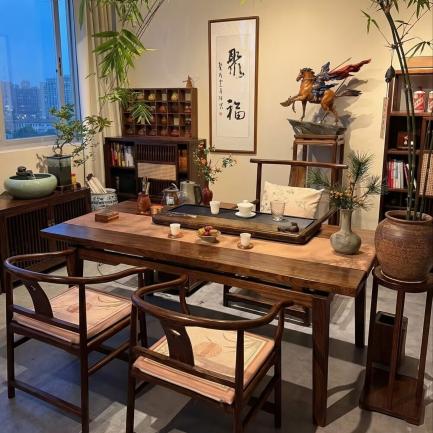
- Traditional Chinese Tea Table Layout Rules
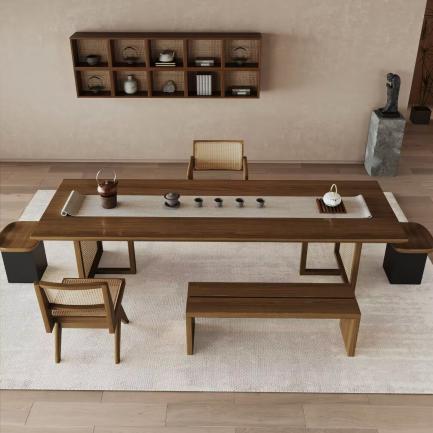
Follow core principles: central placement, solid backing, clear hierarchy, functional zoning. Position the table at the visual center, against a solid wall and facing the door. This follows the traditional concept of “reliable backing” for stability, while giving the host a clear view of the entire space.
Seating adheres to Chinese etiquette:
• Host’s Brewing Seat: Centered against the back wall, with a sturdy host chair—exclusive for tea preparation, with a commanding view.
• Honored Guest Seat: To the host’s left (a sign of respect in Chinese tradition), reserved for elders and distinguished guests.
• Accompanying Guest Seats: To the host’s right and along the table sides, symmetrically arranged for balanced hierarchy and order.
Surrounding layout: Set a tea cabinet or display shelf along the wall, behind the table, close enough for the host to reach quickly for re-stocking tea leaves and tea accessories. Leave some empty room on each side, away from tall furniture, keep movement smooth and include enough negative space. Or place small potted plants or vases for enhanced flow.
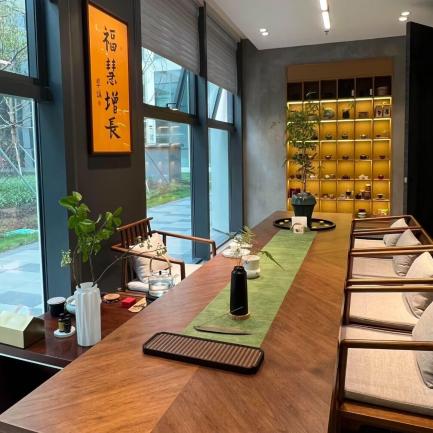
4. Selecting and Arranging Tea Sets
Tea sets are the soul of the tea ceremony—no tea room is complete without them. Traditional Chinese tea sets are not just brewing tools but carriers of ritual. Different materials suit different teas, and proper arrangement balances beauty with workflow efficiency.
Essential Tea Set Collection
A complete Chinese tea setup includes:
Main brewer: Covered bowl or Yixing teapot
• Fairness pitcher
• Tea strainer
• Teacups
• Tea tray
• Six tea ceremony tools
• Tea towel
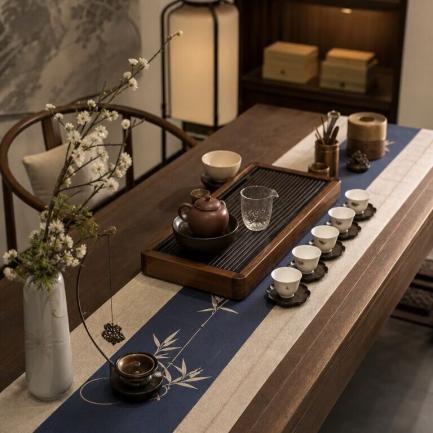
Compact yet comprehensive, meeting all tea tasting scenarios.
- Common Tea Set Materials & Suitable Teas
- Porcelain Tea Sets: Refined and smooth, non-absorbent, easy to clean, and showcase tea color vividly. Best for green tea, white tea and scented tea, highlighting fresh flavors.
- Yixing Zisha Sets: Iconic in Chinese tea culture. Porous clay absorbs tea aroma over time, developing a smooth patina. Ideal for oolong, pu-erh and black tea, enhancing rich flavors with repeated use.
- Earthenware Tea Sets: Rustic texture, excellent heat retention, artisanal charm. Versatile for all teas, fostering a relaxed, natural vibe.
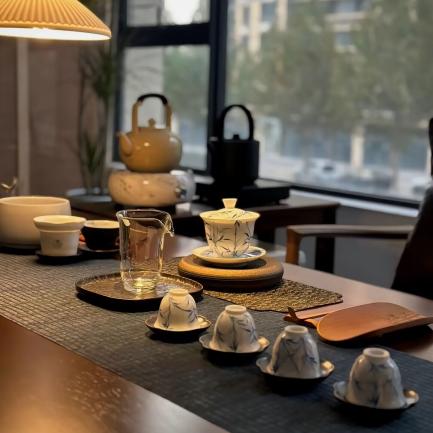
- Standard Tea Set Arrangement
• Tea Tray: Centered on the table as the core brewing area.
• Main Brewer: Near the host’s seat, easy to reach without stretching.
• Fairness Pitcher & Strainer: To the right of the brewer (right-handed workflow), streamlining pouring, filtering and serving.
• Teacups: Symmetrically arranged on both sides of the tray, evenly spaced for neatness.
• Tea Tools: Stored in a tool holder on the right; tea towel neatly placed for quick access and tidiness.
Keep only essential utensils on the surface; store spares and tea leaves in cabinets. Avoid clutter, ensuring harmony between utensils and table with consistent tones.
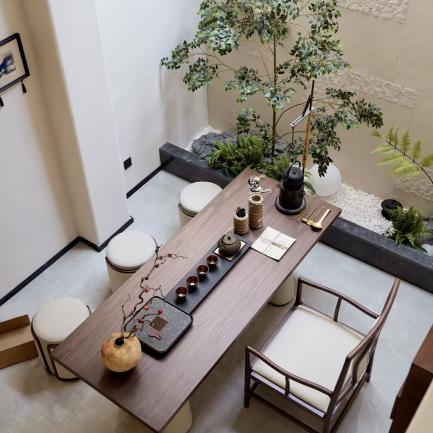
5. Color Palette & Soft Furnishings
Calm Natural Color Scheme
Chinese tea rooms avoid bright artificial hues, favoring soothing earth tones: walnut brown, bamboo beige, charcoal gray, warm white, soft gray and pale green. Harmonious and gentle, they evoke calmness and align with Chinese aesthetics of restraint and balance.
Refined Soft Furnishings & Cultural Accents
Less is more—avoid over-decoration. Add cultural touches to elevate ambiance:
• Wall decor: Ink paintings or calligraphy scrolls for scholarly elegance.
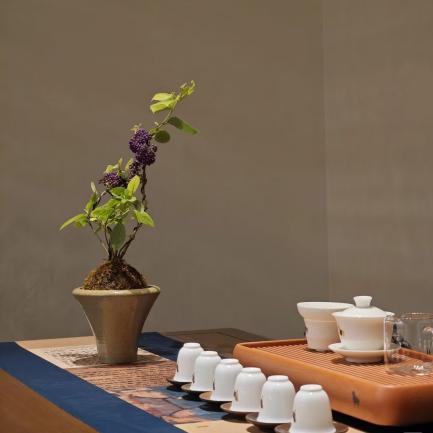
• Table accents: Ceramic vases, bamboo, calamus, small plants, tea pets, stone ornaments or vintage incense burners.
• Table runner: Linen runners in muted tones soften the wood’s solidity, adding warmth and refinement.
Appropriately incorporating natural elements, such as natural light, greenery, and decorative items like rocks and flowing water, enhances the natural charm of the space, making the tea-tasting process closer to nature.
- Comfortable Seating & Gentle Lighting
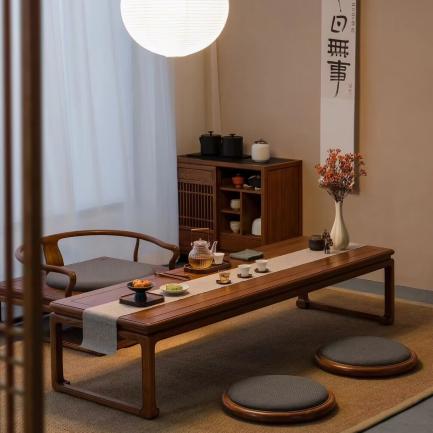
Choose low wooden chairs, rattan seats, benches or tatami mats—natural, comfortable and inviting. Use warm, soft lighting to create a calming and relaxing atmosphere. Focus gentle light on the tea table, allowing subtle shadows to enhance serenity and highlight the beauty of the tea set and tea textures.
6. Common Mistakes to Avoid
To create an elegant tea room, avoid the following:
- Over-decoration: Too many ornaments, plants or artworks create clutter, disrupting negative space and calmness.
- Cheap Materials: Plastic or synthetic finishes clash with natural textures and traditional aesthetics, lowering the overall quality.
- Poor Lighting & Proportion: Harsh white light ruins ambiance; mismatched table-to-space ratios cause cramped or empty feelings.
- Messy Arrangement: Randomly placed tea sets and clutter break the neatness of the tea setup, losing the etiquette of Chinese tea rooms.
- Integrating the Tea Room into Daily Life
A tea room’s ultimate purpose is not just decoration but a healing space for daily life. Its beauty shines through regular use. Start the day with calm tea brewing, meditate or read in quiet moments, unwind alone at night, or gather friends for tea and conversation. Disconnect from digital noise and embrace life’s simplicity through slow tea rituals.
Simple daily maintenance: Wipe spills and reset tea sets after use; ventilate regularly to protect wooden furniture. This preserves the tea room’s elegance, making it grow more charming with time.
An authentic Chinese tea house is a reflection of Eastern aesthetics. It does not involve intricate craftsmanship or costly furniture, only an ordered spatial arrangement, natural materials, and a comfortable tranquil atmosphere. A simple tea table, an elegant tea set, a soft and understated color scheme, and a touch of vibrant greenery are all it takes to capture the essence of the Chinese tea ceremony.
A tea room can be large or small. Whether it is a private retreat, a balcony corner, a living room bay window, or a peaceful courtyard space, it can be thoughtfully designed to suit the available area. More than a physical space, a tea room invites you to return to the essence of life and embrace inner peace, allowing every pot of tea to become a moment of mindfulness and reflection.
Word: tea table set
Link: https://www.umiteasets.com/collections/chinese-tea-table
Word: Traditional Chinese tea sets
Link: https://www.umiteasets.com/collections/chinese-tea-sets

Holding a Master’s in Architecture from the University of Texas at Austin, Emily Rodriguez has dedicated more than two decades to the art and science of building renovation. Starting her journey in historic preservation, she developed a profound respect for blending old with new in building design. Emily became a vital part of our team in 2019, renowned for her insightful and innovative renovation tips. She has been leading our DIY home improvement series since ever since, where she shares her wealth of knowledge in turning outdated spaces into modern havens. When not engaged in writing or consulting, Emily is a passionate advocate for heritage conservation and enjoys exploring vintage architecture, a hobby that complements her professional expertise.