
Many painters check the forecast, grab their brush, and figure that the weather looks good enough. The paint goes on. And then it cracks, peels, or never dries the way it should have.
Not knowing the right temperature to paint outside is one of the most common reasons exterior paint jobs fail. Not because of bad tools or poor technique: just the wrong conditions on the wrong day.
This blog pulls from actual community experiences to help painters figure out the right exterior paint temperature for their specific situation, not just the ideal one.
What is the Ideal Temperature to Paint Outside?
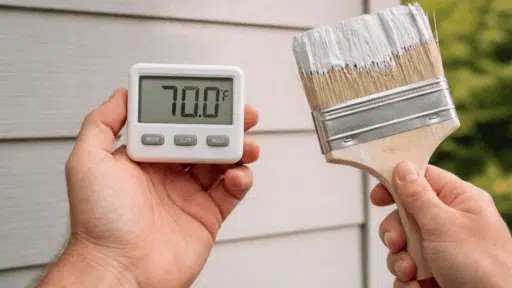
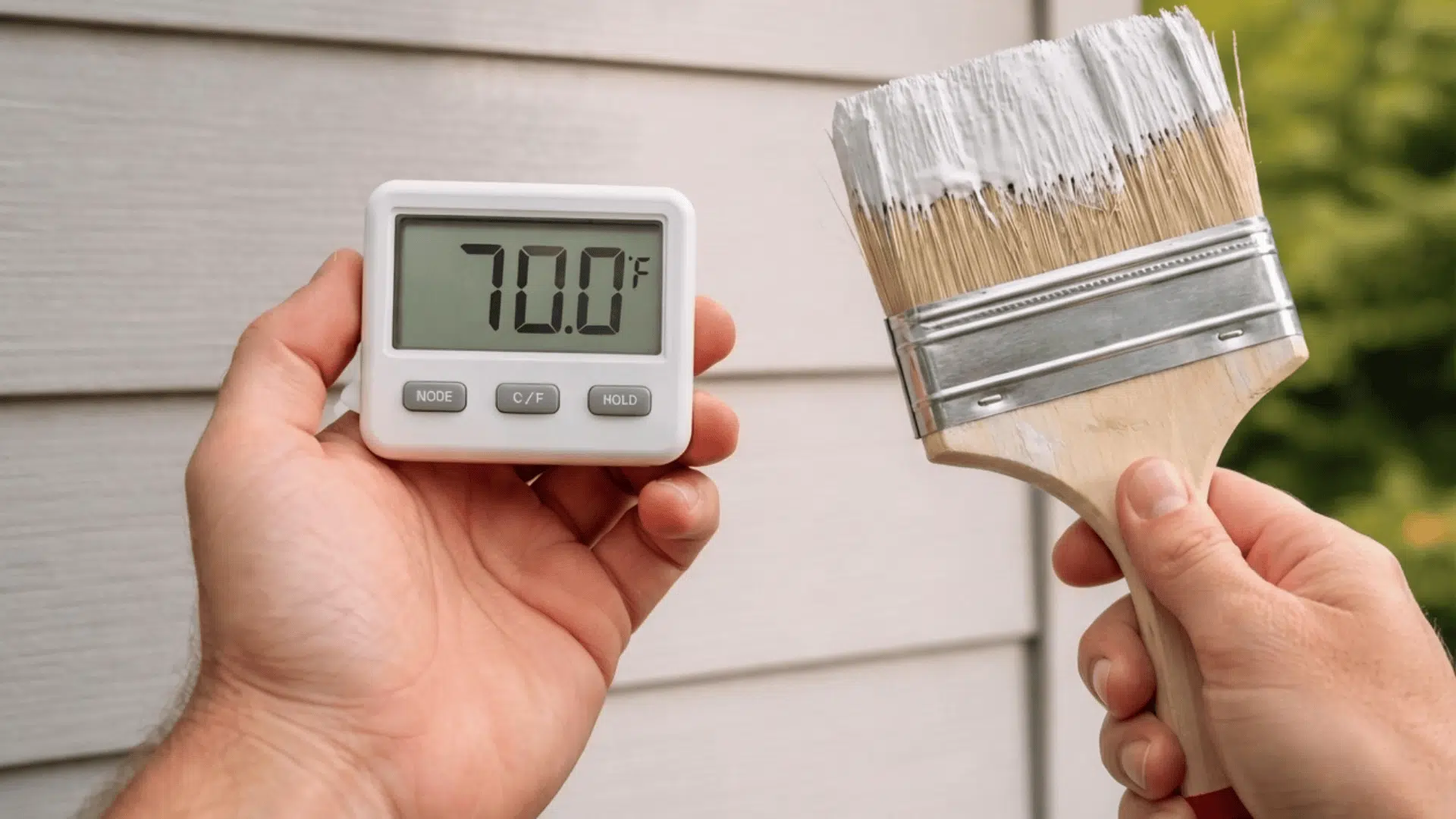
Most paint manufacturers recommend keeping the temperature between 50°F and 85°F (10°C and 30°C) for ideal painting conditions outside.
Some cold-weather formulas can push that lower limit down to around 35°F (1.5°C), but consistent results are harder to guarantee below 50°F. Humidity and wind also play a role, even within this range.
On the upper end, anything above 85°F to 90°F causes paint to dry too quickly, making it difficult to achieve a clean and lasting result.
When thinking about the right exterior paint temperature, a simple rule works well:
- 55°F to 80°F is the safe zone
- 50°F to 55°F
- 80°F to 85°F is manageable with care
- Anything outside that range is where results become unpredictable
How Temperature Actually Affects Exterior Paint
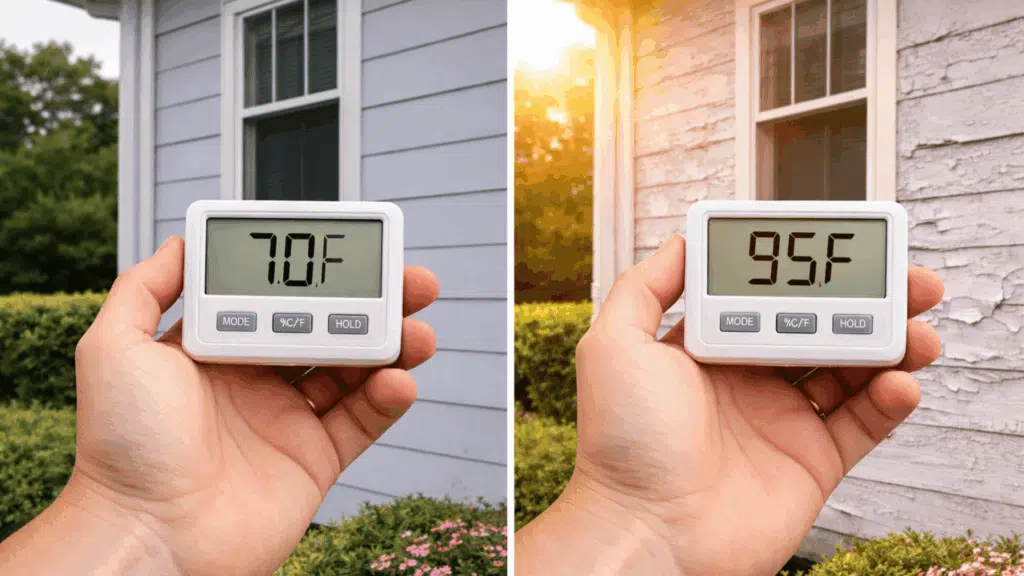
The temperature for painting outside directly impacts how exterior paint dries, bonds, and holds up over time, which is why the right exterior paint temperature matters from the very first coat.
- Cold temperatures slow down the drying process and weaken adhesion to the surface
- Paint applied in cold weather may stay soft or take significantly longer to set.
- Hot temperatures cause paint to dry too quickly, especially in direct sun
- Fast drying leads to brush marks, lap marks, and an uneven finish
- Paint applied in extreme heat is more prone to cracking and peeling over time
Key Factors that Change Paint Results
The right exterior painting temperature alone does not determine whether a paint job succeeds or fails. These factors often make the real difference between a finish that lasts and one that does not.
| Factor | What Happens | Practical Impact |
|---|---|---|
| Surface Temperature | It can be significantly hotter than the air temperature in direct sunlight | Causes uneven drying and poor adhesion |
| Humidity | Slows down moisture evaporation from the surface | Increases the risk of bubbling and weak bonding |
| Direct Sunlight | Speeds up drying too quickly | Leads to streaks, lap marks, and an uneven finish |
| Wind | Dries the surface faster than expected | Can reduce bonding quality and affect how paint settles |
| Time of Day | Affects overall temperature stability | Mid-morning to early afternoon is generally the best window for exterior painting |
What the Painting Community Has to Say
Instead of ideal conditions, here is how painters actually report their experiences working outside in different temperatures and what consistently works or fails across real situations.
Painting in 40°F to 50°F Conditions
Community feedback on the right temperature to paint outside in this range is mixed.
Some painters report decent results when working in direct sunlight with the right paint formula, while others say moisture in the air or shaded surfaces caused the job to fail.
Here is what painters shared from real forum discussions:
“My Boys and I need to paint a wooden garage and here it is in December. We are looking at outdoor temperatures between 40 and 60 degrees. I’ve got Valspar exterior paint and the can says you can paint down to 35 degrees, but I’m a little worried even 45 or 50 degrees might be too cold for latex paint.”: DIYChatroom
“The temperature of the wood is just as important as the air temp. Cool temps slow down the drying and curing time of paints.”: DoItYourself Forum
Key takeaway: 40°F to 50°F can work, but only when conditions like sunlight, surface dryness, and paint type all align properly. One factor off is often enough to cause the whole job to fail.
Warm Days but Cold Nights
This is one of the most commonly reported mistakes among painters, who misjudge the ideal exterior paint temperature across communities.
Many painters rely on daytime temperatures and completely overlook what happens after sunset, which is where things tend to go wrong. Painters who have dealt with this condition describe it this way:
“On cooler moist days, I stop painting around 3 o’clock in the afternoon. I once tried to paint until near dark and even though the paint film on top was dry to the touch, overnight the wet underlayer re-wetted the surface, and it all flushed off by the next morning.”: ContractorTalk
“A few years ago I left an employee on site. The paint took days to dry in part because of the nighttime dew. It eventually flaked off.”: DIYnot Forums
Key takeaway: Daytime temperature alone is not enough. Overnight drops can interrupt the curing process and affect long-term durability.
Sunny but Cold Weather
This condition often misleads painters, as surfaces feel warm to the touch even when the surrounding air temperature is well below the safe range for painting outdoors. It creates a false sense of confidence before the job even starts.
Community members who have run into this describe similar outcomes:
“You will find that the air temperature will read one figure, but because the sun is shining directly on the wall that will read a higher temperature.” : DIYnot Forums
“The key factor is the temperature of the WALL and not the air temperature. You should be concerned with the temperature of the wall and applied paint, which affects the drying and curing.”: DIYChatroom
Key takeaway: Surface warmth can be misleading. Air temperature still controls how paint cures.
Common Mistakes Painters Make with Temperature
Most paint failures come from small oversights rather than extreme conditions. These are the mistakes painters most commonly report when things go wrong with an exterior paint job.
- Relying only on air temperature without checking surface temperature, which can be significantly higher or lower depending on sun exposure
- Ignoring overnight temperature drops after a daytime application, which is one of the leading causes of poor curing and soft patches
- Painting in direct sunlight during peak hours, which speeds up drying too fast, makes a smooth finish difficult to achieve
- Starting too late in the day leaves paint exposed to dropping temperatures before it has had enough time to set properly
- Not checking surface dryness before applying paint, especially after recent rain or morning dew
- Painting right before weather changes, such as rain, wind shifts, or sudden temperature drops, can compromise the entire finish
Conclusion
Knowing the right temperature to paint outside goes beyond checking a single number on a thermometer.
Stable conditions, surface prep, timing, and overnight temperatures all play a role in whether a paint job actually holds up.
What the painting community makes clear is this: real-world results rarely match textbook ideals. Conditions shift, surfaces behave differently, and small oversights add up quickly.
The right exterior paint temperature is only one part of getting the job done properly.
Before starting any exterior paint job, painters are better off checking the full picture: air temperature, surface temperature, humidity, and the forecast for the next 24 hours.

With a Master’s in Architecture from the University of California, Berkeley, Alexander Martin has dedicated the last 18 years to enhancing outdoor living through thoughtful and robust structure design. His career kicked off in urban planning, giving him a unique perspective on integrating structures into diverse environments. In 2019, Alexander brought his expertise to our website, offering insights into creating versatile outdoor spaces. Since then, he has been the lead advisor for our outdoor design projects and is known for his ability to merge functionality with environmental consciousness. Alexander enjoys rock climbing outside of work and participates in community development projects, activities that reflect his passion for the outdoors and sustainable design.