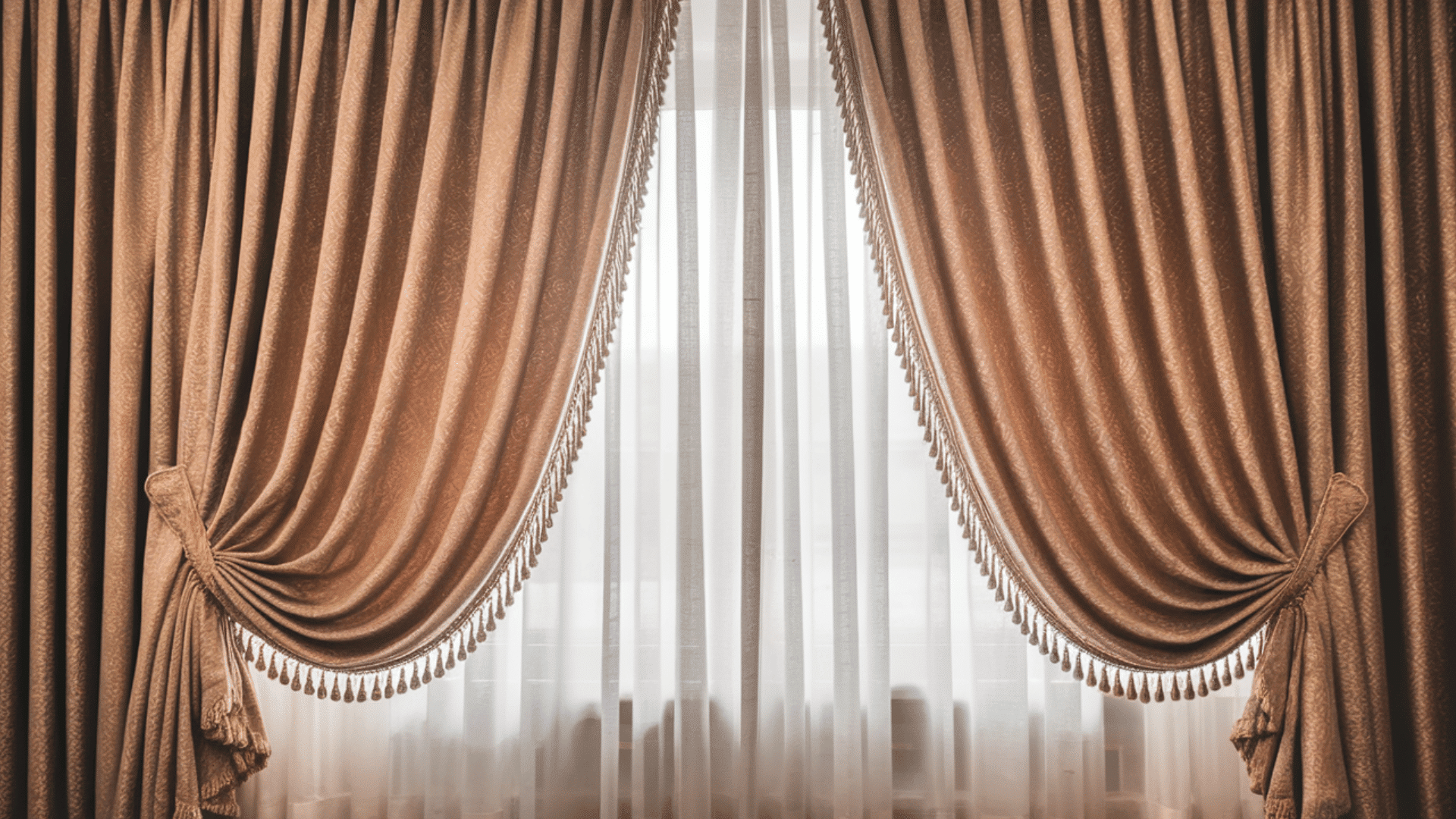

Let’s be honest: windows are the eyes of your home, and the right curtains are like the perfect pair of frames
With a sea of fabrics out there, picking the right curtain styles can feel a bit overwhelming, but it makes a massive difference in how a room breathes.
Whether you want a sleek, modern look or something cozy and classic, this guide breaks down every option. Let’s find the perfect match to fit your space and daily routine.
Why Curtain Styles Matter In Home Design
A well-chosen style can frame your windows beautifully, balance the furniture, and even make a small room feel more open. On the other hand, the wrong style can feel out of place, even if the fabric is nice.
- Improve privacy: The right curtain style helps block outside views without making the room feel dark or closed in. Floor-length panels or layered curtains give better coverage in bedrooms and living spaces.
- Control natural light: Some curtain styles, like sheer panels, allow soft daylight to filter through. Others, like blackout styles, block light almost completely. The header and fabric both play a role in how much light enters.
- Add softness or structure: Pleated curtain styles bring structure and definition. Looser styles like tab tops add softness and movement. This small detail can shift the entire mood of a room.
- Make ceilings look taller: Hanging certain curtain styles higher and choosing longer lengths can draw the eye upward. This creates the illusion of height, especially in rooms with standard ceilings.
- Match your interior theme: Modern homes often look better with clean lines like grommet or ripple fold styles. Traditional spaces usually suit pleated designs. Matching your curtain style with your decor keeps everything visually balanced.
Curtain Styles: Popular Types for Every Home
Choosing the right curtain styles can feel confusing at first. There are so many headings, pleats, fabrics, and lengths to pick from.
1. Rod Pocket Curtains
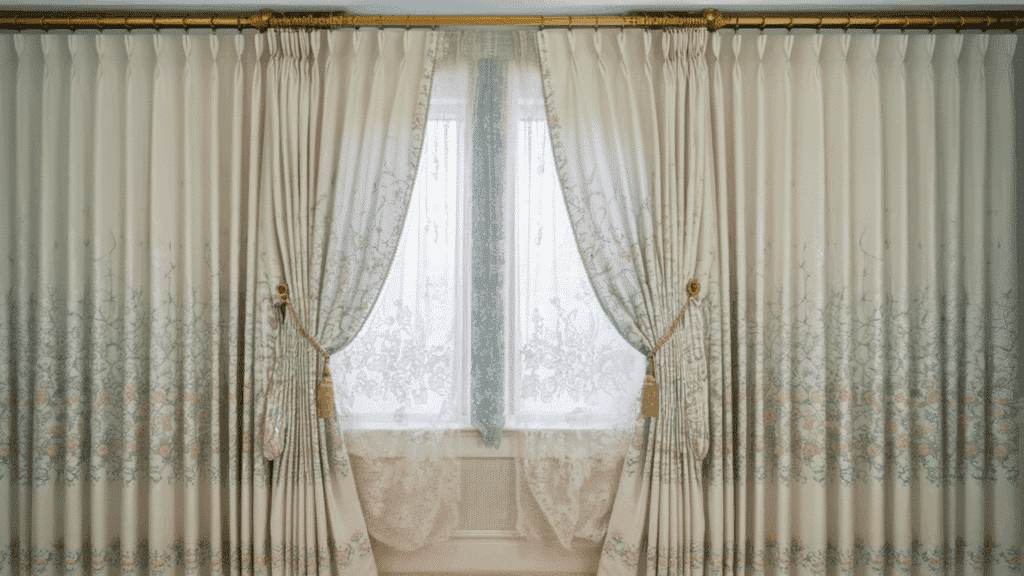
A stitched pocket at the top allows the rod to slide directly through the fabric. This creates soft, gathered folds that feel warm and welcoming.
They stay mostly in place, which makes them better for windows you don’t open daily. The simple design keeps attention on the fabric itself.
- Best For: Bedrooms and guest rooms; ideal for windows that stay closed most of the time
- Style Vibe: Cozy and classic
- Pros: Budget-friendly, easy to install, creates a soft gathered look, works well in cozy or low-traffic spaces
- Cons: Harder to slide open and close often, not ideal for windows used every day
2. Pinch Pleat Curtains
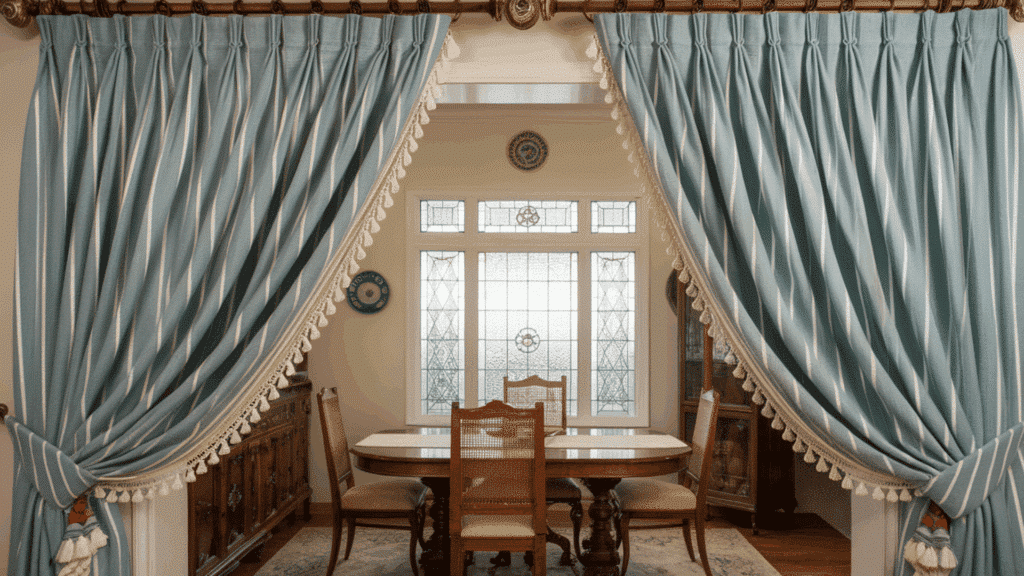
Evenly spaced pleats sewn into the header create a customized and structured look. The folds stay neat from top to bottom. This style works beautifully with medium to heavy fabrics. It instantly makes a room feel more put-together.
- Best For: Formal dining rooms and sitting areas. Great for spaces where you want a polished finish.
- Style Vibe: Refined and structured.
- Pros: Holds its shape well, looks polished, hangs evenly, and adds a structured finish to formal spaces.
- Cons: Slightly higher cost, may require hooks or rings, and needs careful measurement for proper hanging.
3. Pencil Pleat Curtains
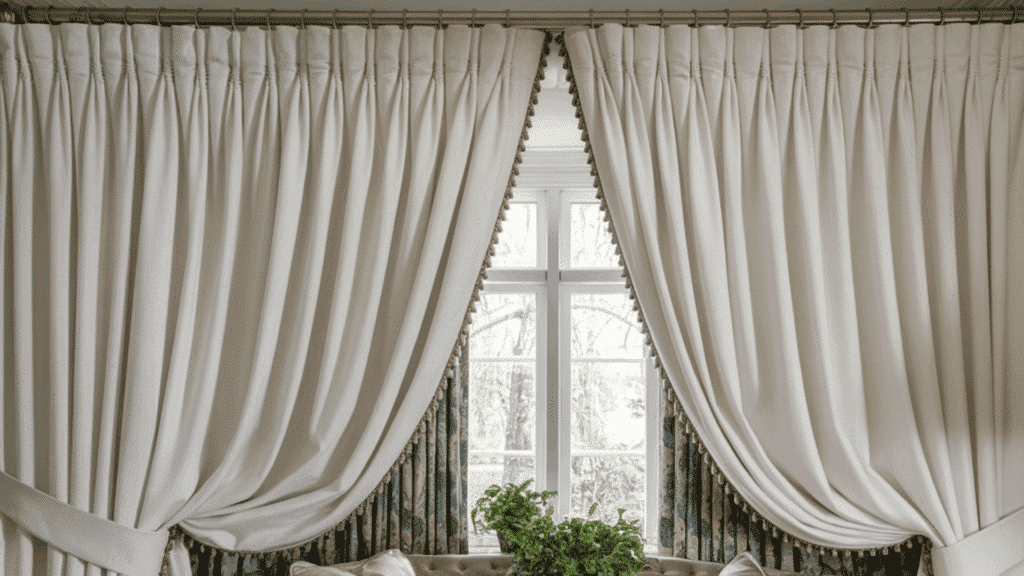
Tightly gathered pleats form a detailed and textured header. The look is softer than pinch pleats but still organized. These curtains adapt easily to rods or tracks. They blend into many design styles without overpowering the space.
- Best For: Family rooms and bedrooms; fits both modern and traditional spaces
- Style Vibe: Balanced and Multi-purpose
- Pros: Flexible hanging options, widely available, easy to style, works with rods and tracks
- Cons: Can look crowded with thick fabric, may appear too gathered if not measured properly
4. Goblet Pleat Curtains
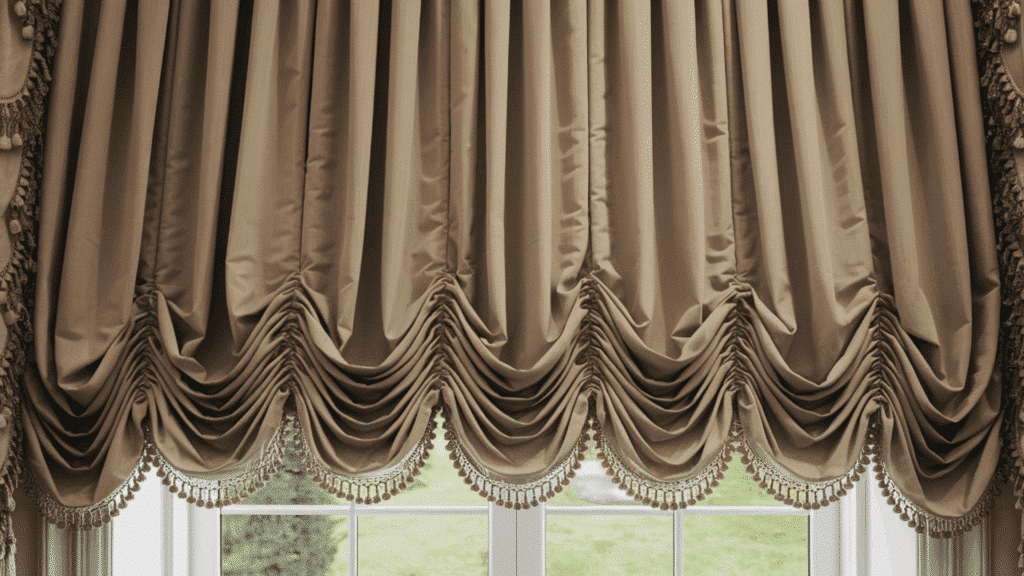
Pleats shaped like small goblets add depth and visual detail. This style pairs best with heavier materials to maintain its shape. It draws attention upward, especially on taller windows. The overall effect feels layered and rich.
- Best For: Tall windows in formal rooms; works well in larger spaces
- Style Vibe: Decorative and classic
- Pros: Creates a strong visual impact, unique design, adds depth to tall windows, and brings a formal touch
- Cons: Needs regular upkeep to maintain pleats, may lose shape if not styled carefully
5. Box Pleat Curtains
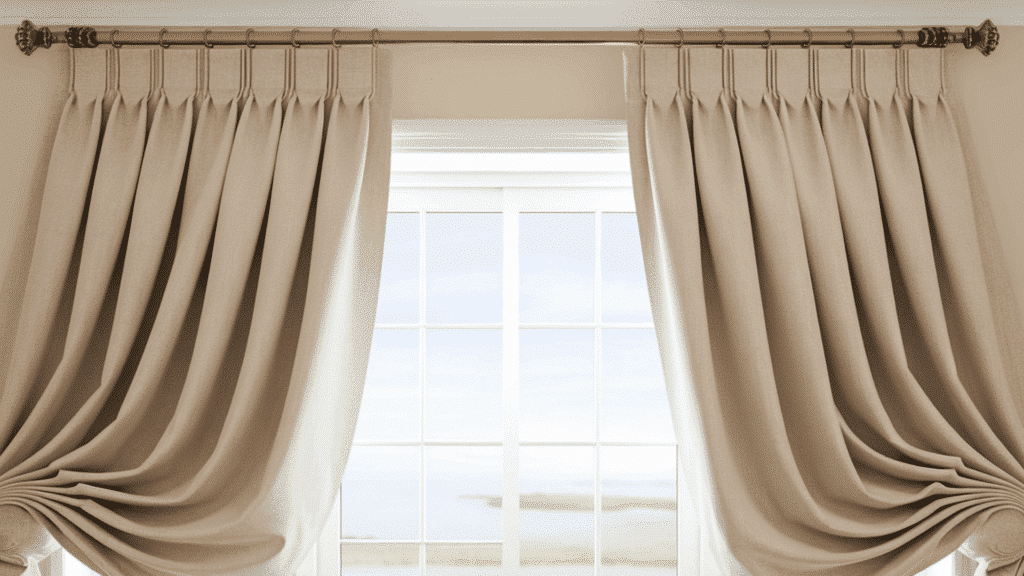
Wide, flat pleats create clean vertical lines. The spacing between pleats keeps the design looking neat. This makes them ideal for structured interiors. They hang evenly and look tidy from every angle.
- Best For: Offices and dining rooms; good for structured layouts
- Style Vibe: Neat and tailored
- Pros: Crisp appearance, symmetrical finish, clean lines, works well in structured interiors
- Cons: Requires accurate measuring, may look uneven if not installed properly
6. Grommet Curtains
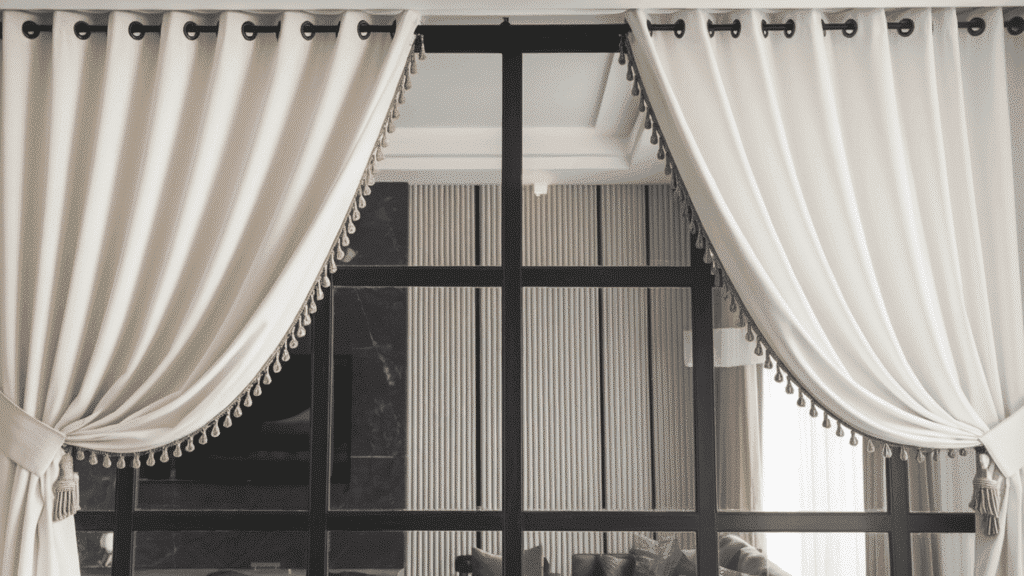
Metal rings at the top allow the curtain to slide smoothly across the rod. The folds appear even and uniform. They’re easy to operate daily. The clean header works well in modern interiors.
- Best For: Living rooms and media spaces. Ideal for windows opened often.
- Style Vibe: Modern and clean.
- Pros: Easy to move, simple to install, slide smoothly across the rod, and create neat, even folds.
- Cons: Less suited for traditional rooms and may look too modern in classic interiors.
7. Ripple Fold Curtains
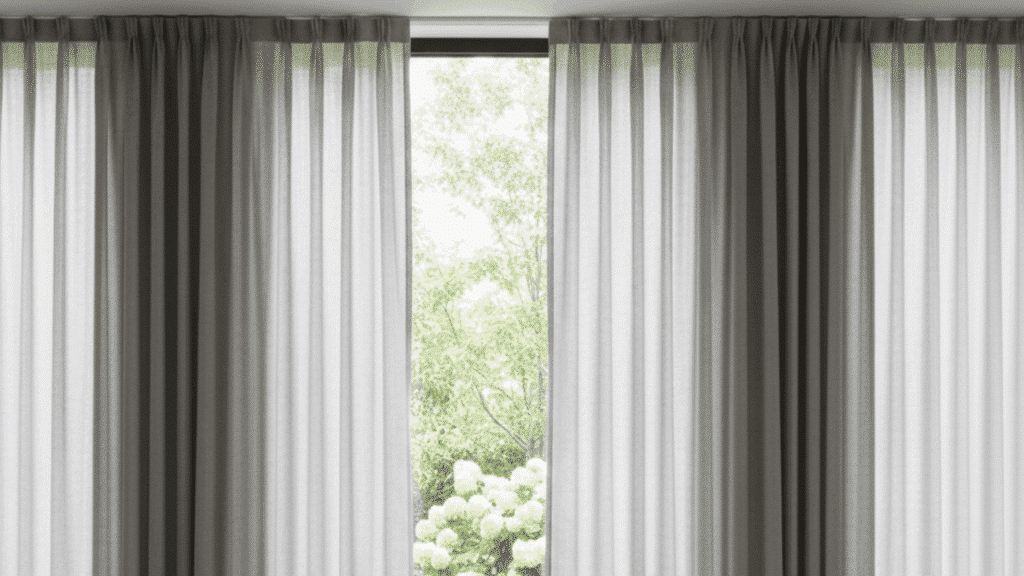
Soft wave-like folds create a consistent pattern across the fabric. They glide along a track system smoothly. The look feels continuous and uncluttered. This makes large windows appear streamlined.
- Best For: Large windows and sliding doors
- Style Vibe: Sleek and contemporary
- Pros: Even folds, smooth gliding on track, clean finish, ideal for large windows
- Cons: Needs special track hardware, may require professional installation
8. Back Tab Curtains
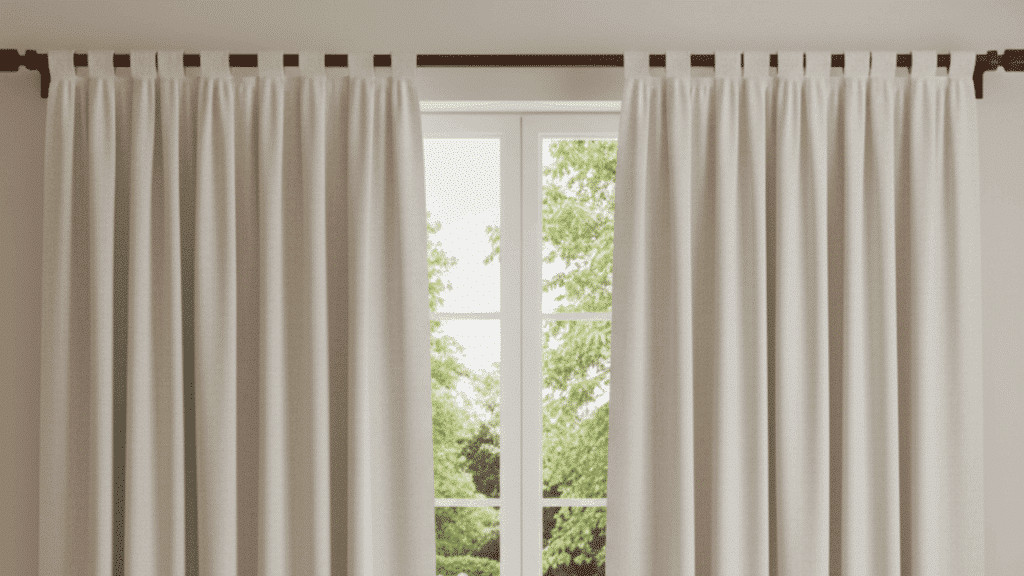
Hidden loops at the back give a clean front appearance. The rod stays mostly concealed behind the fabric. This creates soft pleats without visible hardware. It’s a subtle upgrade from standard tab tops.
- Best For: Bedrooms and relaxed living areas
- Style Vibe: Polished yet simple
- Pros: Clean finish, easy to style, creates soft pleats, gives a polished yet relaxed look
- Cons: Takes a bit more effort to hang properly, may need adjustment for even folds
9. Tab Top Curtains
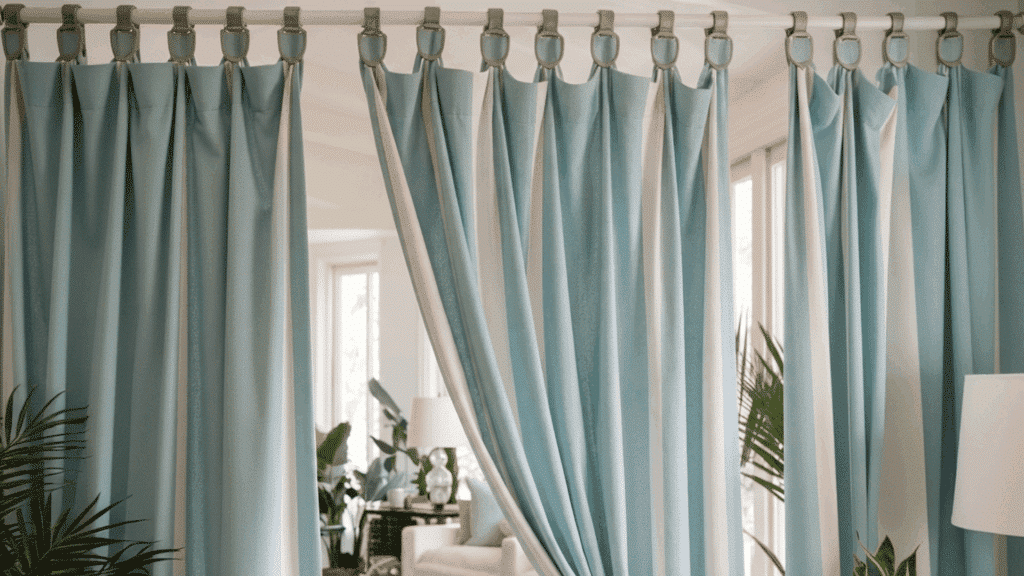
Fabric loops are stitched onto the top and slide over the rod. The loops remain visible, adding texture and charm. They hang loosely and create soft folds. This design feels informal and approachable.
- Best For: Casual spaces and kids’ rooms. Great for playrooms or spaces where comfort matters more than formality
- Style Vibe: Relaxed and simple. It gives off an easygoing and welcoming feel
- Pros: Easy to hang, affordable, creates a soft appearance, and works well in relaxed everyday spaces
- Cons: Not ideal for formal rooms and can look uneven if the tabs are not spaced or adjusted properly
10. Hidden Track Curtains
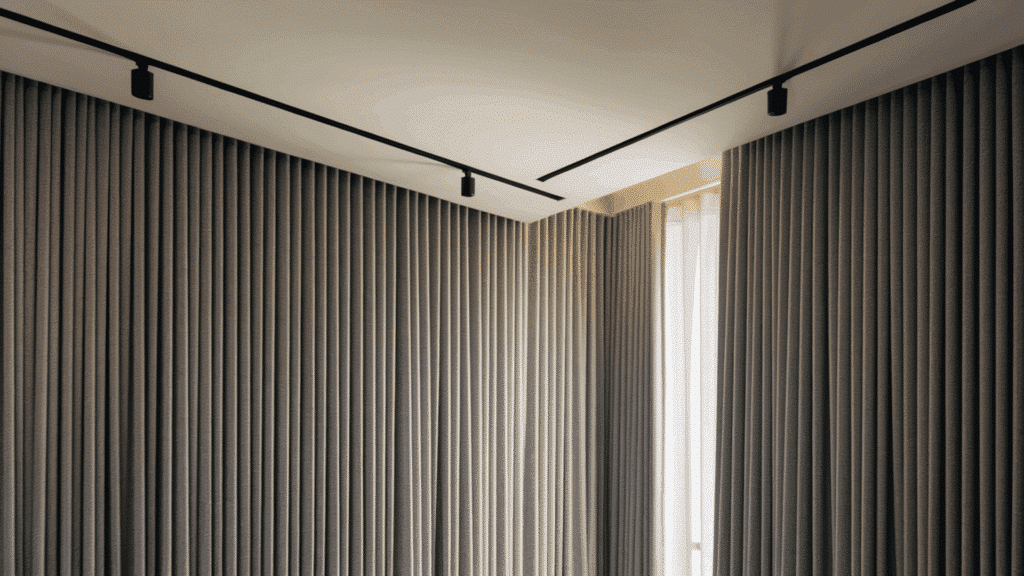
Mounted directly to the ceiling using a track system for an effortless finish. The hardware stays out of sight. This makes the room feel taller and more open. The fabric becomes the main focus.
- Best For: Contemporary homes and apartments
- Style Vibe: Minimal and clean-lined
- Pros: Creates the illusion of taller ceilings, delivers a sleek finish, keeps hardware hidden, and gives windows a clean, modern look
- Cons: Installation may require professional help and precise alignment for a smooth appearance
11. Sheer Curtains
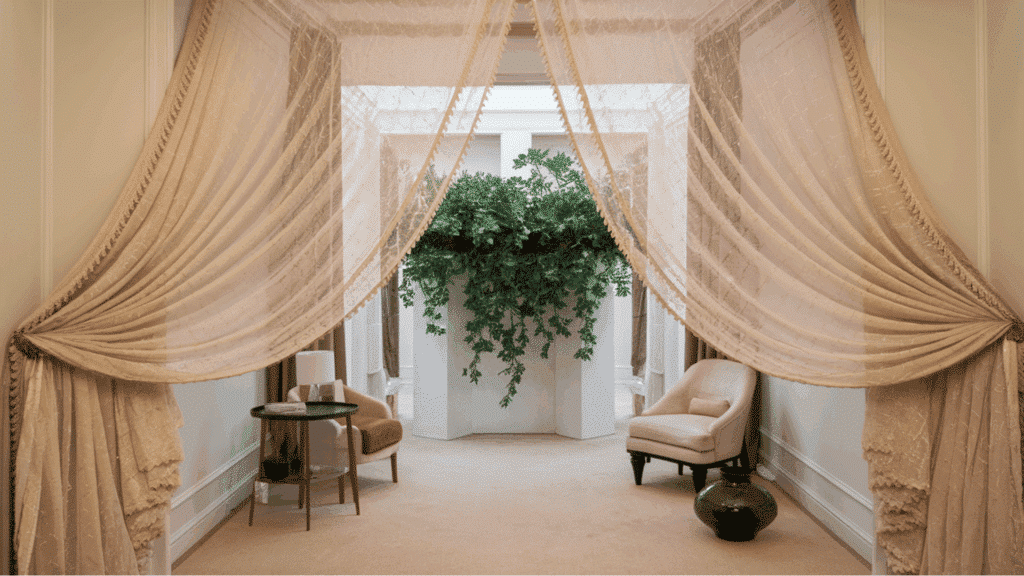
Sheer curtain styles are made from lightweight, semi-transparent fabric that softens incoming daylight. They brighten up a room without leaving windows completely exposed.
The fabric moves gently with airflow, giving the space a fresh and open feel. Many homeowners layer them with heavier drapes for flexibility.
- Best For: Living rooms, balconies, and sun-facing windows. Great for daytime privacy.
- Style Vibe: Airy and light.
- Pros: Allow natural light in while offering daytime privacy, make rooms feel bigger, are affordable, easy to maintain, and layer well with other curtains.
- Cons: Offer limited nighttime privacy, do not insulate against heat, cold, or noise, and may look too thin when used alone.
12. Blackout Curtains
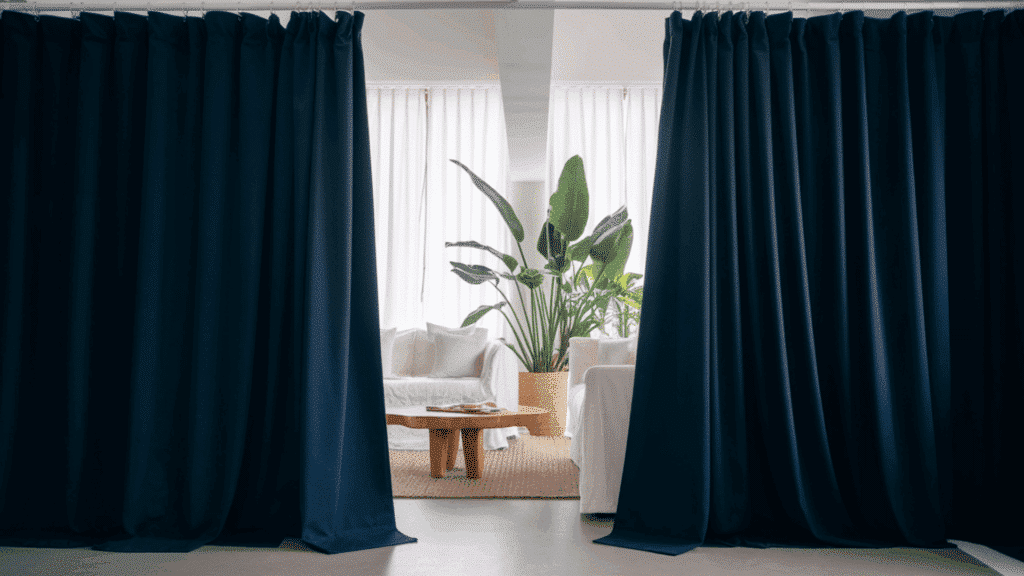
Blackout curtain styles are designed with dense fabric or special lining to block outside light. They create a darker environment that supports better sleep, especially in rooms with strong sunlight.
In addition to light control, they provide noticeable privacy and help reduce glare on screens.
- Best For: Bedrooms, nurseries, and media rooms. Ideal for light-sensitive sleepers
- Style Vibe: Practical and solid
- Pros: Blocks most outside light, improves sleep, enhances privacy, reduces screen glare, and helps protect furniture from sun fading
- Cons: Can look bulky in small rooms, reduces natural daylight, may trap heat in poorly ventilated spaces, and usually costs more than standard curtains
13. Thermal Curtains
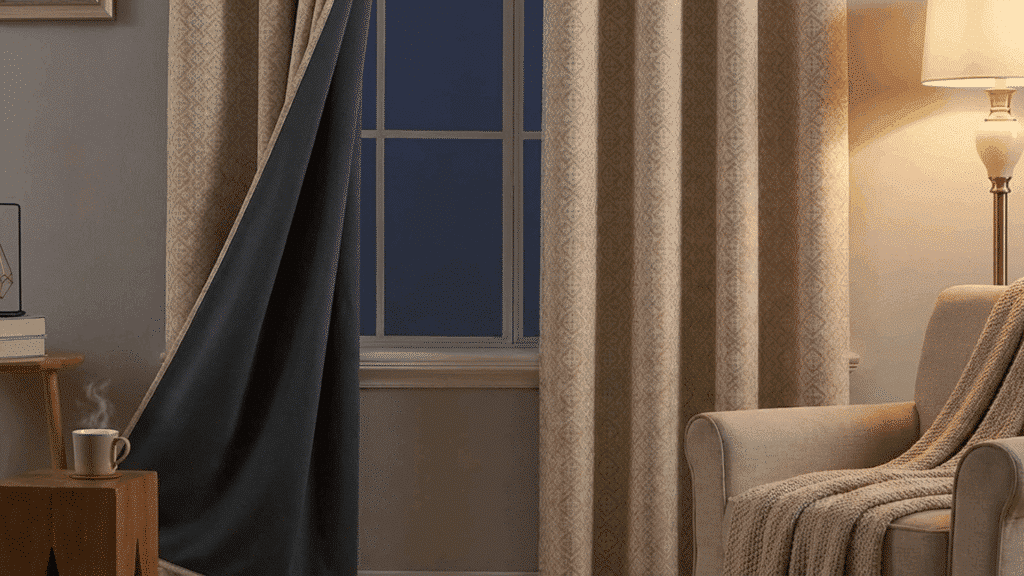
Thermal curtain styles include an insulated backing that helps regulate indoor temperature. They are designed to reduce heat loss during colder months and keep rooms cooler during warmer seasons. This makes them a reliable choice for energy-conscious households.
- Best For: Drafty rooms and colder areas, especially near older windows
- Style Vibe: Functional and sturdy
- Pros: Improves energy efficiency, reduces outside noise, enhances privacy, maintains indoor comfort, and is more durable than lightweight fabrics
- Cons: Thicker material can look heavy, feel less flexible, lack natural flow, and may overpower smaller spaces
14. Layered Curtains
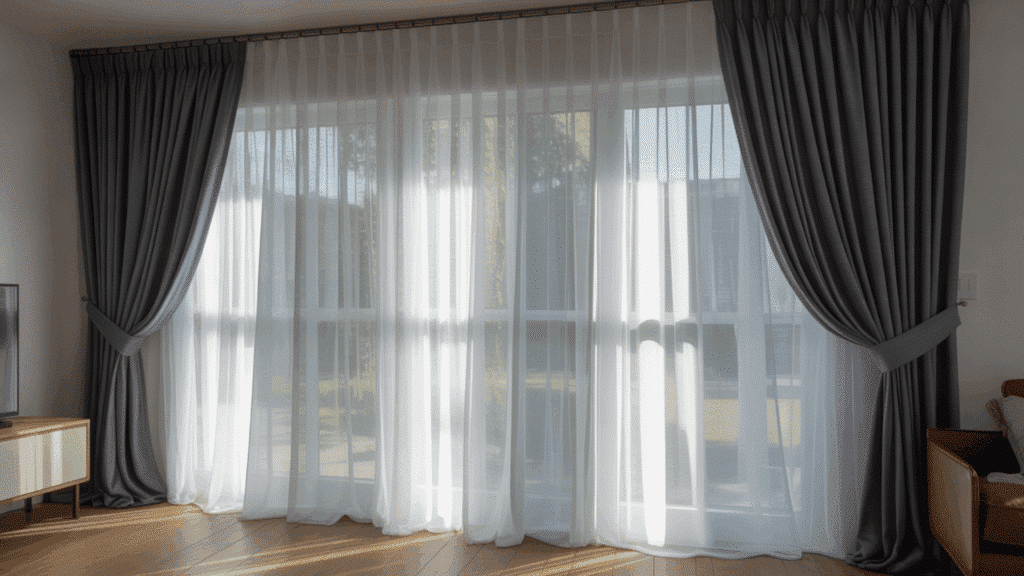
Layered curtain styles combine two or more panels, usually sheer and blackout, to provide flexible light and privacy control.
This setup allows you to adjust the look and function throughout the day. It also adds depth and dimension to the window area.
- Best For: Bedrooms and main living areas where adjustable lighting is important
- Style Vibe: Balanced and complete
- Pros: Offer full control over light and privacy, improve insulation, create a finished look, and suit both modern and traditional interiors
- Cons: Cost more due to multiple panels, require double rods or tracks, take extra effort to arrange neatly, and need slightly more maintenance
15. Cafe Curtains
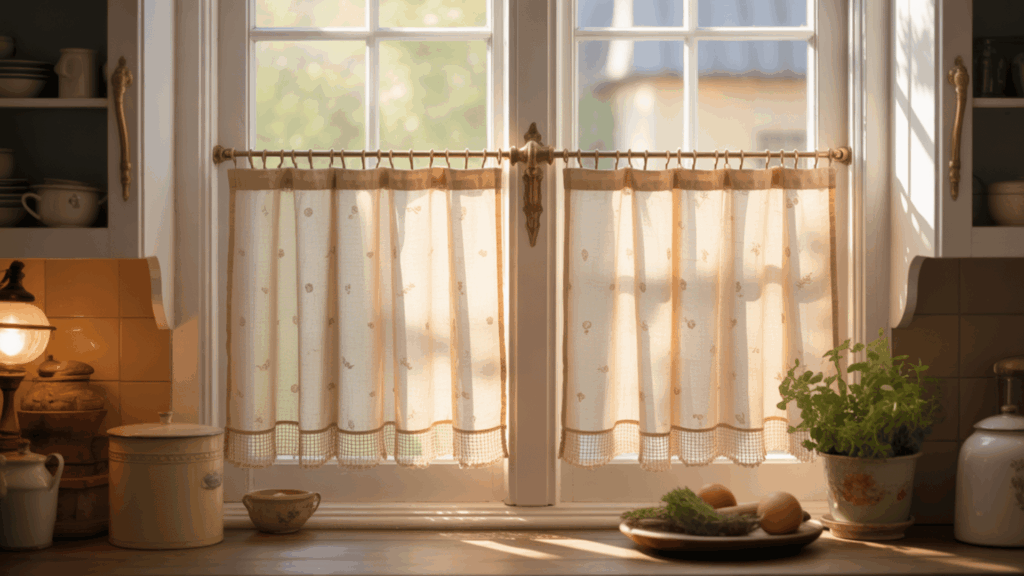
Cafe curtain styles cover only the lower half of the window, leaving the top open for sunlight. This makes them ideal for maintaining privacy while still allowing brightness to enter the room. They are commonly seen in cozy kitchens and breakfast corners.
- Best For: Kitchens and small windows, especially in street-facing homes.
- Style Vibe: Charming and casual.
- Pros: Let natural light in from above, are easy to install, budget-friendly, simple to maintain, and work well in small spaces without feeling heavy.
- Cons: Provide limited coverage, are not ideal for full bedroom privacy, offer minimal insulation, and may not suit very modern interiors.
16. Valance Curtains
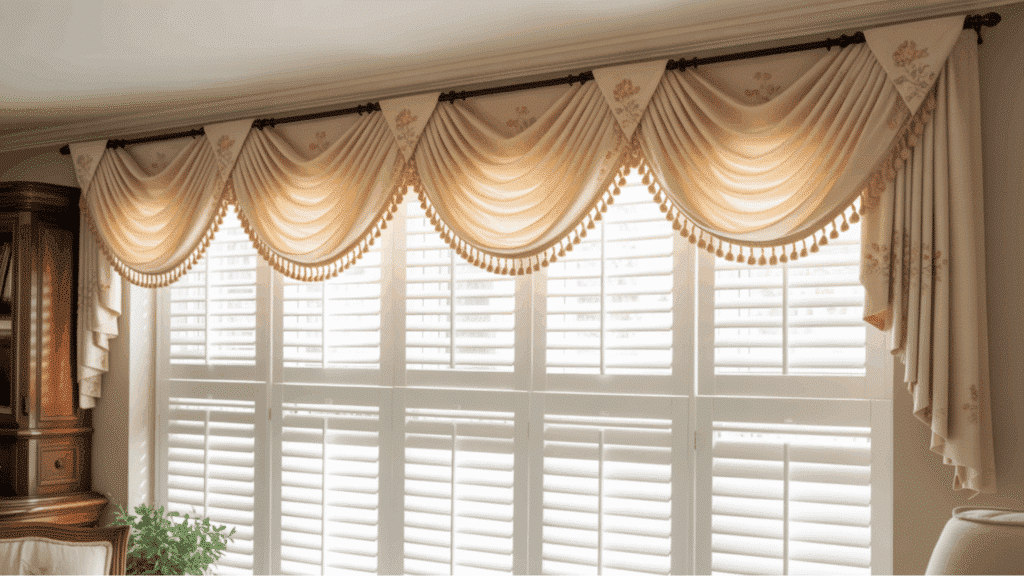
Valance curtain styles are short panels placed across the top portion of windows. They are mostly decorative and are often paired with blinds or longer curtains. Their purpose is to add detail, color, and softness to the upper window area.
- Best For: Accent windows and traditionally styled homes.
- Style Vibe: Decorative and classic.
- Pros: Adds character, hides curtain hardware, is lightweight and easy to hang, and offers an affordable way to introduce texture without full-length curtains.
- Cons: Does not provide privacy or light control on its own and may feel out of place in very modern interiors.
17. Window Scarf Curtains
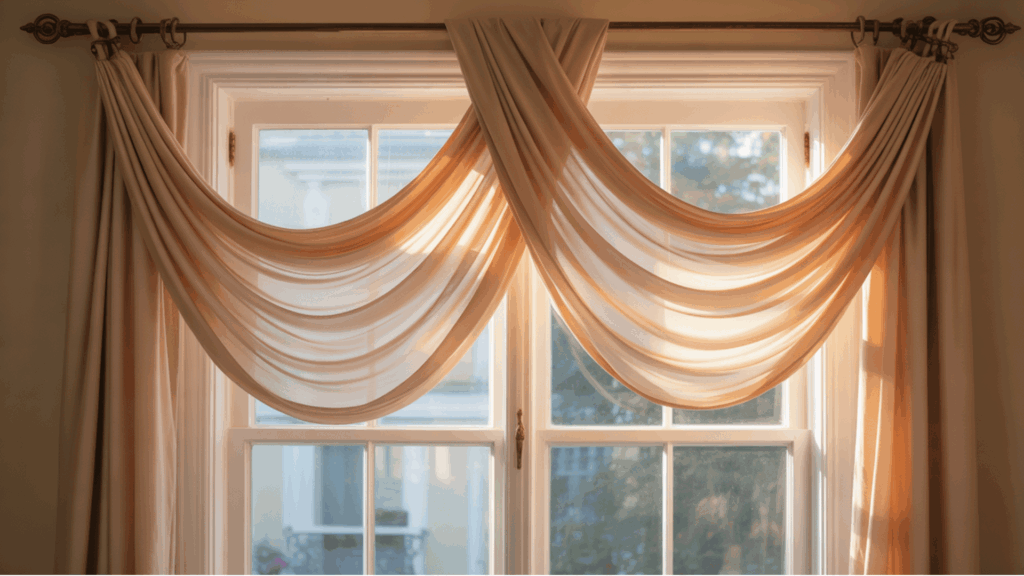
Window scarf curtain styles involve draping a long piece of fabric loosely over a rod. The fabric forms gentle curves and adds softness to the window frame. These are mainly used for visual enhancement rather than full coverage.
- Best For: Formal rooms and decorative setups.
- Style Vibe: Flowing and dramatic.
- Pros: Easy to install, add softness to structured spaces, offer an affordable decorative upgrade, and are lightweight and simple to adjust.
- Cons: Provide minimal privacy, offer little light control, and may shift out of place, requiring occasional adjustment.
18. Tie-Top Curtains
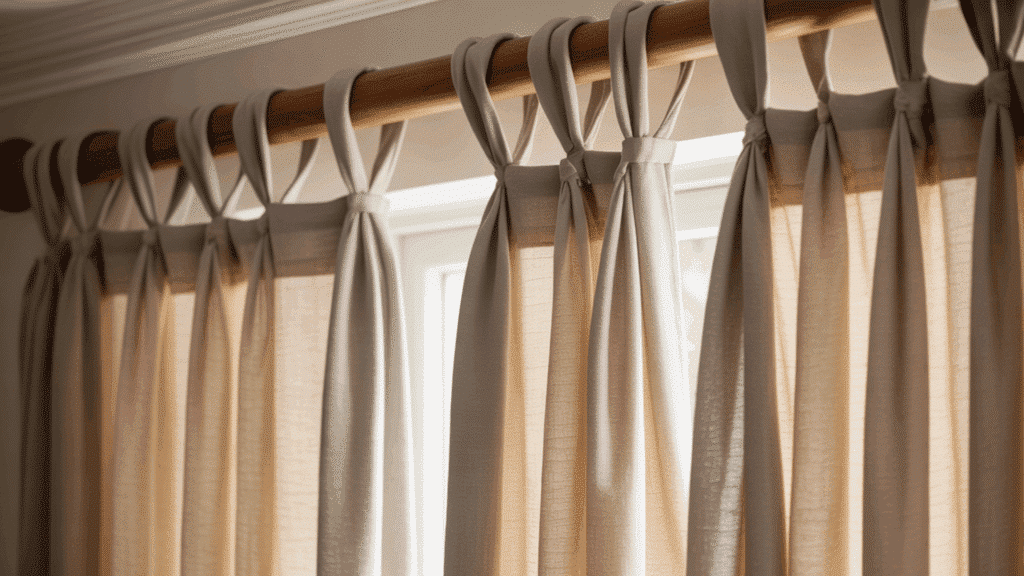
Tie-top curtain styles use fabric ties instead of rings or hooks. The ties are visible, adding texture and a welcoming touch. They hang loosely and create soft folds that feel relaxed.
- Best For: Casual spaces and kids’ rooms. Ideal for playrooms and creative corners.
- Style Vibe: Relaxed and simple, with a friendly and easygoing feel.
- Pros: Easy to adjust, affordable, add a decorative touch at the top, work well with lightweight fabrics, and require minimal hardware.
- Cons: Can take extra time to tie evenly, are less suited for formal spaces, may sag over time, and do not support heavier fabrics well.
19. Panel Pair Curtains
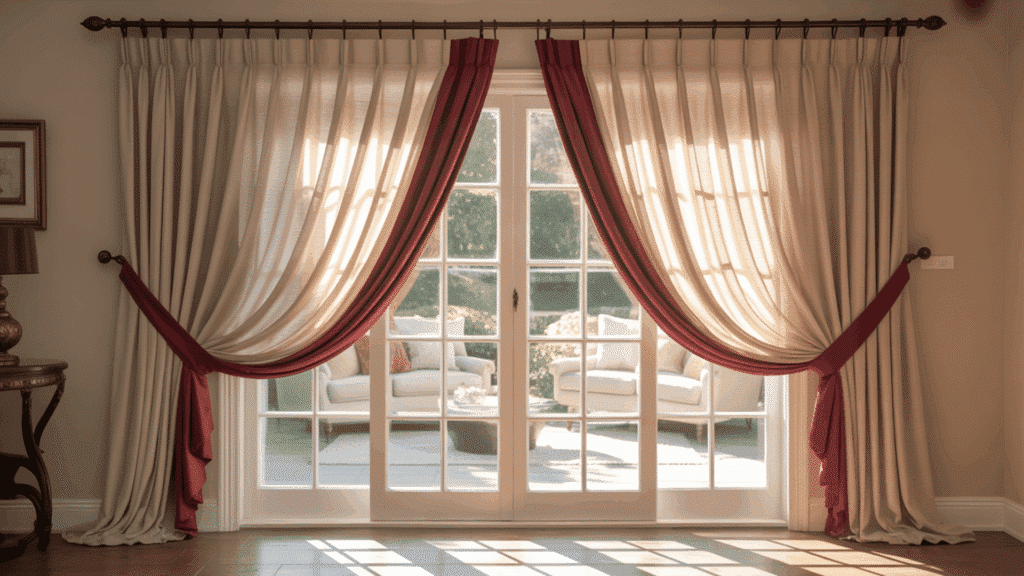
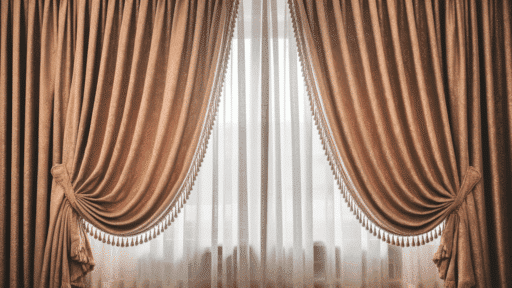
Panel pair curtain styles include two matching panels placed on each side of the window. This creates symmetry and allows full coverage when drawn closed. It’s one of the most commonly used layouts in homes.
- Best For: Living rooms and wide windows.
- Style Vibe: Structured and traditional.
- Pros: They provide balanced coverage, flexible fabric options, and compatibility with many header styles. They also offer a complete and polished look.
- Cons: They require more fabric, cost more than single panels, and may feel heavy in smaller rooms if not styled carefully.
20. Single Panel Curtains
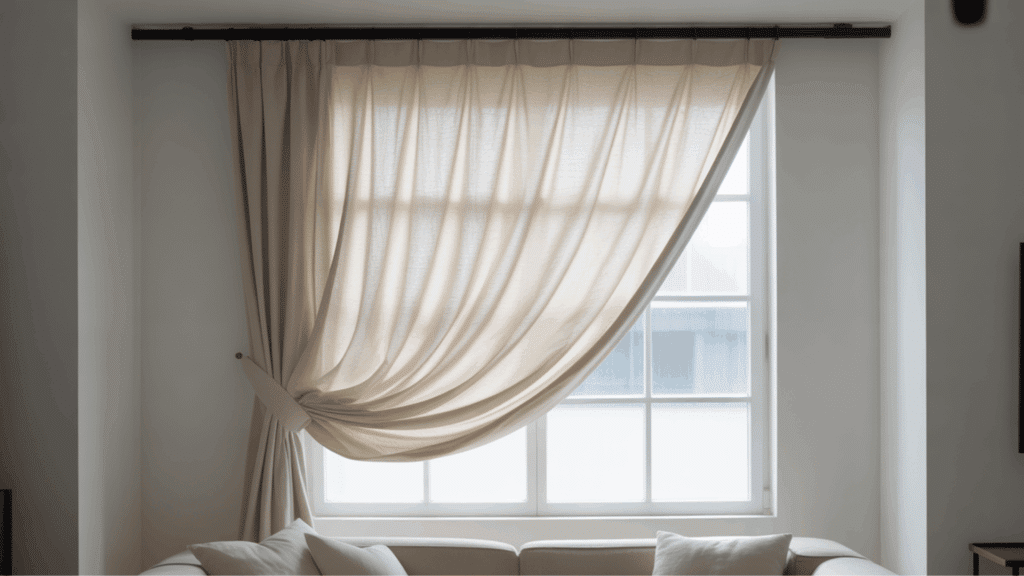
Single-panel curtain styles consist of one wide curtain that slides across the window. This keeps the design simple and uncluttered. It’s a practical choice for compact areas or modern layouts.
- Best For: Small apartments and narrow windows.
- Style Vibe: Minimal and clean.
- Pros: Single panels are budget-friendly, easy to maintain, and save space. They create a modern look and are quick to install.
- Cons: The appearance is less symmetrical, styling options are limited, and wide windows may not be fully covered.
21. Sill-Length Curtains
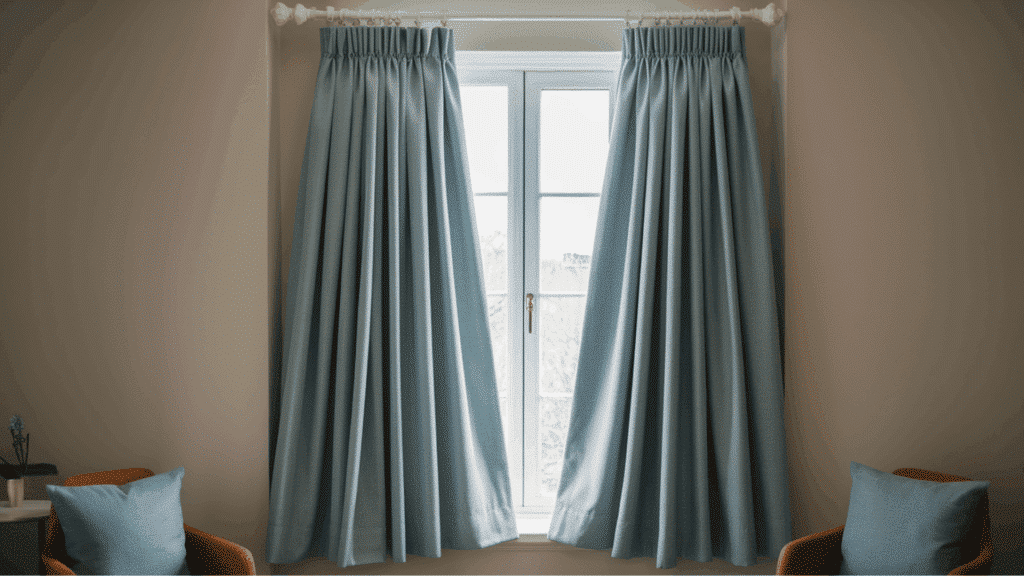
These curtains end right at the window sill, making them practical and easy to manage. They are often chosen for rooms where furniture sits below the window.
- Best For: Kitchens and bathrooms.
- Style Vibe: Practical and neat.
- Pros: They are easy to clean, low maintenance, safe near heaters, and budget-friendly, and work well in compact rooms.
- Cons: They offer less visual impact, do not elongate walls, and provide minimal insulation.
22. Floor-Length Curtains
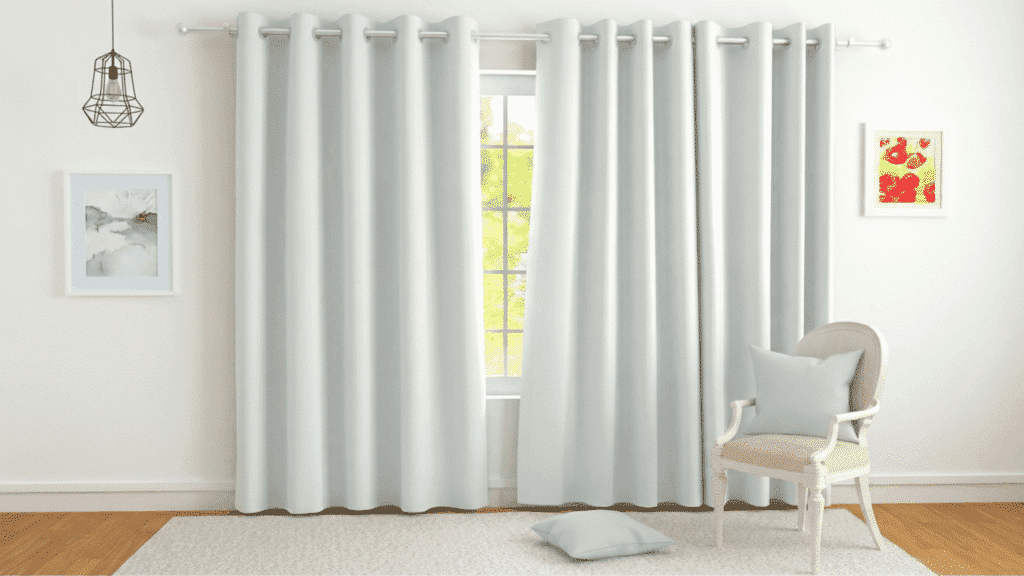
Floor-length curtain styles extend to the floor or hover slightly above it. This is the most commonly chosen length because it creates a finished appearance.
- Best For: Living rooms and bedrooms.
- Style Vibe: Classic and refined.
- Pros: They make ceilings appear taller, provide full window coverage, and work with most interior styles. They also create a balanced and polished look.
- Cons: Accurate measuring is essential; they can collect dust, and hemming may be required for a perfect fit.
23. Puddle-Length Curtains
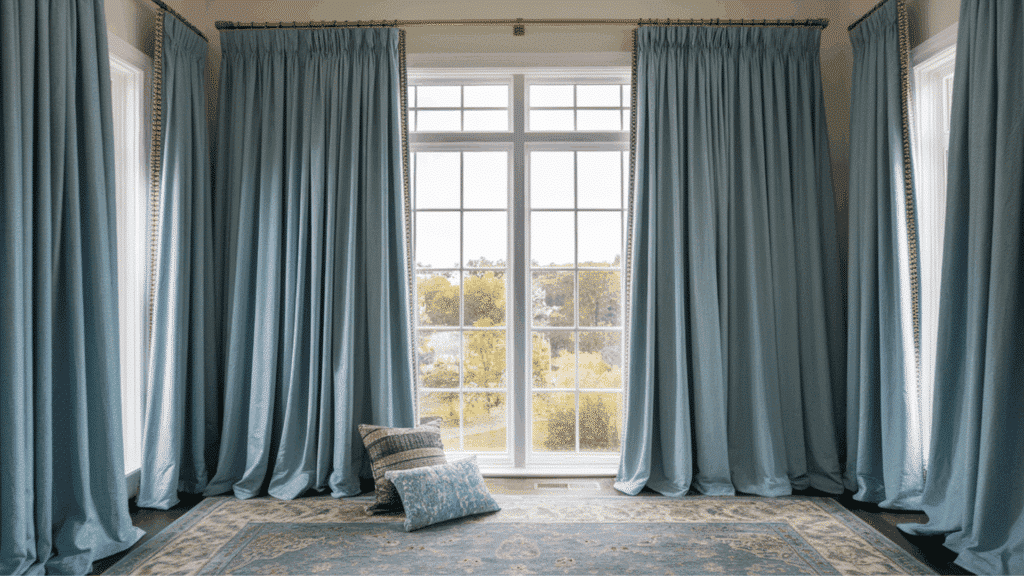
Puddle-length curtain styles extend beyond the floor, allowing extra fabric to gather slightly. This creates a soft, pooled look that adds depth to formal spaces.
- Best For: Formal bedrooms and sitting areas.
- Style Vibe: Romantic and layered.
- Pros: Create a strong visual impact, add texture, pair well with heavier fabrics, enhance tall windows, and bring warmth to larger rooms.
- Cons: Harder to clean, not suitable for high-traffic areas, collect dust easily, and require precise measurement for proper styling.
How to Choose the Right Curtain Style
The best choice depends on your room layout, lighting, privacy needs, and overall decor. Think through these key factors first, and the decision becomes much easier.
| Factor | What to Consider | Quick Tip | Recommended Style |
|---|---|---|---|
| Room Purpose | Think about how you use the space before picking a fabric or style | Formal rooms need structure, casual spaces work better with simple styles | Pinch Pleat or Cafe Curtains |
| Privacy Needs | Consider how much of the outside world you want to let in | Sheer fabrics suit private backyards, opaque panels work better for street-facing windows | Sheer or Blackout Panels |
| Amount of Sunlight | Notice how much natural light the room gets throughout the day | Bright rooms need heavier curtains, and darker rooms do well with lighter sheer styles | Blackout, Thermal, or Sheer Curtains |
| Ceiling Height | Curtain length changes how tall or compact a room feels | Long curtains add height, shorter ones keep the space feeling grounded | Floor-Length or Sill-Length Curtains |
| Decor Theme | Pick a style that matches the overall look of your interior | Clean lines suit modern spaces, and structured headers work well in traditional rooms | Grommet or Pinch Pleat Curtains |
Conclusion
Finding the right curtain styles doesn’t have to be a chore. It’s actually one of the easiest ways to refresh your home without a full renovation.
Whether you’re leaning toward the structured look of a box pleat or the breezy feel of tie-tops, the right fabric will make your space feel finished and “you.”
Take a look at your windows today and see which of these ideas sparks some inspiration. Ready to start your home makeover today?

Tommy Hardy, an alumnus of the Georgia Institute of Technology with a degree in Mechanical Engineering, has been a go-to figure in residential upkeep and innovation for over 18 years. His career commenced in a leading home appliance manufacturing company, where he mastered the intricacies of household systems. Joining our platform in 2020, Tommy quickly became a reader favorite for his practical and easy-to-follow guides. He took the helm of our DIY section in 2019, consistently delivering content that empowers homeowners. Beyond his professional pursuits, Tommy is a passionate gardener and enjoys woodworking, skills enhancing his hands-on approach to home care.