
Most people walk past it every single day, but hardly anyone knows what it actually is or what it does.
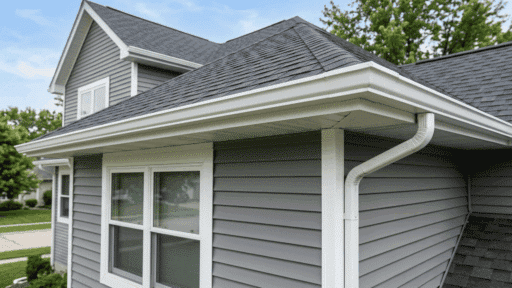
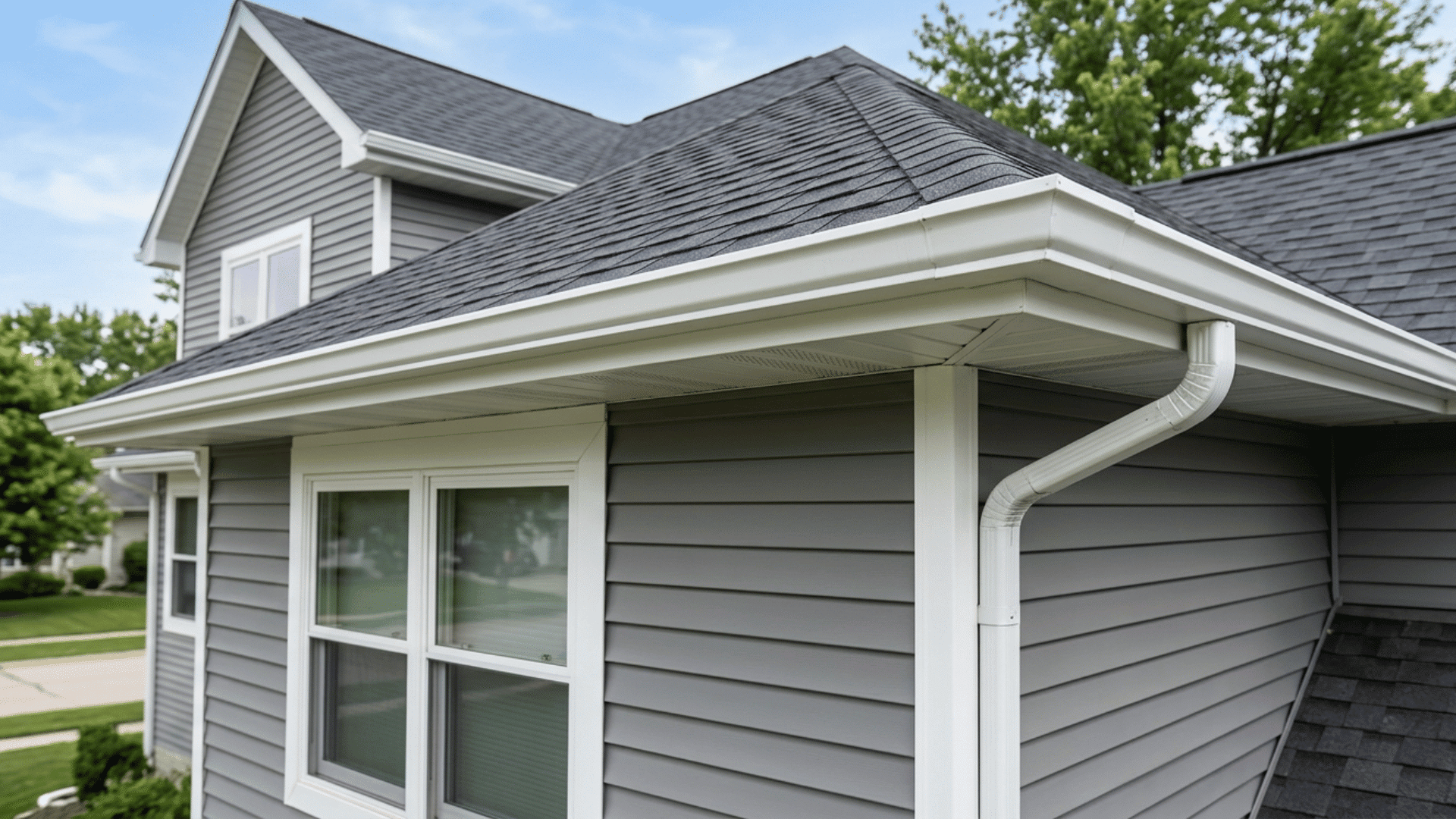
The fascia is the flat board that runs along the edge of the roof. It sits right where the roof meets the outer walls of the house. And it holds the gutters in place, too.
Understanding what fascia on a house is matters more than most people think. When it rots or cracks, gutters pull away, water gets in, and repair bills add up fast.
This guide covers what fascia is, what it does, and why every homeowner should keep an eye on it.
What Is Fascia?
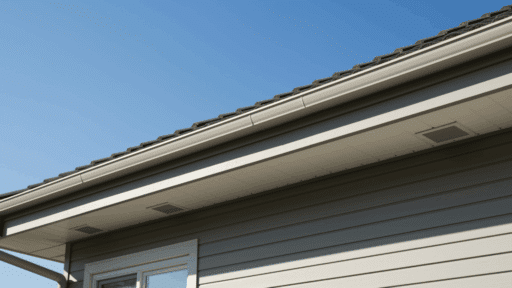
Fascia is the long, straight board that runs along the roofline, sitting right where the roof meets the outer walls of your home.
It’s positioned at the very edge of the roof, tucked between the roof deck above and the soffit below.
If you’re standing on the street, it’s that horizontal band you see running along the entire length of your roofline. Most people walk past it every single day without noticing it’s there.
Because of where it sits, it’s one of the most exposed parts of your home, and it takes on a lot more responsibility than most people realize.
Key Functions of Fascia
Fascia might look like a simple finishing board, but it’s quietly doing several important jobs at once. Here’s a breakdown of everything it takes care of.
- Gutter Support: Your gutters are mounted directly to the fascia board, so when the fascia board weakens, your gutters are the first to sag, pull away, or come down entirely.
- Weatherproofing Fascia blocks moisture from sneaking into the roof structure, helping prevent rot, mold, and long-term damage to your rafters and decking.
- Pest Barrier Any gap along the roofline is an open invitation for birds, squirrels, and insects. Fascia seals off that space and keeps unwanted guests from nesting inside your eaves.
- Artistic Finish A well-maintained fascia gives your roofline a clean, polished look from the street and makes a noticeable difference in overall curb appeal.
- Soffit Support Fascia provides the mounting point for the soffit panel along the underside of your eave. Without it, the soffit has nothing solid to connect to on the outer edge.
- Structural Protection for Rafter Ends: The ends of your roof rafters are exposed without coverage. Fascia sits directly in front of them, shielding rafter tails from rain, wind, and sun damage.
- Roof Edge Definition Fascia creates a clean transition between the roof and the exterior wall, helping direct rainwater properly into the gutters rather than down your siding.
Fascia vs Soffit vs Trim: What’s the Difference?
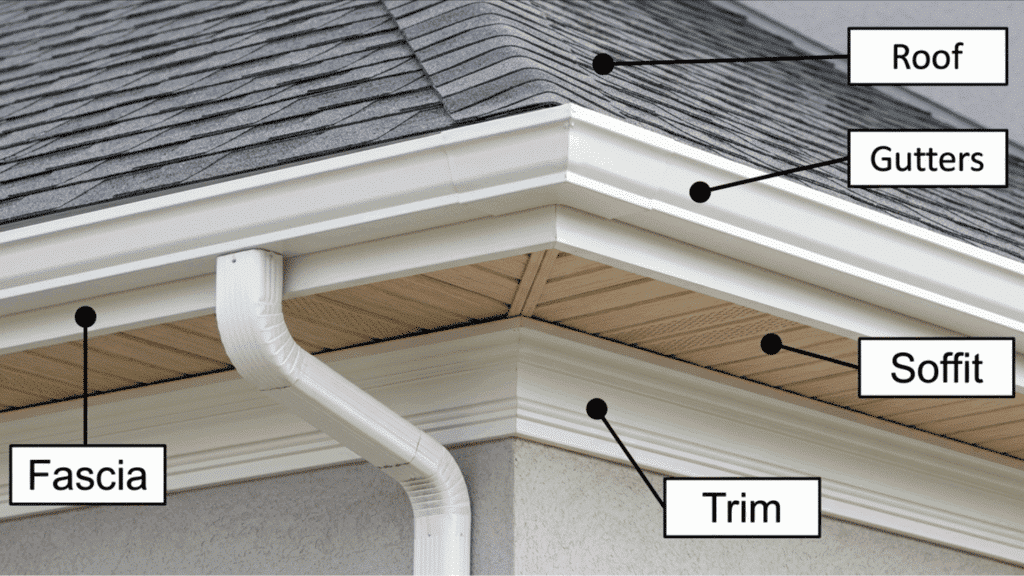
These three terms get mixed up all the time, and honestly, it’s easy to see why. This section breaks down exactly what sets fascia, soffit, and trim apart.
| Feature | Fascia | Soffit | Trim |
|---|---|---|---|
| Location | Front of eave (vertical) | Underside of eave (horizontal) | Windows, doors, corners |
| Main role | Supports gutters, seals the edge | Ventilates attic, covers rafter ends | Decorative finish, frames openings |
| Ventilation | No | Yes (usually) | No |
| Visible from | Street level | Looking up at the eave | Street level |
| Material options | Wood, vinyl, aluminum, composite | Wood, vinyl, aluminum, fiber cement | Wood, vinyl, composite |
| Prone to | Rot, water damage | Mold, pest entry | Cracking, paint peeling |
| Maintenance level | Moderate to high | Low to moderate | Low to moderate |
| Connected to | Gutters, roof deck | Fascia, exterior wall | Exterior wall, window/door frames |
Types of Fascia Board Materials
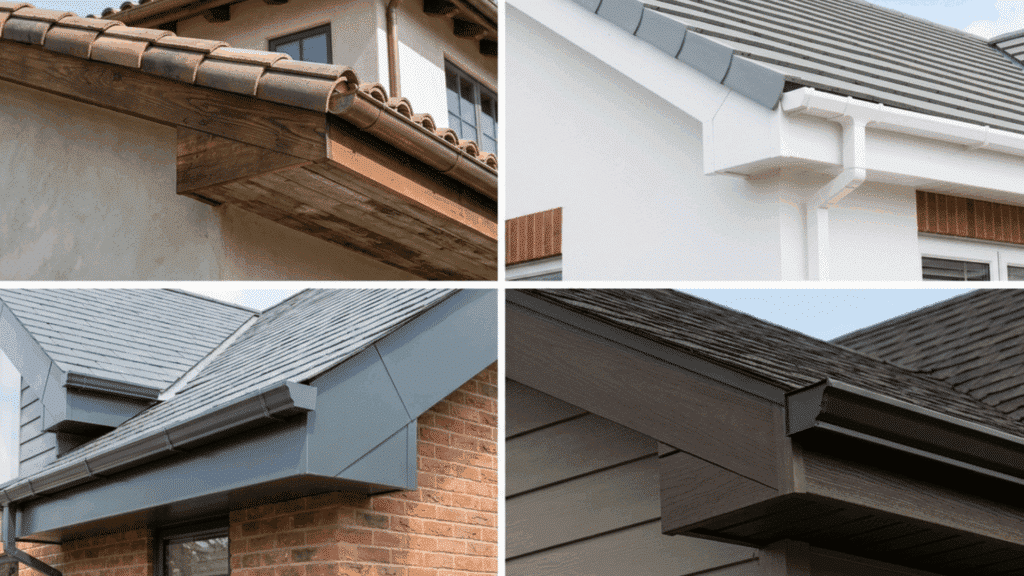
Not all fascia boards are made the same, and the material you choose can make a big difference in how long they last and how much upkeep they need.
1. Wood
Wood fascia has been used on homes for centuries, and it’s easy to see why. It has a classic, natural look that works well with traditional home styles, and it can be painted in any color you like.
The downside is that wood is highly vulnerable to moisture, which means rot and warping are real concerns over time. It needs regular painting and maintenance to stay in good shape and works best in dry climates only.
2. Vinyl
Vinyl is one of the most popular fascia materials out there because of how little maintenance it requires. It’s waterproof, affordable, and holds up well in rainy and humid climates without rotting or warping.
The trade-off is that it comes in a fixed color range, so you can’t repaint it, and it can warp in areas with extreme heat. But for most people, the low upkeep makes it well worth it.
3. UPVC (Unplasticized Polyvinyl Chloride)
UPVC is a step up from standard vinyl in terms of durability and weather resistance. It handles rain, humidity, and temperature changes really well, making it a solid choice for wetter climates.
Like vinyl, it comes in a fixed color range and can’t be repainted, but it requires virtually no maintenance over its lifespan.
The only drawback is that it’s less commonly available and can be harder to source than other materials.
4. Aluminum
Aluminum fascia is lightweight, durable, and naturally fire- and rust-resistant. It performs well in hot, dry climates and usually comes pre-finished from the factory, which saves time during installation.
The main downside is that it dents fairly easily and doesn’t offer as many style options as wood or composite. That said, when properly installed, it can last 20 to 40 years with minimal upkeep.
5. Composite
Composite fascia is made from a mix of wood fibers and synthetic materials, giving you the look of wood without the vulnerability to rot.
It’s a great option for colder climates with freeze-thaw cycles since it doesn’t expand and contract as dramatically as other materials. It often comes pre-finished, but can also be painted on site if needed.
The main thing that holds some people back is the higher upfront cost compared to vinyl or wood.
Signs Your Fascia Needs Repair or Replacement
Your fascia will usually give you a heads up before things get serious, and these are the signs to watch for.
- Rotting or Soft Spots: Press your finger against the board. If it feels soft or spongy, moisture has already worked its way in, and rot has set in beneath the surface.
- Paint Peeling Repeatedly: If your fascia keeps peeling no matter how many times you repaint it, that’s usually a sign of trapped moisture beneath the paint rather than a paint quality issue.
- Gutters Sagging or Pulling Away: When the fascia weakens, it loses its grip on the gutters. So if your gutters are starting to pull away from the roofline, the fascia behind them is likely the culprit.
- Water Stains on Exterior Walls: Water stains running down your exterior walls below the roofline are a strong sign that your fascia is no longer keeping moisture out where it should.
- Visible Cracks or Gaps: Any visible gaps or cracks between the fascia and the soffit are an open door for water, pests, and cold air to get in and cause further damage.
Final Thought
What is fascia on a house? It’s that one board doing a quiet but critical job, holding gutters, blocking moisture, protecting rafter ends, and keeping the roofline looking clean.
Catching problems early keeps things simple and affordable. A quick visual check once or twice a year is really all it takes.
If this helped make sense of fascia, go ahead and check out the rest of our roofing guides; there’s a lot more to learn about keeping a home in solid shape.

Tommy Hardy, an alumnus of the Georgia Institute of Technology with a degree in Mechanical Engineering, has been a go-to figure in residential upkeep and innovation for over 18 years. His career commenced in a leading home appliance manufacturing company, where he mastered the intricacies of household systems. Joining our platform in 2020, Tommy quickly became a reader favorite for his practical and easy-to-follow guides. He took the helm of our DIY section in 2019, consistently delivering content that empowers homeowners. Beyond his professional pursuits, Tommy is a passionate gardener and enjoys woodworking, skills enhancing his hands-on approach to home care.