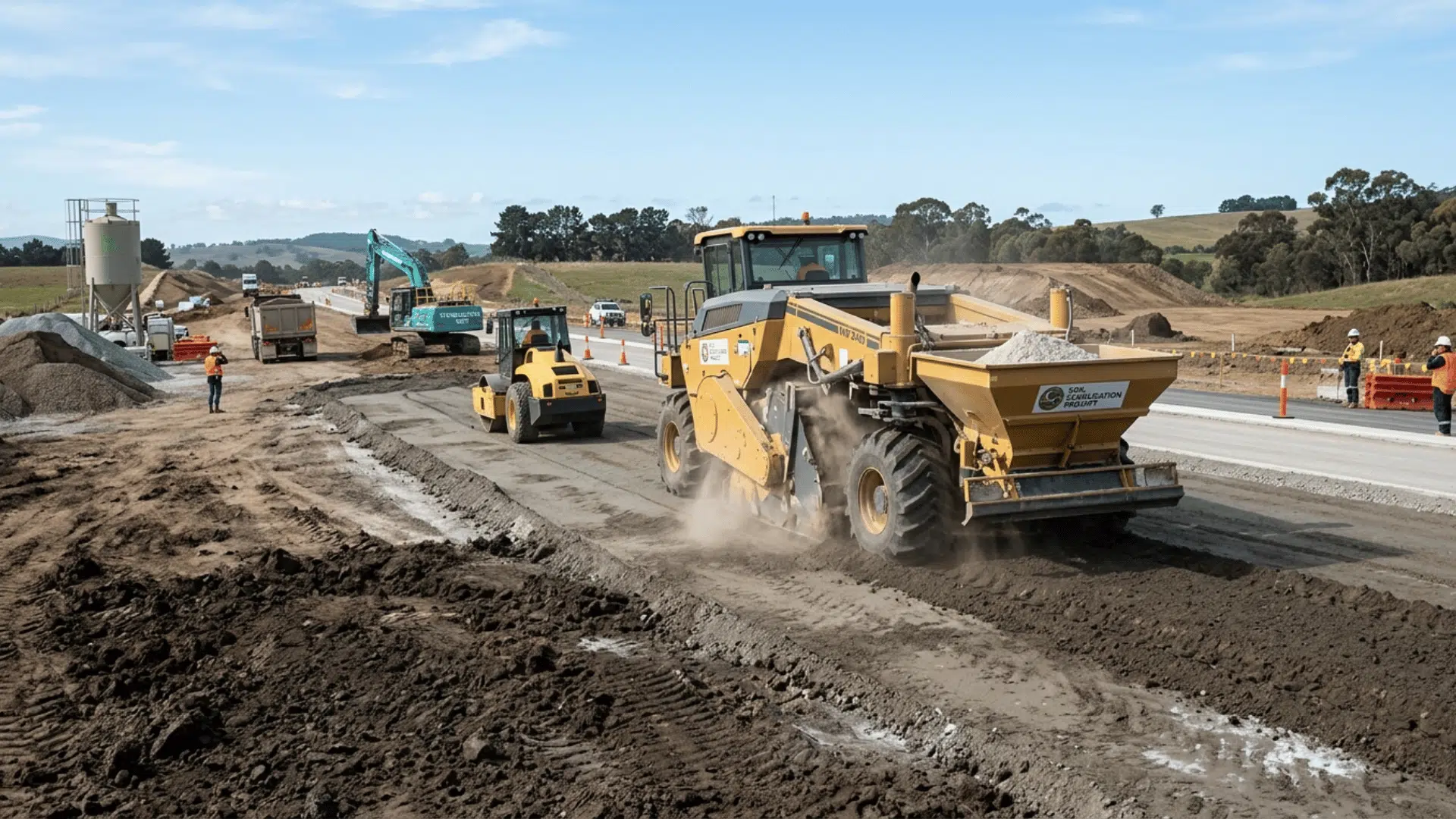

Not all soil is ready to support construction right away. In many cases, the ground is too soft, too loose, or too sensitive to moisture, which can lead to long-term damage.
This is why preparing the soil is such an important step before any building begins. A strong foundation helps prevent cracks, shifting, and costly repairs later.
One of the most effective ways to improve ground conditions is through soil stabilization. It helps make weak soil more dependable so it can safely support roads, buildings, and other structures.
In this guide, you’ll learn what it is, how it works, and the common methods used to make soil suitable for construction.
What Is Soil Stabilization?
It is an engineering technique that changes the chemical or physical makeup of the ground to make it more predictable.
By mixing in additives or using heavy machinery, experts turn “poor” soil into a solid, stone-like platform. This process prevents the earth from expanding or shrinking when it gets wet, a major cause of structural cracks.
Instead of digging up natural dirt and throwing it away, stabilization treats the soil already on-site. This makes it an eco-friendly choice that reduces the need for hauling in expensive new gravel.
Ultimately, it turns raw ground into a reliable foundation that can handle extreme pressure and heavy loads.
Why Is It Important?
Soil conditions directly affect a structure’s safety and durability, which is why they play such a critical role in construction projects.
- Prevents Soil Movement: Unstable soil shifts, settles, and sinks over time. This process locks the ground in place, keeping structures above it safe and intact.
- Improves Construction Safety: Weak soil is a serious risk on any job site. Stabilizing it first creates a firm, reliable base that supports workers, equipment, and the structure being built.
- Increases Durability of Roads and Buildings: A strong foundation means a longer lifespan. Roads and buildings built on stabilized soil hold up far better against heavy loads, traffic, and harsh weather.
- Reduces Erosion and DustLoss: Untreated soil erodes quickly, especially in windy or rainy conditions. Stabilization binds the soil together, reducing both erosion and airborne dust at construction sites.
- Saves Time and Money in the Long Run. Fixing ground issues after construction is far more costly than addressing them early. Proper treatment reduces the need for frequent repairs and maintenance later.
Materials Used In Soil Stabilization
The right material can make all the difference in improving soil performance. Different additives are chosen based on soil type, project requirements, and the specific results needed on-site.
| Material | Best Used For | Key Benefit |
|---|---|---|
| Cement | General soil stabilization across project types | Significantly improves compressive strength and overall soil hardness |
| Lime | Clay-heavy soils with high moisture content | Reduces plasticity and swelling, making soil more manageable |
| Fly Ash | Projects requiring an industrial by-product binder | Improves soil structure and adds strength without high material costs |
| Bitumen | Road construction and pavement base layers | Provides waterproofing and long-term durability under heavy traffic |
| Polymers And Enzymes | Eco-friendly or highly specialized applications | Modern, efficient stabilization with minimal environmental impact |
Types of Soil Stabilization Methods
Different techniques are used depending on the soil type, project scale, and specific ground conditions; there’s no one-size-fits-all approach.
1. Mechanical
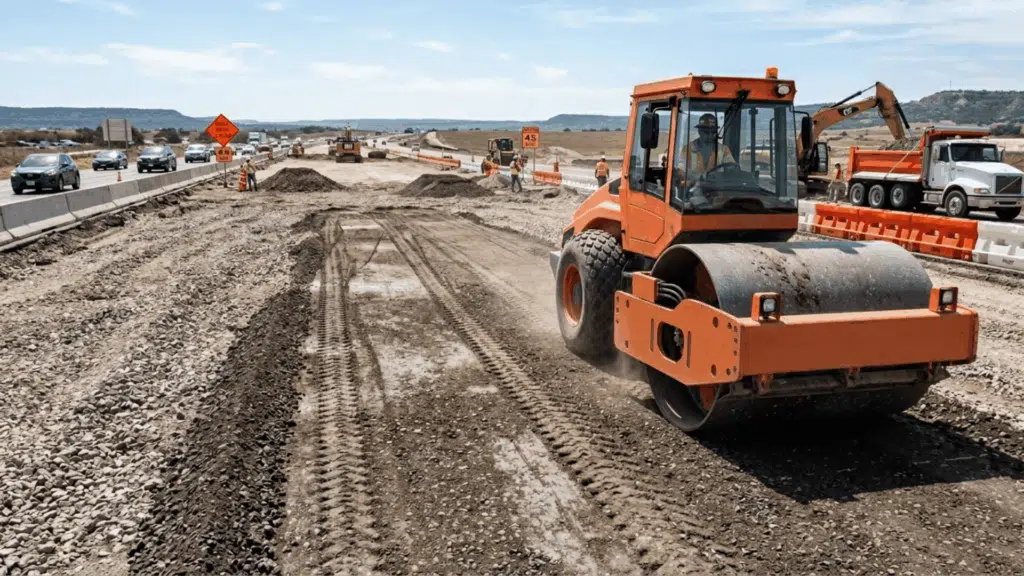
It improves soil by physically altering its structure without adding any chemicals. This is done by mixing different soil types together to create a more balanced, stable composition.
Heavy machinery like rollers and compactors is used to compress the soil, reducing air gaps and increasing its density. The result is a tightly packed, load-bearing surface that can handle significant weight.
This method is most commonly used in road base preparation and large ground leveling projects.
2. Chemical
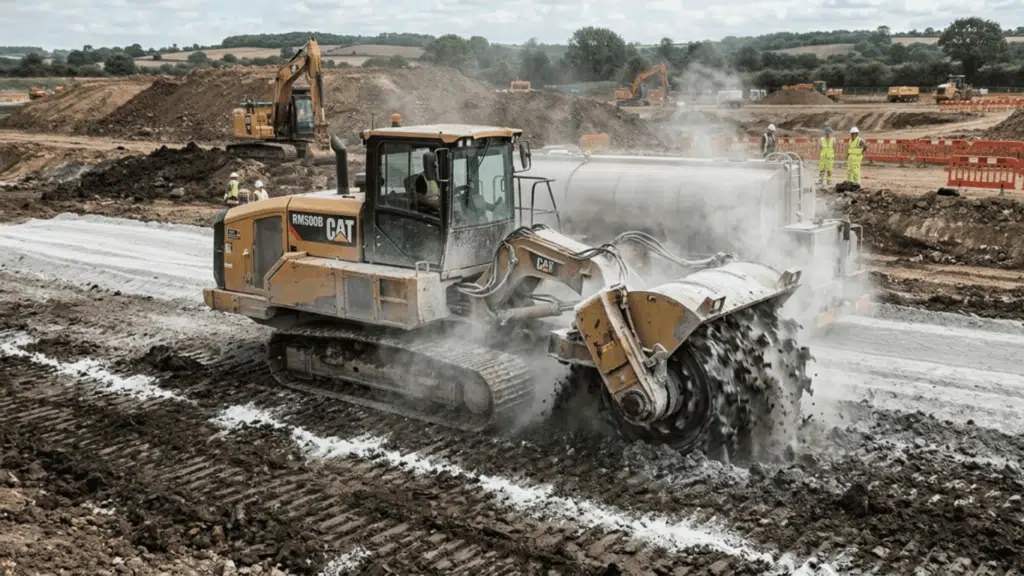
It works by introducing chemical binders directly into the soil, altering its properties at a deeper level.
Common agents like lime, cement, and fly ash are mixed into the soil to trigger reactions that strengthen the overall structure.
This process significantly improves both soil strength and water resistance, making it far less likely to swell, shrink, or erode.
It’s a go-to method for clay-heavy or moisture-prone soils. Chemical stabilization is widely used in road construction, foundations, and airport runways.
3. Biological
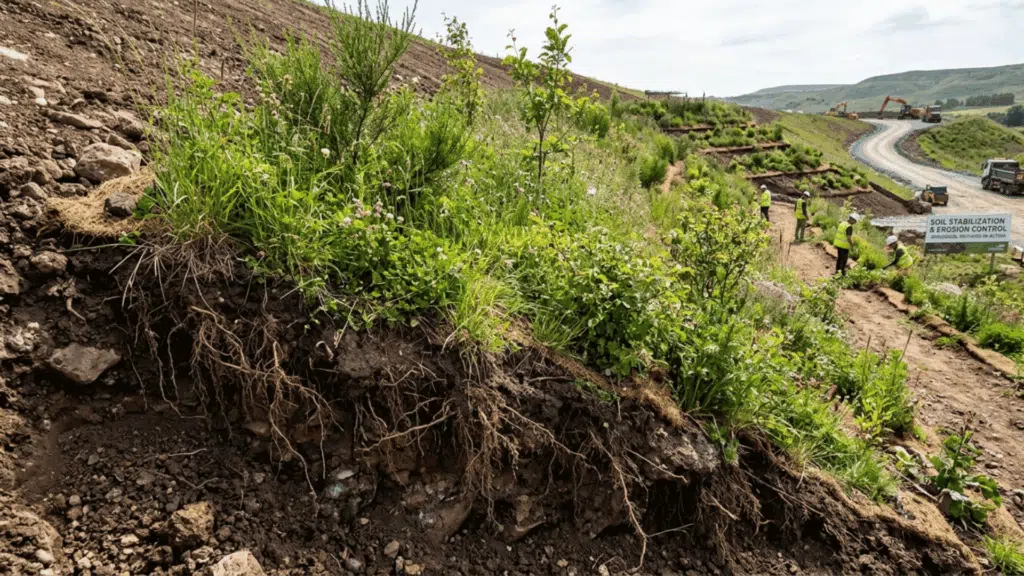
It uses natural elements, primarily vegetation and microorganisms, to strengthen and protect the soil. Plant roots bind soil particles together, making the ground more resistant to surface erosion.
Microorganisms, when introduced into the soil, can produce natural cementing agents that gradually improve soil stability over time.
This method is considered more environmentally friendly compared to chemical approaches. It works best in slopes, embankments, and areas where erosion control is the primary concern.
4. Electrical
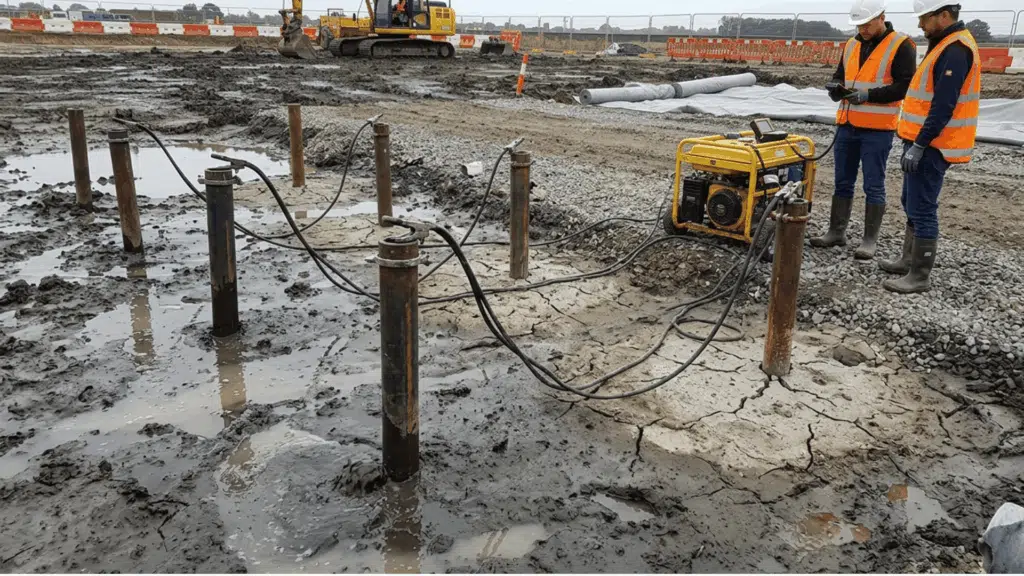
It involves passing an electric current through the soil to change its physical and chemical properties. This process, known as electroosmosis, forces water out of saturated soil, reducing moisture content and increasing strength.
It is primarily used in fine-grained soils, such as clay, where conventional methods may fall short. Given its technical complexity and cost, this method is reserved for specialized engineering situations.
It is commonly applied in deep foundation work, tunneling, and other high-stakes construction environments.
Factors That Affect Soil Stabilization: What You ShouldKnow
Effectiveness depends on several site and material factors. Getting these conditions right helps ensure the process works properly and prevents early failure.
- Soil type and composition determine which stabilization method and materials will work best
- Moisture content must be balanced for proper bonding and compaction
- Climate conditions affect how stabilized soil performs over time
- The type of stabilizing material impacts strength, durability, and suitability
- Construction techniques influence the overall quality and long-term stability
Challenges In Soil Stabilization
It comes with several challenges that can affect performance and cost. Environmental concerns arise with chemicals like lime and cement, which may impact the surrounding soil if not handled properly.
Some methods also involve high initial costs, making them less practical for smaller projects. Proper soil testing and expert engineering are essential, as poor planning can lead to failure.
Inconsistent results are common in mixed soil conditions, where different areas react differently to the same treatment. Extremely wet soils create additional issues by reducing compaction and bonding efficiency.
Limited access to quality materials and equipment, especially in remote areas, can further delay projects and increase overall costs.
The Bottom Line
Soil stabilization is one of those things that doesn’t get much attention, but it’s working hard behind every road you drive on and every building you walk into.
It’s the difference between a structure that lasts generations and one that starts showing problems within years. From mechanical compaction to chemical binders, each method and material serves a specific purpose.
And when the right approach is matched to the right soil conditions, the results speak for themselves: stronger ground, safer structures, and lower long-term costs.
If you’re planning a construction project, don’t overlook what’s beneath your feet. Getting it right from the start is always worth it.

Veronica Lee holds a Master’s degree in Landscape Architecture from Cornell University and has dedicated more than 15 years to transforming outdoor areas into artistic and sustainable spaces. Her career took off in a renowned landscape design firm, where she excelled in creating visually stunning and environmentally responsible designs. In 2019, Veronica brought her expertise to our platform, quickly becoming a key contributor to our outdoor design and sustainability sections. As the lead of our landscape innovation series ever since joining, she has inspired readers with her forward-thinking and practical approach. When not drafting designs, Veronica enjoys pottery and participates in local conservation efforts, activities that complement her professional ethos of blending art with nature.