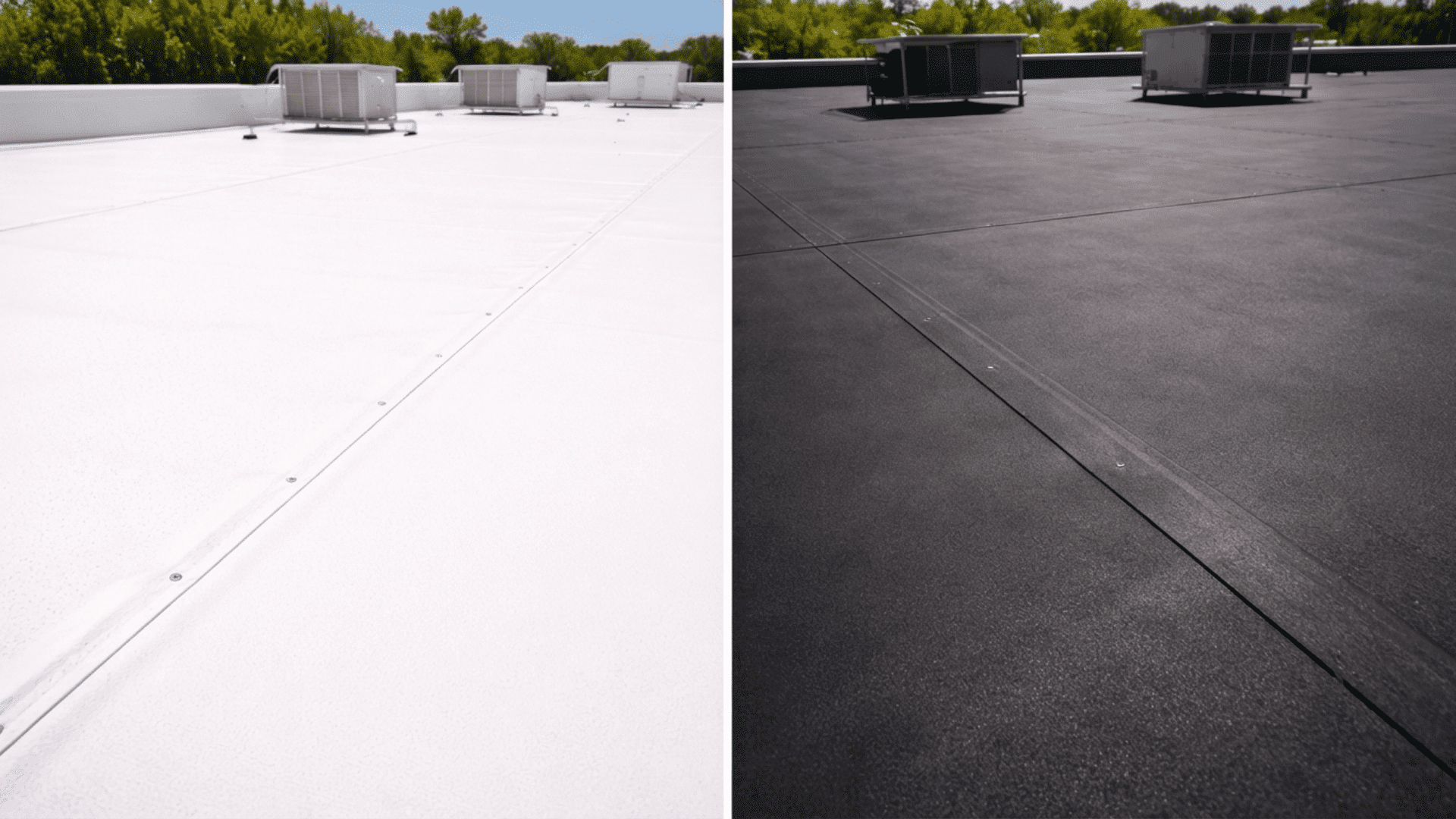

When a flat roof needs replacing, two names keep coming up: TPO and EPDM. Both are single-ply membranes and are widely used in commercial and residential buildings.
But they work, cost, and perform differently depending on the climate and building type.
The question most building owners face is straightforward: which one actually makes sense for their project?
This blog breaks down the TPO vs. EPDM comparison in full, covering costs, lifespan, installation, and the specific situations where each material performs best.
What is TPO Roofing?
TPO, or Thermoplastic Polyolefin, is a single-ply roofing membrane first introduced in the early 1990s as a more energy-efficient alternative to traditional flat roofing materials.
It is made by combining thermoplastic polymers with a reinforcement layer, resulting in a lightweight yet durable sheet membrane.
It gained significant traction in the commercial roofing market over the following two decades, largely due to its white, reflective surface and its ability to meet energy code requirements in warmer climates.
What is EPDM Roofing?
EPDM, or Ethylene Propylene Diene Monomer, is a synthetic rubber membrane that has been used in commercial roofing since the 1960s.
It is produced through a vulcanization process that gives the rubber its durability and long-term resistance to UV exposure and weathering.
Its long history in the industry means there is a substantial body of real-world performance data behind it, which is one of the reasons it remains a trusted option for building owners and contractors seeking a proven, cost-effective flat roofing solution.
TPO vs. EPDM: A Comparison
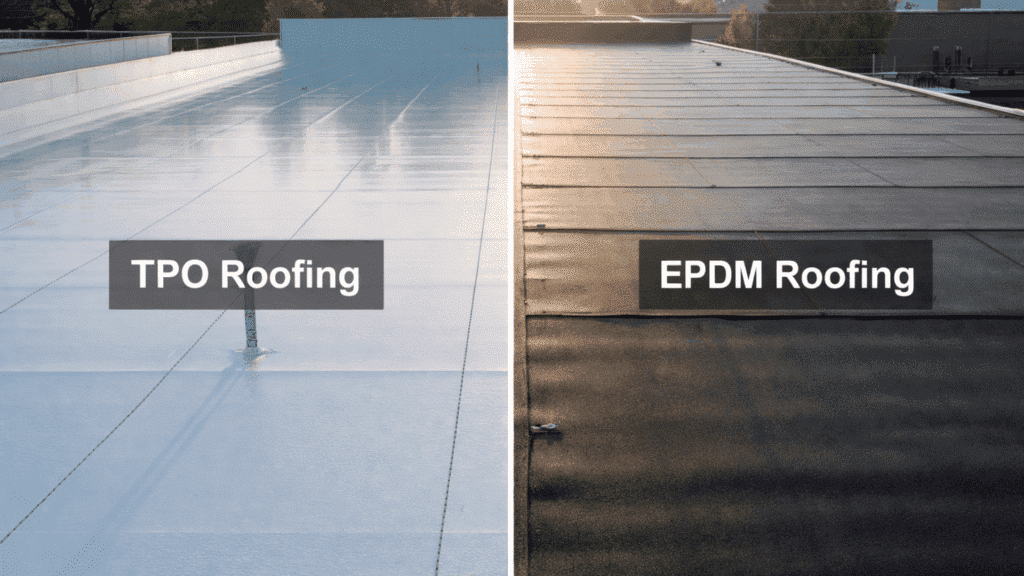
Both TPO and EPDM are widely used single-ply roofing systems, but they differ in material composition, performance characteristics, and overall cost. The table below covers the key comparison points across both categories.
| Feature | Tpo | Epdm |
|---|---|---|
| Material | Thermoplastic polymers with reinforcement scrim | Vulcanized synthetic rubber |
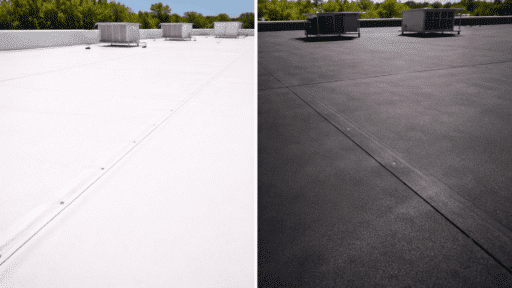
| Typical Color | White | Black |
| Seam Type | Heat-welded, as strong as the membrane itself | Adhesive or seam tape, the bond depends on surface preparation |
| Flexibility | Moderate, reduces in cold temperatures | High, retains elasticity at sub-zero temperatures |
| Energy Performance | Deflects solar radiation | Absorbs solar radiation, a concern in warm climates |
| Lifespan and Warranty | 15 to 25 years, warranty 10 to 20 years | 20 to 30 years, extended warranty on thicker membranes |
| Installation | Mechanical fastening or full adhesion, seams are heat-welded | Fully adhered or mechanically attached, seams sealed with tape or adhesive |
| Repair and Maintenance | Requires compatible materials and proper welding, inspect seams and flashing regularly | Patches applied without specialized equipment, inspect seams and drainage areas regularly. |
| Cost | Material moderate, installation moderate to high | Material lower, installation moderate |
| Long-Term Value | Strong in warm climates | Strong for budget projects |
Which Roof Should You Choose?
Choosing between TPO and EPDM depends on your climate, budget, and long-term priorities. Each material performs well in different conditions, so the better option comes down to what your building needs most.
TPO Roofing: When It Makes More Sense
- Best for Warm Climates – Reflective surface helps reduce heat buildup
- Lower Cooling Costs – Improves energy efficiency in hot areas
- Handles Chemicals Better – Suitable for roofs exposed to grease or exhaust
- Strong Seam Performance – Heat-welded seams improve waterproofing
- Good for Commercial Use – Works well on large, low-slope roofs
EPDM Roofing: When It’s a Better Fit
- Budget-Friendly Option – Lower upfront cost compared to TPO
- Performs Well in Cold Weather – Flexible material handles temperature drops
- Proven Track Record – Long history of reliable performance
- Easy Repairs – Simpler patching process reduces maintenance hassle
- Lower Maintenance Costs – Practical for long-term property management
Hidden Costs Most Buyers Miss
Hidden costs can quietly increase the total price of both TPO and EPDM roofing if they’re not planned upfront. Labor complexity, especially for TPO welding, can raise installation costs.
Roof preparation and tear-off work may add unexpected expenses before installation even begins. Insulation upgrades are often required to meet energy codes, increasing the overall budget.
For TPO, specialized repair tools and skilled technicians can make future fixes more expensive.
With EPDM, seam maintenance over time may lead to added upkeep costs.
Factoring in these details early helps avoid budget surprises and ensures a more accurate project estimate.
Maintenance & Installation Needs: TPO vs EPDM Roofing
Both TPO and EPDM have different installation methods and maintenance needs. Understanding these helps avoid long-term issues and unexpected costs.
TPO Roofing
- Installation Complexity – Requires skilled labor for heat-welded seams
- Seam Strength – Welded seams create a tight, waterproof bond
- Maintenance Level – Moderate; seams and membrane need periodic checks
- Repair Process – Repairs require proper tools and trained technicians
- Common Issues – Installation errors can affect long-term performance
EPDM Roofing
- Installation Simplicity – Easier to install using adhesive or tape systems
- Seam Type – Seams are glued or taped, not welded
- Maintenance Level – Low to moderate with basic inspections
- Repair Process – Simple patching makes fixes quicker and cheaper
- Common Issues – Seams may weaken over time if not maintained properly
Conclusion
Choosing between TPO and EPDM isn’t about picking the “better” material – it’s about choosing what fits the building, climate, and budget.
TPO stands out in warm regions where energy savings and strong seam performance matter most. EPDM, on the other hand, offers a reliable, cost-effective option with a long track record, especially in colder conditions.
Both systems can perform well when installed correctly and maintained over time. The real difference comes down to how each one aligns with your project needs.
Before making a final decision, compare your priorities, speak with a qualified contractor, and choose the option that delivers the best long-term value for your roof.
Tommy Hardy, an alumnus of the Georgia Institute of Technology with a degree in Mechanical Engineering, has been a go-to figure in residential upkeep and innovation for over 18 years. His career commenced in a leading home appliance manufacturing company, where he mastered the intricacies of household systems. Joining our platform in 2020, Tommy quickly became a reader favorite for his practical and easy-to-follow guides. He took the helm of our DIY section in 2019, consistently delivering content that empowers homeowners. Beyond his professional pursuits, Tommy is a passionate gardener and enjoys woodworking, skills enhancing his hands-on approach to home care.