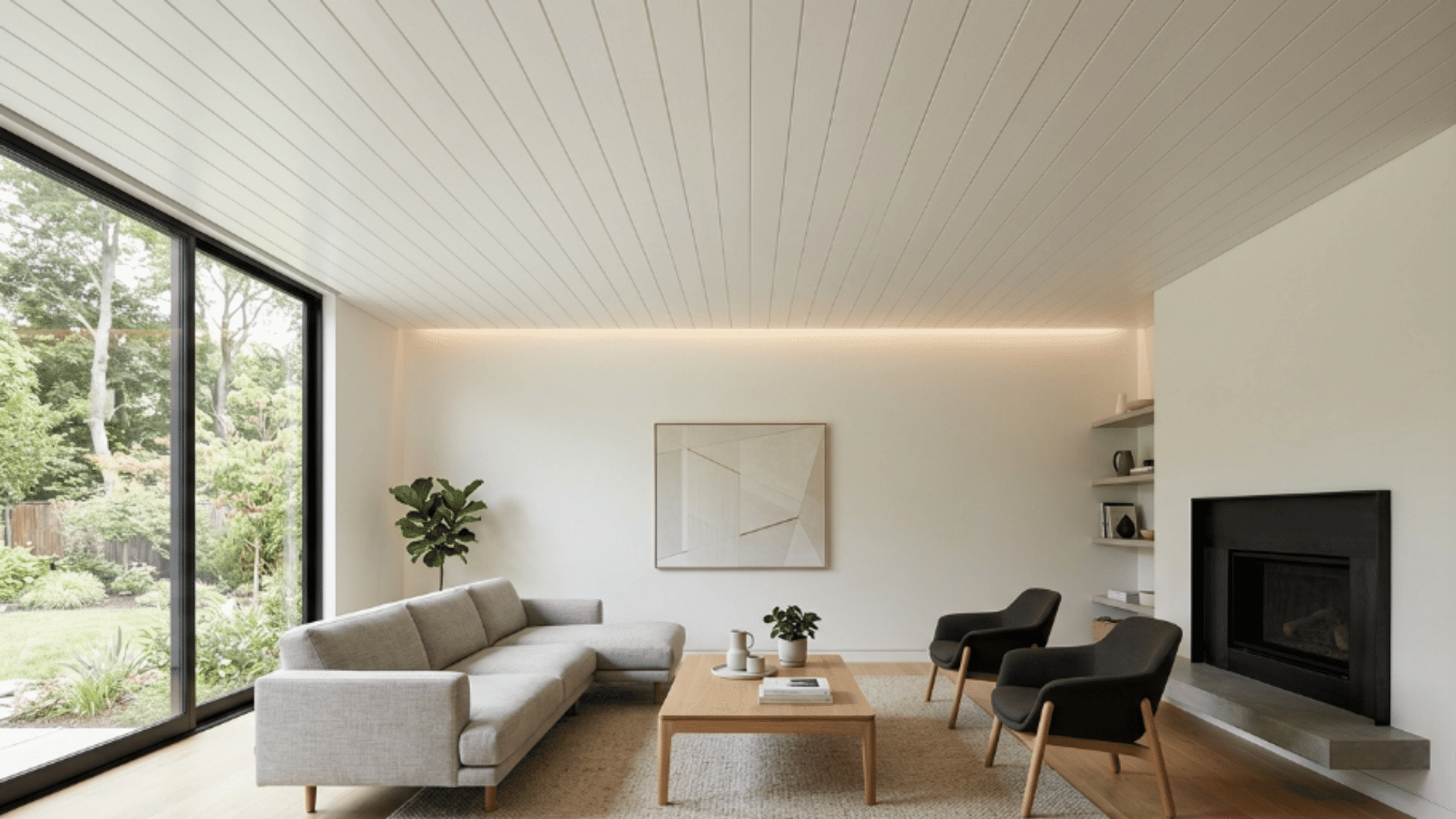

Shiplap ceilings have become a favorite design feature in many homes.
They add texture, character, and a clean finished look without feeling complicated. A shiplap ceiling can make a plain room feel warm and thoughtfully designed.
Many people use shiplap on walls, but the ceiling is often overlooked. Adding it overhead can instantly change the mood of a space.
From rustic farmhouse looks to modern painted ceilings, there are many ways to use shiplap creatively. This list shares shiplap ceiling ideas that can inspire your next home update.
Why Shiplap Ceilings are Popular?
Shiplap ceilings are popular because they bring both visual interest and structure to a room without making the space feel heavy.
The clean horizontal lines naturally guide the eye across the ceiling, which can make a room appear larger and more open.
Many people like shiplap because it complements a range of interior styles, including farmhouse, coastal, modern, and transitional.
It can be painted white for a bright, airy look or stained to showcase natural wood tones. Shiplap ceilings also help highlight features like beams and lighting fixtures.
Shiplap Ceiling Ideas to Inspire Your Space
From cozy bedrooms to open living rooms, shiplap ceiling ideas come in all styles and budgets. Here’s a look at some of the best ones worth considering.
1. Classic White Horizontal Shiplap Ceiling
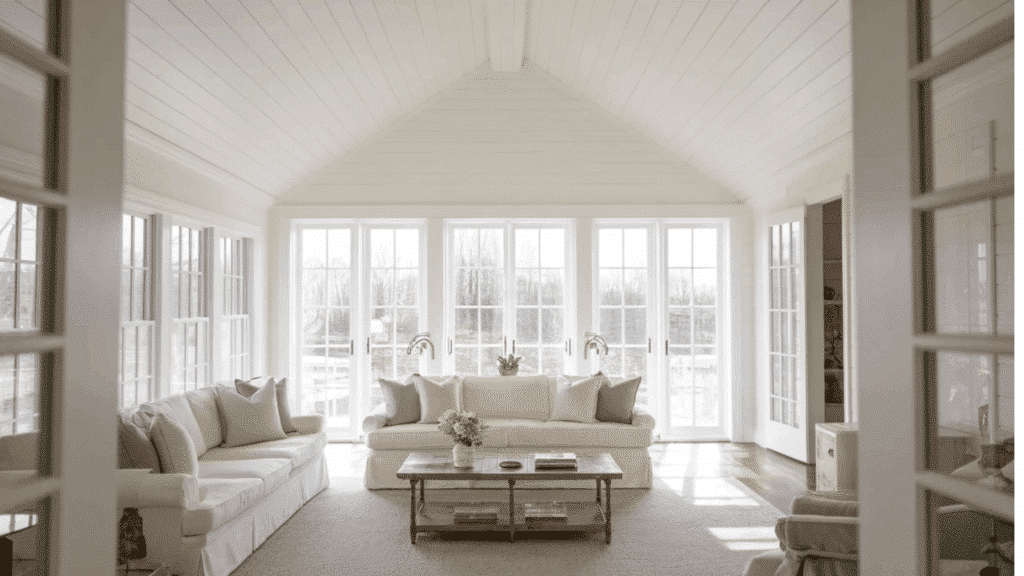
A classic white shiplap ceiling is one of the most popular choices. The clean, horizontal lines create a calm, balanced look that complements many interior styles.
White planks reflect natural and artificial light, helping the room feel brighter and more open. It is also a simple way to add character to a plain ceiling without making the space feel busy.
2. Natural Wood Shiplap Ceiling
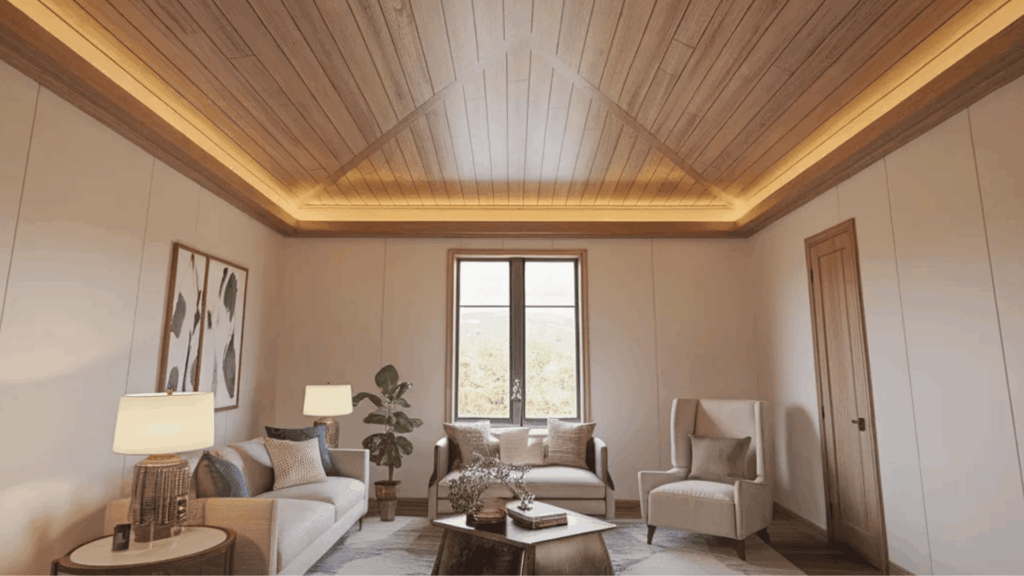
A natural wood shiplap ceiling brings warmth and texture into the room. The visible wood grain creates a welcoming atmosphere and adds character without overwhelming the space.
This design softens the overall environment and pairs nicely with neutral walls and simple furniture. Warm lighting reflecting off the wood surface can make the entire room feel cosy and relaxed.
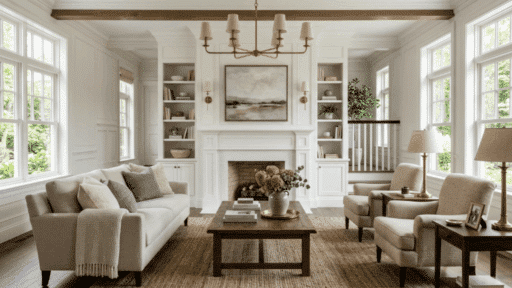
3. White Shiplap Ceiling with Exposed Beams
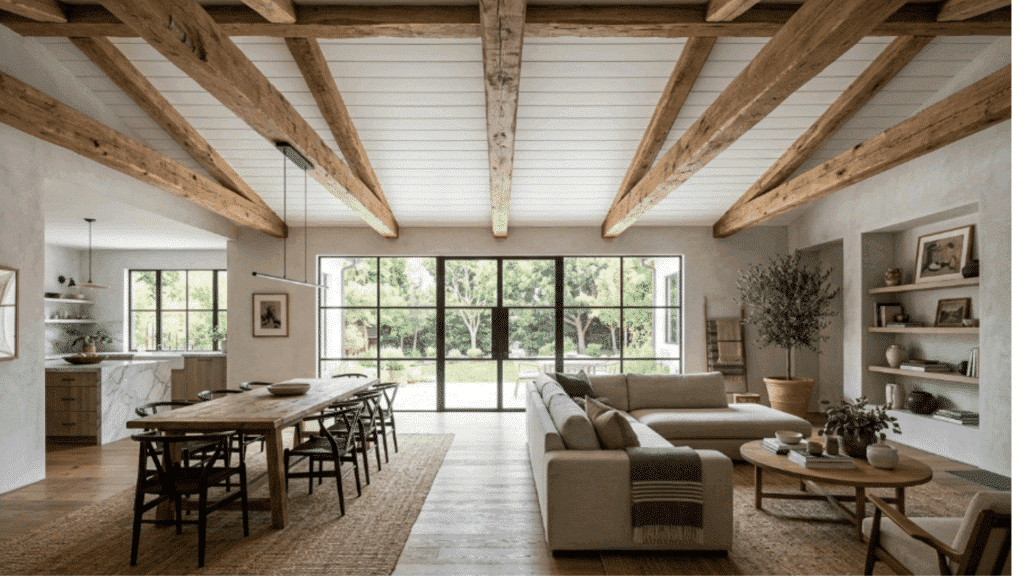
Combining shiplap with exposed beams creates a strong architectural feature overhead. The beams break up the ceiling surface and add depth, making the ceiling more visually interesting.
This design also helps define the room’s structure. The contrast between the smooth shiplap planks and the solid beams can make the space feel both structured and inviting.
The beams can also guide the eye across the ceiling and help frame the layout of the room.
4. Soft Grey Painted Shiplap Ceiling
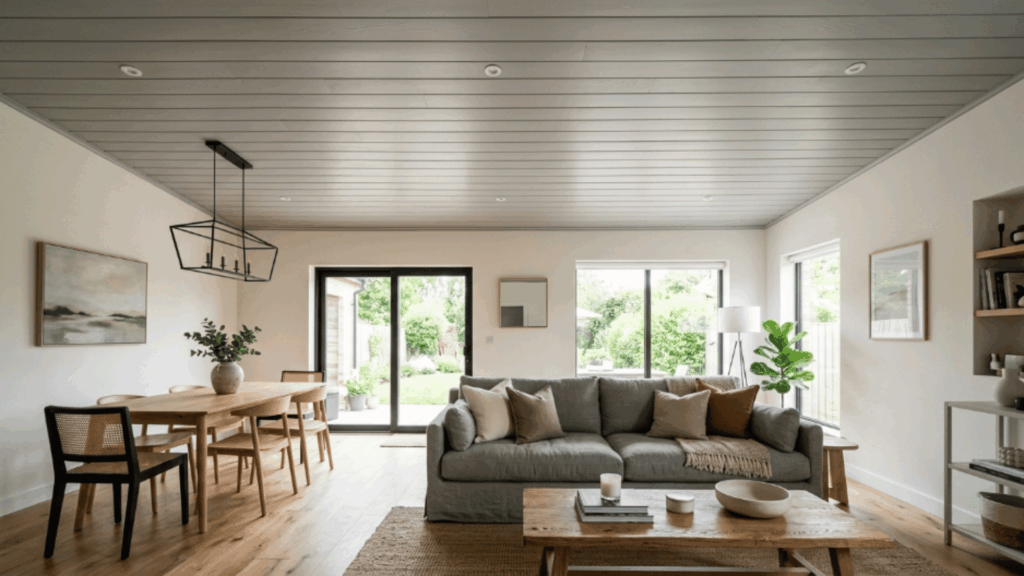
A soft grey shiplap ceiling adds subtle colour while keeping the room calm and balanced. Grey tones create a modern look without making the ceiling feel heavy.
This style works especially well in spaces with neutral walls. The gentle contrast helps the ceiling stand out while maintaining a relaxed and comfortable atmosphere.
5. Vaulted Shiplap Ceiling with Beam Accents
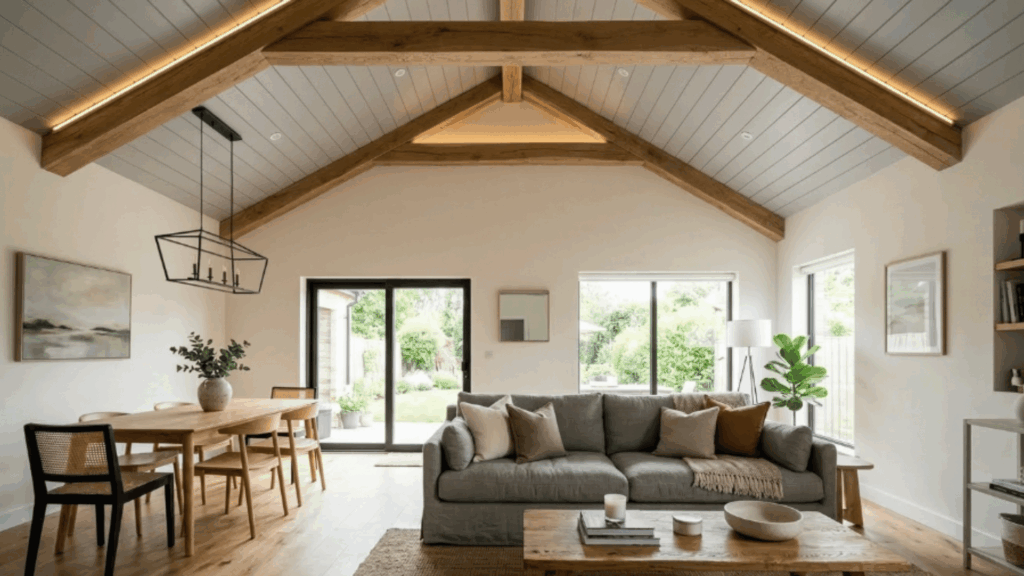
A vaulted shiplap ceiling naturally draws the eye upward and highlights the room’s height. The long planks following the slope create movement and guide the eye along the ceiling.
Beam accents add another layer of structure. Together, they make the room feel larger, brighter, and more open, especially when natural light streams in through tall windows.
This design is especially helpful in spaces where the goal is to make the ceiling feel more dramatic and noticeable.
6. Coastal Light Blue Shiplap Ceiling
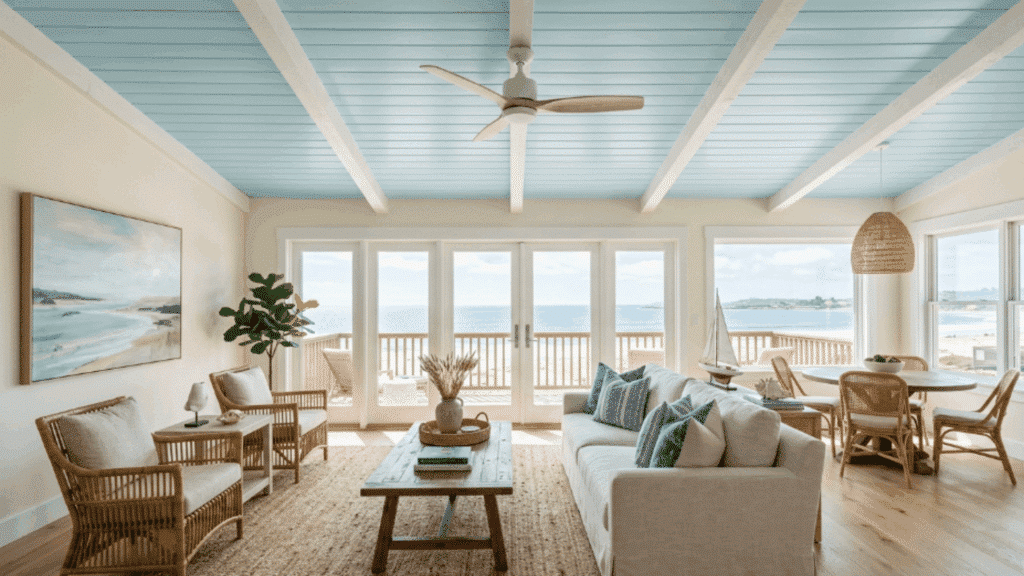
A light-blue shiplap ceiling adds a soft coastal feel to the space. The colour creates a relaxed, refreshing atmosphere that works well in bright interiors.
Light blue tones reflect natural light beautifully, helping the room feel airy and comfortable. This design often creates a calm environment that feels open and peaceful.
7. Shiplap Ceiling with Pendant Lighting
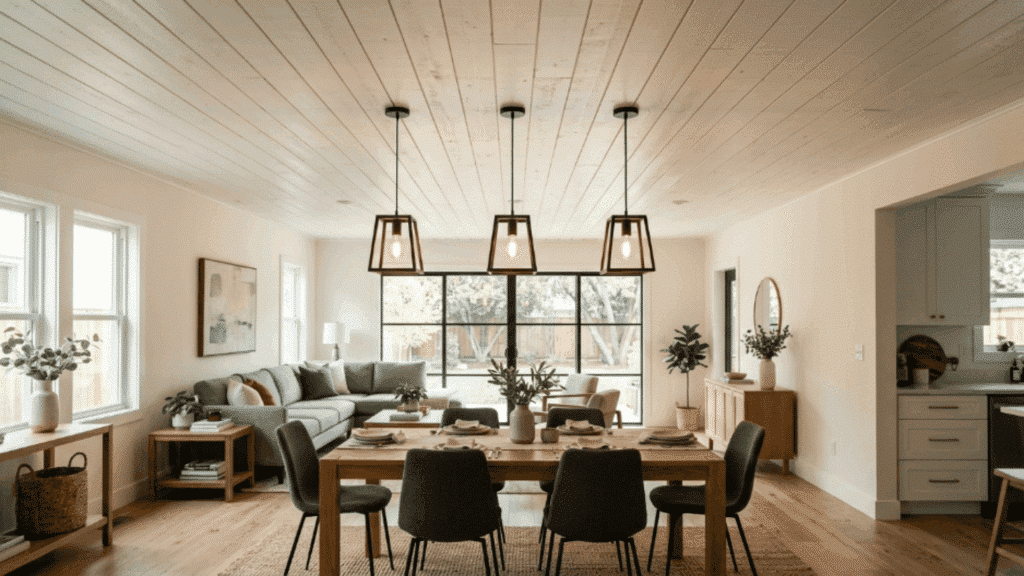
Pendant lighting paired with a shiplap ceiling creates a strong focal point. The clean plank lines provide a simple background, allowing the lighting fixtures to stand out.
When the lights hang down from the ceiling, they add depth and visual layering. This combination helps define the space while keeping the ceiling design noticeable and balanced.
It also allows the lighting to highlight the plank pattern and texture from different angles.
8. Shiplap Ceiling with Recessed Lighting
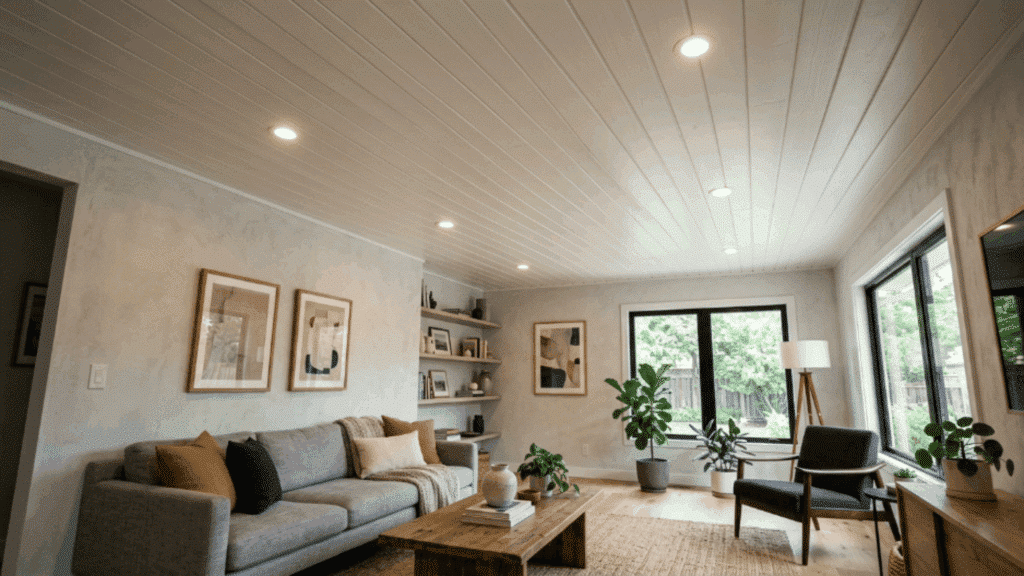
Recessed lighting works especially well with shiplap ceilings because it keeps the surface clean and uncluttered. The lights sit flush with the planks, keeping the ceiling pattern visible.
Soft lighting across the boards highlights the texture of the shiplap. This approach can create a warm and evenly lit environment without distracting from the design.
9. Dark Painted Shiplap Ceiling
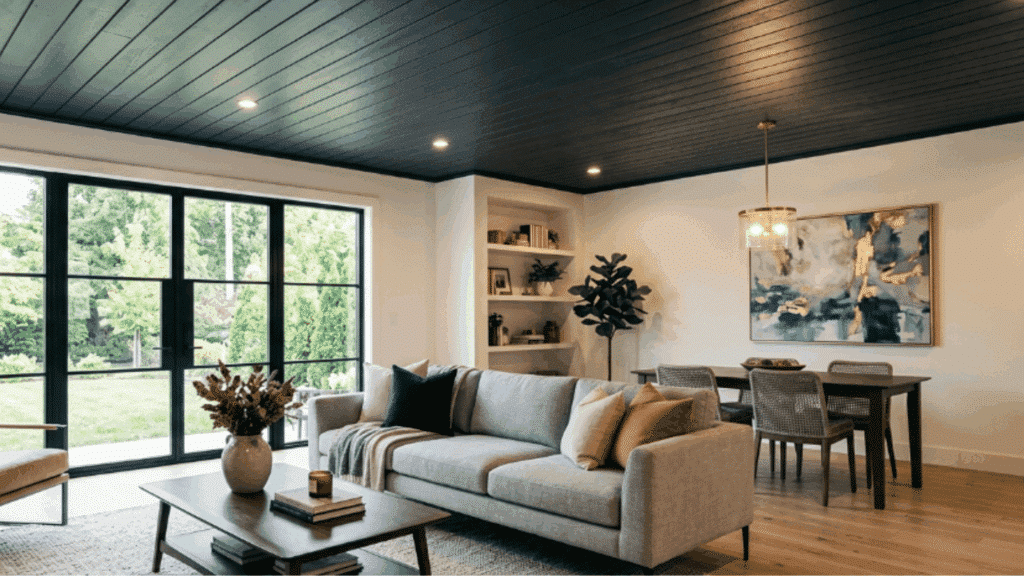
A dark shiplap ceiling creates contrast and drama within a room. Deep colours like navy or charcoal draw attention upward and add visual depth.
When paired with lighter walls and furniture, the ceiling becomes a striking feature. The darker tone can also make lighting fixtures stand out more clearly.
This design can make a large room feel more grounded and visually balanced.
10. Narrow Plank Shiplap Ceiling
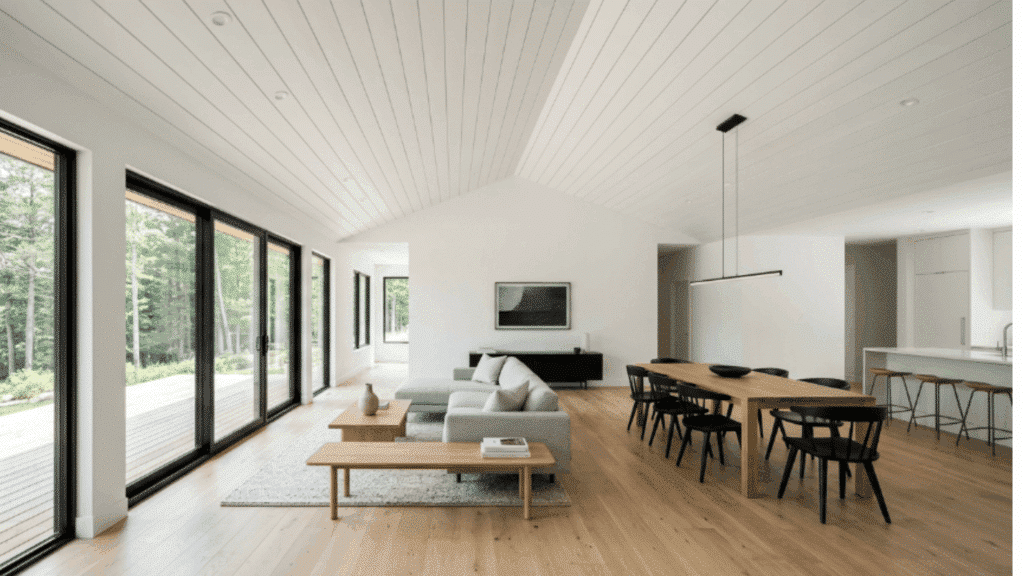
Narrow plank shiplap creates more lines across the ceiling, which adds detail and texture. This design works well in spaces where a little extra visual interest is desired.
The repeated lines can guide the eye across the room and create a sense of movement. It often makes the ceiling feel carefully designed rather than plain.
11. Wide Plank Shiplap Ceiling
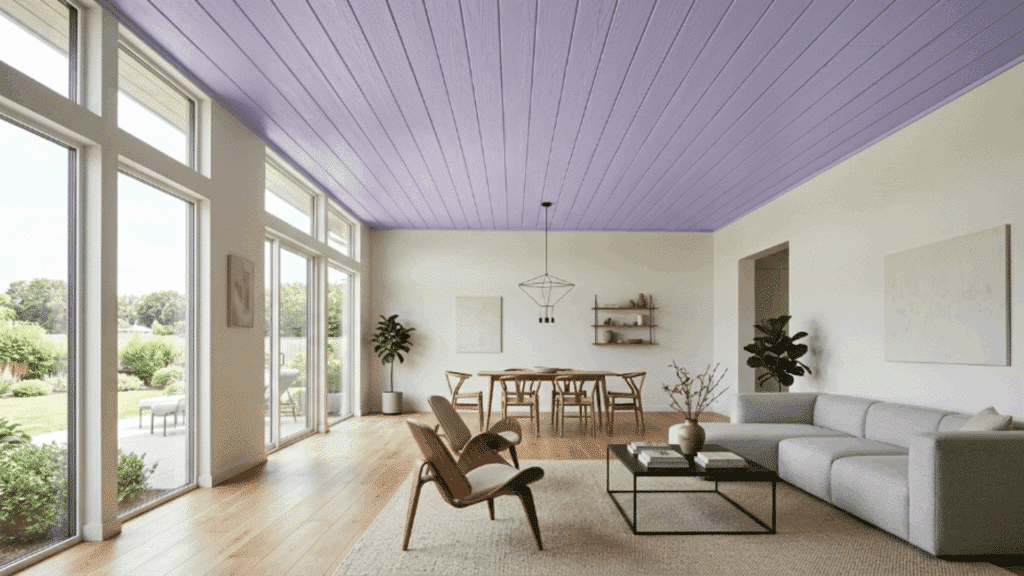
Wide shiplap boards create a simpler and more modern appearance. With fewer plank lines, the ceiling feels clean and open.
This design works well in larger spaces where a minimal ceiling style helps balance the rest of the room. The wider boards also allow lighting to spread evenly across the surface.
It can make the ceiling feel smoother and less busy compared to narrow plank designs.
12. Natural Pine Shiplap Ceiling
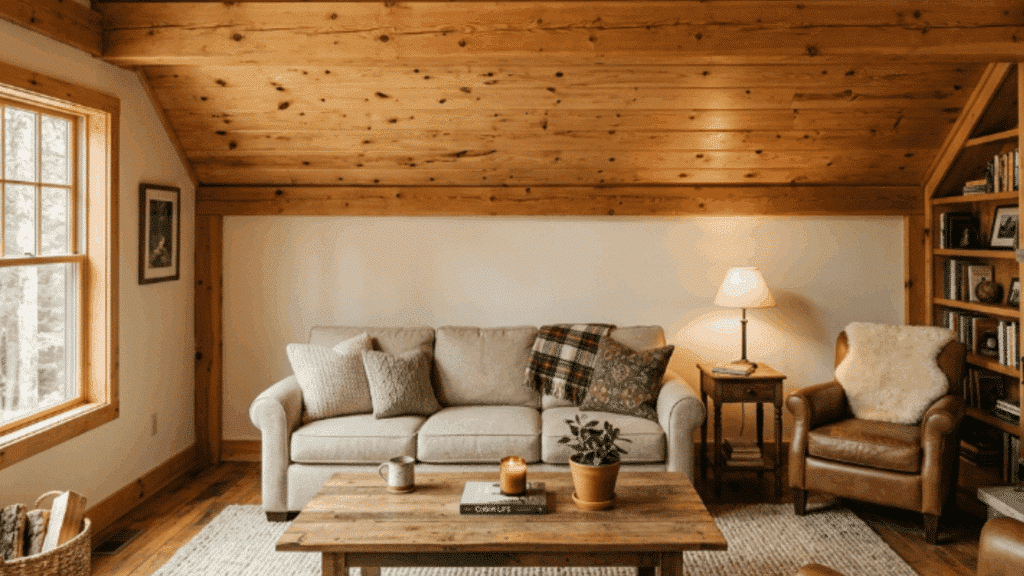
Natural pine shiplap ceilings highlight the beauty of real wood. The grain patterns and warm tones add texture without requiring extra decoration.
As light moves across the wood surface, it creates the natural colour variations. This creates a cozy environment that feels comfortable and inviting.
13. Diagonal Shiplap Ceiling Layout
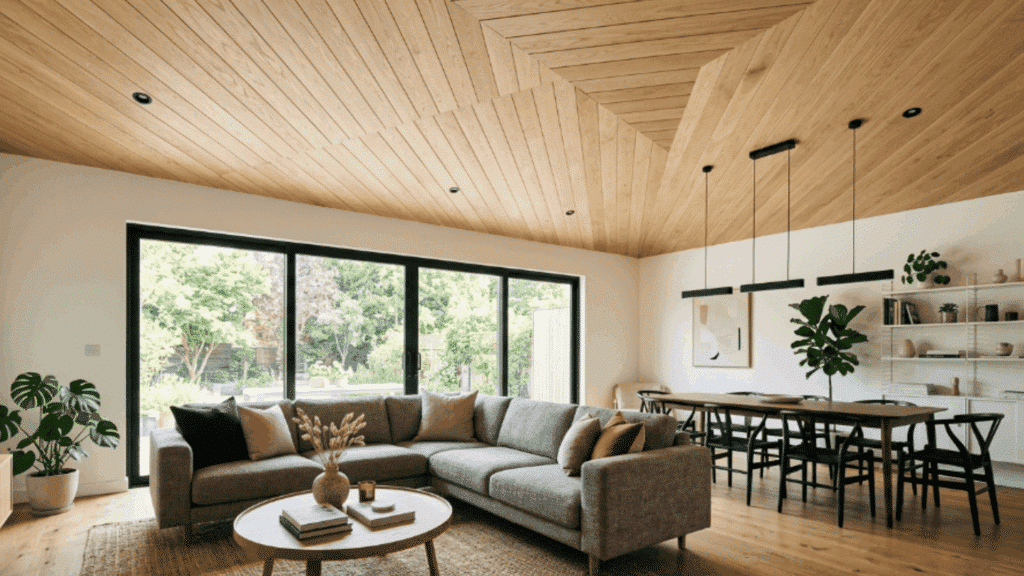
Installing shiplap diagonally creates a unique visual effect. The angled boards guide the eye across the ceiling, adding movement to the room.
This layout can make the space feel more dynamic and visually interesting. It works well when the goal is to give the ceiling a more creative appearance.
The angled lines also break away from traditional ceiling designs, adding personality to the space.
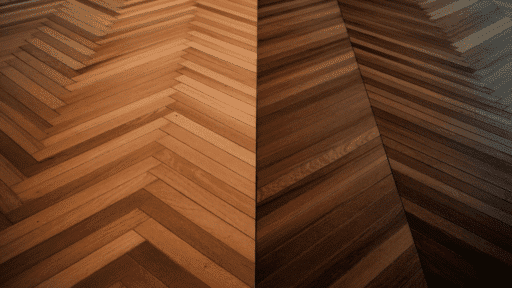
14. Herringbone Shiplap Ceiling Pattern
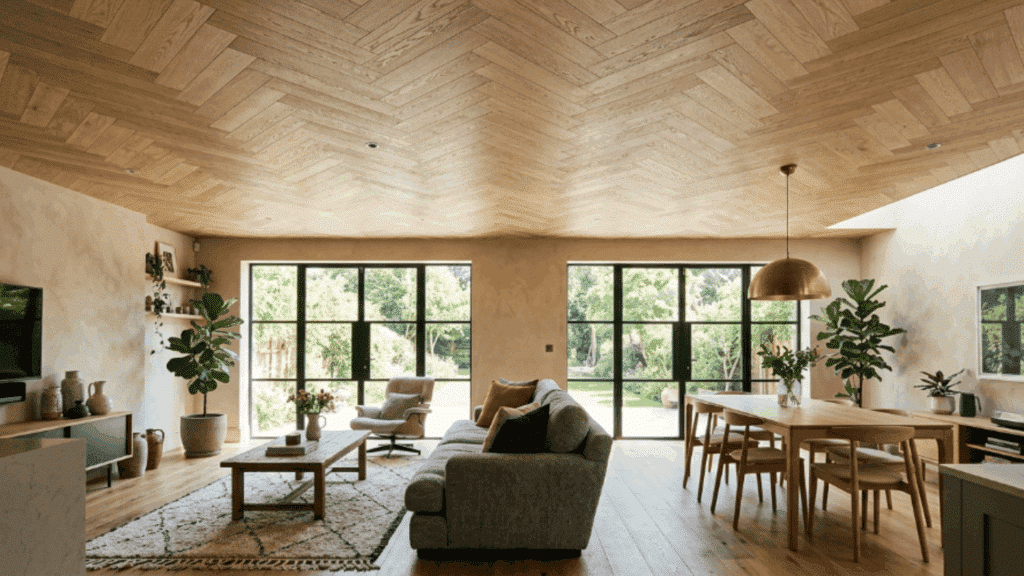
A herringbone pattern turns the ceiling into a decorative feature. The zigzag layout creates depth and texture that immediately draws attention.
Because of the pattern, lighting can cast interesting shadows across the boards. This design often makes the room feel well thought out and visually engaging.
15. Two-Tone Shiplap Ceiling Design
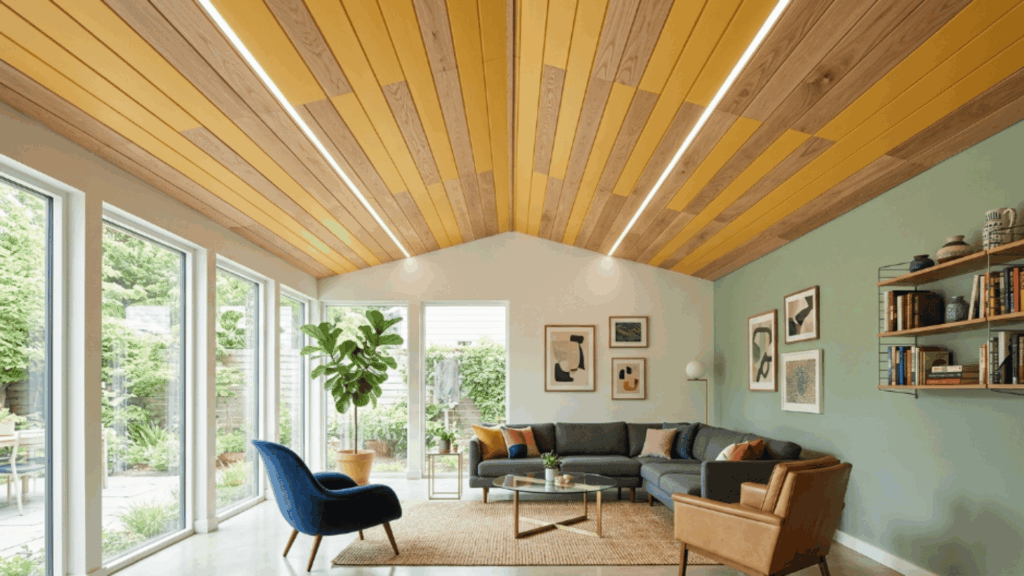
A two-tone shiplap ceiling combines different colors or wood finishes to create contrast. This layered look adds depth without making the ceiling feel busy.
The combination of tones helps highlight the plank pattern. It also allows the ceiling to complement other colours used in the room.
The contrast can make the ceiling feel more visually dynamic and intentional.
16. Coffered Shiplap Ceiling
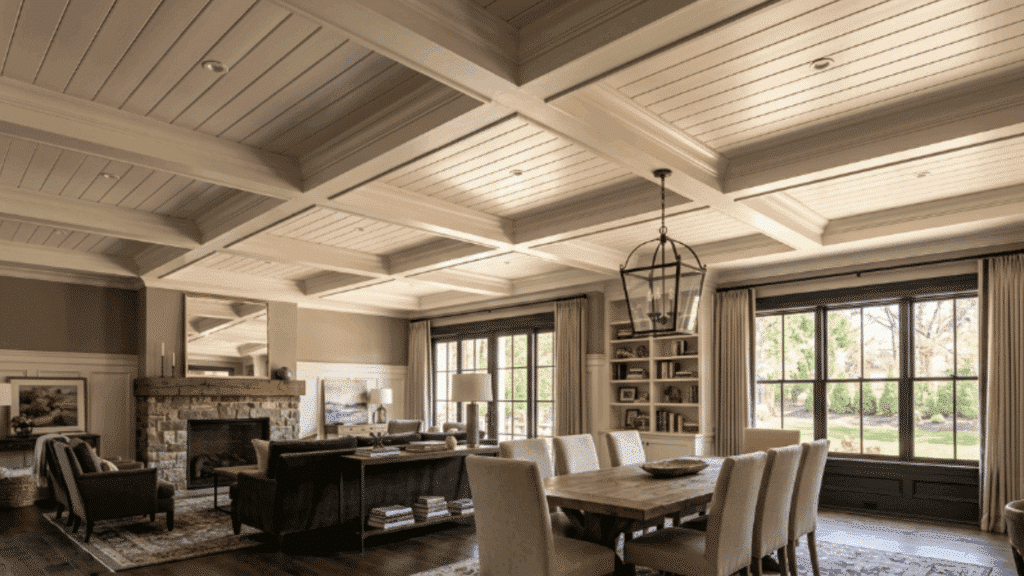
A coffered shiplap ceiling adds architectural detail by dividing the ceiling into framed sections. Each section of shiplap creates a layered, structured design.
The recessed panels create shadows and depth, which adds dimension to the space. This style often makes the room feel more defined and visually interesting.
17. Shiplap Ceiling With Skylight
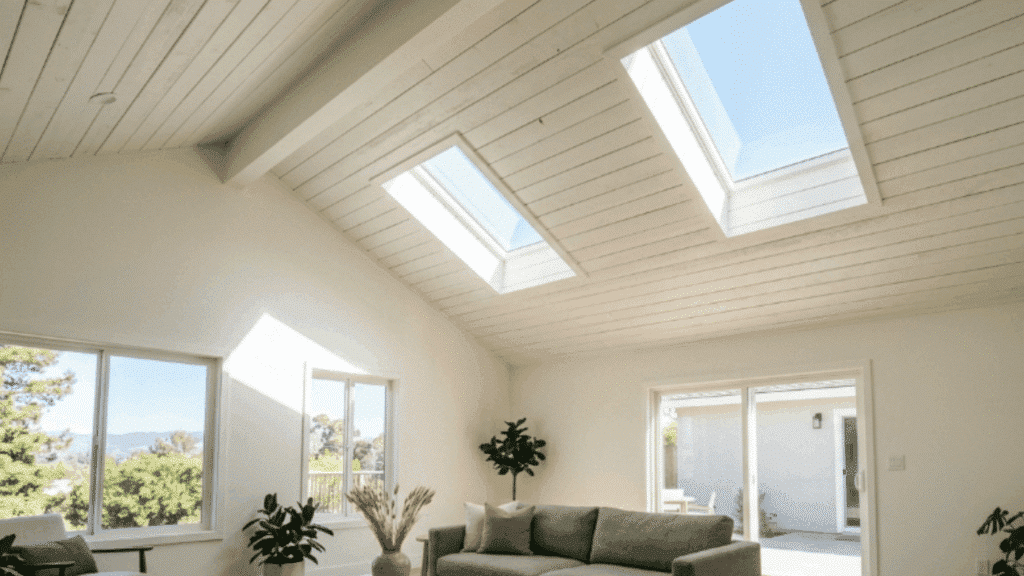
Adding skylights to a shiplap ceiling allows natural light to spread across the planks. Sunlight highlights the texture and pattern of the boards throughout the day.
This design helps the room feel brighter and more open. The natural light also makes the ceiling design stand out even more.
The changing daylight can also create subtle highlights and shadows across the planks.
18. Shiplap Ceiling with Central Statement Beam
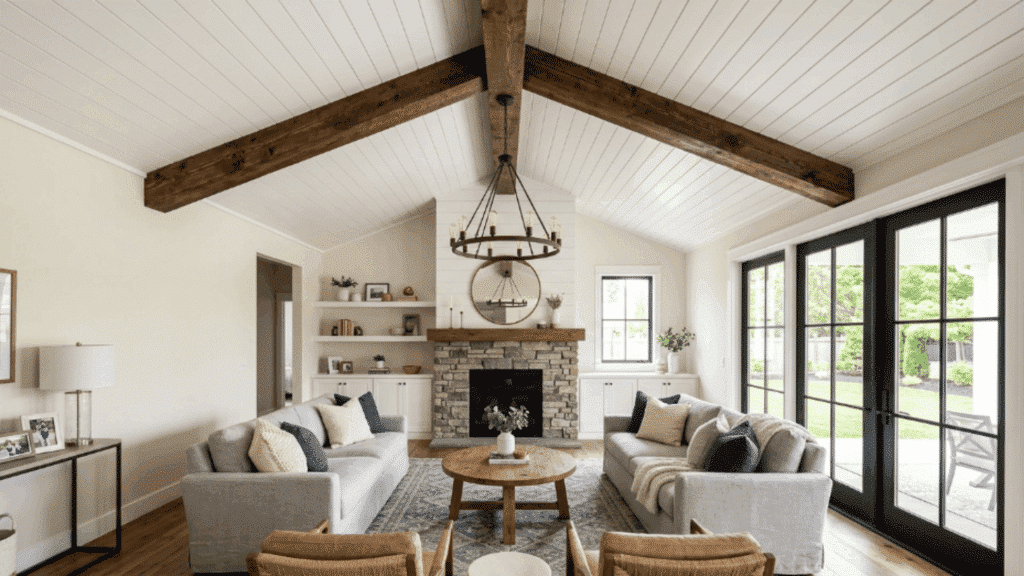
A central beam across a shiplap ceiling creates a clear focal point. The beam divides the ceiling and adds structure to the overall layout.
It also helps anchor the room visually. Lighting fixtures placed along the beam can further highlight the ceiling design.
19. Shiplap Ceiling with Contrast Trim
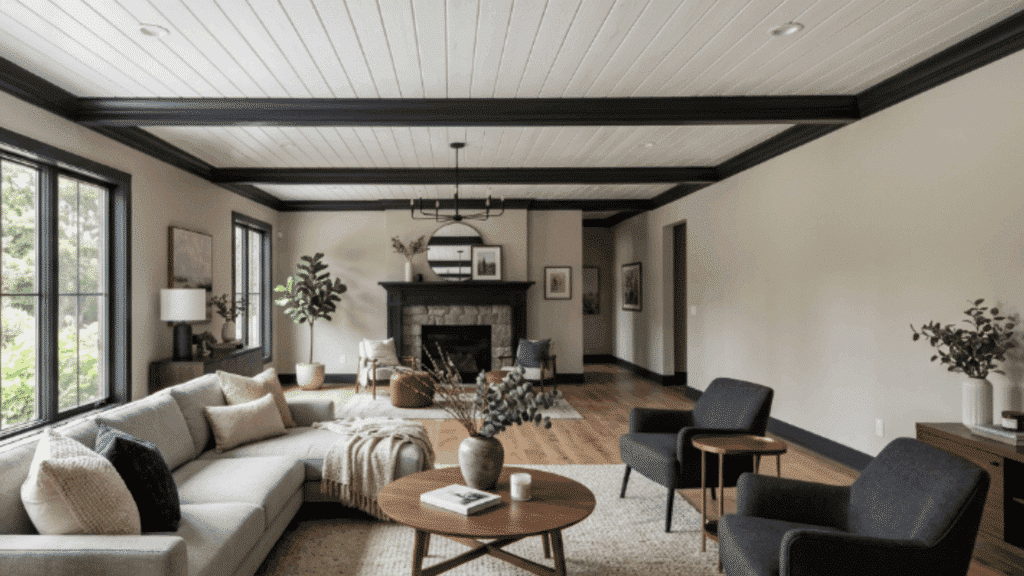
A shiplap ceiling framed with contrasting trim around the edges can make the ceiling design stand out more clearly.
The trim creates a border that visually defines the ceiling area and highlights the plank pattern. This design works well when the trim colour contrasts slightly with the shiplap boards.
The contrast helps draw attention upward and adds a finished architectural detail to the room.
20. Weathered Reclaimed Wood Shiplap Ceiling
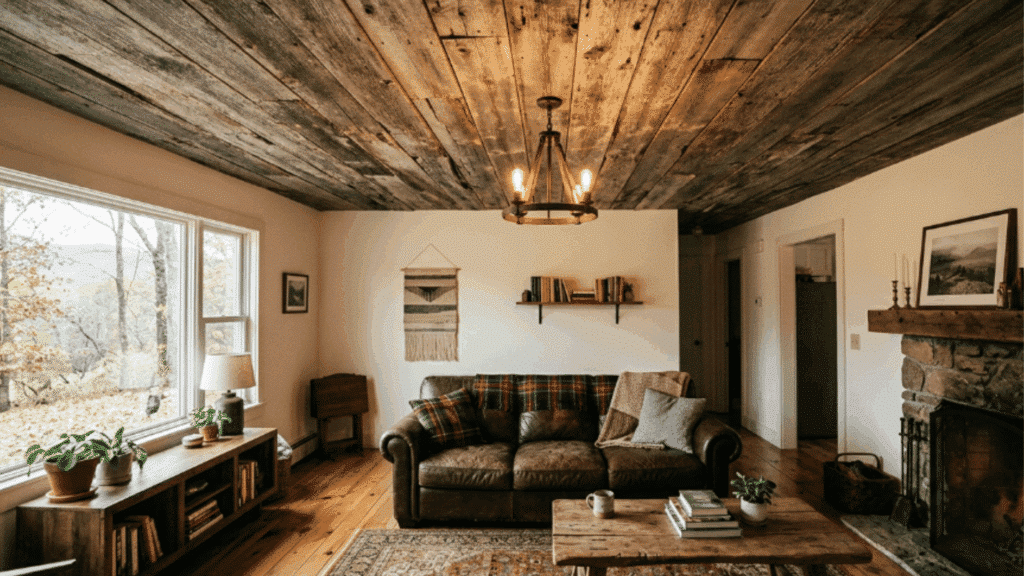
Reclaimed wood shiplap ceilings bring a sense of history and character to the space. The weathered boards create texture and variation across the ceiling.
Warm lighting often enhances the aged wood tones, making the room feel comfortable and grounded.
21. Layered Shiplap Ceiling Design
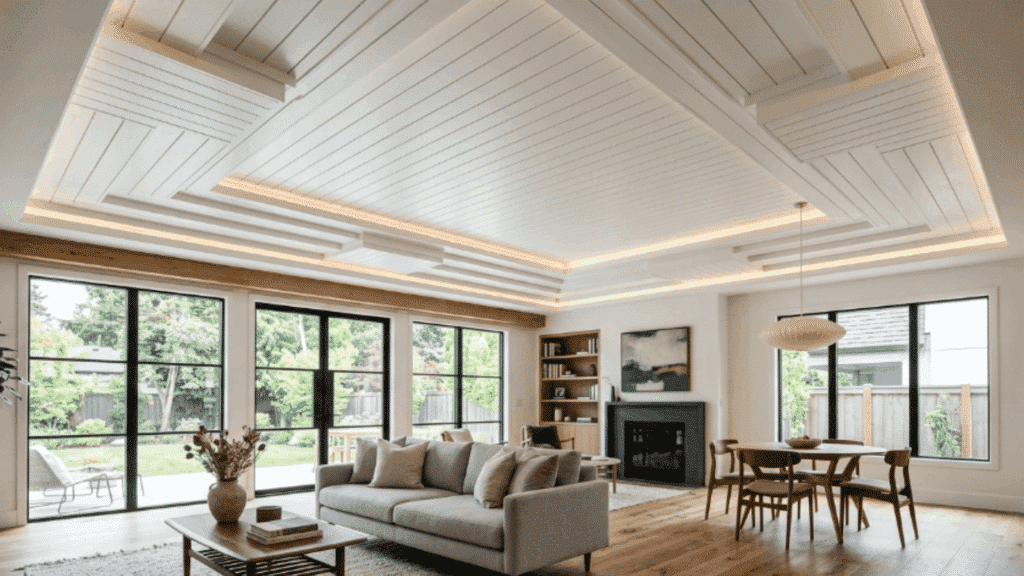
A layered shiplap ceiling introduces multiple levels or sections within the design. This creates depth and architectural interest overhead.
The layered effect helps define different areas of the room. It also allows lighting and shadows to add dimension to the overall space.
This style can make the ceiling feel like a central design element rather than just a background.
Tips for Choosing the Right Shiplap Ceiling Style
Before installing a shiplap ceiling, it helps to think about how the shiplap ceiling ideas will work with the rest of the room.
- Colour Choice: white shiplap brightens the space, while natural wood tones create warmth and a cosy atmosphere throughout the room.
- Board Width: Narrow planks add texture and detail, while wide boards create a cleaner, more modern ceiling look in larger, open interior spaces.
- Room Size: Lighter ceiling colours help small rooms feel more open and spacious by reflecting natural daylight better.
- Lighting Plan: recessed lights or pendant fixtures should be planned early so they fit naturally into the ceiling layout without interrupting the plank pattern.
- Ceiling Height: angled or vertical plank layouts can visually emphasise ceiling height, making the room feel taller.
- Interior Style: choose a shiplap finish that complements the room’s overall style and matches the surrounding decor.
The Bottom Line
A thoughtfully designed shiplap ceiling can bring balance and visual interest to a space without making the design feel complicated.
The texture of the planks adds subtle depth overhead while helping the room feel more complete and well finished.
Many people turn to shiplap ceilings to add character while keeping the design simple. Features like a shiplap vaulted ceiling can also emphasise height and openness.
With the right colour, lighting, and plank direction, this ceiling style can increase both comfort and visual harmony.

With a Master in Architectural Studies from University of Pennysylvania, Marwa Haydar has pioneered living spaces since 2005. Her expertise, initially honed in a prestigious architectural firm, is evident in her approach to creating environments. Marwa became part of our team in 2019 and has since been a driving force in our home improvement section, known for her practical yet stylish solutions. She’s been spearheading our design workshops since then, infusing her passion for teaching into her work. In her leisure time, Marwa enjoys exploring historic architecture and is an enthusiastic pottery hobbyist, further enriching her understanding of form and texture.