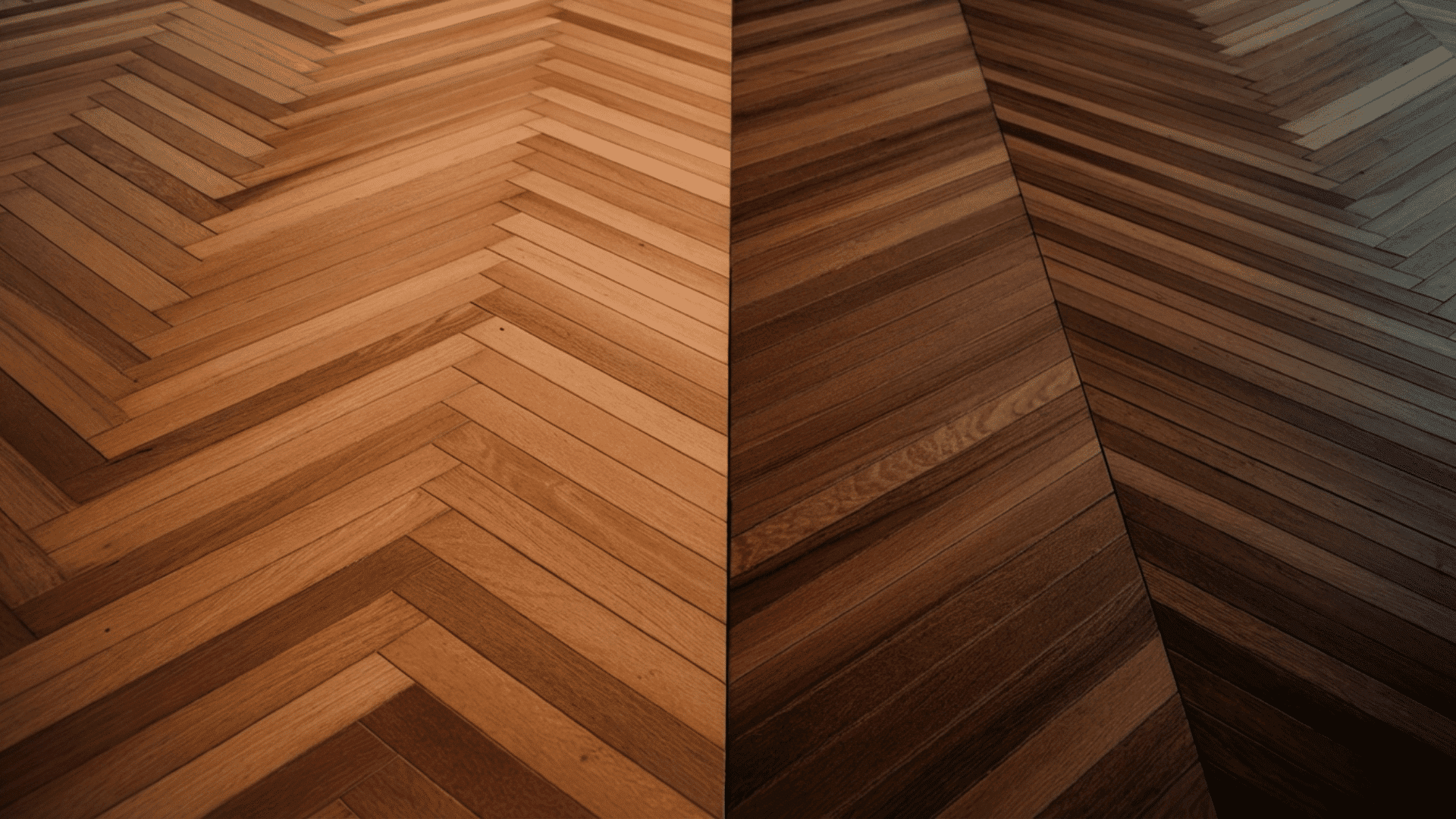

Most people treat herringbone and chevron as the same thing, but they’re not. Both create a zigzag layout, and both look sharp on a floor.
But the way the planks are cut, how they meet, and the visual effect they produce: all of it is different. And that difference matters when you’re picking flooring for your home.
This blog covers the herringbone vs chevron debate from every angle: pattern structure, design impact, installation difficulty, cost, and which rooms each suits best.
What is a Herringbone Pattern?
Herringbone is one of the oldest flooring patterns around. It dates back to Roman times and has stayed popular ever since. You’ll find it in hardwood floors, tile, and even brick pathways.
Each board is placed at a 90-degree angle to the one next to it. The end of one plank meets the side of another, and that overlap is what creates the broken zigzag effect across the floor.
No angled cuts are needed. The planks stay rectangular throughout, and that’s what sets herringbone apart from chevron at the structural level.
Key Visual Characteristics:
- Adds visual texture without pushing the eye toward any single point
- Feels active but not overwhelming
- Works well in both large open spaces and smaller rooms because the movement it creates is balanced rather than directional
What is a Chevron Pattern?
Chevron follows the same zigzag idea as herringbone, but the construction is different. It’s a cleaner, more deliberate pattern.
You’ll see it in modern homes, upscale hotels, and contemporary interiors where the floor is meant to make a statement.
Unlike herringbone, chevron planks are cut at an angle: usually 45 degrees. Both ends of each plank are angled, and when two boards meet at the tip, they form a clean V shape.
That V repeats across the entire floor in a continuous, unbroken line. There’s no overlap. The planks connect precisely at the point, which is why the cuts need to be exact.
Key Visual Characteristics:
- Creates a strong directional pull that draws the eye forward toward the far end of a room
- Feels intentional and bold rather than subtle
- Actively changes how a space feels: long rooms look longer, narrow hallways feel more purposeful
Herringbone vs. Chevron: Common Materials and Costs
Both patterns work across a range of materials, and the cost varies depending on your choice and the complexity of the installation. Here’s a full breakdown.
| Material | Best For | Cost Level | Herringbone Installation | Chevron Installation |
|---|---|---|---|---|
| Hardwood | Living rooms, hallways | Medium to High | Moderate complexity | Higher: precise angled cuts needed |
| Engineered wood | Most areas of the home | Medium | Moderate complexity | Higher: precise angled cuts needed |
| Ceramic and porcelain tiles | Kitchens and bathrooms | Low to Medium | Moderate complexity | Higher: exact alignment required |
| Luxury vinyl and laminate | Budget-friendly installs | Low | Easiest install overall | Moderate: easier than wood, but cuts still needed |
| Natural stone | Entryways and bathrooms | High | Moderate complexity | Higher: costly if cuts go wrong |
| Concrete tiles | Industrial and minimalist interiors | Medium | Moderate complexity | Higher: precision still required |
Herringbone vs. Chevron: Installation Differences
Both patterns take more planning than a standard straight lay, but the effort involved is quite different. What works for herringbone won’t necessarily work for chevron.
Herringbone Installation
- Uses standard rectangular planks, so no angled cutting is required
- Installation begins from a central point and continues outward in a zigzag pattern
- Offers flexibility, allowing small corrections during the process without affecting the full layout
- More forgiving if slight alignment errors happen along the way
- Requires basic planning but is less complex compared to other patterned layouts
- A practical option for experienced DIYers who have the right tools and patience
- Generally takes less time and effort, which can help reduce overall installation cost
Chevron Installation
- Requires each plank to be cut at a precise angle on both ends for a sharp V pattern
- Boards must meet perfectly at the tips, leaving no room for misalignment
- Demands careful planning, exact measurements, and layout precision before starting
- Even small mistakes can disrupt the entire pattern and are difficult to fix later
- Installation process is more detailed and time-consuming compared to herringbone
- Higher labor involvement increases the total project cost
- Typically recommended to be installed by professionals for accurate results
Best Rooms for Herringbone Flooring
Herringbone is a pattern that suits a wide range of spaces. Its balanced, multi-directional movement means it works comfortably in rooms of different shapes and sizes.
1. Living Rooms
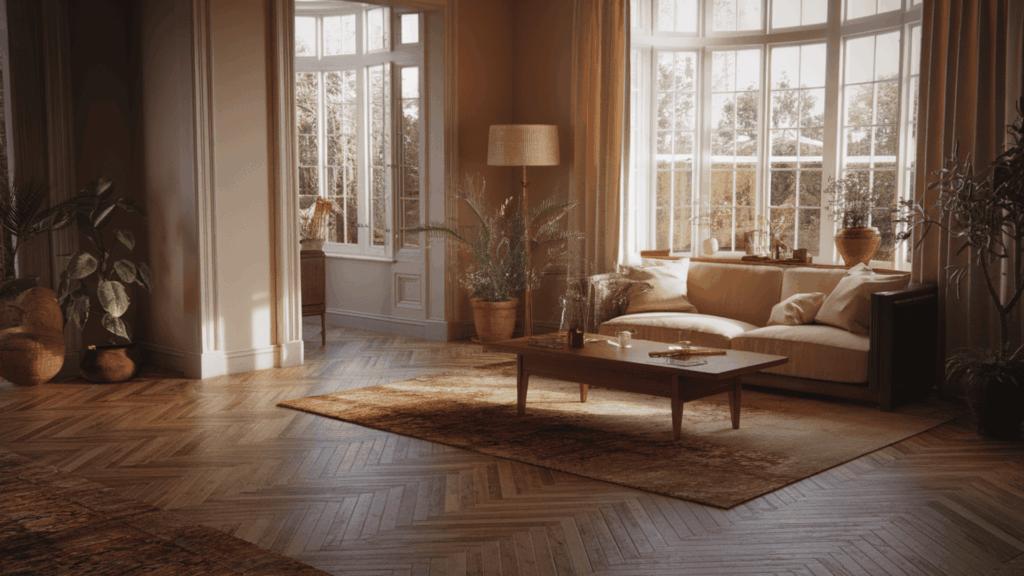
Herringbone adds pattern and depth to a living room without overpowering the space. It brings visual interest to the floor while still letting furniture, walls, and other design elements hold their own.
It works particularly well in traditional and transitional living rooms where warmth and character matter. Lighter wood tones keep the room feeling open, while darker shades add a richer, more grounded feel.
2. Hallways
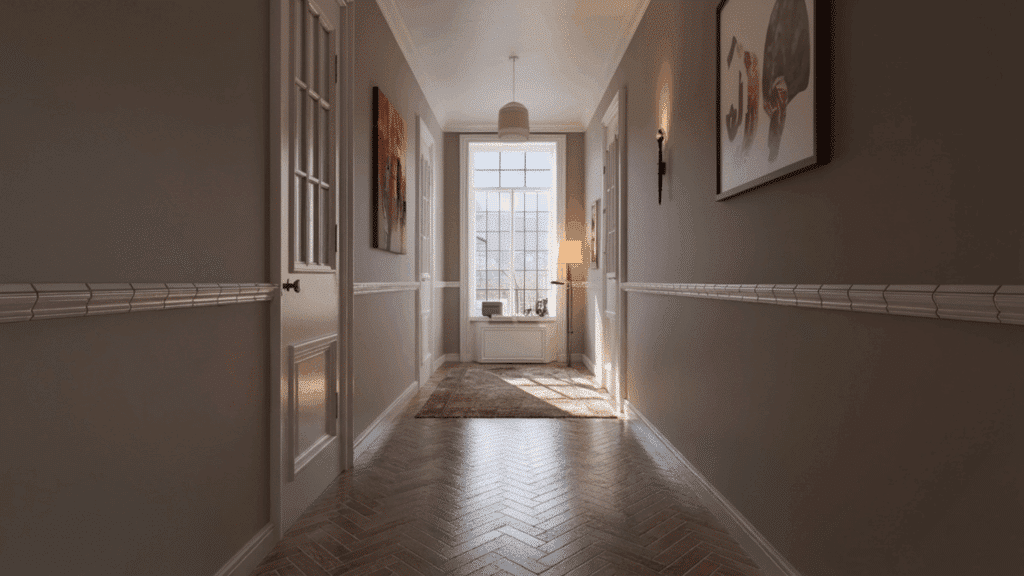
The staggered zigzag layout suits long, narrow hallways well. It spreads visual movement across the floor rather than pushing the eye in one direction, helping the space avoid feeling like a plain corridor.
It’s a classic choice for entryways and hallways in both older and newer homes. The pattern adds enough detail to make the space feel considered and well put together, even without much else going on design-wise.
3. Kitchens
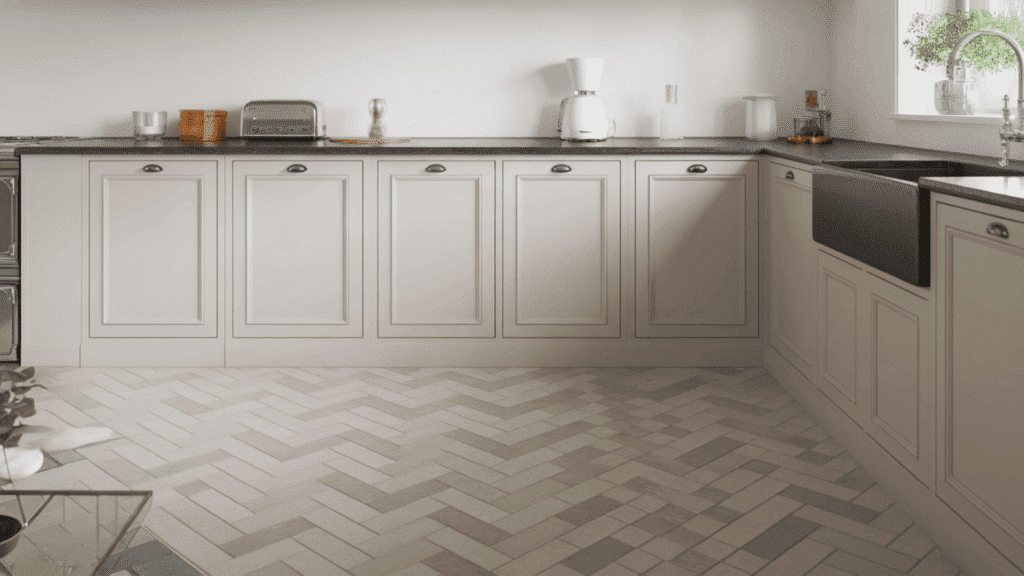
Herringbone is a popular choice for kitchen floors and backsplashes. In wood or tile, the pattern adds texture to a space that can otherwise feel functional and plain.
It holds up well in high-traffic areas and pairs easily with both modern and traditional kitchen designs.
Ceramic and porcelain tiles in a herringbone layout are especially practical here since they’re easy to clean and built to last.
Best Rooms for Chevron Flooring
Chevron works best in spaces where you want the floor to make a strong visual statement. Its directional lines and clean geometry suit interiors that welcome bold design choices.
1. Modern Living Areas
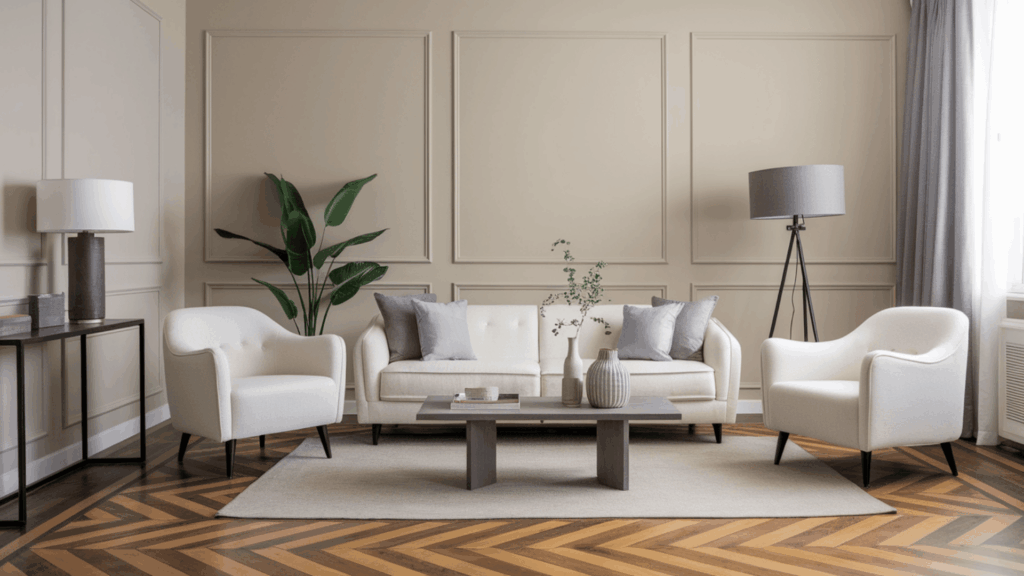
Chevron fits naturally into contemporary living spaces where clean lines and strong geometry are part of the overall design.
The continuous V pattern complements modern furniture, minimal decor, and open floor plans without feeling out of place.
It also pairs well with neutral color palettes. A light oak chevron floor against white walls, for example, creates a sharp, put-together look that feels current without being overdone.
2. Long Rooms
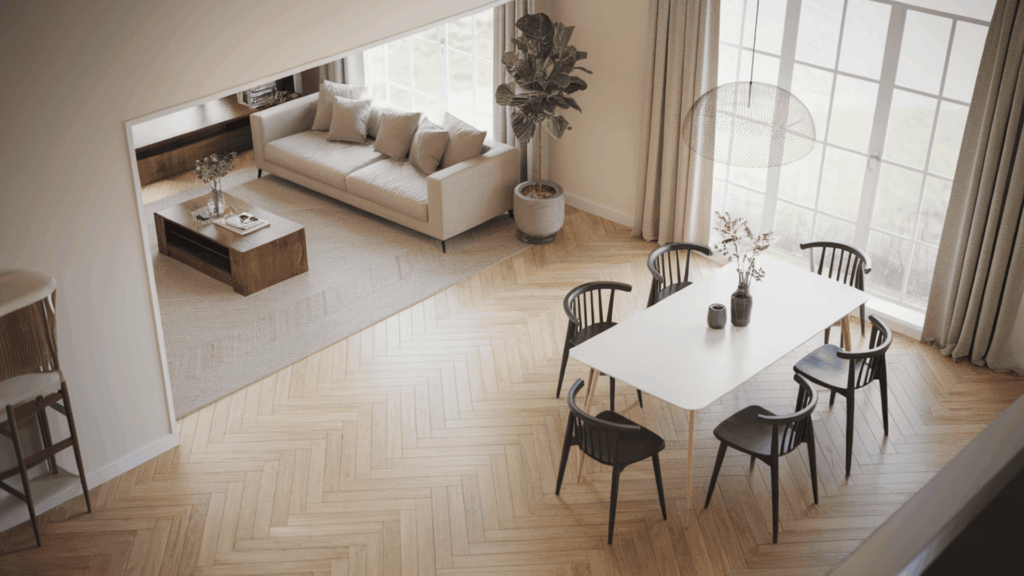
Chevron’s directional lines do something particularly useful in long rooms: they pull the eye forward and make the space feel intentional rather than stretched.
The pattern works with the shape of the room rather than against it. This makes it a strong choice for open-plan living and dining areas where the floor needs to guide the eye across a significant expanse. It adds structure and flow at the same time.
3. Statement Floors

Sometimes the floor is meant to be the centerpiece of a room, and chevron handles that role well. The bold V pattern naturally draws attention, making it a go-to choice when the flooring is intended to stand out rather than blend in.
It works especially well in entryways and reception areas where the first impression matters. A well-laid chevron floor sets the tone for the rest of the space before anything else does.
How to Choose Between Herringbone and Chevron
Both patterns are strong choices, but they suit different priorities. The right one comes down to your design preference, the shape of your room, and how much you’re planning to spend.
| Factor | Choose Herringbone | Choose Chevron |
|---|---|---|
| Style preference | Traditional or classic look | Modern or contemporary interior |
| Visual effect | Subtle movement across the floor | Strong directional lines with visual impact |
| Room shape | Irregular or awkward layouts | Long or narrow rooms |
| Budget | Tighter budget, lower installation costs | Higher budget covering labor and material costs |
| Installation | Self-install or reduced labor complexity | Professional installer recommended |
| Material waste | Lower waste due to straight cuts | Higher waste due to precisely angled cuts |
Final Thoughts
The herringbone vs chevron debate comes down to three things: the look you want, the room you’re working with, and what your budget allows.
Herringbone gives you a classic, textured layout that fits comfortably in most spaces without demanding too much attention.
Chevron brings sharper lines and a stronger visual impact, but it comes at a higher installation cost. Neither pattern is the wrong choice. They do different things.
If you’re still unsure, start by considering the room’s shape and your overall interior style. That usually points you in the right direction faster than anything else.

With a Master in Architectural Studies from University of Pennysylvania, Marwa Haydar has pioneered living spaces since 2005. Her expertise, initially honed in a prestigious architectural firm, is evident in her approach to creating environments. Marwa became part of our team in 2019 and has since been a driving force in our home improvement section, known for her practical yet stylish solutions. She’s been spearheading our design workshops since then, infusing her passion for teaching into her work. In her leisure time, Marwa enjoys exploring historic architecture and is an enthusiastic pottery hobbyist, further enriching her understanding of form and texture.