
Bedrooms may look simple, but getting the size right makes a big difference in how the space feels and functions day to day.
From choosing the right bed to ensuring there’s enough room to move around, size plays a key role in layout. It gives a clear point for setting up a room that feels practical and easy to use.
Many people struggle with planning furniture or understanding how much space is actually needed. That’s where knowing common bedroom dimensions helps.
This guide breaks down standard bedroom size, explains what works best for different needs, and shares simple ideas to make any bedroom feel more comfortable and well-arranged.
What Is the Standard Bedroom Size?
The bedroom size in most homes is usually between 10 × 10 feet and 12 × 12 feet, providing enough room for a bed, basic furniture, and comfortable movement.
The size is often around 120 square feet, making it suitable for a queen bed, small nightstands, and storage.
Building codes in many areas also set a minimum bedroom size of about 70 square feet, along with ceiling height and ventilation requirements.
Larger homes may also include a master bedroom measuring 12 × 14 feet to 14 × 16 feet to accommodate additional furniture and space.
How to Measure Your Bedroom Correctly?
Accurate measurements let you compare your room to the standard bedroom size and understand how it fits within the average bedroom size in most homes.
- Measure the Room Length and Width: This provides the basic dimensions of your bedroom and helps determine whether it falls within the size range.
- Calculate Total Square Footage: This helps compare your space with the size and understand how much furniture it can comfortably accommodate.
- Check Doors, Windows, and Wall Space: Measure the distances between doors, windows, and the room’s corners.
- Measure Closet and Storage Areas: If the bedroom includes a closet or built-in storage, measure these areas separately.
- Create A Simple Floor Layout Plan: This makes it easier to plan furniture arrangement, especially when designing a larger master bedroom.
How Bedroom Size Impacts Comfort?
The bedroom size directly affects how comfortable and easy the space feels to use.
A room close to the standard bedroom size allows enough space for walking, placing furniture, and keeping the layout open. When the room is too small, even basic furniture can make it feel restrictive.
The average bedroom size offers a good balance. It provides enough room for a bed, storage, and simple movement without making the space feel tight.
Larger bedrooms, especially those designed as a master bedroom size, improve comfort further by allowing extra furniture and better spacing.
Standard Bedroom Sizes in Different Homes
The size provides a general guideline for planning and layout, but the average bedroom size can still vary across homes depending on design and available space.
1. Master Bedroom

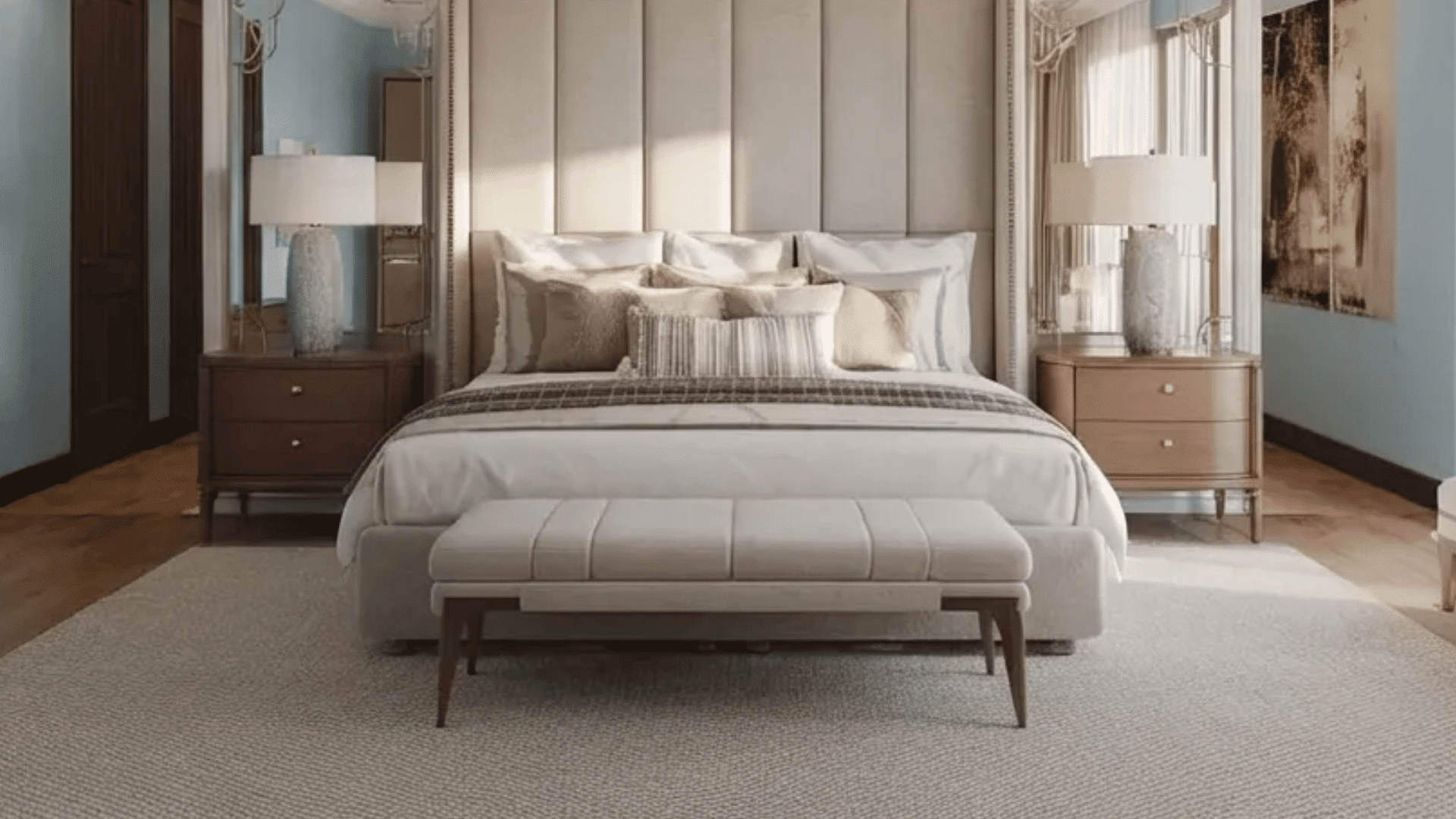
A typical master bedroom size is around 14 × 16 feet (224 sq ft), making it the largest bedroom in many homes and offering more flexibility in layout and design.
This master bedroom size can comfortably accommodate a king or California king bed along with nightstands, dressers, and even additional furniture like a bench or small seating area without making the room feel crowded.
2. Secondary Bedroom
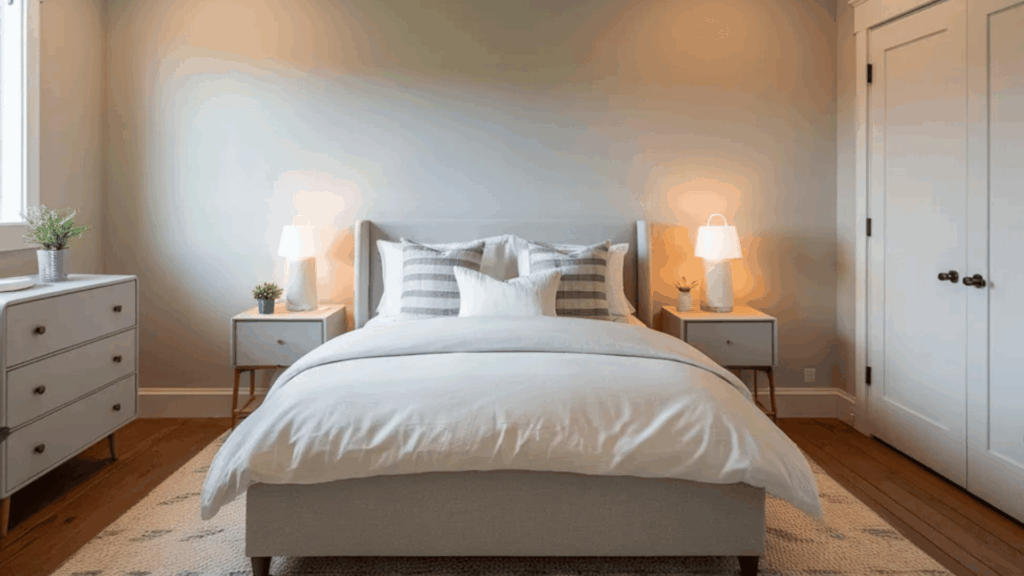
A secondary bedroom typically follows a standard size of about 10 × 12 feet (120 sq ft), making it a practical and commonly used space in many homes.
This size works well with a queen or full bed, along with essential furniture like nightstands, a small dresser, or even a compact desk, while still leaving enough room for comfortable movement.
3. Guest Bedroom
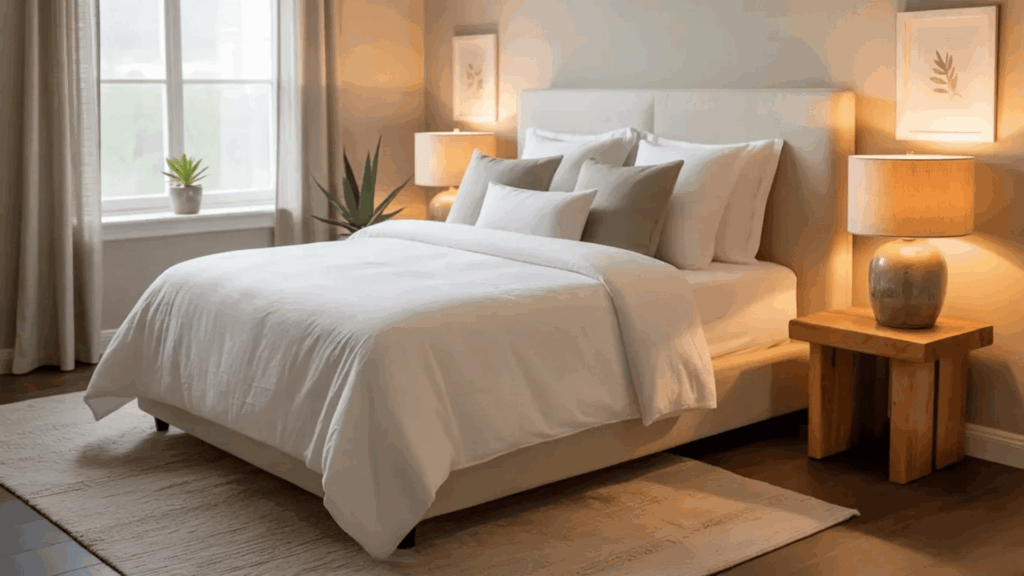
A guest bedroom typically measures about 10 × 10 feet (100 sq ft), making it slightly smaller than the average bedroom but still practical for short stays and occasional use.
This size can comfortably fit a full or queen bed along with minimal furniture like a nightstand or a small dresser, while still leaving enough space for basic movement.
With smart furniture placement and simple storage choices, the room can feel open and welcoming, allowing guests to stay comfortably without the space feeling crowded or restricted.
4. Kids’ Bedroom
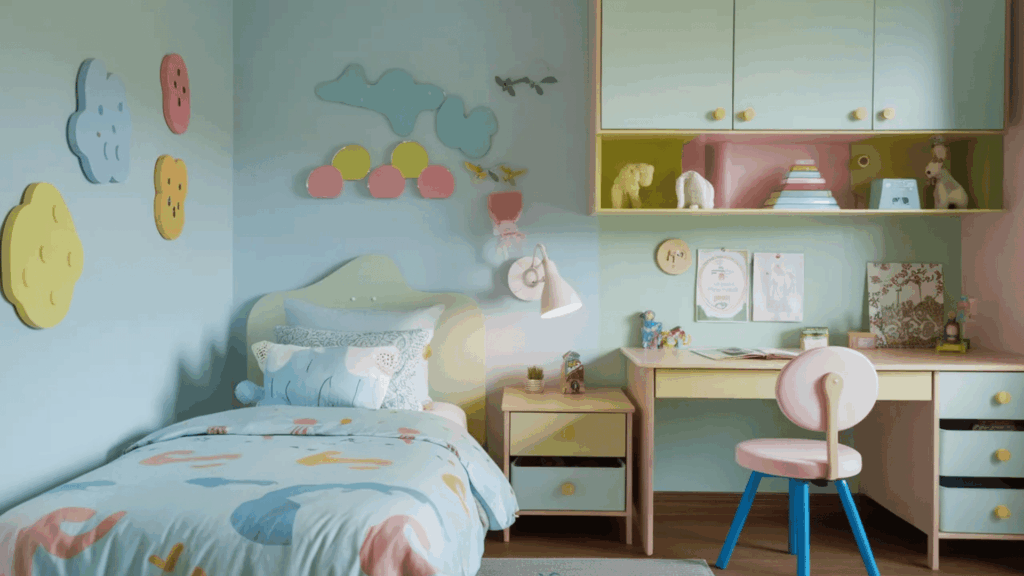
A kids’ bedroom is often around 8 × 10 feet (80 sq ft), making it one of the smaller bedroom sizes in most homes, but still suitable for daily use.
This layout usually fits a twin bed along with essential storage like shelves, toy bins, or a small wardrobe for clothes and books, while still leaving some space for movement.
5. Average Bedroom
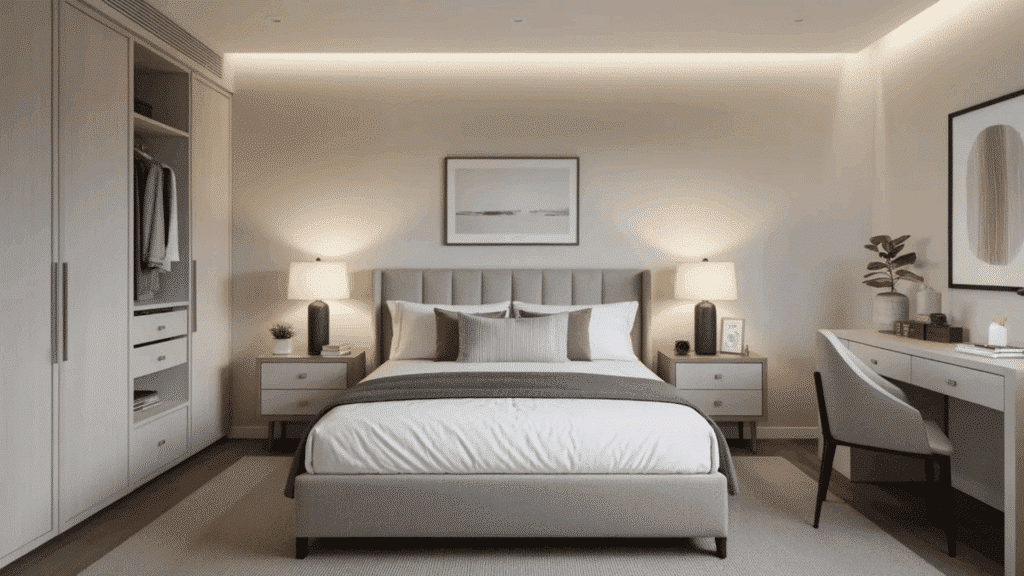
The average bedroom size in many homes is about 11.5 × 11.5 feet (132 sq ft), offering a balanced amount of space that works well for most everyday needs.
This measurement sits between smaller guest rooms and larger master bedrooms, making it a practical option for different uses within the home.
Best Storage Ideas for Small Bedrooms
Making the most of a small space becomes easier with smart storage, especially in a standard or master bedroom.
- Use Under-Bed Storage Efficiently: The space under the bed can hold storage boxes or drawers for clothes. This keeps a bedroom-sized space clean without adding furniture.
- Choose Multi-Functional Furniture Pieces: Beds with benches and compartments work well in an average bedroom. They reduce clutter while saving space.
- Install Wall-Mounted Shelves for Extra Space: Wall shelves store essentials without using floor space. This helps maintain openness in a standard size.
- Maximise Vertical Storage Options: Tall wardrobes or stacked units effectively utilise vertical space. This keeps the size of the bedroom easy to move around.
- Use Hidden Storage to Reduce Clutter: Storage beds or ottomans keep items out of sight. This helps a standard bedroom size stay neat and organised.
Ideal Bedroom Furniture Spacing Guide
Proper furniture spacing helps make the standard bedroom size feel more comfortable, well-organised, and easier to move around, while also improving how the space functions.
| Area | Recommended Spacing | Why It Matters |
|---|---|---|
| Bed | 24–30 inches | Allows for a comfortable walking space around the bed in a standard bedroom. |
| Wall | About 24 inches | Helps maintain smooth movement and improves room flow. |
| Nightstand | 2–4 inches | Keeps nightstands easy to reach without crowding the layout. |
| Closet | 30 inches or more | Ensures closet doors open fully without hitting furniture. |
| Dresser | 30–36 inches | Provides enough space to open drawers and move comfortably. |
Common Bedroom Design Mistakes to Avoid
Even a room that meets the standard bedroom size can still feel smaller and less comfortable if the layout, furniture placement, and spacing are not carefully planned.
- Blocking Natural Light: Placing large furniture in front of windows can block sunlight and make the bedroom feel darker and smaller than the size.
- Overcrowding with Furniture: Adding too many dressers, chairs, or decor items can quickly fill the room, making the space feel cramped.
- Ignoring Walking Space: Leaving little space around the bed and furniture can make movement difficult, especially in rooms smaller than a typical bedroom.
- Using Oversized Furniture: Large beds or bulky wardrobes can overwhelm the room and reduce usable space, even in a larger master bedroom.
- Poor Furniture Placement: Placing furniture without planning the layout can disrupt balance and reduce comfort in rooms designed around the size.
Conclusion
A well-planned bedroom layout starts with understanding how much space is actually available. Knowing the size and the size helps create a room that feels comfortable instead of crowded.
Paying attention to furniture placement, lighting, and walking space can greatly improve how the room functions every day.
Larger rooms designed for a master bedroom size also benefit from thoughtful layouts that balance comfort. Small design choices can make a big difference in how the space feels.
If planning a bedroom makeover or renovation, use these guidelines to design a layout that works better for daily living and long-term comfort.

Ava Taylor, holding a Bachelor’s degree in Interior Design from the Pratt Institute, has made her mark in creating engaging and functional living spaces for over 14 years. She began her career with a New York-based design studio, where she gained a reputation for her innovative and user-centric designs. Ava joined our team in 2019, bringing a blend of artistic flair and practicality to our home improvement section. Since the she has been the lead contributor to our room transformation series, inspiring readers with her unique approach to maximizing space utility and aesthetic appeal. Beyond her professional work, Ava is a passionate collector of vintage furniture, a hobby that enriches her design perspective.