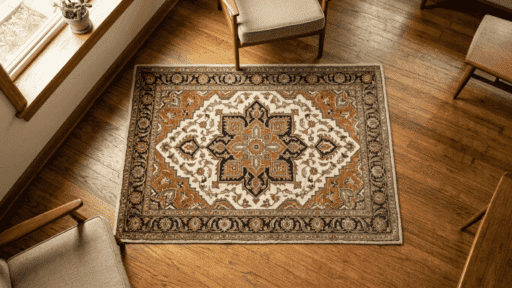
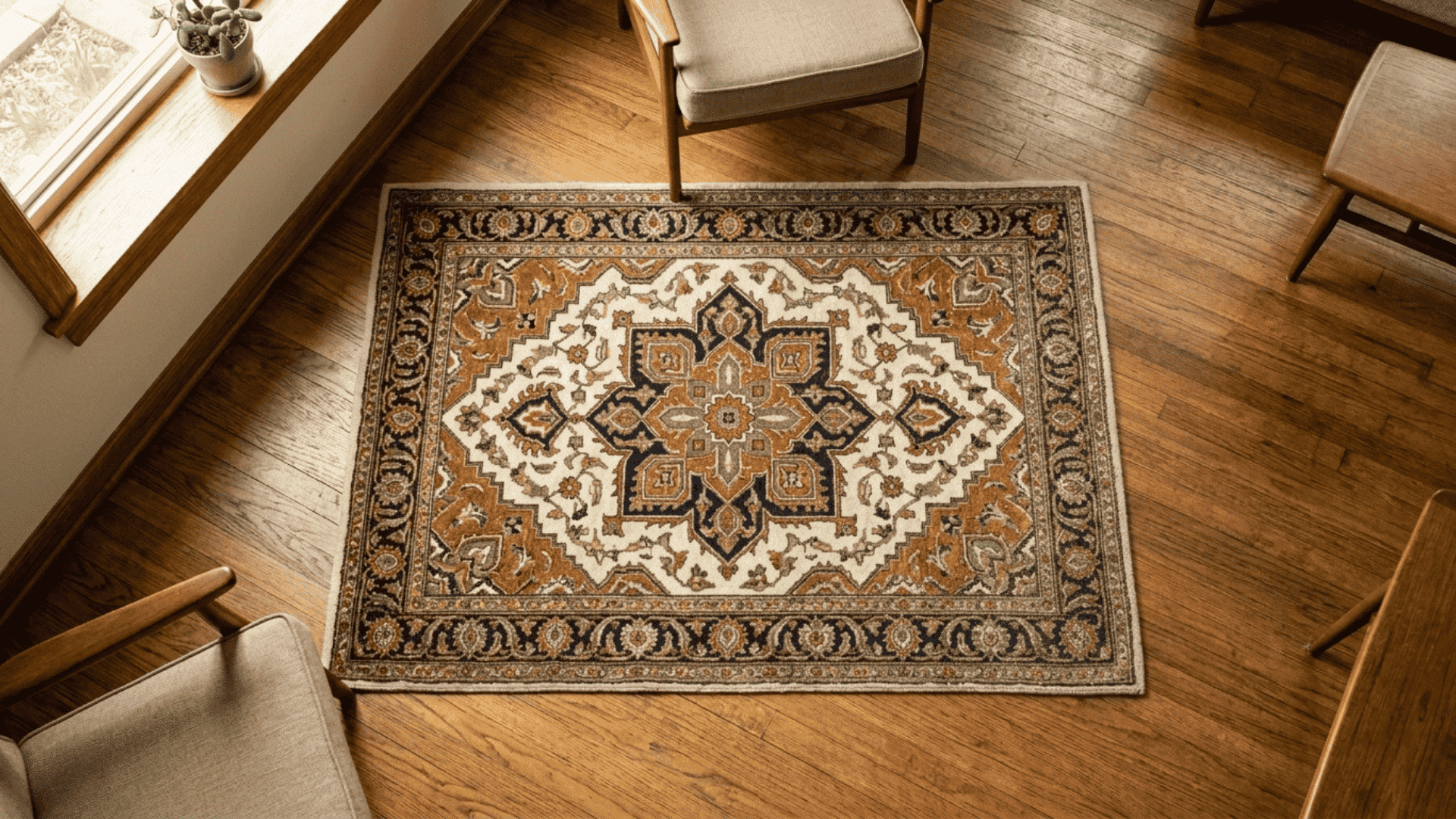

Area rugs go through a lot. Daily foot traffic, pet fur, accidental spills, and dust buildup can make even the cleanest rug look tired over time.
But knowing how to clean area rugs at home does not require expensive equipment or a professional service call. With a few common household items and the right steps, you can keep your rugs fresh and extend their life by years.
The process is straightforward. And the results speak for themselves. This blog covers everything from spotting early warning signs to drying the rug correctly, so it stays clean without the added hassle.
Signs Your Area Rug Needs Cleaning
Most people wait too long before cleaning their area rugs. Knowing the early signs can prevent more serious damage and make the cleaning process much easier.
- The most obvious signs include visible stains, discoloration, or dull patches that stand out from the rest of the rug.
- A noticeable odor even after airing the rug out is another clear signal.
- Increased dust around the rug or a rise in indoor allergy symptoms often point to trapped debris deep within the fibers.
- Running a hand across the surface can also reveal a rough or flat texture, which means dirt has settled in.
- Pet hair or debris that remains on the surface even after vacuuming is a strong sign that the rug needs a proper hands-on clean.
Tools and Materials You’ll Need
Having the right tools is the first step in learning how to clean area rugs at home without spending on professional equipment. Most of these items are already available at home.
| Tool / Material | Purpose | Household Alternative |
|---|---|---|
| Vacuum cleaner | Removes dust and loose debris from fibers | A broom or rug beater works well |
| Mild detergent | Cleans stains and surface dirt | Regular dish soap is a good substitute |
| White vinegar | Removes odors and treats stains naturally | Mix lemon juice with water as an option |
| Baking soda | Absorbs and neutralizes odors | No substitute: keep this as a basic item |
| Soft brush | Scrubs fibers without causing damage | An old toothbrush works for smaller spots |
| Bucket of water | Used for rinsing the rug | Any large container serves the same purpose |
| Clean cloth or towels | Blotting excess moisture during cleaning | Old cotton fabric or worn-out T-shirts work fine |
Step-by-Step Process to Clean Area Rugs at Home
Following the correct steps makes the process simple, safe, and effective without risking any damage to the fibers.
Step 1: Check Rug Material and Care Instructions
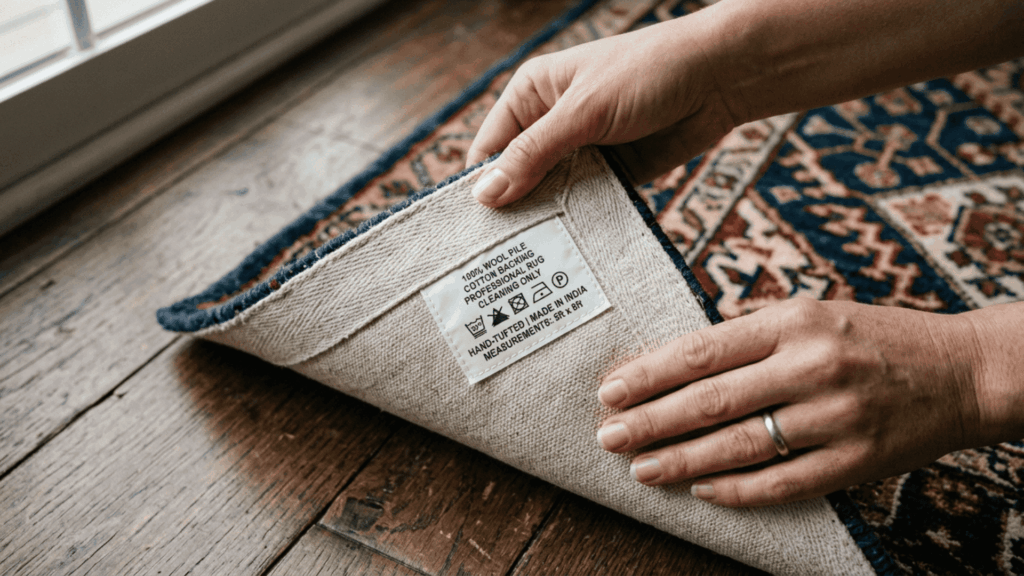
Before applying any cleaning solution, it is essential to check the rug’s material. Different fabrics react differently to water and cleaning agents. Wool, cotton, synthetic, and jute rugs each require a specific approach.
Most rugs have a care label attached to the back. Reading it carefully helps avoid shrinkage, texture damage, or fiber deterioration during the cleaning process.
If no label is present, identifying the fabric type visually or by touch is the next best option before moving forward.
Step 2: Remove Dust and Loose Dirt
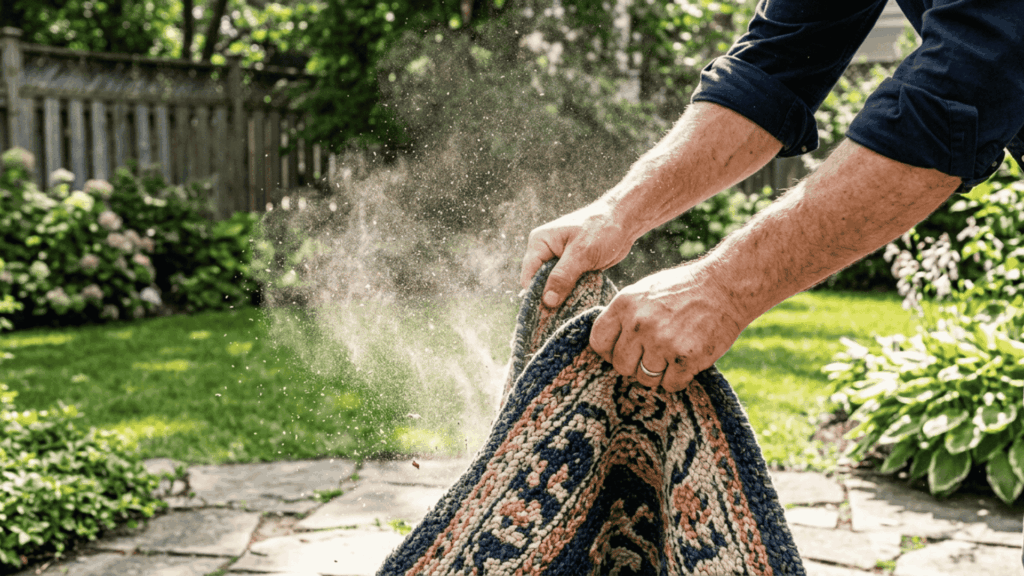
Taking the rug outside and shaking it firmly is the best way to release surface dust and loose debris. For heavier rugs, beating them against a railing or clean wall works just as well.
After shaking, vacuuming both sides of the rug helps pull out dirt that has settled deeper into the fibers. Running the vacuum slowly and in different directions gives better results than a single quick pass.
Step 3: Test Cleaning Solution on a Small Area
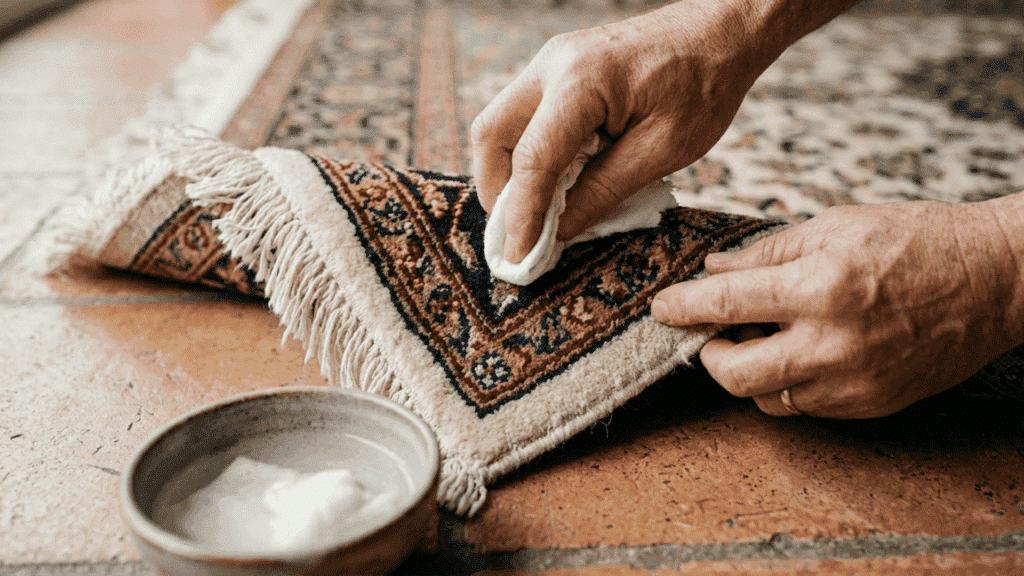
One important part of cleaning area rugs at home is making sure the cleaning solution is safe for the specific rug before applying it.
Testing it on a small, hidden section helps detect color bleeding or any adverse reaction to the fibers. Applying a small amount and waiting five to ten minutes is enough to see how the rug responds.
Only after confirming there is no damage should the cleaning process continue on the rest of the surface.
Step 4: Treat Stains and High-Traffic Spots
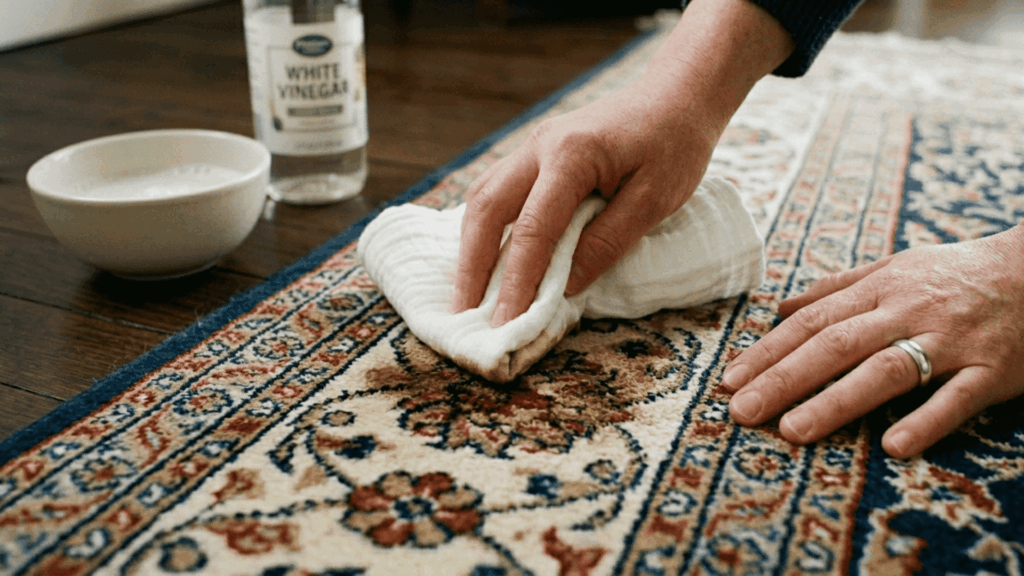
Before cleaning the entire rug, stains and high-traffic areas should be treated individually as separate steps.
Applying a mild detergent or a white vinegar solution directly onto the affected spot works effectively for most common stains. Gently blotting the area with a clean cloth is the right technique here.
Rubbing or scrubbing hard spreads the stain further and can also weaken the fibers over time, so patience matters at this stage.
Step 5: Clean the Rug with Soap and Water
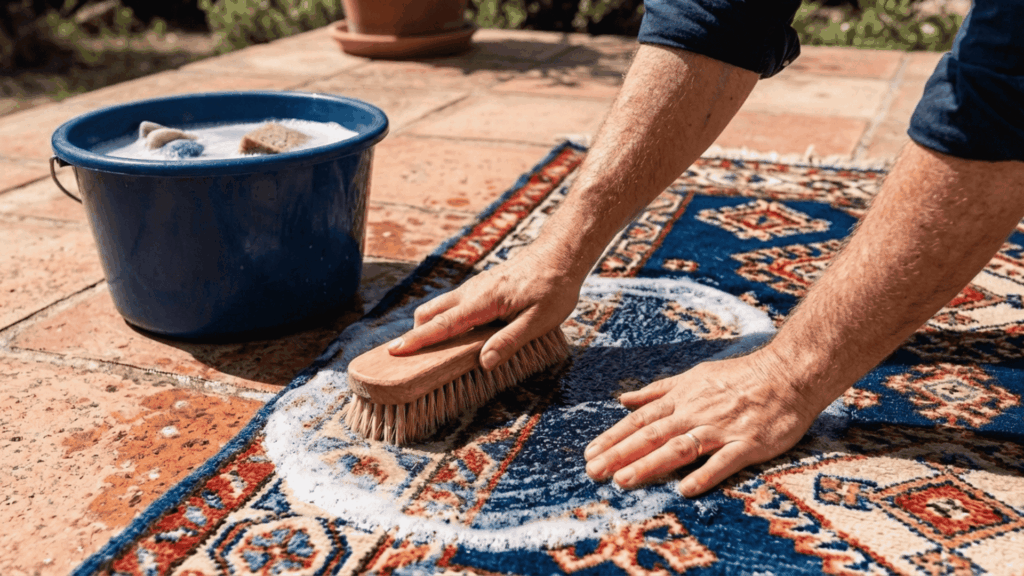
A key step in the process of cleaning area rugs at home is cleaning the entire surface with a mild soap and water solution. Using a soft brush and scrubbing lightly in the direction of the fibers helps lift embedded dirt without damaging the fibers.
For rugs made from sensitive materials like wool or jute, keeping the moisture level low is important. Soaking the rug can cause the backing to weaken or the fibers to lose their original shape.
Step 6: Rinse to Remove Residue
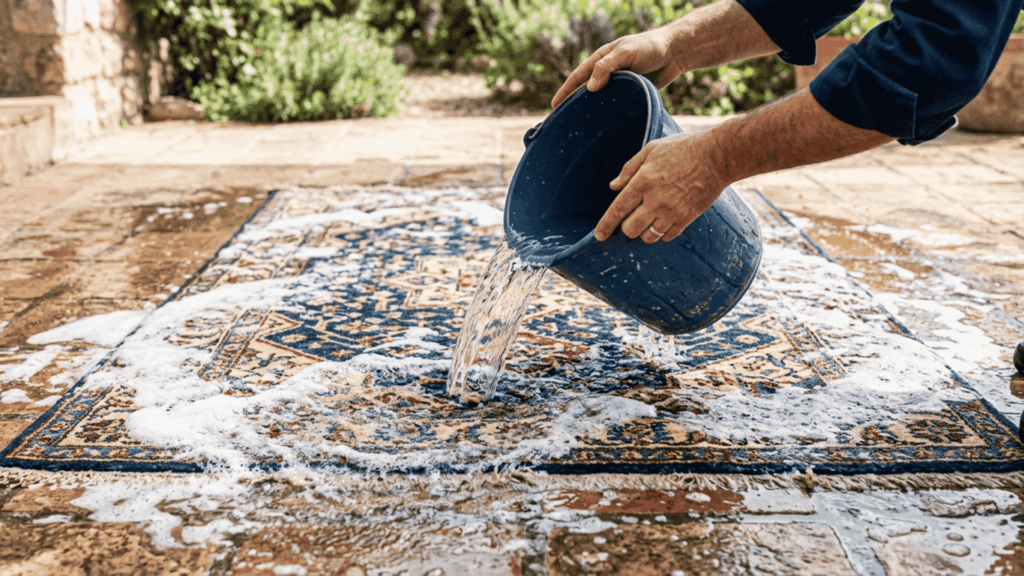
Rinsing the rug thoroughly with clean water ensures that no soap or cleaning solution remains. Leftover residue can attract more dirt quickly, leaving the rug looking dull even after cleaning.
Pouring clean water over the surface and pressing it through with a cloth or soft brush works well for most rug types.
A good way to check is to observe the water running off the rug. Once it runs clear with no soap or foam, the rug is ready for drying.
Step 7: Dry the Rug Properly
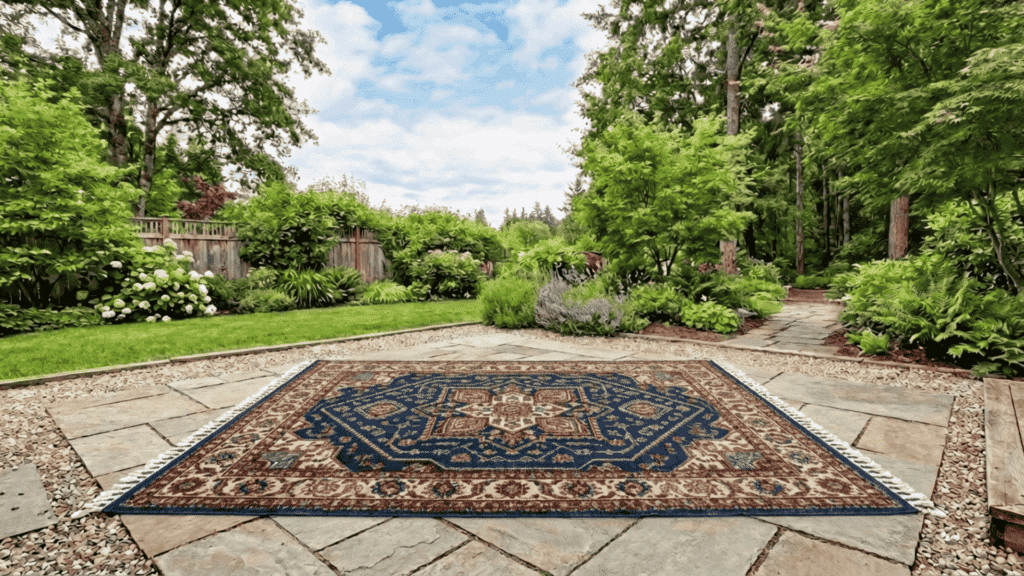
Drying is one of the most important parts of learning how to clean area rugs at home. Laying the rug flat in an open, well-ventilated space allows air to circulate evenly and speeds up the drying process.
Direct sunlight can help with drying, but keeping the rug out too long may cause colors to fade. Folding or rolling the rug while it is still damp should be avoided, as trapped moisture weakens the fibers from the inside and takes much longer to dry out completely.
Common Mistakes to Avoid
Even with the best intentions, a few common mistakes can undo the effort put into learning how to clean area rugs at home the right way.
- Using harsh chemicals: Strong cleaning agents like bleach or ammonia-based products can quickly break down rug fibers, causing permanent discoloration that cannot be reversed.
- Over-wetting the rug: Applying too much water during cleaning soaks through to the backing, leading to mold growth and long-term damage to the rug’s backing and base fibers.
- Scrubbing too aggressively: Rubbing stains with force damages the fiber texture, causes fraying along the surface, and often spreads the stain to a wider area.
- Skipping the patch test: Applying a cleaning solution directly without testing it first risks color bleeding and fiber damage that becomes visible only after the full clean is done.
- Improper drying methods: Folding a damp rug or placing it in a poorly ventilated space traps moisture, leading to shrinkage, odor buildup, and fiber deterioration over time.
Conclusion
Keeping area rugs clean does not have to be complicated or costly. With the right steps and basic household materials, maintaining a rug’s condition is completely manageable without outside help.
The key is consistency. A regular cleaning routine prevents heavy buildup and makes each session quicker and easier than the last.
Knowing how to clean area rugs at home also means avoiding common mistakes that lead to unnecessary damage over time.
Starting with small, regular efforts goes a long way in protecting what is often a significant part of any home’s interior.

Tommy Hardy, an alumnus of the Georgia Institute of Technology with a degree in Mechanical Engineering, has been a go-to figure in residential upkeep and innovation for over 18 years. His career commenced in a leading home appliance manufacturing company, where he mastered the intricacies of household systems. Joining our platform in 2020, Tommy quickly became a reader favorite for his practical and easy-to-follow guides. He took the helm of our DIY section in 2019, consistently delivering content that empowers homeowners. Beyond his professional pursuits, Tommy is a passionate gardener and enjoys woodworking, skills enhancing his hands-on approach to home care.