
Most homeowners never think twice about turning on the tap. Water comes out, it looks clear, it tastes fine; so it must be safe, right? Not always. Drinking water can carry contaminants that have zero taste, no odor, and no visible color, which means your senses alone cannot tell you whether what you’re drinking is actually safe. Testing is the only way to know for sure.
This piece walks you through why water testing matters, what you might be missing, how the process works from start to finish, and what to do once you have your results.
Why It Looks Fine Is Not Enough
Water quality problems are sneaky. Many of the most dangerous contaminants in drinking water are completely invisible. Lead, arsenic, nitrates, radon, and certain bacteria do not announce themselves. You cannot smell them, you cannot taste them, and you definitely cannot see them.
Lead, for example, can leach into your water from older pipes or plumbing fixtures, even if the water leaving the treatment plant was perfectly safe. Nitrates, often linked to agricultural runoff, are particularly dangerous for infants. Arsenic, which occurs naturally in some groundwater, has been connected to long-term health effects with regular exposure. None of these gives you any warning signs until there is already a problem.
Private well owners face even more risk. Municipal water systems are regularly tested and treated, though they are not perfect. Well water has no such oversight. If you use a well, no one is monitoring it on your behalf; that responsibility falls entirely on you.
Contaminants That Slip Past Your Senses
Some water problems are obvious. A rotten egg smell often signals hydrogen sulfide from bacteria. Cloudy or discolored water is easy to notice. These issues are actually easier to catch because they show up.
The harder-to-detect problems are the ones worth worrying about. Here is a short list of contaminants commonly found in household water that leave no trace in taste or smell:
- Lead from aging pipes, soldered joints, or brass fixtures
- Arsenic is found naturally in rock formations and groundwater
- Nitrates are common near farms, lawns with heavy fertilizer use, or septic systems
- Radon is a naturally occurring radioactive gas that dissolves into groundwater
- Volatile organic compounds (VOCs) from industrial activity, fuel spills, or old underground storage tanks
- Coliform bacteria are especially relevant for well users after flooding or heavy rain
You might be drinking water with elevated levels of any of these right now and feel completely fine for years. That is what makes routine testing so important.
How Water Testing Actually Works
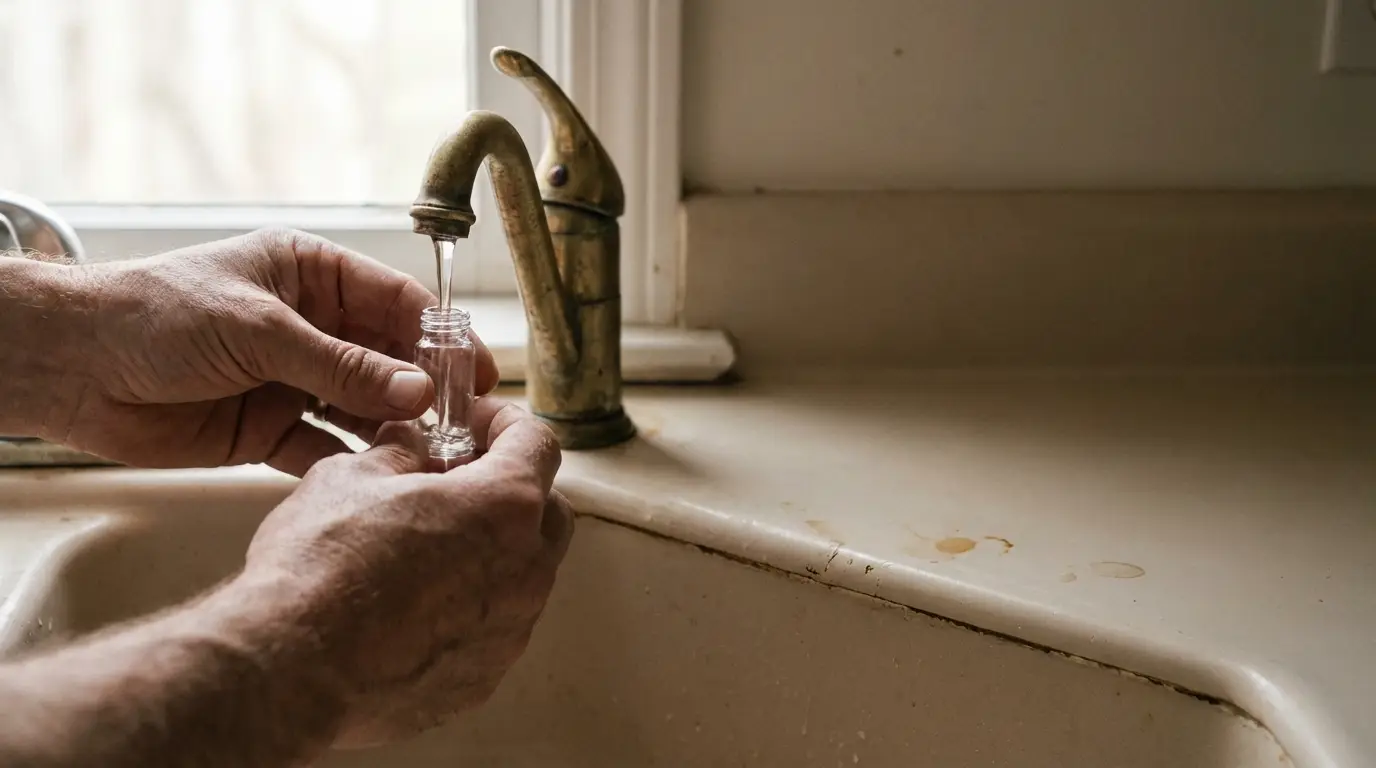
Getting your water tested is simpler than most people expect. ETR Labs is an accredited water testing laboratory that homeowners can use to get accurate results without needing to go through a contractor or water company.
Here is the general process:
| Step 1: Choose a test panel. Labs typically offer different testing packages depending on your situation. A basic panel covers common contaminants like bacteria, lead, and nitrates. More comprehensive panels test for heavy metals, VOCs, pesticides, and radiological elements. If you are on a well or have specific concerns like living near farmland or an industrial area, you may want a broader panel. | Step 2: Collect your sample. Labs mail you a testing kit with sample bottles and instructions. The collection varies depending on what is being tested. For lead, you typically take a “first draw” sample, water that has been sitting in the pipes overnight. For bacteria, you use a sanitized container and avoid contaminating the sample. Following the instructions precisely matters here, because improper collection can skew results. |
|---|---|
| Step 3: Send it in. You ship the sealed samples back to the lab using their provided packaging and instructions. Turnaround times vary but typically range from a few days to a couple of weeks, depending on the panel. | Step 4: Get your results. Accredited labs return a detailed report comparing your water’s contaminant levels against EPA maximum contaminant levels (MCLs). You will see exactly what was found and whether it exceeds safe limits. |
Reading Your Results and Knowing What Comes Next
Getting a report back from a lab can feel overwhelming at first, especially if you are not used to reading water quality data. Here is how to approach it. For each contaminant, the report lists what was detected and the concentration, usually in parts per million (ppm) or parts per billion (ppb). Your results are compared against EPA limits. Anything flagged above the MCL requires action.
If your results come back clean, that is good news, though not a permanent guarantee. Water quality can change, especially for well users. Annual or biannual testing is a reasonable habit to build.
If something comes back elevated, do not panic. There are solutions. Depending on the contaminant:
- Filtration systems can remove many common issues, including sediment, chlorine, and some heavy metals
- Reverse osmosis systems are effective against lead, arsenic, and nitrates
- UV purifiers handle bacterial contamination
- A plumber can assess whether your plumbing itself is the source of the problem
For well owners, a contaminated result may also prompt further investigation into the source, nearby land use, well casing integrity, or geological factors in your area.
Making Testing a Regular Habit
Water quality is not a set-it-and-forget-it situation. Pipes age. Neighborhoods change. New industrial activity can affect groundwater. Seasonal flooding can introduce bacteria into wells.
Testing your water once is a good start. Testing it regularly is what actually protects your household over time. Most experts recommend testing well water at least once a year, and municipal water users should consider testing after any major changes to local infrastructure or after flooding events. Regular testing also helps ensure your water heater and plumbing system stay safe and function properly.
Your tap water is only as safe as your awareness of what is in it. Testing removes the guesswork, and that alone is worth the small effort it takes.
FAQ
Q1: Why should I test my drinking water?
Answer: Testing your drinking water is crucial because many harmful contaminants are invisible, tasteless, and odorless. Just because your water looks clear and tastes fine doesn’t mean it’s safe. Regular testing helps ensure you and your family are drinking safe water.
Q2: What contaminants should I be concerned about in my drinking water?
Answer: Some common contaminants include lead from aging pipes, arsenic found in groundwater, nitrates often linked to agricultural runoff, radon, which is a naturally occurring gas, volatile organic compounds (VOCs) from industrial activities, and coliform bacteria, especially relevant for well users after heavy rain.
Q3: How does the water testing process work?
Answer: The water testing process typically involves choosing a test panel, collecting your water sample using a provided kit, sending the sample to a lab, and then receiving a detailed report on the contaminant levels compared to EPA standards. With services from ETR Labs, the process is straightforward and reliable. It’s easier than you might think!
Q4: What should I do if my water test results show elevated contaminant levels?
Answer: If your results show elevated contaminant levels, don’t panic! There are solutions like filtration systems, reverse osmosis systems, and UV purifiers to address specific issues. You may also want to consult a plumber to check if your plumbing is the source of the problem.
Q5: How often should I test my drinking water?
Answer: It’s recommended to test well water at least once a year. For municipal water users, consider testing after significant changes in local infrastructure or flooding events. Regular testing helps ensure your water remains safe over time.

Priya Nair, MPH, is a certified wellness coach and former hospital dietitian with 12 years of translating public-health research into everyday habits. She joined us in 2024 to deliver evidence-based guidance on nutrition, stress relief, and holistic fitness that fits busy schedules. Off the mat, Priya practices yoga, hikes coastal trails, and tests plant-forward recipes for weekend potlucks with friends and neighbors.