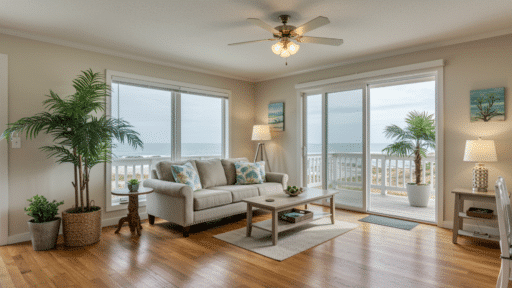
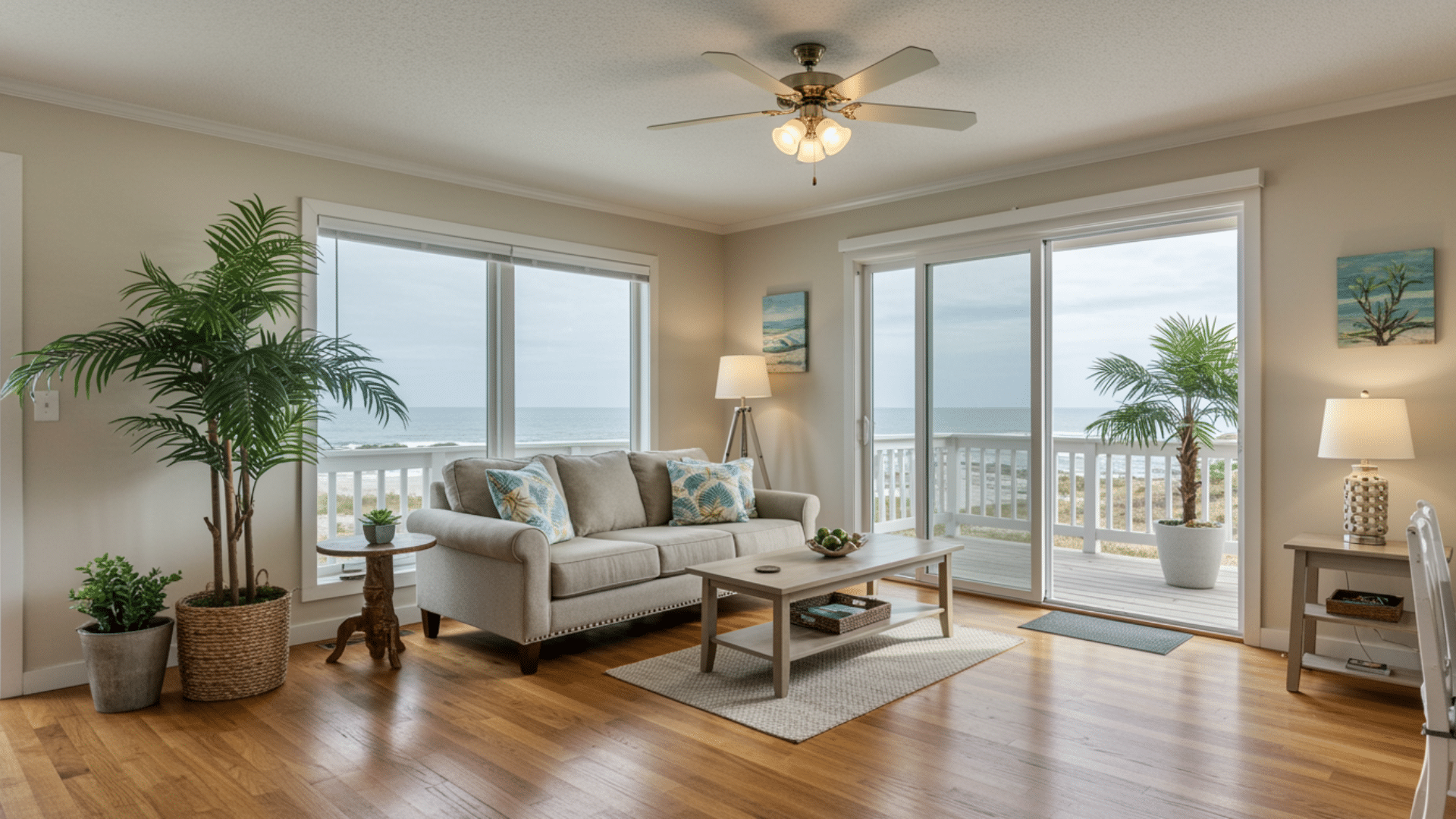

Does your living room feel more cramped and chaotic than calm and coastal? You’re not alone; most people want that breezy, sun-washed feel. The kind of space where you instantly relax, but don’t know how to recreate it at home.
It can feel overwhelming to achieve that look without a full makeover or expensive designer help. Many assume it requires a big budget or a complete redesign to get it right.
That’s where beach modern coastal style comes in, blending clean lines with a relaxed, airy vibe. It’s simple, practical, and achievable no matter where you live.
What Defines a Beach Modern Coastal Living Room
A modern coastal beach living room is centered on calm, intentional design that feels both relaxed and refined.
It uses soft, nature-inspired tones like white, sand, and muted blues to create an open, airy atmosphere.
Natural materials such as linen, rattan, and light wood add warmth and texture without overwhelming the space. Keeping clutter minimal helps maintain a peaceful, breathable environment that feels easy to live in.
This style stands out by blending modern simplicity with coastal comfort in a balanced way. Clean lines meet soft, inviting elements to create a space that looks polished yet feels effortless.
Top Beach Modern Coastal Living Room Ideas
Turning your living room into a beach modern coastal retreat doesn’t require a full renovation or a designer’s budget. It starts with the right choices of color, texture, furniture, and the small details that quietly pull everything together.
1. Soft White Walls with Warm Undertones
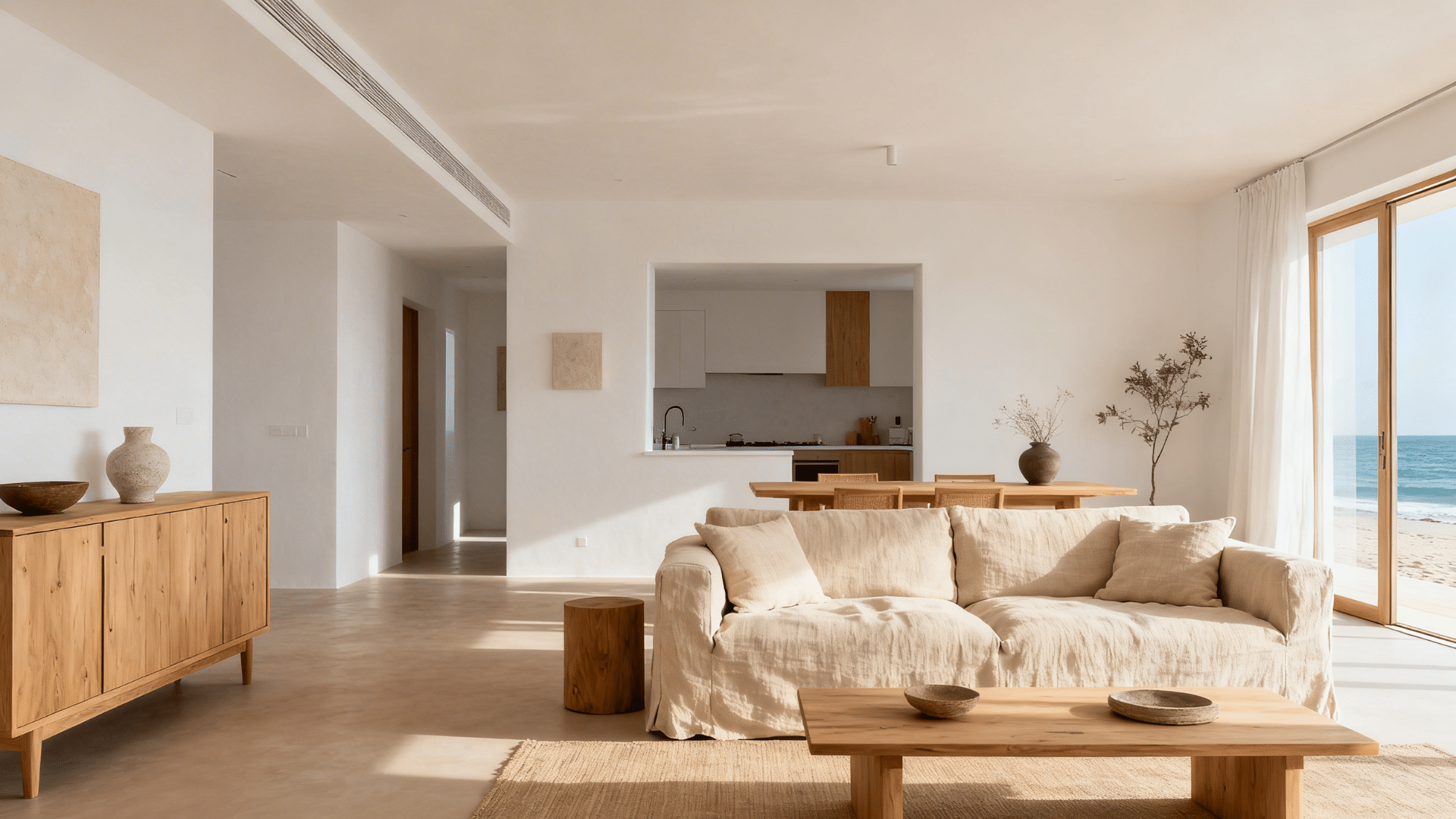
They act as a neutral canvas that lets every other element, textures, furniture, and artwork breathe and stand out without competing. The warmth in the undertone mimics the sun-bleached, sand-washed quality that is central to coastal aesthetics.
Tips:
- Look for paint shades like Benjamin Moore’s White Dove or Sherwin-Williams Alabaster
- Test samples at different times of day before committing to warm whites shift noticeably from morning to evening light.
- Pair with natural wood accents and linen textiles to amplify the coastal warmth without adding more color.
2. Sandy Beige Upholstery
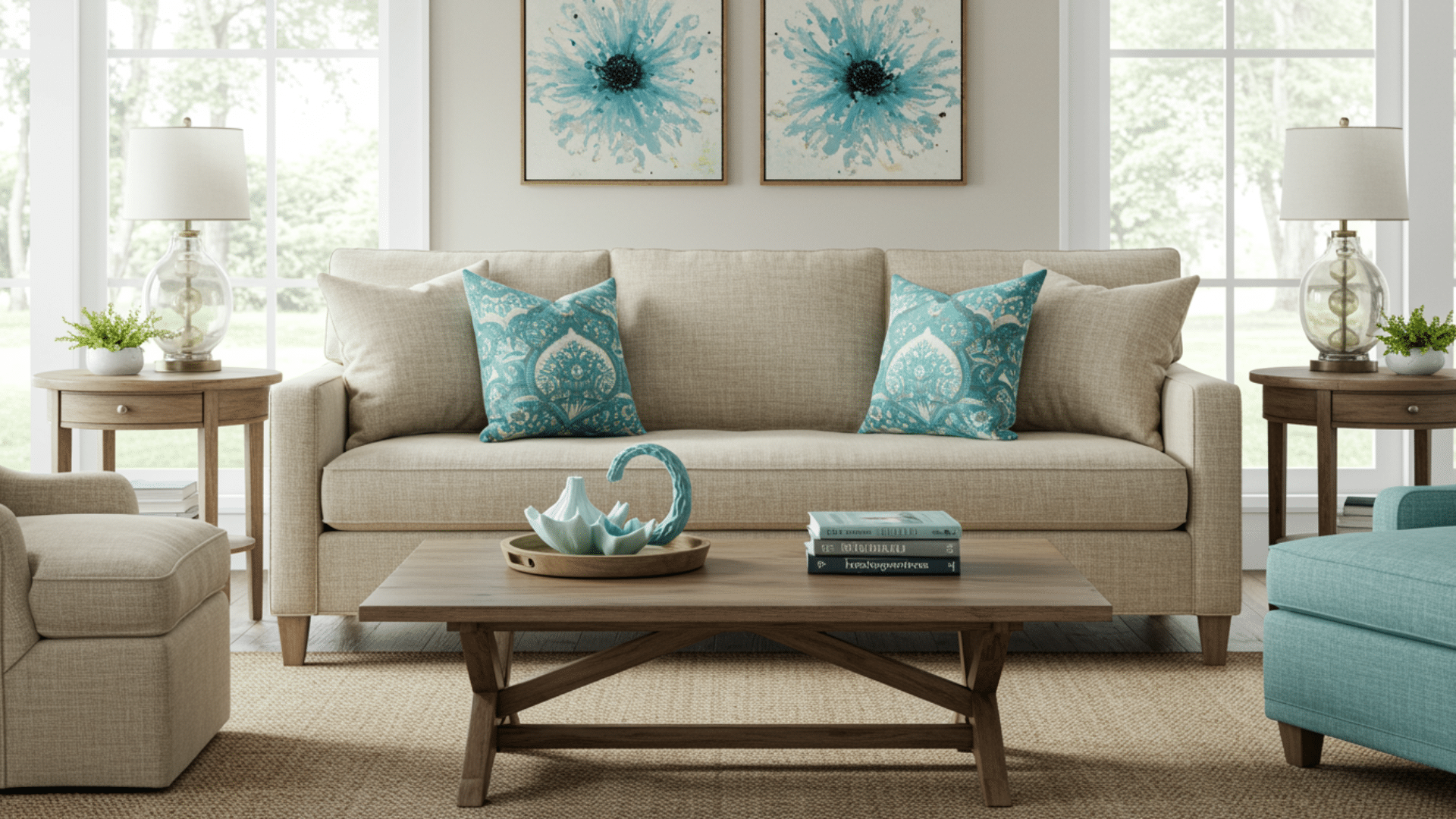
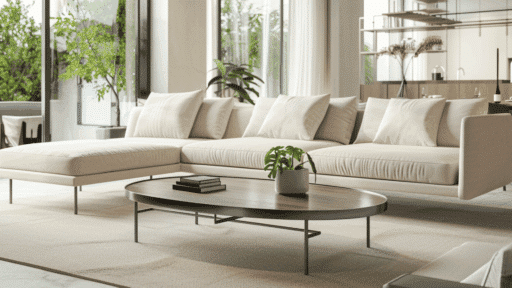
Sandy beige echoes the natural tones of sand, driftwood, and sea grass, making it feel inherently coastal without being literal.
It ages gracefully and hides everyday wear far better than bright white upholstery.
Tips:
- Choose upholstery fabrics with a slight texture, such as brushed cotton, linen blends, or woven fabrics, to add depth and prevent the piece from looking flat.
- Layer with cushions in muted blue, soft terracotta, or warm white to build contrast.
- Avoid overly shiny or smooth fabrics, which work against the relaxed, organic feel the style depends on.
3. Light Oak Coffee Table
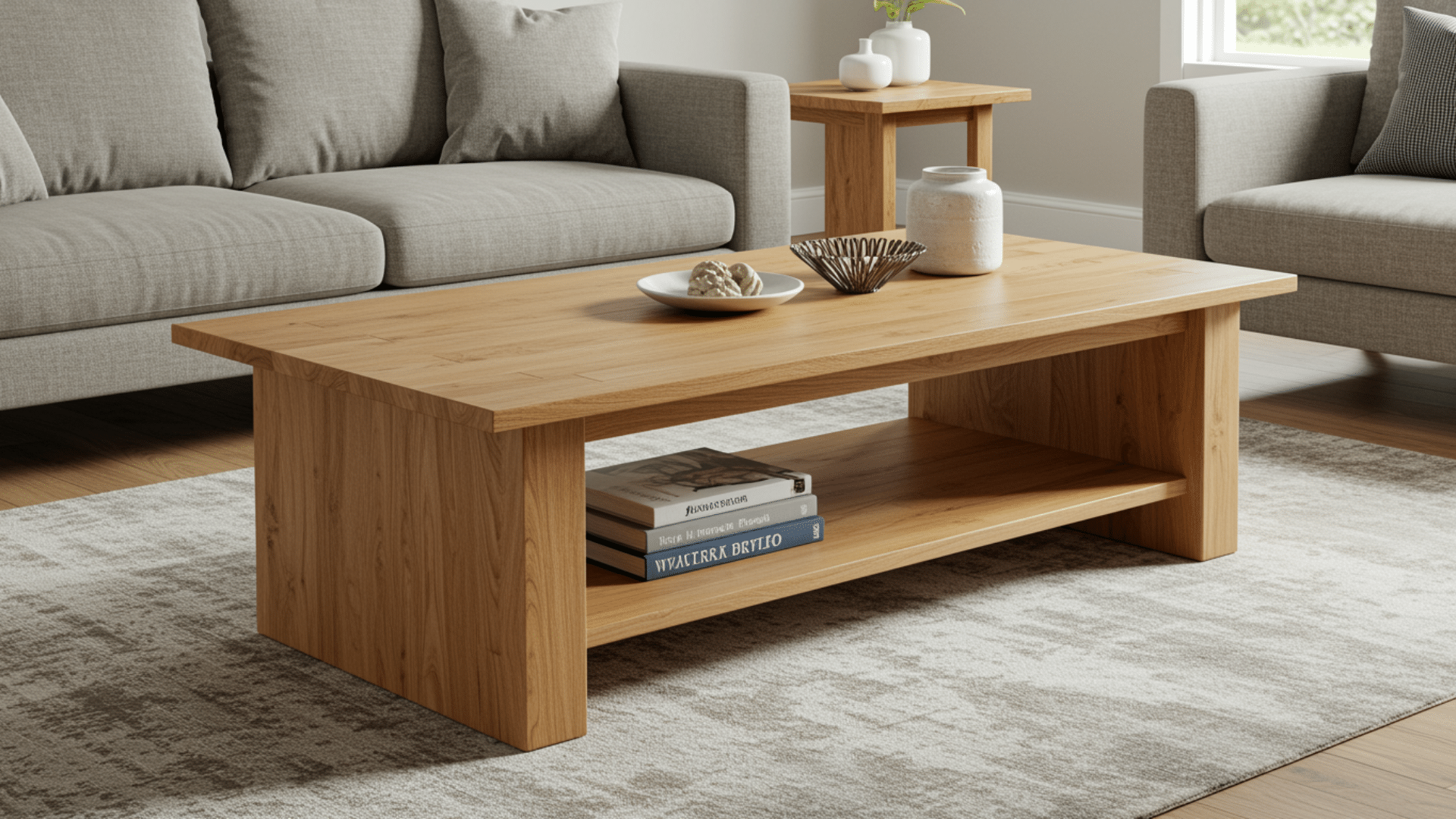
Light oak has a natural honey tone that reads warm and organic without being heavy or rustic. Straight edges keep it squarely in modern territory, while the natural material effortlessly connects with the coastal palette.
Tips:
- Look for tables with a low profile to maintain an open, airy feel.
- Keep the surface lightly styled: a tray, a candle, a small plant, and one or two books are enough.
- Avoid dark stains or heavily grained wood, which pull the aesthetic toward rustic rather than coastal modern.
4. Linen Slipcovered Sofa
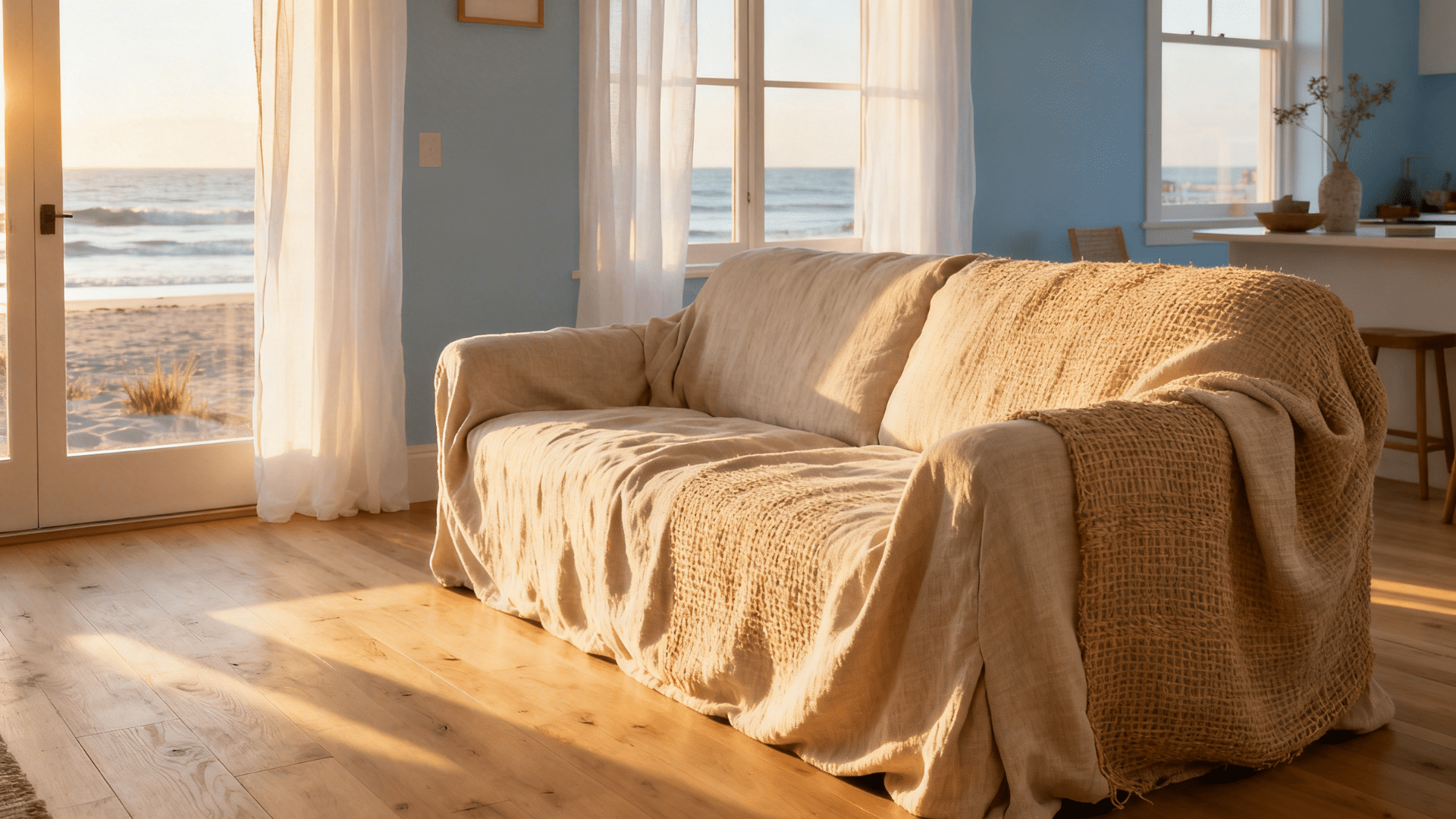
Linen slipcovers introduce softness, organic texture, and a casually undone quality that balances the cleaner, more structured elements of modern design.
The slightly loose, lived-in drape prevents the room from feeling too polished or uptight.
Tips:
- Choose a slipcover in natural linen, soft white, or warm oatmeal tones.
- Wash before use to achieve the relaxed, softened texture that makes linen look its best.
- Style with a mix of cushion sizes in complementary coastal tones, and don’t over-fluff; a slightly relaxed arrangement reinforces the casual mood perfectly.
5. Floor-to-Ceiling Sheer Curtains
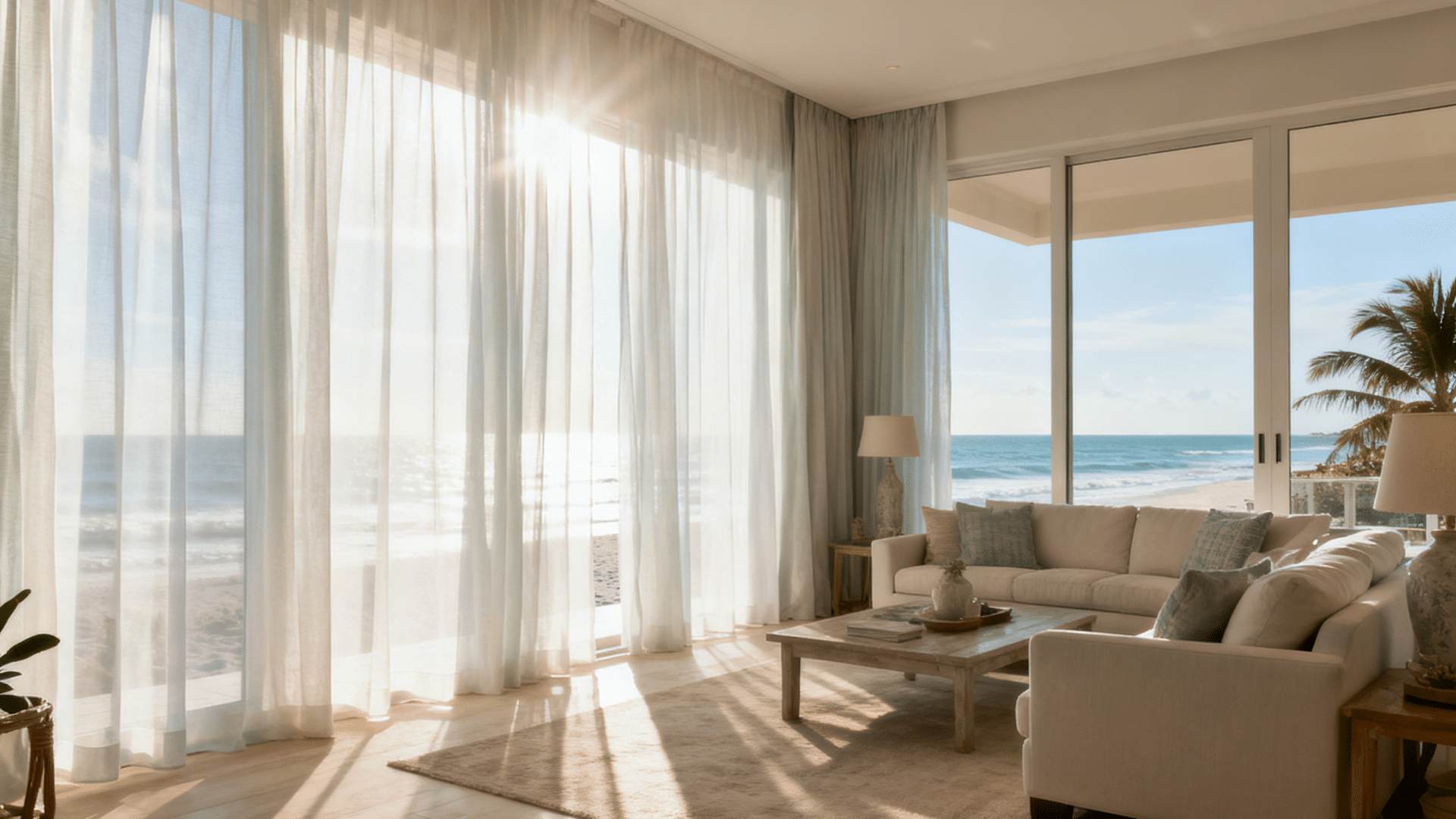
Sheers maximize the visual height of the room by drawing the eye upward, while filtering natural light in a way that mimics the soft, hazy glow of a coastal morning, one of the most distinctive sensory qualities of beach-adjacent spaces.
Tips:
- Mount the curtain rod as close to the ceiling as possible, even if your windows don’t extend that high.
- Choose white or off-white sheer linen fabric for maximum light diffusion.
- Layer over a simple roller blind if privacy is needed, keeping the outer sheer layer always visible during the day.
6. Muted Blue Accent Cushions
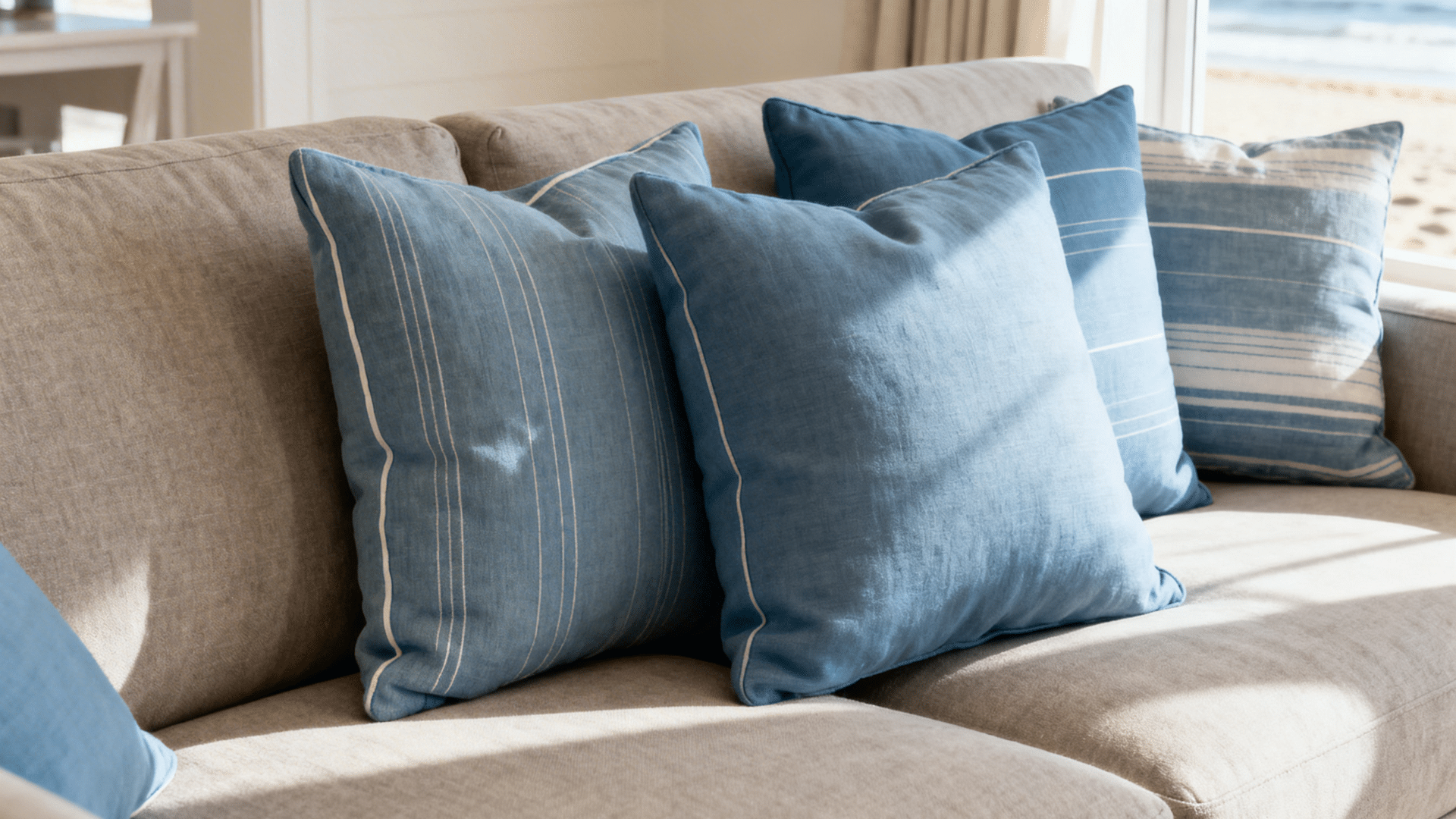
Dusty slate, washed denim, soft teal, or faded navy carry an immediate visual connection to the ocean and sky without being aggressive or overly themed.
Tips:
- Aim for two to four cushions in varying shades of muted blue, rather than a single solid color. The layering creates depth.
- Mix textures within the blue tones, such as a woven cushion alongside a linen one.
- Balance with one or two warm neutral cushions so the blue reads as an accent rather than the dominant color story.
7. Flat-Weave Jute Rug
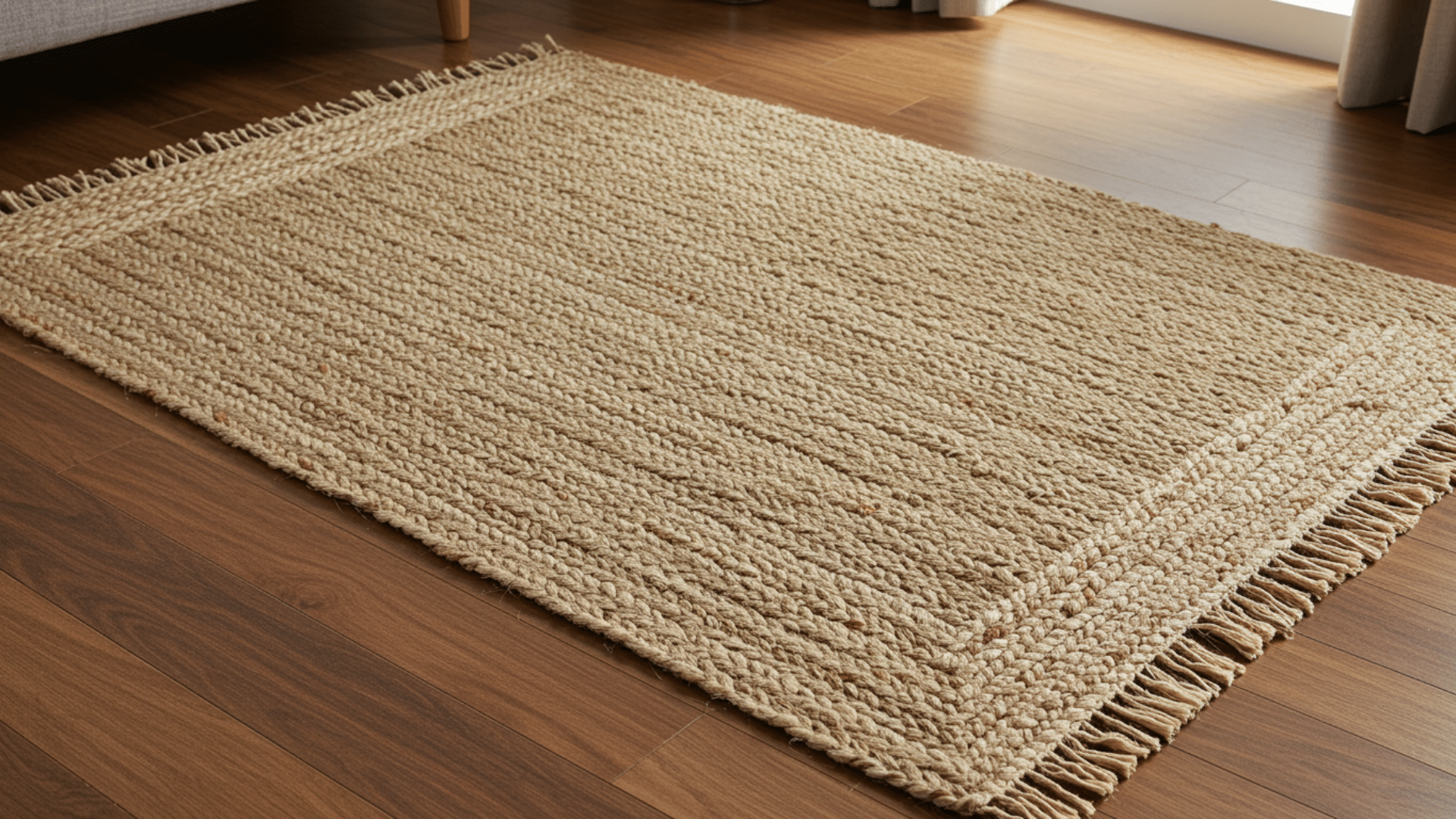
Jute’s raw, plant-based texture immediately evokes sand, sea grass, and sun-dried natural fibers. A flat weave keeps it from feeling too rustic or heavy, maintaining the clean, modern quality the style requires while clearly defining the seating zone.
Tips:
- Size up rather than down the front legs of all seating pieces, which should ideally sit on the rug.
- For high-traffic areas or homes with children, look for jute-cotton blends, which are more durable and easier to clean.
- Layer a thinner woven rug underneath for added softness underfoot if needed.
8. Rattan Lounge Chair
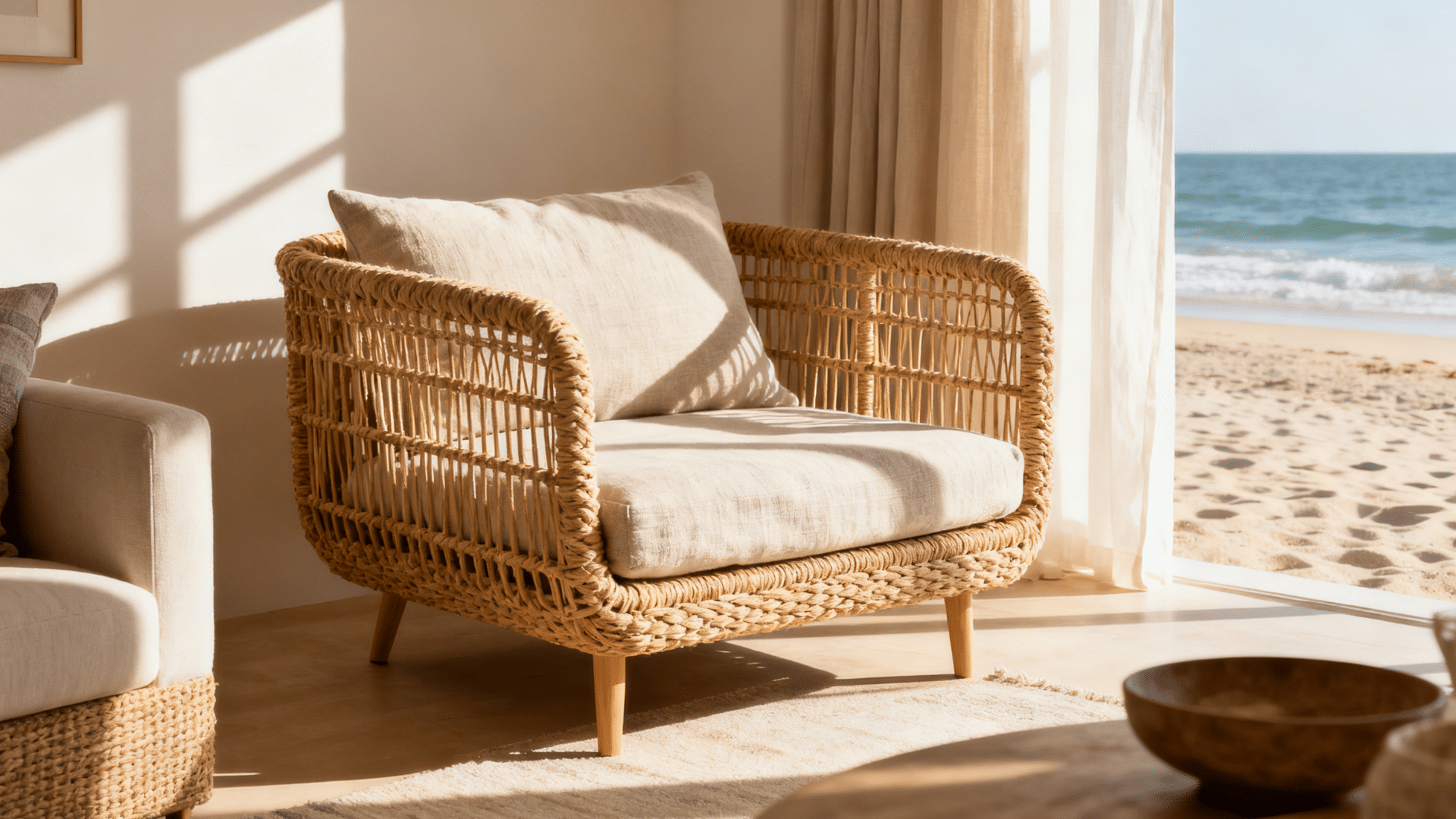
Rattan’s woven texture introduces visual complexity without adding color, integrating seamlessly into a neutral coastal palette. A single well-chosen rattan chair breaks up the uniformity of upholstered seating, preventing the room from feeling flat or predictable.
Tips:
- Position the chair at a slight angle to the main sofa to create a conversational grouping rather than a rigid lineup.
- Add a simple linen cushion in a neutral or muted tone for comfort.
- Look for chairs with clean, rounded frames rather than ornate or heavily carved rattan to keep it firmly in modern coastal territory.
9. Abstract Ocean-Inspired Wall Art
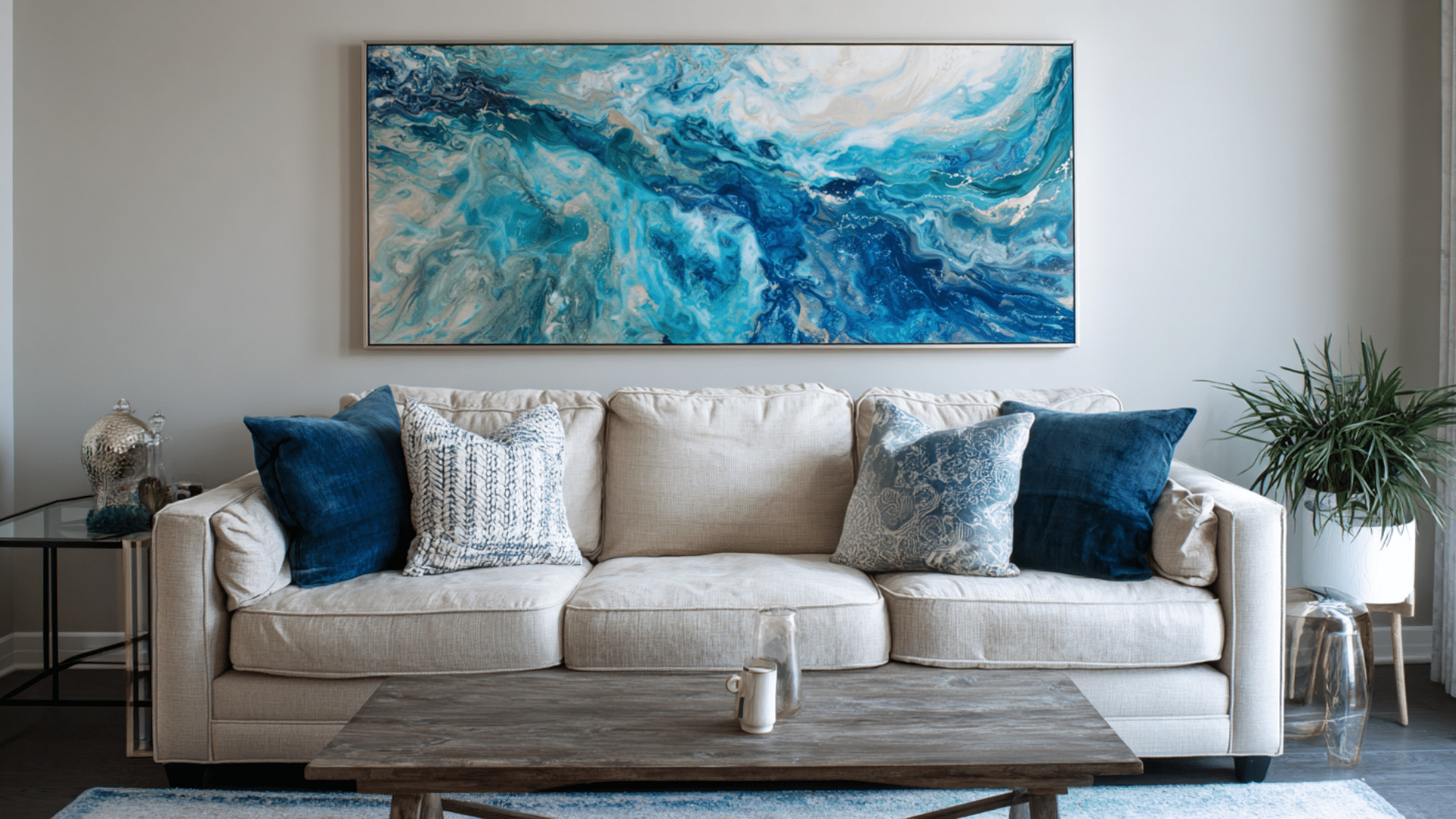
Abstract pieces convey the feeling of the coast shifting, blues, a calm horizon, and fluid movement without being literal. That interpretive quality keeps the room feeling modern and sophisticated rather than themed.
Tips:
- Look for horizontal compositions in soft blues, sandy neutrals, and warm whites.
- Large-scale canvases create the most impact without clutter.
- Hang with the center at eye level, leaving breathing space above the sofa.
10. Driftwood Centerpiece for Organic Detail
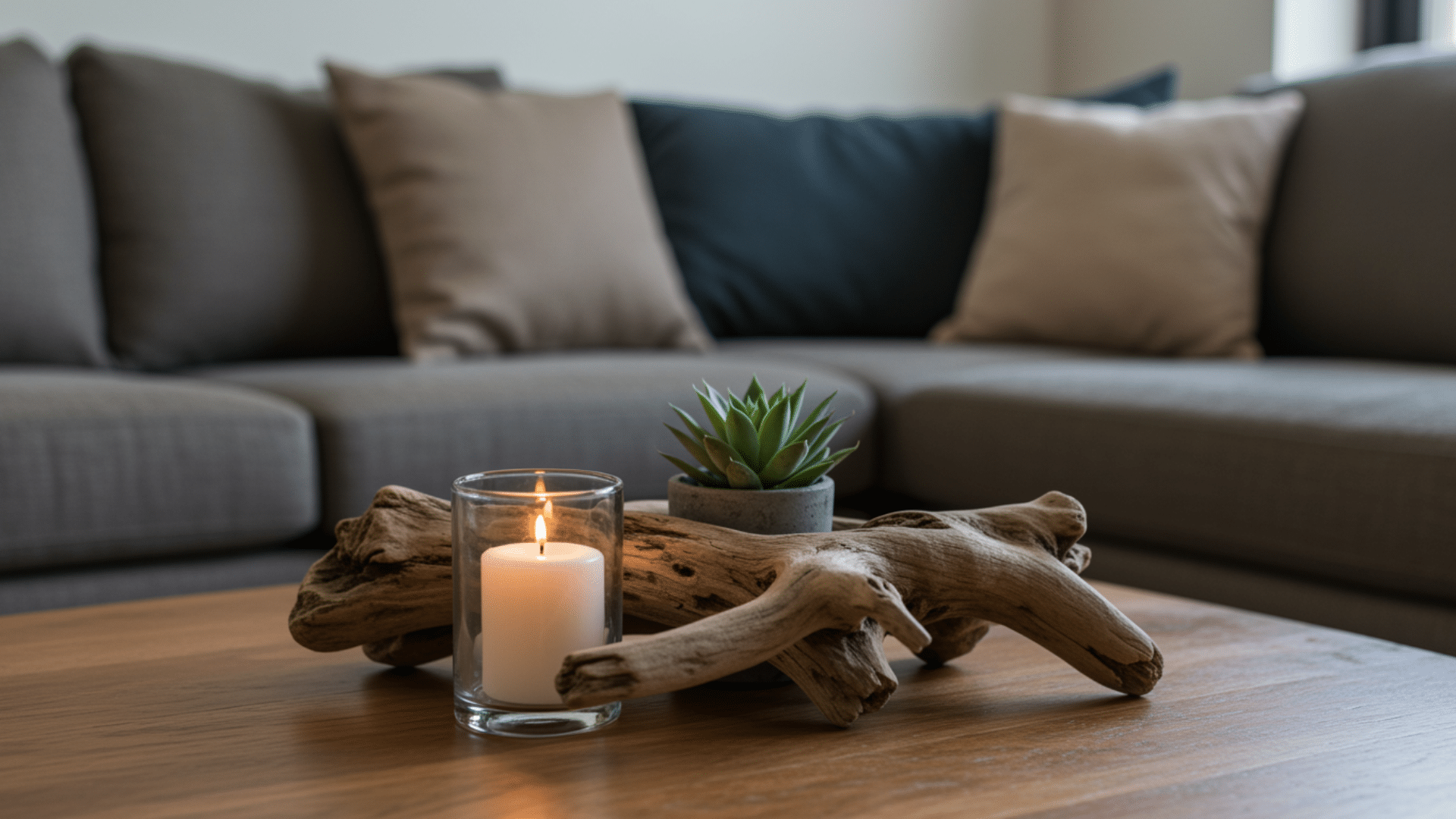
Driftwood carries a quiet visual narrative, weathered and shaped by water and time, that resonates naturally with coastal aesthetics. Its organic form contrasts with clean-lined furniture without clashing.
Tips:
- Use a single, well-shaped piece rather than a cluster.
- Pair with a low candle and a small plant on the coffee table.
- Ensure it’s fully dried and treated before bringing it indoors.
11. Whitewashed Console Table
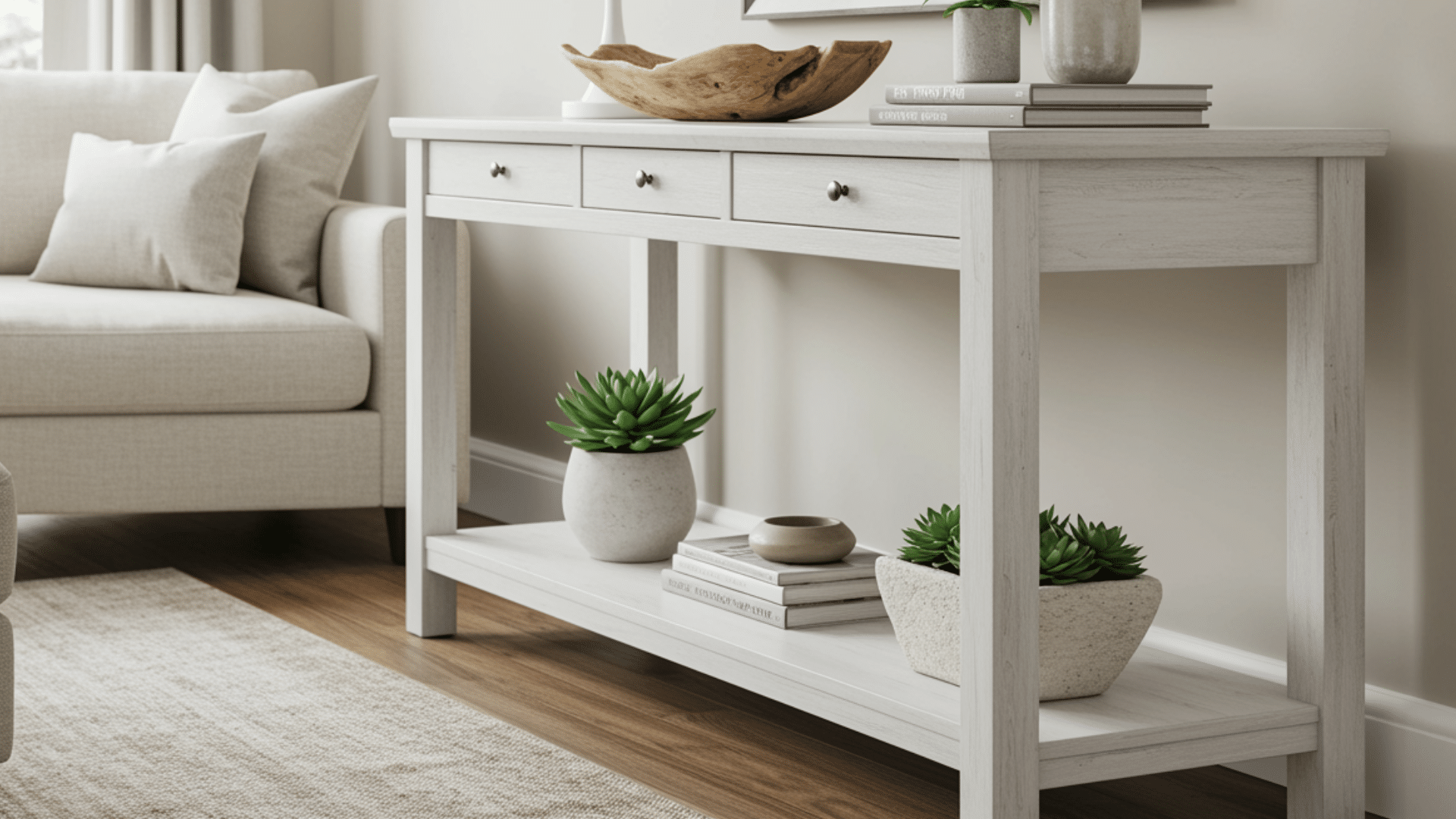
Whitewashing strips wood back to its most sun-bleached, natural state, as close to a finish as a finish gets. It fills the awkward gap behind a floating sofa with genuine character.
Tips:
- Keep it shallow, no deeper than 30cm, so it doesn’t crowd the sofa.
- Style simply with a pair of lamps, a trailing plant, and a flat book or two.
- Don’t overload the surface; the finish does the decorative work on its own.
12. Low-Profile Modular Sectional
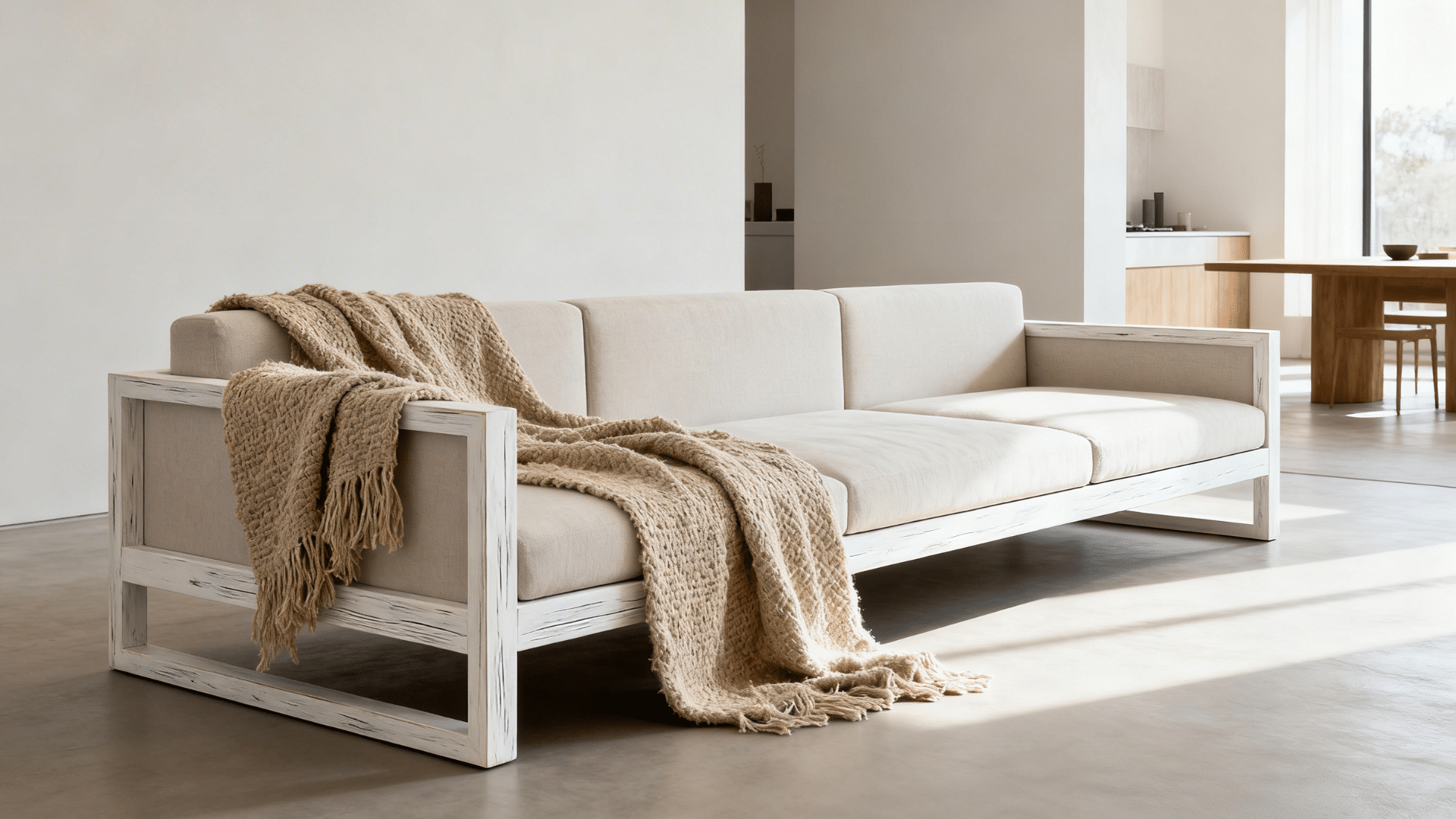
Low-profile furniture keeps sightlines clear, preserving the open, airy quality that coastal design depends on. The modular format suits the relaxed, unfussy nature of coastal living.
Tips:
- Choose upholstery in warm white, oatmeal, or sandy beige in a linen or cotton blend.
- Configure to suit the room’s natural flow rather than defaulting to a standard L-shape.
- Leave adequate clearance from surrounding walls to preserve openness.
13. Symmetrical Furniture Layout
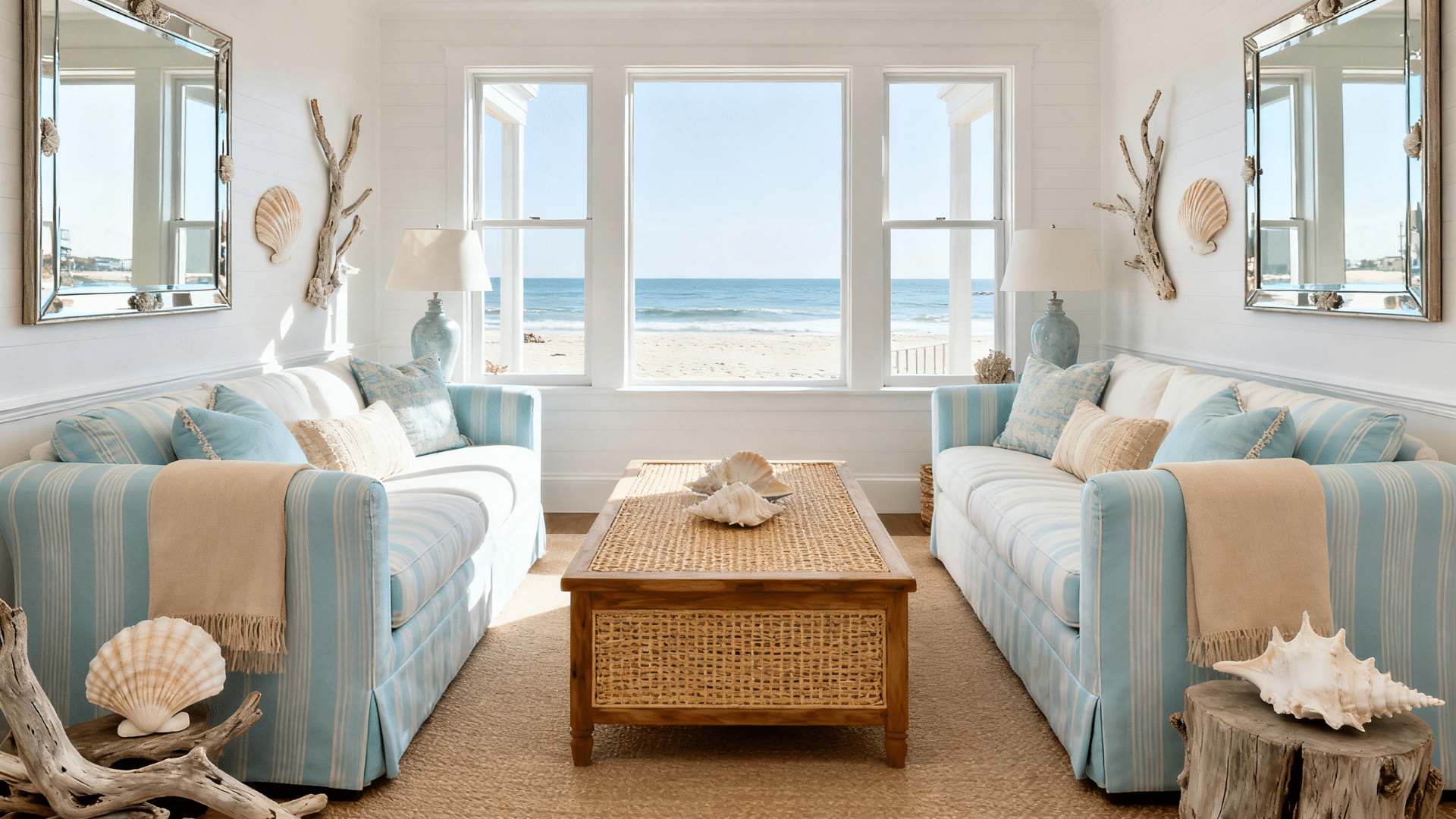
The human eye finds symmetry instinctively restful. A balanced, mirrored layout eliminates visual tension and creates a natural focal point by framing it evenly on both sides.
Tips:
- Center the sofa on the main focal wall, and place mirror-accent chairs on either side.
- Flank the sofa or fireplace with matching lamps, side tables, or floor plants.
- Allow slight texture or height variation between paired elements to balance, not replicate.
14. Exposed Ceiling Beams in Light Wood Finish
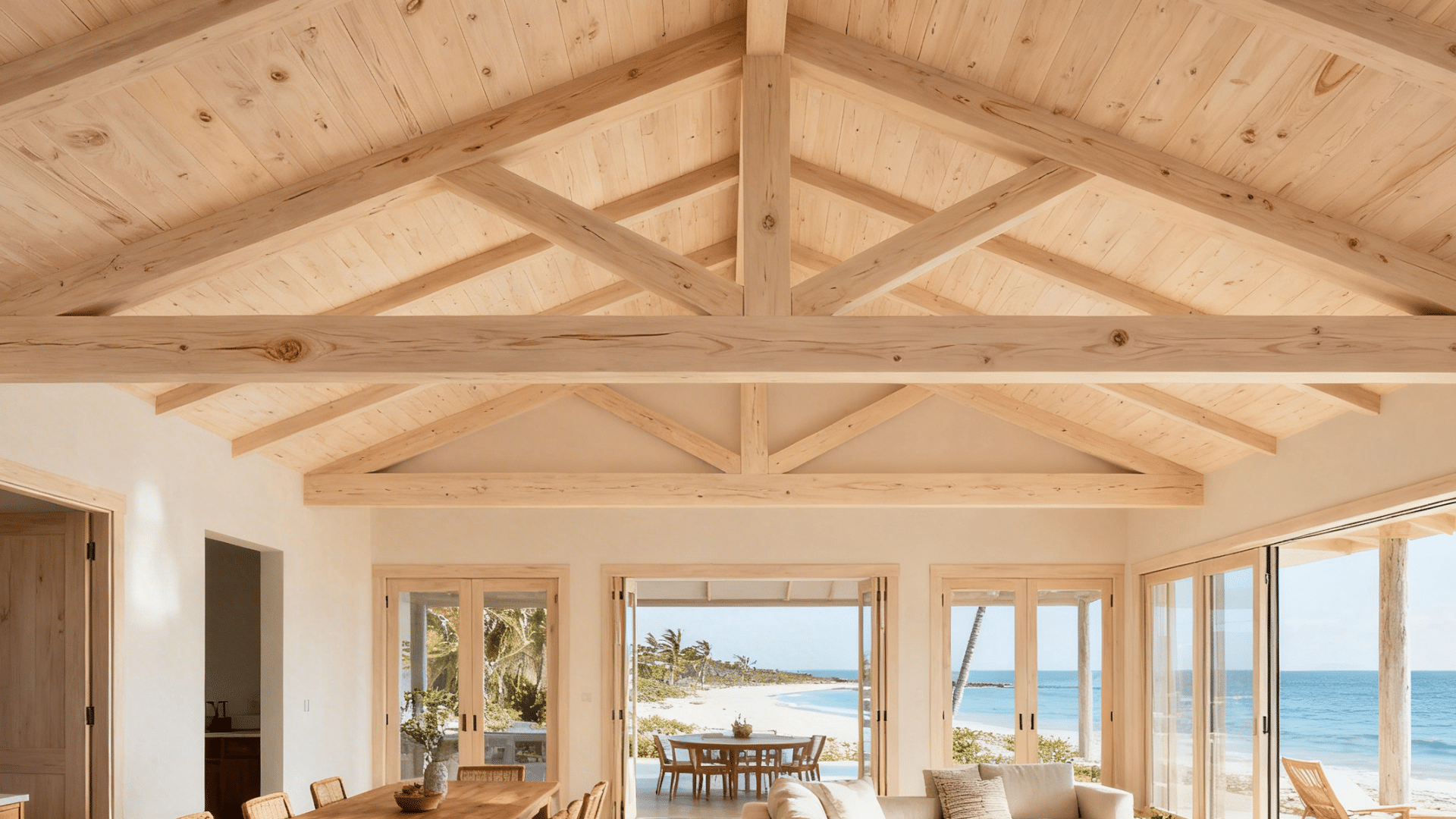
Light wood beams draw the eye upward, increasing perceived height and reinforcing the open, expansive feeling coastal design pursues. They add honest architectural character rooted in beach house construction.
Tips:
- Use lightweight faux beam kits if structural beams aren’t present, convincing, and budget-friendly.
- Finish in whitewashed, pale oak, or bleached ash rather than a dark stain.
- Keep the ceiling between beams white to maximize contrast and light reflection.
15. Textured Ceramic Decor in Neutral Shades
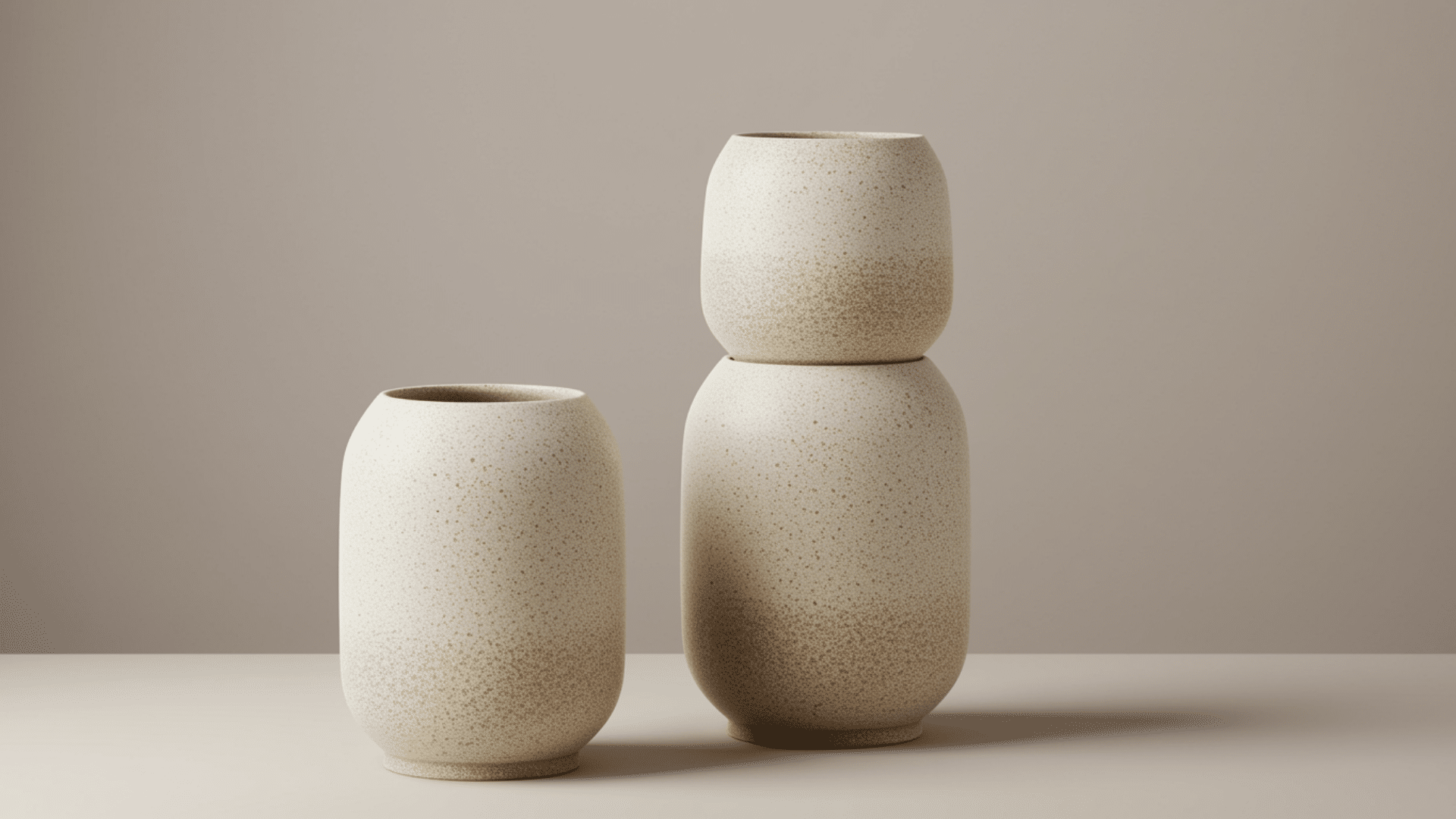
Ceramics carry an inherently handmade, organic quality that aligns with the natural spirit of coastal design. Textured surfaces interact with light in subtle ways that add dimension without color noise.
Tips:
- Group in odd numbers, three pieces of varying heights work best.
- Mix finishes within one neutral family: matte white, sandy bisque, pale stone.
- Avoid glossy or brightly colored pieces, which undermine the quiet, muted character.
16. Mixed Grain Wood Finishes for Depth
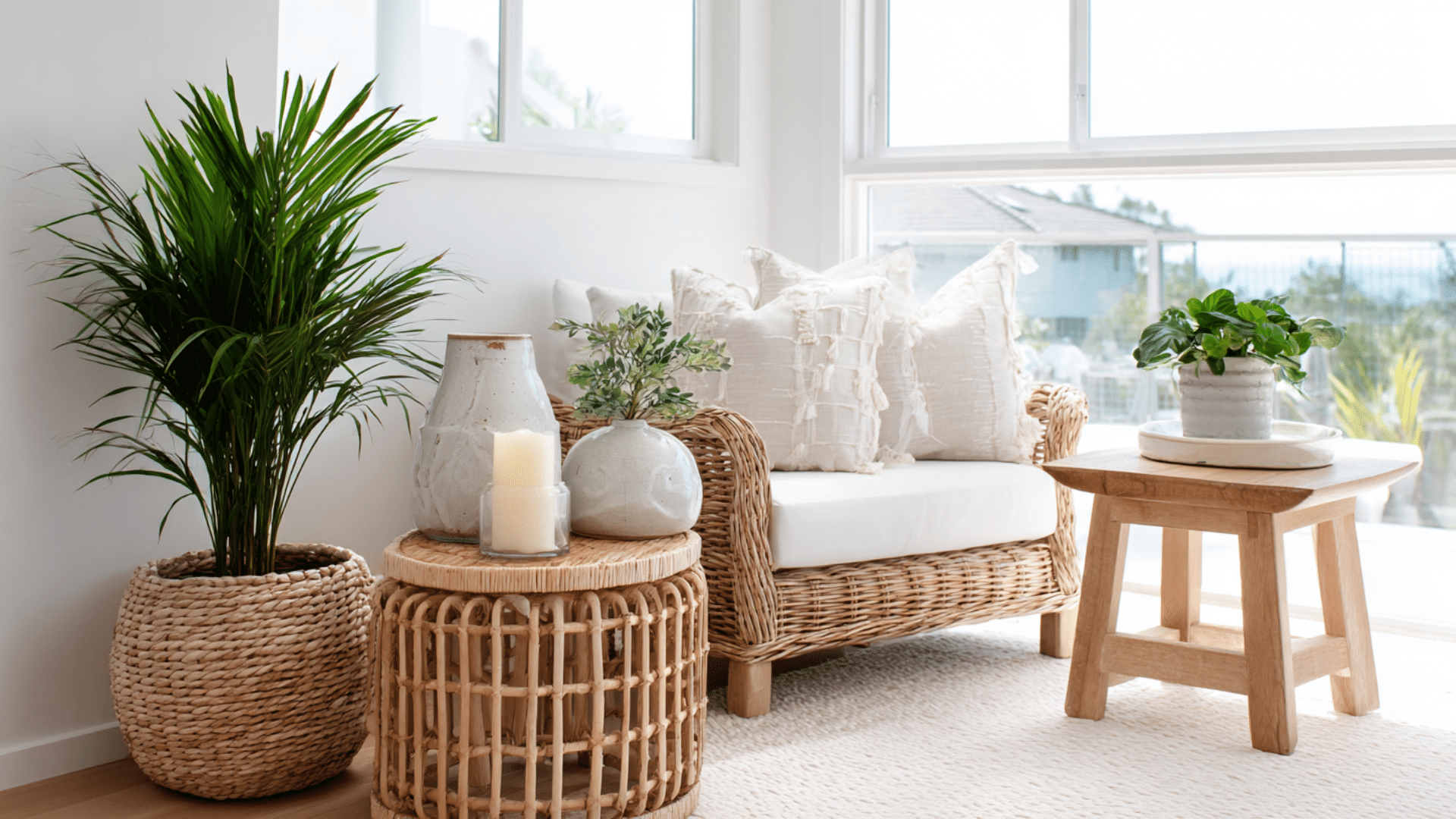
Natural environments are never made from a single material. Varying wood elements reflect that natural variety honestly, adding a layered, organically developed quality that feels collected rather than catalog-complete.
Tips:
- Work within a consistent tonal range, pale oak, whitewashed ash, and light walnut, and maintain variety without discord.
- Vary grain scale a tight grain on the coffee table against a wider grain on shelves creates visual interest.
- Keep metal hardware consistent across all wood pieces to provide a unifying thread.
17. Floating Wood Shelves
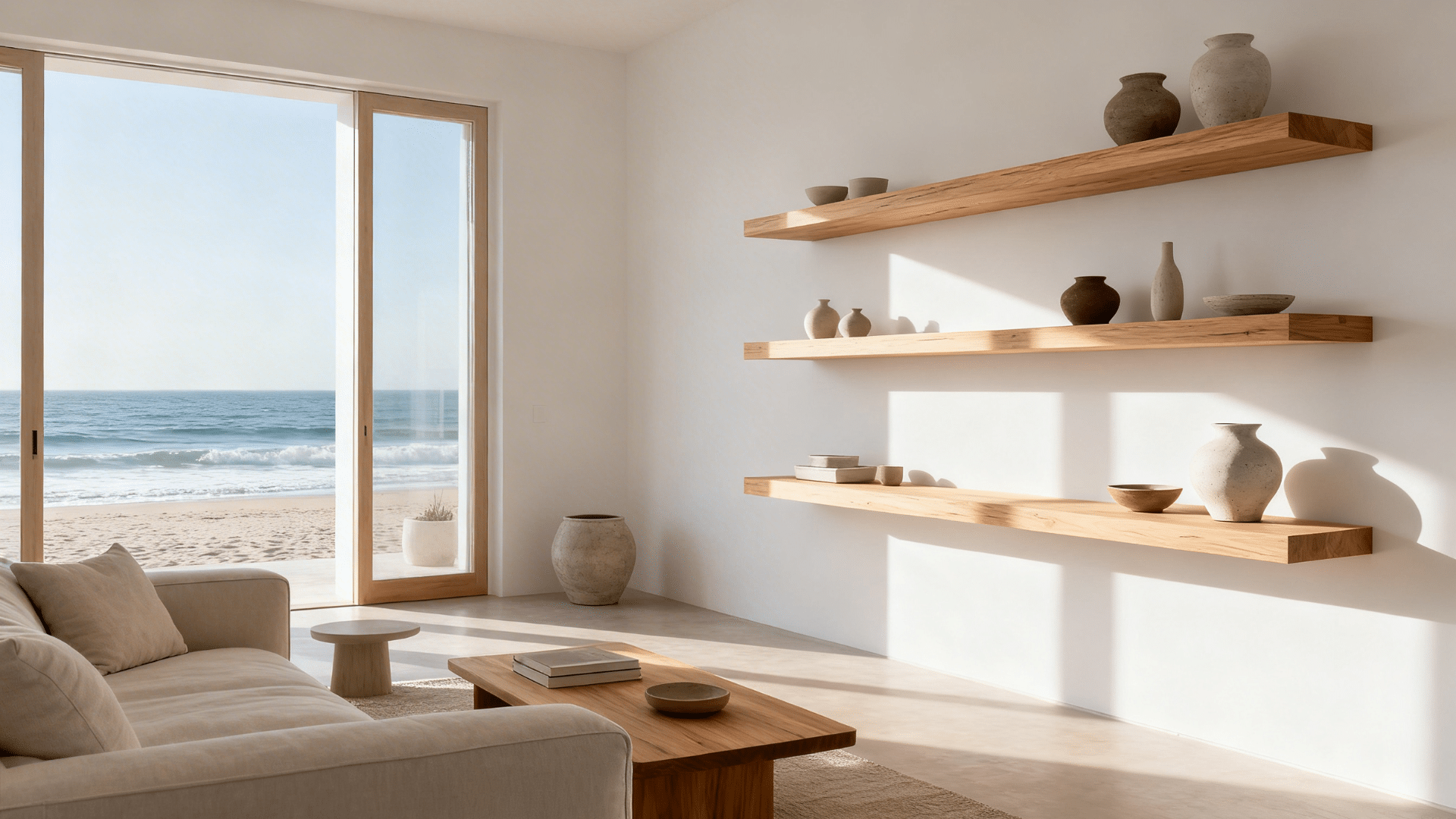
The floating design keeps the look light and airy, consistent with the open atmosphere the style demands. Minimal styling ensures the shelves contribute to calm rather than visual noise.
Tips:
- Install in light oak, whitewash, or pale ash consistent with other wood tones in the room.
- Style each shelf with no more than three to four items maximum.
- Leave deliberate empty space on every shelf. The negative space makes it feel intentional.
18. Sliding Glass Doors
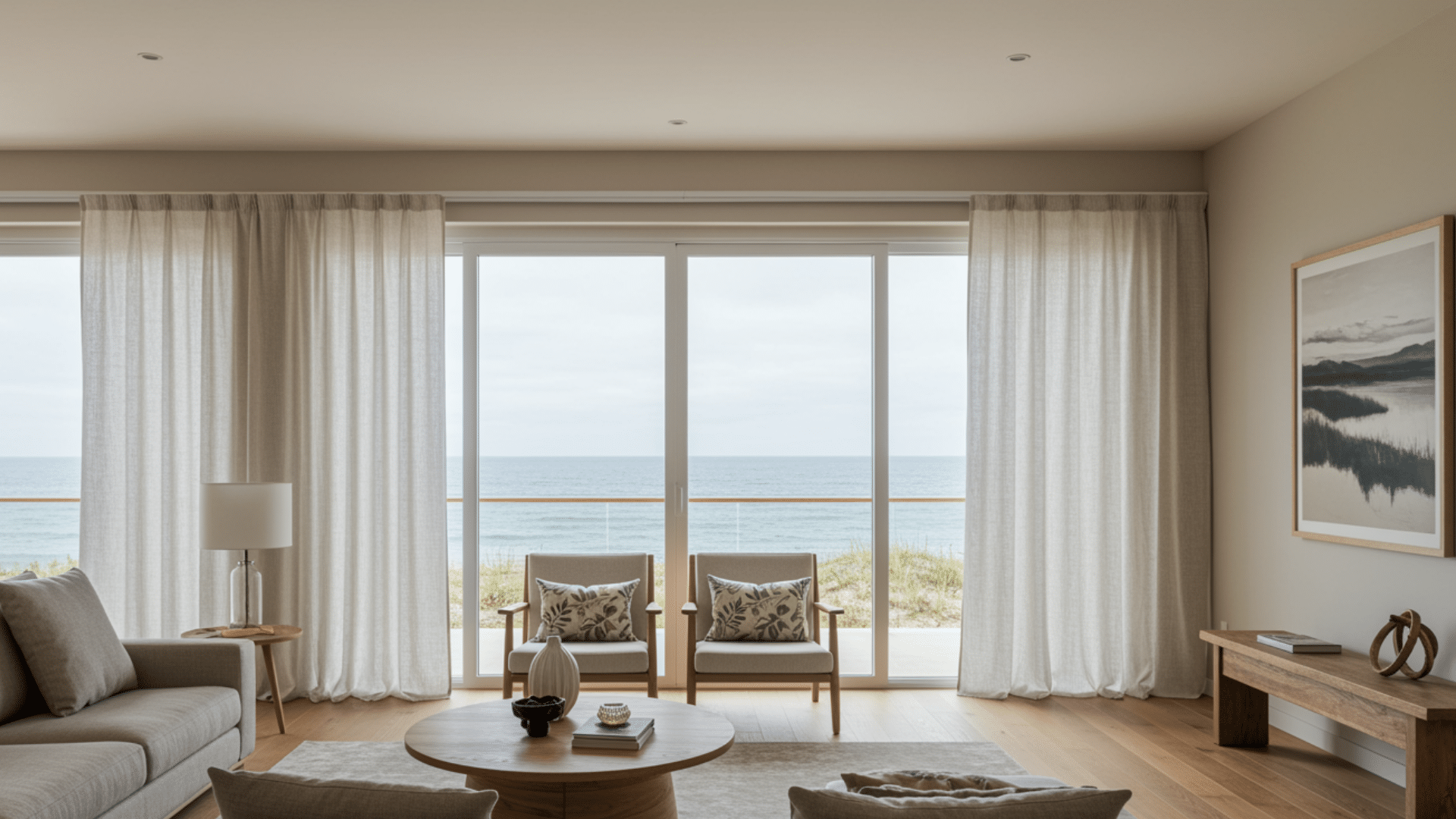
Sliding glass doors dissolve the boundary between inside and outside, flood the room with natural light, and create the effortless indoor-outdoor connection central to coastal living.
Tips:
- Keep window treatments minimal, sheer linen, or nothing at all if privacy allows.
- Ensure flooring transitions seamlessly between indoor and outdoor areas.
- Style the visible outdoor space with care, as it extends the aesthetic beyond the interior walls.
19. Decluttered Surfaces
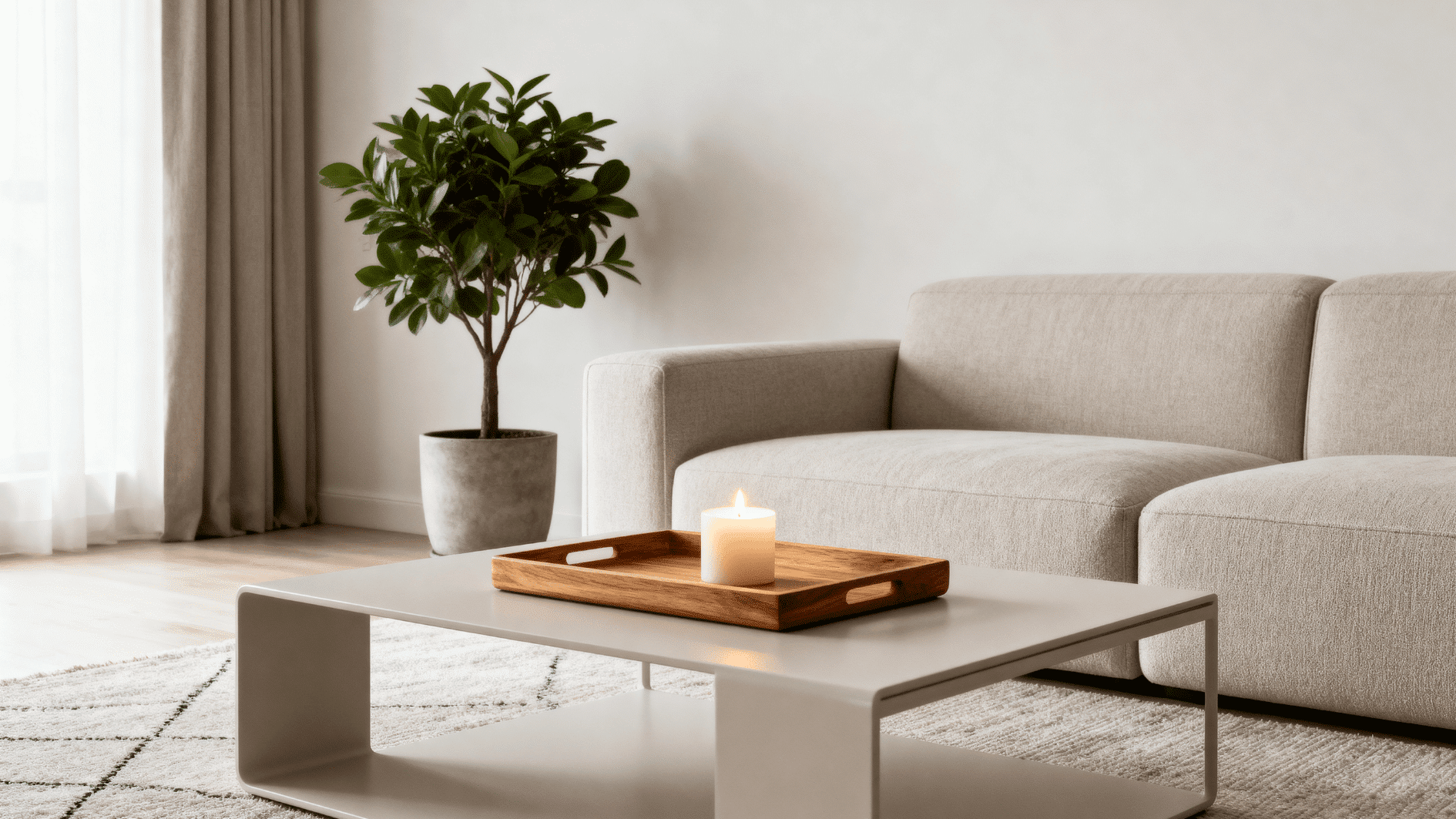
Clutter is visual noise, and visual noise is the enemy of calm. Clear surfaces allow the room’s better elements, furniture, natural textures, and chosen art to breathe and be fully appreciated.
Tips:
- Clear every surface thoroughly, then return only what genuinely earns its place.
- Follow a simple rule: one plant, one candle, one tray per surface maximum.
- Use trays to group smaller items, so they read as a single deliberate element.
20. Hidden Storage Ottoman
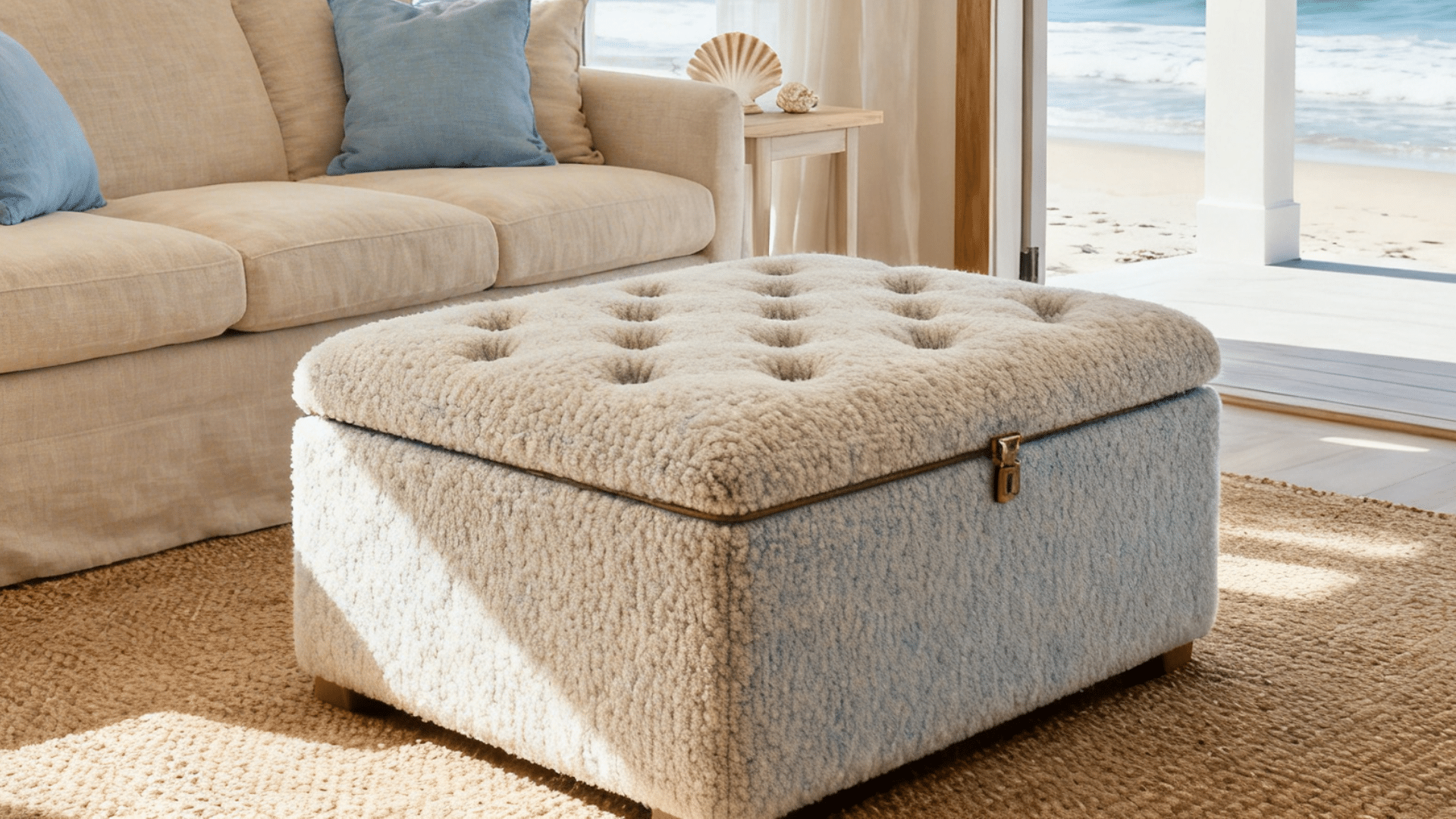
Visible simplicity requires somewhere for real-life clutter to go. A storage ottoman provides that without adding a separate piece of furniture or visible storage unit to the room.
Tips:
- Choose warm white boucle, sandy linen, or pale woven fabric in a simple rectangular silhouette.
- Style the top with a tray to create a stable surface for drinks and small objects.
- Use the interior storage consistently; don’t let it become a dumping ground.
21. Handwoven Storage Baskets
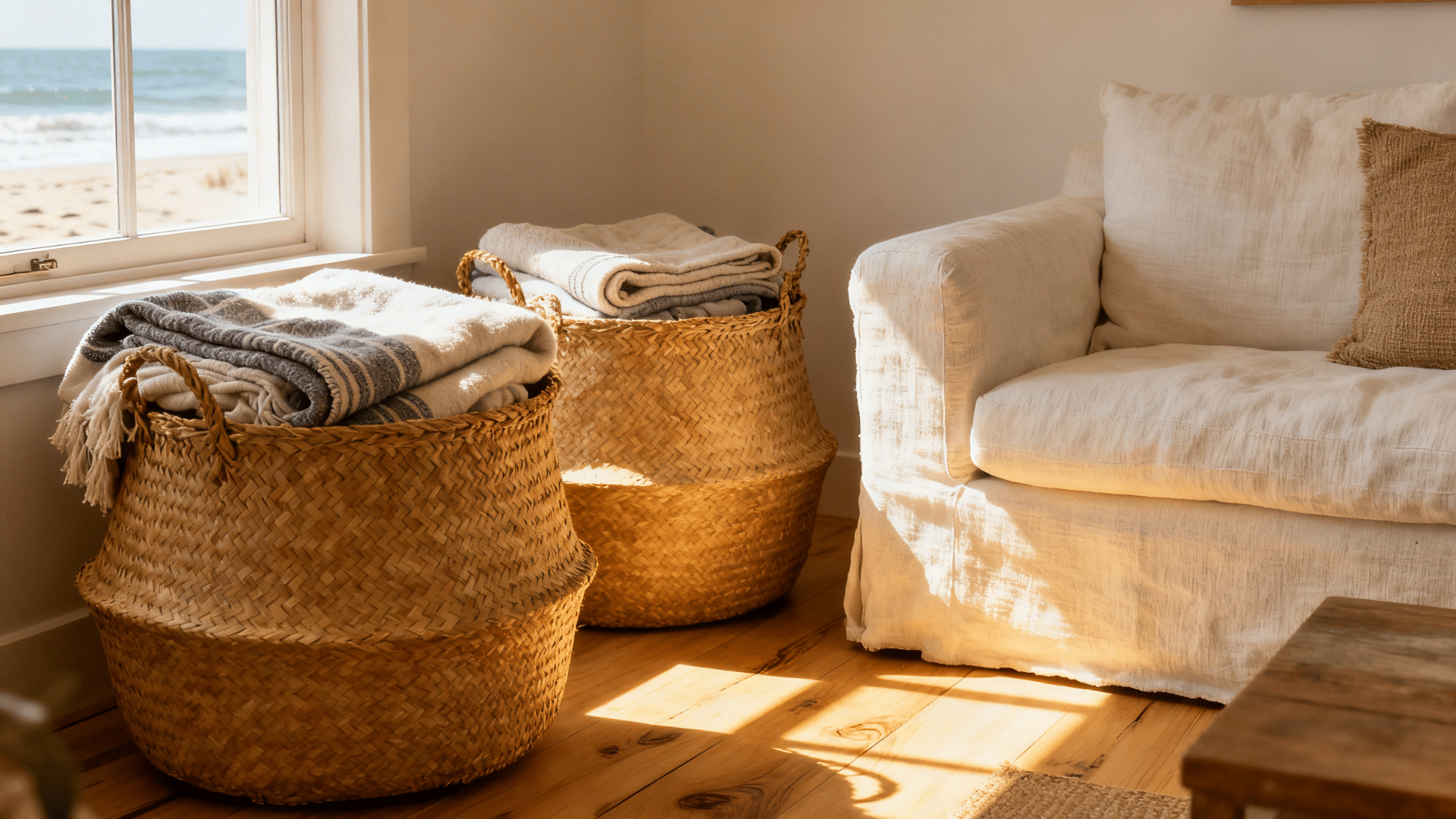
Woven baskets in seagrass, rattan, or wicker add organic texture and warmth without introducing color or visual noise. Unlike plastic bins, they look as good out in the open as tucked away.
Tips:
- Use larger baskets for throws and cushions on the floor; smaller ones on shelves for books or remotes.
- Choose natural, undyed tones, raw seagrass, pale rattan, or warm honey wicker.
- Vary the weave pattern slightly between pieces while keeping the material family consistent.
22. Lightweight Cotton Throws
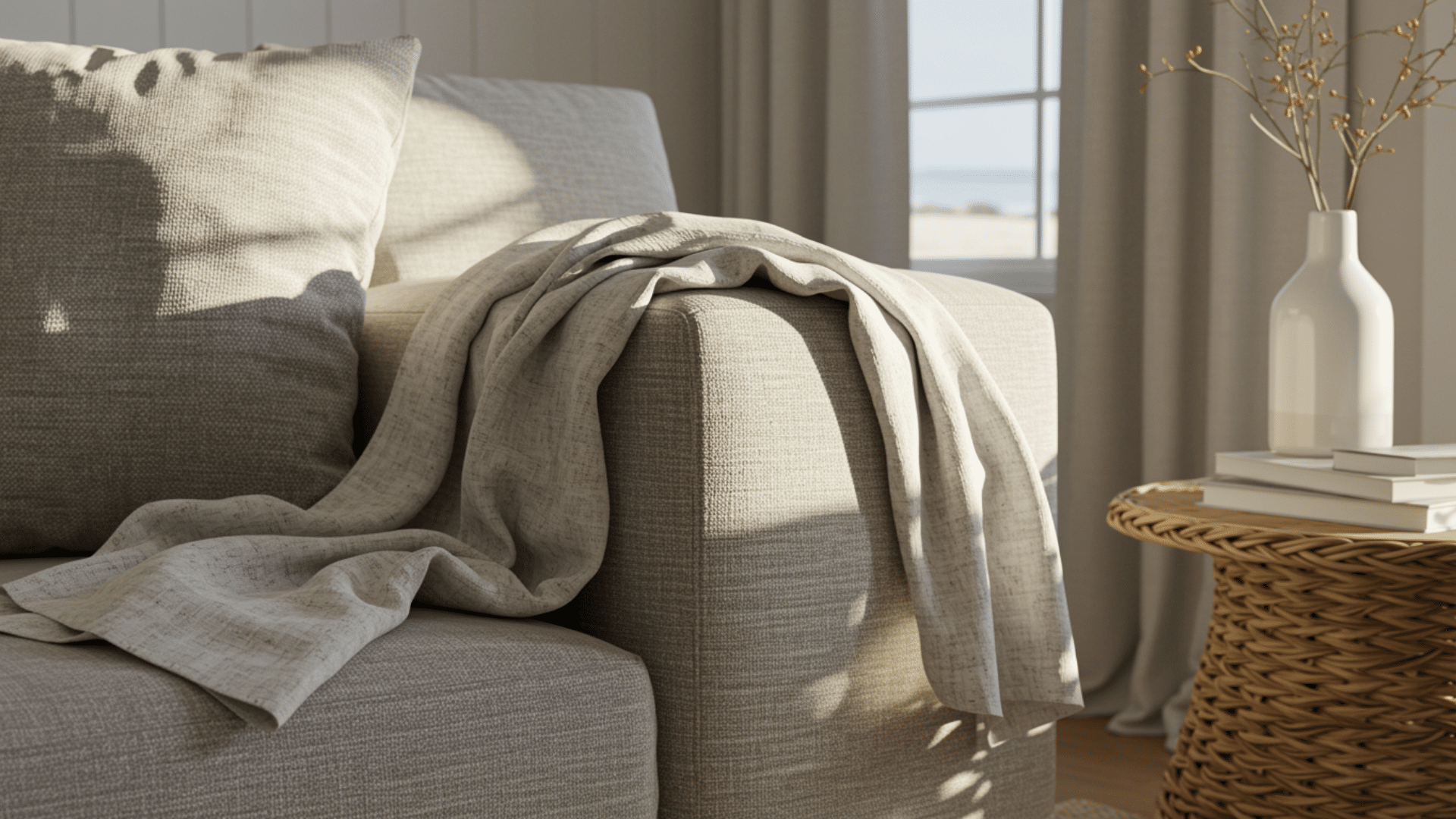
Lightweight cotton throws feel breezy and effortless, in keeping with the airy atmosphere the style seeks. A casually draped throw softens the room’s composition with an unscripted, organic element.
Tips:
- Drape loosely over one sofa arm, far more natural than a neatly folded stack.
- Choose warm white, soft sand, or a muted coastal stripe within the existing palette.
- Keep to one throw per seating piece to avoid the room feeling over-layered.
23. Tone-On-Tone Beige Styling
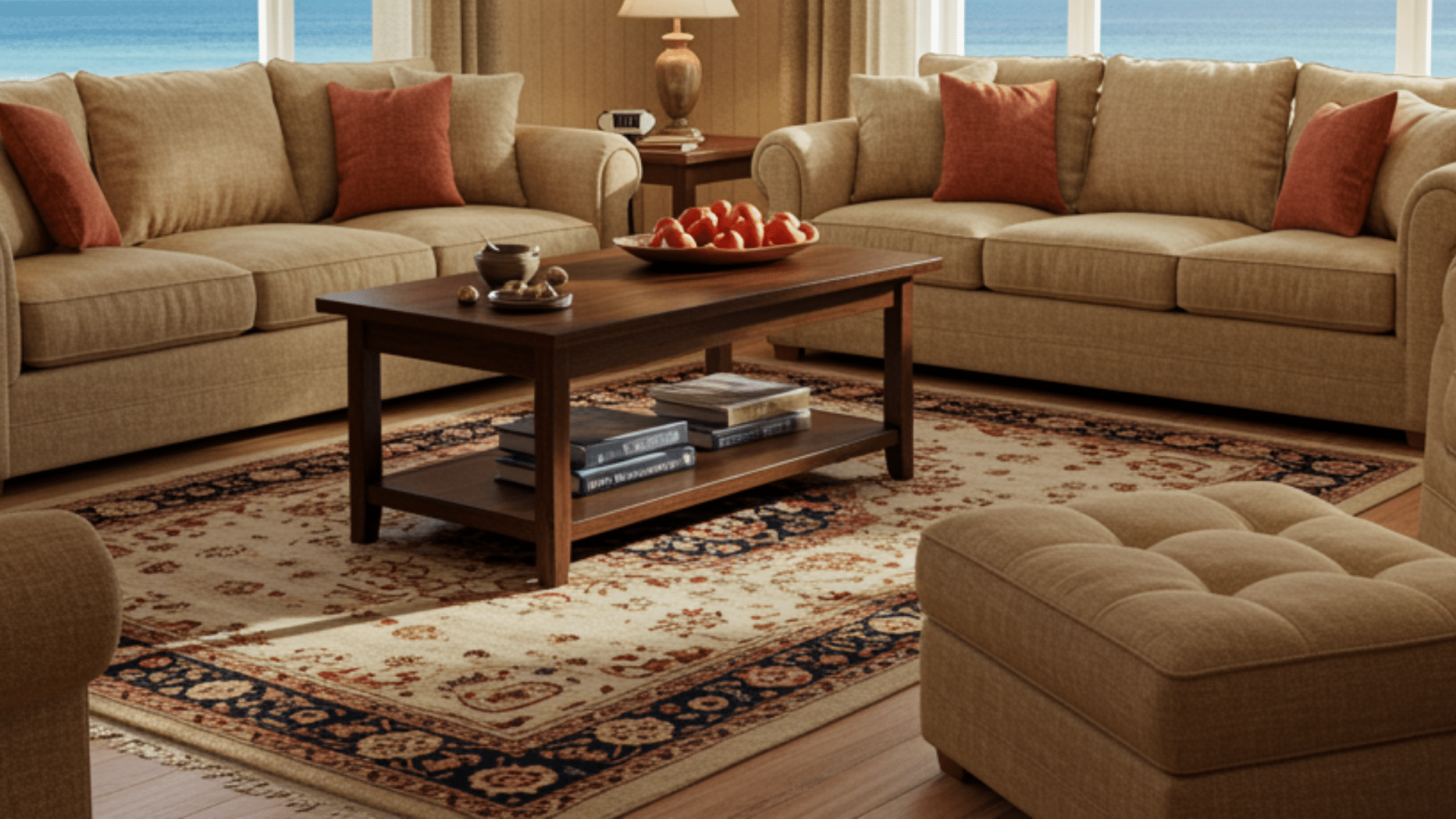
Working within a single color family allows the eye to move through the space without interruption, generating a subconscious sense of calm. Subtle variation between shades creates depth through tonal layering rather than contrast.
Tips:
- Layer from light to deep: warm white walls, sandy beige sofa, deeper taupe in cushions and ceramics.
- Various textures rather than colors, linen, jute, ceramic, and wood all read differently in the same tonal family.
- Add one subtle accent, such as a muted blue cushion or a green plant, to prevent the palette from feeling enclosed.
24. Fringed Cushions
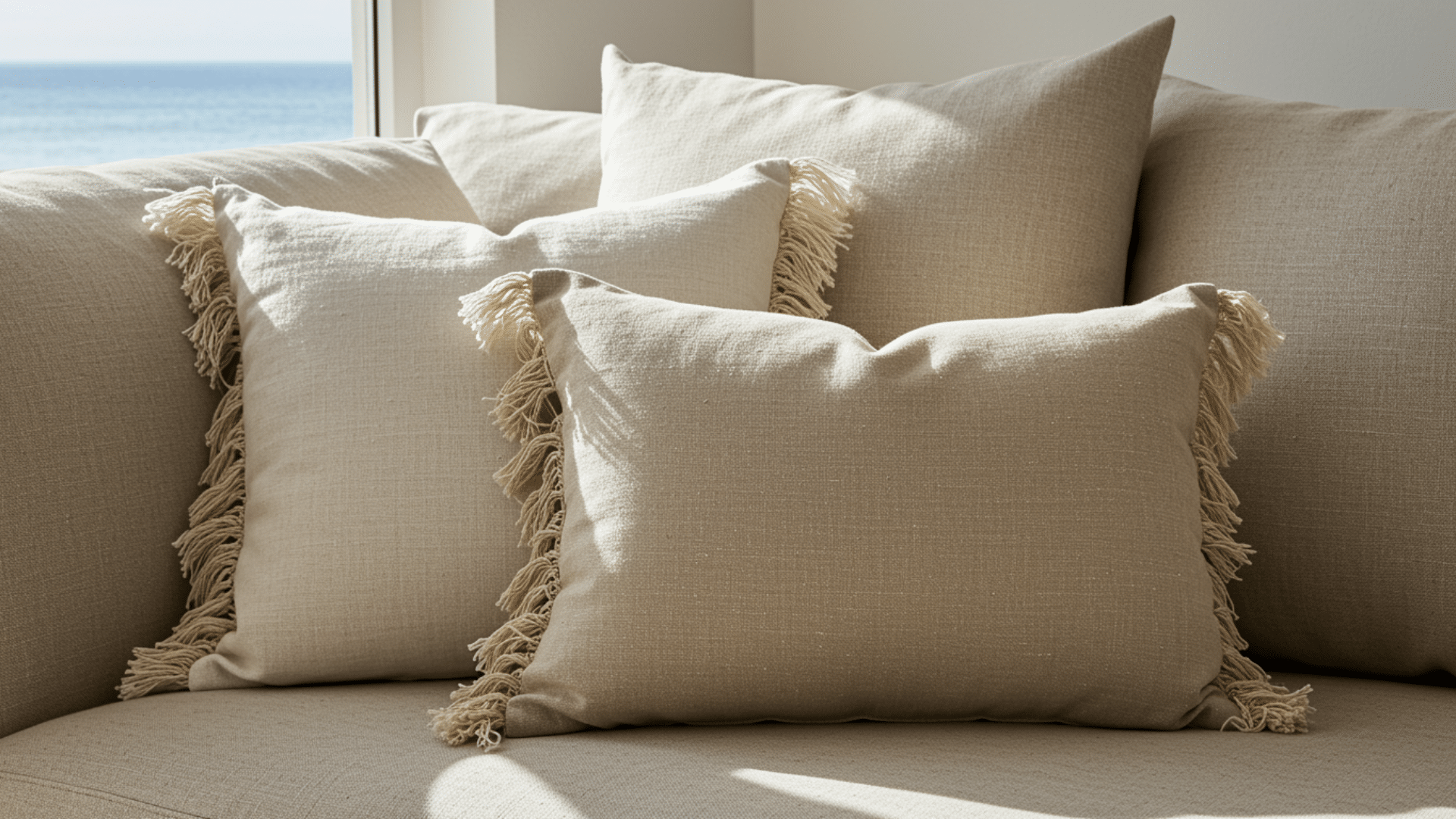
In a coastal setting, fringe evokes natural fibers and unhurried handcraft. On a clean-lined linen sofa, fringed cushions introduce organic softness and texture without adding color or pattern.
Tips:
- Choose fringed cushions in undyed linen, warm oatmeal, soft white, or sandy beige.
- Mix with smoother, unfringed cushions for texture contrast without disrupting the palette.
- Keep fringe fine and neat. One or two fringed pieces among a broader arrangement is enough.
25. Slim Metal Floor Lamp
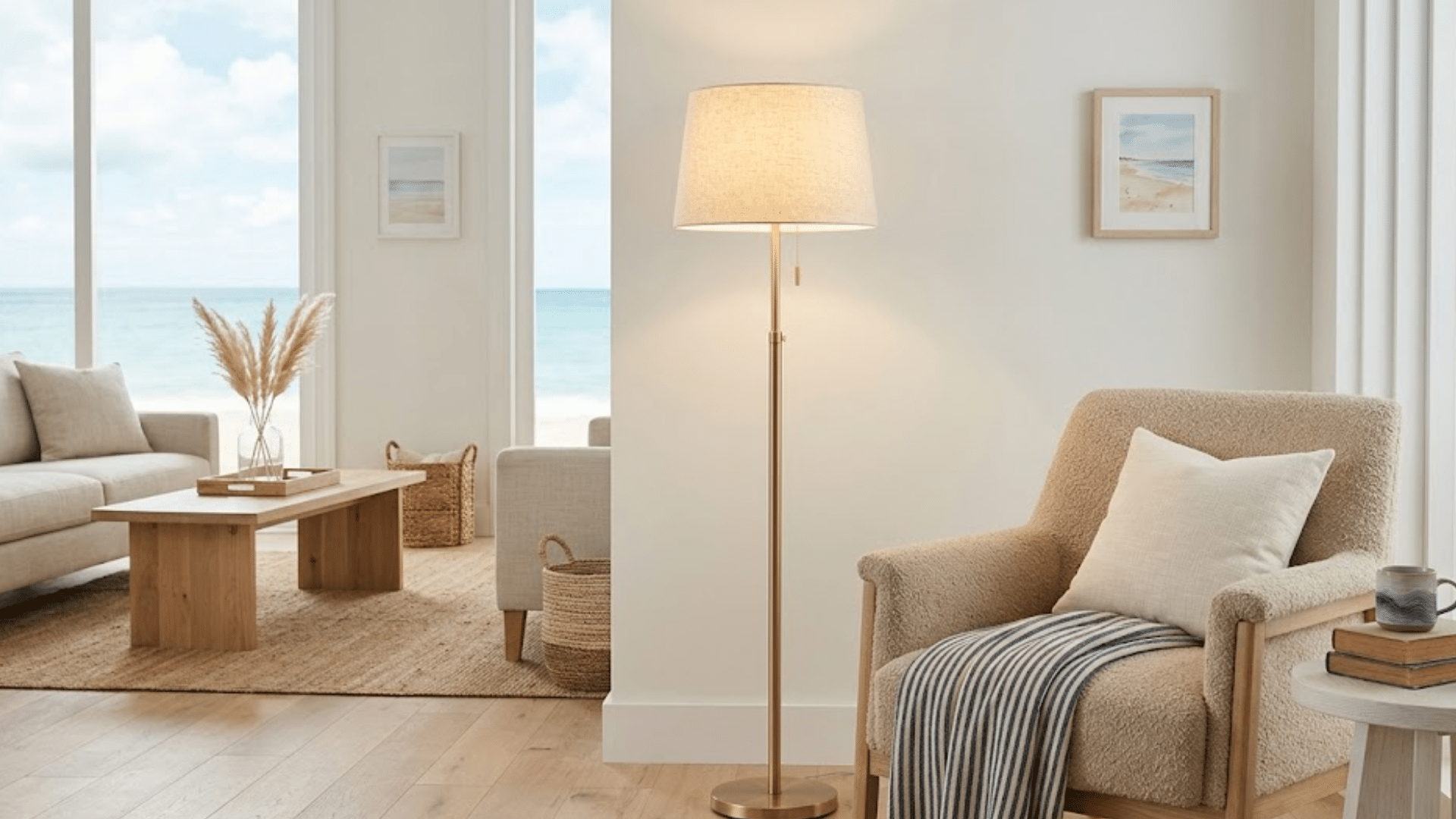
Floor lamps address the most common lighting shortcoming, reliance on a single overhead source. A slim metal form adds layered lighting at the human scale without visually crowding the space.
Tips:
- Position beside an armchair or sofa end to anchor a corner and create a natural reading nook.
- Choose a matte finish, brushed brass, warm bronze, or soft black over polished chrome.
- Pair with a linen or cotton drum shade in white or off-white to softly diffuse light.
26. Live-Edge Wood Coffee Table
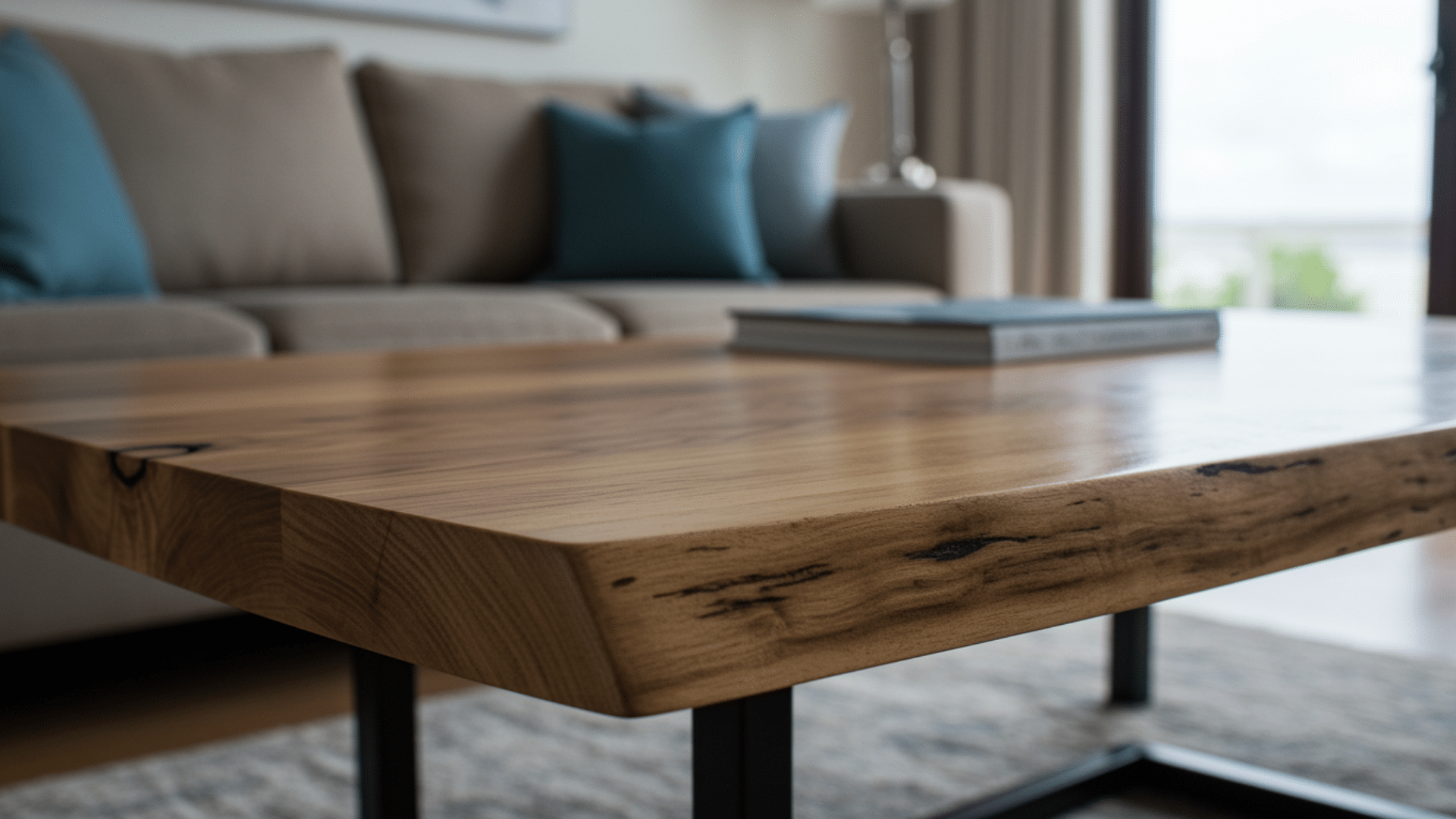
Live-edge wood retains the natural contour of the original tree, making every table unique. That organic irregularity creates a powerful counterpoint to modern furniture lines, adding dynamic tension to the room.
Tips:
- Choose a lighter wood tone, pale oak, ash, or light walnut, to keep it coastal rather than rustic.
- Mount on simple hairpin or straight metal legs for a modern silhouette.
- Seal with a matte or satin finish; high gloss undermines the raw, organic quality.
27. U-Shaped Sectional
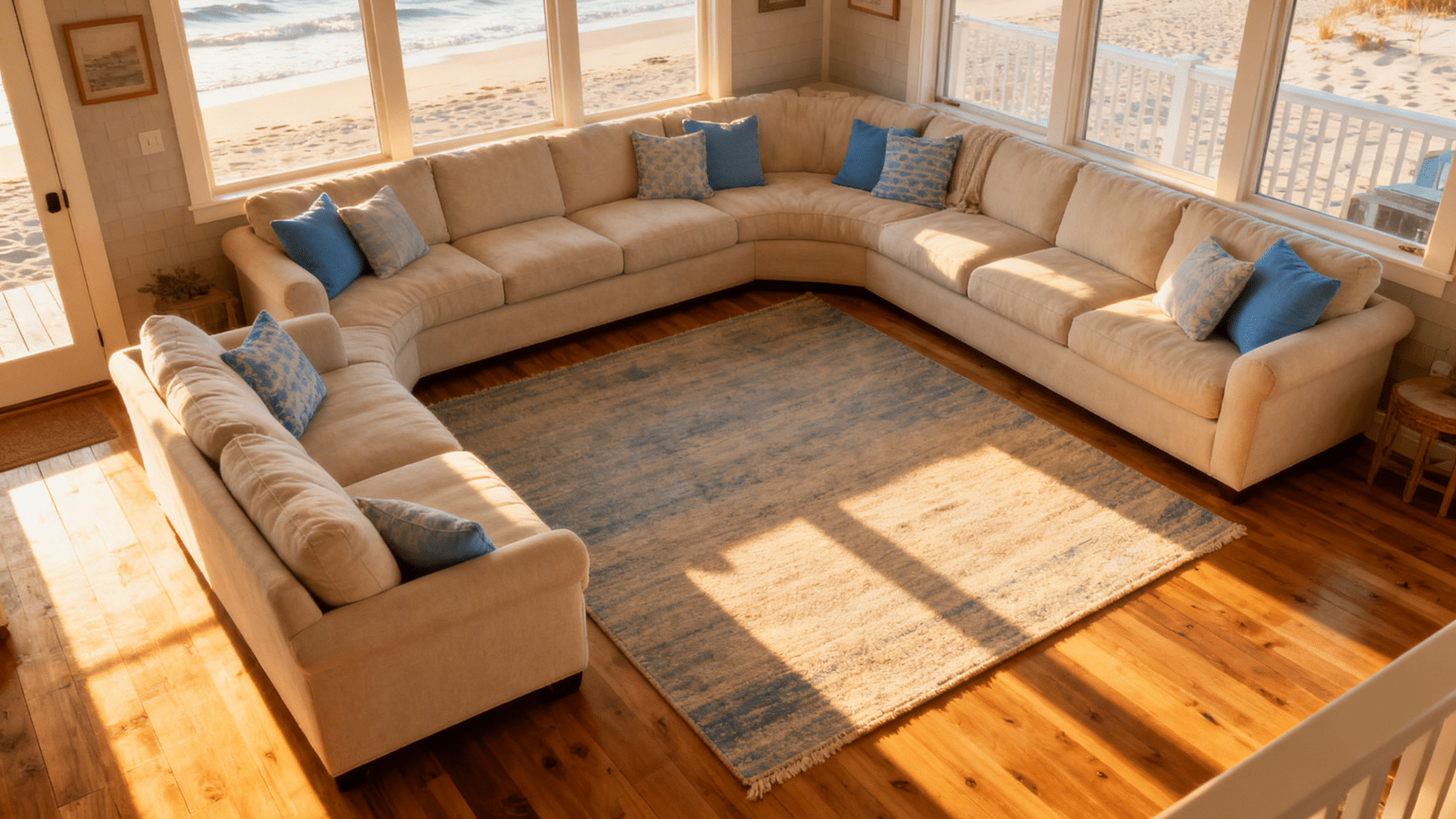
Coastal living has always been inherently social, and a U-shaped sectional captures that spirit in furniture form. Its generous scale also means fewer additional pieces are needed, paradoxically creating more open floor space.
Tips:
- Choose a low-profile configuration to preserve open sightlines and the airy atmosphere.
- Anchor with a large area rug that extends under all three sections.
- Style cushions in varying coastal tones across the full length for a cohesive but relaxed look.
28. Dual Rug Layering (Flat + Plush Combo)
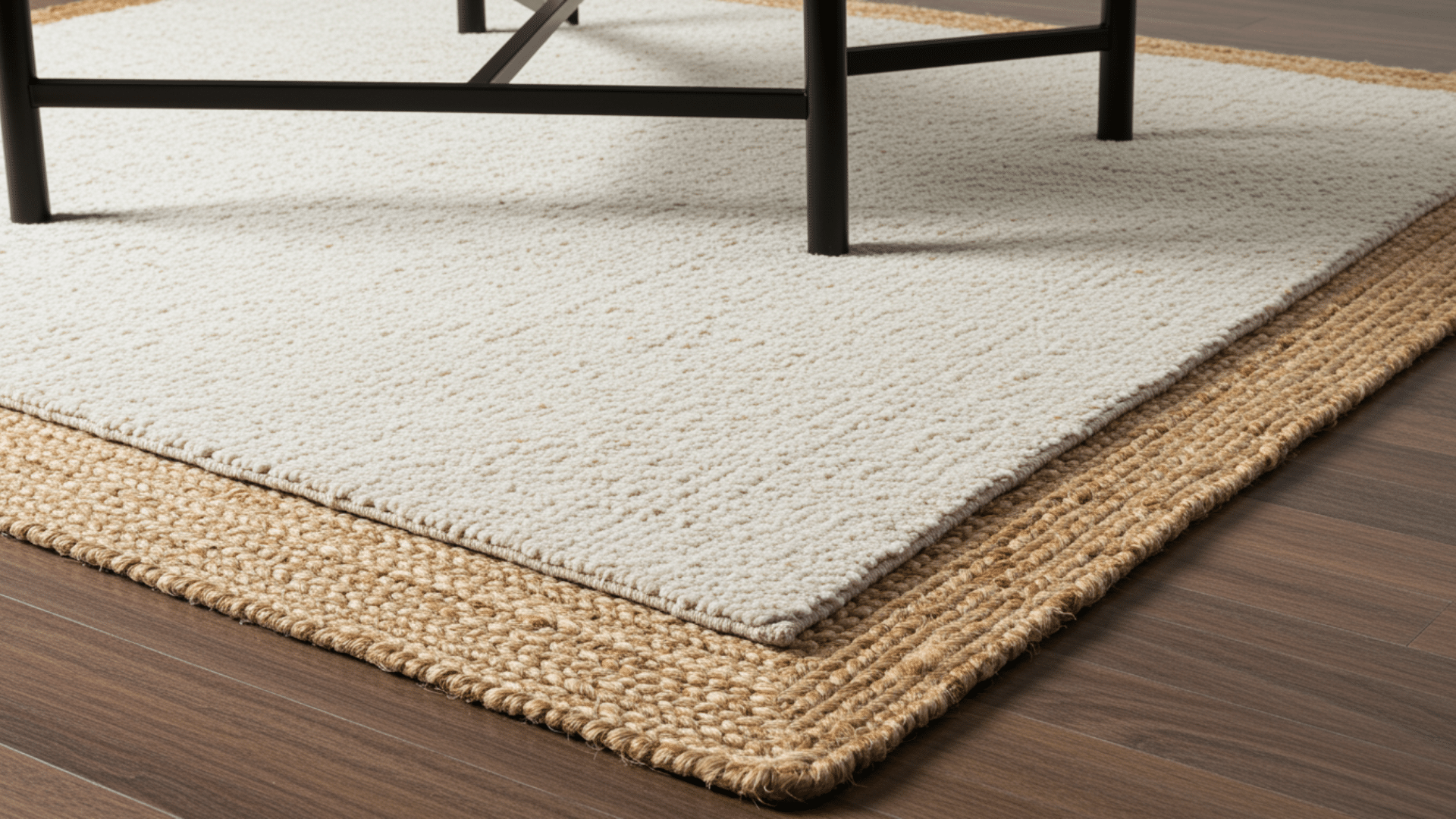
Two-layered rugs deliver contrast: the crispness of a flat weave grounds the arrangement, and the softness of the top rug adds warmth underfoot. In a restrained palette, that textural contrast becomes a key source of visual richness.
Tips:
- Use a large natural jute or sisal rug as the base layer, extending beyond the furniture footprint.
- Layer a smaller pale ivory Moroccan wool or soft cotton dhurrie on top, centered under the coffee table.
- Keep both rugs in the same warm neutral family and ensure the size differential is clearly visible.
29. Shiplap Wall Paneling Painted White
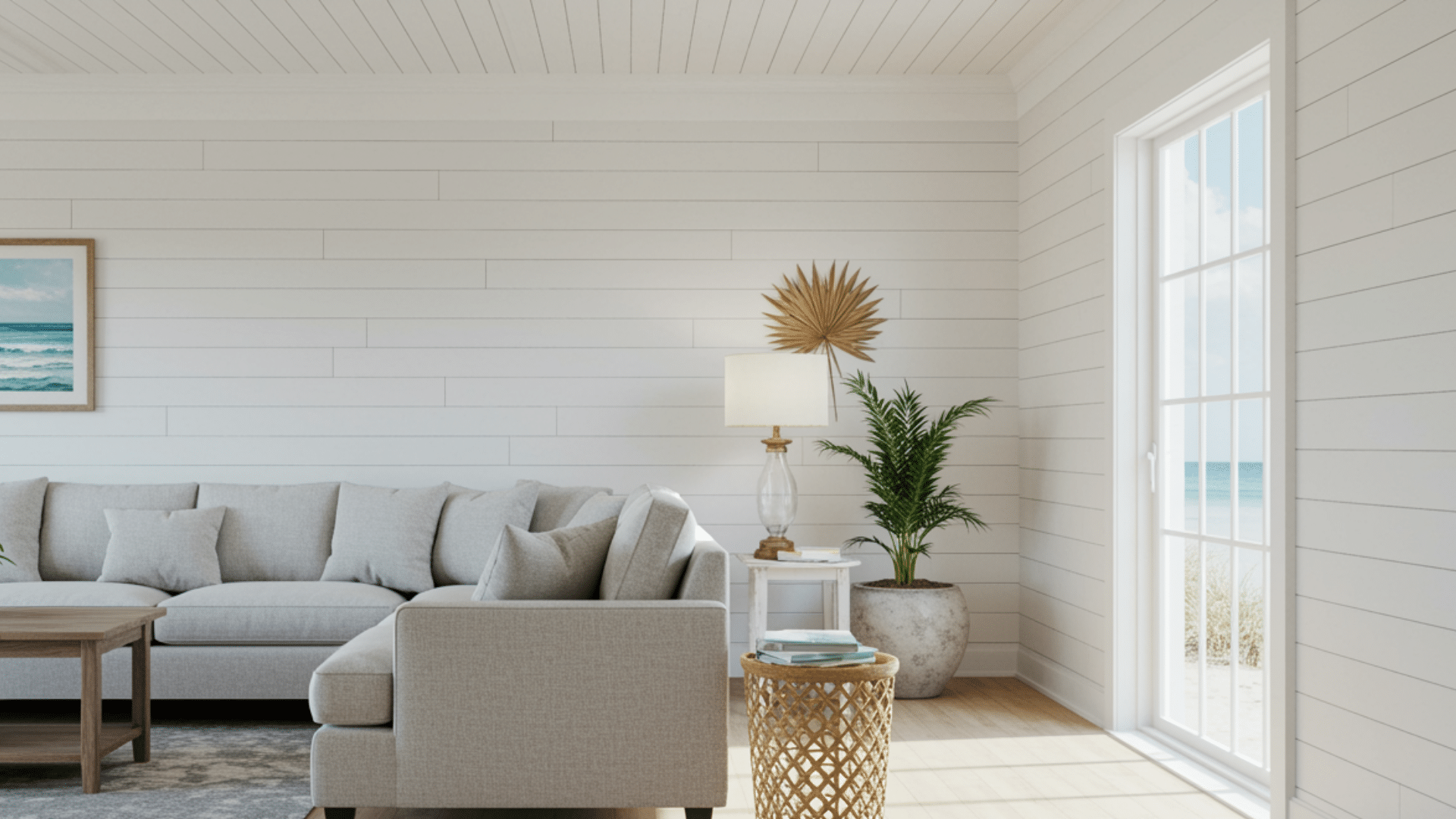
Shiplap has deep roots in coastal and maritime architecture, giving it genuine authenticity here. Painted white, it recedes into the background while still delivering texture and shadow detail that shifts with the light.
Tips:
- Apply horizontally on a single feature wall behind the sofa or the fireplace; this works best.
- Paint the paneling in a warm white or off-white to prevent it from feeling stark.
- Use a slightly wider reveal gap between planks for a cleaner, more contemporary result.
30. Built-In Media Unit
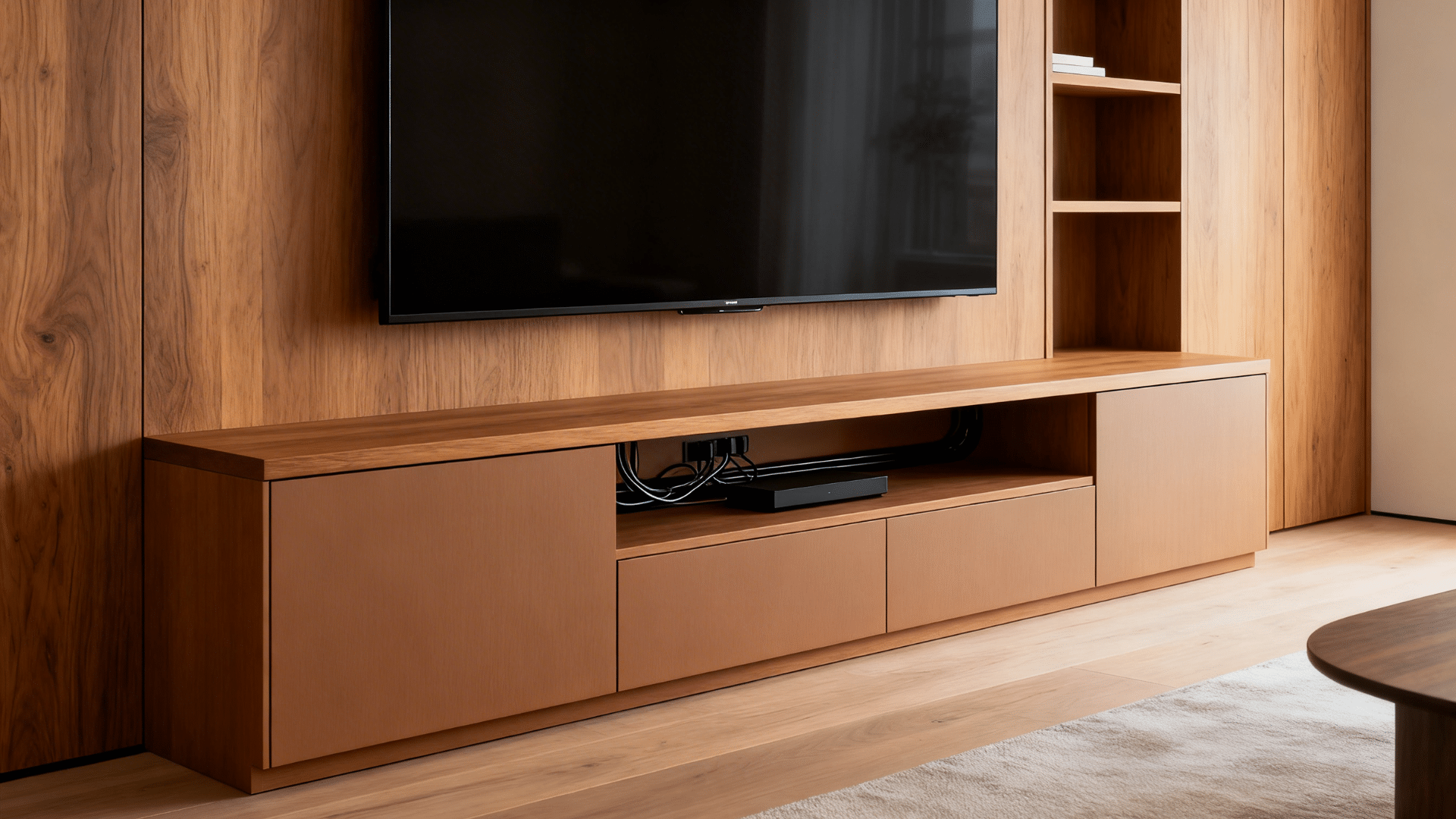
Freestanding TV units and visible cables are among the most reliable sources of visual clutter. A built-in unit addresses all of it simultaneously while creating a coherent architectural feature wall.
Tips:
- Specify a painted finish matching the surrounding wall color so it reads as architecture, not furniture.
- Incorporate a mix of closed cabinets for storage and a few open shelves for plants and ceramics.
- Keep open shelving minimal, use only natural materials, and create deliberate negative space throughout.
31. Tall Indoor Palm
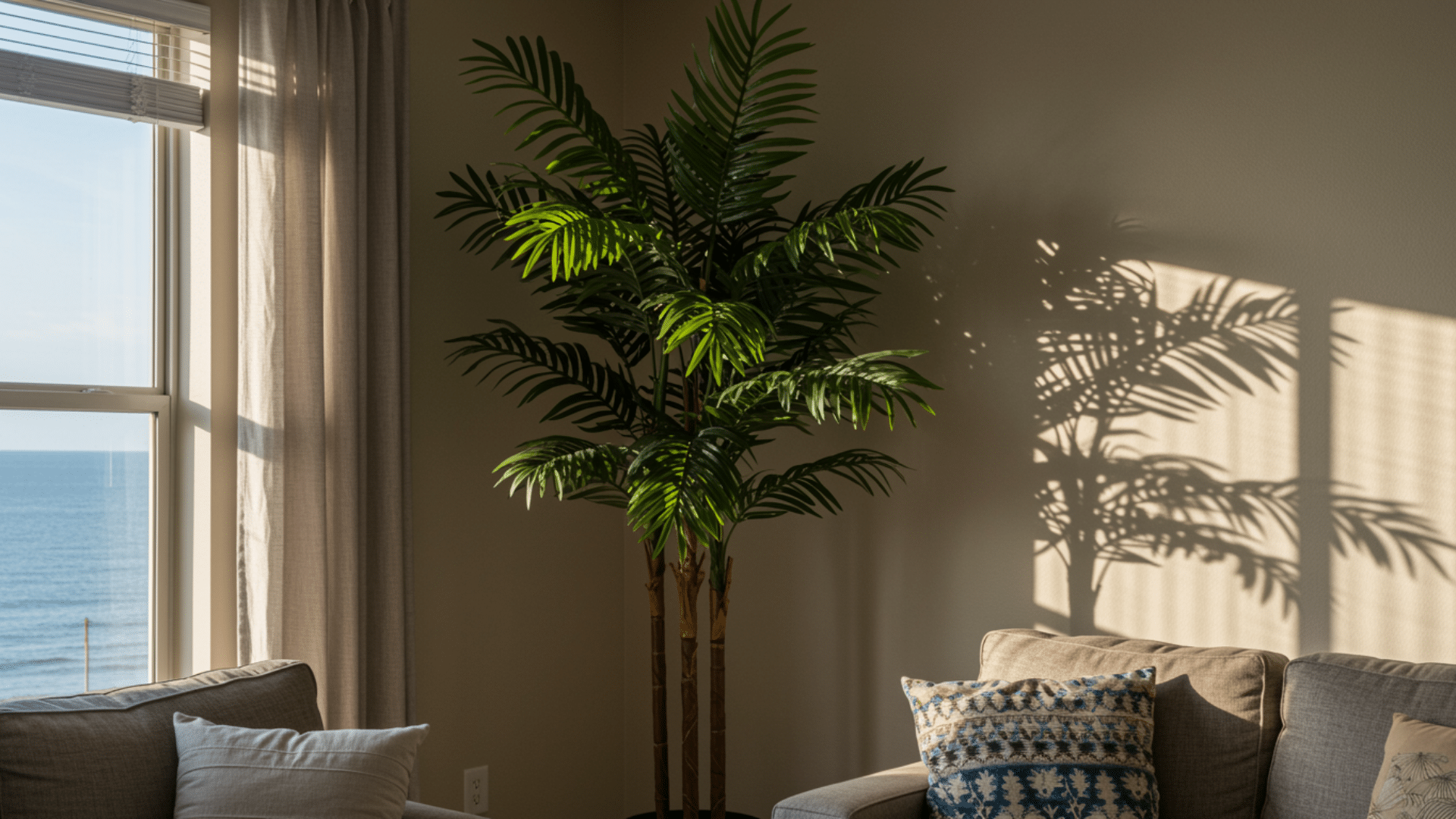
Palms add organic vertical interest that balances the horizontal weight of low-profile furniture, creating a more dynamic and complete room. The subtle movement of fronds brings a liveliness that static objects cannot replicate.
Tips:
- Position an Areca, Kentia, or Parlor palm in a corner beside the sofa or near sliding glass doors.
- Plant in a large, textured clay or raw concrete planter that complements the natural material palette.
- Dust the fronds occasionally and rotate the pot every 3 months for even, balanced growth.
32. Olive Tree In Textured Clay Planter
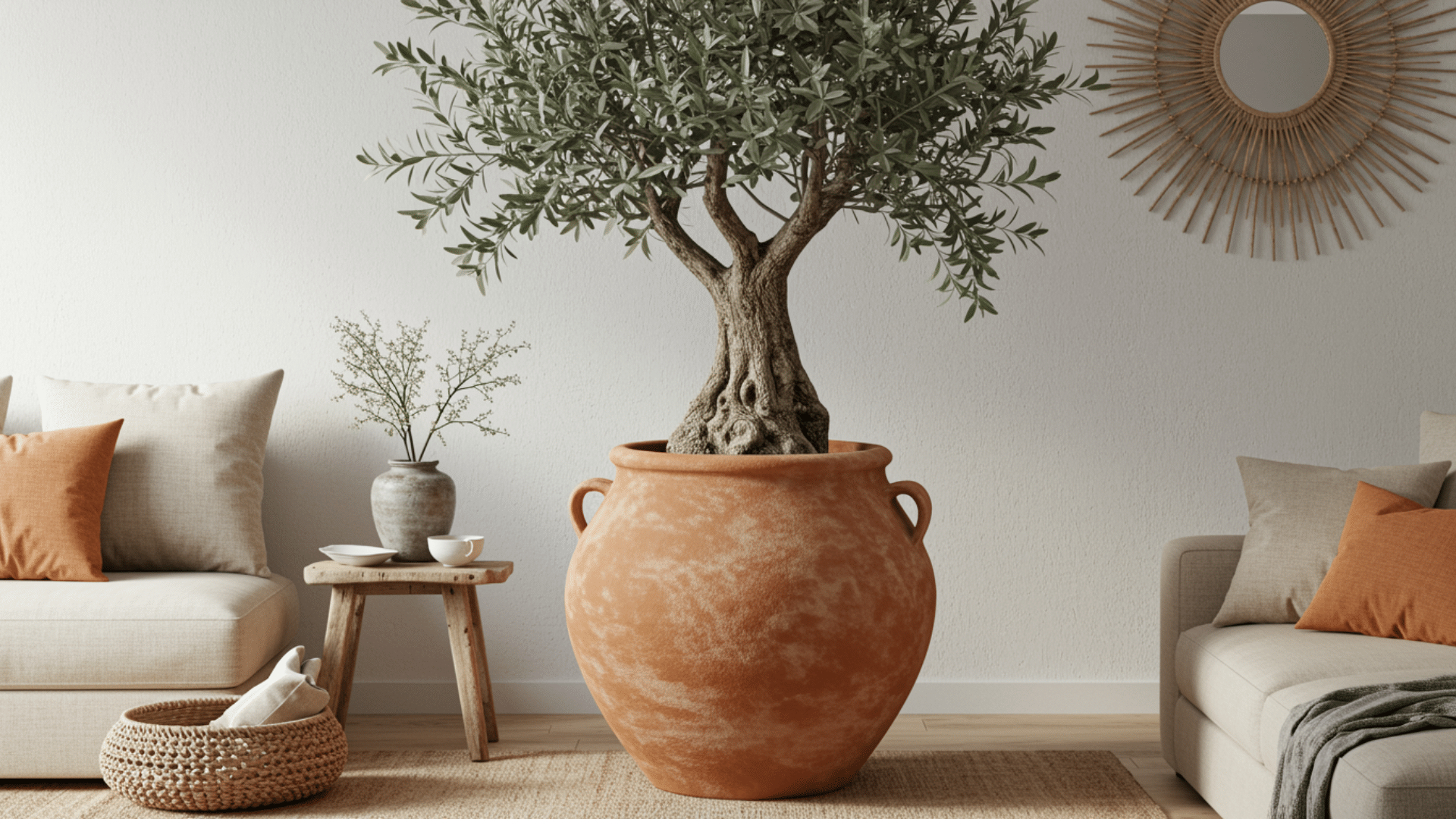
Olive trees bring Mediterranean warmth and an air of timeless permanence. Their gnarled trunks and silvery-green leaves evoke whitewashed walls and warm terracotta of coastal architecture without feeling overtly tropical.
Tips:
- Choose a single-trunk variety for maximum sculptural impact; multi-stemmed varieties can look bushy indoors.
- Plant in a large hand-thrown or ribbed clay planter in warm terracotta, sandy beige, or pale stone.
- Position near the brightest natural light and water sparingly; olive trees prefer dry conditions indoors.
33. Woven Pendant Light
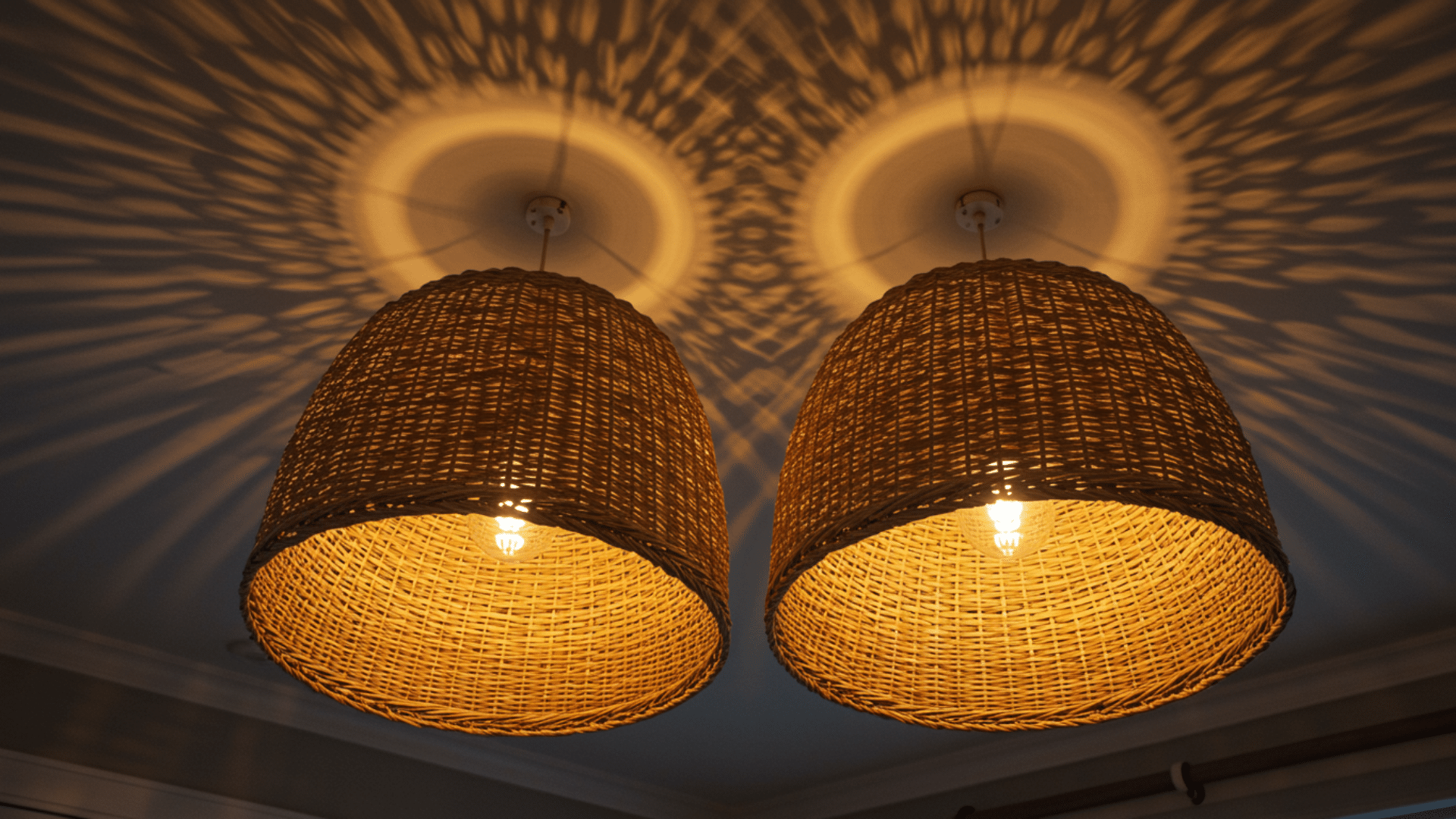
Woven pendants bring organic texture to the ceiling plane and cast beautifully patterned light and shadow when illuminated, adding an atmospheric quality that a standard pendant cannot.
Tips:
- Hang lower than instinct suggests, around 180 to 200cm from the floor to the pendant base.
- Choose a size proportional to the seating area beneath; oversized is rarely regretted.
- Pair with a warm-toned Edison or a soft white bulb rather than a cool white bulb.
34. Open Shelf Styling
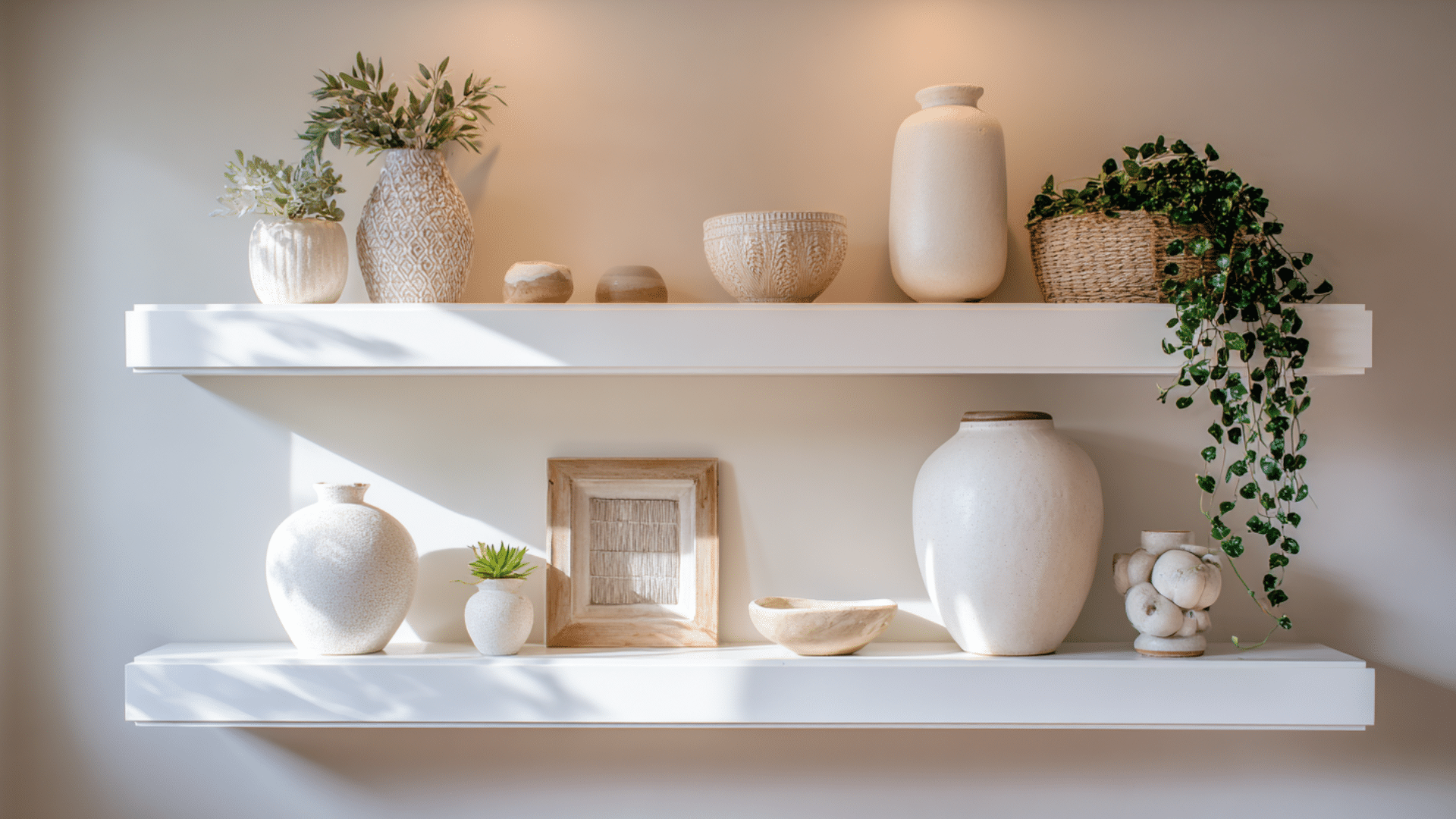
Negative space gives the eye a place to rest and makes the objects feel more intentional. Empty shelf space is not a design failure; it’s one of the most powerful tools the style has.
Tips:
- Style each shelf with a maximum of 3 objects and leave at least a third of it visibly empty.
- A variety of height and form, a tall vase, a low ceramic bowl, and a trailing plant create rhythm without density.
- Assess from across the room, not up close, to reveal if the negative space is working.
35. Thin Stripe Upholstery
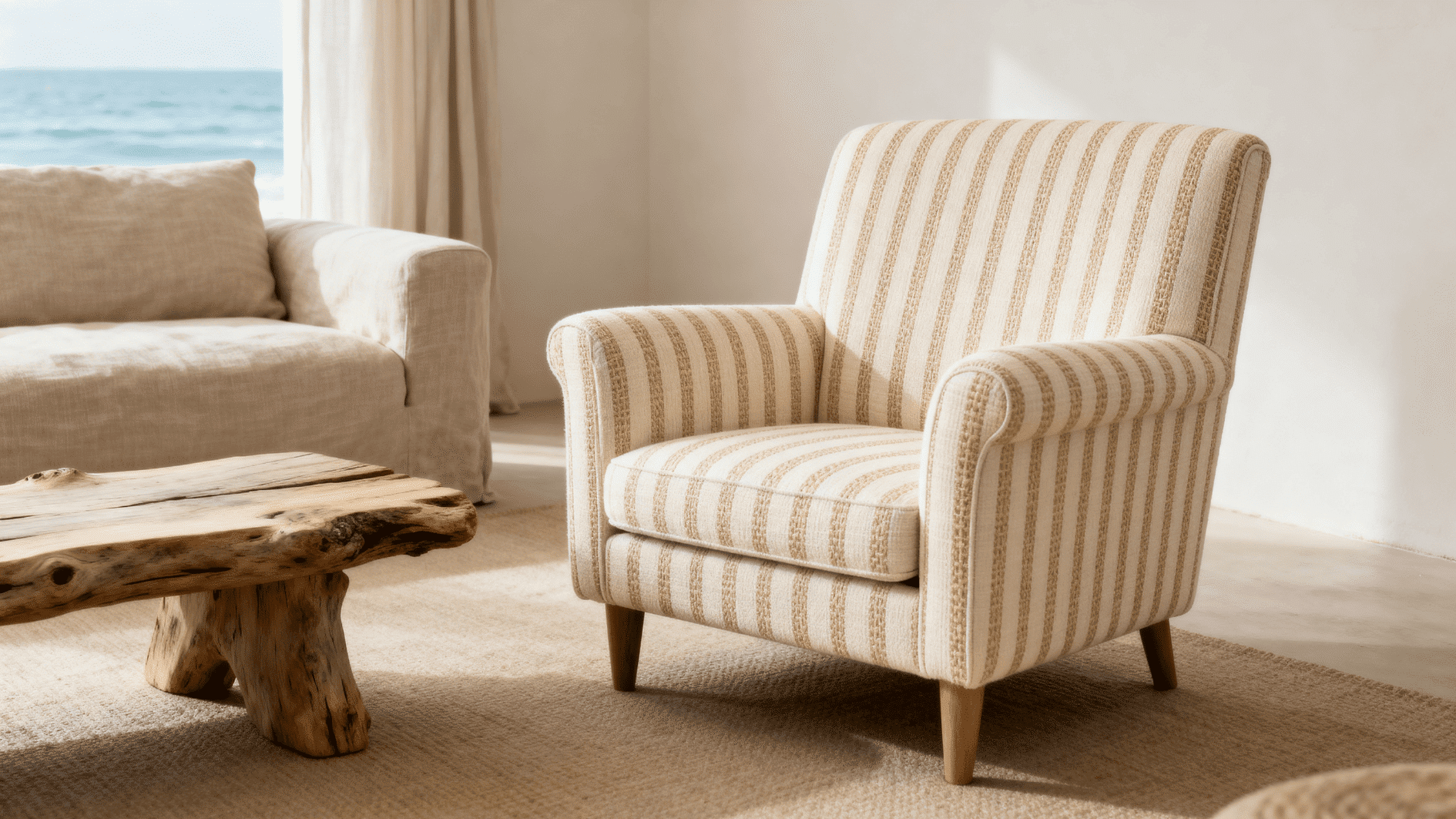
At a fine scale, stripes read as texture rather than a bold pattern, adding visual interest without dominance. Their deep roots in maritime textile design give them natural authenticity in a coastal context.
Tips:
- Limit striped upholstery to one accent piece, a chair, bench, or pair of cushions only.
- Keep the stripe genuinely fine, no wider than 1-2cm per stripe, for a subtle, textural quality.
- Surround the striped piece with solid neutrals so it reads as a considered accent, not competition.
36. Two-Tone Wood and White Furniture Mix
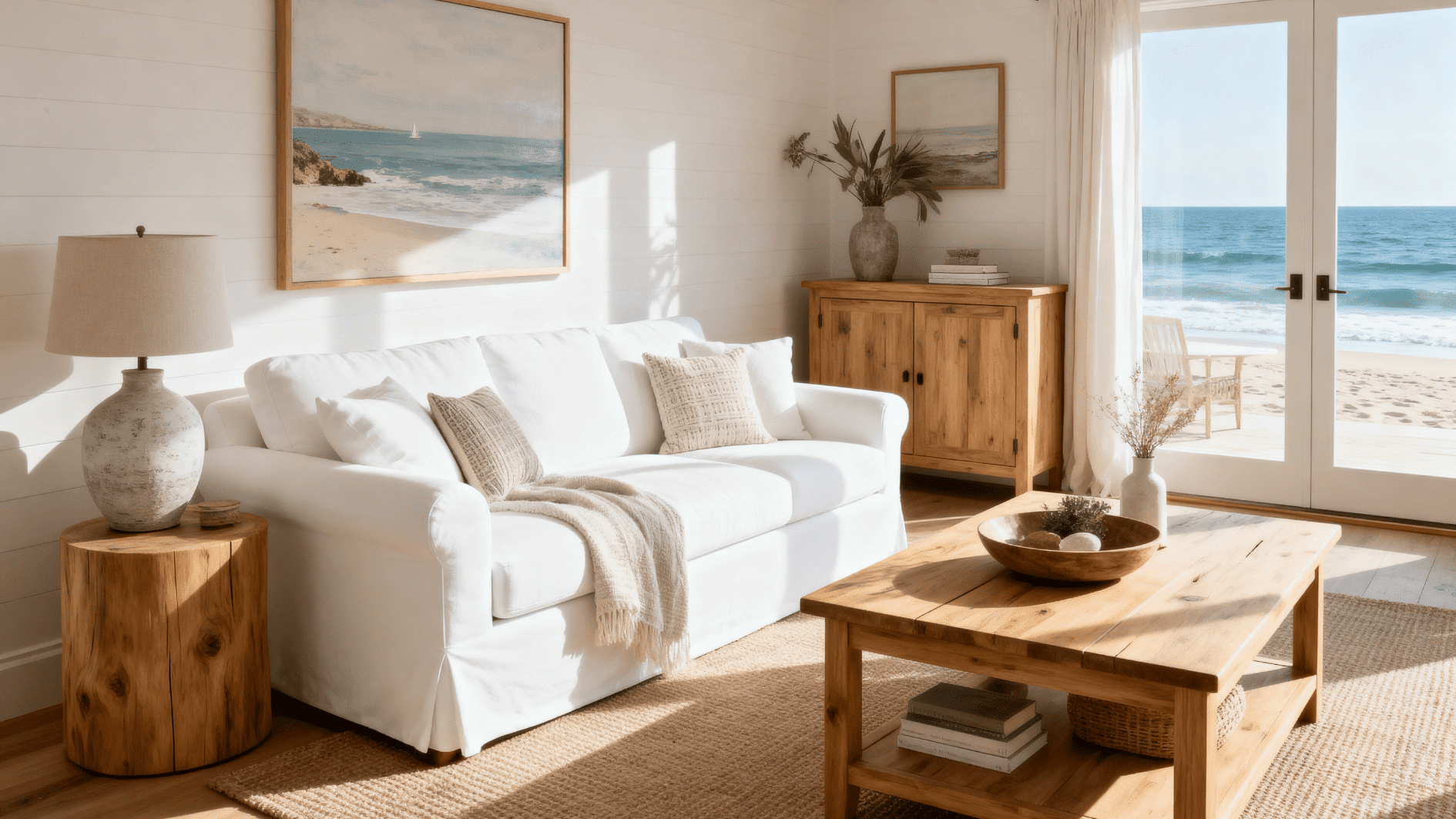
White delivers brightness and visual lightness; light wood provides organic warmth. Together, they capture the sun-bleached, open quality of coastal spaces that neither could achieve on their own.
Tips:
- Use white as the dominant tone on upholstery and walls, with light wood in structural elements.
- Keep wood tones consistent across pieces don’t mix warm oak with cool ash.
- Use brushed brass or warm bronze hardware to bridge the two tones cohesively.
37. Rounded Edge Sofa
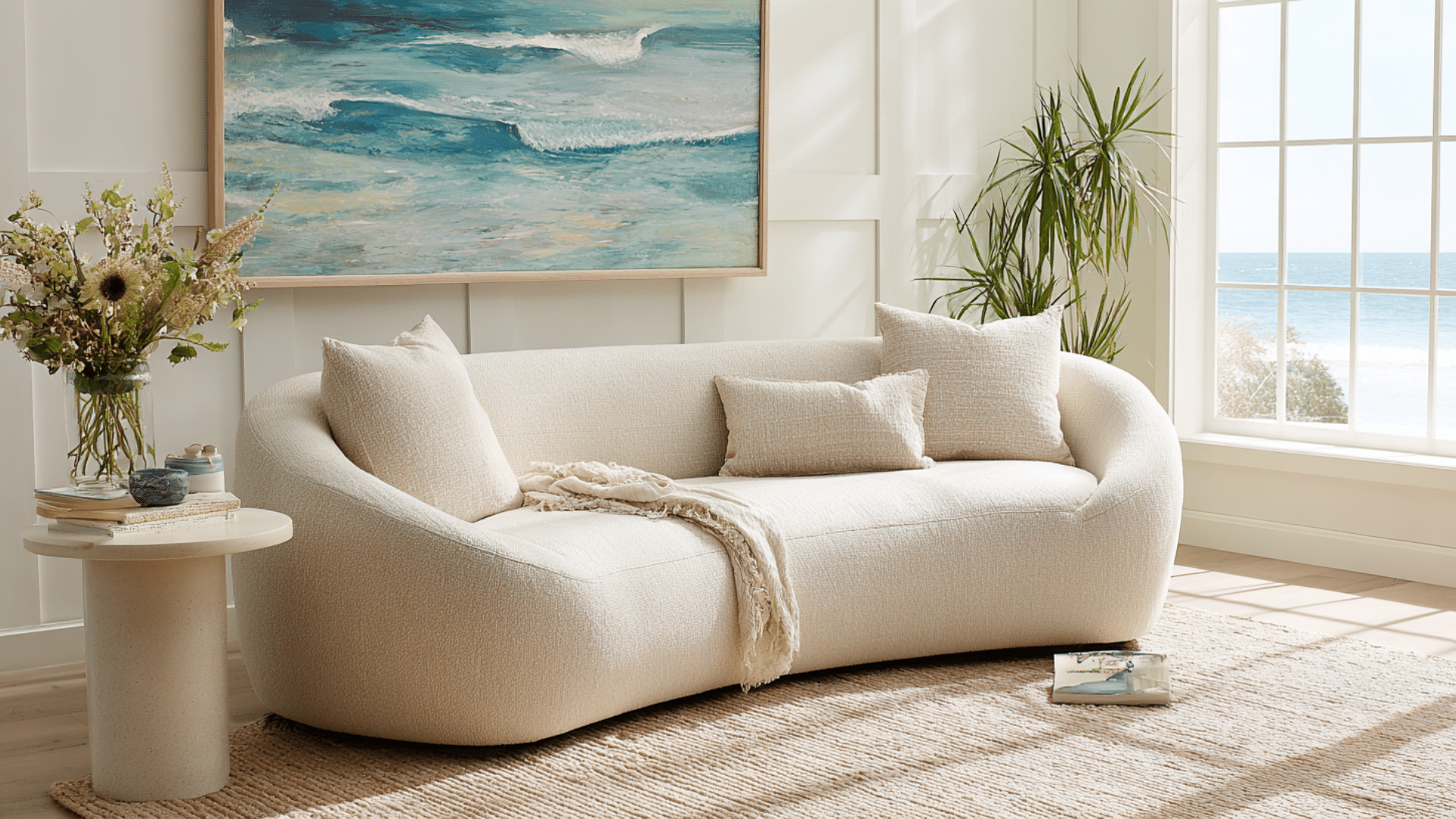
Rounded forms are instinctively perceived as softer and more inviting than sharp angles. Curves echo the organic, fluid shapes of the natural coastal world, making them feel entirely at home here.
Tips:
- Choose a gently curved or barrel-shaped silhouette; exaggerated curves can overpower and date quickly.
- Upholster in boucle, linen, or brushed cotton to reinforce the gentle quality the form communicates.
- Pair with a rectangular coffee table to contrast the sofa’s curves with straight edges.
38. Upholstered Bench
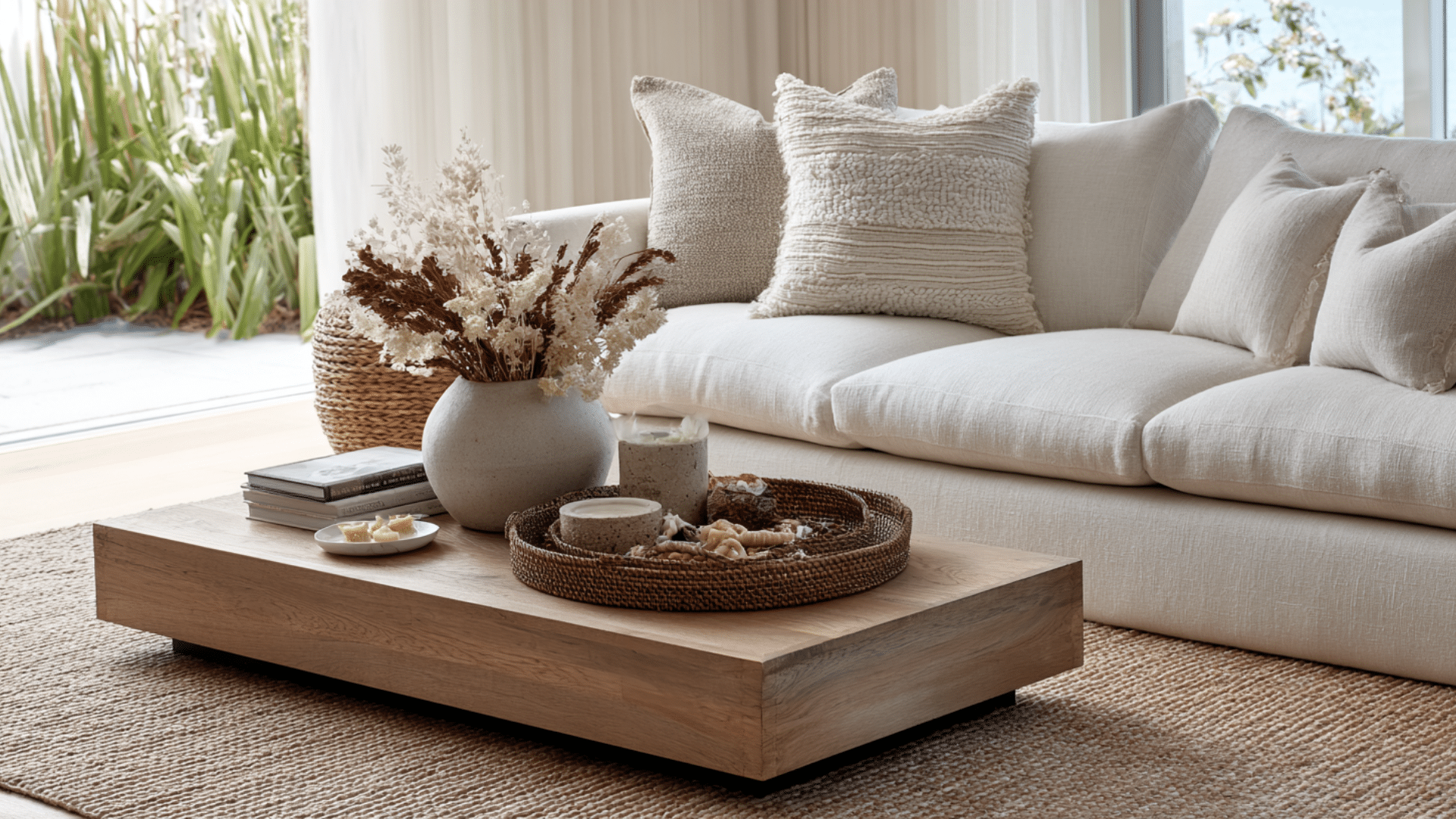
A coffee table can make a seating arrangement feel slightly formal. An upholstered bench softens the central zone and communicates a laid-back quality entirely consistent with coastal living.
Tips:
- Choose firm upholstery, tightly upholstered linen, or woven fabric in a neutral coastal tone.
- Add a large tray on top to create a stable surface for drinks and small objects.
- Ensure it’s proportionally generous, too narrow relative to the sofa length looks hesitant.
39. Brushed Brass Accents
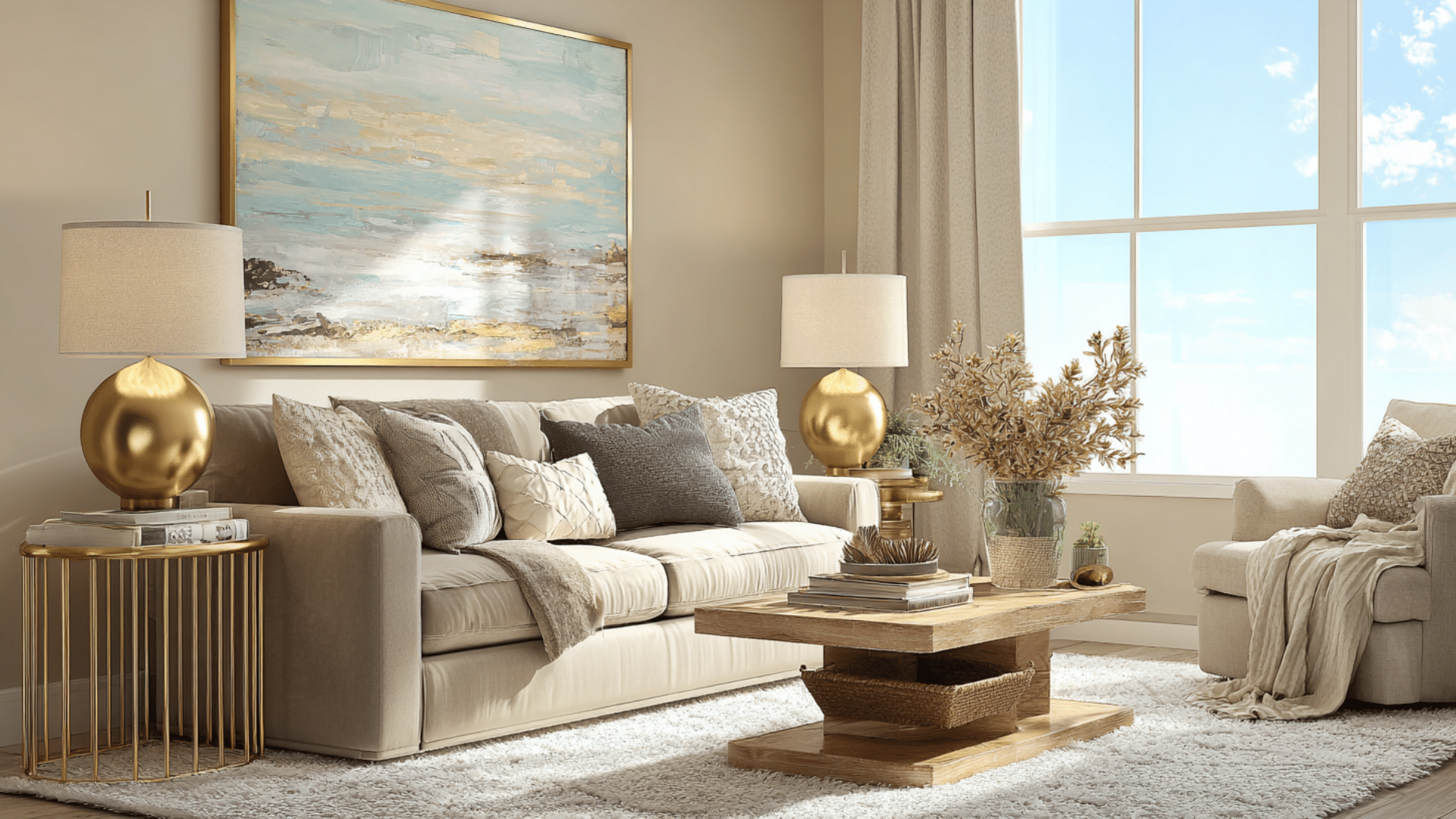
Brushed brass is warmer than chrome and more refined than raw copper. In a room of soft whites and sandy neutrals, it creates a warm metallic counterpoint that adds depth without visual noise.
Tips:
- Introduce through functional elements, lamp bases, cabinet hardware, curtain rods, and shelf brackets.
- Limit to three or four visible points so it reads as a considered accent thread throughout.
- Avoid mixing with other metal finishes; keep everything brushed brass for a cohesive result.
40. Grid-Style Gallery Wall Layout
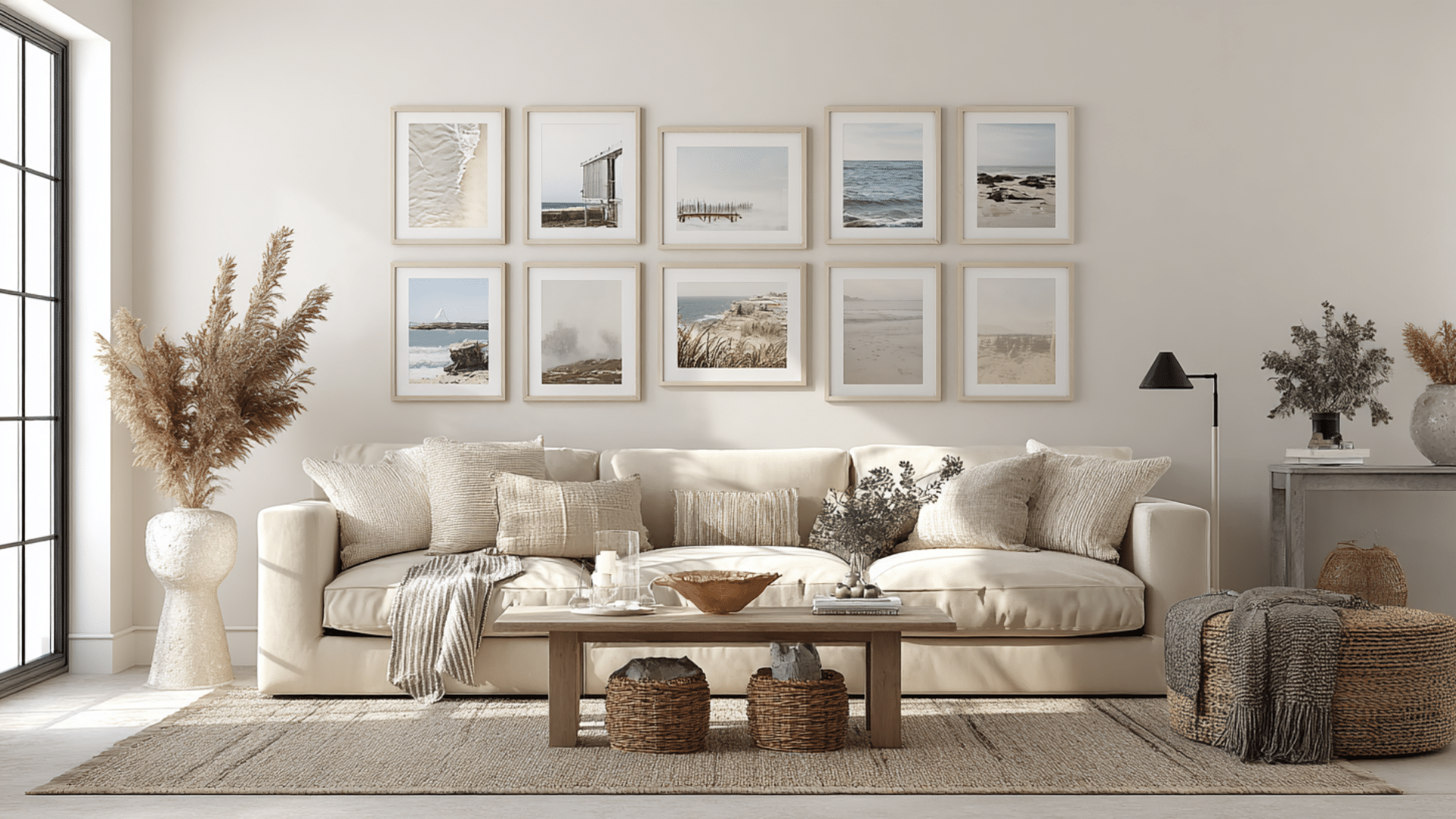
A grid layout communicates intention and discipline, functioning almost as a single large artwork rather than a collection. Coastal content softens the structural rigidity, balancing order with ease.
Tips:
- Use frames of identical size and finish a set of four, six, or nine in thin black, natural wood, or brushed brass.
- Maintain equal spacing throughout 5 to 8cm gaps, which are standard for a clean grid.
- Choose artwork within a consistent coastal color family across all frames.
41. Ivory and Cream Monochrome Palette
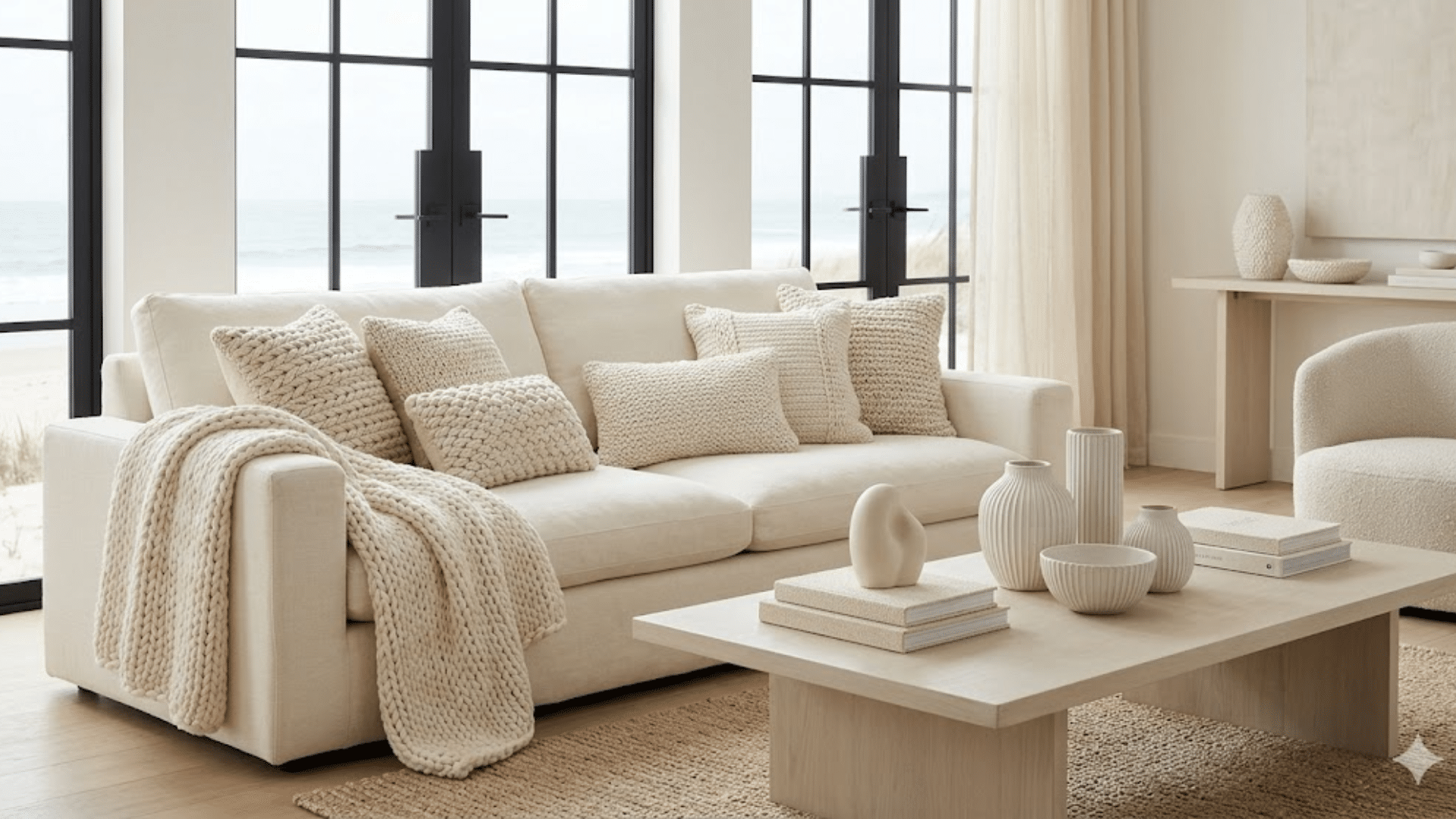
Ivory and cream are the colors of sun-bleached linen, dried sea grass, and natural sand inherently coastal in association. All visual interest comes from texture, form, and material variation rather than color contrast.
Tips:
- Build across every surface: ivory walls, cream upholstery, off-white textiles, pale wood furniture.
- Varying textures, obsessively ribbed ceramics, woven cushions, rough jute, smooth plaster, and boucle all read distinctly.
- Add one grounding element a darker wood tone or a single muted plant to anchor the palette.
42. Vertical Wood Slat Accent Wall
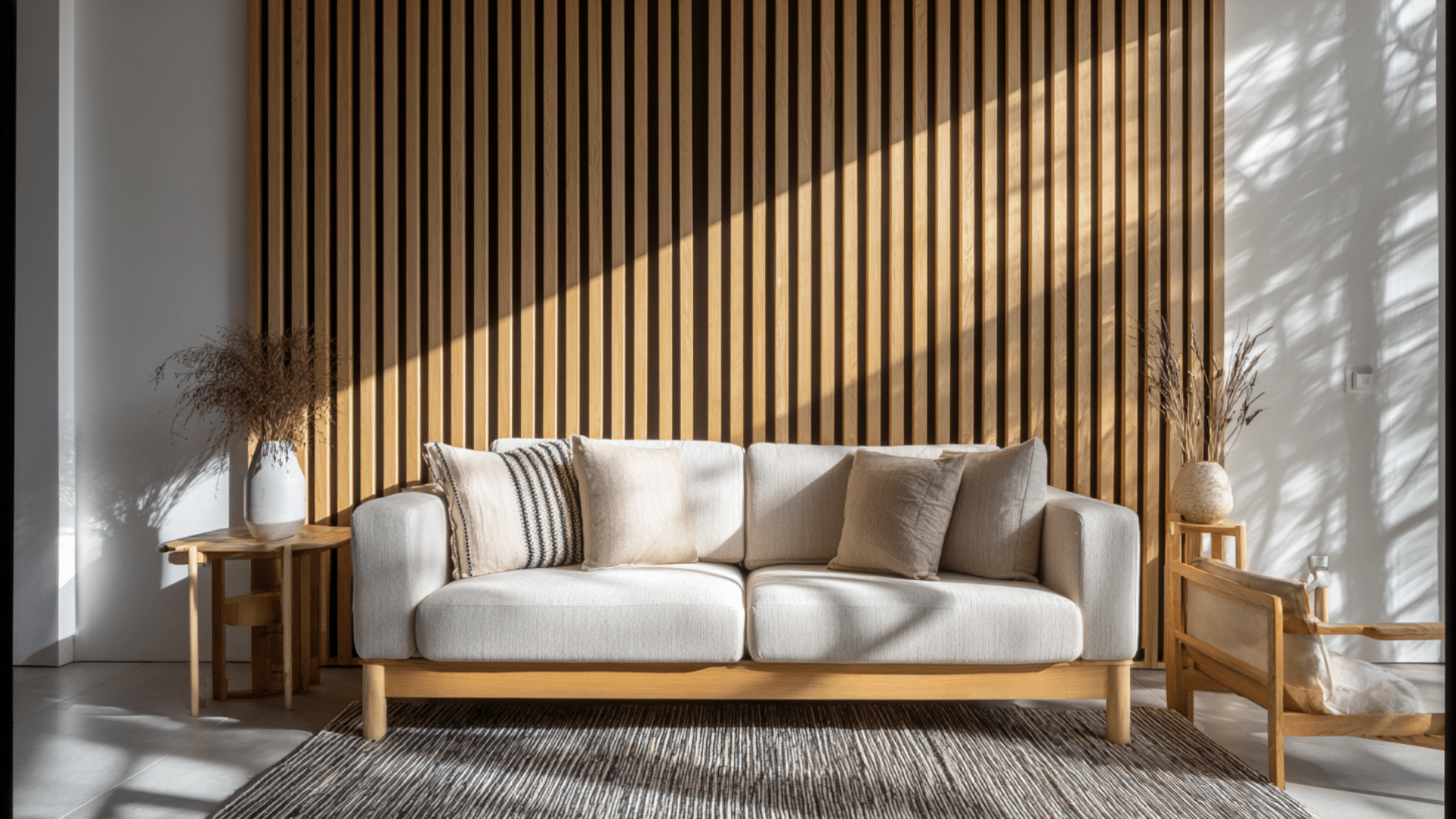
Vertical slats draw the eye upward, reinforcing height and the expansive feeling coastal design pursues. The rhythm of repeated lines creates a surface that shifts subtly with changing light, feeling dynamic rather than static.
Tips:
- Install pale oak, ash, or whitewashed pine slats on the wall behind the sofa or television unit.
- Space slats 3 to 6cm apart, close enough to read as unified, wide enough to reveal the wall behind.
- Paint the wall behind the slats the same color as the surrounding walls for a seamless, recessed effect.
43. Matte Black Hardware for Sharp Definition
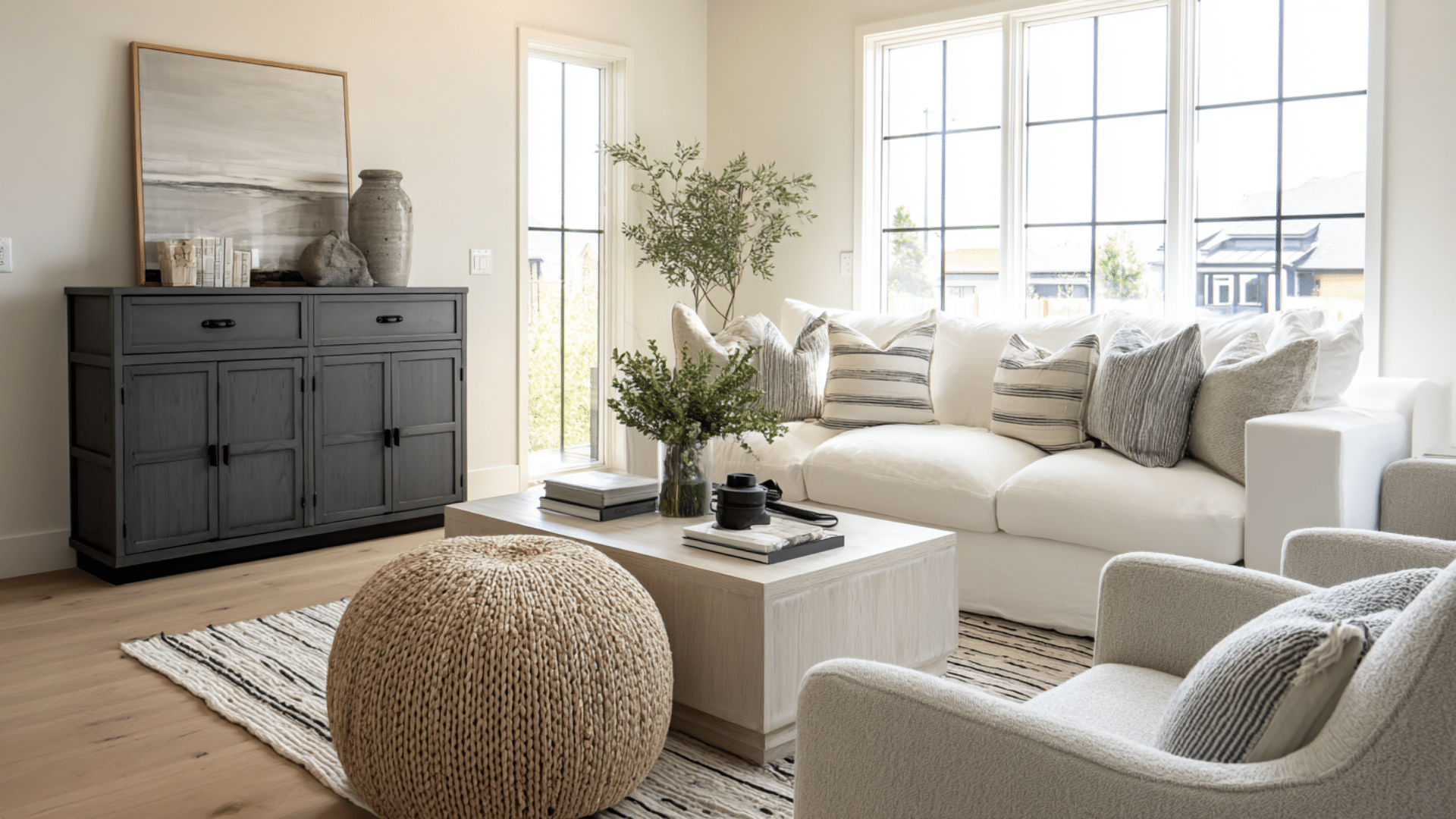
In a room of warm whites, sandy neutrals, and organic textures, matte black functions as a visual full stop, a crisp note that sharpens the overall composition and reinforces the contemporary framework.
Tips:
- Apply consistently through cabinet pulls, door handles, curtain rods, shelf brackets, and lamp fixtures.
- Avoid mixing with other metal finishes in the same room, as it creates visual noise, not contrast.
- Pair with warm wood tones and natural textiles so the black reads as sharp and modern, not heavy.
44. Sculptural Coastal Decor Pieces
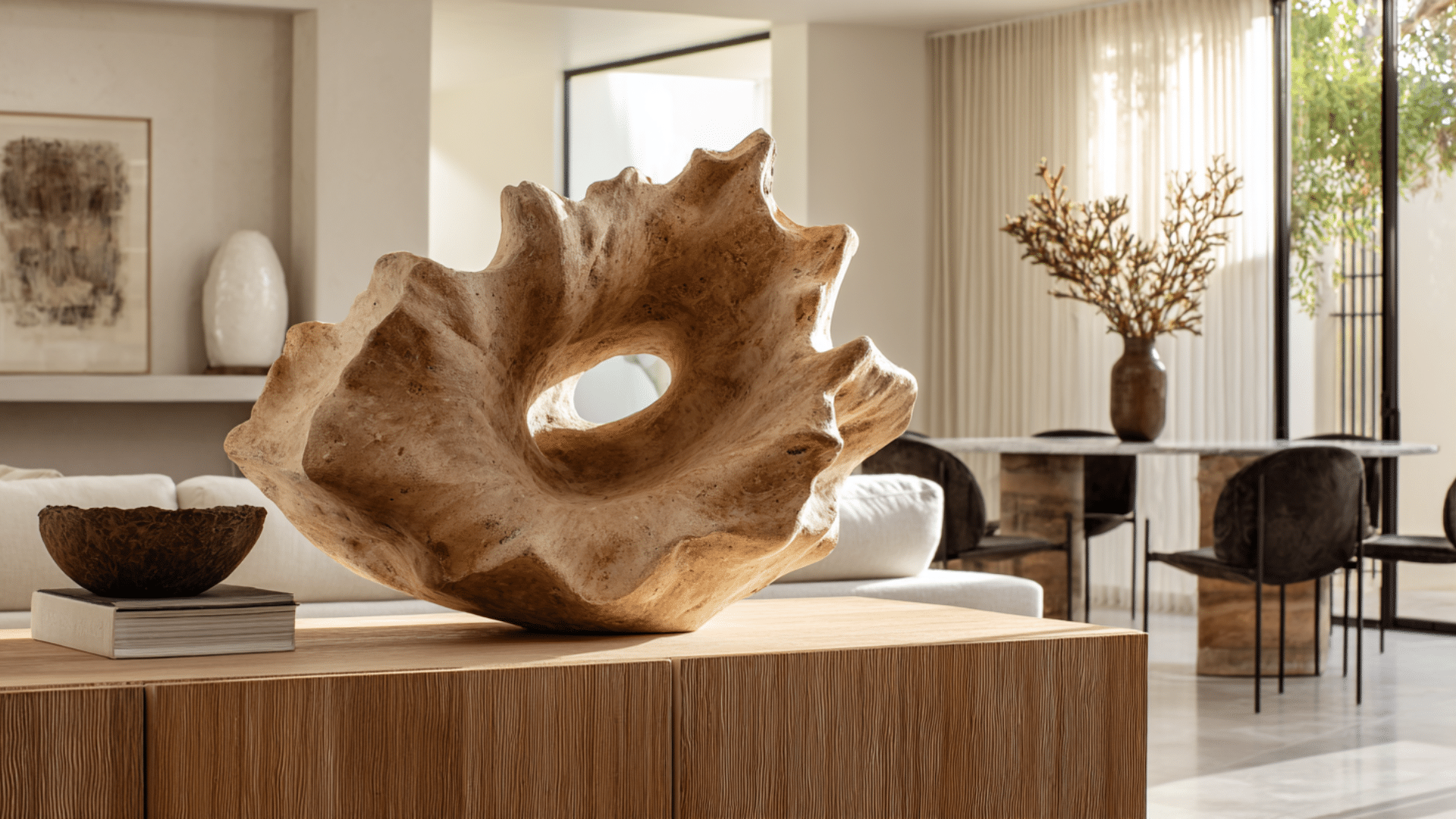
Sculpture introduces three-dimensional form and material depth to surfaces. In a coastal context, pieces drawing on organic shapes and natural materials evoke the environment through abstraction rather than literal representation.
Tips:
- Choose hand-formed ceramics, carved stone, cast concrete, or blown glass in coastal tones.
- Opt for one large sculptural piece rather than several small objects competing for attention.
- Rotate pieces seasonally to keep the room feeling fresh without a full redesign.
45. Wide-Plank Light Wood Flooring
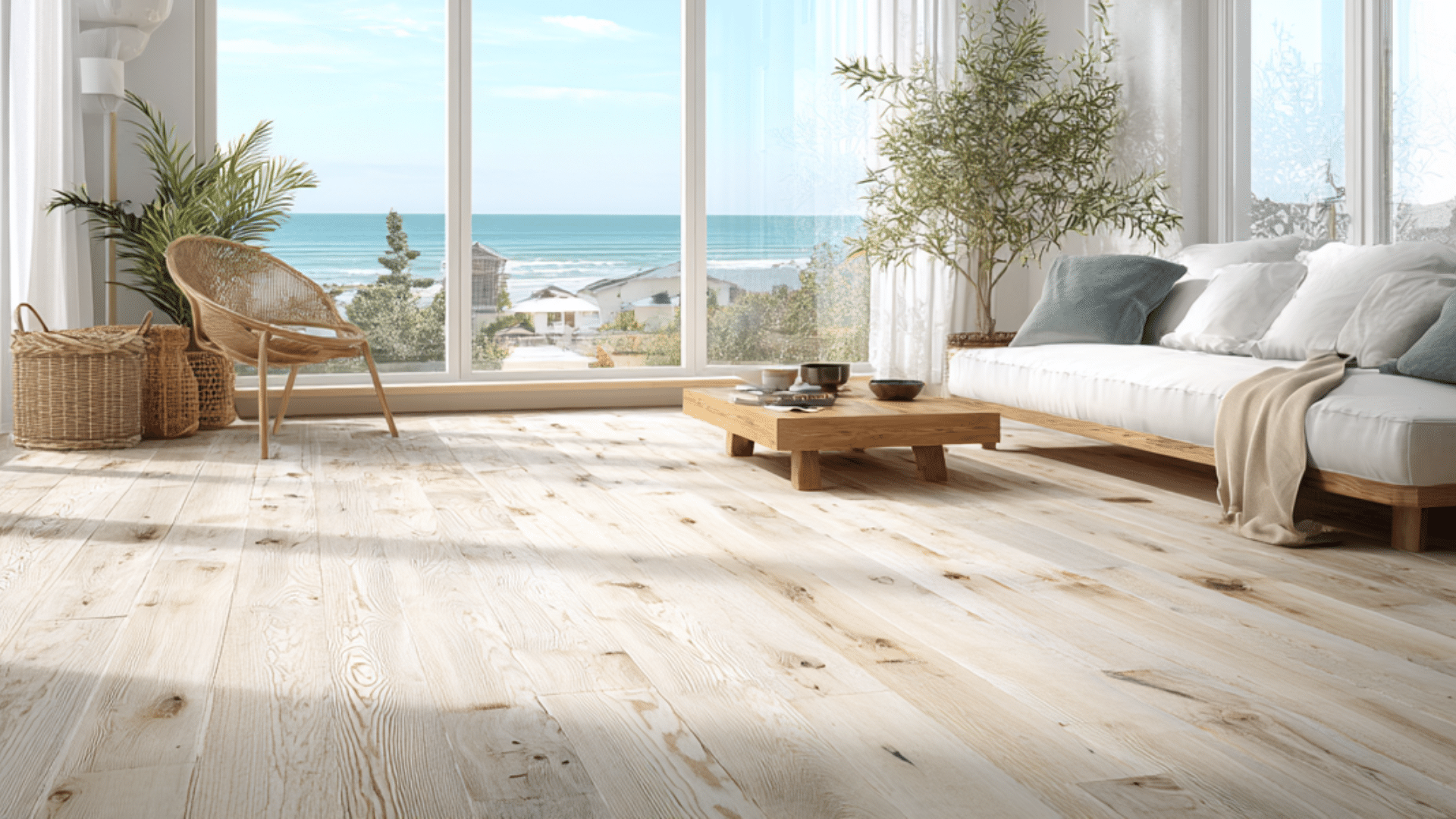
Wide planks create a sense of expansive, uninterrupted surface that makes any room feel larger and more open.
Light wood tones reflect natural light upward, amplifying brightness while natural grain adds organic texture at floor level.
Tips:
- Choose planks at least 15cm wide, ideally 20cm or wider, for that open, generous quality.
- Finish in matte or satin rather than high gloss, which shows scratches and looks overly polished.
- Lay planks parallel to the longest wall or toward the primary light source to maximize the lengthening effect.
Conclusion
A beach modern coastal living room is not about perfection; it’s about finding the right balance. A balance between clean modern structure and the relaxed ease of coastal living.
It’s also about blending natural warmth with simple, uncluttered design. Creating a space that feels thoughtfully styled but still comfortable for everyday life.
You don’t need to change everything at once to achieve this look. Start small, layer textures, soften colors, and let each change gradually transform the space.

Ava Taylor, holding a Bachelor’s degree in Interior Design from the Pratt Institute, has made her mark in creating engaging and functional living spaces for over 14 years. She began her career with a New York-based design studio, where she gained a reputation for her innovative and user-centric designs. Ava joined our team in 2019, bringing a blend of artistic flair and practicality to our home improvement section. Since the she has been the lead contributor to our room transformation series, inspiring readers with her unique approach to maximizing space utility and aesthetic appeal. Beyond her professional work, Ava is a passionate collector of vintage furniture, a hobby that enriches her design perspective.