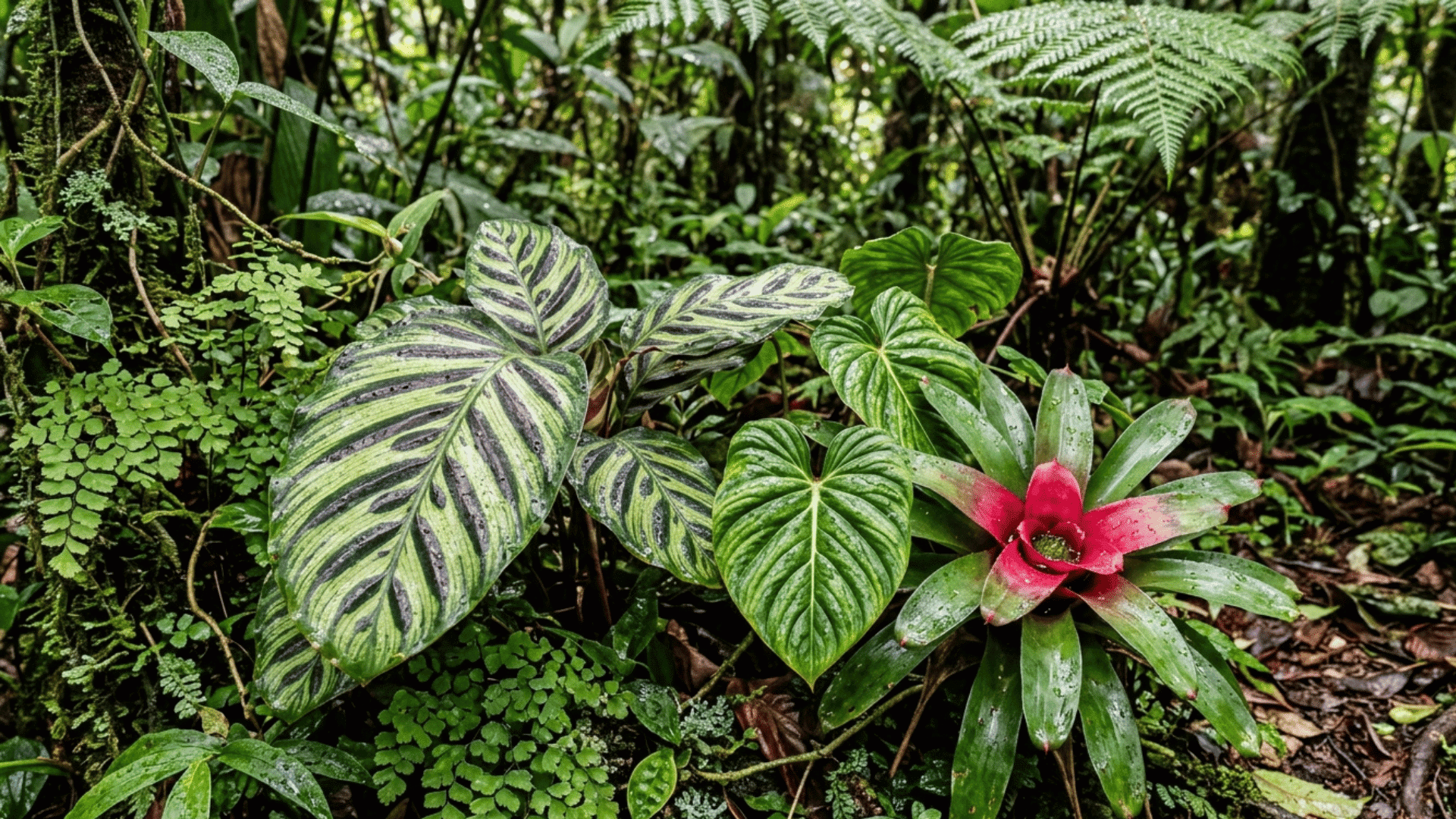

Tropical rainforests are some of the most lively places on Earth, filled with plants that look, grow, and survive in unique ways.
From tall trees that form thick canopies to small plants that thrive in low light, every layer has something different going on.
And it’s not just about looks these plants play a big role in keeping the ecosystem balanced. In this blog, you’ll get to know the different types of tropical rainforest plants, how they grow, and what makes them so important in nature.
What Defines a Tropical Rainforest Plant?
Tropical rainforest plants are adapted to warm climates with high rainfall and constant humidity. Their growth patterns are shaped by limited sunlight and dense forest layers.
- Adapted to High Rainfall: These plants thrive in areas with frequent and heavy rain throughout the year.
- Grow in Warm Temperatures: They are suited to stable, warm climates with little seasonal change.
- Adjust to Low Light Conditions: Many develop large leaves to capture limited sunlight under dense canopies.
- Vertical Growth Patterns: Some grow tall to reach sunlight, while others spread across lower forest layers.
- High Humidity Tolerance: Constant moisture in the air supports their continuous growth.
- Diverse Growth Types: Includes trees, shrubs, climbers, and epiphytes adapted to different forest levels.
Tropical Rainforest Plants to Know
Tropical rainforest plants grow in hot, humid regions and show a wide range of forms, from tall trees to small ground plants, each adapted to survive in dense forests with heavy rainfall and limited sunlight.
1. Kapok Tree
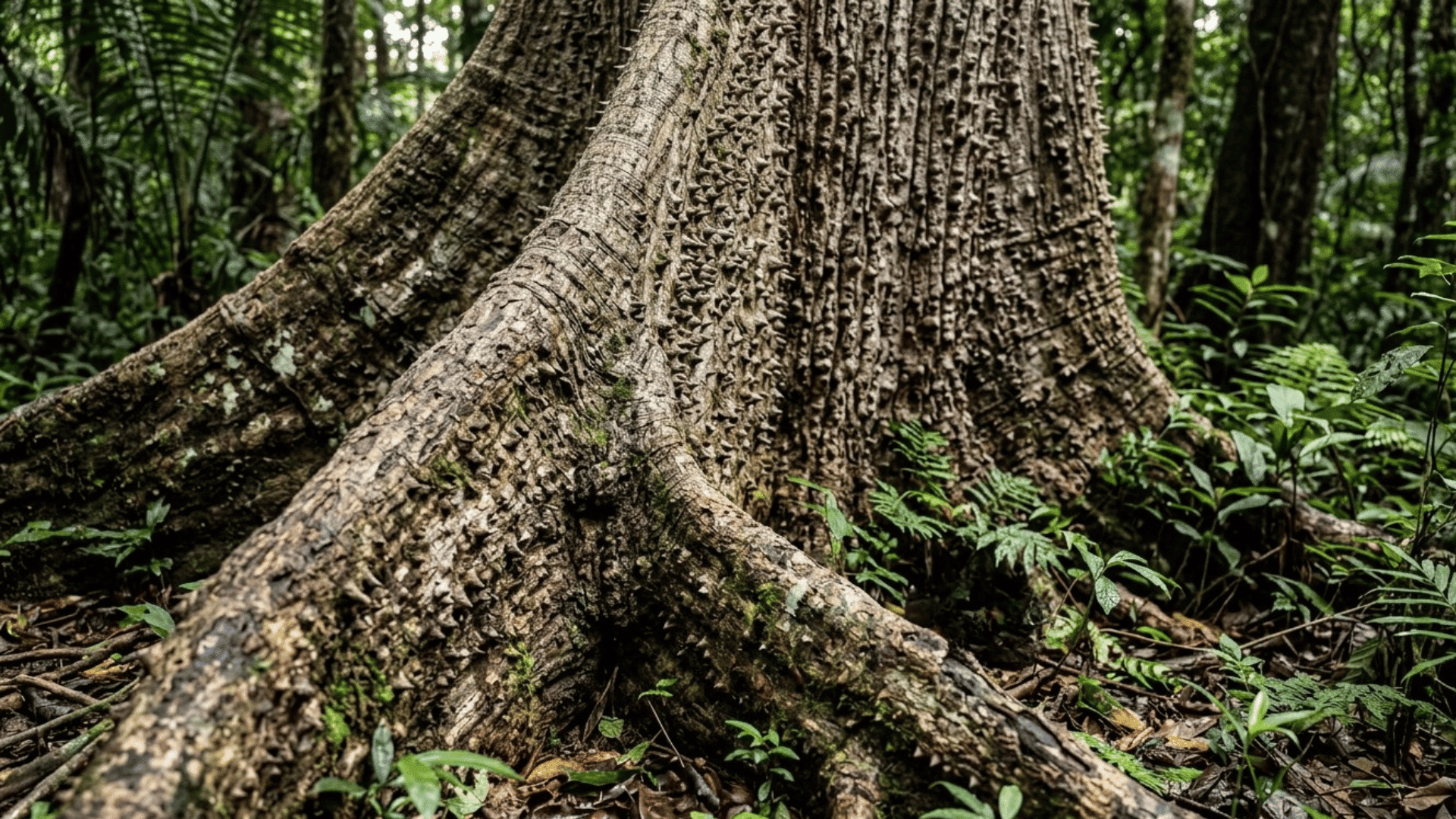
The kapok tree is one of the tallest tropical rainforest plants, often rising above the forest canopy. It has a thick trunk and large buttress roots that help support its height.
This tree provides shelter for birds, insects, and small animals. Its lightweight fibers, known as kapok, are used in pillows and cushions.
The tree also produces large seed pods filled with fluffy fibers. Kapok trees play an important role in rainforest ecosystems by offering shade, habitat, and support to many living organisms.
2. Rubber Tree
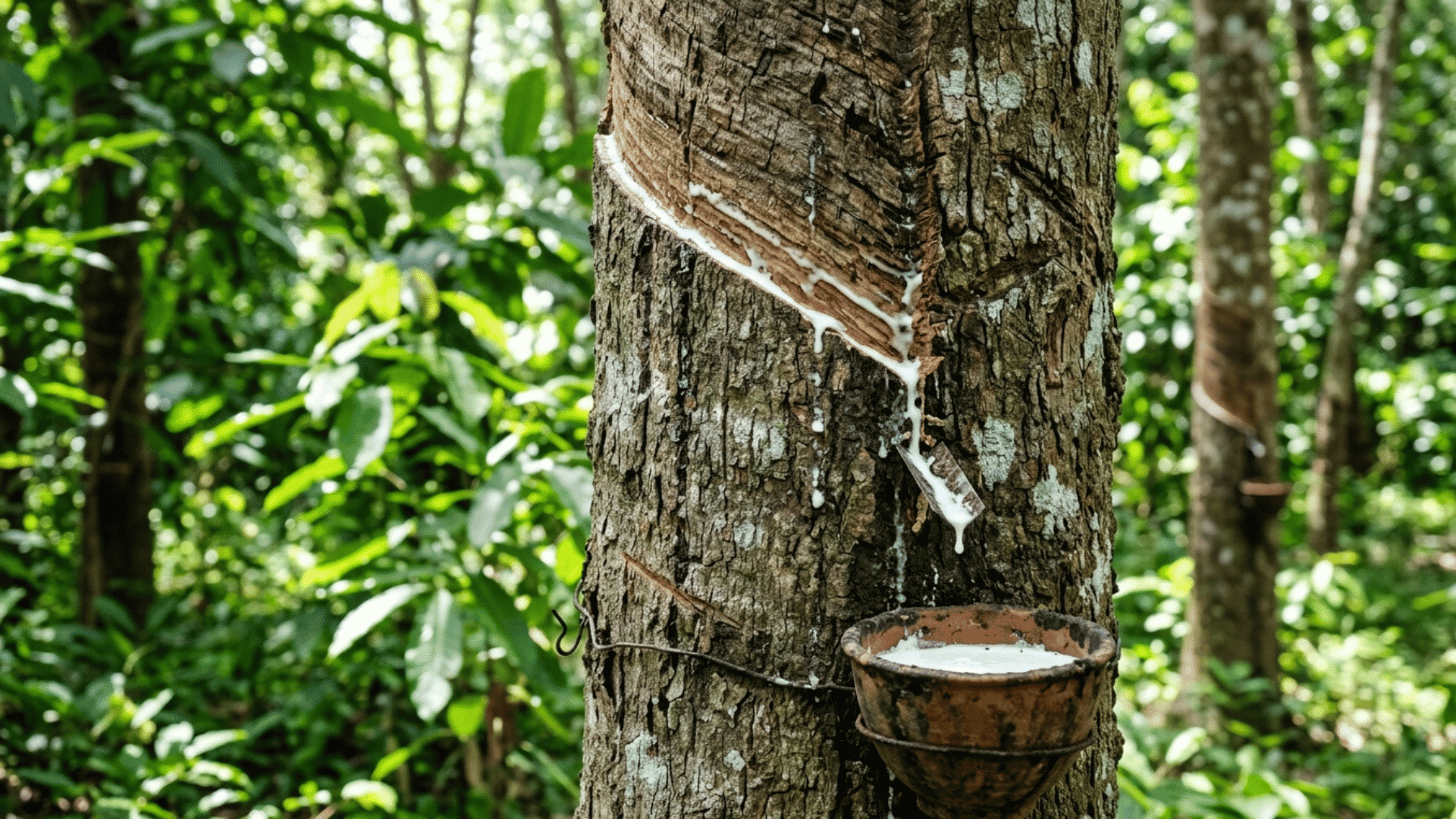
The rubber tree is known for producing natural latex, which is used to make rubber products. It grows well in warm and humid climates, making tropical rainforests an ideal home.
The tree has broad leaves that help it absorb sunlight even in dense forests. When the bark is cut, it releases a milky sap that is collected and processed.
Rubber trees are important both economically and ecologically, as they support industries while also providing shade and habitat for wildlife in rainforest regions.
3. Mahogany Tree
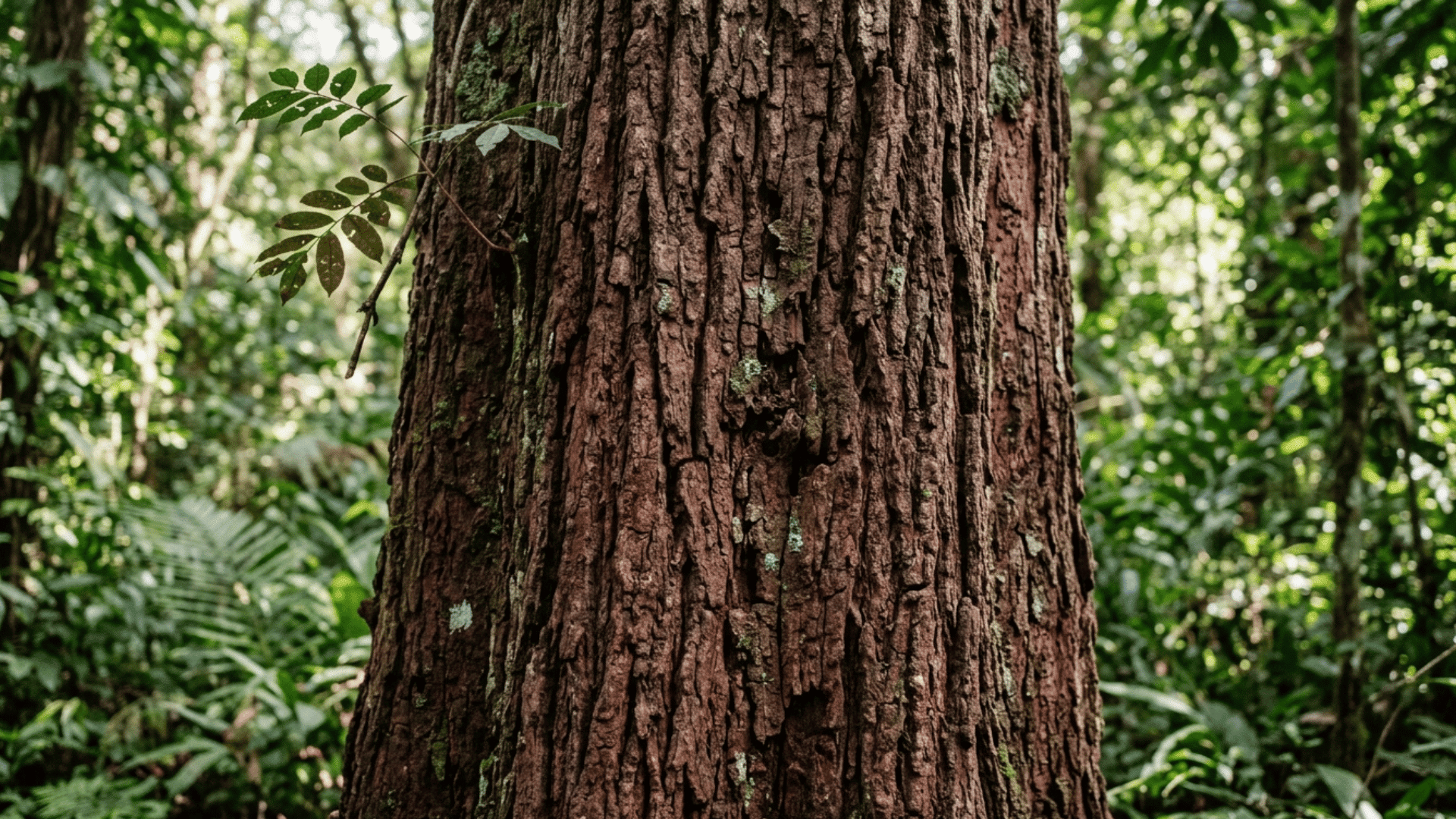
Mahogany trees are large hardwood trees found in tropical rainforests. They are valued for their strong, durable wood, often used in furniture and construction. These trees can grow very tall and have wide canopies that provide shade.
Their seeds are spread by the wind, helping them grow in different parts of the forest. Mahogany trees support many forms of life by offering shelter and food. They are an important part of rainforest biodiversity but are also threatened due to heavy logging.
4. Teak Tree
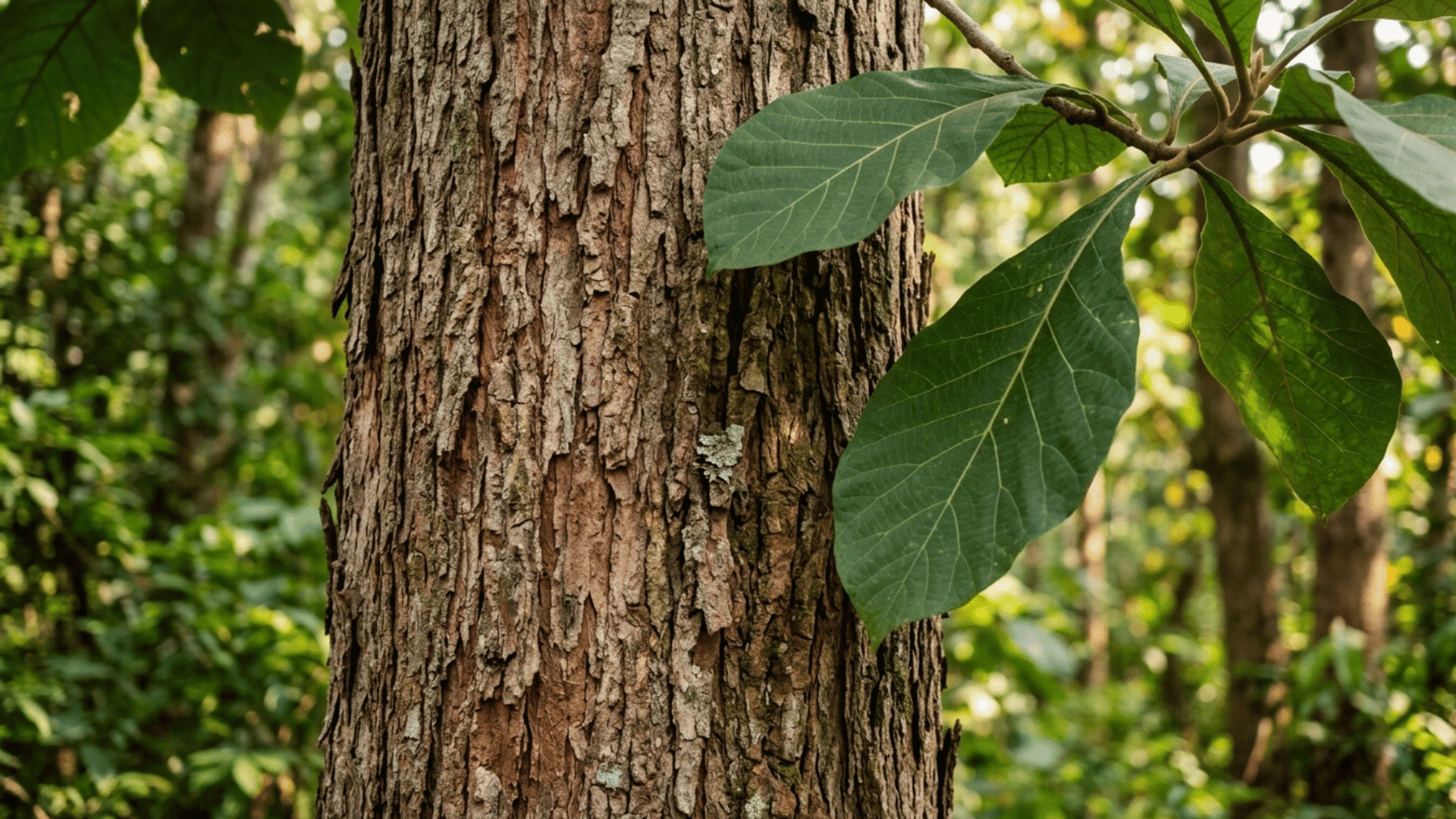
The teak tree is a tropical hardwood tree known for its strong and water-resistant wood. It grows in warm climates with plenty of rainfall. Teak leaves are large and help the tree capture sunlight in crowded forests.
The wood is commonly used in furniture, flooring, and shipbuilding because it does not easily rot. In rainforests, teak trees provide shade and support wildlife. They also help maintain soil stability, making them an important part of the forest ecosystem.
5. Brazil Nut Tree
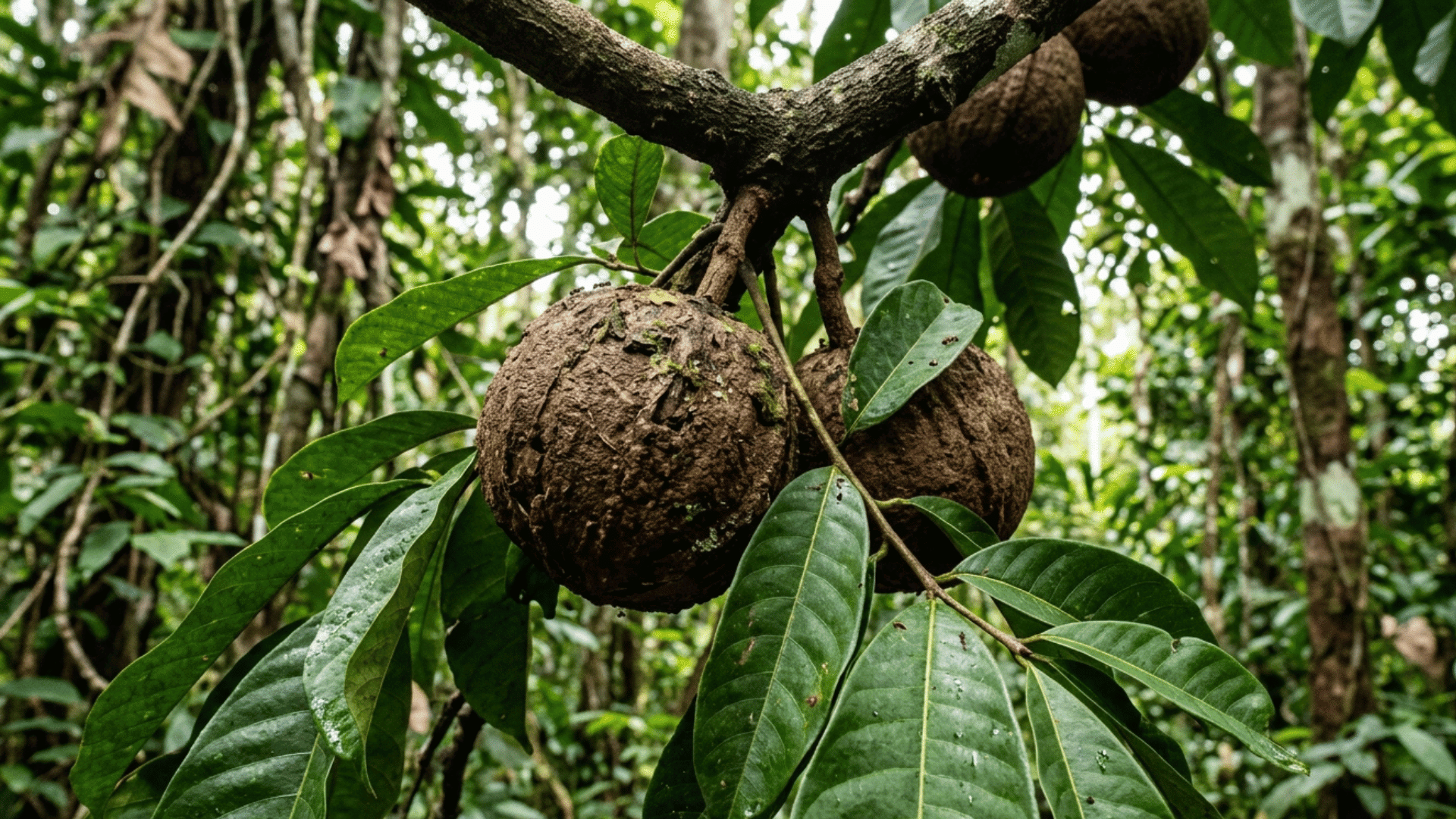
The Brazil nut tree is a large rainforest tree that can live for hundreds of years. It produces hard-shelled fruits that contain edible nuts. These trees depend on specific insects for pollination and animals like agoutis for seed dispersal.
This connection shows how rainforest plants and animals depend on each other. Brazil nut trees grow tall and form part of the canopy layer. They are important for both the environment and local communities that collect and sell the nuts.
6. Orchid
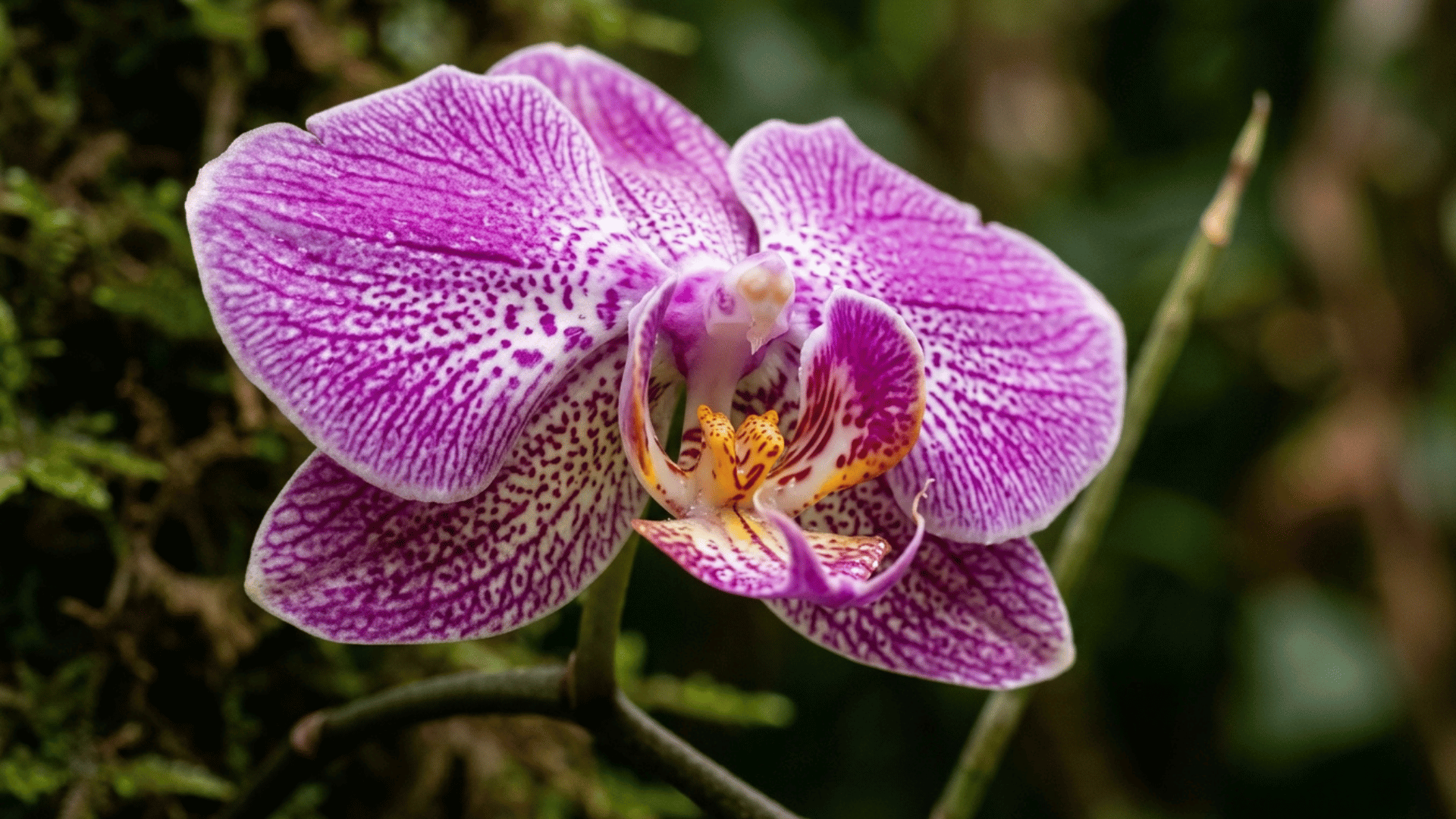
Orchids are colorful flowering plants commonly found in tropical rainforests. Many orchids grow as epiphytes, meaning they live on other plants without harming them.
They absorb moisture and nutrients from the air and rain. Orchids come in many shapes and colors, making them one of the most diverse plant groups.
They attract pollinators like insects and birds. These plants add beauty to the rainforest and play a role in maintaining ecological balance through pollination.
7. Hibiscus
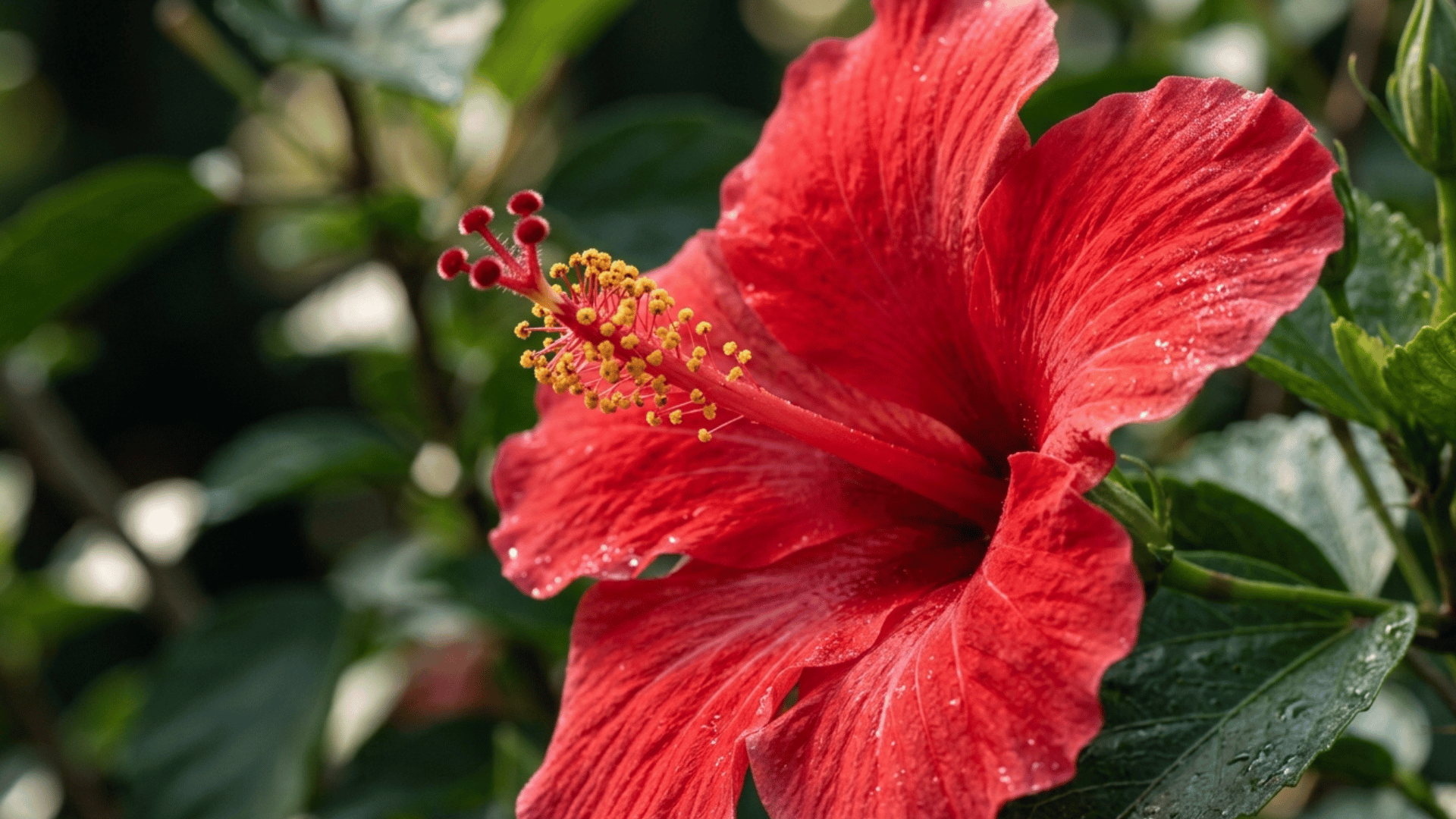
Hibiscus is a flowering plant known for its large, bright blooms. It thrives in warm and humid conditions, making it common in rainforest areas. The plant attracts pollinators such as bees and butterflies.
Hibiscus leaves are often broad, helping the plant absorb sunlight efficiently. Some species are used for medicinal and decorative purposes. In rainforests, hibiscus adds color and supports insect life, making it an important part of the ecosystem.
8. Passion Flower
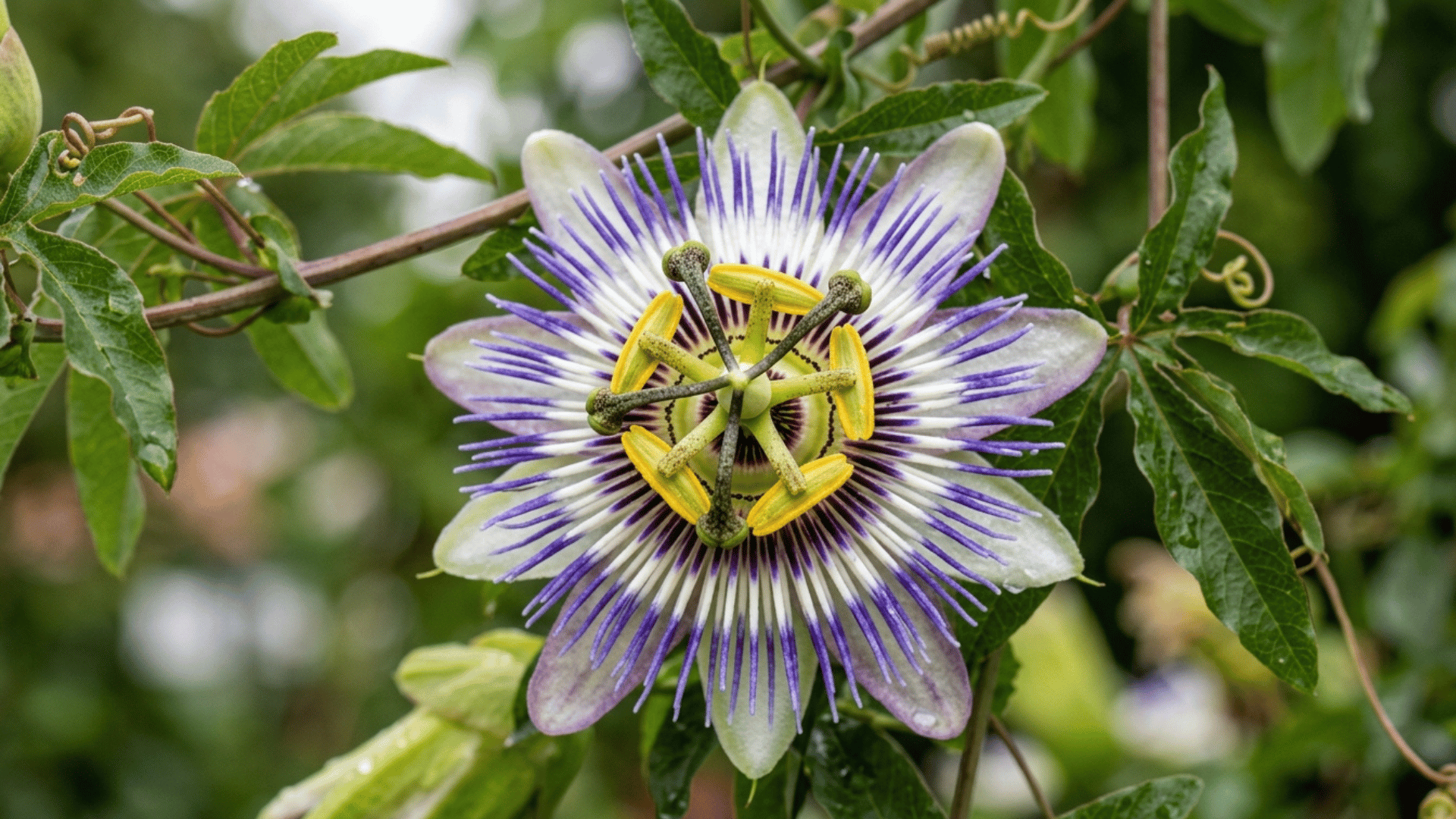
The passion flower is a unique climbing plant known for its detailed and colorful flowers. It grows well in tropical climates and often climbs on other plants for support.
The plant produces fruit, which is edible and rich in nutrients. Passion flowers attract pollinators like bees and butterflies.
Their vines help cover spaces in the forest, adding to plant diversity. This plant plays a role in supporting wildlife and maintaining the balance of rainforest ecosystems.
9. Heliconia
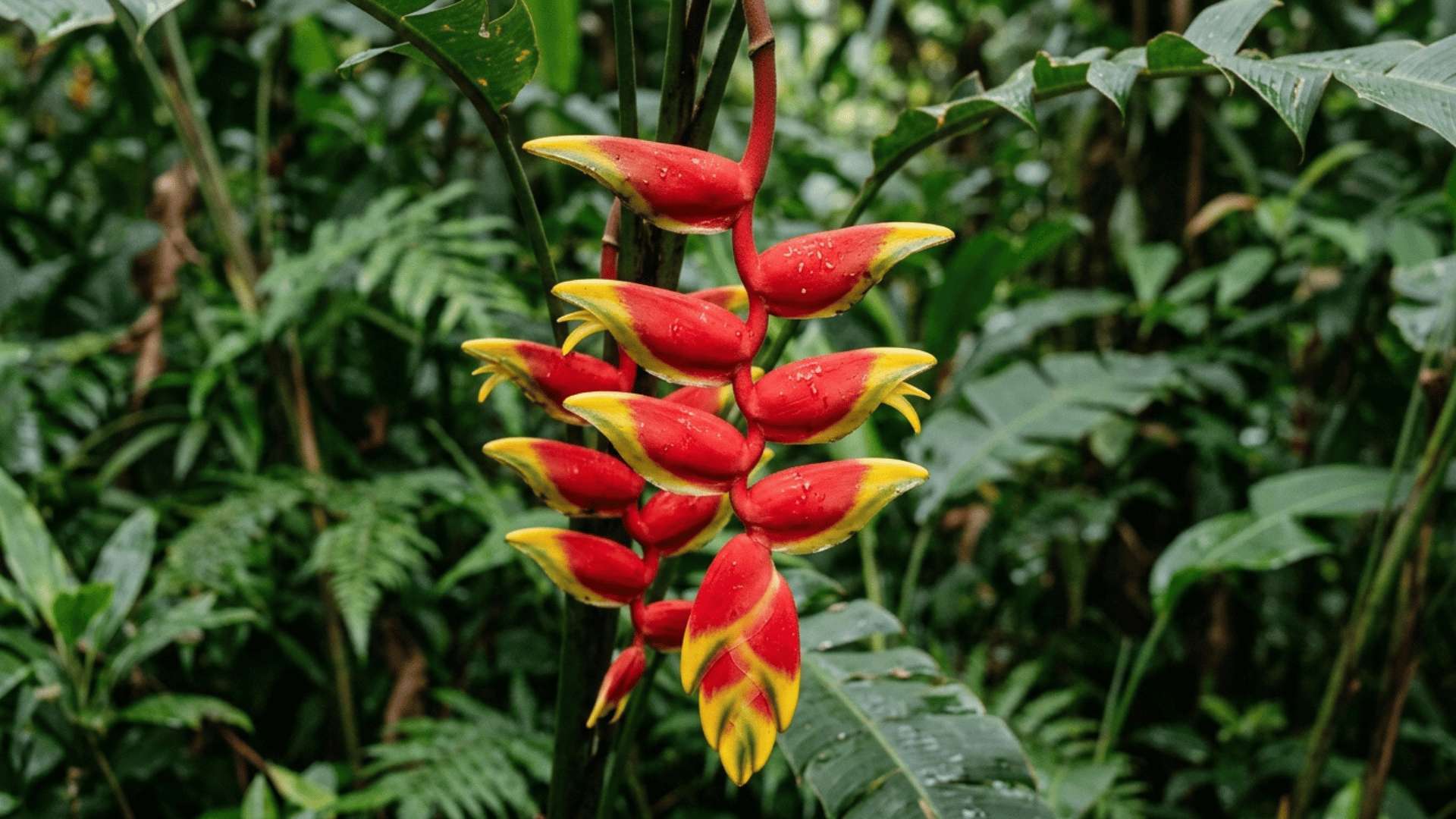
Heliconia is a tropical plant known for its bright and unusual flower structures. These plants grow in warm and wet environments and are often found in the understory of rainforests.
Their flowers attract birds like hummingbirds, which help with pollination. Heliconia leaves are large and help capture sunlight in low-light areas. The plant adds color to the forest and supports wildlife, making it an important part of rainforest plant life.
10. Anthurium
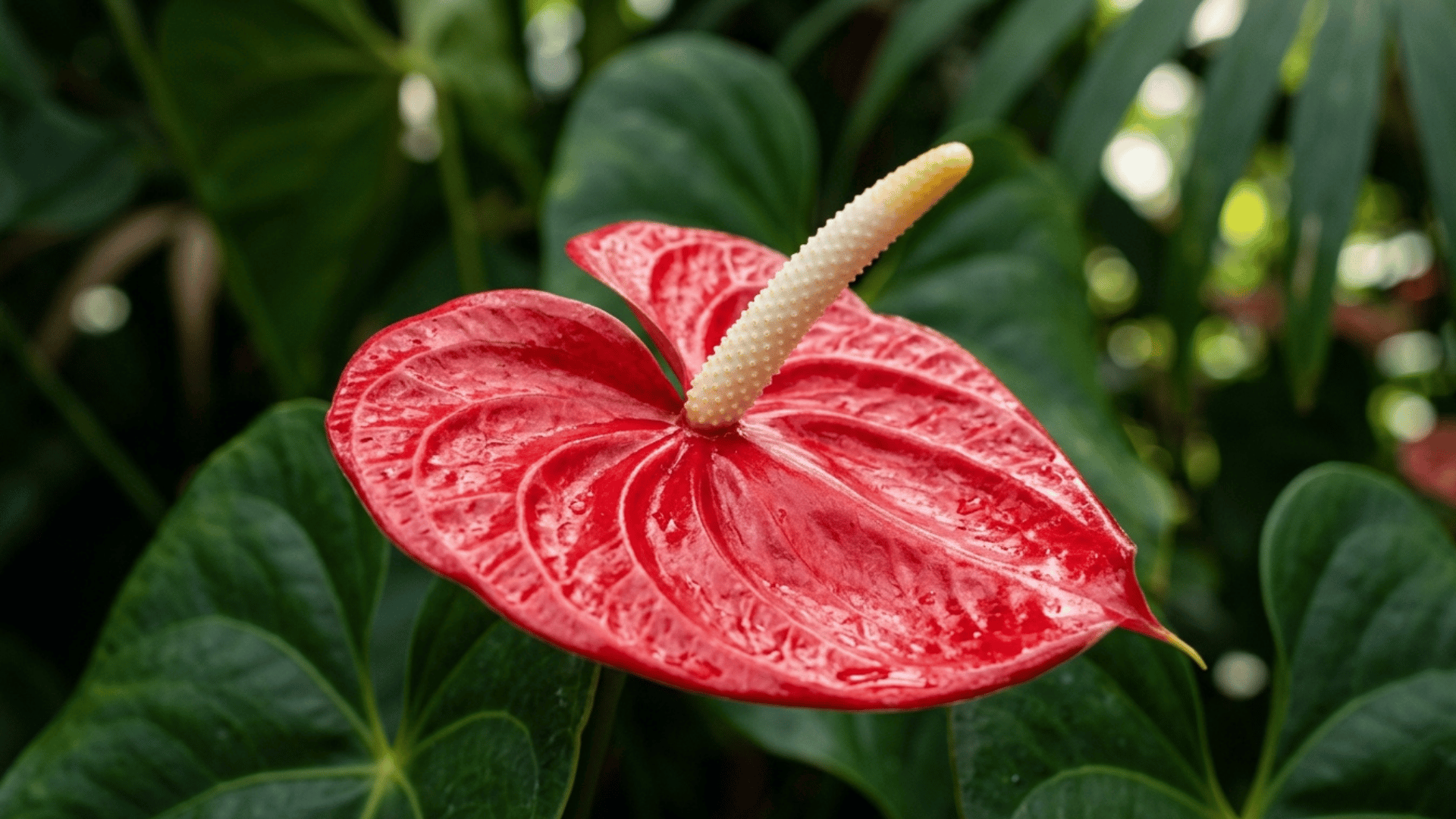
Anthurium is a tropical plant with glossy leaves and bright, waxy flowers. It thrives in humid rainforest conditions and often grows in shaded areas.
This plant can grow on the ground or as an epiphyte on trees. Anthuriums attract insects that help with pollination. Their large leaves help absorb limited sunlight.
They are also popular as decorative plants due to their unique appearance. In rainforests, they contribute to plant diversity and ecosystem balance.
11. Lianas
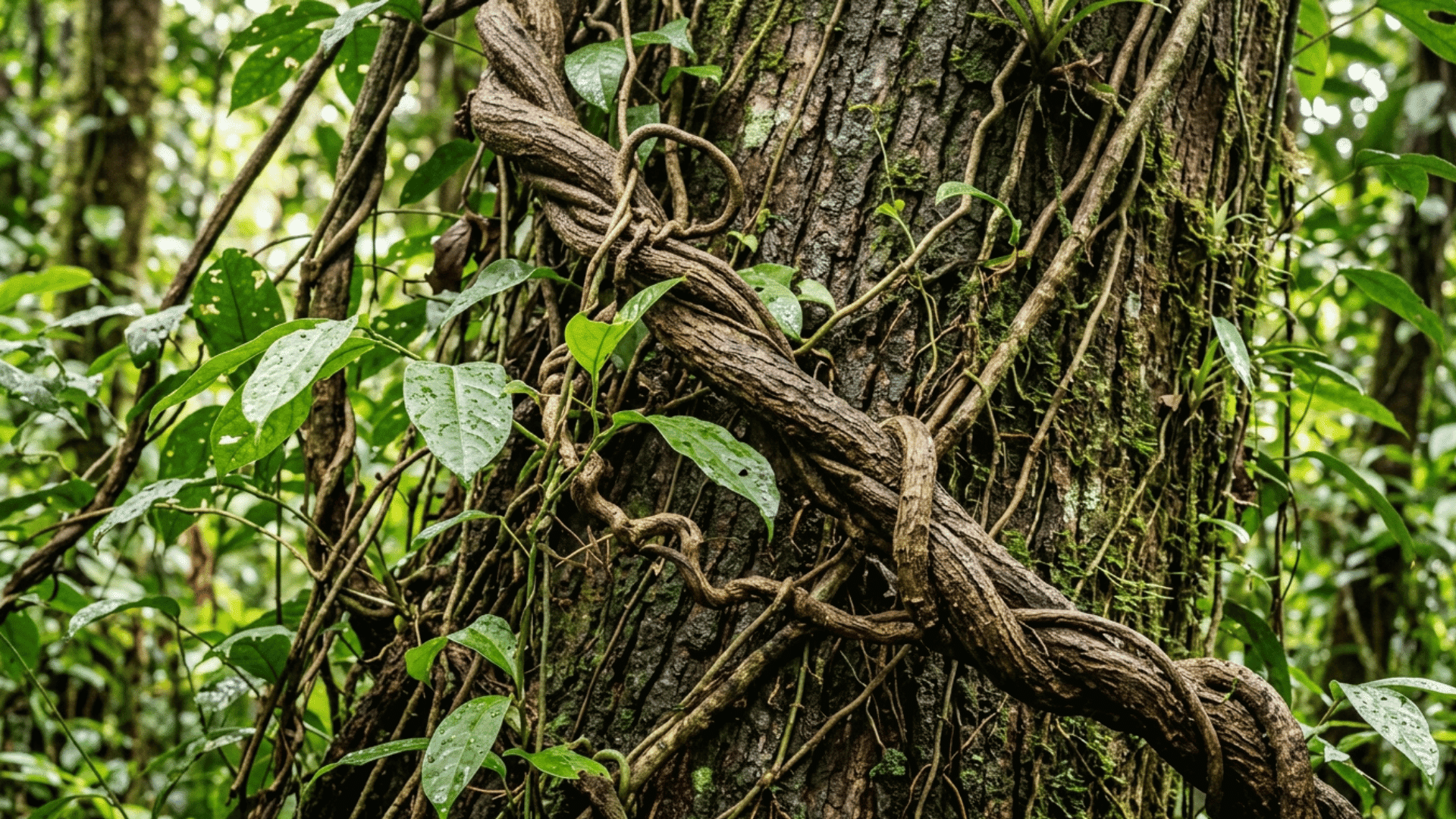
Lianas are woody vines that climb tall trees to reach sunlight. They are common in tropical rainforests and can grow very long. Instead of growing thick trunks, they rely on other trees for support.
Lianas help connect different parts of the forest, allowing animals to move easily. They compete with trees for sunlight but also add to the forest structure. These plants play an important role in shaping the rainforest environment.
12. Rattan
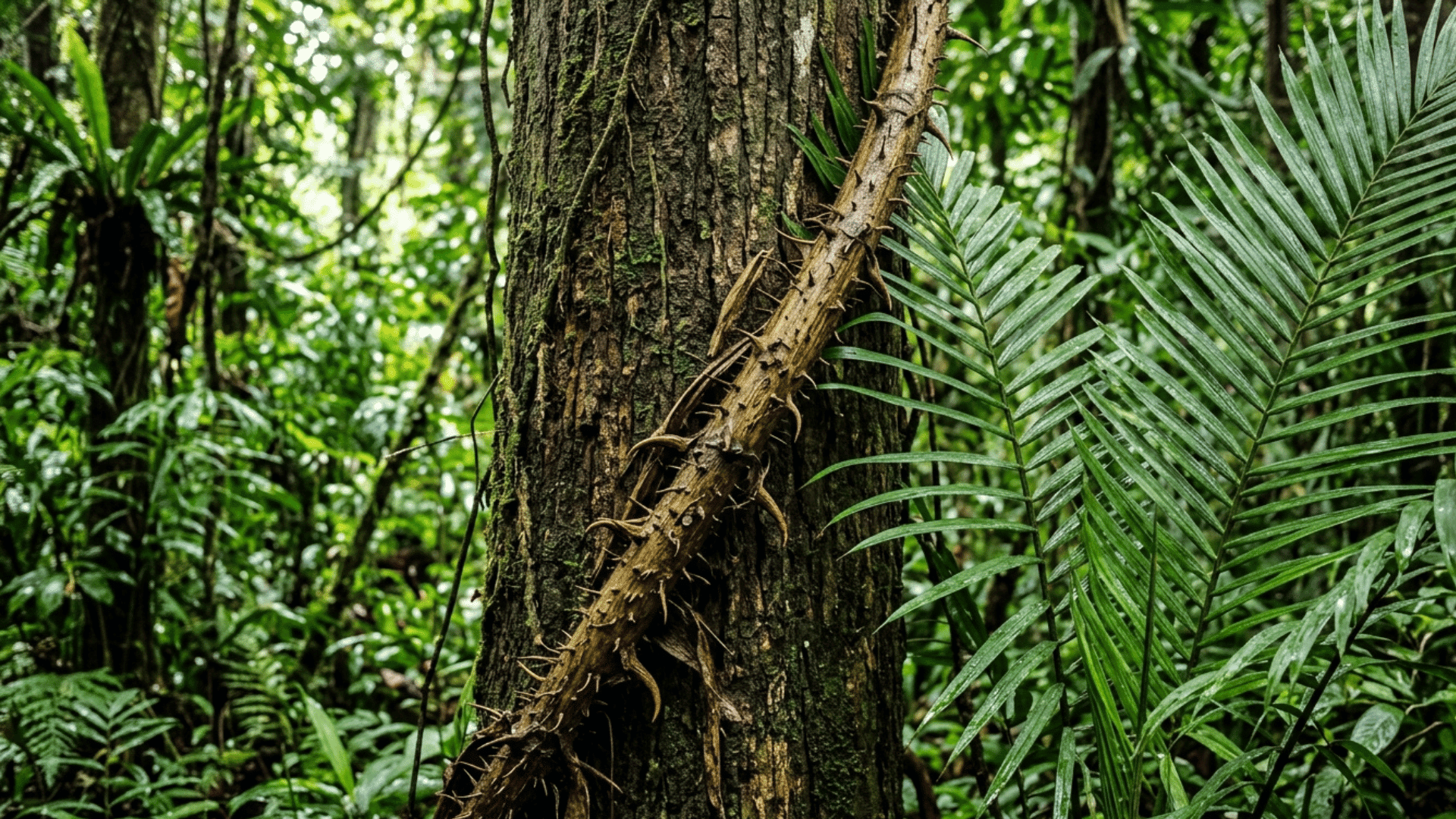
Rattan is a climbing palm found in tropical rainforests. It grows long, flexible stems that can climb trees for support. Rattan is widely used to make furniture, baskets, and ropes.
In the rainforest, it helps provide structure and habitat for animals. Its leaves and stems can also be used by local communities. Rattan plays both an ecological and economic role, making it an important rainforest plant.
13. Monkey Ladder Vine
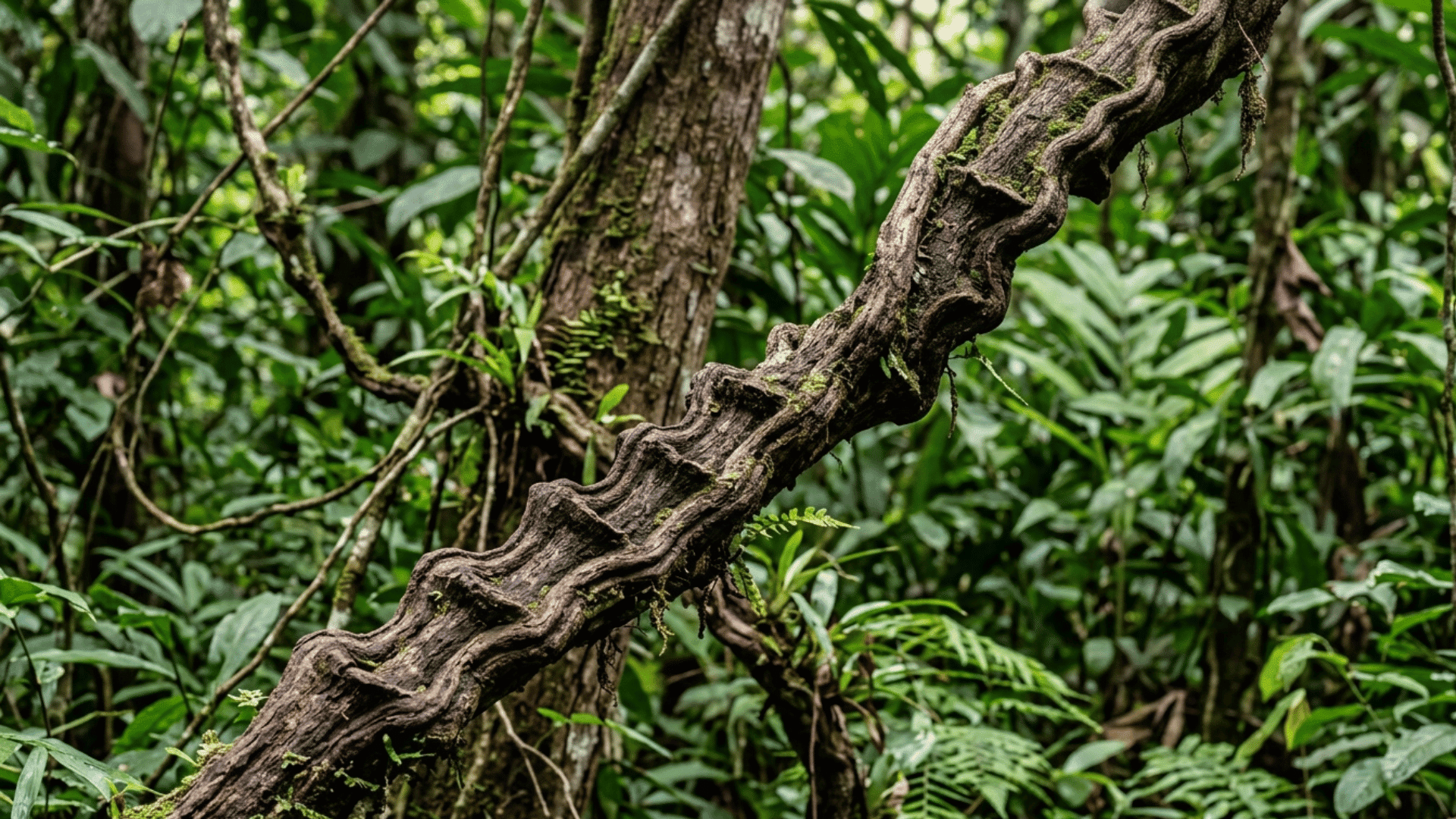
Monkey ladder vine is a large climbing plant found in rainforests. It grows thick, twisted stems that look like ladders, which animals can use to move between trees.
This plant climbs toward sunlight by attaching itself to tall trees. It provides shelter and pathways for monkeys and other animals.
Monkey ladder vines help connect the forest layers and support biodiversity. They are a key part of rainforest plant life.
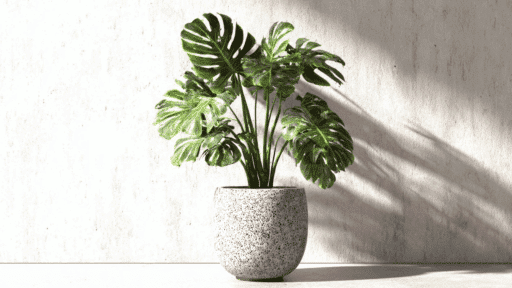
14. Philodendron
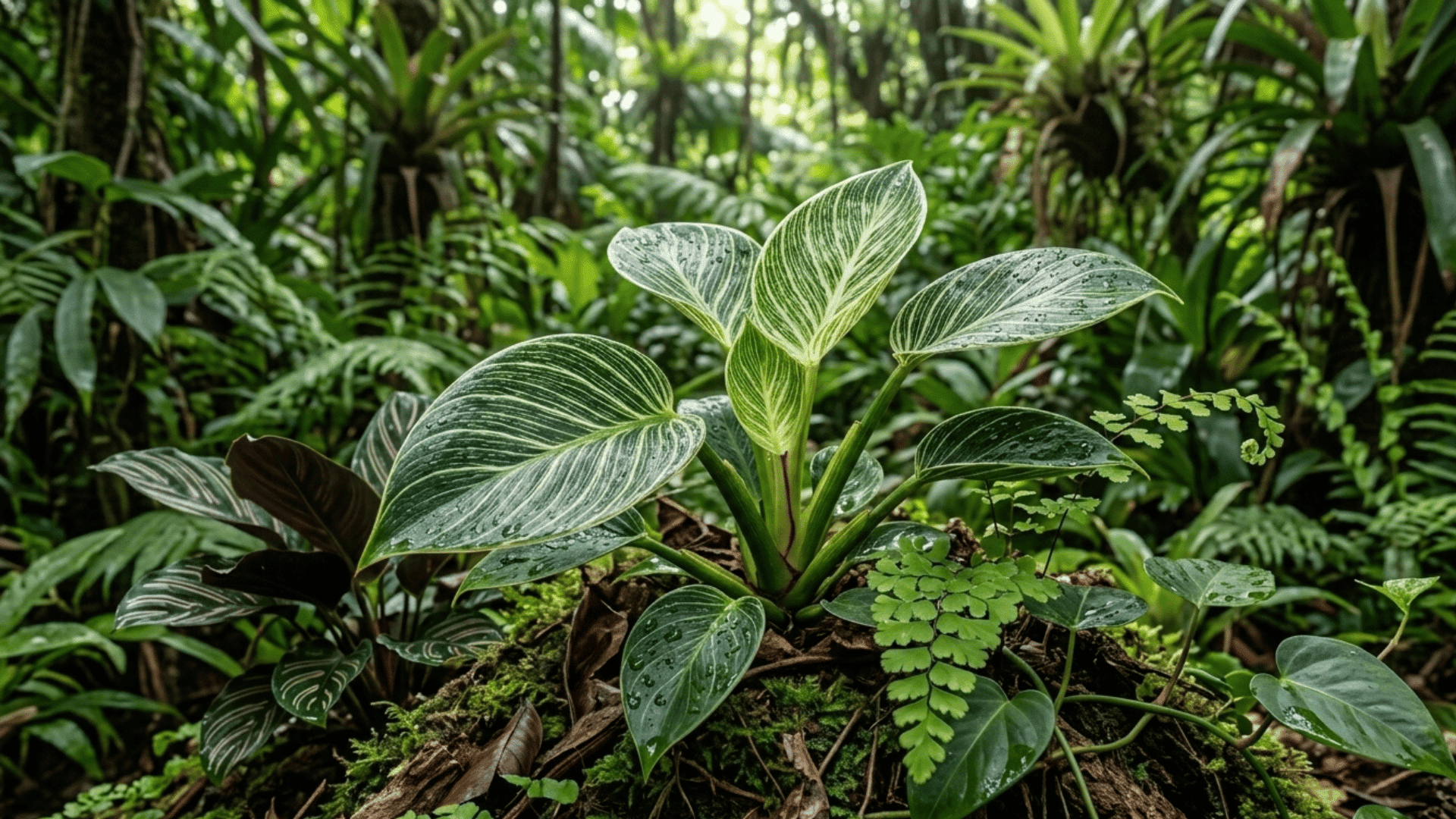
Philodendrons are tropical plants that grow on the forest floor or climb trees. They have large, heart-shaped leaves that help them absorb sunlight in low-light areas.
These plants thrive in humid environments and are easy to grow. Philodendrons can grow as vines or shrubs, depending on the species.
They support insects and small animals in the rainforest. Their ability to adapt makes them an important part of tropical plant ecosystems.
15. Vanilla Orchid
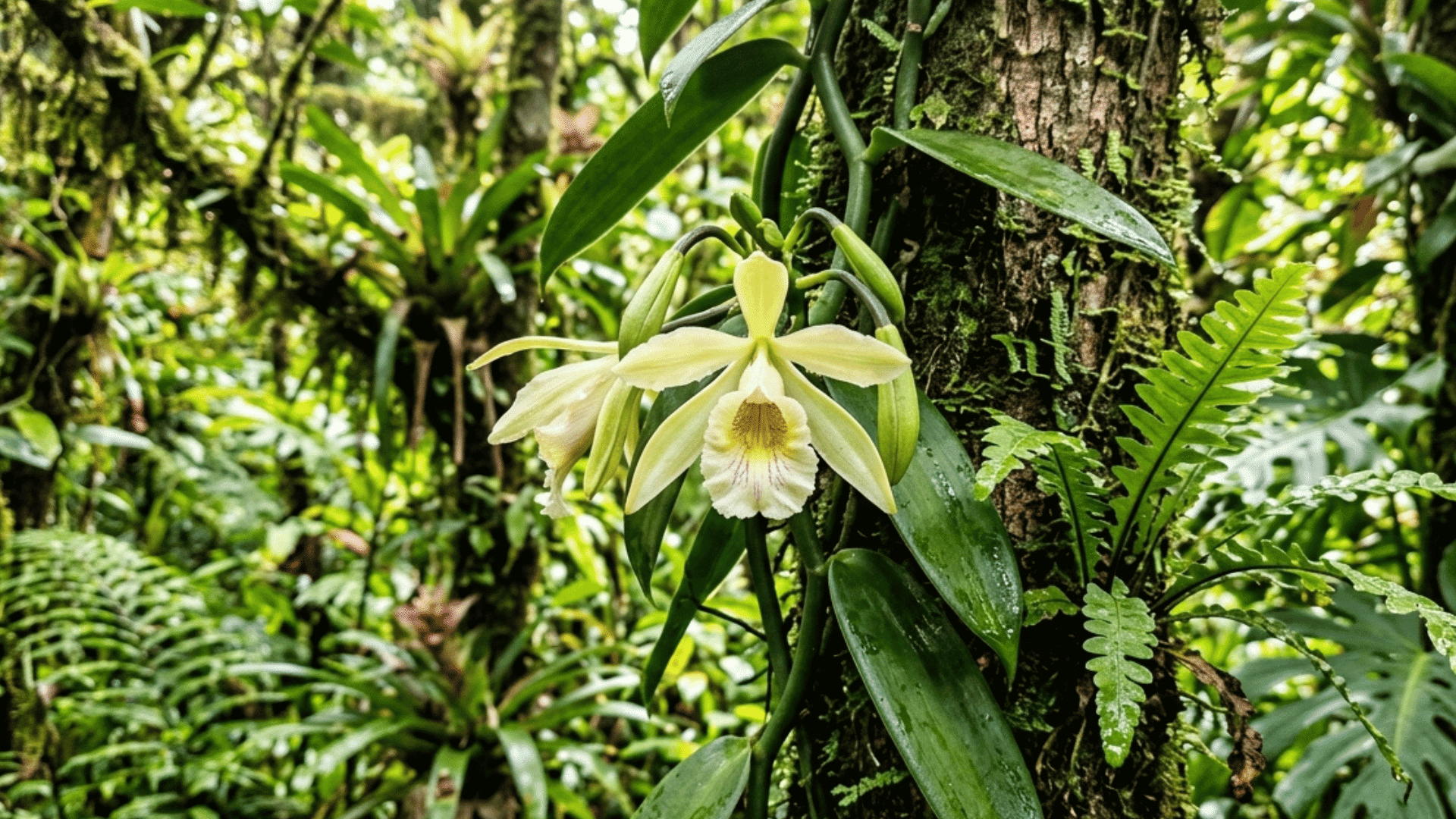
The vanilla orchid is a climbing plant that produces vanilla beans. It grows in tropical rainforests and needs support from trees to climb. The plant produces flowers that must be pollinated to form pods.
These pods are processed to make vanilla flavoring. Vanilla orchids thrive in warm, humid conditions and require shade. They are important both economically and ecologically, as they contribute to biodiversity and support pollinators.
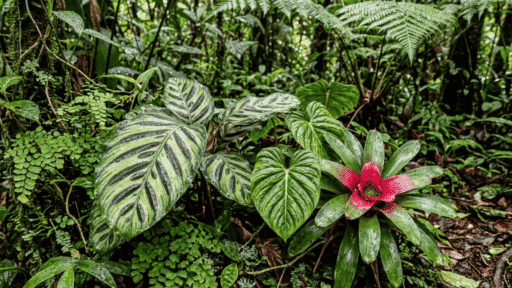
16. Bromeliads
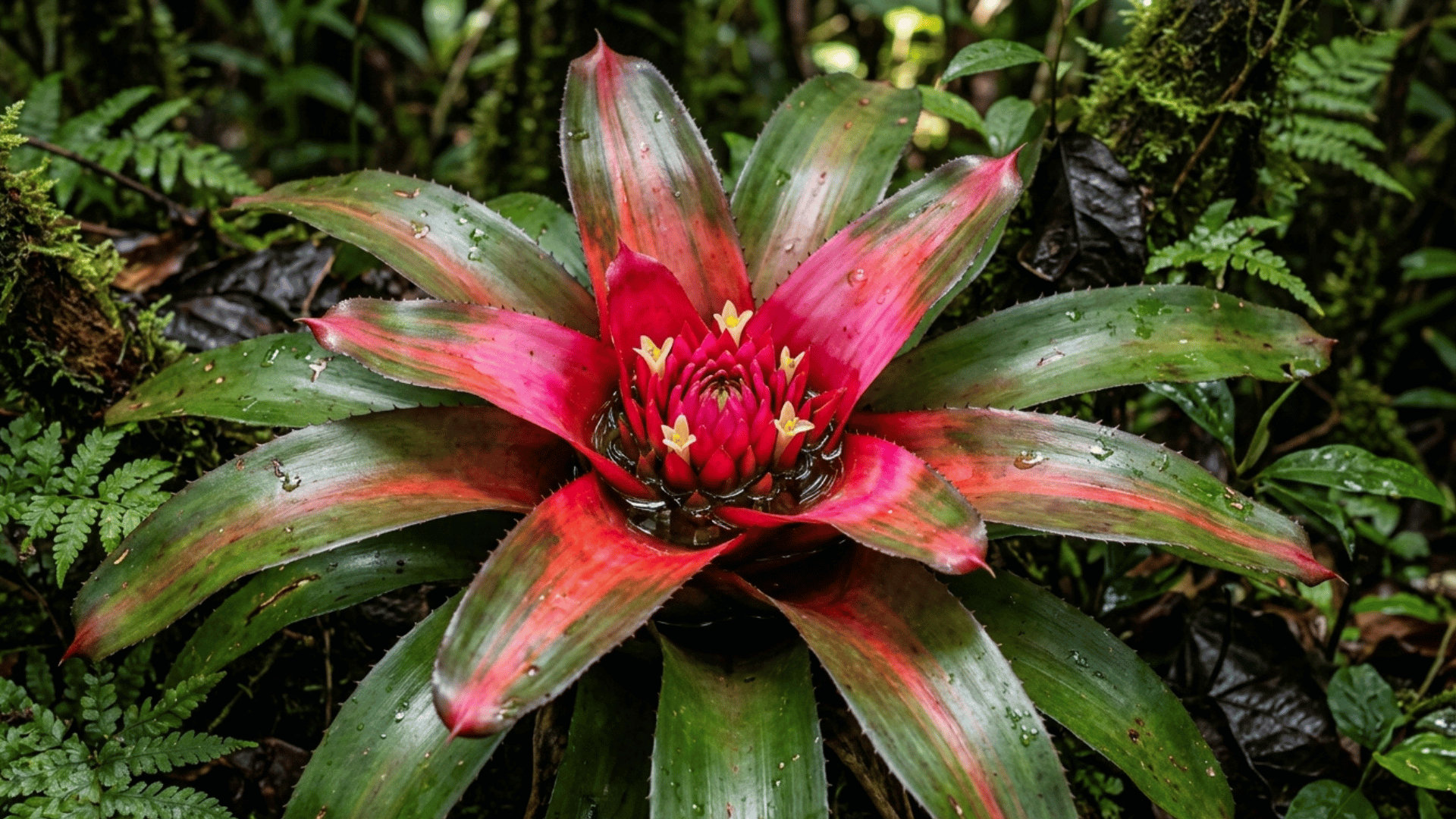
Bromeliads are tropical plants that often grow on trees as epiphytes. They have leaves that form a cup-like shape, allowing them to collect water. This water can support small animals like frogs and insects.
Bromeliads absorb nutrients from rain and air. They thrive in humid rainforest conditions. These plants help create mini ecosystems within the forest and play a role in supporting wildlife.
17. Air Plants (Tillandsia)
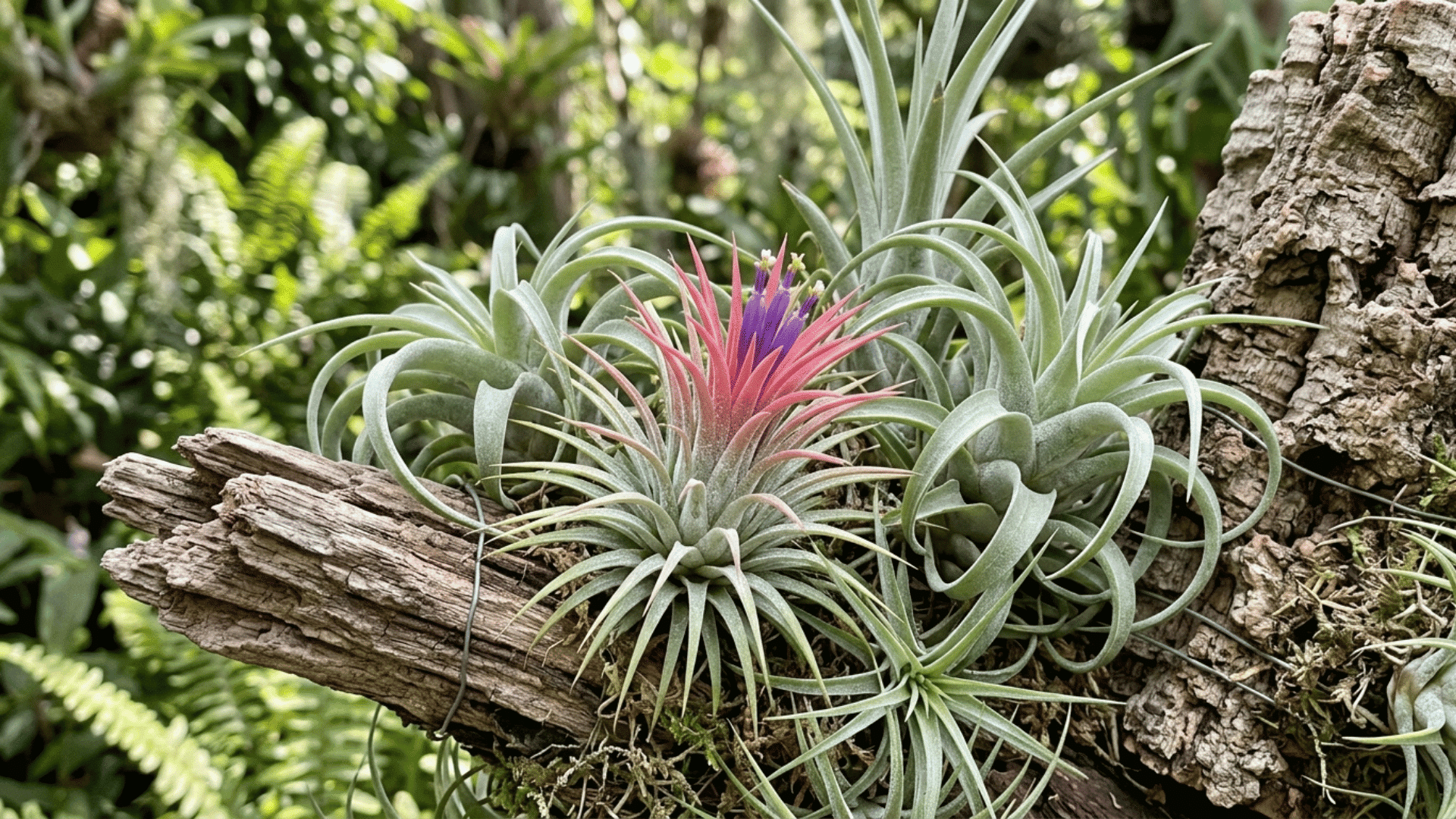
Air plants, also known as Tillandsia, do not need soil to grow. They absorb moisture and nutrients directly from the air through their leaves. These plants often grow on trees in tropical rainforests.
They are lightweight and easy to spread. Air plants help increase plant diversity and provide habitat for small organisms. Their unique way of growing makes them an interesting part of rainforest ecosystems.
18. Staghorn Fern
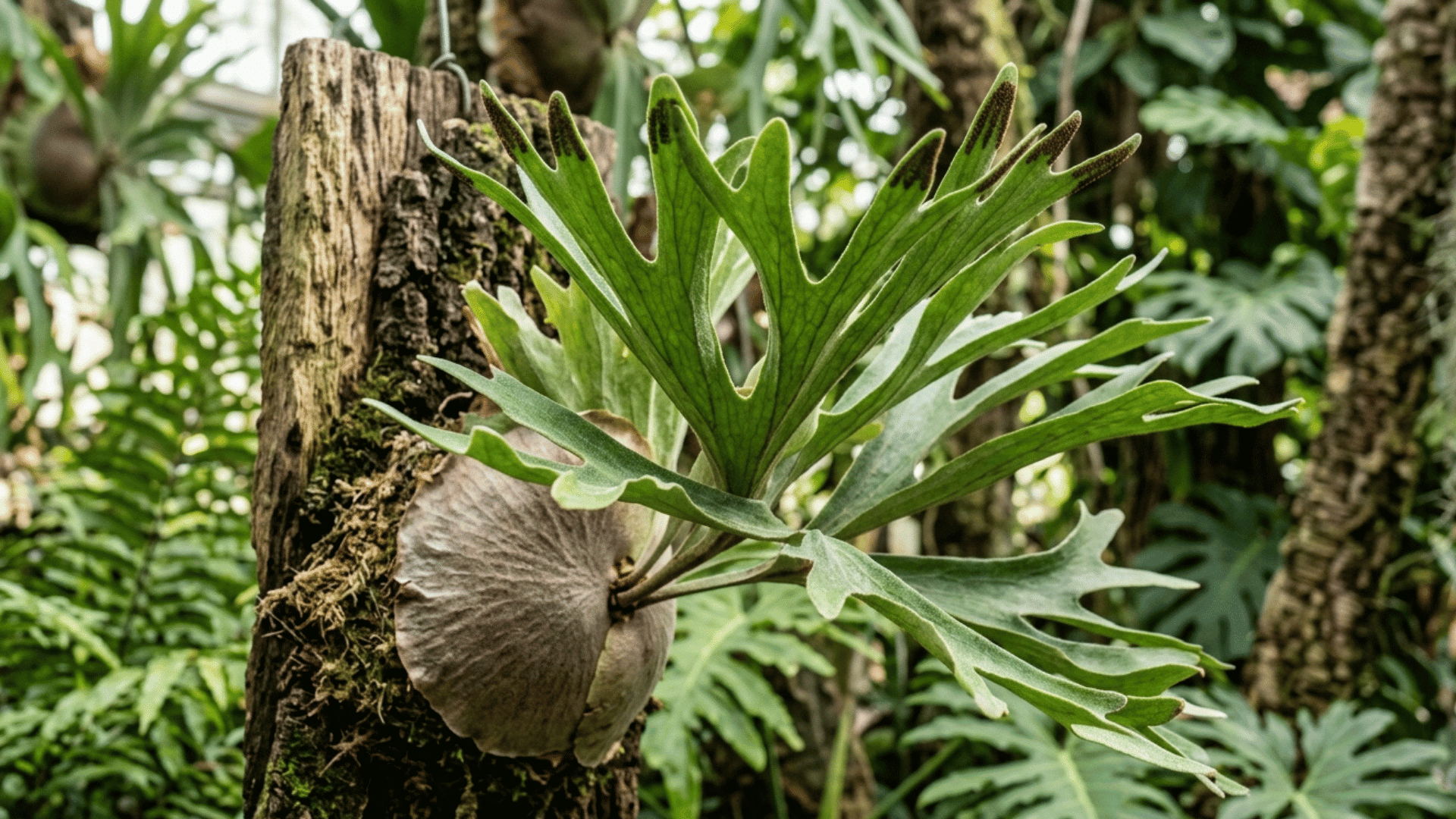
Staghorn ferns are epiphytic plants that grow on trees in tropical rainforests. They have leaves shaped like deer antlers, which help them capture water and nutrients.
These plants do not harm the trees they grow on. Staghorn ferns thrive in humid conditions and shaded areas.
They provide shelter for small insects and add to the forest’s plant diversity. Their unique shape makes them easy to identify.
19. Moss
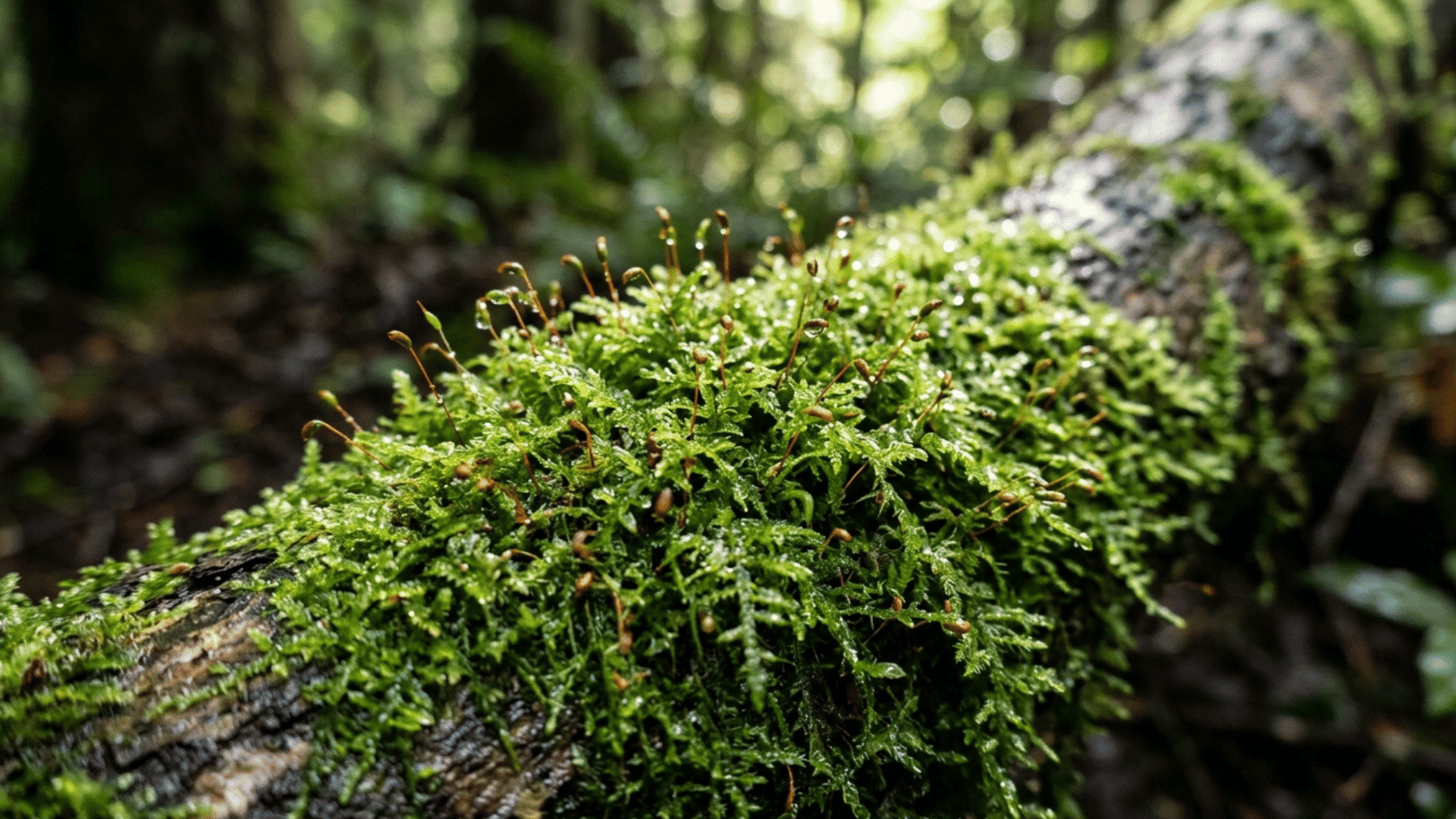
Moss is a small, non-flowering plant that grows in damp and shaded areas of rainforests. It spreads across rocks, tree trunks, and the forest floor. Moss helps retain moisture and prevent soil erosion.
It also provides habitat for tiny organisms. This plant plays a key role in maintaining the moisture balance of the rainforest. Despite its small size, moss is very important for the ecosystem.
20. Liverwort
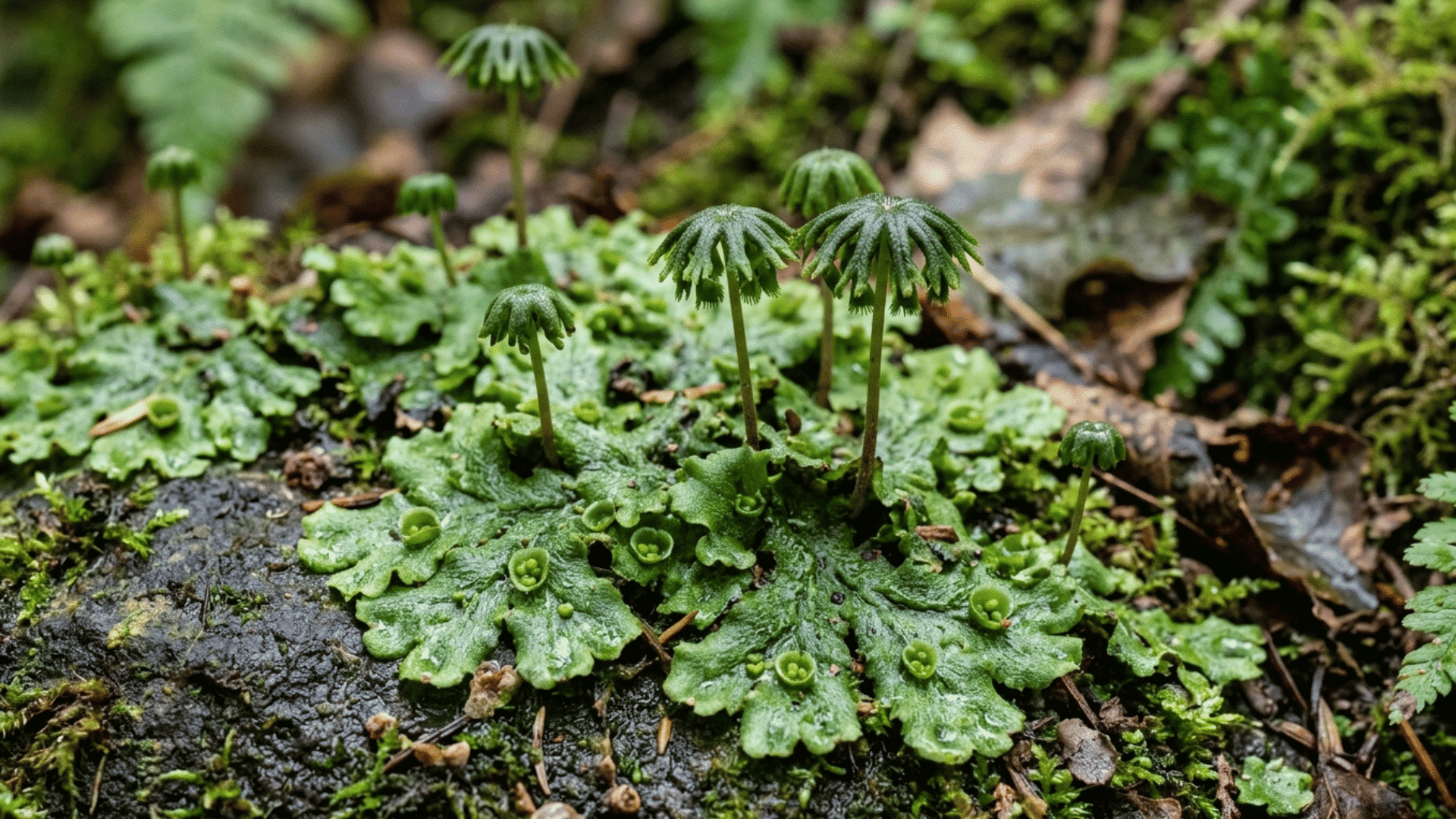
Liverwort is a simple plant that grows in moist and shaded rainforest areas. It often spreads across soil, rocks, and tree bark.
Like moss, it does not have flowers or seeds. Liverwort helps keep the environment moist and supports small organisms.
It plays a role in nutrient cycling within the forest. This plant is important for maintaining the health of the rainforest ecosystem.
21. Pitcher Plant
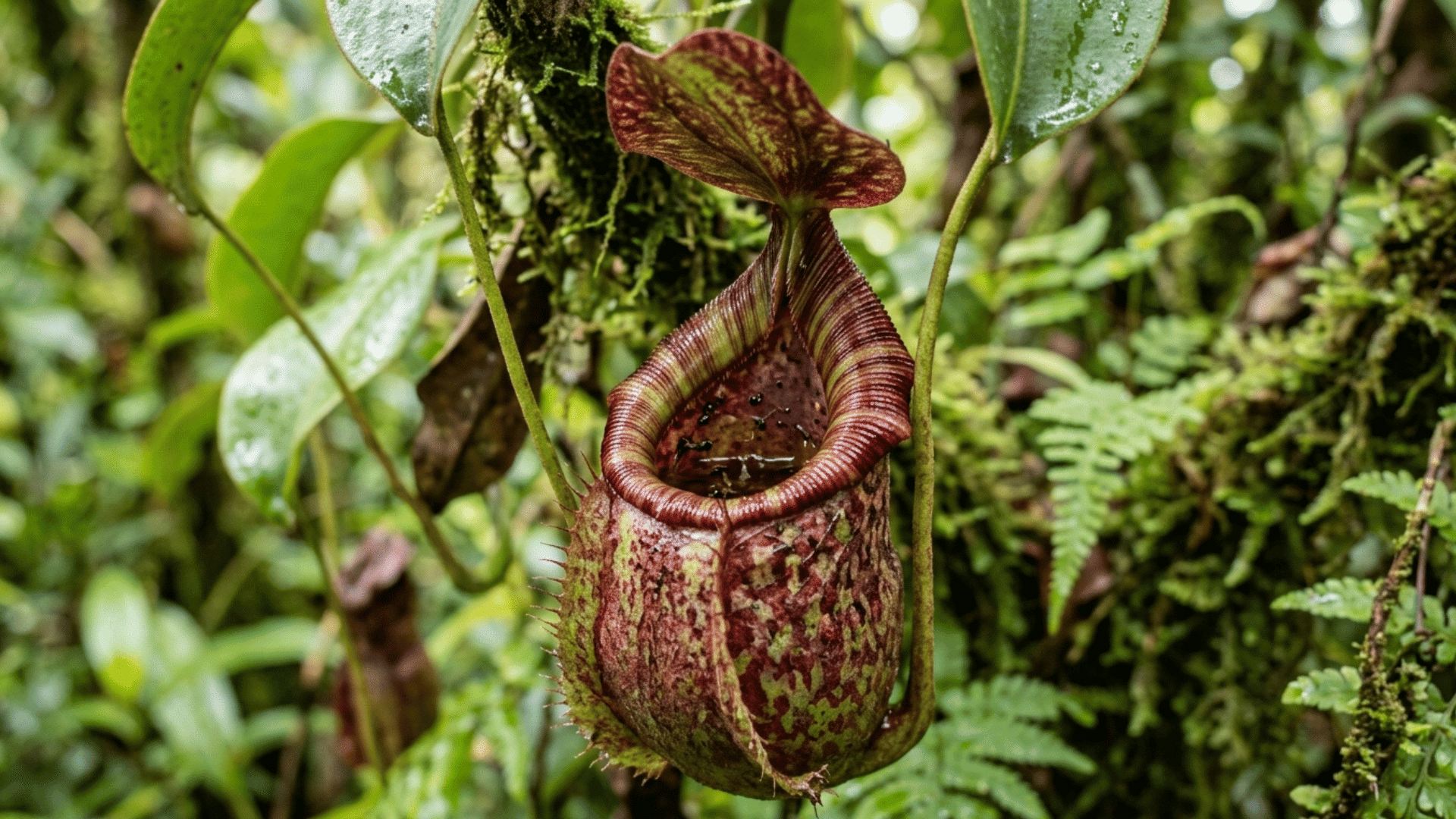
The pitcher plant is a carnivorous plant that traps insects in its pitcher-shaped leaves. It grows in nutrient-poor soils and gets nutrients by digesting insects.
Rainwater collects inside the pitcher, helping trap prey. This plant is found in tropical rainforests with high humidity. Pitcher plants help control insect populations and show how plants adapt to difficult conditions.
22. Venus Flytrap
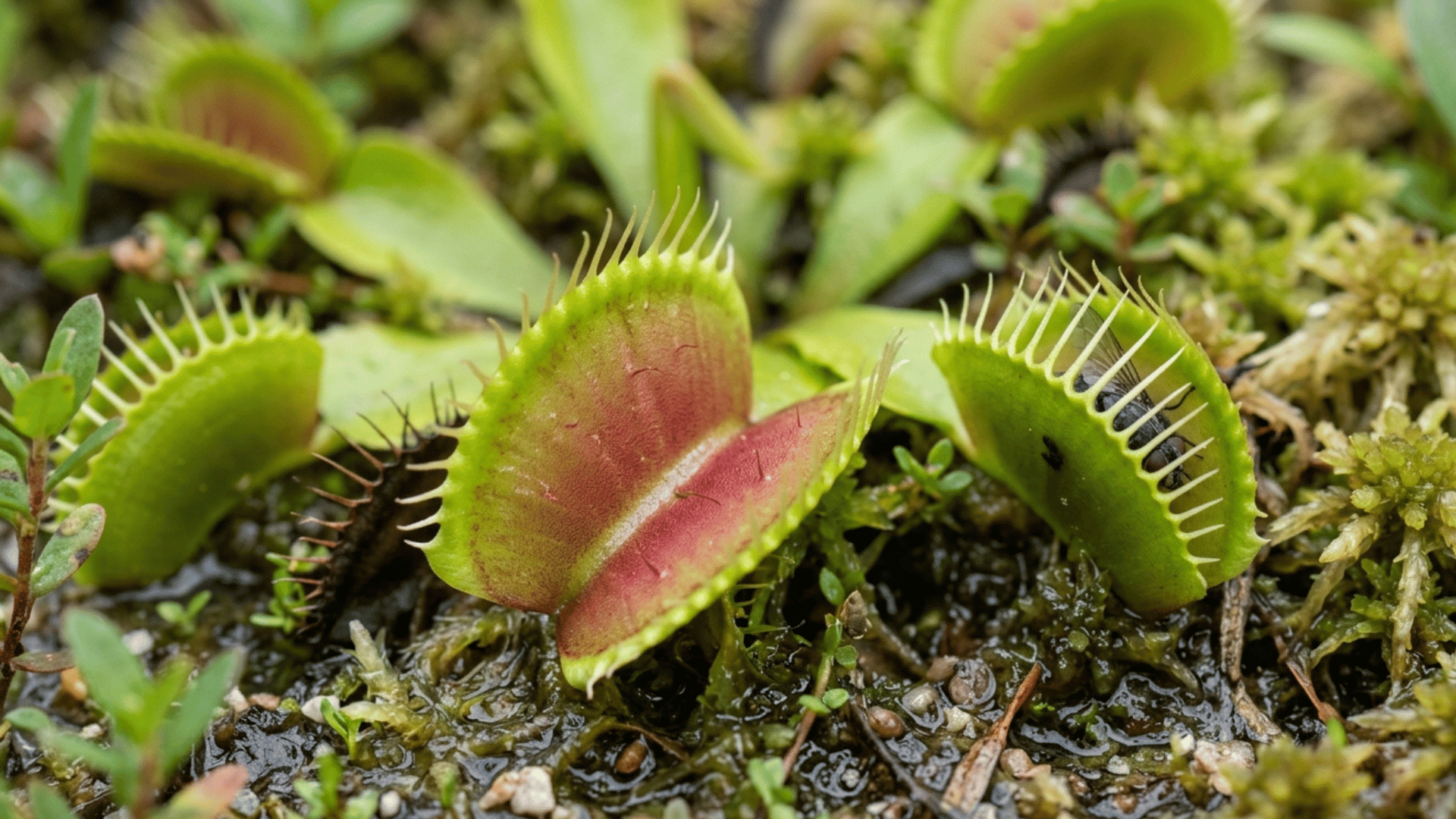
The Venus flytrap is a carnivorous plant known for its snapping leaves. When insects touch its trigger hairs, the leaves close quickly to trap them. It digests the insects to get nutrients.
This plant grows in humid environments and nutrient-poor soils. While not common in all rainforests, it shares similar conditions. The Venus flytrap is a fascinating example of plant adaptation.
23. Sundew
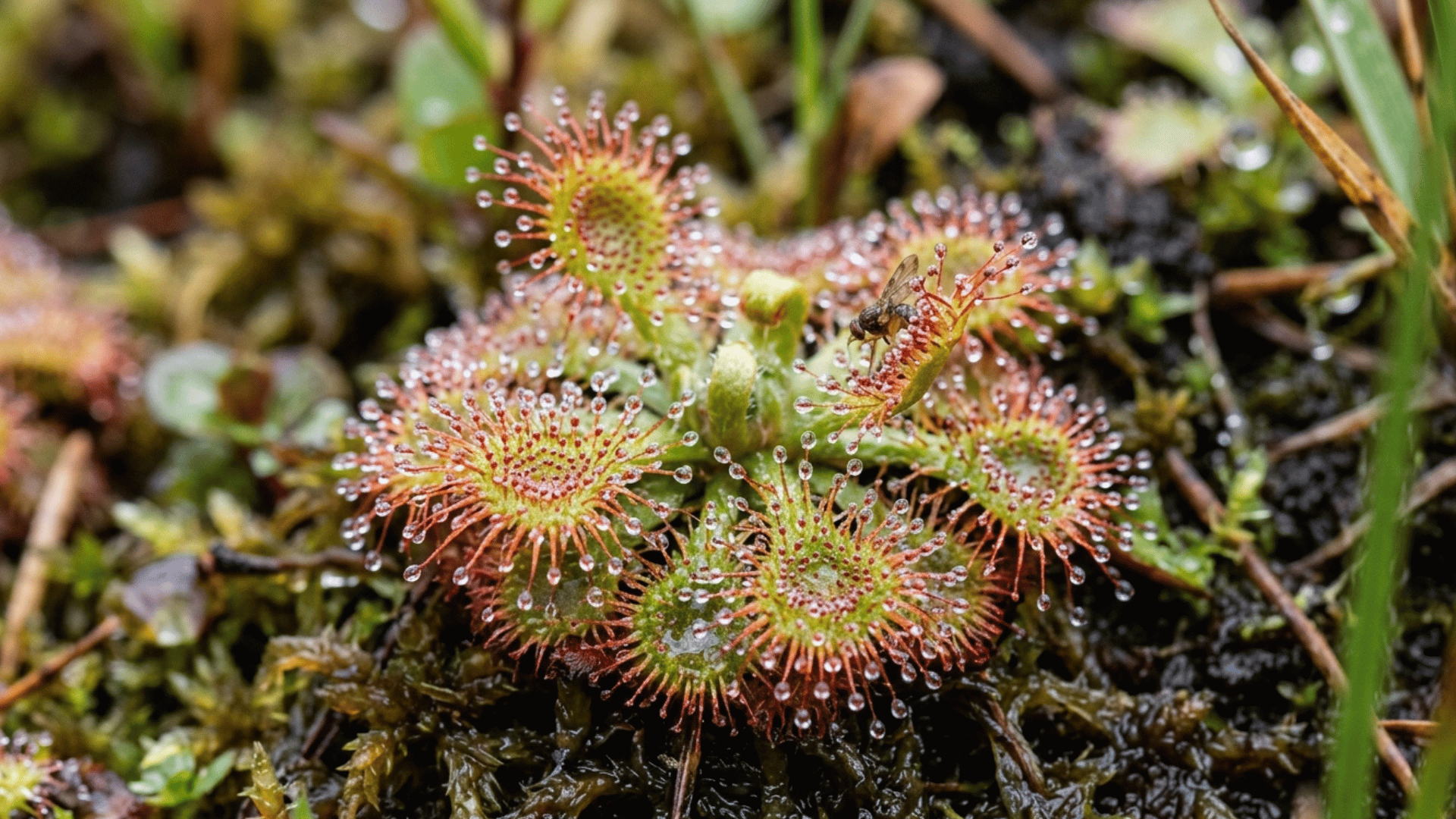
Sundews are carnivorous plants with sticky leaves that trap insects. The leaves are covered in tiny hair-like structures that produce a sticky substance.
When insects land, they get stuck and are slowly digested. Sundews grow in wet and nutrient-poor soils.
They are small but effective hunters. These plants help maintain balance in the ecosystem by controlling insect populations.
24. Bladderwort
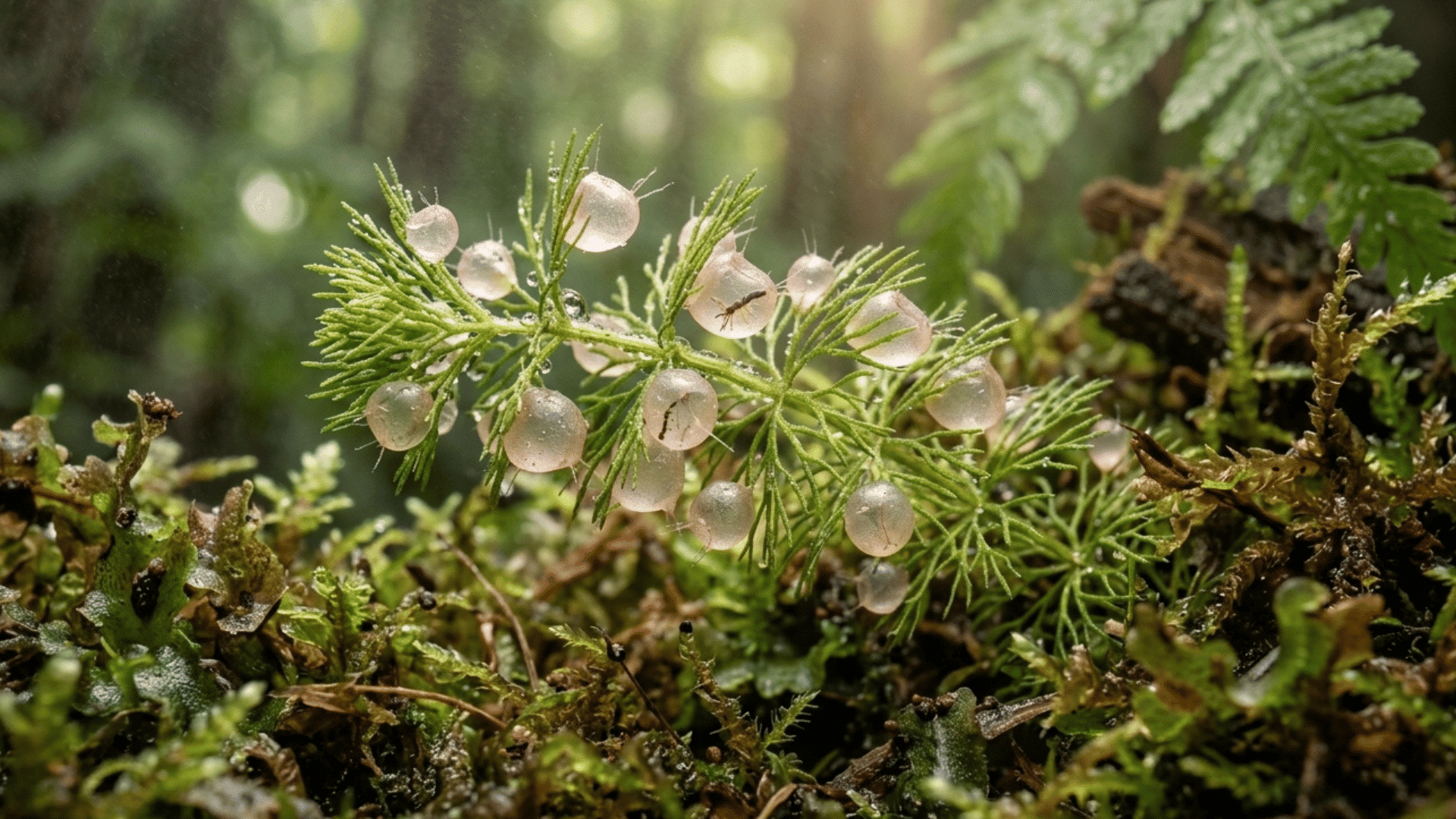
Bladderwort is a carnivorous plant that traps tiny aquatic organisms. It has small bladder-like structures that suck in prey when triggered. This plant grows in water or very wet soil.
It does not have true roots and floats freely. Bladderwort gets nutrients by digesting small organisms. It is an example of how plants adapt to challenging environments in rainforests.
25. Rafflesia
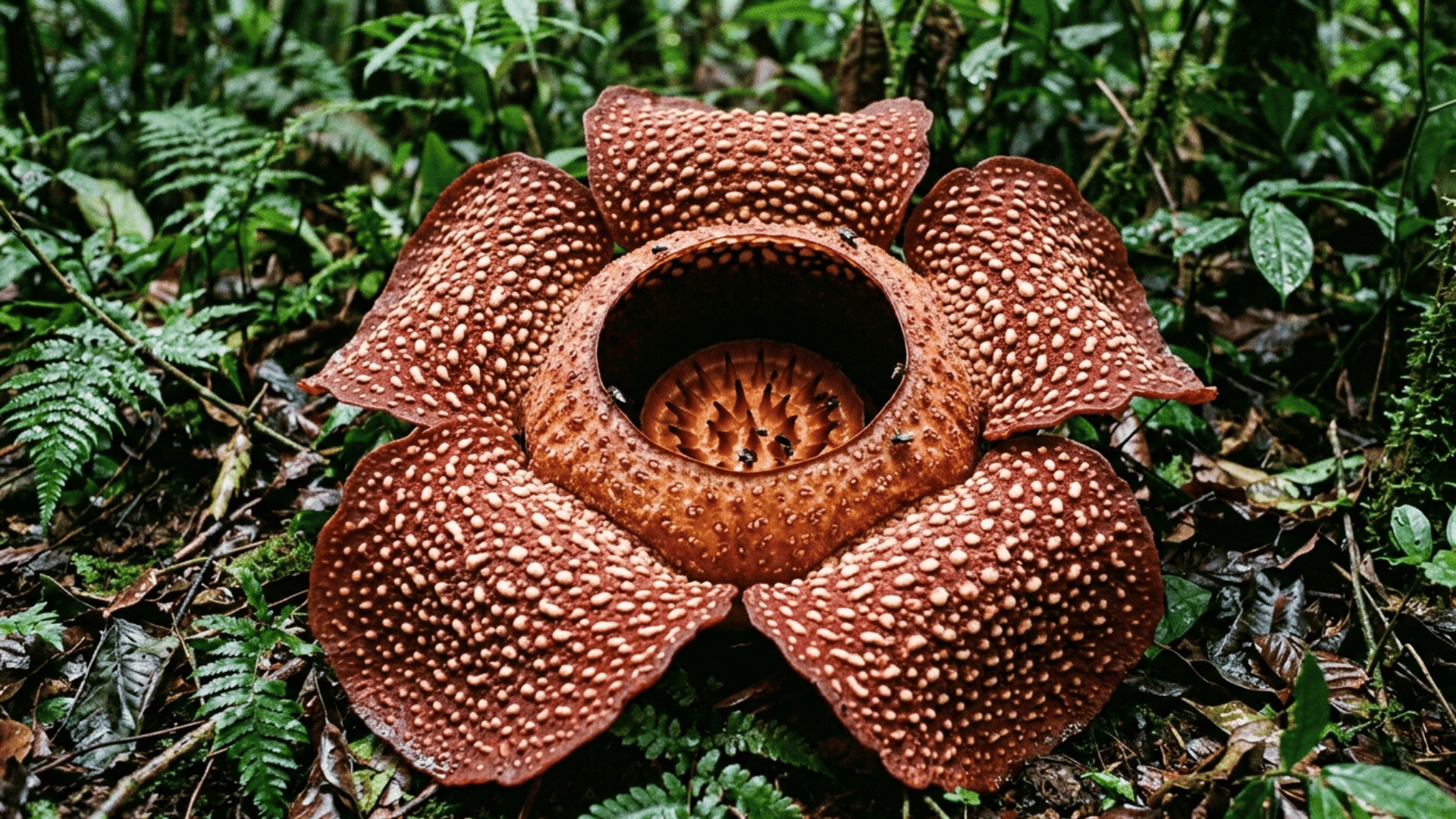
Rafflesia is one of the largest flowers in the world and is found in tropical rainforests. It does not have leaves, stems, or roots like most plants. Instead, it grows as a parasite on other plants.
The flower produces a strong odor to attract insects for pollination. Rafflesia is rare and unique. It shows how diverse and unusual rainforest plants can be.
Interesting Facts About Tropical Rainforest Plants
Tropical rainforest plants have many unique features and surprising facts, from their rich diversity to the smart ways they survive in hot, wet, and crowded forest environments.
- Rainforest plants are incredibly diverse: Tropical rainforests are home to more than half of the world’s plant species, even though they cover a small part of the Earth. This makes them one of the richest ecosystems in terms of plant life.
- Some plants grow without soil: Many rainforest plants, known as epiphytes, grow on other plants instead of in the ground. They do not harm the host plant and get their nutrients from rain, air, and debris.
- They play a key role in medicine: A large number of modern medicines are made using rainforest plants. These plants are used to treat illnesses like infections, pain, and even serious diseases.
- New plant species are still being discovered: Scientists continue to find new plant species. Many areas are still not fully studied, so discoveries are ongoing.
- Plants have unique survival features: Rainforest plants have special adaptations like drip-tip leaves, large surfaces, and strong roots that help them survive heavy rain, low light, and poor soil conditions.
Conclusion
Tropical rainforest plants show how diverse and important nature can be. From towering trees to tiny moss, these rainforest plants each play a unique role in keeping the ecosystem balanced and healthy.
They support wildlife, help produce oxygen, and even provide resources used by humans. The variety seen in tropical rainforest plants also highlights how well they adapt to heat, rainfall, and limited sunlight.
Protecting these plants is not just about saving greenery, but also about preserving life that depends on them.
When rainforest plants are protected, it helps maintain biodiversity and ensures that future generations can continue to learn from and benefit from these rich natural environments.

With a Master’s in Landscape Architecture from the University of Virginia, Sophia Stephenson has dedicated the last 20 years to creating and maintaining vibrant outdoor spaces. Her professional journey started in landscape design, where she gained a reputation for innovative and sustainable approaches. Sophia became a part of our editorial team as a freelancer in 2019, offering a fresh perspective on outdoor living. Since 2020, she has been the chief for our outdoor design content, blending aesthetic appeal with environmental stewardship. In her leisure time, Sophia is a keen photographer, capturing the beauty of natural landscapes, a hobby that complements her professional expertise.